Brown Tips on Dahlia: Causes, Checks & Fixes
Quick answer
Brown tips on outdoor dahlias usually mean drought stress in containers, tuber or root rot from soggy soil, Botrytis spreading from spent blooms, fertilizer burn, or heat scorch-not low indoor humidity. First step: probe soil 5 cm (2 in) deep and check whether the stem base is firm or soft before you water or feed.
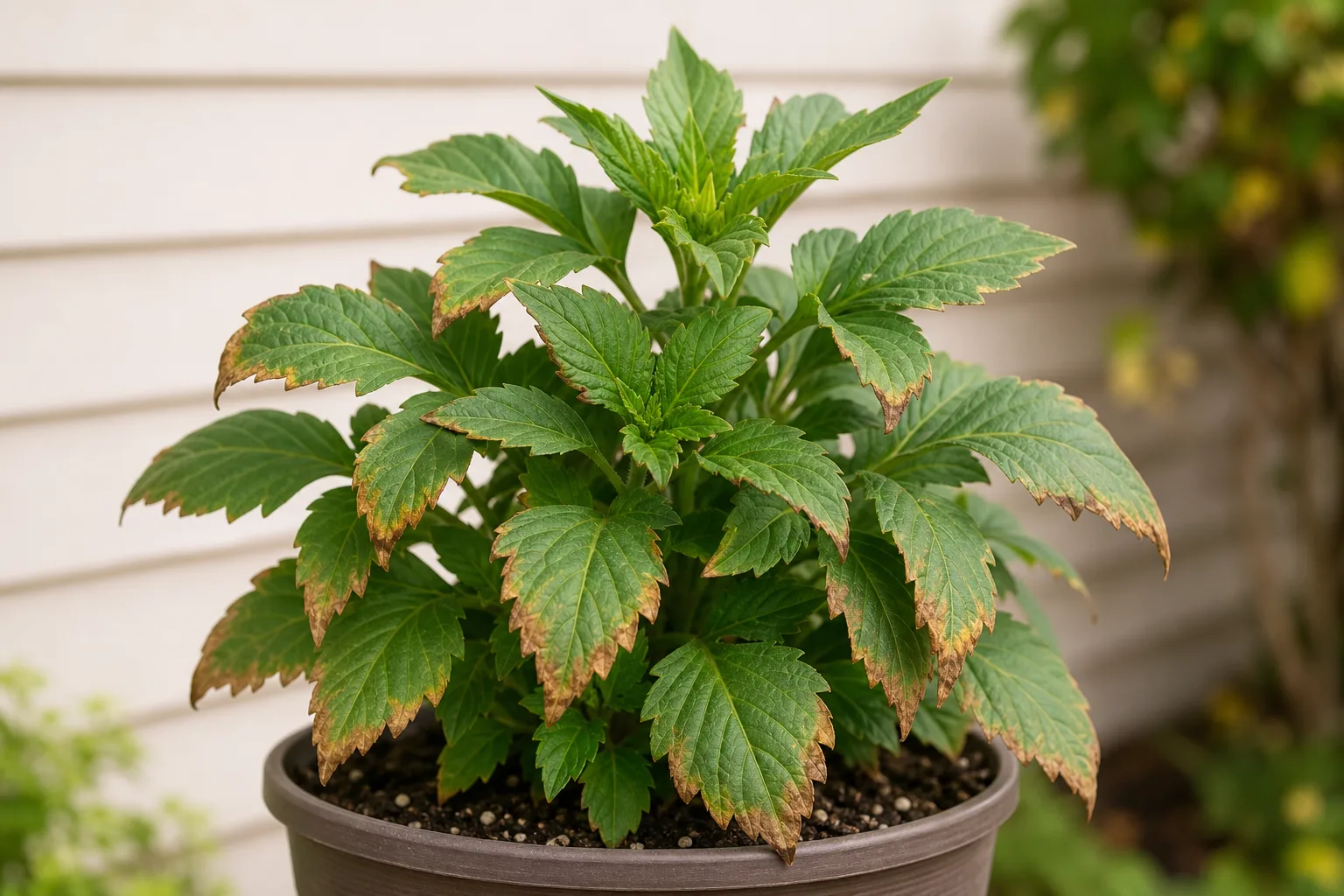
Brown Tips on Dahlia: Causes, Checks & Fixes
This guide covers brown tips on Dahlia. See also the general Brown Tips guide, watering, and light pages for this plant.
Brown Tips on Dahlia: Causes, Checks & Fixes
Quick answer
Brown leaf tips and margins on dahlia (Dahlia spp.) in garden beds and containers are usually environmental stress, not a mystery houseplant humidity problem. Dahlias are tuberous tender perennials grown outdoors in full sun with heavy midsummer water demand. The most common causes are drought during peak bloom, tuber or root rot on Dahlia from overwatering, Botrytis gray mold spreading from spent flowers, fertilizer or salt burn, and heat or sun scorch after transplant-plus normal frost blackening at season’s end.
First step: insert a finger or dry stake 5 cm (2 in) into the soil and squeeze the stem base just above the crown. Dry soil with firm green stems points to underwatering on Dahlia; wet heavy soil with soft stems or a sour smell points to rot. Make one correction based on that reading before stacking fertilizer, fungicide, or Dahlia repotting guide.
What brown tips look like on Dahlia
On dahlias, “brown tips” usually means dry crispy margins on compound leaves, often starting at the lowest or outermost leaflets and moving upward during sustained stress. The rest of the leaf may stay green while only the edge desiccates-a pattern common when hollow stems and top-heavy blooms increase water loss in July and August heat.
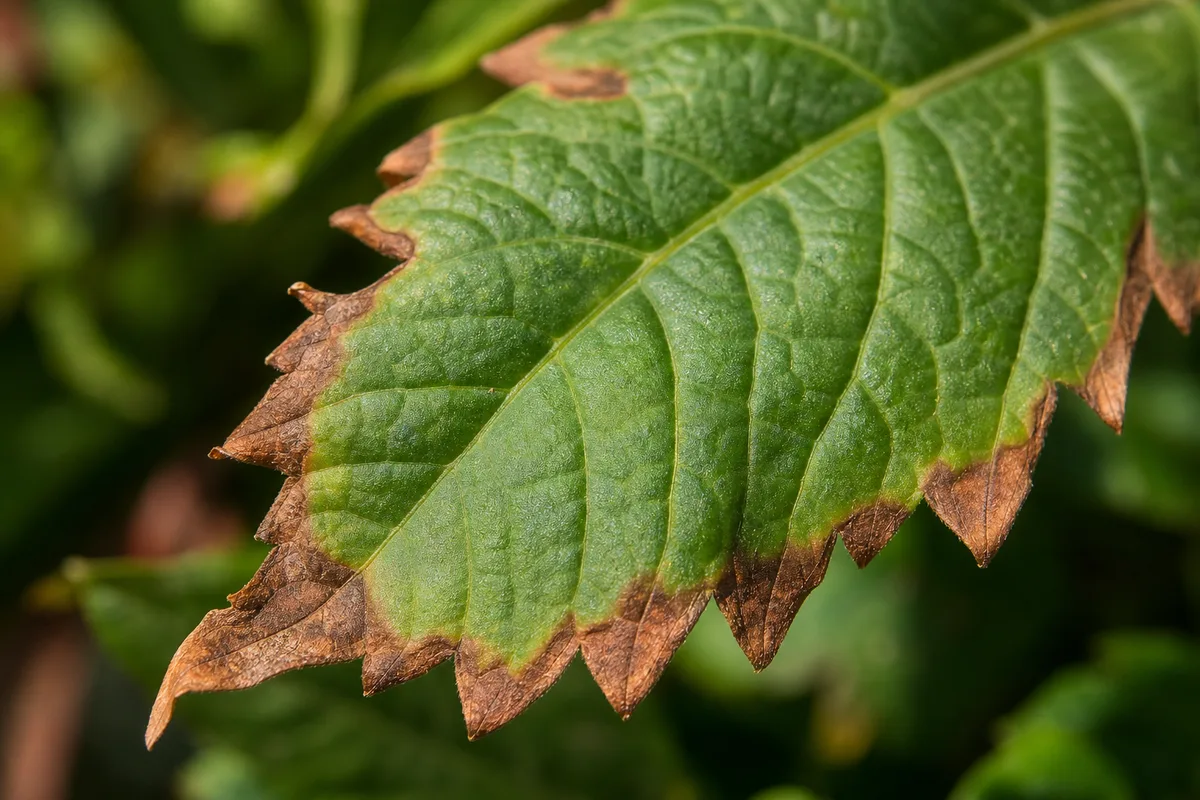
Brown Tips symptoms on Dahlia - compare with healthy tissue on the same plant.
Drought stress produces tan-to-brown, papery edges that feel dry when you rub them. Lower leaves often show damage first. Soil at 5 cm depth is dry; the pot feels light in containers. Stems stay firm and green at the base. Afternoon wilt may appear but plants often perk overnight after a deep soak.
Tuber or root rot can also show as brown margins while soil is wet and heavy. Lower leaves turn soft yellow, then brown. The stem base may feel mushy or hollow. This is paradoxical tip burn-roots cannot deliver water even though the mix is saturated. See the dahlia watering guide for drought-versus-rot wilt timing.
Botrytis (gray mold) starts on spent blooms or wounded tissue as brown, water-soaked spots that may develop a fuzzy gray coating in cool, humid weather. It spreads to leaf margins and stems-not the uniform dry crispness of drought. Illinois Extension notes that Botrytis on fleshy leaves often shows irregular brown lesions, while the American Dahlia Society emphasizes removing dying petals and injured tissue where the fungus gains entry.
Fertilizer burn appears as scorched margins, sometimes with white salt crust on soil or pot rims, often within days of a heavy feed on dry roots. Sun or wind scorch after a sudden move to full sun without hardening off shows bleached or crisp patches on sun-facing leaves, not just tips.
Spider mite stippling can be mistaken for margin burn on dense decorative cultivars: look for fine pale dots across the leaf blade and webbing on undersides, not uniform dry edges alone. Mites cluster on stressed foliage during hot dry spells-confirm with a white-paper tap test before treating margins as drought.
End-of-season frost turns foliage dark brown-black uniformly after a hard freeze-that is normal senescence, not a fixable care error. Stop watering and shift to tuber overwintering per the dahlia overview.
Field note: August container dinnerplate on a hot patio
In a typical August heat wave, a dinnerplate dahlia in a 35 cm (14 in) patio pot may show crispy lower margins while the top still looks green-soil at the surface can read slightly damp from a morning sprinkle, but a finger probe at 5 cm comes up dusty and the pot feels noticeably lighter than neighbors. Stems at the crown stay firm. One slow soak until water runs from drainage holes (saucer emptied) often stops new burn within 48 hours; the browned tissue itself does not re-green, but the next leaf pair emerges with clean edges. That pattern is drought at tuber depth, not a humidity problem and not rot-unless you also find soft tissue at the stem base.
Why Dahlia gets brown tips
Drought and heat stress during peak bloom
Established dahlias transpire heavily when stems load with flowers in full sun. OSU Extension recommends keeping soil consistently moist during active growth without waterlogging. Containers on hot patios may need daily checks while in-ground beds might need deep watering every few days-surface-green plants with crispy edges often mean moisture never reached tuber depth. Hollow dahlia stems and large leaf surface area make margin stress visible before the whole plant collapses.
Midday droop on hot days with moist soil at depth is often temporary heat flagging, not automatic thirst. Morning wilt with dry soil is the drought signal that warrants irrigation.
Tuber or root rot from overwatering
Dahlias will not thrive in waterlogged soil and tubers rot when cold, saturated soil surrounds dormant or newly planted clumps. WSU Extension warns that excessive water before roots establish can rot tubers outright. Chronic overwatering destroys feeder roots; leaf tips brown because water delivery fails. This overlaps heavily with overwatering on Dahlia and wilting on Dahlia-wet-soil wilt is urgent, not cosmetic.
Botrytis and fungal issues
Botrytis cinerea attacks old flower petals, damaged leaves, and crowded dense cultivars where air stagnates. Spent blooms left on the plant become a food source; infection moves to leaf edges as brown necrotic patches. Powdery mildew-a white coating on leaves-often tracks with dry hot spells plus inconsistent watering per the dahlia overview. Mildew weakens foliage; severe cases can precede margin browning as leaves senesce.
Fertilizer or salt burn
Dahlias are moderate to heavy feeders, but OSU Extension cautions that too much nitrogen produces weak stems, small blooms, and tubers that rot or shrivel in storage-symptoms that often include scorched leaf margins when salts concentrate on dry roots. WSU Extension recommends low-nitrogen ratios such as 5-10-10 applied every three to four weeks through mid-August, not on drought-stressed plants. High-nitrogen all-purpose feeds applied too often produce lush foliage with burnt edges and few buds. Container dahlias leach faster but also accumulate salts when overfed. See the dahlia fertilizer guide for low-nitrogen bloom timing.
Sun, wind, and transplant scorch
Dahlias need six to eight hours of direct sun for best bloom, but nursery starts or shade-grown transplants moved suddenly into harsh afternoon sun without 7–14 days of hardening off can bleach or crisp leaf edges within days. Wind-exposed sites snap hollow stems and desiccate margins even when soil moisture is adequate-a broken stem tip can wilt and brown leaflets downstream within a day while the rest of the plant stays turgid. The dahlia light guide covers morning sun versus afternoon heat protection.
How to confirm the cause
Work through these checks in order:
- Soil moisture at 5 cm (2 in) - Dry and dusty supports drought; cool, clinging, or sour-smelling soil supports rot. Do not trust surface color alone.
- Time of wilt - Midday droop with moist depth and evening recovery often means heat, not drought. Morning limp stems with wet soil mean rot investigation.
- Stem base firmness - Firm green tissue at the crown fits drought, scorch, or fertilizer burn. Soft, dark, or hollow bases fit rot.
- Pattern on leaves - Uniform dry crisp margins on lower leaves in dry weather = drought. Water-soaked spots with gray fuzz = Botrytis. Bleached sun-facing patches after a recent move = scorch. Fine stippling plus webbing on undersides = spider mites, not margin drought alone.
- Recent feeding - Heavy fertilizer within the last week on dry soil increases salt-burn likelihood.
- Spent blooms - Pointed, conical old flower bases still attached raise Botrytis risk; rounded fresh buds are fine.
- Broken or wind-snapped stems - Localized browning on leaves below a fresh snap, with firm crown and moist soil, points to wind injury rather than root failure.
- Season - Post-frost uniform blackening is normal end-of-season browning, not a midseason care fix.
| What you see | Likely cause | First direction |
|---|---|---|
| Crispy dry margins, dry soil 5 cm down, firm stem | Drought / heat stress | Deep water at base |
| Brown margins, wet soil, soft yellow lower leaves | Tuber or root rot | Stop watering; inspect crown |
| Brown water-soaked spots, gray fuzz, old blooms present | Botrytis | Remove infected tissue; improve airflow |
| Scorched margins after recent feed on dry soil | Fertilizer burn | Flush; pause feeding |
| Bleached/crisp sun-facing leaves after transplant | Sun scorch | Shade partially; harden off |
| Stippling + webbing on undersides, firm stem | Spider mites | Rinse undersides; treat if confirmed |
| Crisp leaves below a fresh stem snap, moist soil | Wind / mechanical injury | Stake; trim damaged section |
| All foliage black after frost | Normal senescence | Overwinter tubers |
First fix for Dahlia
Probe soil 5 cm deep and apply exactly one correction matched to moisture and stem firmness.
If soil is dry and stems are firm, water slowly and deeply at the base until moisture penetrates the root zone (until a little runs from container drainage holes, then empty saucers). Wait 24 hours and recheck morning stem turgor before watering again.
If soil is wet and the stem base is soft, stop all irrigation immediately. Do not fertilize. Clear mulch from the crown temporarily, improve drainage paths, and inspect for rot. Dig only if collapse is spreading-see overwatering for tuber inspection steps.
If Botrytis patches are present, remove infected leaves and spent flower bases with clean pruners first, then improve spacing and airflow. Do not wet foliage overnight.
One targeted action lets you read the plant’s response over the next week. Stacking fungicide, fertilizer, and repotting on day one obscures the diagnosis.
Recovery timeline
Drought-related tip burn often stabilizes within one to two deep watering cycles if roots are intact. Existing brown tissue does not re-green; success means new leaves and buds emerge without fresh margin damage over the next two to four weeks.
Sun scorch stops spreading once exposure is reduced and plants acclimate; new growth should look normal within two to three weeks.
Fertilizer burn recovery takes three to four weeks after flushing and pausing feeds-watch for clean margins on the smallest new leaves.
Botrytis may require repeated removal of infected tissue over several weeks during humid spells. Severe crown invasion may not be reversible.
Rot recovery is uncertain. Firm green tissue at the stem base after drying soil is encouraging; mushy tubers usually mean replacing the clump next season.
What not to do
Do not treat dahlias like humidity-sensitive houseplants-misting leaves does not fix outdoor margin burn and can encourage foliar disease. Do not apply “bright indirect light” advice; dahlias need full sun with optional afternoon shade only in extreme heat zones per the light guide.
Do not fertilize a stressed dahlia before confirming soil moisture and root health. Do not water reflexively when midday wilt appears if soil at 5 cm is already moist-you may deepen rot.
Do not leave spent pointed flower bases on dense cultivars through humid weather; deadhead to the next leaf joint weekly during peak bloom as described in the dahlia overview.
When trimming damaged leaves, wear gloves-dahlias are toxic to cats, dogs, and horses with mild GI signs and possible skin irritation from sap.
Do not dig tubers mid-season for diagnosis unless rot is confirmed and the plant is failing; unnecessary disturbance wounds storage tissue.
How to prevent brown tips next time
Match watering to growth stage: minimal irrigation until shoots establish, then deep consistent moisture when the top 5 cm dries during active bloom per the dahlia watering guide. Mulch after soil warms, but keep mulch back from the crown early in the season.
Plant in full sun with free-draining soil; amend heavy clay before planting. Stake before stems flop so hollow stems do not snap and wound tissue invites Botrytis.
Deadhead weekly through peak season-cut spent blooms back to the next leaf set, not just petal removal. Feed with low-nitrogen bloom booster on moist soil every three to four weeks in beds and every two to three weeks in containers; stop four to six weeks before frost.
Harden off transplants over 7–14 days before full sun placement. In hot climates, favor morning sun and afternoon shade or 30% shade cloth rather than abandoning sun entirely.
Check containers every morning in July and August. In-ground beds benefit from a rain gauge so light showers are not mistaken for deep watering.
When to worry
Escalate if brown margins spread rapidly while soil stays wet and the crown softens-that pattern suggests advancing rot, not cosmetic burn. Treat as urgent if gray fuzzy mold moves down stems from infected blooms or if multiple stems collapse overnight after prolonged rain on poorly drained soil.
Firm stems with isolated crispy tips during a dry heat wave are lower urgency-deep water once and monitor new growth.
Post-frost uniform black foliage is expected; shift to tuber lifting or mulching rather than trying to “save” leaves.
When to use this page vs other Dahlia guides
- Dahlia watering guide - Use for routine moisture checks before assuming brown tips is the main issue.
- Dahlia problems hub - Browse all 17 common issues on this species.
- Low Humidity on Dahlia - Different entry point when symptoms overlap with brown tips.
- Underwatering on Dahlia - Different entry point when symptoms overlap with brown tips.
- Overwatering on Dahlia - Different entry point when symptoms overlap with brown tips.