Low Humidity on Dahlia: Causes, Checks & Fixes
Quick answer
Low humidity on Dahlia matters most for indoor winter starts and arid-climate containers-not for in-ground summer beds with steady soil moisture. First step: confirm your growing context, check relative humidity near the plant, and move the pot away from heat vents before adding water or mist.
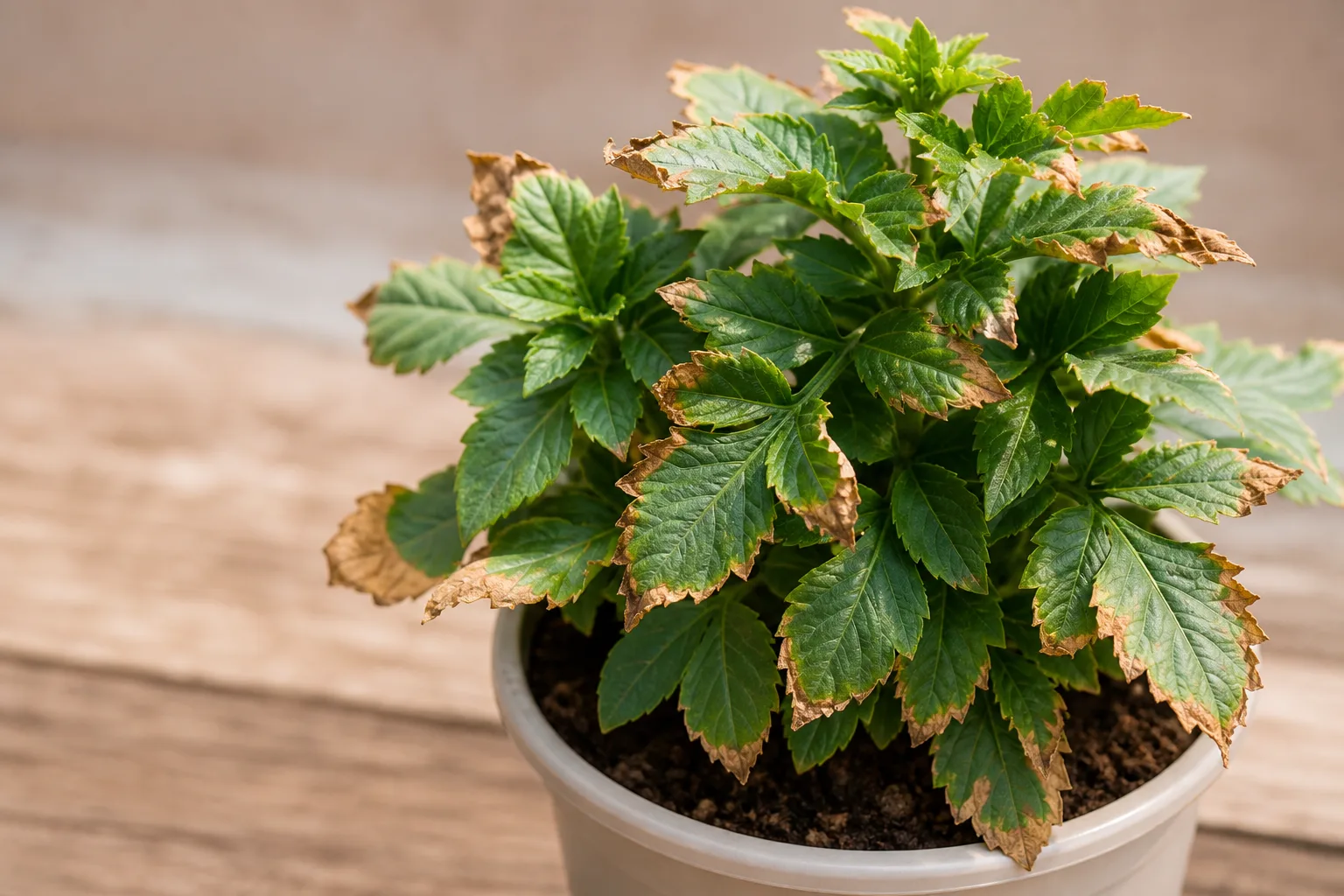
Low Humidity on Dahlia: Causes, Checks & Fixes
This guide covers low humidity on Dahlia. See also the general Low Humidity guide, watering, and light pages for this plant.
Low Humidity on Dahlia: Causes, Checks & Fixes
Quick answer
Low humidity on Dahlia is not the same problem calathea growers face. Dahlias are tuberous sun-lovers from Mexican highlands-they tolerate moderate air moisture (roughly 40–60%) during active growth and rarely need tropical-greenhouse humidity outdoors. Dry air becomes a real issue in three situations: indoor tuber starts in heated winter rooms, containers on dry patios or windy balconies, and arid-climate gardens where evaporation outpaces root uptake.
Crispy leaf margins, tight curling on new growth, and sudden spider mite outbreaks are the usual signals-not generic yellowing from a fern-care playbook.
First step: confirm your growing context and measure air moisture near the plant before you change watering. Move an indoor start off heat vents and check a hygrometer at foliage height. In arid gardens, probe soil moisture before misting leaves in full sun.
When low humidity actually matters for Dahlia
Dahlias are frost-tender tuber crops, not permanent houseplants. Most gardeners grow them outdoors in full sun for one season, then lift or mulch tubers for winter. In that normal cycle, ambient humidity in a summer garden is rarely the limiting factor-root-zone moisture and heat management matter more. The RHS dahlia growing guide notes that dahlias want moist yet free-draining soil and will not thrive in very dry sites, which is primarily a soil-water problem, not a call to humidify the whole yard.
Dry air becomes important in these contexts:
Indoor pre-frost starts. Starting tubers four to six weeks before last frost puts tender shoots in heated rooms where winter air often drops to 20–35% relative humidity. Longfield Gardens warns that indoor heat dries air quickly and that low humidity can lead to crispy leaf edges or spider mites on indoor dahlias. These plants also need intense supplemental light-not a bright corner alone.
Heated indoor culture year-round. Ambitious indoor growers face the same dry-air pattern plus stagnant airflow. Without a fan and humidity buffer, margins brown while stems stretch toward weak window light.
Containers in arid or windy climates. On desert patios, reflected heat from pavement, and open windy sites, leaves lose water faster than roots replace it. Longfield Gardens’ climate guidance describes crispy leaf edges when very dry air pulls moisture from foliage faster than roots can supply-often paired with need for drip irrigation or early-morning misting, not afternoon showers on hot leaves.
Tuber storage (different symptom). Stored tubers in heated basements can shrivel when air is too dry, needing 75–85% RH in a sealed micro-environment-not the same fix as foliar crisping on a growing plant. If your question is wrinkled dormant tubers, see storage humidity in our overview guide rather than treating it like a houseplant humidity crisis.
When humidity is not the main issue: dormant tubers with no foliage, in-ground plants with moist soil that only droop at midday heat, and humid-summer gardens where powdery mildew-not dryness-is the risk.
What low humidity looks like on Dahlia
Dry-air stress on dahlias shows up in leaf margins and pest pressure, not the uniform tip browning of a moisture-loving tropical.
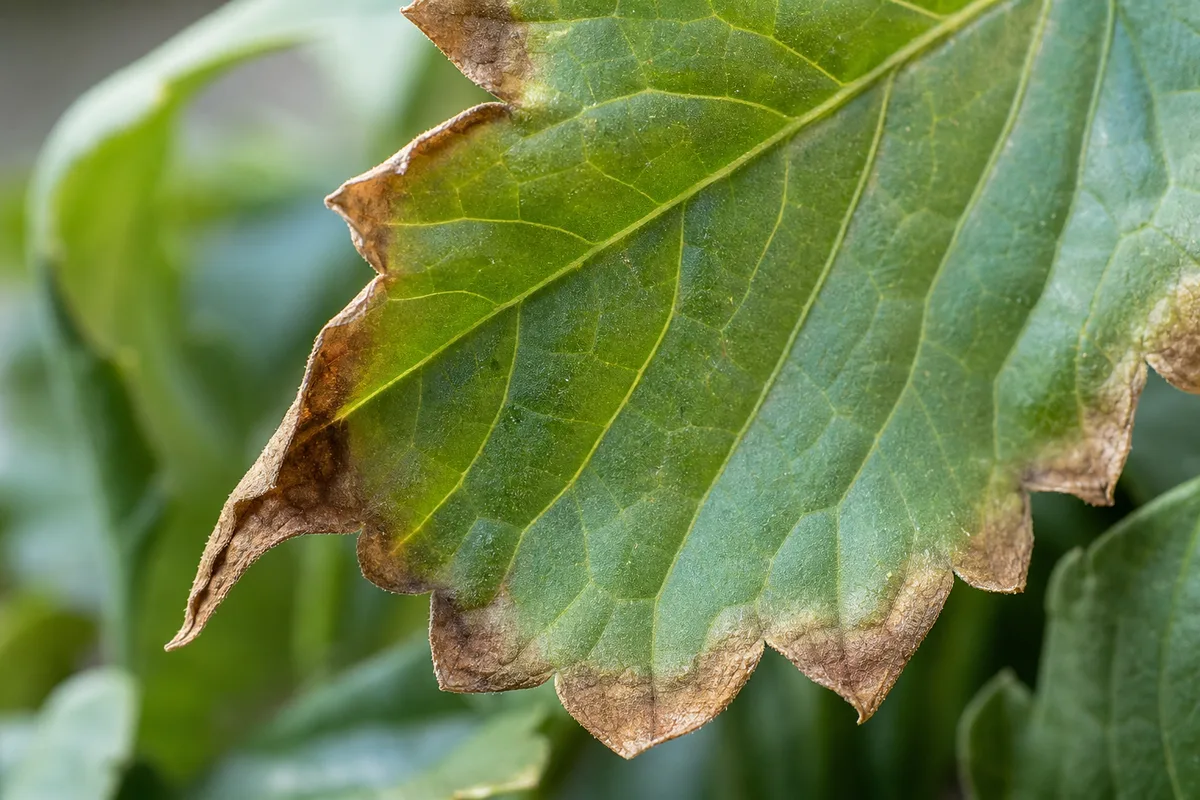
Low Humidity symptoms on Dahlia - compare with healthy tissue on the same plant.
Crispy brown edges on otherwise green leaves, often starting on the newest or most exposed foliage facing a heat vent, sunny window glass, or afternoon desert sun.
Slight upward leaf curl on young indoor shoots when air is very dry and light is marginal-easy to confuse with underwatering if you skip a soil probe.
Accelerated spider mite outbreaks-fine yellow stippling, bronzing, and webbing on undersides in warm, dry indoor or greenhouse air. Spider mites are common on plants stressed by low humidity and heat; see spider mites on Dahlia if stippling is present.
Flower stress secondary to leaf damage-buds may abort or open smaller when chronic dry air combines with inconsistent watering, but blooms rarely fail from air moisture alone when roots are well supplied in an outdoor bed.
Unlike underwatering, low humidity often appears with soil that is moist at depth-especially in overcompensated containers where a grower waters heavily to “fix” crisp leaves while air stays dry near a radiator.
Why Dahlia gets low humidity stress
Dahlia leaves transpire heavily in full sun-six to eight hours of direct light per our light guide-which is correct for the species but increases water loss from foliage. When air is dry, that loss outpaces uptake even if soil moisture is adequate.
Winter heating removes moisture from indoor air just when pre-started tubers produce tender new leaves. Heat vents and sunny south glass amplify local dryness without changing the reading on a thermostat across the room.
Arid climates and windy exposures mimic the mountain day’s bright sun without the cool-night recovery dahlias prefer. Longfield Gardens recommends drip irrigation and early-morning misting in dry regions so internal “plumbing” keeps up with evaporation-addressing the plant’s water budget through roots and timing, not random midday spritzes.
Container root volume limits how fast roots can supply leaves on a hot, dry balcony. Pots dry both soil and surrounding air faster than in-ground plantings.
Misplaced tropical-houseplant advice sends growers hunting for 60–80% room humidity year-round. Dahlias are not high-humidity plants during outdoor summer culture; chasing fern-level RH outdoors can increase foliar disease risk where nights stay warm and humid.
How to confirm the cause
Use this numbered confirmation workflow before changing care:
- Name your context - Indoor winter start, outdoor container, in-ground garden bed, or dormant tuber storage? Each has a different fix. Outdoor summer beds rarely need humidifiers.
- Measure RH near foliage - Place a hygrometer at leaf height for 24 hours. Below 35% in a heated indoor room with crisping margins strongly supports dry-air stress on tender starts. Outdoor readings below 25% in arid zones support soil-moisture and timing fixes.
- Probe soil 3–5 cm down - Dry soil plus crisp edges may be underwatering or combined drought and dry air. Moist soil with margin-only crisping points to air moisture or localized heat, not thirst.
- Read the leaf pattern - Uniform margins on exposed side near a vent or glass → environmental dryness. Random stippling and webbing → spider mites. Bleached petals and one-sided scorch on afternoon sun → light/heat scorch per our light guide, not humidity.
- Check timing - Symptoms appearing when heat first runs in October–March on indoor starts fit dry air. Midday-only droop on moist soil in July fits heat wilt, not RH deficit.
- Inspect the microclimate - Is the pot above a radiator, beside a forced-air vent, or on a west-facing brick wall? Move it one metre away and recheck new growth for seven days before stacking fixes.
If webbing or stippling is present, treat mites even after you raise humidity-dry air was likely a contributing stress, not the whole diagnosis.
First fix for Dahlia
Move the plant out of the driest microclimate before you add water, mist, or buy equipment.
For indoor starts: shift the pot away from heat vents and hot window glass, then set it on a pebble tray (pot base above water line) or run a small humidifier nearby targeting 40–50% RH at foliage height-not tropical 70%+. Longfield Gardens lists grouping plants, pebble trays, and humidifiers as the primary indoor buffers against dry winter air.
For arid outdoor containers or beds: skip the humidifier. Deep-soak at the stem base in early morning and apply 2–3 cm of organic mulch kept back from the crown so shallow feeder roots stay cool and moist. Oregon State University Extension recommends mulching to preserve soil moisture in dry conditions and keeping soil consistently moist without waterlogging during active growth.
Make one change, wait seven days, and read new leaf edges before adding misting routines, fertilizer, or Dahlia repotting guide.
Step-by-step recovery
After the first placement or irrigation fix:
- Add airflow indoors - A low oscillating fan prevents stagnant humid corners that invite powdery mildew while still allowing moderate RH. Longfield Gardens emphasizes air circulation for indoor dahlias to reduce fungal issues.
- Verify light intensity - Crisp edges plus leggy stems often mean weak window light, not humidity alone. Add a full-spectrum grow light 15–30 cm above shoots for 12–14 hours if stems stretch.
- Align watering with air dryness - Dry air increases transpiration; check containers daily in peak heat. Follow depth-based guidance in our watering guide rather than keeping soil soggy to compensate for dry leaves-that risks tuber rot.
- Morning outdoor mist only in arid zones - If you mist, do it early so leaves dry before intense sun. Afternoon mist on hot foliage can scorch or invite disease.
- Inspect for mites weekly on indoor starts through heating season. Rinse undersides if stippling appears; do not wait for webbing to coat new growth.
- Trim dead margins after stability - Remove fully crisp leaf tips only once new growth looks clean. Partial damage can remain on older leaves without harming the plant.
Recovery timeline
Indoor starts often show cleaner new leaf edges within 7–14 days after moving off vents and adding a humidity buffer, assuming light is adequate.
Outdoor containers in arid weather may need one to two deep irrigation cycles plus mulch before midday flagging eases; old crisp tissue will not revert.
Crispy margins never re-green-judge success by unfurling leaves without new browning and by stable buds, not by old damaged tissue.
Spider mite damage takes longer; stippling on old leaves persists even after humidity improves. Allow two to three weeks of combined environmental correction and mite control before expecting clean replacement foliage.
If stems soften at the base while you increase humidity and watering, stop-inspect for rot instead of treating dry air.
Lookalike symptoms
| Pattern | Likely cause | Key differentiator |
|---|---|---|
| Crispy margins, moist soil, near heat vent | Low humidity / localized dry air | RH low at leaf height; no stippling |
| Morning wilt, dry soil 5 cm down | Underwatering | Probe dry; pot light; see underwatering |
| Midday droop, moist soil, recovery by evening | Heat stress | Timing; not a humidifier issue |
| Yellow stipples + webbing on undersides | Spider mites | Tap test; see spider mites |
| Bleached petals, one-sided leaf scorch | Sun/heat scorch | Afternoon exposure; light guide |
| Soft yellow lower leaves, sour soil | overwatering on Dahlia / rot | Wet mix; crown softening |
Dry air and drought often overlap on indoor starts-fix placement and humidity first, then probe soil before soaking.
Mistakes to avoid
- Misting on hot afternoon sun outdoors-brief surface wetting without raising RH; can burn leaves or spread disease.
- Overwatering to fix crisp edges while air stays dry near a heater-invites tuber rot without solving transpiration loss.
- Running a humidifier at tropical levels outdoors or in closed rooms without airflow-powdery mildew risk where nights stay warm.
- Assuming every dahlia needs a humidifier in a normal summer garden with working irrigation.
- Treating spider mite stippling as humidity damage alone-environment helps prevention; active infestations need rinsing or labeled miticides.
- Applying “bright indirect light” houseplant rules-dahlias need full sun outdoors and strong grow lights indoors, not fern-corner placement.
How to prevent low humidity problems next time
Indoor starts: Pre-plan humidity before tubers sprout-pebble tray, humidifier, or grouped pots away from vents. Match light to the light guide from day one so weak stems do not amplify moisture stress.
Containers: Choose larger pots with excellent drainage, mulch surface soil in heat, and position away from drying wind tunnels between buildings.
Arid gardens: Install drip or soaker irrigation on a deep schedule; mulch beds after soil warms. Accept that some afternoon shade in extreme desert heat protects blooms better than ambient humidification.
Storage: Keep dormant tubers in cool 40–50°F (4–10°C) storage with 75–85% RH in vermiculite or peat-not on open shelves in a heated living room.
Seasonal rhythm: Humidity care peaks when indoor heat runs and when dry winds hit outdoor bloom. Dormant tubers need storage humidity, not foliar misting.
When to worry
Escalate promptly if:
- Webbing spreads across new growth in a warm room-mite outbreak, not margin crisp alone.
- New shoots collapse despite corrected RH and moist soil-inspect crown for rot or freeze damage.
- Stored tubers shrivel deeply mid-winter-adjust storage micro-humidity before spring planting fails.
- Powdery white coating appears after heavy misting in a closed humid room-reduce moisture on leaves and improve fan airflow.
Established outdoor dahlias with deep irrigation rarely fail from air humidity alone; persistent crisping with wet soil signals lookalikes-pests, salt burn, or root failure-not a missing humidifier.
Conclusion
Low humidity on Dahlia is a context-specific problem: heated indoor starts, dry containers, and arid windy sites-not a universal houseplant humidity crisis. Dahlias want moderate air moisture during growth, full sun, and consistent root-zone water outdoors.
Confirm with the six-step workflow-context, hygrometer, soil probe, leaf pattern, timing, and microclimate-then apply one first fix: move off dry heat and buffer indoor air, or deep-water and mulch in arid gardens. Crisp old tissue will not heal; watch new leaves and bud set for proof. Link dry indoor air to mite prevention, align with our overview, watering, and brown tips guides when symptoms overlap, and skip tropical humidifier advice that this tuber crop never needed outdoors.
When to use this page vs other Dahlia guides
- Dahlia watering guide - Use for routine moisture checks before assuming low humidity is the main issue.
- Dahlia problems hub - Browse all 17 common issues on this species.
- Brown Tips on Dahlia - Different entry point when symptoms overlap with low humidity.