Spider Mites on Dahlia: Causes, Checks & Fixes
Quick answer
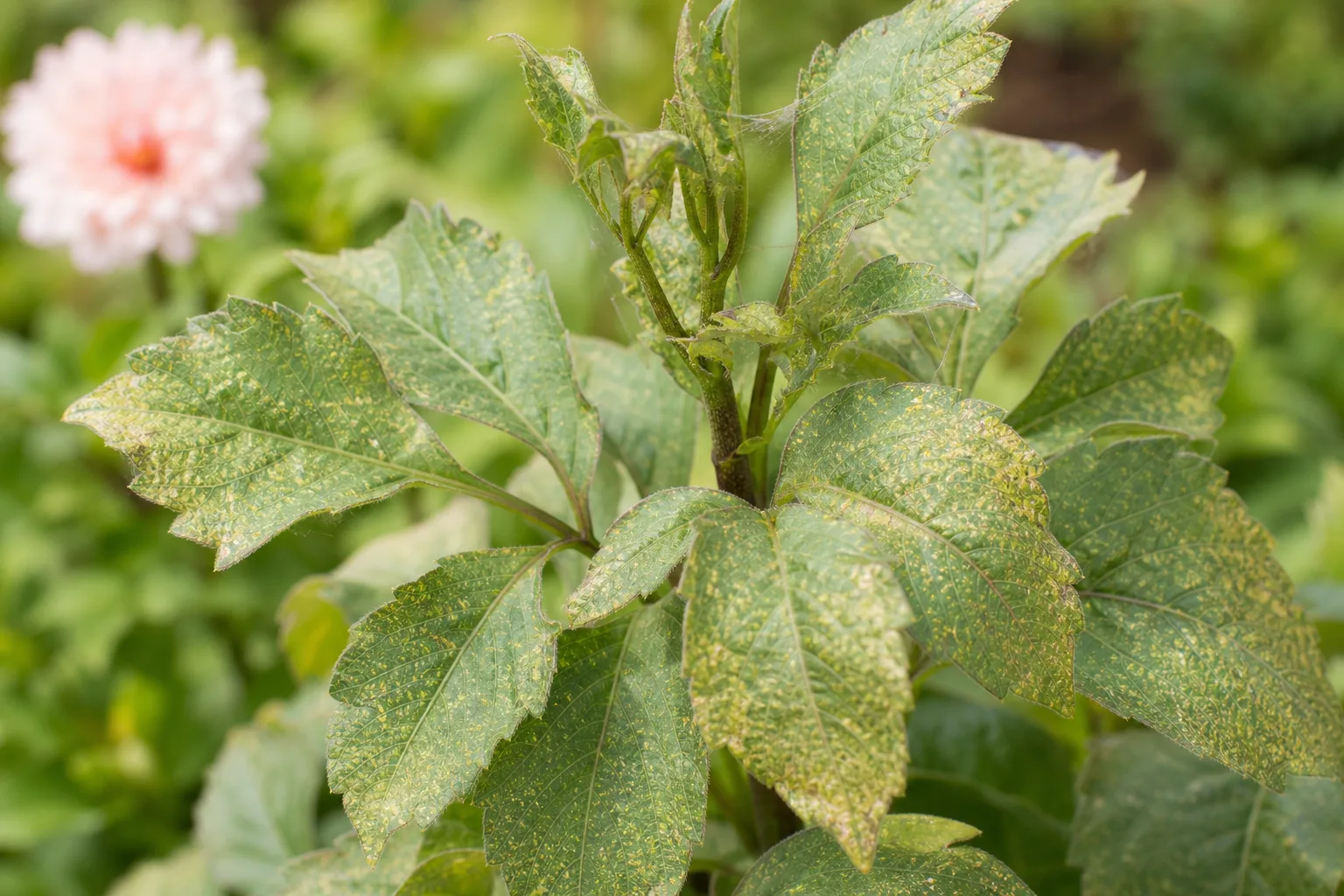
Spider mites on outdoor Dahlia (*Dahlia* spp.) explode in hot, dry summer weather-stippled compound leaves, bronzing, and fine webbing on hollow stems. First step: blast leaf undersides with a strong morning rinse, then treat with horticultural oil or insecticidal soap before stacking miticides.
Spider Mites on Dahlia: Causes, Checks & Fixes
This guide covers spider mites on Dahlia. See also the general Spider Mites guide, watering, and light pages for this plant.
Spider Mites on Dahlia: Causes, Checks & Fixes
Quick answer
Dahlia (Dahlia spp.) is an outdoor tuberous perennial grown in Dahlia light guide for summer-to-frost bloom-not a humidity-loving houseplant. Spider mites on dahlias usually appear in mid- to late summer when days are hot and irrigation lapses: fine yellow stippling on compound leaves, bronzing that reads as yellow from a distance, and delicate webbing at leaf bases and hollow stem nodes. Blooms may open smaller or drop early when feeding is heavy on upper laterals.
First step: blast leaf undersides with a strong jet of water in early morning on staked outdoor plants or patio containers. Mites live and feed on the underside of foliage; a thorough rinse knocks adults and eggs down before you reach for sprays. Only after that rinse-and after you confirm moving specks with the white-paper tap test-apply horticultural oil or insecticidal soap labeled for ornamentals, coating undersides until runoff.
Full species context: Dahlia overview. For overlapping yellow foliage, see yellow leaves on Dahlia.
What spider mites look like on Dahlia
On dahlias, damage shows up on large compound leaves and upright hollow stems that lose moisture fast in full sun:
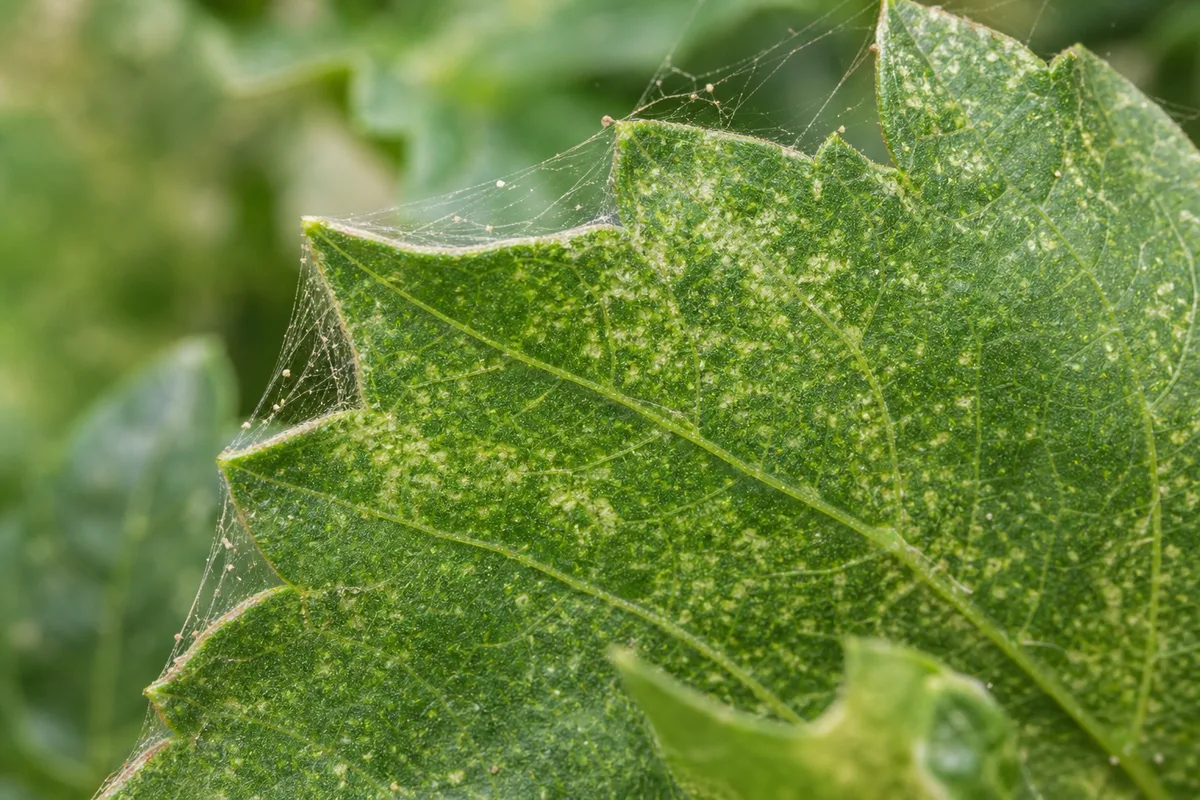
Spider Mites symptoms on Dahlia - compare with healthy tissue on the same plant.
- Fine yellow or white stipples-pinpoint feeding marks where mites pierced cells; from ten feet away the leaf looks dull or bronzed
- Bronzing or yellowing that starts on older lower leaves and climbs the stem as colonies expand
- Delicate silk webbing at leaf axils, stem joints, and under leaflets-a classic sign of spider mite presence, not the thick webs of orb-weaver spiders
- Distorted or undersized buds when mites colonize the lateral just below a forming flower head
- Crisp, prematurely dry leaflets on heavily infested laterals late in season
Dahlia’s rapid mid-season growth produces fresh leaves weekly, which can hide early stippling until a hot dry week triggers an explosion. Show growers often notice mites first on lower stripped zones or older laterals while the top bud still looks fine.
Not spider mites: Flat talc-like white patches that wipe off dry are powdery mildew-a fungus, not an arachnid. Pear-shaped insects clustered on buds are aphids. Cottony tufts in leaf axils are mealybugs. Uniform edge crisp on outer leaves in dry soil without stippling or webbing usually means drought stress-cross-check with our watering guide.
Why garden dahlias get spider mites
The twospotted spider mite (Tetranychus urticae) is the species most gardeners meet on ornamentals. It is a garden and landscape pest, not a houseplant-only problem-and it thrives when dahlias face the same stressors that make a border look glorious on Instagram:
Hot, dry summer weather. Mites reproduce fastest when air is warm and humidity is low. Illinois Extension notes that twospotted spider mites become serious on landscape plants during hot, dry weather-exactly when dahlias are in peak bloom and gardeners are busiest. Oklahoma State Extension similarly ties severe outbreaks to hot, dry summer conditions.
Drought stress between deep waterings. Dahlias in full sun transpire heavily through large leaves. When soil dries several inches down between shallow sprinkles, foliage loses turgor and mite populations build faster on stressed plants in hot, dry weather. Consistent deep watering during dry spells is preventive-not because mites drink from roots, but because unstressed leaves resist infestation better.
Dusty foliage on road-facing borders. Dust-coated leaves in hot microclimates mimic drought stress. Container dahlias on paved patios heat up faster than in-ground plants in loam.
Greenhouse-started plants planted out without quarantine. Spider mites are often introduced on infested plant material moved outdoors in late spring. Two weeks of isolation and underside inspection before planting into a collection prevents one infested pot from seeding a whole bed.
Old foliage left on staked plants. The American Dahlia Society recommends stripping old lower leaves through the season; mites often colonize the oldest foliage first, then migrate up the hollow stem toward new laterals and buds.
Indoor scenarios matter only at the margins: dahlias started indoors before last frost can pick up mites in dry heated rooms-see low humidity on Dahlia if you are forcing tubers inside. Established in-ground border plants do not need pebble trays or humidifiers.
How to confirm spider mites (not drought, thrips, or mildew)
Work through these checks in order on a calm morning:
- White-paper tap test - Hold a sheet of white paper under a stippled leaflet. Tap or flick the leaf sharply. Slow-moving pinhead specks that crawl on the paper confirm live mites. Static debris that does not move is not mites.
- Webbing location - Fine silk at leaf bases and stem nodes supports mites. No webbing with only uniform bronzing on lower leaves in dry soil points to water stress first.
- Stipple pattern - Mite feeding leaves random fine dots on both sides of leaflets. Thrips often leave silvery scars and black fecal specks; magnification helps if you are unsure.
- Soil moisture cross-check - Push your finger 5 cm (2 in) into the soil. Evenly moist soil with stippling and webbing confirms pests. Dust-dry soil with bronzing but no specks means fix watering before pesticides.
- Spread speed - Mite bronzing climbs a stem over one to two hot weeks. Mildew patches expand as white film. Drought bronzing often hits exposed sides of the bed on the same hot afternoon.
| What you see | Likely cause | Next check |
|---|---|---|
| Fine yellow dots + webbing on undersides | Spider mites | Tap test; morning rinse |
| Uniform bronzing, dry soil, no specks | Drought stress | Deep water; mulch |
| Flat white powder on leaf tops | Powdery mildew | Rub test; airflow |
| Silvery scars, tiny black dots | Thrips | Magnifying glass on buds |
| Pear-shaped insects on buds | Aphids | See aphids guide |
First fix for outdoor and container dahlias
Isolate only when practical-single patio pots can move away from neighbors; in-ground border plants stay put, but stop brushing against infested foliage when you walk the bed.
Rinse undersides with a strong jet of water in early morning. Oregon State Extension recommends blasting affected plants with high-pressure water to dislodge mites, eggs, and webbing-repeat several times on sturdy staked dahlias. Aim at leaf undersides and stem joints, not open blooms on the first pass. Syringing conserves predatory mites better than broad sprays.
After the plant dries, apply horticultural oil or insecticidal soap if live mites remain. Ohio State Extension notes these products work by contact only and require thorough coverage of upper and lower leaf surfaces. Coat undersides until runoff. Apply in cool morning or evening-not midday on full-sun leaves. Avoid spraying open flowers when possible; focus on stems and foliage supporting the bud.
Repeat on a schedule. Soap must usually be reapplied two to three days later to catch newly hatched nymphs-eggs survive the first pass. Continue until new stippling stops and webbing does not return for two weeks.
Do not reach for general garden insecticides labeled for beetles or caterpillars first-mites are arachnids, and many insecticides do not control them and may kill beneficial predators.
Protecting open blooms and pollinators
Dahlias are grown for showy flowers that attract bees and butterflies. Pest control should preserve blooms when you can:
- Rinse before you spray-water alone clears mites from leaves without touching petals
- Spray stems and undersides, not open faces-horticultural oils can spot delicate petals; Ohio State Extension advises avoiding flowers when using oils on ornamentals in summer
- Work early or late-bees are less active at dawn; dry foliage by mid-morning reduces burn risk
- Accept minor lower-leaf damage-stripping heavily stippled lower foliage (bag and trash it) opens airflow and removes mite factories without touching the top bud
If mites have reached the bud bracts and webbing is dense, treating the lateral is still worthwhile-an untreated lateral spreads mites to neighboring plants through the rest of August.
What not to do
- Do not assume one insecticide application finished the job-mite generations hatch every few days in heat; one spray leaves eggs behind
- Do not spray horticultural oil at midday on full-sun leaves-contact oils can scorch tissue when temperatures are high
- Do not use dish soap mixed at home-unlabeled detergents burn dahlia foliage; use products labeled for plants
- Do not leave stripped infested leaves in the compost or on the soil-bag and discard them; mites migrate upward from old foliage
- Do not soak the crown repeatedly before frost lift-dahlias are tuberous plants vulnerable to crown rot in wet, cooling soil; rinse foliage, but avoid flooding the base before dig-up
- Do not ignore pets when treating-ASPCA lists dahlias as toxic to cats and dogs with mild GI signs; keep pets off sprayed plants until foliage dries and store pesticides out of reach
Recovery timeline and bloom expectations
Stippling on existing leaflets does not green back-damaged tissue stays bronzed. Judge success by clean new growth on upper laterals and buds that open without stippling on bracts.
After consistent rinsing and two to three soap or oil cycles:
- One week - Active crawling should drop; new webbing slows
- Two to three weeks - Fresh leaves on topped laterals emerge without stippling if watering and heat stress are managed
- Rest of season - Heavily damaged lower leaves can stay ugly until frost; they still photosynthesize if green enough-strip only if mite colonies remain active there
Severely infested plants that stop producing clean laterals rarely recover enough to justify show blooms; the American Dahlia Society advises removing breeding-factory plants rather than spreading mites across the garden.
Mites feed on living foliage, not dormant tubers underground. At frost, remove dried stems and foliage before storage-any mites present die without living leaves. Firm tubers stored cool and dry do not harbor active mite populations through winter.
How to prevent spider mites next season
- Deep, consistent watering through July and August dry spells-Illinois Extension ties prevention to keeping plants well watered during hot weather
- Weekly underside scouting on staked plants from midsummer onward-catch stippling before webbing coats stem nodes
- Strip old lower foliage through the season per dahlia show practice-removes mite harborage before colonies climb
- Quarantine new tubers and purchased plants for two weeks before planting into a collection
- Conserve predators-lacewings, lady beetles, and predatory mites help outdoors; avoid broad-spectrum sprays unless infestation is severe
- Choose well-adapted cultivars and fertile, drained soil per OSU Extension dahlia guidance-healthy plants withstand stress better
For indoor pre-frost starts, monitor dry heated rooms separately-mites there are an environmental stress problem as much as a pest problem.
When to escalate - miticides, extension help, and pet safety
Move beyond soap and oil when:
- Webbing returns within days after three properly timed contact sprays
- Multiple staked plants in one bed are bronzing simultaneously during peak bloom
- You need show-quality blooms in two weeks and lower laterals are mite factories
Miticide notes: Ohio State Extension explains that many miticides require professional licensing; homeowners usually rely on soaps, oils, and repeated syringing. Mites develop resistance quickly-the American Dahlia Society stresses rotating chemical classes and limiting repeat use if you use commercial miticides. Contact your local cooperative extension office for products legal in your state and current label directions.
Pet safety: Dahlias are toxic to cats and dogs. Treated leaves and fallen petals remain a ingestion risk for curious pets. Keep animals off sprayed beds until dry, and call your veterinarian or ASPCA Poison Control at (888) 426-4435 if ingestion occurs.
Pre-frost decisions: If mites attack weeks before tuber lift, treating foliage is still worthwhile to limit spread to neighbors-but strip all top growth at frost regardless. Mites on leaves do not justify throwing away firm tubers; discard only soft, diseased crown tissue per our root rot guide.
When to use this page vs other Dahlia guides
- Dahlia watering guide - Use for routine moisture checks before assuming spider mites is the main issue.
- Dahlia problems hub - Browse all 17 common issues on this species.
- Low Humidity on Dahlia - Different entry point when symptoms overlap with spider mites.
- Slow Growth on Dahlia - Different entry point when symptoms overlap with spider mites.