White Spots on Dahlia: Causes, Checks & Fixes
Quick answer
On garden dahlias, white spots are usually powdery mildew-a flour-like fungal film on leaves and stems in humid or stressed beds. First step: rub a spot with a damp finger; if it smears and returns, remove the worst leaves and switch to base watering with better spacing.
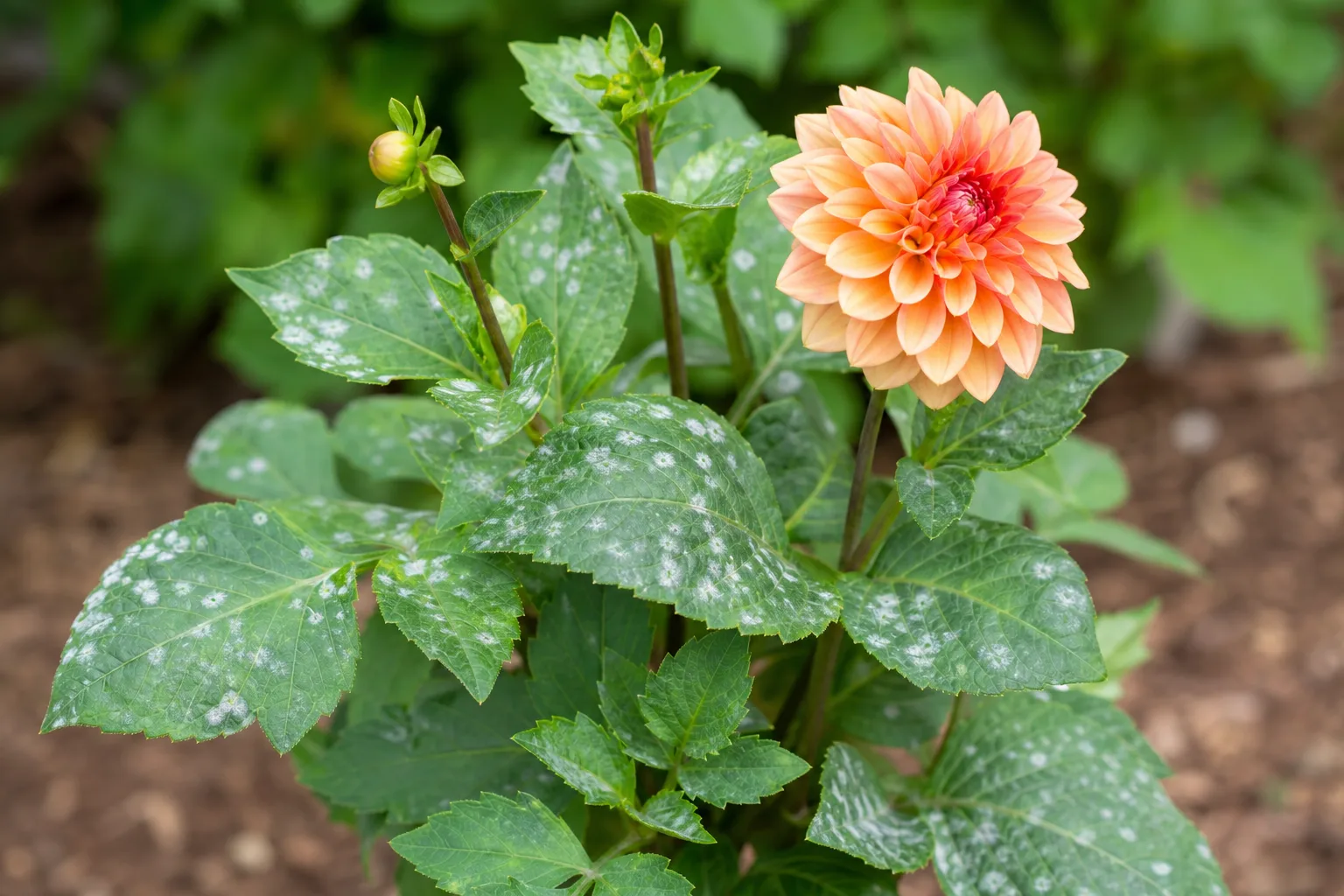
White Spots on Dahlia: Causes, Checks & Fixes
This guide covers white spots on Dahlia. See also the general White Spots guide, watering, and light pages for this plant.
White Spots on Dahlia: Causes, Checks & Fixes
Quick answer
Dahlia (Dahlia spp.) is an outdoor tuberous perennial grown in full sun for summer-to-frost bloom-not an indoor foliage houseplant. White spots on dahlia leaves and stems are usually powdery mildew: a dry, flour-like fungal film that spreads in humid weather, crowded beds, or when foliage stays wet from overhead watering.
First step: rub a white patch with a damp finger. Powdery mildew smears and often reappears within days on the same leaf. Mealybug cotton sits in stem joints and leaves a pink smear when crushed. Mineral splash wipes off dry and does not spread.
If mildew is confirmed, remove the worst affected leaves, space or thin crowded plants for airflow, and water at the base in morning-not with evening sprinklers on foliage. Spray only if patches keep spreading after those cultural fixes.
Full species context: dahlia overview. For cottony axil clusters, see mealybugs on Dahlia. For base-watering rhythm, see the watering guide and light guide.
What white spots look like on Dahlia
On dahlias, powdery mildew usually starts as grayish-white, powdery patches on upper leaf surfaces, sometimes spreading to stems and flower buds. The coating can look like flour dust or a thin cobwebby mat. PNW Plant Disease Handbook describes severely affected dahlia leaves becoming distorted and falling early; light infections may be mostly cosmetic.
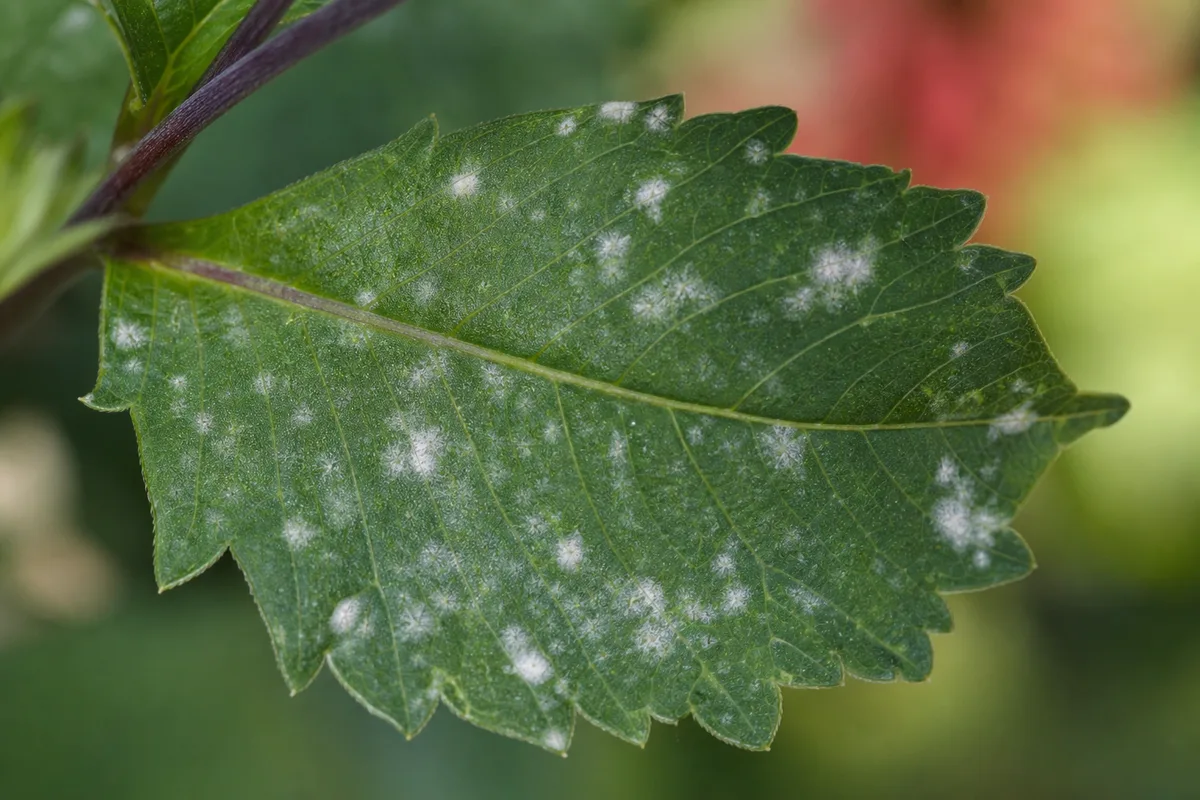
White Spots symptoms on Dahlia - compare with healthy tissue on the same plant.
Typical progression in a cutting bed:
- Lower and inner leaves in a dense stand show spots first-where humidity lingers after dew or irrigation
- Patches enlarge and merge across the leaf face; edges may yellow while the plant still blooms
- Stems and buds can coat over in humid summers, reducing flower quality on exhibition types
- Unlike hard-water residue, the film does not wipe away cleanly and returns after rubbing
Mealybugs (see mealybugs guide) produce cottony tufts in leaf axils and crotches, not flat dust on open leaf tops. Spider mites cause fine yellow stippling and sometimes webbing in hot dry weather-see spider mites on Dahlia. Hard-water or fertilizer splash leaves gritty white crust that brushes off dry and stays gone.
Why Dahlia gets white spots
Powdery mildew on dahlias is caused by specialized fungi such as Golovinomyces cichoracearum that grow on leaf surfaces. Ask Extension notes dahlias can be particularly susceptible, especially when humidity exceeds about 95%, temperatures sit in the 68–86°F (20–30°C) range, and air movement is poor. USU Extension lists dahlia among common flower-garden hosts and ties outbreaks to warm days with cool nights and heavy dew.
That pattern overlaps with real dahlia culture on the overview: crowded cutting rows, wet foliage overnight, and dry hot spells when roots run thirsty all stress the same plants mildew hits hardest. OSU Extension ties fungal problems on dahlias to overhead watering, poor airflow, and overcrowding-the same fixes that keep hollow stems strong in full sun.
Dahlia-specific risk factors:
- Tight spacing in borders or patio pots-branching stems create a humid inner canopy
- Sprinklers or hoses wetting leaves in evening; dew then sits for hours
- Shaded sites-USU notes shade-grown plants mildew more readily than those in open sun per the light guide
- Nitrogen-heavy feeding pushing soft new leaves that UMN Extension warns infect easily
- Skipped deadheading leaving spent blooms that trap moisture against stems
Powdery mildew is not cured by blasting leaves with overhead water-that keeps tissue wet longer and can spread spores on splash.
How to confirm the cause
Work through these checks in order before buying sprays:
- Rub test - Damp a finger and rub a white patch. Mildew smears and regrows. Mineral dust wipes off and stays off. Mealybug wax clumps and may show pink fluid under magnification.
- Location - Flat patches on leaf tops and stems suggest mildew. Cotton in axils, crown, or bud bases suggests mealybugs-different treatment.
- Spread pattern - Mildew expands across leaf surfaces in humid weeks. Stippling with webbing points to mites. Static crust after rain on outer leaves only often means hard water.
- Spacing and watering - Note bed density, whether sprinklers hit foliage, and if lower inner leaves stay damp until midday.
- Soil moisture at 5 cm - Probe with a finger. Chronic wet soil weakens dahlias separately from mildew; fix drainage per the watering guide but do not assume dry cultural stress alone caused white film on leaf tops.
- Neighbour plants - Mildew can move between aster-family neighbours (zinnias, sunflowers) in the same humid border.
| What you see | Likely cause | Quick check |
|---|---|---|
| Flat white dust on leaf tops | Powdery mildew | Smears when rubbed; returns in days |
| Cottony clumps in stem joints | Mealybugs | Pink smear when crushed; sticky honeydew |
| Gritty white crust, outer leaves only | Mineral splash | Wipes dry; no spread |
| Fine yellow dots, possible webbing | Spider mites | Underside inspection; hot dry spell |
First fix for Dahlia
Remove badly affected leaves and improve airflow before reaching for sprays.
That single cultural pass is the first fix-not neem, bicarbonate, and fungicide on the same afternoon.
- Snip and bag leaves that are more than half coated or yellowing-dispose in trash, not compost near next year’s bed. OSU Extension recommends removing infected tissue and reducing overcrowding.
- Thin or space plants to roughly 45–60 cm (18–24 in) between mature stems in borders; pull patio pots apart so leaves do not touch neighbours.
- Strip lower two or three leaf sets on tall stems once plants reach 30–40 cm, as OSU advises for airflow and disease reduction.
- Switch to base watering in morning-soak the root zone, keep foliage dry. See the watering guide for depth checks.
- Hold nitrogen fertilizer until spread stops; lush flushes feed new mildew per UMN Extension.
When to spray
If patches still spread after one to two weeks of cultural fixes:
- Potassium bicarbonate or horticultural oils per label on healthy green tissue-test one leaf in full sun first; dahlias in hot afternoon sun can scorch after oil.
- Neem oil can suppress mildew on ornamentals when applied thoroughly to leaf surfaces; follow label intervals before cutting flowers for vases.
- Sulfur or labeled fungicides for ornamentals may be warranted on exhibition plantings-UMN notes fungicides slow spread but do not restore heavily coated leaves.
Apply early morning or dusk when bees are less active on open blooms. The ASPCA lists dahlias as toxic to cats and dogs with mild GI signs-keep pets off freshly sprayed beds until sprays dry.
PNW Plant Disease Handbook lists Dahlinova series cultivars among mildew-resistant options for replanting in humid regions.
Recovery timeline
Coated leaves stay blemished-judge success by clean new growth and stopped spread, not by old spots vanishing.
- Days 3–7: After leaf removal and spacing, active spread should slow; inner leaves dry faster by midday.
- Weeks 1–2: New leaves and side shoots emerge without fresh powder if humidity and watering improved.
- Weeks 3–4: Severe stands may still look ragged until frost; light infections often become tolerable if flowering continues.
If mildew rebounds between weekly inspections, spacing is still too tight, a neighbour plant is infected, or mealybugs are contributing honeydew-re-check axils before adding stronger fungicides.
Late-season heavy defoliation can reduce tuber vigor before frost. Prioritize airflow in August and September so plants enter dormancy with enough healthy leaf area to feed tubers-then follow normal lift-and-store steps on the overview.
What not to do
- Do not overhead-water to “wash off” mildew-wet foliage overnight worsens outbreaks per RHS powdery mildew guidance and OSU.
- Do not fertilize heavily on infected plants; soft new growth infections easily.
- Do not stack pruning, Dahlia repotting guide, and multiple sprays the same day on stressed dahlias.
- Do not confuse stem-joint cotton with leaf-surface dust-treating mildew alone will not clear mealybugs.
- Do not compost heavily infected foliage in open piles beside next spring’s planting rows.
How to prevent white spots next time
- Plant in full sun with well-drained soil-six to eight hours of direct light per the light guide and RHS dahlia guide.
- Space generously at planting; thin volunteers that crowd the row mid-season.
- Water at the base when the top 5 cm dries during active growth-morning timing matches the overview powdery mildew note on wet foliage overnight.
- Deadhead weekly and inspect inner leaves while you work-catch speckling before buds coat.
- Remove lower leaves on tall types once stems establish for permanent airflow.
- Choose resistant cultivars such as Dahlinova types in humid climates per PNW handbook.
- Quarantine new tubers or pots before placing them in a clean cutting bed.
When to read the mealybugs guide
If white material sits in leaf axils, feels waxy, leaves sticky honeydew, or shows a pink smear when crushed, switch to the mealybugs on Dahlia page-alcohol dabbing and weekly repeats, not spacing alone. Many gardeners search “white spots” before they notice insects; the rub and location tests above prevent wasted fungicide on a pest problem.
When to use this page vs other Dahlia guides
- Dahlia watering guide - Use for routine moisture checks before assuming white spots is the main issue.
- Dahlia problems hub - Browse all 17 common issues on this species.
- Mealybugs on Dahlia - Different entry point when symptoms overlap with white spots.