Mealybugs on Dahlia: Causes, Checks & Fixes
Quick answer
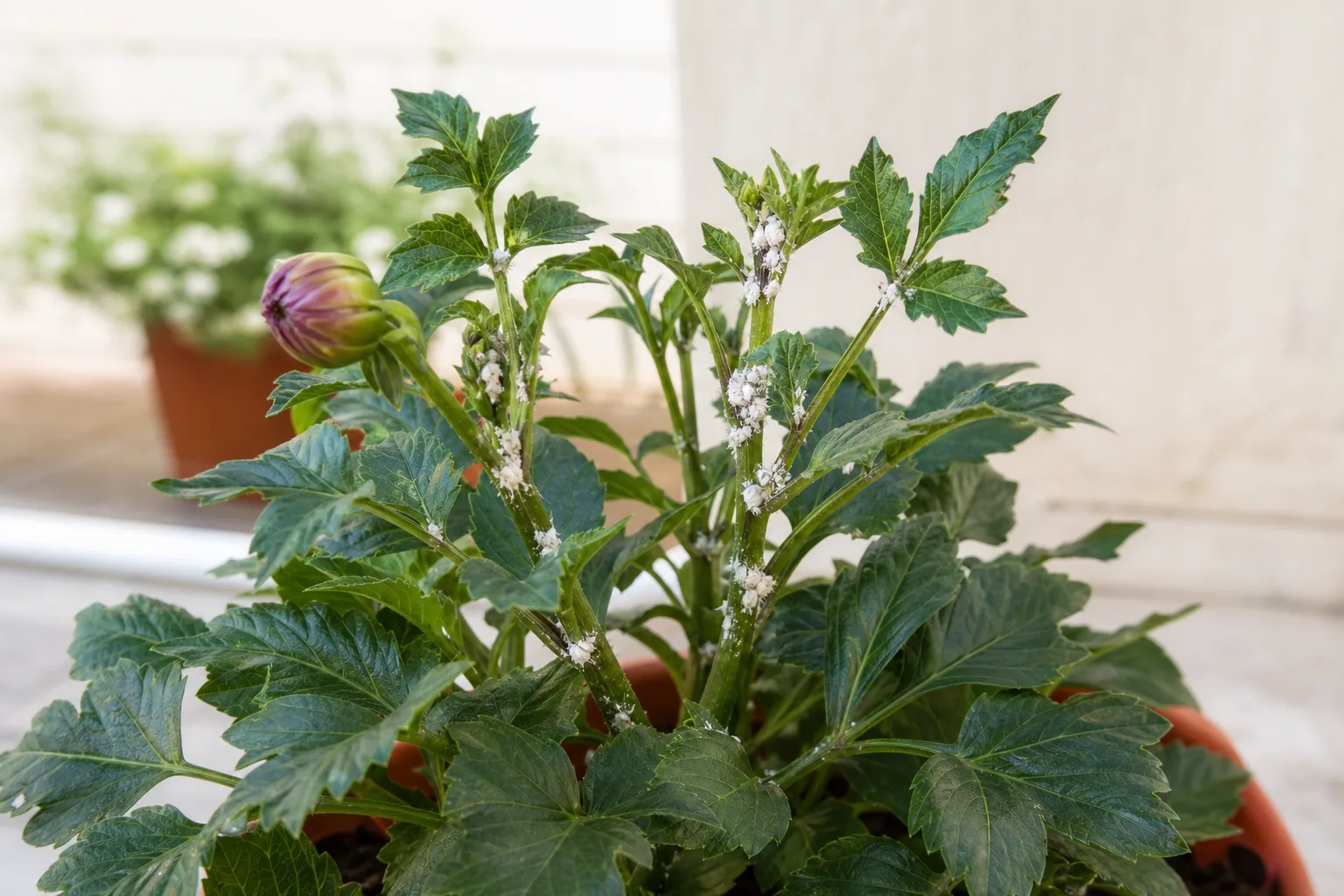
Mealybugs on Dahlia cluster in leaf axils, stem joints, and new shoots where sap is richest. First step: isolate the plant and dab visible colonies with 70% isopropyl alcohol on a cotton swab-repeat weekly until no new cottony masses appear. If the whole plant droops, check stem axils before watering: sticky wax plus honeydew means mealybugs; wilt with wet soil and a soft crown points to tuber rot instead.
Mealybugs on Dahlia: Causes, Checks & Fixes
This guide covers mealybugs on Dahlia. See also the general Mealybugs guide, watering, and light pages for this plant.
Mealybugs on Dahlia: Causes, Checks & Fixes
Quick answer
Mealybugs on Dahlia (Dahlia spp.) show up as white, cottony clumps tucked into leaf axils, stem joints, and the crown-exactly the sheltered crevices fast-growing Dahlia stems create as side shoots and flower buds push out. They are sap-sucking insects, not a fungus or mineral deposit, and they multiply quickly when plants are stressed, crowded, or recently fertilized with nitrogen.
First step: isolate the plant and dab every visible colony with a cotton swab dipped in 70% isopropyl alcohol. Work stem by stem from the crown outward, including leaf undersides and bud bases. One pass rarely clears an infestation because eggs and young crawlers hide under wax and in tight joints-plan on weekly repeats for at least three weeks before you call the plant clean.
Drooping Dahlia? Check axils before you water. Mealybug feeding drains sap and can make stems look thirsty even when soil is moist-look for cottony wax and sticky honeydew at leaf joints first. If soil is wet, the crown feels soft, and lower leaves are yellow and mushy, you are likely facing tuber rot or overwatering-extra water makes that worse. Wilt with dry soil 5 cm down is a separate underwatering problem. Getting this fork right matters because alcohol dabs fix mealybugs but cannot save rotting tubers.
Full species context: Dahlia overview.
What mealybugs look like on Dahlia
On Dahlia, mealybugs rarely announce themselves on open leaf faces. They prefer protected feeding sites:
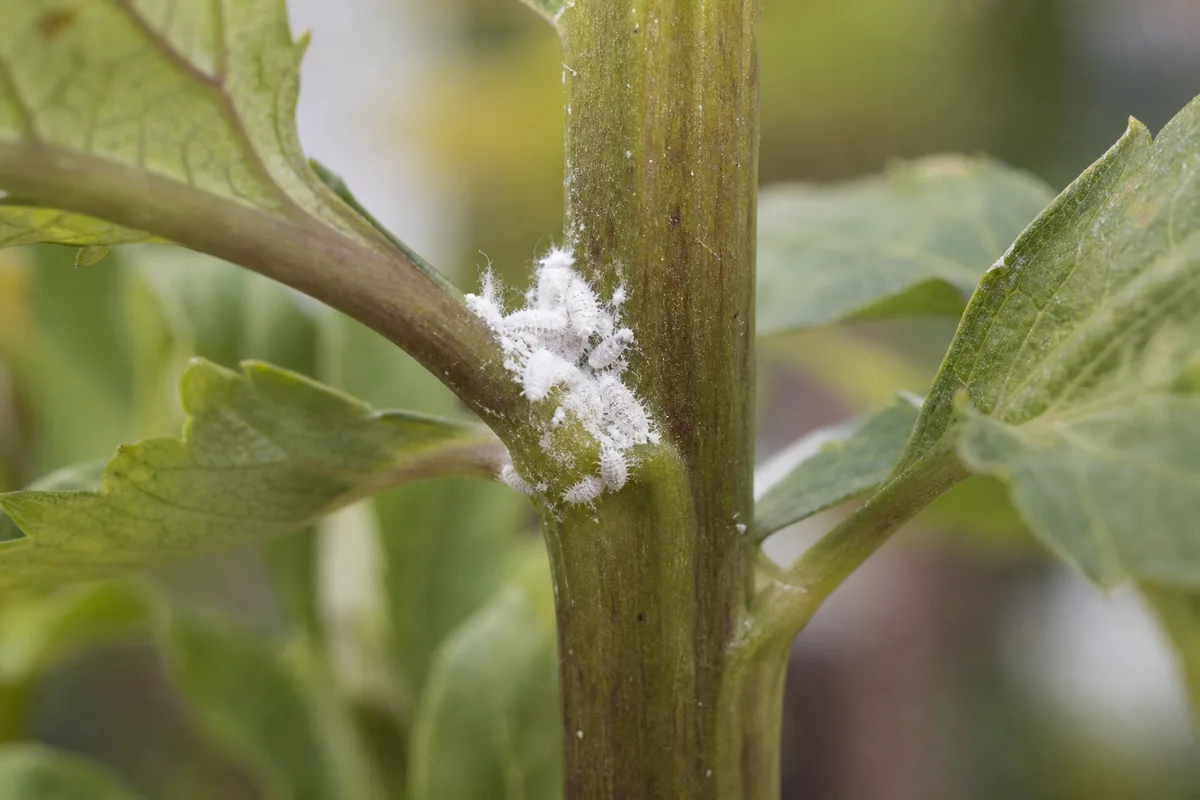
White cottony mealybug colonies tucked into a leaf axil where the petiole meets the stem - compare clean stem joints on unaffected growth.
- Leaf axils where the petiole meets the main stem
- Branch crotches below side shoots and flower stalks
- Undersides of young leaves near the growing tip
- The crown at soil level, especially on container plants
- Flower bud bases, where waxy fluff can look like normal fuzz until you look closer
Individual adults are small, oval, and segmented under the wax. What you usually notice first is a cottony mass-sometimes an egg sac holding dozens of eggs-or scattered white dots along a green stem. As colonies grow, leaves may yellow, curl, or drop, new shoots can look stunted, and stems may feel sticky.
Honeydew is a clear, sugary excretion that coats leaves, pots, or nearby surfaces. It often leads to sooty mold-a black fungal film on top of the stickiness-and can attract ants, which farm mealybugs and spread crawlers to other plants. Heavy feeding during bloom season can weaken flower stalks just when Dahlia should be putting energy into buds.
Normal lookalikes: Powdery mildew on Dahlia produces flat white patches on upper leaf surfaces, usually in cool, humid spells-not waxy tufts in stem joints. Mineral or hard-water residue wipes off dry. Natural leaf fuzz, if present on your variety, is uniform and does not cluster with sticky residue or pink smear when crushed. Soft pear-shaped insects on new tips are aphids-same honeydew, different body shape.
Why Dahlia gets mealybugs
Dahlia is not a delicate foliage houseplant, but it is a common host. Citrus mealybug (Planococcus citri), the species most often found on indoor ornamentals, has been collected on dahlia among many greenhouse and garden hosts. Mealybugs arrive on infested tubers, nursery stock, tools, or neighboring pots-not because Dahlia is weak by nature, but because warm, sheltered growing conditions suit them.
Several Dahlia-specific habits raise risk:
Fast tender growth. During active season Dahlia pushes new leaves and flower stalks quickly. Mealybugs prefer soft, nitrogen-rich tissue for feeding and egg laying. Overfeeding with high-nitrogen fertilizer while watering generously produces exactly the flush of tender shoots pests target-pause heavy feeding during active infestation per the fertilizer guide.
Sheltered stem architecture. Upright, branching stems with tight leaf joints give mealybugs cover from sprays and rain. Container dahlias grown close together on a patio or bench make it easy for crawlers-mobile young nymphs-to walk onto the next pot.
Indoor and greenhouse culture. Dahlia grown under cover for season extension or as a potted display lacks the predatory insects that often keep outdoor mealybug numbers in check. Year-round mild temperatures let populations build through multiple generations without a cold break.
Ant protection. If ants are on the pot or stakes, they may be tending mealybugs for honeydew and blocking natural enemies. That pattern is common on container collections.
Introduction without quarantine. New tubers, cuttings, or store-bought pots brought straight into a display bed or windowsill group are the top entry route. Skipping even a short isolation period is how most home collections get their first outbreak.
Stress from overwatered, poorly drained mix does not cause mealybugs directly, but weak, yellowing Dahlia in soggy soil is harder to recover once sap loss adds up-fix drainage per the watering guide separately, but do not assume mealybugs will leave on their own when watering improves.
How to confirm the cause
Work through these checks before reaching for sprays:
- Location of white material - Mealybugs cluster in axils, crotches, and bud bases. Powdery mildew sits on leaf tops; mealybugs hide underneath and between stems.
- Crush test - Dab a colony with a dry cotton swab, then crush it. Mealybugs leave a pink or reddish smear (body fluids). Chalk or mildew leaves no smear.
- Movement - Gently disturb a cluster with a toothpick. Slow-moving oval bodies under the wax confirm live insects. Static white fluff with no bodies may be old egg sacs-still treat, but note whether crawlers remain.
- Sticky residue - Shiny honeydew on leaves or the pot rim points to sap feeders. Pair that with axil clusters and mealybugs are likely.
- Ants and sooty mold - Ant trails up stems, or black mold on sticky leaves, support mealybug diagnosis over purely cultural problems.
- Wilt fork - Stunted or twisted newest shoots with colonies at the tip fit mealybug feeding. Whole-plant wilt with dry soil suggests underwatering; wilt with wet mix and soft crown tissue suggests rot-different emergencies.
- Neighbor plants - Check plants touching the Dahlia or sharing a watering tray. Mealybugs spread slowly but steadily through collections.
If stems are clean, sticky leaves persist, and the plant keeps declining, inspect roots and the soil surface-some mealybug species feed below ground on potted plants, though aboveground citrus mealybug is the usual culprit on Dahlia.
First fix for Dahlia
Isolate the plant and physically remove every colony you can reach with alcohol.
Move the pot away from other plants-across the room indoors, or several feet outdoors-until you see no new cottony masses for two weeks after the last treatment. Then:
- Test alcohol on one leaf if the plant is in full sun or heat stress. Dab a small hidden spot with 70% isopropyl alcohol and wait 24 hours. If the tissue burns, dilute to 50% or use more manual picking and a gentle water rinse instead.
- Work systematically from crown to tips. Dip a cotton swab in alcohol and touch each visible mealybug and egg sac until the wax dissolves and bodies turn brown. Replace swabs as they load up.
- Support stems while you work-Dahlia hollow stems can snap if you twist heavily infested flower stalks. Prune off heavily coated bud stalks you cannot clean and bag them for disposal, not compost near clean plants.
- Wipe honeydew off leaves with a damp cloth so sooty mold does not block light while you treat.
- Repeat weekly for at least three weeks. Eggs and crawlers hatch on a staggered schedule; one session leaves a hidden reserve.
That alcohol pass is the first fix-not a shower, neem drench, and repot on day one. Secondary steps come only if colonies remain after two or three weekly rounds.
If alcohol alone is not enough
After two weekly alcohol passes, if you still find live colonies:
- Insecticidal soap mixed and applied per label directions-typically a ready-to-use spray or concentrate diluted to label strength. Coat undersides of leaves and stem joints until runoff; soaps work on contact and miss insects you never wet. Test one leaf first; Dahlia in hot direct sun can scorch after soap application. Spray in evening shade when temperatures stay below 85°F, and repeat every 7–10 days until crawlers stop appearing.
- Horticultural oil at summer label rates only after a leaf test-oil on Dahlia foliage in strong midday sun causes phytotoxicity fast. Evening application on a cool day is safer than midday rescue sprays during peak bloom.
- Strong water spray on sturdy outdoor container plants can knock exposed nymphs off-repeat every few days. Avoid blasting the crown if the mix is already wet; tubers rot in waterlogged soil.
- Discard severely infested small plants or cuttings if more than half the stems carry dense wax and new buds are failing-sometimes removal protects the rest of the collection.
Do not repot solely for mealybugs unless you confirm root-feeding mealybugs or find egg sacs on the pot interior. Dahlia repotting guide stressed Dahlia into fresh mix without clearing aboveground colonies often spreads crawlers through the new soil.
Biological control for outdoor garden dahlias
In open garden beds with mild winters, cultural practices and natural enemies often suppress mealybugs better than repeated sprays. Lady beetles, lacewings, parasitic wasps, and spiders feed on mealybugs when ant protection is absent. The mealybug destroyer (Cryptolaemus montrouzieri) is a specialized predator available from insectaries in some regions, though it does not survive cold winters everywhere.
For outdoor dahlias:
- Avoid broad-spectrum insecticides during bloom-they kill pollinators and the predators already working your bed.
- Control ants with barriers or bait placed away from open flowers so natural enemies can reach colonies.
- Space plants for airflow so dew does not trap pests in dense foliage at the soil line.
- Accept light colonies on lower stem joints if predators are active and buds stay clean-escalate to alcohol dabs only when wax reaches flower buds or spreads up multiple stalks.
Greenhouse or porch containers rarely get enough predator pressure-treat those like houseplants with isolation and alcohol, not garden-bed patience.
Mealybugs on stored Dahlia tubers
Mealybugs are not only an active-season stem problem. Potted dahlias overwintered in a warm garage or tubers stored above 50°F can carry live populations into spring. Crawlers hidden in crown crevices wake when shoots emerge and spread before you notice white wax on new stems.
Before planting stored stock:
- Rinse dug clumps gently with water to expose the crown and neck-soil hides wax in folds.
- Inspect every tuber for white cottony patches at the stem base, in eyes, and where tubers join the crown. Soft, sunken, or foul-smelling tissue is rot-discard, do not treat.
- Dab visible mealybugs with alcohol on a swab; let tubers air-dry completely in shade before packing in peat, vermiculite, or wood shavings for storage.
- Quarantine sprouting tubers for two weeks in a separate tray before placing them in a clean bed or bench row.
- Discard chronic offenders-tubers that brought mealybugs two seasons running are cheaper to replace than a collection-wide outbreak during peak bloom.
On dahlias, stored-tuber infestations differ from active-season colonies: wax concentrates at the crown and eyes, not along tall hollow stems. A clean stem flush in May can still trace back to an infested tuber you planted in April.
Recovery timeline
Expect visible colony counts to drop within the first week of consistent alcohol dabbing. Calling the plant clear takes longer:
- Weeks 1–3: Weekly alcohol or soap passes; fewer white masses; less fresh honeydew.
- Week 4+: No new cottony clusters on inspection with a hand lens; ants disappear if they were feeding on honeydew.
- New growth: Clean shoots and bud stalks without wax at axils are the best recovery sign. Old yellowed leaves may not revert-remove them once the plant is stable.
If populations rebound between weekly treatments, you missed hidden egg sacs in the crown, ants are reintroducing crawlers, or a neighboring plant is still infested. Re-isolate and inspect the whole collection before adding stronger products.
Flower display may lag one cycle after a bad infestation because Dahlia redirected energy to pest damage. Do not compensate with heavy nitrogen while insects remain-that produces more soft tissue for the next generation.
Lookalike symptoms and causes to rule out
| What you see | Likely cause | How to tell apart |
|---|---|---|
| White patches on upper leaf surfaces | Powdery mildew | Flat, talc-like dust; no stem clusters; common in cool, humid spells |
| Green or black soft insects on new tips | Aphids | Pear-shaped, no thick wax; same honeydew, different body shape |
| Brown domes on stems | Scale | Hard shells, not cottony; does not smear pink when crushed |
| Whiteflies flying when disturbed | Whiteflies | Winged adults fly off; nymphs are flat on undersides, not tufted wax |
| Sticky leaves, no insects visible | Previous pest residue or aphids on neighbors | Clean stems but ongoing stickiness-search again at dusk with a lens |
Ruling out lookalikes matters because oil and soap help mealybugs and aphids but will not fix mildew-and alcohol on mildew patches wastes time while crawlers hatch.
Mistakes to avoid
- One treatment and done. Mealybug eggs survive inside waterproof wax. A single spray or alcohol session almost always fails.
- Treating without isolating. Crawlers walk to the next pot within days in a crowded collection.
- Blasting alcohol on sun-stressed leaves at midday. Burn risk is real on Dahlia foliage in full summer sun-treat in evening or move to shade first.
- Composting infested prunings near clean beds or pots. Bag and bin material with live insects.
- Heavy nitrogen feed during active infestation. Soft new growth feeds the next generation faster.
- Ignoring ants. Until ants are blocked or removed, natural predators and your treatments face an uphill battle.
- Assuming wilting means water. Check axils before watering a wilted Dahlia-sap loss from mealybugs mimics thirst, and extra water worsens tuber rot risk.
- Planting uninspected stored tubers straight into a clean display bed after a prior mealybug year.
Dahlia care cross-check
While treating mealybugs, keep baseline care steady-do not stack repotting, hard pruning, and fertilizer on a pest-stressed plant.
- Light: Dahlia wants full sun for strong structure and bloom. Weak light produces leggy, soft stems that hide pests better and recover slower-see the light guide.
- Water: Deep water when the top 3–5 cm of mix is dry; avoid keeping tubers soggy. Stress from rot and stress from pests together are harder to reverse.
- Airflow: Moderate humidity (40–60%) is fine, but stagnant, crowded bench placement helps pests and sooty mold. Space pots so stems do not touch.
- Feeding: Resume normal high-potassium feeding at bud stage only after insects are under control-not during active infestation.
How to prevent mealybugs next time
Prevention on Dahlia is mostly about inspection and introduction control, not humidity tricks.
- Quarantine new tubers, nursery pots, and gifts for two to three weeks before placing them in a bed or display group.
- Inspect leaf axils and crown during weekly care-especially when new side shoots appear.
- Check tools, stakes, and saucers when moving plants; a quick alcohol wipe on reused stakes costs little.
- Manage ants with barriers or bait away from open flowers if pollinators visit your garden.
- Avoid nitrogen spikes that flush tender growth; follow balanced feeding until buds form, then shift to potassium as your normal Dahlia routine dictates.
- Keep predators outdoors when possible-avoid broad-spectrum insecticides on garden dahlias that kill lady beetles and lacewings.
If mealybugs have hit your collection before, run a monthly axil check through the growing season even when stems look clean. Early colonies are alcohol-sized; late colonies are collection-wide.
When to worry
Escalate beyond weekly alcohol if:
- Multiple plants show colonies within a week-assume collection-wide protocol, not single-pot care.
- Flower buds are encased in wax and ants are active on every stalk.
- New shoots collapse despite clearing visible insects-inspect roots and consider discarding the worst plant to protect others.
- Sooty mold covers most foliage, blocking light during peak bloom.
- Infestations return every season on the same bench or bed-contact your local cooperative extension office for integrated pest management help before rotating stronger pesticides.
Dahlia is toxic to cats and dogs if chewed; keep treated plants where pets cannot lick wet alcohol or soap residue until foliage is dry. If a pet ingests Dahlia leaves, stems, or heavily treated tissue, contact your veterinarian or ASPCA Poison Control at (888) 426-4435 immediately-that is separate from the mild toxicity risk of untreated plant tissue.
Healthy Dahlia with firm stems, clean new growth, and no fresh honeydew after three to four weekly treatment rounds is winning. Persistent rebound on an old, woody container plant that no longer blooms well may be a signal to discard rather than keep treating indefinitely.
Related tool
Use the Pest Identifier Tool to narrow causes for mealybugs on this plant before changing multiple variables at once.
Related guides
- Dahlia overview - tuber culture, staking, deadheading, overwintering
- Dahlia watering - drought versus rot, container rhythm
- Dahlia fertilizer - nitrogen timing and bloom-stage potassium
- Aphids on Dahlia - honeydew lookalike with different body shape
- White spots on Dahlia - powdery mildew versus waxy stem clusters
- Root rot on Dahlia - wilt with wet soil and soft crown
When to use this page vs other Dahlia guides
- Dahlia watering guide - Use for routine moisture checks before assuming mealybugs is the main issue.
- Dahlia problems hub - Browse all 17 common issues on this species.
- Yellow Leaves on Dahlia - Different entry point when symptoms overlap with mealybugs.
- Slow Growth on Dahlia - Different entry point when symptoms overlap with mealybugs.
- Spider Mites on Dahlia - Different entry point when symptoms overlap with mealybugs.