Aphids on Dahlia: Causes, Checks & Fixes
Quick answer
Aphids on Dahlia colonize tender new growth and buds. First step: isolate the plant and knock insects off with a strong water rinse before applying insecticidal soap.
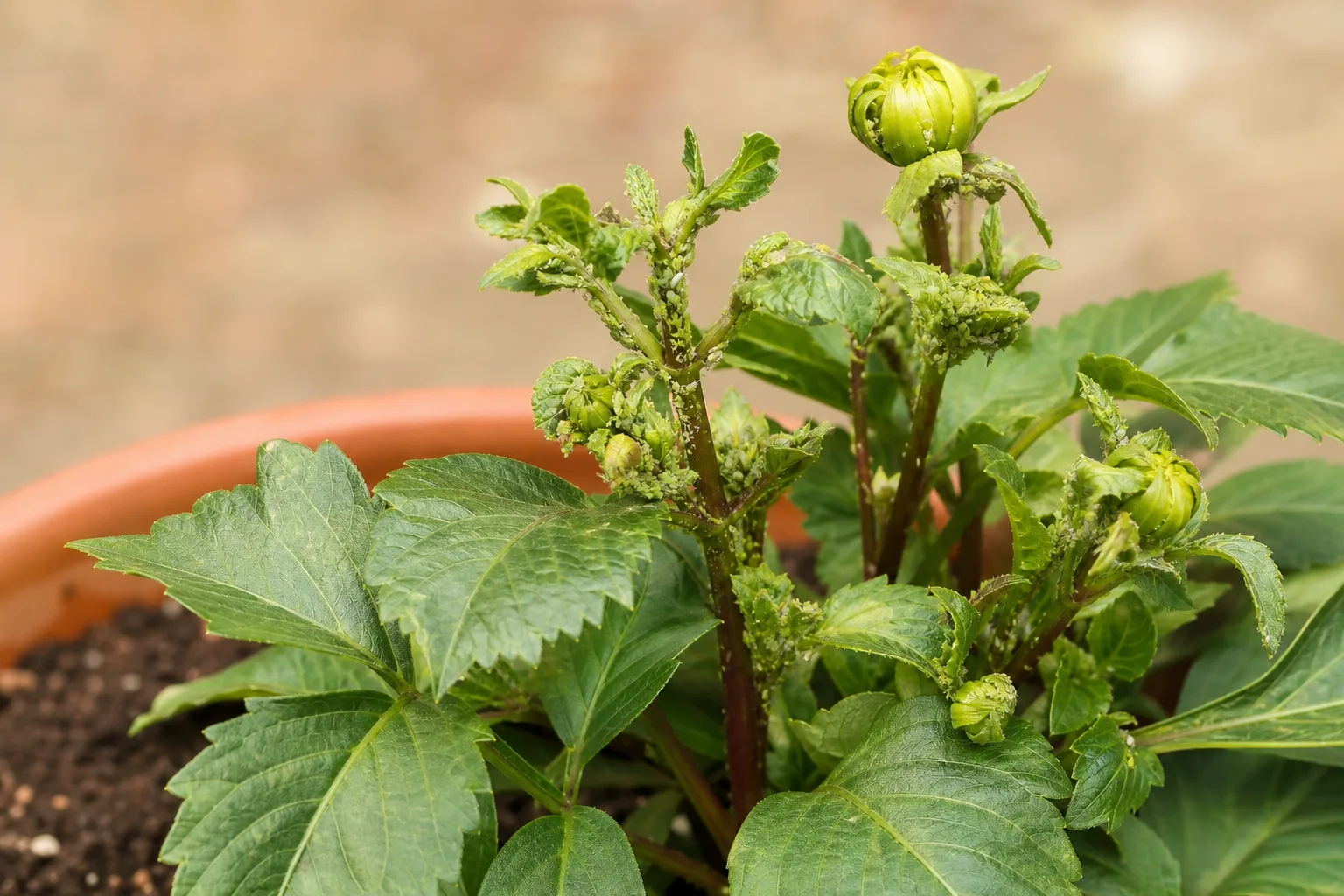
Aphids on Dahlia: Causes, Checks & Fixes
This guide covers aphids on Dahlia. See also the general Aphids guide, watering, and light pages for this plant.
Aphids on Dahlia: Causes, Checks & Fixes
Quick answer
Aphids on Dahlia (Dahlia spp.) are small sap-sucking insects that pile onto the tenderest growth-new leaf tips, stem joints, and especially forming flower buds. A few insects rarely kill an established plant, but colonies grow fast on Dahlia’s rapid spring-to-fall push and can curl leaves, stunt buds, and coat blooms in sticky honeydew before they open.
First step: isolate the plant and knock aphids off with a strong rinse. Use a shower head, sink sprayer, or garden hose on sturdy outdoor plants. Hit stems, bud clusters, and leaf undersides until insects dislodge. Only after that rinse should you reach for insecticidal soap or horticultural oil-contact sprays miss aphids you never exposed.
What aphids look like on Dahlia
On Dahlia, aphids usually show up where the plant is putting on fresh tissue:
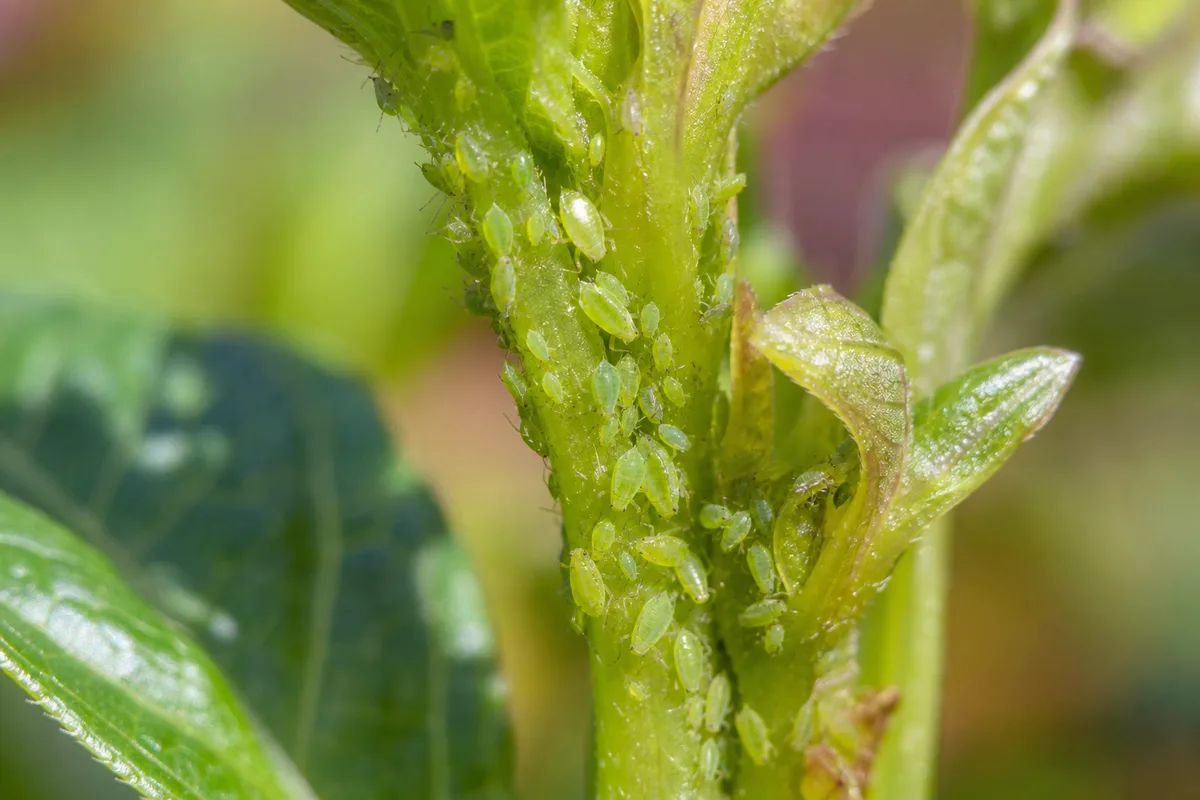
Aphids symptoms on Dahlia - compare with healthy tissue on the same plant.
- Dense clusters on new shoots, just below opening buds, and along upper stems
- Pear-shaped soft bodies about 1/16 to 1/8 inch long-often green, but also black, yellow, or pink depending on species
- Curled or twisted young leaves when feeding is heavy
- Shiny sticky honeydew on leaves, stems, or nearby pot rims
- Ants climbing stems to harvest honeydew-ants protect aphids from predators
- Black sooty mold growing on dried honeydew, dulling leaf color
- Whitish shed skins left behind on leaves after molting
Dahlia’s large flower heads and constant pinching for bushier growth both produce soft shoots aphids prefer. Damage is often worst right before bloom, when buds are packed with sugar-rich sap.
Not aphids: Hard brown bumps that do not move are scale. White cottony tufts in leaf axils are mealybugs. Fine stippling with webbing points to spider mites. Powdery white fungal patches that wipe off dry are mildew, not insects.
Why Dahlia gets aphids
Dahlia is a fast-growing, nitrogen-responsive flowering plant. During active growth it pushes succulent new stems weekly-exactly the tissue aphids target. Several species feed on ornamental flowers; green peach aphid and melon aphid are commonly reported on dahlia plantings.
Common introduction routes:
- New tubers, seedlings, or store-bought plants brought home without quarantine
- Open windows or doors near outdoor infested plants
- Overwintering aphids on stored tubers, garden debris, or weed hosts near beds
- Winged adults dispersing when a colony outgrows one shoot
Cultural factors that make Dahlia more vulnerable:
- Heavy nitrogen feeding producing soft, lush shoots aphids reproduce on quickly
- Crowded pots or tight plant groupings that limit airflow and hide colonies
- Stressed plants in too little light or irregular watering-pests exploit weak growth
- Ant highways from nearby nests that protect aphids from lady beetles and lacewings
On outdoor dahlias, weeds such as sowthistle and mustard can host aphid colonies that later move to your flowers. Indoors or on a patio, the main risk is skipping inspection during the weeks Dahlia is elongating toward bloom.
How to confirm the cause
Work through these checks before spraying anything:
- Target the newest growth - Peel back or lift the first set of leaves below a bud cluster. Aphids cluster on stems just below flower buds, not on old lower foliage.
- Look for movement - Aphids crawl slowly when disturbed. Scale and mealybugs stay put.
- Check for honeydew - A shiny tacky film on leaves or the pot rim supports aphids even if insect numbers look small.
- Watch for ants - Ants on Dahlia stems strongly suggest aphids or scale producing honeydew.
- Rule out lookalikes - No webbing? Not mites. No cottony wax? Not mealybugs. Insects are soft and pear-shaped? Aphids fit.
- Scan neighbors - Aphids spread to other fast-growing plants. Check anything within a few feet.
If you find only a handful of aphids on one shoot and no honeydew yet, a thorough rinse may be enough. If buds are coated, honeydew is present, or ants are active, plan on repeated contact treatments.
First fix for Dahlia
Isolate the plant and rinse aphids off with a strong, direct water stream.
Move the pot away from other plants. Spray or shower every infested stem, bud, and leaf underside until insects fall off. Outdoor plants can take a firm hose jet; container plants do fine in a sink or shower. Let foliage dry in Dahlia light guide-not hot midday sun on wet leaves.
This single step removes most of the population, washes away honeydew, and exposes survivors for any follow-up spray. Do not jump straight to oil or soap on a plant you have not rinsed first-you will miss hidden clusters inside curled leaves and bud bracts.
Step-by-step recovery
After the initial rinse, work in this order:
- Prune only if necessary - Snip off a shoot or bud cluster that is completely coated and past saving. Bag and discard it; do not compost active infestations indoors.
- Apply contact treatment if insects remain - Once the plant is dry and not heat-stressed, spray insecticidal soap or horticultural oil labeled for ornamental plants. Coat stems, buds, and leaf undersides until runoff. These products kill on contact only.
- Repeat on a schedule - Re-treat every five to seven days for two to three cycles to catch nymphs that hatch after each pass. One spray rarely clears an established colony.
- Disrupt ants - If ants are tending aphids, set sticky barriers on pot rims or move outdoor pots away from ant trails so natural predators can reach the insects.
- Hold the nitrogen - Pause high-nitrogen feeds until the infestation is gone. Resume balanced or potassium-forward feeding once new growth looks clean.
- Inspect weekly - Dahlia outgrows damage quickly; new tender shoots are your early-warning system.
For severe outdoor infestations that persist after repeated soap or oil passes, some growers use systemic products-but on flowering Dahlia, avoid anything toxic to bees while blooms are open and pollinators are visiting. That trade-off is one reason the water-and-soap path is the default first choice.
Recovery timeline
You should see fewer live aphids within 48 hours of a thorough rinse. After the first soap or oil application, most remaining insects die on contact.
One to two weeks of consistent treatment usually clears a moderate infestation. Judge success by:
- No new shiny honeydew on upper leaves
- Ant activity dropping off stems
- Clean new shoots emerging without curled tips
- Flower buds opening without black sooty coating
Old leaves that yellowed or curled heavily will not fully flatten-trim them for appearance once the plant is insect-free. Dahlia replaces foliage fast during active growth, so clean new leaves matter more than rescuing every damaged older blade.
Worsening signs: Buds aborting in large numbers, sooty mold spreading despite treatment, winged aphids on multiple plants, or distorted mosaic-like leaf patterns that persist after insects are gone-the last can indicate virus transmission and may require removing the plant to protect others.
Lookalike symptoms
- Spider mites on Dahlia - Fine stippling and webbing on leaf undersides in dry warm air; insects are microscopic dots, not clustered pear shapes on buds.
- Thrips - Silvery scars on petals and leaves; insects are slender and fast, not soft-bodied clusters.
- Mealybugs on Dahlia - White cottony masses in leaf axils and crowns; do not produce the same dense bud-tip colonies.
- Scale - Hard or waxy immobile bumps on stems; honeydew possible but no soft moving insects.
- Powdery mildew - White dry fungal dust on leaves; wipes off without sticky residue.
- Heat or drought stress - Flower droop and leaf edge crisping without insects or honeydew on new growth.
What not to do
Do not spray oil or soap on a wilted, sunburned, or heat-stressed Dahlia-treated foliage can scorch when temperatures are high. Work in early morning or evening on outdoor plants.
Do not use dish detergent mixed at home; improper soaps burn leaves. Use products labeled for plants.
Do not assume one treatment finished the job. Aphids reproduce quickly; missing one weekly repeat lets the colony rebuild on the next flush of growth.
Do not fertilize heavily while fighting an infestation-soft nitrogen-rich shoots invite reinfestation.
Do not ignore ants. Until ant tending stops, predator insects struggle to control aphids.
Avoid broad-spectrum insecticides on flowering outdoor Dahlia when bees are active unless you accept pollinator risk.
Dahlia care cross-check
Aphids exploit care gaps more than they cause them, but stable culture speeds recovery:
- Light - Dahlia wants full sun for strong growth. Weak light produces soft stretched shoots that stay vulnerable after treatment.
- Watering - Deep water when the top 3–5 cm dries; avoid keeping tubers in soggy mix. Stress from irregular watering does not cause aphids, but it slows rebound.
- Soil - Rich, loose, well-draining mix supports fast replacement growth after you remove damaged shoots.
- Airflow - Space pots and stake tall varieties so you can inspect stems and bud clusters from all sides.
- Season - During cool-season active growth, weekly bud checks catch infestations before flowers open.
How to prevent aphids next time
- Quarantine new tubers, cuttings, and store plants for at least two weeks before placing near other Dahlias.
- Inspect weekly during rapid growth-run fingers along new stems and lift leaves below buds.
- Moderate nitrogen - Feed for steady growth, not excessive lush shoots; split fertilizer into smaller doses through the season rather than one heavy nitrogen push.
- Control weeds around outdoor beds that host aphids overwinter.
- Encourage predators outdoors - Lady beetles, lacewings, and syrphid fly larvae feed on aphids when ants are not protecting colonies.
- Wash honeydew promptly - Sticky residue invites sooty mold and ant farming even after insects die.
When to worry
Most Dahlia aphid problems are manageable if you catch them on new growth. Escalate when:
- Entire bud clusters are coated and starting to abort
- Multiple plants show winged aphids or heavy colonies at once
- Sooty mold covers most upper foliage despite rinsing
- Virus-like mottling appears on leaves and does not improve after insects are eliminated-aphids can vector viral diseases on dahlias; remove and discard suspect plants rather than risking the collection
- Treatment after three weekly cycles still finds live colonies on every new shoot
A single saved tuber can restart next season’s display. Losing one heavily infected container to protect others is often the practical call when buds, honeydew, and winged spread overlap at peak bloom.
Conclusion
Aphids on Dahlia are a growth-stage pest: they find the plant when fresh shoots and buds are most succulent. Isolate, rinse hard, then follow with contact sprays on a weekly rhythm until new growth stays clean. Recovery shows up in unstained buds and fast replacement foliage-not in old curled leaves. Weekly checks during Dahlia’s push toward bloom prevent small clusters from becoming a ruined flower display.
When to use this page vs other Dahlia guides
- Dahlia watering guide - Use for routine moisture checks before assuming aphids is the main issue.
- Dahlia problems hub - Browse all 17 common issues on this species.
- Mealybugs on Dahlia - Different entry point when symptoms overlap with aphids.
- Spider Mites on Dahlia - Different entry point when symptoms overlap with aphids.
- Yellow Leaves on Dahlia - Different entry point when symptoms overlap with aphids.