Slow Growth on Dahlia: Causes, Checks & Fixes
Quick answer
Healthy dahlia tubers often take two to four weeks after warm planting before shoots appear-longer in cool soil. First step: check soil temperature at 10 cm depth, confirm the tuber has a viable eye and firm tissue, and verify at least six hours of direct sun before fertilizing or digging up.
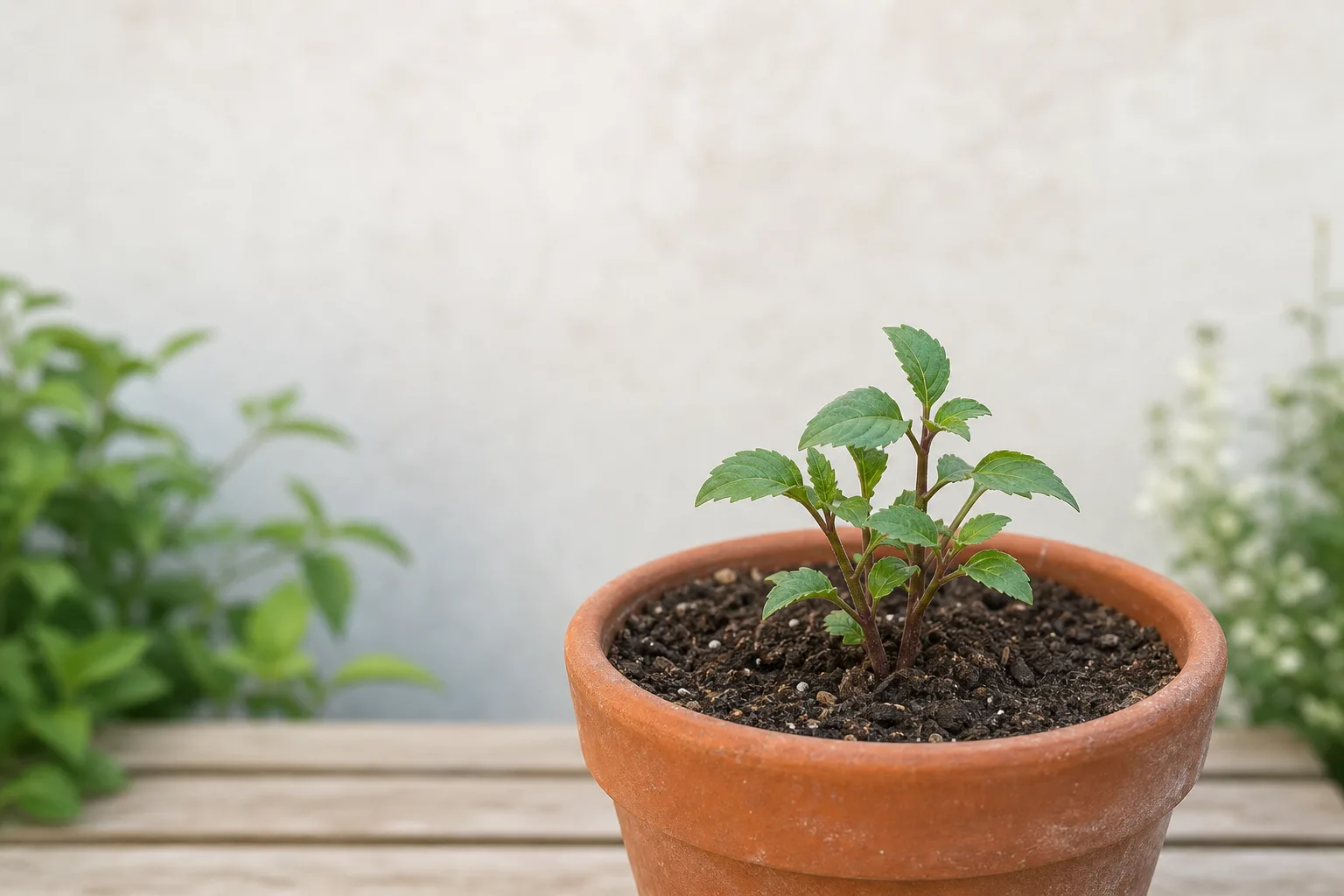
Slow Growth on Dahlia: Causes, Checks & Fixes
This guide covers slow growth on Dahlia. See also the general Slow Growth guide, watering, and light pages for this plant.
Slow Growth on Dahlia: Causes, Checks & Fixes
Quick answer
Dahlia (Dahlia spp.) is an outdoor tuberous perennial, not a houseplant-and slow growth in spring is often normal while the tuber waits for warm soil. After planting into ground that holds around 60°F (15°C) or warmer, healthy tubers commonly send up the first shoots in two to four weeks; cool, wet springs can stretch that to four to six weeks without the tuber being dead. OSU Extension advises planting when soil temperature stays warm consistently-not merely when air feels pleasant.
First step: insert a soil thermometer 10 cm (4 in) deep at the planting site, brush soil from the crown to confirm a viable eye and firm tuber tissue, and count direct sun hours on the bed. That trio separates normal emergence lag from cold-soil dormancy, shade stall, tuber rot, or a division planted without an eye-before you soak, fertilize, or dig up a tuber that is simply waiting for summer.
What slow growth looks like on Dahlia
On a healthy active dahlia, stems push from crown eyes, leaves unfold in pairs along hollow stems, and height gain accelerates once nights stay above 10°C (50°F). Dwarf bedding types may reach 30 cm (12 in) in a few weeks after emergence; tall dinnerplate cultivars can add several centimetres per day during peak summer once roots are established.
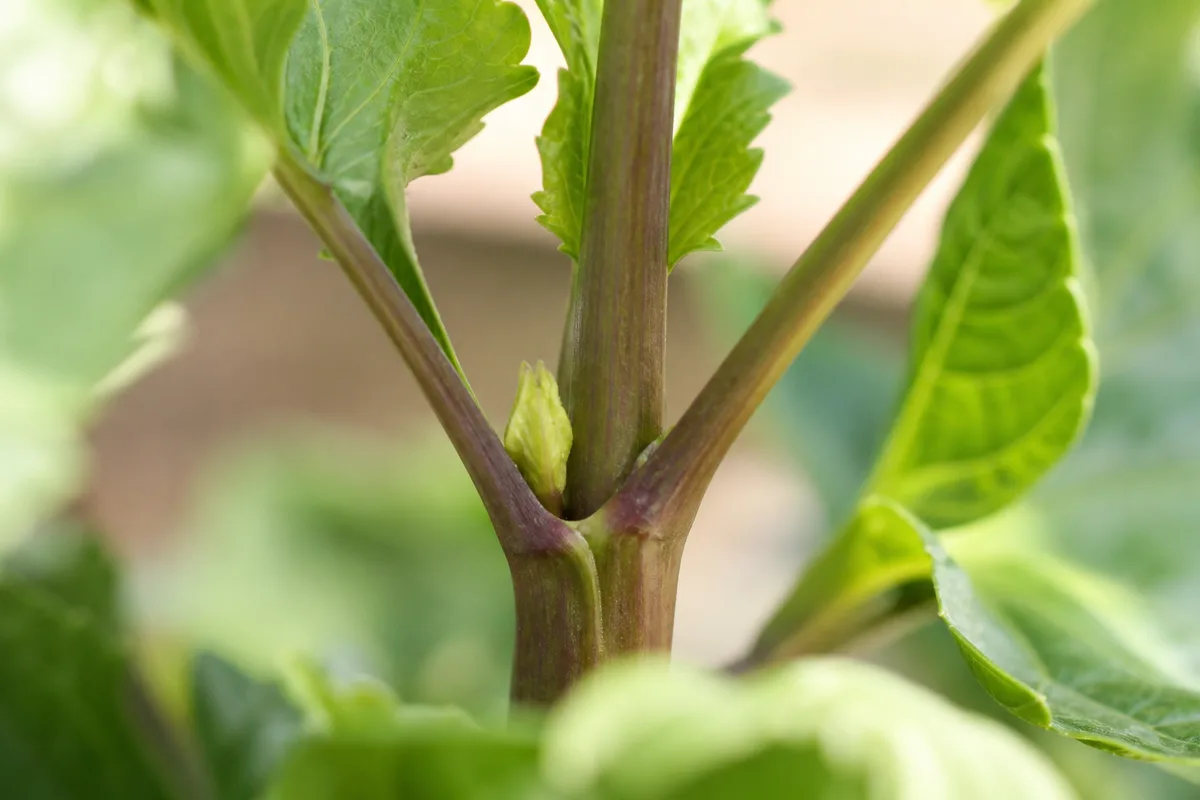
Slow Growth symptoms on Dahlia - compare with healthy tissue on the same plant.
Slow growth as a problem looks different from that baseline:
- No shoots above soil three to four weeks after planting into warm soil (60°F+)
- Shoots emerge then stall at 5–8 cm (2–3 in) for weeks without new leaves
- Stems stay short with small pale leaves while neighbouring dahlias in full sun race ahead
- Fewer stems than expected from a multi-eye tuber-only one weak sprout when three eyes looked viable at planting
- Vertical gain stops mid-season while lower leaves yellow and buds fail to form
Normal slow periods you should not panic over:
- First two to four weeks after planting into freshly warmed soil-roots develop underground before visible shoots
- Cool nights in late spring when days are warm but soil at tuber depth stays below 15°C (59°F)
- First week after transplant from indoor pots to the garden while roots re-establish
- Brief midsummer pause in hot southern gardens when temperatures exceed 32°C (90°F) for extended stretches-the plant conserves energy until nights cool
If shoots are absent but the tuber is firm and soil was cold at planting, you are usually watching dormancy, not death. If shoots appeared then collapsed with mushy crown tissue, shift to the root rot pathway.
Why Dahlia gets slow growth
Cold or wet soil at planting
Dahlias evolved in the warm highlands of Mexico and Central America and stay metabolically idle in cold earth. OSU Extension recommends planting when soil temperature is around 60°F or warmer consistently for several days-often late April through May in temperate zones, later on heavy clay that holds chill. Air may feel warm in early spring while tuber-level soil remains too cold for sprouting.
Planting into cold, saturated soil is worse than waiting: the tuber sits dormant while moisture invites rot. WSU Extension guidance uses lilac bloom as a regional cue that soil has warmed enough for dahlias in the Pacific Northwest. Southern gardeners may plant earlier; northern gardens wait until late May or early June.
Insufficient direct sun
Dahlias need at least six hours of direct sun daily, with six to eight hours ideal for strong stems and heavy bloom according to the RHS and BBC Gardeners’ World. Partial shade keeps plants alive but reduces stem count, flower size, and growth rate. Shade-stalled dahlias often produce thin stems with wide gaps between leaves-growth happens, but slowly and weakly. See the dahlia light guide for placement and the not enough light page when etiolation is the main pattern.
Tuber problems: no eye, rot, or damage
Each division needs at least one eye on the crown-a bump or sprout point where stems originate. A severed tuber lobe without an eye will never sprout. OSU Extension notes that broken necks on pot tubers may fail to grow. Rotten tubers feel soft, hollow, or smell sour; they will not recover.
overwatering on Dahlia before shoots appear is a common rot trigger. OSU advises not watering until the first two leaves are present after planting-slightly moist soil at planting is enough.
Nitrogen deficiency or imbalanced feeding
Once actively growing, dahlias are moderate to heavy feeders. Too little nitrogen shows as yellow lower leaves and stunted stems on otherwise sunny sites. Too much nitrogen early produces lush foliage with weak stems and delayed buds-also a form of perceived “slow” progress toward flowers. The dahlia fertilizer guide covers timing: begin feeding when plants reach 30 cm (12 in), not while tubers are still dormant.
Slug and pest damage on new shoots
Slugs and snails target soft emerging shoots in spring. A sprout that appears then vanishes overnight often suffered slug grazing-not mysterious stall. BBC Gardeners’ World recommends night checks, debris clearance, and iron phosphate bait where legal at planting. Earwigs and aphids can set back young growth but usually leave visible damage rather than total absence.
Late planting or recent division stress
Dahlias planted late in June have fewer calendar weeks before fall frost to reach mature height-growth feels “slow” compared to May-planted neighbours even when daily gain is normal. Fresh divisions with small eye count may push one stem while the tuber rebuilds stored energy; multi-stem clumps follow once roots fill the planting hole.
Cool nights after warm days
Even with good sun, nights below 10°C (50°F) for extended periods slow stem elongation. Growth resumes when night temperatures stabilise-a pattern common in maritime springs and high-elevation gardens.
How to confirm the cause - step-by-step checklist
Work through these checks in order:
- Planting date and soil temperature - Was the tuber planted before soil held 60°F (15°C) at 10 cm depth? If yes, slow emergence may be normal waiting-not failure.
- Tuber eye audit - Gently expose the crown. Is there a swollen eye or pale sprout tip? No eye means no growth expected regardless of wait time.
- Tuber firmness - Press the tuber body and neck. Firm, dense tissue supports waiting. Mushy or hollow tissue means rot-see root rot.
- Sun hours - Count direct sun on the bed from mid-morning through afternoon. Under six hours explains shade stall; moving the plant or tuber may be required next season.
- Soil moisture - Slightly moist at planting is correct. Soggy cold soil after repeated watering suggests rot risk; dry warm soil with firm tuber supports patience.
- Shoot status - No shoot at all vs. shoot chewed to soil line vs. shoot stalled at 5 cm each point to different fixes (wait, slug control, sun or warmth).
- Neighbour comparison - Other dahlias in the same bed racing ahead implicates this tuber or micro-site shade/drainage, not regional weather alone.
- Recent division or potting - Single weak sprout from a fresh split may be normal first-year recovery; expect more stems next season if the eye was viable.
First fix for Dahlia
Verify soil warmth, tuber firmness, and eye viability-then match water and sun to that finding before any other intervention.
If soil is still cold and the tuber is firm with a visible eye, the correct action is wait and warm the site-not dig, soak, or fertilise. Consider black plastic mulch or row cover to raise soil temperature a few degrees if spring is dragging. If soil is warm, tuber firm, eye present, but no shoot after four to six weeks, scrape soil carefully and look for a pale tip just below the surface-some shoots push slowly through heavy crust.
If shade is the limiter on an emerged plant, move container dahlias to the sunniest spot or plan to relocate tubers in fall for in-ground beds you cannot move. Do not expect full growth speed until the plant receives six or more hours of direct sun.
If slugs chewed the only sprout, clear debris, apply iron phosphate bait if appropriate, and watch for a secondary eye to break-dahlias often resprout from another crown point.
Step-by-step recovery
After the initial assessment:
- Stop watering dormant tubers in cool soil until shoots appear or soil at 10 cm is warm and dry-ish-see the dahlia watering guide for the emergence rhythm.
- Warm cold beds with mulch, row cover, or delayed replanting if you planted too early and tubers remain firm.
- Relocate containers to full sun over seven to ten days if plants were in partial shade-harden off started plants gradually.
- Protect new shoots from slugs with night checks and barriers until stems reach 15–20 cm (6–8 in).
- Begin feeding only when active shoots are 30 cm (12 in) tall and growing weekly-low-nitrogen bloom formulas per OSU guidance, not heavy nitrogen on stalled plants.
- Stake early once stems lengthen so wind does not snap slow-growing plants and set them back further-tall cultivars need support before they look like they need it.
- Dig and inspect only if the tuber is soft, smelly, or shows no eye activity after six to eight weeks in warm soil-otherwise disturbance breaks fragile new roots.
Make one correction at a time and judge response over two to three weeks of warm weather.
Recovery timeline
| Situation | Realistic expectation |
|---|---|
| Firm tuber, cold soil at planting | Shoots appear two to four weeks after soil reaches 60°F+ |
| Firm tuber, warm soil, no shoot yet | Allow up to four to six weeks in cool springs before declaring failure |
| Shoot emerged, then slug damage | Secondary eye may sprout in one to three weeks if tuber energy remains |
| Shade-stalled emerged plant moved to full sun | Noticeable stem thickening and faster leaf production in two to three weeks |
| Nitrogen deficiency corrected mid-season | Greener new leaves in two to four weeks; height gain follows |
| Rotten tuber | No recovery-discard and replant with drainage fixes |
Judge progress by new shoot count, leaf size on the top two pairs, and weekly height gain-not by flowers, which come later in the calendar.
Lookalike symptoms - comparison table
| What you see | Likely issue | Key differentiator |
|---|---|---|
| Nothing above soil for 2–4 weeks, firm tuber, cold spring soil | Normal emergence lag | Tuber firm; soil recently warmed |
| Nothing for 6+ weeks, mushy tuber | Tuber rot / failure | Sour smell, soft crown-see root rot |
| Tall thin stems, fast vertical stretch | Leggy growth from shade | Stems lengthen toward light-see leggy growth |
| Short weak stems, pale leaves, some growth | Not enough light / etiolation | Partial sun bed; compare to full-sun neighbours |
| Shoot appeared, vanished overnight | Slug or snail damage | Slime trails, chewed tips at soil line |
| Yellow lower leaves, stalled mid-season on sunny site | Nitrogen lack or overwatering | Check soil moisture and feeding history |
| Wilting midday, limp stems | Water stress or root failure | Different urgency-see wilting guide if collapse is severe |
Slow growth means little gain or delayed start. Leggy growth means stretching on weak stems. No emergence after warm soil usually means tuber, eye, or rot-not light alone.
What not to do
Do not soak newly planted tubers in cool soil hoping to “wake them up”-excess moisture causes rot before roots activate. Do not fertilise dormant or stalled tubers; salts accumulate without uptake. Do not dig up firm tubers at three weeks in a cold spring-you break the root initials forming below ground.
Do not treat outdoor dahlias like houseplants: bright indirect light and pot saucer advice do not apply to garden tubers that need direct sun. Do not stack Dahlia repotting guide, heavy pruning, and high-nitrogen feed on the same weekend when growth is already stressed.
Do not assume slow equals dead and discard firm tubers prematurely-wait through a warm spell first.
How to prevent slow growth next time
Plant when soil at 10 cm holds 60°F (15°C) consistently-align with tomato planting in your region if unsure. Choose a site with six to eight hours of direct sun and free-draining soil amended with compost; heavy clay needs grit or raised beds per the dahlia overview and soil guide.
At planting, confirm each tuber has a viable eye facing up, plant 10–15 cm (4–6 in) deep per WVU Extension, and water lightly only if soil is dry-then wait for leaves before regular irrigation. Stake at planting for tall types. Protect shoots from slugs the first month.
Start tubers indoors four to six weeks before last frost if your season is short-grow in bright cool conditions so plants are not leggy before hardening off. Label cultivars so you learn which varieties sprout quickly versus slowly on your site.
When to escalate - tuber rot, extension help
Contact your local extension office or an experienced dahlia grower if multiple tubers in warm, sunny, well-drained soil fail to emerge after eight weeks, if crown tissue turns black and mushy, or if shoots collapse repeatedly despite corrected watering and slug control.
Discard tubers that are soft throughout, hollow at the neck, or smell sour-they will not recover and may spread rot to neighbours. Replace with firm, eyed stock and fix drainage before replanting.
Pet note: Dahlias are toxic to cats and dogs; tubers are the most concentrated part. Wear gloves when handling damaged tissue if sap irritates your skin.
Conclusion
Slow growth on dahlia is often calendar and temperature math, not a mystery disease. Confirm warm soil, firm tuber, viable eye, and full sun before you water heavily, feed, or dig. Normal emergence takes two to four weeks after soil warms; shade, slugs, nitrogen gaps, and rot each leave a distinct pattern once you inspect the crown and compare neighbouring plants. Match the fix to the cause-wait for warmth, move to sun, protect shoots, or discard failed tubers-and judge recovery by new stem and leaf production through the warm weeks ahead.
When to use this page vs other Dahlia guides
- Dahlia watering guide - Use for routine moisture checks before assuming slow growth is the main issue.
- Dahlia problems hub - Browse all 17 common issues on this species.
- Not Enough Light on Dahlia - Different entry point when symptoms overlap with slow growth.
- Leggy Growth on Dahlia - Different entry point when symptoms overlap with slow growth.
- Yellow Leaves on Dahlia - Different entry point when symptoms overlap with slow growth.