Leggy Growth on Dahlia: Causes, Checks & Fixes
Quick answer
Leggy dahlias have stretched stems with wide gaps between leaves-usually from too little direct sun or weak indoor starts. First step: move to six or more hours of direct sun, pinch the center stem when it reaches about 30 cm, and stake before stems flop.
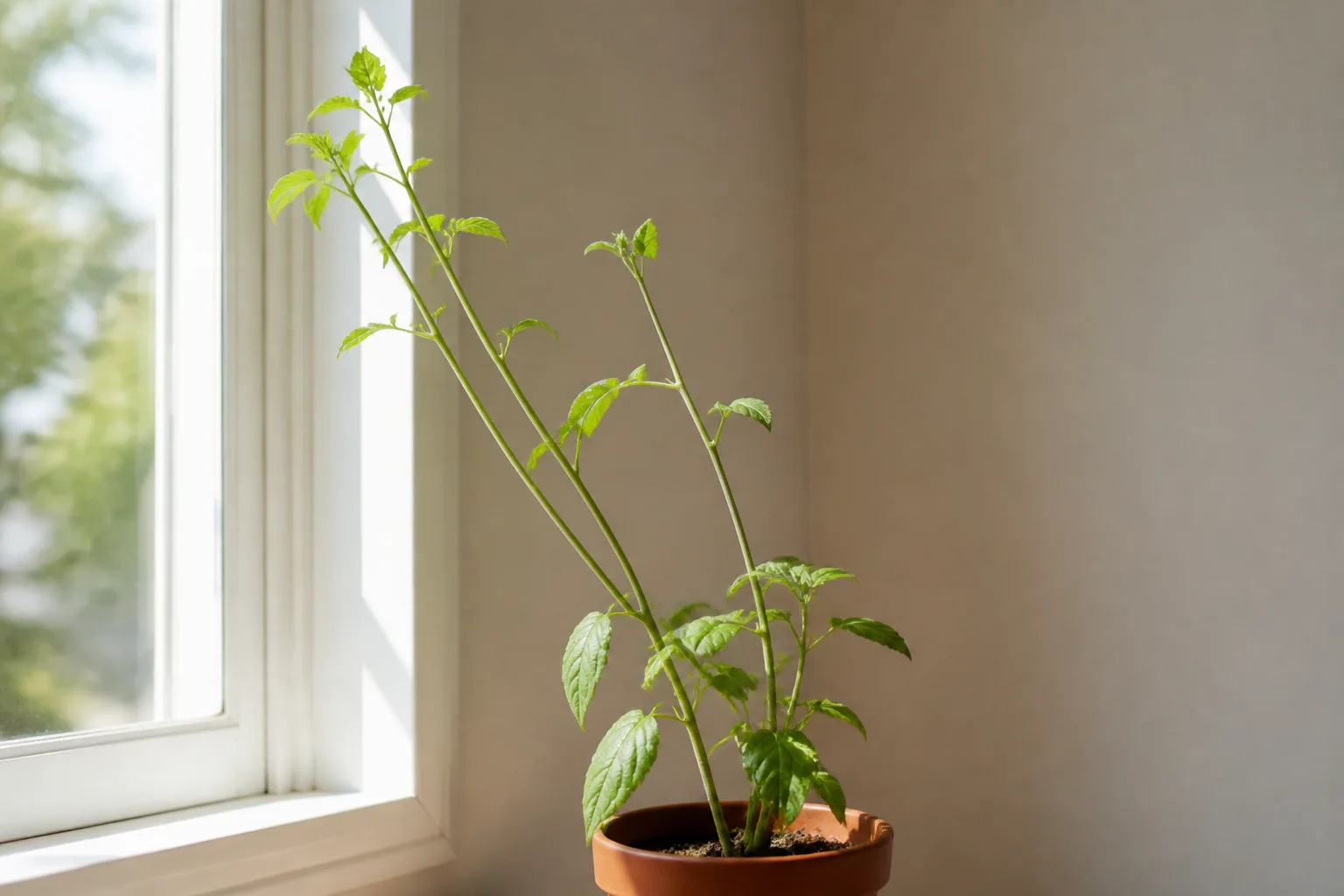
Leggy Growth on Dahlia: Causes, Checks & Fixes
This guide covers leggy growth on Dahlia. See also the general Leggy Growth guide, watering, and light pages for this plant.
Leggy Growth on Dahlia: Causes, Checks & Fixes
Quick answer
Leggy growth on Dahlia (Dahlia spp.) is etiolation-the plant stretching toward light because photosynthesis income is too low for compact tissue. Stems grow tall and thin, internodes lengthen (wide gaps between leaf pairs), lower leaves drop or stay small, and the plant often leans toward the brightest direction while flower buds lag behind foliage.
First step: relocate to at least six hours of direct sun on the leaves, pinch the center stem when it reaches about 30 cm (12 inches), and stake before stems flop. Light is the root cause; pinching and staking manage the structure while new growth firms up. If your main question is bloom failure from shade, see our not enough light on Dahlia guide-the two problems overlap but this page focuses on stretched stems and structural recovery.
What leggy growth looks like on Dahlia
On outdoor or container dahlias, legginess shows up as architecture problems, not just slow bloom:
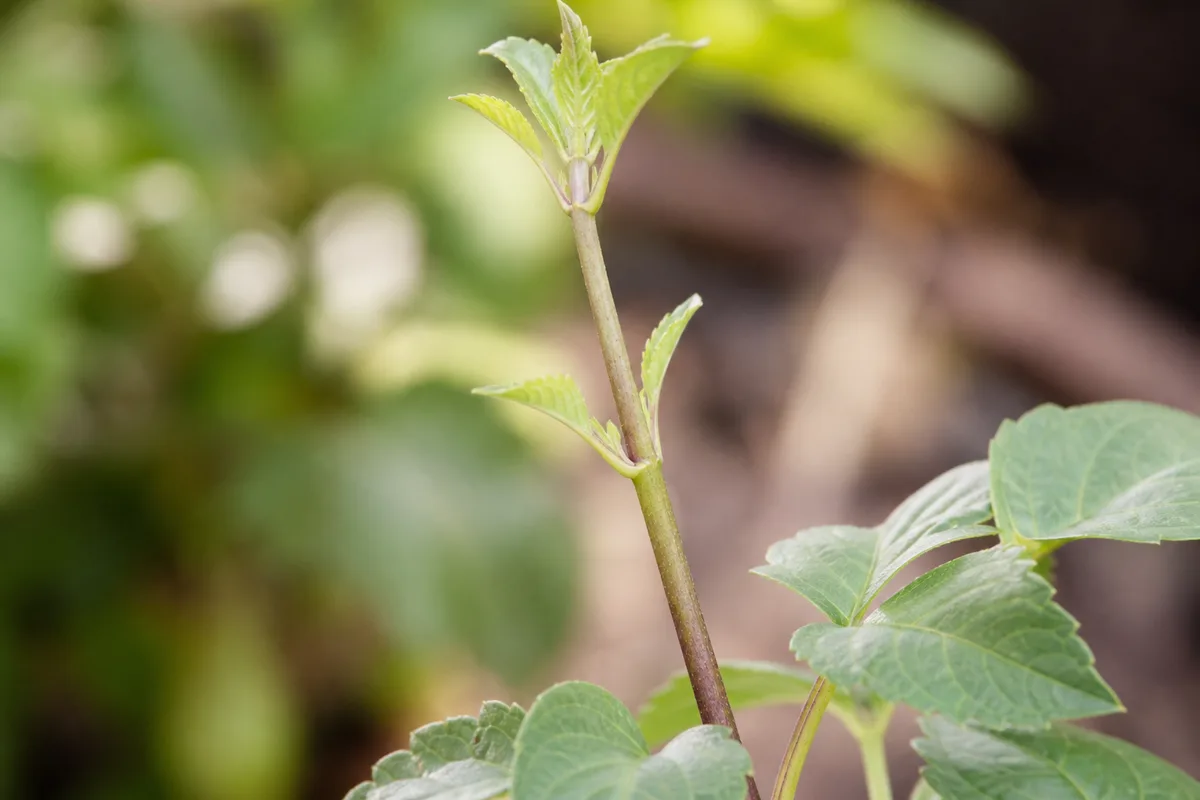
Leggy Growth symptoms on Dahlia - compare with healthy tissue on the same plant.
- Long internodes - Measure the gap between leaf pairs on new growth. Etiolated stems show gaps two to three times wider than the same cultivar in full sun
- Thin, soft stems that bend in light wind or under the weight of the first flower head
- Upward lean or one-sided stretch toward a fence gap, window, or afternoon sun patch
- Sparse lower foliage with most leaves clustered near the growing tip
- Delayed or absent buds while vertical growth continues-a bushy green plant with no flowers is often light-starved stretch, not healthy vigor
- Pale new leaves on indoor or porch-held starts that never hardened off
Dinnerplate and other tall varieties naturally reach 1.2 m or more in full sun-that is genetic height on sturdy stems, not legginess. The diagnostic split: in adequate light, stems thicken at the base and internodes stay relatively short; in etiolation, the same genetics produce weak, hollow-feeling stalks that need staking weeks earlier than expected.
Indoor-started dahlias show the pattern fastest. Without enough intensity, sprouts become pale, brittle “spider” stems that green up only after exposure to strong light-and may snap during hardening off if not corrected early.
Why Dahlia gets leggy growth
Insufficient direct sun (etiolation)
Dahlias evolved in the high, sunny climates of Mexico and Central America and behave like a full-sun crop. When direct photons are limiting, the plant redirects growth upward-literally-producing longer internodes and thinner cell walls in a bid to escape shade. Extension sources define full sun for dahlias as six or more hours of direct sunlight daily; below that, leggy stretch and weak stems are predictable outcomes.
This is the same light deficit covered in depth on our Dahlia light guide and not enough light pages. Leggy growth is often the first visible structural symptom before bloom failure becomes obvious.
Indoor or porch culture with low intensity
Tubers sprouted on a windowsill or in a dim greenhouse commonly become leggy before transplant. Glass cuts intensity, days are short in late winter, and the plant “searches” for sun by rapid vertical growth. Longfield Gardens notes that without adequate light, stems grow very tall, thin, and pale-a pattern distinct from normal outdoor habit.
Fix: full-spectrum grow lights 15–30 cm above foliage for 14–16 hours daily on starts, then gradual hardening over seven to ten days before full outdoor sun.
Mid-season shade creep
A dahlia planted in adequate spring sun may become leggy by midsummer when neighboring shrubs, annuals, or tree canopies fill in. New growth above the shade line stretches while lower leaves yellow from reduced light. The change is gradual-compare internode length on shoots formed in May versus August.
Excess nitrogen in marginal light
High-nitrogen fertilizer in shade pushes soft, leafy, upward growth when light cannot support dense tissue. You get taller plants with fewer buds-a lookalike covered on our slow growth page when the whole plant stalls, but here the stem still elongates weakly.
Overcrowding and poor airflow
Dense spacing blocks lower leaves from direct sun and traps humidity. Lower stems stretch toward gaps while upper growth shades the base-legginess plus powdery mildew risk in cool, shaded pockets.
How this differs from not enough light on Dahlia
Both pages address shade stress, but the search intent differs:
| Symptom focus | Leggy growth (this page) | Not enough light |
|---|---|---|
| Primary complaint | Long weak stems, wide internodes, flop risk | No blooms, pale foliage, wrong placement |
| First fix emphasis | Pinch, stake, structural training + sun | Relocate to full sun first |
| Indoor starts | Central topic | Mentioned as one cause |
| Recovery metric | Tighter internodes on new growth after pinch | Bud set and flower count |
Cross-read both guides if stems stretch and buds fail-the fixes run in parallel, but leggy growth adds mandatory pinching and staking steps that a light-only diagnosis might skip.
How to confirm the cause
Work through this numbered checklist:
- Direct sun hours on foliage - Watch the plant for a full day. Count hours when sun hits leaves directly. Fewer than six hours strongly supports etiolation.
- Internode measurement - Compare gaps between leaf pairs on the newest stem versus a photo from early season or a neighbor plant in full sun.
- Lean direction - Stretch toward one compass point confirms light-seeking growth, not random mechanical flop.
- Start history - Indoor sprout without grow light? Windowsill-only culture? Legginess often begins before outdoor planting.
- Fertilizer review - Heavy nitrogen feed in a dim corner amplifies stretch.
- Spacing scan - Neighboring plants casting shadow on this dahlia’s lower half?
- Variety check - Tag height in full sun versus current weak stems. Tall but sturdy is normal; tall and spindly is etiolation.
If the plant already receives six or more hours of direct sun with stocky stems and still grows taller than expected, you may be seeing variety genetics, not a problem-confirm against the cultivar description before forcing pinches on a naturally tall type.
The first fix to try
Move to full sun, then pinch and stake in that order.
- Relocate container dahlias to the brightest open spot with six to eight hours of direct sun. For in-ground plants shaded mid-season, shift potted specimens onto sunnier hardscape or prune overhanging branches. Acclimate plants from deep shade over several days-morning sun first-before full exposure.
- Pinch the center stem when it reaches 12 to 16 inches (30–40 cm) with at least four leaf sets. Remove the top 3–4 inches just above a node. This redirects energy to side branches and shortens the effective height. Details in our Dahlia pruning guide.
- Stake immediately if stems wobble. OSU Extension recommends stakes at planting for dahlias over 90 cm; leggy plants need support now, not after the first storm. Tie every 30 cm (12 inches) up the stem with soft twine.
Do not fertilize heavily until new compact growth appears. Do not repot and pinch the same day on a stressed plant.
Step-by-step recovery
Week 1: Move to improved sun. Install stakes and first ties. Pinch if height and leaf-count thresholds are met. Reduce watering if the old shaded schedule left soil soggy-brighter sun increases uptake.
Weeks 2–3: Watch for new leaf pairs closer together on the tip and side shoots activating below the pinch. First tiny buds may appear on lateral stems.
Weeks 4–6: Open flowers on sturdier side branches signal success. Leave old elongated sections staked until replacements bloom, or cut leggy tops back to a strong node once light is stable.
Indoor-leggy starts: If sprouts exceed 5 cm and look spindly before planting out, trim weak sprout tissue near the tuber neck to encourage stronger secondary shoots. Harden off gradually-never move directly from a dim windowsill to midday sun.
Old stems never shorten. Recovery is always judged on new growth, not by expecting existing internodes to compress.
Recovery timeline
| Sign | What it means |
|---|---|
| New leaves closer together within 2 weeks | Light and pinch are working |
| Side branches after pinching | Apical dominance broken; bushier habit forming |
| Stems still elongating after 3 weeks in “brighter” spot | Location still too shady-move again |
| Stem snaps at soil line in wind | Staking came too late; inspect tuber firmness |
| Buds on lateral shoots only | Normal after pinch; main tip energy redirected |
Most container dahlias show tighter new growth within two to four weeks after reaching true full sun during active growth (roughly 15–25°C). Cool weather slows the timeline.
Lookalike symptoms
Not enough light (bloom-focused) - Overlaps heavily; see not enough light on Dahlia when bud failure is the primary worry.
Slow growth - Whole plant stalls with short rigid stems, not continuous stretch. See slow growth on Dahlia.
Normal tall variety - Sturdy base, acceptable internode length, blooms present. Stake for wind; skip aggressive pinching if the cultivar is bred for height.
High nitrogen - Lush dark leaves, extreme height, no buds. Fix light first; switch to low-nitrogen feed after bud set per our fertilizer guide.
Heat stress in full sun - Midday wilt with crisp edges despite good stem thickness. Provide afternoon shade during extreme heat only-not the deep shade that causes etiolation.
What not to do
- Treating bright indirect light as sufficient-dahlias are not foliage houseplants
- Pinching without improving light-new side shoots will also stretch in shade
- Moving from a dim indoor bench straight into harsh afternoon sun without hardening
- Skipping stakes because the plant “might toughen up”-etiolated stems rarely do
- Heavy nitrogen feed to “green up” a leggy plant in a dark corner
- Assuming old stretched stems will shorten after relocation-they will not
How to prevent leggy growth next season
- Site tubers in the brightest well-drained bed at planting-six to eight hours of direct sun per our overview and light guides
- Pound stakes at planting before tubers sprout to avoid puncturing roots later
- Pinch at 30 cm on tall varieties every season-once per stem is usually enough
- Start indoors only with grow lights 14–16 hours daily; limit indoor time to four to six weeks before transplant
- Track mid-season shadows and prune overhanging branches before stems stretch
- Space plants for lower-leaf sun exposure and airflow
- Choose shorter border cultivars for spots that cannot reach eight hours of direct sun
Dahlia care cross-check
Leggy recovery sits inside the wider dahlia system:
- Light: Dahlia light requirements - hour targets and hot-climate afternoon shade
- Pruning: Dahlia pruning - pinch timing, deadheading, disbudding
- Watering: Dahlia watering - shade slows drying; full sun speeds it up
- Soil: Dahlia soil - wet tubers in shade rot while stems stretch
Align all four after you move a leggy plant to sun-watering rhythm must change when evaporation increases.
When to worry
Legginess alone rarely kills a dahlia in one season, but structural failure can:
- Stems snap at the crown in wind before you stake-inspect tuber firmness; soft tissue suggests rot, not simple etiolation
- Indoor starts collapse during hardening-reduce sun hours temporarily and re-pinch rather than discarding the tuber
- No tighter internodes after four weeks in verified full sun-tuber may be weak or diseased; check our root rot guide
A floppy but green plant in partial sun is fixable. A soft, smelly crown in a dark wet pot is a different emergency.
Conclusion
Leggy dahlias are telling you the plant is outrunning its light supply-building height instead of strength. Six or more hours of direct sun, an early pinch at 12 to 18 inches, and staking before flop form the recovery triangle. Judge success by the next leaf sets sitting closer together, not by old stretched stems standing taller.
For shade placement and bloom failure, pair this page with not enough light on Dahlia. For pinch technique and deadheading through the season, see Dahlia pruning. Get the structure right, and the flowers follow.
When to use this page vs other Dahlia guides
- Dahlia watering guide - Use for routine moisture checks before assuming leggy growth is the main issue.
- Dahlia problems hub - Browse all 17 common issues on this species.
- Not Enough Light on Dahlia - Different entry point when symptoms overlap with leggy growth.
- Slow Growth on Dahlia - Different entry point when symptoms overlap with leggy growth.
- Yellow Leaves on Dahlia - Different entry point when symptoms overlap with leggy growth.