Chrysanthemum Care: Light, Water, Soil & Blooms
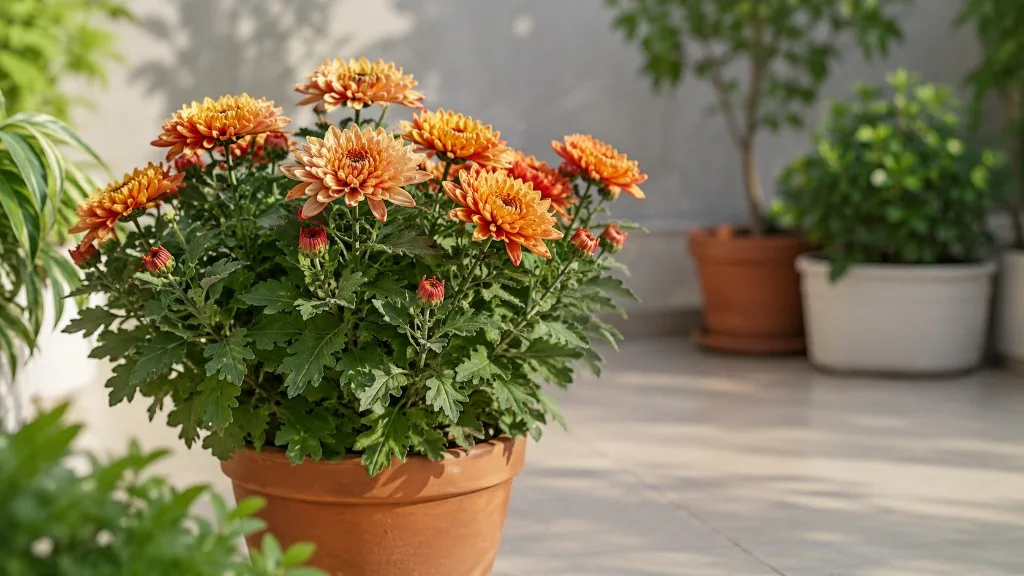
Chrysanthemum morifolium
Chrysanthemum needs full sun (5+ hours daily), watering every 5–7 days when the top 2 cm is dry, tip pinching in spring and early summer for bushy growth, and high-potassium feeding once buds form.
Chrysanthemum Care: Light, Water, Soil & Blooms
Start with wateringThe most common care mistake for ChrysanthemumWatering guide → →Chrysanthemum care essentials
Light
full sun - 5–6 hours of direct sunlight for best flowering
Water
Every 4–5 days during dry weather (top 2 cm dry). Reduce in cool or wet conditions. Avoid waterlogging in cool soil.
Soil
Well-draining fertile potting mix or garden soil. pH 6.0–7.0.
Humidity
Moderate (40–60%); tolerates Indian conditions well
Temperature
10°C to 22°C (50–72°F) - a cool-season flowering plant
Fertilizer
Use high-phosphorus and potassium fertilizer to promote bud development; balanced NPK before bud set and stop if the plant is stressed, newly repotted, or not actively growing.
About Chrysanthemum
Chrysanthemum is native to China and Japan, typically reaches 30–90 cm tall; 30–60 cm wide indoors, with moderate to fast during growing season growth. Chrysanthemum has a bushy growth habit and part of the Asteraceae family. It is also known as Mum, Garden Mum, Sevanti, and Guldaudi.
| Detail | Information |
|---|---|
| Also known as | Mum, Garden Mum, Sevanti, Guldaudi |
| Native region | China and Japan |
| Mature size | 30–90 cm tall; 30–60 cm wide |
| Growth rate | Moderate to fast during growing season |
| Growth habit | Bushy |
| Scientific name | Chrysanthemum morifolium |
| Family | Asteraceae |
Chrysanthemum Care: Light, Water, Soil & Blooms
What Is Chrysanthemum?
Chrysanthemum - commonly called mum, garden mum, or hardy mum - is one of the most recognizable autumn plants in North American and European gardens. The species most home growers encounter is Chrysanthemum × morifolium (also written Chrysanthemum morifolium), a herbaceous perennial in the aster family (Asteraceae, formerly Compositae) bred for dense mounds of showy fall flowers in white, yellow, bronze, pink, lavender, coral, purple, and burgundy. Indoors or in pots on a porch, mums typically reach 30 to 90 cm (12 to 36 inches) tall and 30 to 60 cm (12 to 24 inches) wide, though exact size depends on cultivar, pinching, and whether the plant was forced for a one-season display or grown as a long-term garden perennial.
If you are trying to decide whether chrysanthemum fits your space, the honest summary is this: mums reward Chrysanthemum light guide, steady moisture, fertile well-drained soil, and seasonal timing - and they punish weak light, soggy crowns, late planting before winter, and artificial night lighting. They are excellent for autumn color, container displays, and cut flowers. They are a poor fit for pet households where cats or dogs might chew foliage, for dim indoor corners where bloom initiation fails, and for gardeners who want a zero-maintenance year-round houseplant without seasonal dormancy.
Botanical Background and Garden Mums vs Florist Mums
Chrysanthemums have been cultivated in China and Japan for centuries and carry deep cultural significance - especially in Japan, where the chrysanthemum appears on the Imperial Seal. Modern garden mums descend from complex hybridization within Chrysanthemum species, and commerce uses overlapping common names that confuse care expectations. The label on the pot matters less than the growing purpose behind the plant.
Garden mums (hardy or garden chrysanthemums) are bred for outdoor permanence in temperate climates. NC State Extension lists Chrysanthemum × morifolium as a herbaceous perennial hardy in USDA Zones 5a through 9b, with rapid growth, dense upright-to-mounding habit, and fall bloom triggered by shortening days. When planted early enough with good drainage, these mums can return year after year.
Florist mums are bred for greenhouse forcing, exhibition-size blooms, and cut-flower production. They are often treated as seasonal annuals outside warm zones because their root systems and stem structure are optimized for a single spectacular flush, not winter survival. A mum bought in full bloom from a grocery store or florist in October may be either type; without a cultivar tag, assume it is a display plant first and a long-term perennial second.
The practical distinction for home growers: garden mums need time in the ground before frost to establish roots; florist mums need a perfect autumn show and may not survive winter even with good care. If your goal is a perennial fall display, buy labeled hardy garden mums in spring or early fall (six to eight weeks before the ground freezes), not only in peak bloom from a seasonal display rack.
Why Photoperiod and Pinching Drive the Bloom
Chrysanthemum flowering is controlled primarily by photoperiod - the length of the dark period in a 24-hour cycle. Most garden mum cultivars begin forming flower buds when nights grow long enough, typically when day length drops below about 12 hours. Bloom usually follows six to eight weeks after bud initiation, which is why mums flower in autumn in temperate regions. Clemson HGIC and the Old Farmer’s Almanac both emphasize that artificial light at night - porch security lights, street lamps, or indoor grow lights on a long timer - can delay or prevent budding. If your potted mum on the front step is lush but flowerless, night lighting is a prime suspect alongside insufficient sun or drought stress.
Pinching is the other non-negotiable skill for garden mums. Left unpinched, many cultivars grow tall, leggy, and wind-prone with fewer flowers. Pinching removes the soft growing tip to force branching, creating a compact plant that can carry more blooms. The Missouri Botanical Garden chrysanthemum factsheet recommends the first pinch when shoots reach 6 to 8 inches (15 to 20 cm), repeating when new branches reach the same height, with a final pinch timed roughly three months before expected bloom - often around mid-June for early bloomers, July 1 for mid-season types, and no later than mid-July for late varieties, with Southern growers sometimes pinching into early August per regional extension guidance. Stop pinching once buds are visible; cutting buds off late in the season directly reduces your fall show.
Best Growing Conditions for Chrysanthemum
Chrysanthemum performs best when the growing site mirrors its natural rhythm: bright sun during the growing season, fertile soil that drains freely, steady root-zone moisture, and stable temperatures without crown-chilling extremes. The four variables that decide almost every outcome are light, water, soil, and temperature. Align those and feeding, pinching, and propagation become straightforward. Misalign any one - especially light or drainage - and the plant shows stress in leaves and stems weeks before roots fail completely.
Light Requirements
Chrysanthemum needs full sun for strong bloom production - at least 5 to 6 hours of direct sunlight daily, and ideally 6 to 8 hours during the active growing season. Clemson HGIC states that mums in shade may color nicely the first year but perform poorly the following season because they cannot rebuild the carbohydrate reserves needed for perennial growth. In hot-summer climates (roughly Zone 8 and warmer), afternoon shade can reduce heat stress on foliage without sacrificing the long-day growing phase; in cool northern gardens, maximize sun exposure.
For potted porch mums, place containers where they receive unobstructed direct sun for most of the day. Rotate pots weekly if growth leans toward one side. If you are transitioning a greenhouse-grown mum to outdoor sun, acclimate over 7 to 14 days by increasing exposure gradually; sudden moves produce bleached leaves, scorched petal edges, and wilt even when the root zone is moist.
Low light produces stretched stems, small pale leaves, delayed budding, and elevated rot risk because the plant uses water slowly while the soil stays wet longer. A practical test: new growth should be sturdy and green, not floppy and reaching. If internodes lengthen and flower count drops, the plant wants more sun before more fertilizer.
Temperature and Humidity
During active growth and bloom, chrysanthemums prefer moderate temperatures roughly between 59 and 77°F (15 and 25°C). They tolerate cooler autumn nights that trigger flowering and can survive light frosts on established hardy plants, but hard freezes damage open blooms and unhardened late-season transplants. Avoid placing pots directly above radiators, against sun-heated south glass in peak summer, or in cold wind tunnels at doorways.
Humidity is secondary to light and water for mums. Average household or garden humidity is usually adequate. In very dry indoor air, spider mites can appear on stressed plants; good air circulation and proper watering matter more than misting. Do not mist mum flowers or dense foliage late in the day - wet crowns and petals invite fungal spotting, especially in crowded container displays.
Hardy garden mums in Zones 5–9 overwinter outdoors with good drainage and early root establishment. In colder margins or for late-purchased pots, overwinter dormant plants in a cool dark space (about 32–50°F / 0–10°C) with barely moist roots, then replant after the last hard frost in spring - a method the Old Farmer’s Almanac describes for northern gardeners saving potted stock.
Soil and Drainage
Use fertile, well-draining soil rich in organic matter, with a target pH of 6.0 to 7.0 (neutral to slightly acidic). NC State Extension lists high organic matter and good drainage as core cultural requirements. Mums are heavy feeders with shallow, fibrous roots that dry quickly in sun but suffocate in standing water. A workable container mix is quality potting soil amended with compost, plus perlite or coarse sand if your base mix is peat-heavy. In garden beds, incorporate aged compost or manure before planting and mound slightly in clay soils to improve runoff.
Drainage failures show up as crown rot, persistent wilting despite wet soil, and sudden collapse at the base. Always use pots with drainage holes; if a decorative foil or plastic wrapper covers the pot from a retail display, remove it or punch holes immediately. Plant garden mums at the same depth they grew in the nursery pot - burying the crown too deep invites stem rot, per Almanac planting guidance. Space plants 18 to 36 inches (45 to 90 cm) apart depending on mature spread so air moves between stems and reduces disease pressure.
How to Water Chrysanthemum
The general rule for chrysanthemum is water when the top 1 to 2 cm (about 1 inch) of soil feels dry, then soak thoroughly until excess drains from the bottom. Because mum roots are shallow, the upper soil layer is a reliable indicator, but always confirm moisture an inch or two deep before assuming the whole root zone is dry. During peak bloom and full sun, many potted mums need checking daily; in cooler post-bloom rest periods, the interval often stretches to every two to three days indoors or weekly in cool ground beds - but your calendar is a reminder to check, not a rule to follow blindly.
Water at the soil surface, not over the foliage or flowers, to reduce fungal issues. After watering, empty saucers and cachepots so the plant is not sitting in stale runoff. A light pot that tips easily usually means the root zone has dried; a heavy pot with cool, damp soil means wait.
Chrysanthemum watering guide During Active Growth and Bloom
From spring through autumn bloom, chrysanthemums use water aggressively when sun is strong and flower production is underway. Clemson HGIC notes that too little water slows growth or stops it entirely, and mums especially need ample moisture during bloom. Wilting flowers and buds on a dry, lightweight pot are clear drought signals. Recover by soaking until water runs free, then draining - not by giving tiny sips that wet only the surface.
Newly planted field or garden mums need consistent moisture while roots establish - typically the first two to three weeks after transplant. For fall-purchased container mums in full flower, do not let drought stress shorten the display; check moisture every morning on sunny porches. After the main flush fades, reduce frequency gradually as growth slows and temperatures drop, but do not abandon winter-hardy plants in the ground - roots still need moisture until the soil freezes if you expect perennial return.
Seasonal Adjustments and Container Considerations
Container mums dry faster than in-ground plants because soil volume is limited and sun heats the pot walls. Terracotta breathes and dries quickly; plastic retains moisture longer. Adjust your check frequency to the pot material and weather, not to a generic weekly schedule. In rainy autumns, tilt pots or improve drainage so storms do not leave roots waterlogged for days.
After bloom, hardy mums entering dormancy still need occasional deep watering during dry fall spells so roots do not desiccate before freeze-up. Indoors, heated winter air can dry pots on windowsills; move dormant storage pots to cool basements or garages and water lightly only when soil is nearly dry - soggy cold soil is more dangerous than slight dryness for dormant crowns.
Common Watering Mistakes
The most common chrysanthemum watering mistake is treating retail display mums like short-term cut flowers - checking them only when petals droop, then overcompensating with repeated shallow splashes that never reach the root ball. The second is leaving pots in non-draining wrappers, which traps water and causes crown rot within days. The third is watering on a fixed weekly schedule regardless of sun, pot size, or season; a mum under six hours of porch sun in October may need daily drinks, while the same cultivar in a cool interior slows dramatically.
If leaves yellow while soil stays wet and the base looks dark or mushy, stop watering, improve drainage, and inspect the crown before resuming. If flowers wilt on dry soil, soak once thoroughly rather than increasing a dribble routine that encourages shallow root growth.
How to Feed Chrysanthemum
Chrysanthemums are heavy feeders during vegetative growth and benefit from regular nutrition while building the branching framework that will carry fall flowers. Clemson HGIC recommends weekly soluble fertilizer for garden mums in active production, while the Old Farmer’s Almanac suggests a monthly balanced fertilizer such as 10-10-10 for home beds - both point to the same principle: replenish nutrients in fast-draining, organically rich soil that supports repeated bloom cycles.
For containers, use a balanced water-soluble houseplant or garden fertilizer at half the label rate every two to three weeks from spring through midsummer, applied to already-moist soil to avoid root burn. Slow-release granular fertilizer mixed into the top layer at Chrysanthemum repotting guide can supplement liquid feeding for busy growers. Pause or sharply reduce feeding once flower buds are visible unless you are growing strictly for foliage - late nitrogen can soften stems and reduce flower quality.
Do not fertilize stressed, drought-shocked, or recently repotted mums until new growth resumes. Salt buildup in containers shows as crust on the soil surface and brown leaf margins; flush the pot with plain water until runoff runs clear, then resume feeding at a lower rate. Organic options such as compost tea or diluted fish emulsion work well for in-ground plantings where soil biology helps buffer salts.
Pinching, Pruning, and Deadheading
Pinching is how you convert a tall, sparse mum seedling into a rounded, flower-heavy mound. When new shoots reach 6 to 8 inches (15 to 20 cm), pinch or snip about 1 inch (2.5 cm) off each growing tip with clean fingers or pruners. Repeat every time branches add another 6 to 8 inches of growth until the cultivar’s cutoff date for your bloom season. Each pinch redistributes growth hormones to side buds, increasing branch count and flower sites.
Deadheading spent blooms during the autumn show keeps the plant tidy and can prolong the display on some cultivars by redirecting energy from seed set to any secondary buds. Cut just above a healthy leaf node, and sanitize tools between plants if you see disease spotting. Pruning for shape after bloom is different from pinching: once frost kills top growth on hardy in-ground mums, many gardeners leave dead stems as light winter insulation, then clean up in early spring when new shoots emerge at the crown.
If you inherit a mum in full bloom with no pinching history, you cannot rewind the season. Enjoy the display, then plan pinching next spring if the plant survives winter. Attempting hard shearing on a blooming plant removes the reason you bought it.
Repotting and Root Health
Repot or divide chrysanthemums when roots circle the drainage holes, water runs straight through without soaking, or the plant dries out within hours of watering - often every one to two years for vigorous container stock, or every two to three years for in-ground clumps that become crowded. The best window is early spring as new shoots appear, giving a full growing season to re-establish before autumn bloom initiation.
Choose a pot one size larger with drainage holes, or divide the clump and return sections to the same size pots. Tease apart rooted divisions with a sharp knife if necessary, keeping several shoots and healthy white roots per division. Replant at the same crown depth, water lightly for the first week, then resume normal moisture checks as new growth firms up. Overpotting into a huge container is a common post-repurchase mistake; excess wet soil around a small root mass causes rot faster than crowding does.
In garden beds, divide hardy mums every two to three springs to prevent congested centers that dry unevenly and harbor disease. Discard woody, hollow, or odorless dark root sections; replant vigorous outer divisions into refreshed soil amended with compost.
Propagation Methods for Chrysanthemum
The two most reliable home propagation methods for chrysanthemum are stem cuttings and division. Stem cuttings capture a specific cultivar; division multiplies an established clump you already know performs in your climate.
For stem cuttings, take 3- to 4-inch (7–10 cm) healthy shoots in late spring or early summer, strip the lower leaves, and insert the cut end into moist, well-draining medium (perlite, sand, or a 50/50 peat-perlite mix). Keep humidity high with a loose clear cover or frequent misting of the medium - not the leaves - and provide bright indirect light until roots form in two to three weeks. Harden off gradually before full sun planting.
For division, lift the parent plant in early spring, split the root ball into sections with at least three to five shoots each, and replant immediately at the correct depth. Water in well and shade lightly for a few days if sun is intense. Do not propagate from pest-infested, diseased, or drought-stressed parents; cuttings inherit weakness and rot easily in propagation trays.
Starting from seed is possible for some species and mixed cultivars, but named garden mums are clonally propagated because seed will not match the parent flower form. Seed sowing indoors six to ten weeks before last frost, as described by garden references including This Old House, is a specialty project - not the path most mum buyers need.
Common Chrysanthemum Problems
Most chrysanthemum problems trace back to environment and timing, not mysterious plant illness. Symptoms appear in leaves, stems, and flowers with a fairly predictable logic once you know whether drainage, light, photoperiod, or pests is the driver. Patience matters: mums recover slowly from crown damage but often bounce back from single drought episodes if roots remain healthy.
Yellow Leaves, Pests, and Bloom Failures
Yellow leaves usually mean one of four things: overwatering on Chrysanthemum and poor drainage, underwatering on Chrysanthemum during hot bloom, nitrogen deficiency during heavy vegetative growth, or natural lower-leaf senescence after flowering. Check soil moisture at crown level first, then review sun exposure and recent fertilizer history. Yellowing with black spots or gray mold points to fungal leaf spot or botrytis in crowded, wet conditions - improve airflow, remove affected leaves, and avoid overhead watering.
Pests include aphids on tender shoots, spider mites in hot dry air, slugs and snails on young spring growth, and occasional leaf miners. Inspect stems and leaf undersides weekly during the growing season. A strong water rinse, hand removal, and insecticidal soap directed at pests (not open flowers) handle most early infestations. Remember that mums naturally contain pyrethrins, insecticidal compounds that deter some pests - but those same compounds make the plant toxic to pets, not a reason to skip pest control indoors.
Bloom failures - lush foliage but no buds - most often trace to nighttime light interruption, insufficient daylength decline indoors, pinching too late (buds removed repeatedly), or severe drought during bud set. Security lights and street lamps are frequent culprits on porches. Moving the pot to a fully dark night location from late summer onward can trigger budding on photoperiod-sensitive cultivars. Lack of sun produces weak budding even when nights are long enough.
Wilting during bloom on dry soil is underwatering; wilting on wet soil is root or crown rot and needs drainage correction, not more water. Brown petal edges on otherwise healthy plants may be wind burn, frost nip, or sun scorch after abrupt exposure changes.
Is Chrysanthemum Safe for Pets?
No - chrysanthemum is toxic to cats, dogs, and horses. The ASPCA lists Chrysanthemum spp. as toxic to all three, with toxic principles including sesquiterpene lactones, pyrethrins, and other irritants. Reported clinical signs include vomiting, diarrhea, hypersalivation, incoordination, and dermatitis from ingestion or contact with plant material. Cut flowers and fallen petals count too - a porch mum display within reach of a curious cat is a genuine hazard.
Cats are especially sensitive to pyrethrin-class compounds relative to many dogs, so assume no safe chew level rather than testing tolerance. If you suspect ingestion, contact your veterinarian or the ASPCA Animal Poison Control Center at (888) 426-4435 promptly. For pet-active homes, treat chrysanthemums as outdoor-only plants behind barriers, or choose non-toxic alternatives for enclosed spaces where pets explore. Wear gloves if you have skin sensitivity when pinching large amounts of mum foliage.
Conclusion
The most useful thing to know about chrysanthemum is that it is a sun-loving, short-day, heavy-feeding perennial - usually Chrysanthemum × morifolium in garden commerce - that builds its autumn show during long bright days and long dark nights, not on a generic houseplant schedule. Give it full sun, fertile well-drained soil, steady moisture checked at the root zone, and a disciplined pinching calendar, and hardy garden mums can reward you with compact mounds of color year after year in Zones 5–9. Give it weak light, trapped drainage, late planting before winter, or porch lights that break the night, and even a lush mum becomes a one-season decoration.
Start with the environment before reaching for fertilizer or replacements: confirm six or more hours of direct sun, fix pot drainage the day you buy, match watering to how fast the pot actually dries, and stop pinching on time for your cultivar’s bloom window. If you need a perennial fall anchor, buy labeled hardy garden mums early, divide them every few springs, and keep pets away from every part of the plant. If you only want a few weeks of autumn color, enjoy florist-style pots on their own terms - just know the care goal is display, not longevity. Either way, chrysanthemum is straightforward once you respect its seasonal logic instead of fighting it.
When to use this page vs other Chrysanthemum guides
- Chrysanthemum overview - Canonical hub for this species - care topics and problems branch from here.
- Chrysanthemum problems - Symptom-first path when you already know something is wrong.
Related Chrysanthemum guides
How to care for Chrysanthemum?
How much light does Chrysanthemum need?
full sun - 5–6 hours of direct sunlight for best flowering
- full sun - 5–6 hours of direct sunlight for best flowering - full sun - 5–6 hours of direct sunlight for best flowering.
When should you water Chrysanthemum?
Every 4–5 days during dry weather (top 2 cm dry). Reduce in cool or wet conditions. Avoid waterlogging in cool soil.
- Water when the top 2 cm is dry - Every 4–5 days during dry weather (top 2 cm dry).
- Drain excess water - Avoid waterlogging in cool soil.
What soil works best for Chrysanthemum?
Well-draining fertile potting mix or garden soil. pH 6.0–7.0.
- 50% potting mix - Well-draining fertile potting mix or garden soil.
- 30% compost
- 20% perlite - Light white granules that keep soil airy and help prevent compaction.
Grower notes for Chrysanthemum
What matters most with Chrysanthemum
Chrysanthemum needs enough light and seasonal rhythm to bloom well. Leaves may stay alive in mediocre light, but flowers usually reveal whether the plant is truly getting what it needs. In practice, the care checkpoint is simple: full sun - 5–6 hours of direct sunlight for best flowering. Pair that with well-draining fertile potting mix or garden soil; pH 6.0–7.0, and avoid changing water, pot size, and placement all at once.
Best placement in a real home
Chrysanthemum belongs where full sun - 5–6 hours of direct sunlight for best flowering is realistic for most of the day, not only where the pot looks good. Every 4–5 days during dry weather (top 2 cm dry). Reduce in cool or wet conditions. Avoid waterlogging in cool soil. If the pot stays wet longer than expected, move the plant into better light or reassess the mix before watering again. Humidity target: Moderate (40–60%); tolerates Indian conditions well. Temperature comfort zone: 10°C to 22°C (50–72°F) - a cool-season flowering plant.
Before you buy this plant
Choose Chrysanthemum with firm new growth, clean leaf undersides, and soil that does not smell sour or feel compacted. Be cautious if you see aphids, sticky residue, collapsed crowns, or a pot that is wet in poor light. Cosmetic old-leaf damage is less worrying than weak roots or active pests.
First month after bringing it home
Do not repot Chrysanthemum on day one unless the mix is failing or pests are obvious. Quarantine it, learn how fast the pot dries, and keep care boring while it adjusts. Watch especially for aphids and root-rot. If problems appear, correct the condition first rather than stacking fertilizer, repotting, and pruning together.
Safety note for Chrysanthemum
Chrysanthemum is not a plant to keep within reach of pets or children. The database flags it for cats, dogs, and horses. Use gloves if sap or plant tissue is irritating, and pick a pet-safe alternative for floor pots or low shelves.
How to tell Chrysanthemum is settling in
Also sold as Mum, Garden Mum, and Sevanti, this plant should be judged by stable new growth rather than label names alone. If you plan to multiply it later, common methods include Basal cuttings and Division. Repot only when you see tight root ball and reduced flowering. If root-rot shows up early, inspect light, watering, and roots before assuming the plant is permanently weak.
Toxic to cats, dogs, and horses
Chrysanthemum is toxic to cats, dogs, and horses - causes GI signs, drooling, and skin irritation. Keep away from pets.
ASPCA lists chrysanthemums as toxic to cats, dogs, and horses. Ingestion causes vomiting, diarrhoea, hypersalivation, incoordination, and dermatitis. Keep all parts - including cut flowers - away from pets.
Watering Chrysanthemum
For Chrysanthemum, water when the top 2 cm is dry and water every 1–2 days during flowering season; every 3 days in cooler rest periods. Water generously during autumn–winter flowering; reduce after main flush.
| Detail | Information |
|---|---|
| How often | Every 1–2 days during flowering season; every 3 days in cooler rest periods |
| How to check | Water when the top 2 cm is dry |
| Seasonal changes | Water generously during autumn–winter flowering; reduce after main flush |
Signs of overwatering
- root rot
- crown rot
- yellow wilting leaves
Signs of underwatering
- wilting flowers and buds
- drooping stems
- dry crumbly soil
Soil & potting for Chrysanthemum
Use a mix of 50% potting mix, 30% compost, 20% perlite for Chrysanthemum. Good drainage while retaining moisture. Target soil pH around 5.8–6.5. Repot annually - often treated as seasonal plant; divide clumps in spring if keeping perennial, ideally in spring after flowering ends.
| Detail | Information |
|---|---|
| Recommended mix | 50% potting mix, 30% compost, 20% perlite |
| Drainage | Good drainage while retaining moisture |
| Soil pH | 5.8–6.5 |
| Repotting frequency | Annually - often treated as seasonal plant; divide clumps in spring if keeping perennial |
| Best season to repot | Spring after flowering ends |
Signs it needs repotting
- tight root ball
- reduced flowering
Humidity & temperature for Chrysanthemum
Chrysanthemum prefers moderate (40–60%); tolerates Indian conditions well, though normal home humidity is usually fine. Keep temperatures around 10°C to 22°C (50–72°F) - a cool-season flowering plant.
| Detail | Information |
|---|---|
| Humidity | Moderate (40–60%); tolerates Indian conditions well - normal home humidity is fine. |
| Ideal temperature | 10°C to 22°C (50–72°F) - a cool-season flowering plant |
Fertilizer & pruning for Chrysanthemum
Use use high-phosphorus and potassium fertilizer to promote bud development; balanced NPK before bud set and stop if the plant is stressed, newly repotted, or not actively growing. for Chrysanthemum.
| Detail | Information |
|---|---|
| Fertilizer type | Use high-phosphorus and potassium fertilizer to promote bud development; balanced NPK before bud set and stop if the plant is stressed, newly repotted, or not actively growing. |
Common problems on Chrysanthemum
Aphids
MediumLikely cause: Soft new growth in spring is highly attractive to aphid colonies.
Quick fix: Blast with water, apply insecticidal soap, or introduce natural predators. Check new growth weekly in spring.
Full fix guide →Root Rot
MediumLikely cause: Overwatering in cool or wet conditions - particularly common with pot chrysanthemums in autumn.
Quick fix: Ensure container has drainage holes. Allow top 2 cm to dry before watering. Reduce frequency in cool weather.
Full fix guide →Yellow Leaves
MediumLikely cause: Common on this plant type; confirm with recent watering, light, and root checks.
Quick fix: Inspect the plant and correct the most likely care stressor before stacking treatments.
Full fix guide →Brown Tips
MediumLikely cause: Common on this plant type; confirm with recent watering, light, and root checks.
Quick fix: Inspect the plant and correct the most likely care stressor before stacking treatments.
Full fix guide →Overwatering
MediumLikely cause: Common on this plant type; confirm with recent watering, light, and root checks.
Quick fix: Inspect the plant and correct the most likely care stressor before stacking treatments.
Full fix guide →Underwatering
MediumLikely cause: Common on this plant type; confirm with recent watering, light, and root checks.
Quick fix: Inspect the plant and correct the most likely care stressor before stacking treatments.
Full fix guide →Spider Mites
MediumLikely cause: Common on this plant type; confirm with recent watering, light, and root checks.
Quick fix: Inspect the plant and correct the most likely care stressor before stacking treatments.
Full fix guide →Mealybugs
MediumLikely cause: Common on this plant type; confirm with recent watering, light, and root checks.
Quick fix: Inspect the plant and correct the most likely care stressor before stacking treatments.
Full fix guide →Leggy Growth
MediumLikely cause: Common on this plant type; confirm with recent watering, light, and root checks.
Quick fix: Inspect the plant and correct the most likely care stressor before stacking treatments.
Full fix guide →Slow Growth
MediumLikely cause: Common on this plant type; confirm with recent watering, light, and root checks.
Quick fix: Inspect the plant and correct the most likely care stressor before stacking treatments.
Full fix guide →Wilting
MediumLikely cause: Common on this plant type; confirm with recent watering, light, and root checks.
Quick fix: Inspect the plant and correct the most likely care stressor before stacking treatments.
Full fix guide →Drooping Leaves
MediumLikely cause: Common on this plant type; confirm with recent watering, light, and root checks.
Quick fix: Inspect the plant and correct the most likely care stressor before stacking treatments.
Full fix guide →Low Humidity
MediumLikely cause: Common on this plant type; confirm with recent watering, light, and root checks.
Quick fix: Inspect the plant and correct the most likely care stressor before stacking treatments.
Full fix guide →Not Enough Light
MediumLikely cause: Common on this plant type; confirm with recent watering, light, and root checks.
Quick fix: Inspect the plant and correct the most likely care stressor before stacking treatments.
Full fix guide →Fungus Gnats
MediumLikely cause: Common on this plant type; confirm with recent watering, light, and root checks.
Quick fix: Inspect the plant and correct the most likely care stressor before stacking treatments.
Full fix guide →Mold on Soil
MediumLikely cause: Common on this plant type; confirm with recent watering, light, and root checks.
Quick fix: Inspect the plant and correct the most likely care stressor before stacking treatments.
Full fix guide →