Watering Chrysanthemum: Schedule, Soil Checks & Mistakes
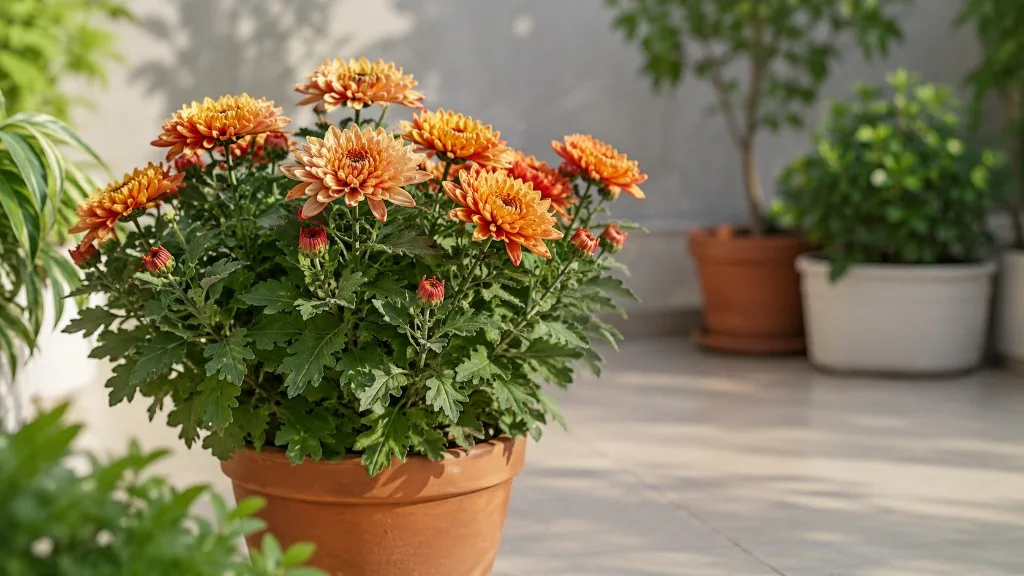
Watering Chrysanthemum: Schedule, Soil Checks & Mistakes
Watering Chrysanthemum: Schedule, Soil Checks & Mistakes
A chrysanthemum in full bloom can look tough right up until the roots fail quietly in wet soil. Chrysanthemum × morifolium - the garden mum and florist mum most people bring home in autumn - has a shallow, fibrous root system that wants steady moisture, fast drainage, and enough oxygen between drinks. Give it a rigid weekly schedule without checking the pot, and you will either rot the crown in cool weather or shorten the bloom flush with repeated drought. The goal is not to water on Tuesday because the calendar says so. The goal is to learn how your container, soil mix, light, and season change dry-down speed, then water only when the root zone is ready.
For most home growers, that means checking soil moisture daily during active display and watering when the top 2 cm (about 1 inch) of mix feels dry. Potted mums in bright heat often need a full drink every one to two days during peak flowering; in cooler rest periods, every three days or longer is common if the pot still holds moisture at depth. In-ground garden mums follow a different rule: about one inch of water per week across the growing season, delivered deeply and less often than a porch pot. Clemson HGIC notes that mums have shallow roots and need ample water during bloom - but the top layer must dry between drinks rather than staying saturated on a fixed calendar.
This guide walks through garden-mum vs florist-mum watering goals, the checks that matter, a seasonal schedule with dormancy rules, clean technique, and the mistakes that turn a showy autumn pot into a wilted rescue project by November. For full species context - hardiness, pinching, and perennial expectations - see the chrysanthemum overview.
Reviewed by LeafyPixels Review Board · Author: sai-ananth · Methodology: Recommendations checked against Clemson HGIC, NC State Extension, Missouri Botanical Garden, Nebraska Extension, Old Farmer’s Almanac, and ASPCA guidance, then aligned with LeafyPixels chrysanthemum cluster data.
Why Chrysanthemum Watering Is Not a Fixed Calendar Date
Chrysanthemums are cool-season bloomers with moderate to fast growth during their active phase, but their water use still swings sharply with environment. Compare two real October setups on the same mild day: a 6-inch nursery pot in full porch sun may need water every 24 to 48 hours because limited soil volume and heated pot walls dry the shallow root zone fast. An in-ground garden mum in the same yard may need only one deep soak per week if rain has not already delivered moisture - the bed holds a larger reservoir and roots explore deeper soil. Calendar watering ignores that gap and creates two predictable failures: chronic overwatering on Chrysanthemum when evaporation slows in cool air, and repeat underwatering on Chrysanthemum when heat and wind pull water faster than you expect.
The plant’s biology explains why tight moisture control matters. Fibrous roots sit close to the soil surface in containers. They absorb water quickly when the mix is evenly moist and aerated, but they suffocate when pore spaces stay filled with water for too long. Crown tissue at the soil line is especially vulnerable to rot when splash watering, poor drainage, or a decorative outer pot traps runoff. Chrysanthemums also bloom heavily when conditions align - flowers and buds are moisture-sensitive, so drought shows up fast as wilting blooms even when older leaves still look acceptable.
Treat watering as a response to soil state, not a recurring appointment. A weekly reminder on your phone is fine if it prompts a check. It is a poor substitute for the check itself. If you change light placement or soil mix, assume the interval must be relearned over the next two weeks.
Garden Mums vs Florist Mums: Different Watering Goals
Commerce uses overlapping names - mum, garden mum, hardy mum - but watering goals depend on why you bought the plant, not the color on the tag. NC State Extension lists Chrysanthemum × morifolium as a herbaceous perennial hardy in USDA Zones 5a through 9b, with fall bloom triggered by shortening days. Garden mums bred for outdoor permanence need steady moisture while establishing roots, then occasional deep water through dry fall spells so crowns do not desiccate before freeze-up. If your goal is a returning perennial, buy labeled hardy stock in spring or early fall with time to root in before winter - not only peak-bloom racks in October.
Florist mums are forced for greenhouse display, exhibition blooms, or cut-flower production. They are often treated as seasonal annuals outside warm zones because root systems and stem structure prioritize a single spectacular flush over winter survival. The Old Farmer’s Almanac notes that fall gift mums in garden centers are often best treated as annuals for overwintering - they were not necessarily bred to survive cold storage the way labeled hardy cultivars are. Without a cultivar tag, assume a grocery-store mum in full October bloom is a display plant first and a long-term perennial second.
The practical watering split: garden mums need consistent moisture through establishment, dry-down checks through bloom, then reduced but not abandoned watering into dormancy. Florist/display mums need flawless moisture through the show - daily checks on sunny porches - then gradually reduced water after petals fade unless you are actively trying to salvage roots for spring. If petals drop and you plan to discard the plant, stop forcing water into a declining root ball. If you plan to repot and overwinter, shift to the dormancy rules below rather than bloom-season frequency.
How Often to Water Chrysanthemum in Pots vs. Garden Beds
Container culture and in-ground culture are different watering problems. Pots limit soil volume, expose more surface area to evaporation, and dry from the top down and the sides inward. Garden beds hold a larger moisture reservoir, benefit from deeper root exploration, and respond better to infrequent deep irrigation. If you remember only one distinction: pots follow dry-down speed; beds follow weekly depth.
Container Mums and Daily Dry-Down
Potted chrysanthemums - porch mums, gift pots, patio displays - should be checked every day while actively blooming or sitting in strong sun. Water when the top 1–2 inches (2.5–5 cm) feel dry. In warm, windy, or full-sun conditions, that can mean watering daily. In mild autumn weather, every two to three days may be enough. NC State Extension lists garden mums under full sun with moist, well-drained soil - which in containers translates to frequent moisture checks rather than a weekly schedule.
Retail pot mums are often rootbound in small containers when you buy them. Tight roots mean the soil mass is small relative to the leafy top, so the pot dries quickly and may need water more often than a freshly repotted plant. That is not a license to water blindly every morning. It is a reason to check daily and to repot into a slightly larger well-draining container if you plan to keep the plant beyond a two-week porch display.
October vignette: A 6-inch plastic nursery mum in full sun on a south-facing step in mid-October - air 18°C (65°F), breezy afternoons - often dries the top 2 cm within 24 hours and needs a full soak when the pot feels light. The same cultivar moved indoors to a cool east window the same week may stay damp three to four days because transpiration and evaporation drop sharply. Same plant, same month, different interval - which is why the calendar fails.
Watch the dry-down pattern, not just surface color. Peat-heavy mixes can look dry on top while staying damp underneath, especially in plastic pots. Terracotta breathes and dries faster than glazed ceramic. A finger or skewer to depth tells you more than a glance.
In-Ground Mums and Weekly Depth
In-ground chrysanthemums generally need about one inch of water per week during the growing season, whether from rainfall or supplemental irrigation. Nebraska Extension notes that one good watering or rain per week - the equivalent of 1 inch - is usually adequate for established plants, while newly set plants should stay uniformly moist during establishment. Mums can survive dry stretches, but bloom size, stem strength, and longevity improve with regular, even moisture rather than boom-and-bust cycles. Deep watering at the base once or twice a week beats light daily sprinkles that never reach the lower roots.
Missouri Botanical Garden recommends well-drained soil and full sunlight for in-ground mums, which pairs with deep rather than shallow irrigation. Use a soaker hose or drip line along the row when possible - Clemson HGIC’s disease guidance recommends avoiding overhead irrigation that wets leaves and spreads foliar pathogens.
Watering Frequency Quick-Reference
Use this table as a starting range. Always confirm with finger, skewer, and pot-weight checks before watering.
| Situation | Light / season | Typical check interval | Water when |
|---|---|---|---|
| 6–8 in. porch pot, active bloom | Full sun, warm autumn | Daily | Top 2 cm dry; pot light |
| 10–12 in. patio container, bloom | Part sun, mild autumn | Every 2–3 days | Top 2–5 cm dry |
| Indoor hold, post-bloom | Low light, cool room | Every 5–10 days | Top half approaching dry |
| Dormant potted storage | Cool garage 0–10°C | Every 2–4 weeks | Soil nearly dry at depth |
| In-ground garden mum, active growth | Full sun, summer–fall | Weekly (+ rain) | ~1 in./week total moisture |
| In-ground hardy mum, late fall | Cool, rain possible | As needed | Deep soak in dry spells before freeze |
| Florist gift pot, peak bloom | Bright display | Daily | Top 2 cm dry; drain cachepot |
The Best Soil Moisture Checks Before You Pour
Every reliable chrysanthemum watering routine rests on the same principle: verify root-zone readiness before adding water. Three checks work together - depth moisture, probe clarity, and pot weight - and you do not need special tools beyond your hand and a wooden skewer or chopstick.
Use the same check method consistently for two weeks and you will start to recognize this plant’s rhythm in your home. That learned pattern is more valuable than any generic interval printed on a care tag.
Finger and Skewer Depth Test
The finger test is the fastest daily check. Press into the mix to 2–5 cm (1–2 inches). If the soil feels cool and clings to your skin, wait. If it feels dry and crumbly at that depth, prepare to water after confirming with pot weight.
The skewer or chopstick test helps when you are unsure or when the plant is in a deep pot. Insert the probe to several inches, leave it for thirty seconds, then pull it out. Moist soil leaves a dark mark and may cling; dry soil shows little change. For chrysanthemums, the decision threshold is readiness at the upper root zone, not desert dryness through the entire ball. You want a cycle of full saturation followed by partial dry-down, not constant sogginess or repeated complete drought.
The Pot-Weight Lift Test
Pot weight is the check experienced growers trust most. Lift the container right after a thorough watering and notice the heft. Lift it again before the next watering. A pot that feels substantially lighter has lost much of its available moisture. If the pot still feels heavy and cool at the base, roots are likely sitting in wet mix even when the surface looks acceptable.
Container size changes how fast weight shifts: larger pots hold more moisture and slow the schedule; small pots dry quickly. Learn the weight of your specific pot after watering and at the point when the plant clearly needs another drink. That calibration separates dry-soil wilt (light pot, dry probe) from wet-soil wilt (heavy pot, damp probe) faster than looking at leaves alone.
A Practical Chrysanthemum Watering Schedule by Season
Season changes evaporation, growth speed, and bloom demand at the same time, which is why autumn mums confuse so many growers. Air feels cooler, so people water less - but a blooming pot on a sunny step can still dry in a day. Use season as a starting range, then let soil checks override it.
Active flowering display (autumn porch season): Check daily. Water when the top 2 cm is dry - often every one to two days in sun and wind. Blooms and buds fail fast if the root ball repeatedly swings between saturated and parched. Clemson HGIC warns that too little water slows or stops growth entirely, and mums especially need ample moisture during bloom.
Cooler rest period after main flush: Growth slows. Extend the interval toward every three days or longer, but only if depth checks and pot weight confirm dryness is approaching. Cool soil plus reduced light can keep mix wet longer; this is when overwatering in fall becomes common. Clemson HGIC’s disease factsheet notes that overwatering causes yellowing leaves that blacken and drop, while drought produces woody, stunted growth.
Indoor holding through winter (if you keep the plant): Water sparingly and check more carefully than you water. A mum in dimmer, cooler indoor air may need water only when the top half of the mix is approaching dry. Never assume summer frequency still applies after you move it away from porch sun.
Return to active growth in spring: As light strengthens and new shoots appear, shorten the dry-down interval again. Resume thorough watering when the top layer dries, and pair the change with stable light rather than jumping water alone.
Hardy Garden-Mum Dormancy and Overwinter Storage
Hardy garden mums in Zones 5–9 can overwinter outdoors with good drainage and early root establishment. After the main flush fades, reduce frequency gradually as growth slows - but do not abandon in-ground plants during dry fall spells; roots still need moisture until the soil freezes if you expect perennial return. The chrysanthemum overview covers planting timing and crown protection in more depth.
For potted stock overwintered indoors, the Old Farmer’s Almanac recommends potting up after first fall frost, leaving foliage until spring, and keeping roots damp but not soggy in a basement or dark cool closet - checking pots weekly and watering when soil approaches dry. In extremely cold margins, dormant storage at roughly 32–50°F (0–10°C) with light water every two to four weeks beats warm-room bloom schedules that keep cold wet soil around resting crowns. Soggy cold mix is more dangerous than slight dryness for dormant mums.
Post-bloom florist mums: If you are not overwintering, reduce water as petals drop and stems brown. If you are salvaging for spring, shift to dormancy rules after repotting into fresh well-drained mix - not daily bloom-season soaks on a declining root ball.
How to Water Chrysanthemum the Right Way
Technique matters as much as timing. Chrysanthemums are prone to foliar fungal issues when leaves and flowers stay wet in cool, still air. Water at the base of the plant, directing flow onto the soil surface rather than over the dome of blooms. Clemson HGIC recommends watering the soil without wetting foliage to reduce disease pressure. A watering can with a narrow spout or a hose wand works well for containers; a soaker hose or drip line is ideal for garden rows.
Water thoroughly until excess runs from drainage holes. Partial top sprinkles train shallow dry zones and leave the core thirsty. After watering, empty the saucer within thirty minutes so the pot is not sitting in a reservoir. Chrysanthemum is toxic to cats, dogs, and horses per the ASPCA - wear gloves if sap irritates your skin, and discard saucer water where pets cannot drink it. If the plant lives inside a decorative cachepot, lift the inner pot to water, drain fully, then return it - never let the outer shell collect standing water.
Avoid splashing the crown where stems meet soil. Crown rot starts quietly and shows up later as mushy stems, sour-smelling mix, and collapse despite your best intentions.
Top-Watering vs Bottom-Soaking
Top-watering should be your default method. It refreshes the entire soil column when done slowly enough for the mix to absorb water evenly, and it flushes accumulated salts from fertilizer residue better than passive soaking.
Bottom-soaking is a recovery tool, not a daily habit. When extremely dry mix turns hydrophobic - water runs down the sides and out the bottom without wetting the root ball - place the pot in a bucket or tray of water and let it absorb from below for 30 to 60 minutes. Remove the pot, let it drain completely, then return to normal top-watering once the root ball is evenly rehydrated. Do not leave pots submerged indefinitely; that reverses the problem and invites rot.
Signs Your Chrysanthemum Is Overwatered
Overwatering is the more common serious failure for container chrysanthemums, especially in autumn when cool air tricks growers into pouring water on schedule while soil stays wet at depth. Overwatered mums can look thirsty, which pushes people to water even more.
Watch for these patterns together, not in isolation:
Yellowing lower leaves often appear first. Older foliage yellows while the mix remains damp because damaged roots cannot move nutrients effectively.
Wilting despite wet soil is a hallmark sign. Roots deprived of oxygen cannot uptake water, so stems flop even though you watered yesterday. Clemson HGIC describes this pattern when overwatering damages shallow roots that cannot absorb moisture from saturated mix.
Stunted or reduced bud development happens when the root zone stays too wet for too long. Energy that should fuel blooms gets diverted to survival.
Soft, darkening stems at the soil line suggest early crown rot. Gentle pressure on a healthy crown feels firm; infected tissue yields and may smell sweet or sour.
White or fuzzy mold on the soil surface points to persistent surface moisture and poor airflow.
Sour or fermented smell from the pot means anaerobic conditions are building - a serious warning to stop watering and inspect roots.
If several of these appear together, pause irrigation, improve drainage, empty any trapped runoff, and assess whether repotting into fresh mix is necessary before the plant declines further.
Signs Your Chrysanthemum Needs Water Soon
Underwatering is usually easier to correct if you catch it early, but repeated drought damages fine roots and makes the plant react poorly when water finally returns. Chrysanthemums are not drought-tolerant xeriscape plants; they expect moderate, steady moisture.
Wilting flowers and buds are often the first visible signal during bloom. Leaves may still look normal briefly while the most moisture-hungry tissue collapses.
Drooping stems and limp new growth follow as dehydration progresses.
Dry, crumbly soil several centimeters down confirms the wilt is moisture-related rather than root rot on Chrysanthemum.
A very light pot relative to its post-watering weight supports the underwatering diagnosis.
Dull gray-green foliage tone and cracked soil surface appear with more prolonged dryness. Clemson HGIC notes that too little water slows or stops growth entirely.
Premature flower drop can follow a single severe dry episode. One missed watering on a hot afternoon can shorten the display you bought the plant for.
The critical distinction from overwatering: underwatered plants wilt with dry soil and a light pot. Overwatered plants wilt with wet soil and a heavy pot. When both leaf yellowing and wilt appear, soil moisture at depth and pot weight separate the two faster than looking at leaves alone.
When Soil Becomes Water-Repellent
Dry peat-based mixes in small pots can reach a point where water channels around the root ball instead of soaking in. You water, see runoff immediately, and assume the plant is hydrated while the center stays dry. The mum then wilts from drought in a pot that “got watered.”
Signs include water pooling on the surface, rapid runoff from drainage holes within seconds, and a pot that feels oddly light despite recent watering attempts. Blooms wilt while soil at the very top may look briefly darkened but the core remains powder-dry.
Fix it with a slow top-water applied in pulses - water a little, wait ten minutes, repeat until the mix swells and accepts moisture - or with a bottom soak for thirty to sixty minutes. After recovery, resume regular thorough watering to prevent re-drying into a brick. Severely rootbound plants may need repotting so there is enough mix to hold an even moisture gradient.
Hydrophobic soil is a reason to soak, not a reason to switch permanently to bottom-watering for every cycle.
Pot Size, Drainage, and Cachepot Risks
Drainage hardware is non-negotiable for long-term chrysanthemum health. At least one free-draining hole - preferably several - should let water exit after every irrigation. Stones at the bottom of a pot do not fix a lack of holes or poor soil structure.
Cachepots and decorative sleeves are the hidden failure point on gift mums. Water drains from the nursery pot into a sealed outer shell and sits around the roots all day. Always remove or drain the outer container after watering. If you want the decorative look, double-pot with air gap or lift-and-drain every time.
Pot sizing should match the root ball plus modest room to grow. A pot only slightly larger than the roots dries on a predictable rhythm. An oversized pot holds a ring of wet unused mix that keeps roots cold and oxygen-starved - a setup that feels generous but causes chronic overwatering.
After repotting, expect slower dry-down until roots explore the new mix. Many growers overwater freshly repotted mums because the old schedule no longer matches the larger soil volume.
Frost plus wet soil is a separate crown risk for in-ground mums: saturated cold soil around the crown invites rot. Improve drainage in clay beds and avoid heavy irrigation immediately before hard freeze when the plant is entering dormancy.
Common Chrysanthemum Watering Mistakes
Most watering failures repeat the same few habits. Recognizing them early saves blooms.
Watering on a calendar without checking soil is the top mistake. Tuesdays are not inherently dry days.
Treating “keep moist” as “keep wet” suffocates roots. Chrysanthemums want moisture availability, not constant saturation.
Using a decorative pot as a water reservoir rots roots within days on a cool porch.
Splashing blooms and foliage encourages fungal problems and wastes water to evaporation.
Giving tiny daily sips instead of thorough watering builds shallow dry pockets and salt buildup without hydrating the core.
Ignoring weight and depth after repotting or moving leaves you on an obsolete schedule.
Stacking fixes during stress - repotting, fertilizing, and increasing water at the same time - hides what actually caused the decline.
Assuming wilt always means dry soil leads to fatal extra watering during root rot.
Letting the plant dry to wilting repeatedly to “avoid overwatering” damages roots and shortens bloom life.
Misting instead of soil watering does not replace root-zone moisture and may worsen leaf disease pressure.
Each mistake is preventable with checks-first habits and complete drainage after every full watering.
When to use this page vs other Chrysanthemum guides
- Chrysanthemum overview - Start here for whole-plant context before deep-diving this topic.
- Chrysanthemum problems hub - Jump to symptom-specific fix guides when this care topic does not resolve the issue.
- Overwatering on Chrysanthemum - Escalate here when watering adjustments are not enough.
- Underwatering on Chrysanthemum - Escalate here when watering adjustments are not enough.
- Root Rot on Chrysanthemum - Escalate here when watering adjustments are not enough.
Related Chrysanthemum guides
- Chrysanthemum overview
- Chrysanthemum light
- Chrysanthemum soil
- Chrysanthemum propagation
- Chrysanthemum fertilizer
- Chrysanthemum repotting
- Overwatering on Chrysanthemum
- Underwatering on Chrysanthemum
- Root Rot on Chrysanthemum
- Wilting on Chrysanthemum
- Drooping Leaves on Chrysanthemum
- Mold on Soil on Chrysanthemum
Conclusion
Watering chrysanthemum well comes down to a simple discipline applied consistently: check the soil, confirm with pot weight, water thoroughly at the base, and let the mix dry before the next full drink. Pots in active autumn bloom often need attention every one to two days in sun; cooler rest phases stretch toward every three days or longer only when depth checks say it is time. Garden mums in the ground follow weekly depth rather than daily frequency.
Match your routine to why you own the plant - a porch display mum, a labeled hardy garden perennial, or a post-bloom salvage project - and link watering to real light and soil conditions rather than a tag interval. When petals fade, reduce water unless you are actively overwintering; when spring shoots return, relearn dry-down speed before increasing volume. The mistakes that kill display mums are almost never mysterious - they are calendar watering, trapped runoff in decorative pots, and extra water on wilted plants sitting in already wet soil. Your chrysanthemum rewards checks-first habits with firmer stems, longer-lasting blooms, and roots that still breathe when the season turns cold.