Drooping Leaves on Chrysanthemum (Mum): Causes, Checks &
Quick answer
Drooping leaves on Chrysanthemum usually mean lower foliage lost turgor while the crown is still firm-often from dry soil in full sun, soggy crowns in cool rooms, or normal post-bloom aging. First step: push your finger into the top 1–2 cm of mix and lift the pot before you water or prune.
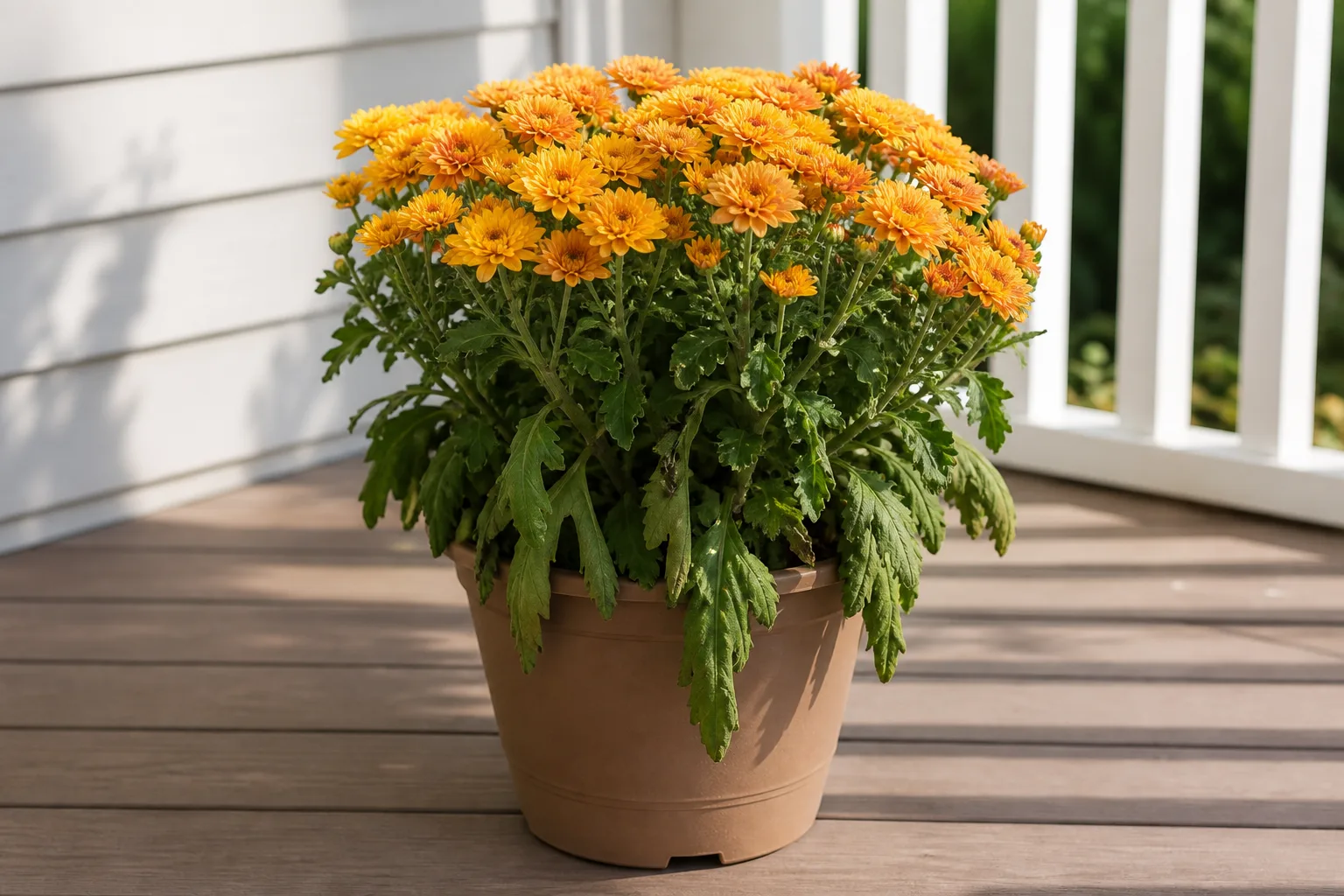
Drooping Leaves on Chrysanthemum (Mum): Causes, Checks & Fixes
This guide covers drooping leaves on Chrysanthemum. See also the general Drooping Leaves guide, watering, and light pages for this plant.
Drooping Leaves on Chrysanthemum (Mum): Causes, Checks & Fixes
Quick answer
Drooping leaves on Chrysanthemum (Chrysanthemum × morifolium) usually means lower foliage has lost turgor while the crown and upper stems are still firm-a partial sag pattern, not always a whole-plant crisis. On porch mums in full sun during autumn bloom, shallow roots dry fast and lower leaves hang first. In cool rooms or overwatered gift pots, soggy crowns produce the same limp look with wet soil.
First step: push your finger into the top 1–2 cm of mix and lift the pot. Dry, light soil with drooping lower leaves calls for a thorough soak until water drains, then an emptied saucer. Cool, heavy, damp soil with sagging foliage means stop watering and inspect the crown before you add more water. If droop appears only in midday heat and the plant perks by evening on moist soil below the surface, you are likely seeing temporary heat stress, not drought.
For full canopy collapse or paradoxical wilt on wet mix, see the wilting guide. For chronic wet-soil failure, see overwatering and root rot.
What drooping leaves look like on Chrysanthemum
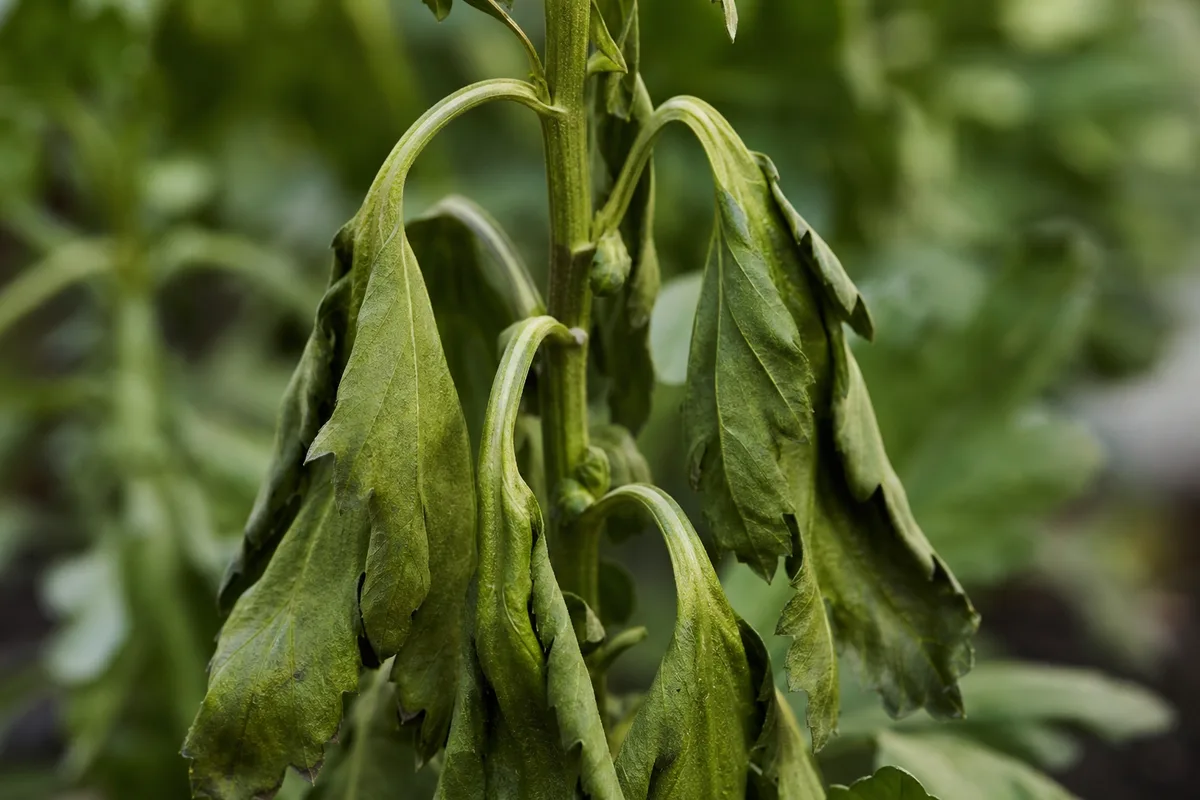
Lower leaves hang downward with lost turgor while the crown and upper stems remain relatively upright - classic partial droop on a blooming mum.
On a healthy mum, stiff leaves angle upward from branching stems and support open blooms without folding. Drooping changes that profile in ways that help you branch the diagnosis.
Lower-leaf droop with firm crown is the classic partial pattern. Bottom leaves hang while newer growth and buds at the stem tips still look upright. Leaves may feel thin and slightly curled if soil is dry, or yellow-tipped if stress has lasted several days. This often follows a missed watering on a sunny porch, a root-bound nursery pot that dried overnight, or normal aging after peak bloom.
Wet-soil droop shows limp lower leaves while the mix stays dark, cool, and heavy. Yellowing often starts from the bottom up. You may smell sourness at the drain holes or see fungus gnats near the surface. The crown-the tight cluster where new shoots emerge-may feel soft if rot is advancing. Upper leaves can still look green for a while, which is why owners keep watering.
Afternoon heat droop appears on mums in direct sun during warm autumn days. Lower outer leaves and open flowers may sag by mid-afternoon even when soil is moist an inch below the surface. If the plant looks normal by morning and the crown is firm, this is usually temporary heat stress, not a call for more water.
Post-bloom sag is common and often normal. Spent flowers weigh stems downward, and older lower leaves yellow and hang as the plant winds down its display flush. The crown should stay firm, roots should not smell sour, and soil moisture should stay even-not swinging between bone dry and soggy.
Nursery-pot droop hits grocery-store and garden-center mums hard. Tight peat in a small plastic pot dries on the surface while the core stays wet, or the opposite-a dry root ball inside a foil wrapper with no drain holes after one heavy drink. Leaves droop within a day of bringing the plant home because the root zone and your new site do not match yet.
Why Chrysanthemum gets drooping leaves
Mums carry dense autumn blooms on shallow, fibrous roots that respond quickly to moisture swings. That biology explains why droop shows up faster than on many deeper-rooted houseplants during peak transpiration in full sun.
Underwatering during full-sun bloom
Potted mums in full sun may need daily moisture checks during peak bloom because shallow roots dry quickly in heat. A blooming mum on a sunny porch can lose turgor in lower leaves within hours if the top inch of mix goes dry while flowers continue pulling water. This is the most common fixable cause of partial droop-not disease.
Overwatering and early crown stress
Mums want steady moisture but not a soggy crown, especially in cool indoor air where evaporation slows. Overwatering causes yellowing leaves that blacken and drop on chrysanthemums. Chronic wetness at the soil line keeps lower leaves limp even though you water faithfully. See overwatering when wet soil and yellow lower leaves pair together.
Heat stress without drought
During the hottest part of the day, mums can lose water through leaves faster than roots absorb it, producing temporary droop on otherwise moist soil. Wilting during midday heat with recovery by morning often signals heat stress, not drought. Do not pour more water until you confirm the top inch is actually dry.
Root-bound or peat-heavy nursery pots
Display mums are often root-bound in small containers with peat-heavy mix. The pot dries unevenly, water runs down the sides without rewetting the core, or the crown stays wet after repotting shock. Either pattern droops lower leaves first while the plant adjusts.
Post-bloom senescence
After flowering, energy shifts away from older foliage. Lower leaves yellow, soften, and hang while spent blooms weigh branches. This is expected on seasonal display mums if the crown stays firm and you are not also fighting wet rot or drought.
Repotting and transplant shock
Moving a blooming mum from a nursery pot into a decorative container-or planting a garden mum late in autumn-disturbs shallow roots. Open leaves may droop for several days even when you water correctly, especially if roots were torn, buried too deep, or left in dry pockets.
How drooping leaves differ from wilting on Chrysanthemum
Drooping leaves - partial sag, usually lower or outer foliage, while the crown and upper growth stay relatively firm. Often gradual, seasonal, or tied to one-sided moisture stress.
Wilting - broader loss of turgor across much of the plant, often sudden, with dry or paradoxically wet soil driving a water crisis. See the wilting guide when the whole mound collapses or limp leaves persist all day on wet mix.
| Sign | Drooping leaves | Wilting |
|---|---|---|
| Scope | Mostly lower/outer leaves | Whole plant or large sections |
| Crown | Usually firm early | May soften if rot advances |
| Timing | Gradual or afternoon-only | Often sudden or all-day |
| First check | Top-inch moisture + pot weight | Same, but treat as higher urgency |
How to confirm the cause
Work through these checks in order so you do not water a rotting crown or prune healthy senescent leaves unnecessarily.
- Top-inch moisture - Insert a finger or skewer into the top 1–2 cm. Dry confirms drought-driven droop; damp with limp lower leaves suggests crown stress or rot. Match this to the watering guide dry rule before the next drink.
- Pot weight - Lift the pot. Light plus droop equals dry. Heavy, cool pot plus droop equals oversaturated mix or failed roots.
- Time of day - Afternoon-only sag on moist soil points to heat stress. All-day droop on dry soil points to underwatering. All-day droop on wet soil points to overwatering or root rot.
- Leaf pattern - Yellowing from the bottom up on wet mix strongly suggests root trouble. Even droop on dry mix with firm crown is more recoverable thirst.
- Crown feel - Press the base of stems gently. Firm crown with drooping outer leaves is a better sign than soft, dark, or collapsing tissue at the soil line.
- Bloom stage - Heavy open flowers plus dry soil often explain outer branch sag. Spent blooms plus yellow lower leaves after peak flowering may be normal senescence.
- Pot context - Remove foil wrappers, confirm drain holes, and check whether the nursery root ball is tight against the pot sides.
- Light placement - Blooming mums need full sun per the light guide and overview. Dim shelves slow growth and keep soil wet too long; full sun without matching water checks dries pots fast.
Quick pattern guide
| Soil at top 1–2 cm | Pot weight | Time pattern | Likely cause | First action |
|---|---|---|---|---|
| Dry | Light | Worse in afternoon sun | Underwatering in bloom | Soak until drainage; empty saucer |
| Moist below, dry surface | Medium | Midday only, perks by evening | Heat stress | Verify morning moisture; avoid extra water |
| Wet / cool | Heavy | All day | Overwatering / early rot | Stop watering; check crown and drainage |
| Even moisture | Normal | After bloom ends | Post-bloom senescence | Remove spent flowers; maintain even moisture |
| Variable | Light but core dry | After bringing home | Nursery dry pocket | Bottom-soak once, then daily top checks |
First fix for Chrysanthemum
One clear first action: confirm top-inch moisture and pot weight before you water, prune, or repot.
- Dry soil, light pot: Water thoroughly at the soil surface until excess drains from the holes, then empty the saucer within 30 minutes. Recheck daily during hot bloom in full sun.
- Wet soil, heavy pot: Stop watering until the top inch dries. Confirm drain holes are open, remove cachepot wrappers, and inspect the crown for softness. If rot is confirmed, follow root rot steps-do not fertilize.
- Midday heat droop on moist soil: Wait until evening before reacting. If the plant recovered overnight, adjust timing so soil is adequately moist in the morning-not soaked again at midday.
- Post-bloom lower-leaf sag with firm crown: Trim spent flowers and yellowed lower leaves if they block airflow. Keep even moisture without soaking the crown.
Make one care correction at a time so you can read the plant’s response over the next week.
Step-by-step recovery by cause
Dry-soil droop during bloom
Water at the base until the root zone is evenly moist and drainage runs clear. Empty saucers. Move the pot if it sits in all-day reflected heat without afternoon recovery-extreme reflected heat may need brief shade, but mums still need strong sun for bloom. Expect lower leaves to firm within hours to one day if roots are healthy.
Wet-crown droop
Stop watering until the top inch dries. Improve drainage-poke clear holes, repot into well-drained mix only if roots are mushy or the nursery ball never dries. Remove clearly rotted lower stems at firm tissue. Recovery is measured in weeks by new shoots from the crown, not by old yellow leaves re-standing.
Heat-stress droop
Ensure the plant received adequate moisture in the morning. Avoid overhead soaking of dense blooms in late day. If sag repeats daily on moist soil, verify roots are not also compacted or rotting-heat droop and wet-root failure can overlap on stressed display pots.
Nursery-pot adjustment
Remove decorative wraps. If the root ball is extremely dry and water runs off the surface, bottom-soak the pot for 30–60 minutes once, then return to top-watering when the top inch dries. If the core stayed wet while leaves drooped, stop top watering until the upper layer dries.
Post-bloom cleanup
Deadhead spent flowers to reduce stem weight. Peel off yellow lower leaves if they touch wet soil. For hardy garden mums you plan to keep, transition to outdoor full sun and good drainage per the overview-florist-type display mums may not survive winter even with good care.
Recovery timeline
| Pattern | What to expect |
|---|---|
| Mild drought droop | Leaves often firm within hours to one day after proper soak |
| Heat droop | Same evening or next morning if roots are healthy |
| Wet-root stress | One to three weeks; judge by new crown shoots |
| Crown rot | Partial save possible; may need division or discard |
| Post-bloom senescence | Lower leaf drop over weeks; not an emergency if crown is firm |
| Repot shock | Several days to two weeks for turgor to stabilize |
Damaged lower leaves may not fully re-firm. Judge success by stable new growth from the crown, not by old foliage standing upright again.
Lookalike symptoms
Wilting - broader canopy collapse; higher urgency when soil is wet. See wilting.
Underwatering with crispy edges - dry soil plus brown leaf margins; see underwatering.
Leggy stretch - long weak stems reaching for light with pale small leaves; fix light first per not enough light, not more water.
Pest stippling - spider mites can cause leaf decline on stressed mums; inspect undersides for webbing or speckles before assuming water alone is the issue.
What not to do
Do not water automatically when only lower leaves droop-confirm soil moisture first. Do not keep retail foil wrappers on pots without drainage. Do not fertilize a stressed mum to perk it up; roots need stability first. Do not stack repotting, heavy pruning, and pesticide on the same day. Do not move a blooming mum to dim indoor light to stop droop-you will trade one stress for weaker growth and wetter soil.
When removing yellowed or drooping leaves, remember that chrysanthemum is toxic to cats and dogs. Bag and discard fallen foliage if pets might chew it; wash hands after handling.
How to prevent drooping leaves next time
Match everyday care to how mums actually grow: full sun during bloom, top 1–2 cm dry before watering, and free-draining pots with emptied saucers. During autumn display, check moisture daily on sunny porches. After bloom, trim spent flowers promptly so weight does not keep lower stems bent into wet soil.
For perennial garden mums, plant early with good drainage and avoid burying the crown too deep-NC State Extension lists high organic matter and good drainage as core requirements for Chrysanthemum × morifolium. Florist display mums are often treated as seasonal color; expect more post-bloom droop even with correct care.
When to worry
Treat droop as urgent if the crown turns soft and dark on wet soil, grey mould spreads on lower stems, or lower leaves keep yellowing while you have stopped watering for several days. Also act fast during peak bloom if a full-sun pot goes bone dry-buds abort quickly when roots cannot keep pace.
Normal post-bloom lower-leaf droop with a firm crown and even moisture is not an emergency. If you are unsure whether sag is senescence or rot, compare crown firmness and soil smell before pruning heavily.
Related Chrysanthemum guides
- Chrysanthemum care overview - light, water, bloom timing, garden vs florist mums
- Watering Chrysanthemum - top-inch dry rule and bloom-season rhythm
- Light for Chrysanthemum - full sun needs during growing season
- Overwatering on Chrysanthemum - wet soil with limp leaves
- Wilting on Chrysanthemum - whole-plant turgor loss
- Root rot on Chrysanthemum - soft crown on wet mix