Overwatering on Chrysanthemum: Causes, Checks & Fixes
Quick answer
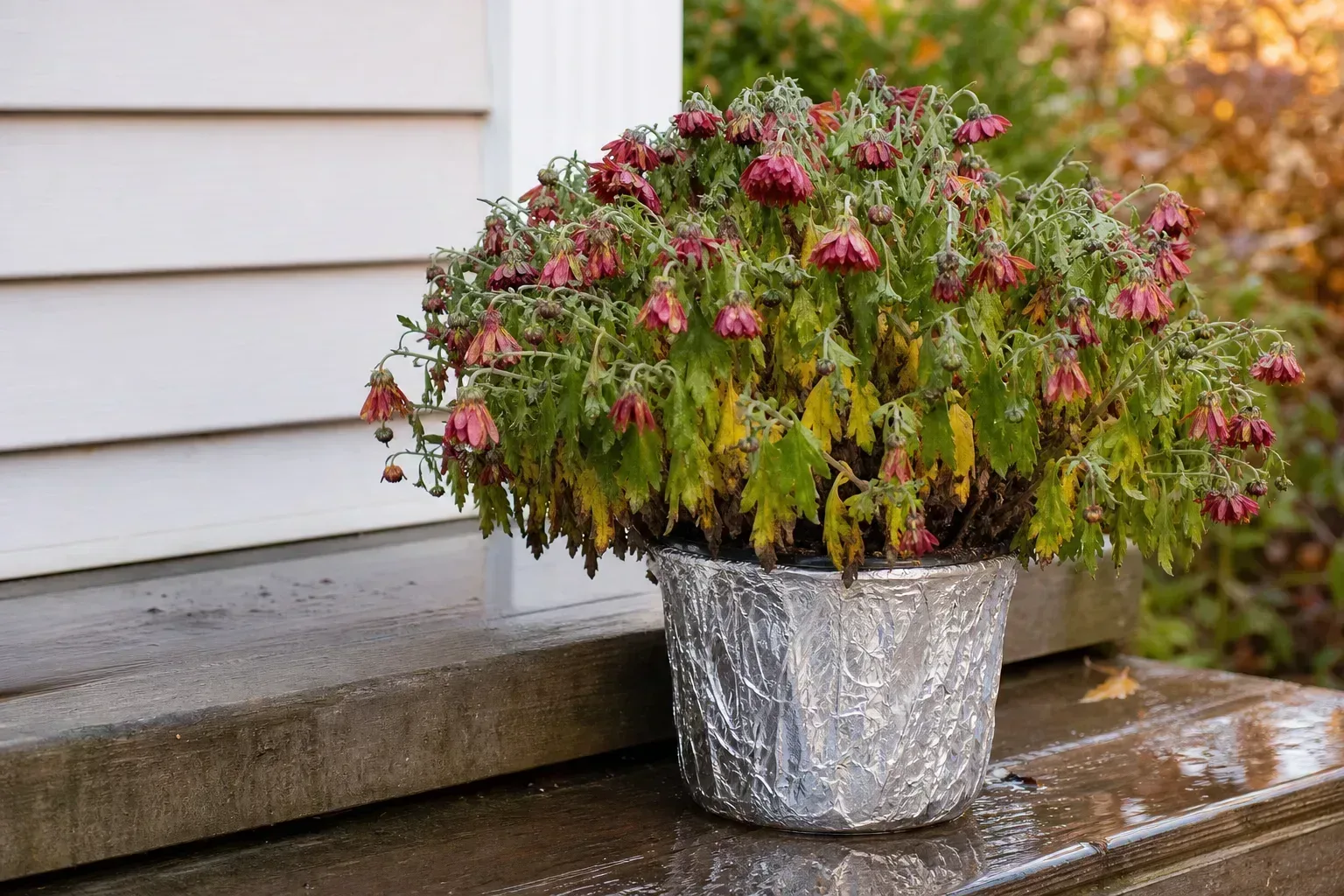
Overwatering on Chrysanthemum means shallow fibrous roots sit in wet mix too long - common in cool autumn weather, foil-wrapped florist pots, and cachepots that trap runoff. First step: stop watering, empty all standing water, and let the top 2 cm (1 inch) of mix dry while you confirm drainage.
Overwatering on Chrysanthemum: Causes, Checks & Fixes
This guide covers overwatering on Chrysanthemum. See also the general Overwatering guide, watering, and light pages for this plant.
Overwatering on Chrysanthemum: Causes, Checks & Fixes
Quick answer
Overwatering on Chrysanthemum (Chrysanthemum × morifolium - the florist’s mum and garden mum most people buy in autumn) is not one generous drink. It is soil that stays wet too long around shallow fibrous roots, standing water in saucers or cachepots, or daily watering without checking whether the top layer has actually dried. Clemson HGIC notes that overwatering causes yellowing leaves that blacken and drop - the opposite of drought, which produces woody stunted growth on the same plant.
First step: stop all watering, empty every saucer and decorative outer pot, and let the top 2 cm (about 1 inch) of mix dry while you confirm drainage holes are open. Do not pour more water because blooms look limp while soil is already wet - that paradoxical wilt means roots cannot absorb moisture from saturated mix.
This page is the canonical wet-soil hub for the chrysanthemum cluster - foil-wrap traps, paradoxical bloom wilt, heavy-vs-light pot diagnosis, and crown-recovery escalation before confirmed decay. For baseline watering technique and seasonal schedules, see the Chrysanthemum watering guide and the Chrysanthemum overview. If mushy roots or a collapsed crown appear during inspection, move to the root rot guide - this page covers early wet-soil intervention before decay is confirmed.
Overwatering vs. underwatering vs. heat wilt on Chrysanthemum
Three patterns look alike on autumn mums but need different first actions:
| Pattern | Pot weight | Top inch | Bloom/stem look | First path |
|---|---|---|---|---|
| Overwatering | Heavy, cool | Damp or wet | Wilting blooms on saturated mix | Stop water; drain vessels |
| Underwatering | Light | Dry, crumbly | Limp stems, dull gray-green tone | One thorough drink at soil base |
| Heat wilt | Moderate | Moist but not saturated | Midday droop, firms by evening | Shade or morning water - not another soak |
The critical fork: underwatered mums wilt with dry soil and a light pot. Overwatered mums wilt with wet soil and a heavy pot. Pot weight at depth separates the two faster than looking at blooms alone. Heat wilt recovers when the sun angle drops - overwatering does not.
What overwatering looks like on Chrysanthemum
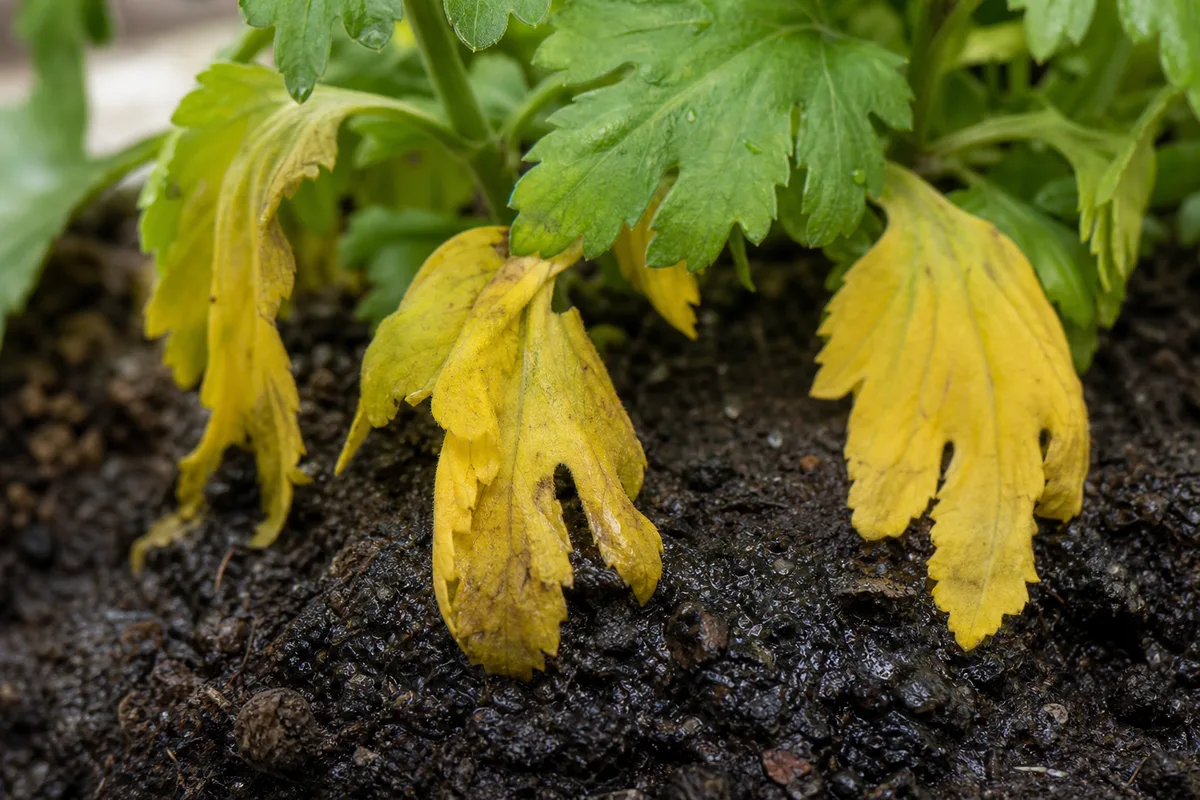
Yellowing lower leaves hang limp above dark, damp mix - wilting blooms on wet soil mean roots cannot absorb water, not drought.
The hallmark pattern on autumn mums is wilting blooms and limp stems while the pot still feels heavy and cool. Shallow roots suffocate in wet mix, so the plant cannot move water upward even though you watered yesterday. Pythium root rot on chrysanthemum begins with wilting, chlorosis, and water-soaked decayed roots - the plant cannot absorb water even when surrounded by it.
Other common signs together - not in isolation:
- Yellowing lower leaves while mix at depth stays damp
- Pot stays heavy several days after the last watering
- Stunted or reduced bud development during what should be peak bloom
- Soft, darkening stems at the soil line - early crown rot
- White or fuzzy mold on the soil surface
- Sour or fermented smell from the drainage hole
- Small fungus gnats when soil never dries between drinks
- Edema or soft water-soaked spots on foliage in persistently wet conditions
What it does not look like: A single spent bloom drooping on an otherwise firm plant with appropriate dry-down is often normal senescence after the flower finishes. Crispy leaves with a light pot and dry mix throughout usually mean underwatering - not overwatering. Midday droop in hot sun that recovers by evening with adequate soil moisture is heat wilt; see wilting for that distinction.
Visual confirmation tip: When photographing or comparing your plant, capture the pot from below - a foil-wrapped gift mum with standing water in the sleeve looks turgid from above but stays heavy and cool at the base. A light dry pot beside it on the same porch is the underwatering contrast.
Why Chrysanthemum gets overwatered
Chrysanthemums are marketed as thirsty autumn bloomers, which is half true. NC State Extension lists garden mums under full sun with moist, well-drained soil - moisture available, not constant saturation. Growers often interpret “keep moist” as “keep wet,” especially when cool autumn air makes the soil feel like it should need less frequent checks but they still pour water on a calendar schedule.
Shallow roots and crown vulnerability
Fibrous roots sit close to the soil surface in containers - chrysanthemums require well-drained soils because of their relatively shallow root system. They absorb water quickly when mix is evenly moist and aerated, but they fail fast when pore spaces stay filled with water. Crown tissue where stems meet soil is especially vulnerable - splash watering, poor drainage, or a decorative outer pot trapping runoff invites rot at the exact point new shoots emerge. Water the soil without wetting foliage to reduce disease pressure on this susceptible zone.
Autumn florist pots, foil wrap, and cachepots
Retail mums arrive rootbound in small nursery pots, often wrapped in decorative foil or plastic sleeves with no drainage exit. Water runs into the pot, collects in the foil bottom, and keeps roots cold and oxygen-starved all day. Cachepots and decorative sleeves are the hidden failure point on gift mums - always remove or drain the outer container after every watering. If you want the decorative look, double-pot with an air gap or lift-and-drain every time.
Cool porch weather compounds the trap. Air feels crisp, so people water less often in their minds - but they still add a full drink when blooms droop, not realizing evaporation has slowed and the mix is already wet at depth. Mums need regular watering because roots are shallow - the check must be daily during bloom, but the answer is not always “water.”
Setup mistakes that keep pots wet
- Calendar watering without finger or weight checks
- Oversized pots where a modest root ball sits in a large wet zone that never dries
- Heavy peat mix without perlite in a glazed ceramic container
- Blocked or missing drainage holes - including foil-wrapped bottoms
- Low light after moving indoors, slowing evaporation while watering continues on the sunny-porch schedule
- Cool rooms where chilled roots function poorly and wet mix lingers longer
- Misting foliage while soil is already waterlogged - humidity plus wet roots compound stress without fixing root-zone oxygen
Because mums bloom heavily when conditions align, flowers and buds are moisture-sensitive. Overwatering during display season stalls bud development and yellows lower leaves while mix stays damp - the plant looks thirsty, which pushes owners to water even more.
Lookalike symptoms to rule out
| What you see | Likely cause | Urgency | Where to read next |
|---|---|---|---|
| Limp blooms, heavy wet pot, yellowing lower leaves | Overwatering / early root stress | Routine dry-down | This page |
| Light pot, dry top inch, wilted flowers, dull gray-green tone | Underwatering | Water once at soil base | Underwatering |
| Midday droop in hot sun, recovers evening, adequate moisture | Heat wilt | Shade or morning water | Wilting |
| Wet mix plus soft crown, sour smell, mushy roots on unpotting | Advancing root or crown rot | Same-day unpot | Root rot |
| Yellow lower leaves with wet soil plus tiny flying insects | Fungus gnats from wet mix | Monitor while drying | Fungus gnats |
| Yellowing with appropriate dry-down, firm crown | Symptom overlap - inspect roots | Confirm before acting | Yellow leaves |
The critical distinction: underwatered mums wilt with dry soil and a light pot. Overwatered mums wilt with wet soil and a heavy pot. Pot weight at depth separates the two faster than looking at blooms alone.
How to confirm overwatering
Work through these checks in order before changing anything else:
- Pot weight - Lift the container. Heavy and cool days after watering supports overwatering. A noticeably lighter pot may mean drought instead.
- Moisture at the top 2 cm - Press a finger about one inch deep. If soil feels cool and clings to your skin, wait. Dry and crumbly at that depth means a dry-down cycle has started. A wooden skewer withdrawn with moist particles confirms wetness lower down.
- Bloom and leaf pattern - Wilting flowers and buds with wet mix fits overwatering on mums during active bloom. Yellowing starting on lower leaves with damp soil strengthens the diagnosis.
- Crown check - Gentle pressure on stems at the soil line. Healthy crown feels firm; infected tissue yields and may smell sweet or sour.
- Drainage hardware - Confirm holes are open, foil wrap is pierced or removed, and no cachepot is holding runoff.
- Smell - Sour odor at the drainage hole suggests anaerobic conditions building.
- Season context - Cool autumn porch or dim indoor holding slows dry-down. Have you watered on a summer calendar anyway?
If the pot is light, the top inch is dry, and blooms are drooping but the crown is firm, underwatering may explain wilt better - water thoroughly once at the soil base after confirming dryness, then resume your dry-down rhythm.
Wet-vs-dry pot-weight decision table
Use this after the seven checks above. It adds an urgency column the lookalike table does not carry:
| Pot weight | Top inch | Crown feel | Smell | Urgency | First path |
|---|---|---|---|---|---|
| Heavy, cool | Damp or wet | Firm | Neutral | Routine | Pause water; drain vessels; recheck in 1–2 dry-down cycles |
| Heavy, cool | Damp or wet | Firm | Musty | Monitor | Pause water; skewer test at depth; watch yellow spread |
| Heavy, cool | Damp or wet | Softening | Sour | Same-day | Unpot and inspect roots; see root rot |
| Light | Dry | Firm | Neutral | Not overwatering | See underwatering |
| Heavy, cool | Damp | Collapsed limp | Sour | Urgent | Unpot today; trim mushy roots; sanitize pot if discarding |
| Heavy, cool | Damp | Firm, new shoots stalled | Neutral | Monitor | Pause water; pierce foil or remove wrap; improve drainage |
First fix for Chrysanthemum
Stop all watering until the top 2 cm (1 inch) of mix dries and the pot feels noticeably lighter.
That single pause lets oxygen return to shallow roots before you assess drainage, light, or watering technique. Empty standing water from saucers and cachepots immediately - never let the nursery pot sit in a reservoir. If the plant is in a sealed foil wrap, pierce drainage holes through the bottom or remove the wrap before the next watering cycle.
After the dry-down begins:
- Water at the base of the plant, not over the dome of blooms
- Confirm the pot drains freely before resuming any irrigation
- Move to brighter indirect light only if the plant was in deep shade slowing evaporation - acclimate gradually; do not jump from a cool dim corner into hot direct sun on a waterlogged root system
Do not fertilize, repot into a larger container, or mist foliage while soil is still recovering from saturation. One variable at a time.
Step-by-step recovery when the crown is soft
If the crown feels slightly soft but roots below still show firm pale tissue when you gently unpot:
- Stop watering and let surface mix begin drying while you gather fresh well-drained potting mix and a clean pot with open drainage.
- Remove the plant from its container and shake off wet mix gently.
- Inspect roots and crown - trim brown, mushy, or translucent roots with clean scissors. Cut dark soft crown tissue back to firm green or tan stem.
- Let cut surfaces air-dry for a few hours in bright indirect light - do not leave the bare root ball baking in direct sun.
- Repot into fresh mix with perlite or coarse material for drainage. Use a pot only slightly larger than the trimmed root ball - not an oversized rescue container.
- Water lightly to settle mix around roots - moisten the upper zone without saturating a damaged system. Resume normal thorough watering only after new growth appears.
If the crown collapses under light pressure, most roots are mushy, or the mix smells strongly sour throughout, recovery is unlikely. Salvage any firm side shoots above healthy tissue, or accept loss and start fresh next season.
Recovery timeline and what to watch
Mild overwatering caught early - firm crown, no sour smell, only heavy wet mix - often stabilizes within one to two dry-down cycles. On a cool autumn porch, editorial observation: a saturated foil-wrapped gift mum can need 7 to 10 days before the top inch feels dry and the pot weight drops noticeably - not a calendar guess, but a lift-and-finger confirmation. Lower leaves that yellowed may not re-green; judge success by firm new shoots from the crown, not by saving every old leaf.
Moderate root stress with some trimmed tissue can take two to four weeks before new growth looks normal. Blooms on stressed stems may finish quickly or abort; that is normal during recovery.
Signs improvement is working:
- Pot weight drops on a predictable cycle after watering
- Crown feels firm under gentle pressure
- New leaves or buds emerge green and turgid
- Sour smell fades after Chrysanthemum repotting guide and corrected drainage
Signs the problem is worsening - escalate to root rot or discard:
- Crown softens further despite dry-down
- Wilt spreads while mix stays wet
- New growth stops entirely
- Mushy roots increase on re-inspection
What not to do
- Do not fertilize a waterlogged plant - salts stress damaged roots
- Do not repot into an even larger pot “to help drying” - extra wet mix around a small root ball makes chronic overwatering worse
- Do not water because blooms look limp when soil is already heavy and damp
- Do not mist heavily while roots are recovering in wet mix
- Do not bottom-water into a sealed foil sleeve without draining afterward
- Do not stack fixes - repotting, fertilizing, and increasing light simultaneously hide what actually helped
How to prevent overwatering next time
Prevention on chrysanthemum is check-first watering, not a fixed calendar:
- Check soil daily during active autumn bloom - water when the top 2 cm feels dry, often every one to two days in sun, every two to three days in cool weather
- Water thoroughly at the base until excess drains, then empty saucers within 30 minutes
- Remove or pierce foil wraps on store-bought mums before the first drink
- Use well-drained fertile mix - Missouri Botanical Garden recommends well-drained soil and full sunlight for garden mums, which in containers means perlite or coarse material in the blend
- Match pot size to root ball - slightly larger is fine; oversized is a chronic wet-zone trap
- After bloom fades and growth slows, extend the interval only when depth checks and pot weight confirm dryness is approaching - cool soil plus reduced light keeps mix wet longer
Gift florist mum vs. overwintered garden mum
Gift florist mums in foil sleeves are usually treated as seasonal display plants. Salvage after overwatering means drainage correction and one dry-down cycle - not necessarily overwintering for next year’s bloom. Most gift mums are not bred or conditioned for long-term perennial performance indoors.
Hardy garden mums planted in the ground or overwintered in containers with firm crowns may recover from a wet spell if drainage improves before crown rot advances. In colder hardiness zones, wet crowns through winter thaws are especially dangerous - standing water around crowns during winter thaws can injure garden mums. Keep overwintered pots on the dry side through dormancy and confirm drainage before spring growth resumes.
The full seasonal schedule, pot-weight calibration, and foil-wrap details live in the Chrysanthemum watering guide.
When to worry
Treat these as urgent - same-day action, not wait-and-see:
- Crown tissue turns dark and mushy under gentle pressure in wet soil
- Grey mould or fuzzy growth spreads on lower stems at the soil line
- Sour smell throughout the root ball on unpotting
- Wilt worsens daily despite stopping irrigation and correcting drainage
- Most roots brown and slimy when inspected - see root rot numbered recovery protocol
Advanced crown rot on an overwintered mum is often fatal. Honest threshold: if less than a third of the root system remains firm and the crown collapses, discard the plant and sanitize the pot rather than spreading pathogens to healthy mums nearby.
For moderate cases - yellow lower leaves, heavy pot, firm crown - this page’s dry-down and drainage fixes are usually enough. When in doubt after inspection, the wilting guide walks through dry versus wet pot diagnosis in more detail.
If decline continues after root trim and repot into well-drained mix, contact your local cooperative extension office or master gardener helpline for hands-on diagnosis before you water again.
Escalation summary: which path to take
Use this fork after pot weight, top-inch moisture, and crown firmness checks:
- Pause and drain - Heavy wet pot, firm crown, no sour smell, yellowing limited to lower leaves. Stop watering, empty all vessels, let the top inch dry, recheck in one to two dry-down cycles.
- Monitor with skewer test - Heavy pot, firm crown, musty smell or fungus gnats, but no crown softening. Pause water, confirm damp core with a skewer, pierce or remove foil wrap, watch for yellow spread up the plant.
- Same-day unpot - Softening crown, sour saturated mix, or limp blooms that stay limp after the mix has dried appropriately once. Inspect roots, trim mushy tissue, repot smaller - see root rot numbered recovery.
- Discard or side-shoot salvage - More than two-thirds of roots mushy, parent crown collapsed, but one firm side shoot remains above healthy tissue. Cut above firm stem, repot the shoot only, discard rotted mass.
- Not overwatering - Light dry pot, crisp dry edges, mix pulling from the wall. Do not pause water; see underwatering.
Permanent cosmetic note: Yellow or brown lower leaves will not re-green. Judge success by firm new shoots from the crown and predictable pot weight between drinks - not by old damaged foliage.
Related chrysanthemum problems
- Chrysanthemum overview - species care hub: light, water, soil, blooms, overwintering
- Watering - rhythm, pot-weight checks, foil-wrap handling
- Root rot - mushy roots and numbered repot escalation
- Underwatering - dry wilt lookalike
- Wilting - acute collapse on wet or dry soil
- Drooping leaves - gradual sag vs acute wilt
- Yellow leaves - lower-leaf progression on wet mix
- Fungus gnats - wet-soil secondary pest
- Mold on soil - surface mold on persistently damp mix
This URL is the overwatering and wet-soil hub for the chrysanthemum cluster. Sibling pages go deeper on one cause; start here when blooms wilt on heavy wet soil or a foil-wrapped pot traps runoff.
FAQs
My mum is still in the foil wrap from the store - how do I avoid overwatering?
Poke drainage holes through the foil bottom or remove the wrap entirely so water can exit. Never let the nursery pot sit in a sealed decorative sleeve collecting runoff. Water at the soil base until excess drains, then lift the pot and pour out any water trapped in the outer shell within 30 minutes.
Why are my chrysanthemum blooms wilting when I water every day?
Daily watering without checking soil moisture keeps shallow roots oxygen-starved even when blooms look thirsty. Wilting with heavy wet soil means damaged roots cannot absorb water - the opposite of drought. Stop watering until the top inch dries and compare pot weight before the next drink.
How can I confirm overwatering on Chrysanthemum?
Suspect overwatering when the pot stays heavy and cool for days, lower leaves yellow while mix is damp, blooms wilt despite wet soil, and a sour smell comes from the drainage hole. A light dry pot with crumbly top inch usually points to underwatering instead.
Can I save a chrysanthemum with a soft crown for rebloom next year?
A slightly soft crown with firm roots below may recover after trimming rotten tissue, repotting into fresh well-drained mix, and withholding heavy watering until new shoots appear. Advanced crown rot - dark mushy stems, sour smell throughout the root ball - is often fatal; honest salvage is limited to healthy side shoots above firm tissue. Gift florist mums are rarely worth overwintering; hardy garden mums with firm crowns have better long-term odds.
When should I switch from this page to the root-rot guide?
Escalate when unpotting reveals brown mushy roots, the crown collapses under gentle pressure, or wilt worsens despite a dry-down pause. Those signs mean wet soil has progressed into decay. Firm roots with only heavy wet mix can usually be fixed here with a watering pause and drainage correction - follow the numbered steps in the root rot guide once mushy tissue is confirmed.
When to use this page vs other Chrysanthemum guides
- Chrysanthemum watering guide - Use for routine moisture checks before assuming overwatering is the main issue.
- Chrysanthemum problems hub - Browse all 16 common issues on this species.
- Root Rot on Chrysanthemum - Different entry point when symptoms overlap with overwatering.
- Yellow Leaves on Chrysanthemum - Different entry point when symptoms overlap with overwatering.
- Wilting on Chrysanthemum - Different entry point when symptoms overlap with overwatering.