Mold on Soil on Chrysanthemum: Causes, Checks & Fixes
Quick answer
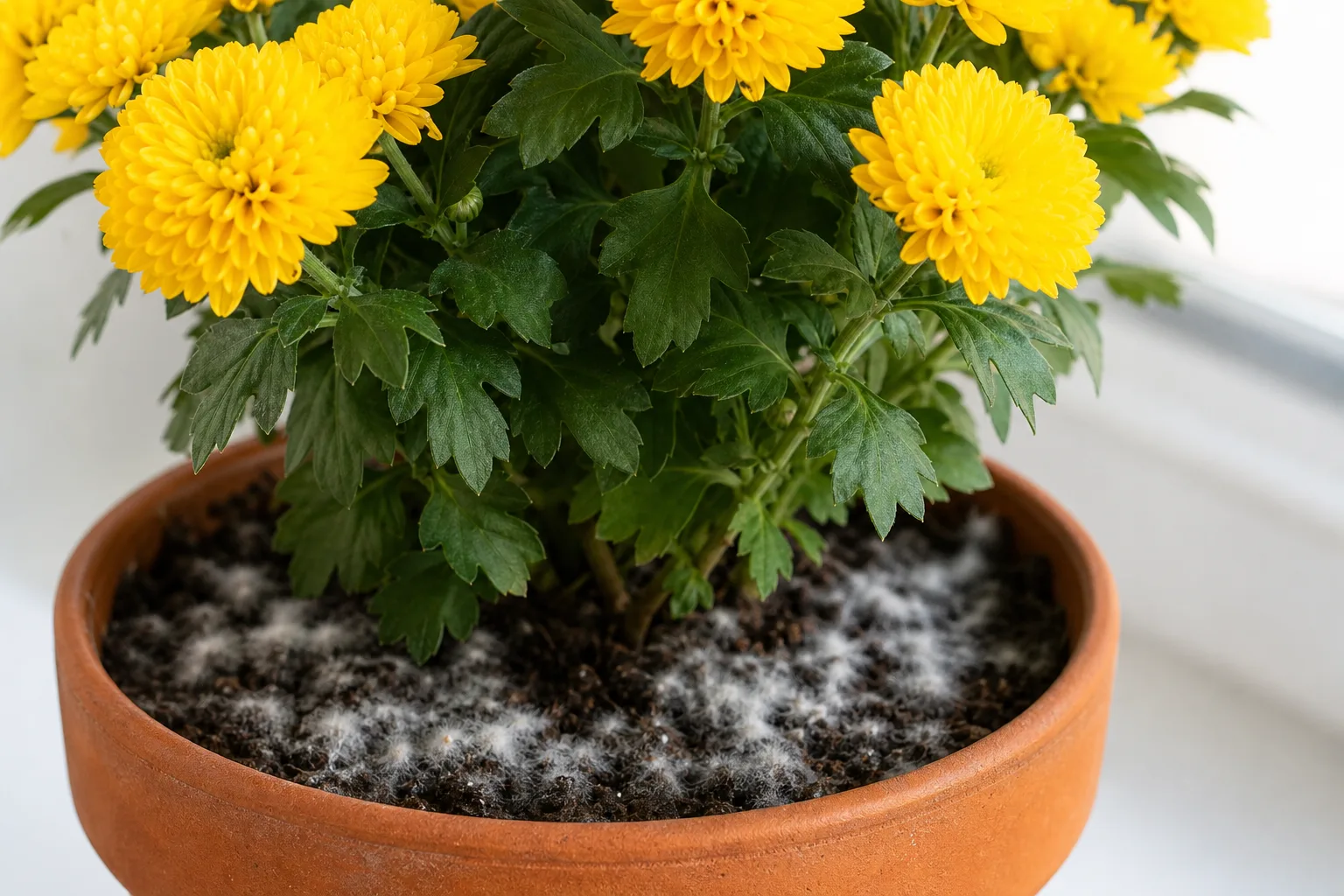
Fluffy white or gray growth on a chrysanthemum's soil surface is usually harmless saprophytic mold feeding on wet organic mix-not a disease attacking the plant. First step: stop watering, let the top 2 cm dry, and scrape off the visible mold before you spray anything.
Mold on Soil on Chrysanthemum: Causes, Checks & Fixes
This guide covers mold on soil on Chrysanthemum. See also the general Mold on Soil guide, watering, and light pages for this plant.
Mold on Soil on Chrysanthemum: Causes, Checks & Fixes
Quick answer
White or gray fuzz on a chrysanthemum’s potting soil is usually saprophytic mold-a fungus feeding on organic matter in a persistently damp surface layer, not a pathogen eating the plant. That distinction matters on mums bought in full autumn bloom, often wrapped in foil and watered on a calendar instead of when the mix actually dries.
First step: stop watering and let the top 2 cm of mix dry completely before you water again. Once the surface is dry, scrape off the visible mold and discard it. Do not reach for fungicide until you have confirmed the plant itself-not just the soil-is infected.
If stems are firm, foliage looks normal, and only the soil surface is fuzzy, you are correcting a moisture problem, not rescuing a diseased chrysanthemum.
Why mold grows on Chrysanthemum soil
Chrysanthemums are cool-season performers that still need consistent moisture during bloom-but they are especially vulnerable to surface wetness when temperatures drop and evaporation slows. Pot mums sold for autumn displays often sit in decorative sleeves without drainage, which traps water at the soil line exactly where mold spores germinate.
The plant’s normal Chrysanthemum watering guide is to water when the top 2 cm feels dry and to reduce frequency in cool or wet weather. Many growers keep watering a blooming mum on a flowering-season schedule even after nights turn cold and the pot stays heavy for days. That chronic surface moisture feeds saprophytic fungi living on peat, compost, and decaying organic particles in the mix.
Spent chrysanthemum flowers add fuel. As blooms finish, petals and small leaves drop into the crown and onto the soil. That debris decays on a wet surface and gives mold a concentrated food source-especially on bushy mums with dense foliage shading the pot rim.
Indoor or porch placement compounds the issue. Mums need Chrysanthemum light guide for best flowering; in dim corners or covered entries, the soil surface dries slowly even when the plant still looks thirsty. Overhead watering onto dense mum foliage can also splash organic material onto the mix and keep the top layer damp longer than the roots need.
Wet soil attracts more than mold. Fungus gnats lay eggs in moist potting mix, and their larvae feed on fungi and organic matter in the same damp top layer. Seeing small flies when you disturb the soil is a second signal that the surface has stayed wet too long-not that the mold itself caused a new pest invasion from scratch.
What mold on soil looks like on Chrysanthemum
Harmless surface mold (most common):
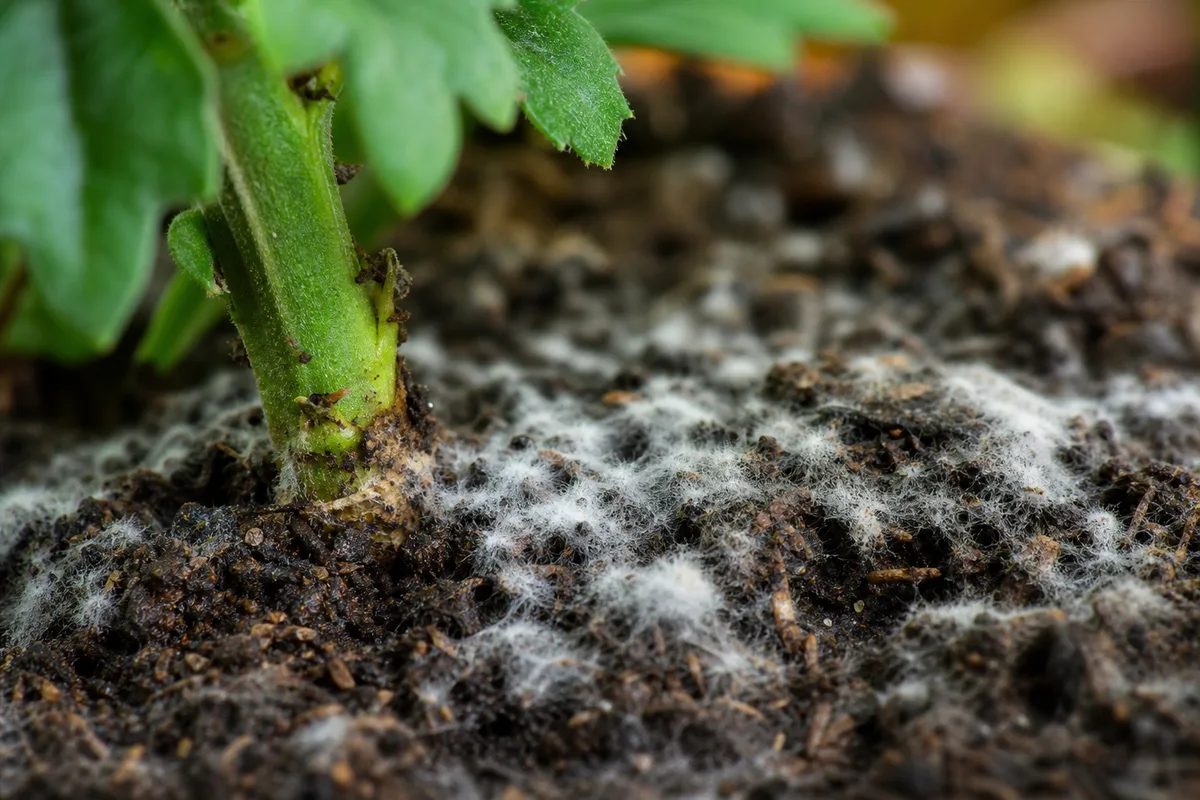
Harmless white surface mold on damp chrysanthemum potting mix - compare with dry, clean soil on a well-drained mum.
- White, gray, or occasionally yellowish fuzzy patches on the top of the mix
- Growth concentrated on the soil surface or on fallen petals-not on living stems
- Soil that feels cool and damp to the touch for days after watering
- Plant stems firm; leaves and flowers otherwise healthy
- May appear shortly after heavy watering, rainy porch weeks, or moving a foil-wrapped mum indoors
Signs the wet soil is already hurting the mum (not just cosmetic):
- Yellowing lower leaves while soil stays wet
- Soft, blackening tissue at the crown or base of stems
- Wilting despite soggy mix-rotting roots cannot take up water
- Sour or rotten smell from the pot when you lift it
- Tiny dark flies rising when you tap the pot edge
Surface saprophytic fungi feed on decaying organic matter and are distinct from salt crusts or pathogenic molds on plant tissue. On chrysanthemums, the critical visual split is soil only versus stems and crown.
How to confirm the cause
Work through these checks before you change anything else:
- Surface versus stem - Fluffy growth limited to soil and fallen debris suggests saprophytic mold. White cottony growth climbing a wilting stem is a different problem.
- Moisture at 2 cm - Stick a finger into the top 2 cm. If it clings and feels cold days after watering, the surface has stayed too wet-mold was predictable.
- Pot weight - Lift the container. A mum in saturated mix feels noticeably heavy; compare to how it felt when the soil was properly dry.
- Drainage check - Peel back foil or decorative wraps. Confirm holes exist and water is not pooling in an outer pot. PSU Extension advises removing foil coverings from overwintering mums so pots do not hold standing water.
- Root sniff test - If you are worried, gently tip the plant out. Healthy roots are firm and light colored. Brown mushy roots with sour soil confirm overwatering on Chrysanthemum damage beyond surface mold.
- Debris scan - Look for layers of spent mum flowers, collapsed leaves, or woody mulch pieces on the surface feeding the fungus.
- Fly check - Small gnats or springtails near the soil confirm chronic moisture; allowing the growing medium to dry between waterings is the primary control.
If stems are firm, roots look sound, and mold sits only on the surface after a wet spell, you have cosmetic mold tied to care-not an emergency disease treatment.
First fix for Chrysanthemum
Stop watering and let the top 2 cm of mix dry completely before the next drink.
This single step breaks the moisture cycle that keeps saprophytic mold alive and discourages fungus gnat larvae in the same layer. Move the pot to a brighter spot with gentle airflow if it sits in a dim, stagnant corner-but do not blast a blooming mum with hot dry furnace air directly on flowers.
Once the surface is dry:
- Scrape off the top quarter-inch of moldy soil and fallen debris with a spoon or small trowel.
- Discard the scraped material in the trash, not the compost pile if you grow other mums or composites outdoors.
- Replace the removed layer with a thin sprinkle of dry fresh potting mix if you want a clean surface.
Do not water again until the top 2 cm feels dry. In cool autumn weather that may take several days. That pause is correct-not neglect.
Step-by-step recovery
After the initial dry-down and scrape:
- Fix drainage - Remove foil wraps, empty outer cache pots after watering, and clear blocked drainage holes. Never let a mum sit in standing water overnight.
- Adjust the watering rhythm - Water thoroughly until a little runs from drainage holes, then wait until the top 2 cm dries again. Reduce frequency as nights cool; the pot will tell you when it is light enough to need water.
- Clean the crown - Pick off spent blooms and yellowing leaves resting on the soil so they do not decay into the surface layer.
- Improve airflow - Space porch mums so foliage does not wall off the pot rim. Indoors, a small fan set on low several feet away speeds surface drying without desiccating flowers.
- Bottom-water if needed - For mums you must keep evenly moist at depth but dry on top, set the pot in a tray of water briefly so the plant drinks from below while the surface stays drier. Bottom-watering keeps the soil surface dry, which discourages both mold and gnats.
- Repot only if mold returns weekly - If scraping and drying fail after two cycles, the mix may be compacted or too water-retentive. Repot into fresh well-draining mix with perlite, matching pot size to the root ball-not an oversized autumn display pot.
Skip fungicide for harmless surface mold. Chemical sprays on a blooming mum stress flowers and do not fix the underlying wet surface.
Recovery timeline
Surface mold should disappear within two to seven days once the top layer stays dry and you remove the visible growth. You may see a brief return after the next heavy watering if drainage is still poor-that is a signal to fix the pot setup, not to spray.
Judge recovery by firm stems, normal flower aging (not sudden wilt), and a dry surface between waterings-not by whether every speck of old mold is visible. New white fuzz after each watering means the rhythm still needs adjustment.
If yellowing leaves or crown softness appeared before you corrected moisture, recovery may take two to four weeks of proper drying cycles. Leaves that turned yellow from root stress will not green up; watch new growth at shoot tips instead.
Lookalike symptoms to rule out
Sclerotinia white mold on stems - Chrysanthemums are among composites susceptible to white mold disease caused by Sclerotinia sclerotiorum. This pathogen produces fluffy white growth on wilting stems, often with hard black sclerotia resembling small seeds-not harmless fuzz limited to wet soil. Spacing and removing infected plant tissue matter for this disease; drying the soil alone will not cure it.
Powdery mildew on leaves - Dry white powder on leaf surfaces, not a fuzzy mat on soil. Mums in crowded humid shade can develop mildew; treatment and prevention differ from soil mold.
Salt crust on soil - White or gray crust on the rim or surface from fertilizer or hard water. Clemson HGIC distinguishes salt crust from saprophytic soil fungi. Crust feels hard and mineral-like, not fluffy.
Algae on soil - Green slimy film in constant moisture and low light. Same moisture fix as mold, but confirms the surface has been wet for a very long time.
root rot on Chrysanthemum without visible surface mold - Overwatering can kill roots when soil stays waterlogged, causing wilt and crown rot even when the surface looks clean. Always check roots when the plant wilts despite wet soil.
Mistakes to avoid
Do not drench fungicide on cosmetic soil mold-it does not address wet mix and can harm blooming mums.
Do not keep decorative foil or cache pots that hide standing water. Autumn gift mums often fail from trapped moisture, not from mold itself.
Do not water on a fixed calendar during cool weather. A mum in a 15°C room uses far less water than one in full September sun.
Do not assume wilting means dry soil. Wilting with wet mix often means rotting roots cannot absorb water-adding more water accelerates decline.
Do not compost moldy scraped soil or infected mum debris if you suspect stem white mold; discard to avoid spreading spores in the garden.
Do not place a recovering mum in deep shade to “rest”-insufficient light slows drying and encourages mold recurrence on the next watering.
How to prevent soil mold next time
Match watering to the pot, not the bloom calendar. Check the top 2 cm every time; reduce frequency as autumn nights cool and the container stays heavy longer.
Buy or repot into containers with open drainage. If you use decorative outer pots, water in the inner pot and empty the outer shell within minutes.
Remove spent flowers promptly. A mum in full bloom sheds petals fast; weekly cleanup keeps organic debris off the soil.
Use an airy mix. A blend with perlite and compost drains better than heavy garden soil or aged peat that compacts in a seasonal pot.
Keep mums in bright light. Full sun speeds balanced drying; dim indoor displays are mold-prone even when the plant still flowers.
Watch for fungus gnats early. Letting the top 1–2 inches dry between waterings prevents both gnats and the mold that often appears in the same wet layer.
When to worry
Escalate beyond scraping and drying when:
- Stems wilt and show white fluffy growth on tissue, not just soil
- Black hard sclerotia appear on stems or in the crown
- The crown feels mushy or smells sour when you press near the base
- Wilting continues after the surface has been dry for a week
- Roots are brown, slimy, and foul-smelling when you inspect the root ball
- Mold returns within 48 hours of scraping despite corrected watering-compacted or contaminated mix may need full Chrysanthemum repotting guide
Cosmetic white fuzz on dry-day soil after one overwatering on a otherwise healthy blooming mum is not urgent. Confirm stem and root health first; treat moisture, not panic.
Conclusion
Mold on a chrysanthemum’s soil is usually a moisture and debris signal on a cool-season bloomer that dries slowly in autumn pots-not a reason to discard a healthy mum. Let the top 2 cm dry, scrape the surface, fix drainage, and clean fallen flowers. Reserve fungicides and repotting for cases where stems, crowns, or roots-not just the soil surface-show disease or rot. That path keeps foil-wrapped autumn mums flowering while the mix stays clean underneath.
When to use this page vs other Chrysanthemum guides
- Chrysanthemum watering guide - Use for routine moisture checks before assuming mold on soil is the main issue.
- Chrysanthemum problems hub - Browse all 16 common issues on this species.
- Fungus Gnats on Chrysanthemum - Different entry point when symptoms overlap with mold on soil.
- Overwatering on Chrysanthemum - Different entry point when symptoms overlap with mold on soil.
- Root Rot on Chrysanthemum - Different entry point when symptoms overlap with mold on soil.