Chrysanthemum Light Needs: Full Sun, Photoperiod
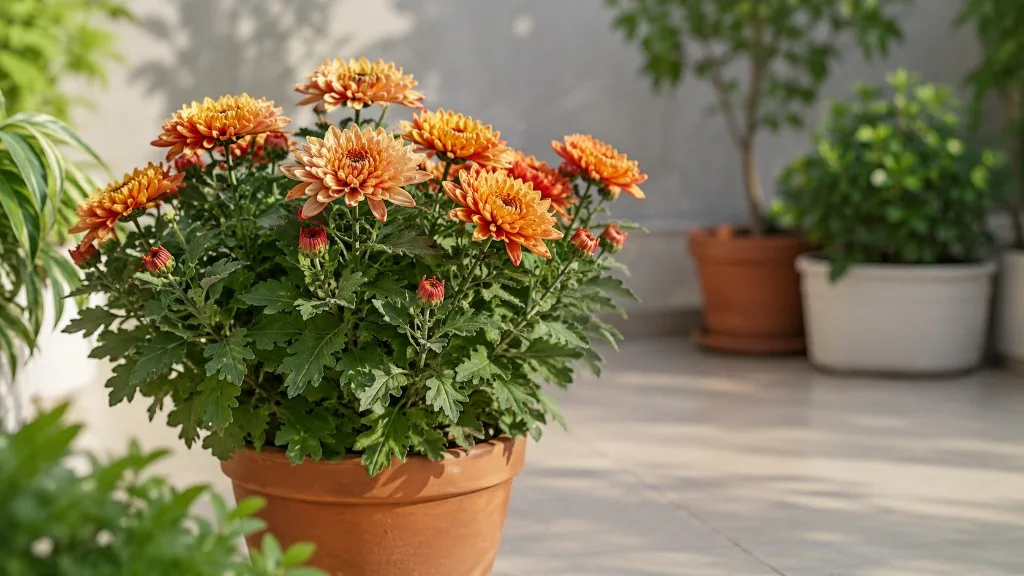
Chrysanthemum Light Needs: Full Sun, Photoperiod, and Warning Signs
Chrysanthemum Light Needs: Full Sun, Photoperiod, and Warning Signs
Chrysanthemum is one of the most misunderstood light subjects in home gardening because it looks like a potted plant and behaves like a seasonal crop. Chrysanthemum × morifolium - the garden mum or florist’s chrysanthemum most people buy in autumn - will keep green leaves in mediocre light longer than you might expect, but mediocre light is exactly how you end up with a tall, weak plant that never matches the compact, flower-covered mums at the nursery. Light controls two separate outcomes at once: how strong the plant grows during the day, and whether it receives the long, uninterrupted nights that trigger autumn flowering.
The practical goal is not “find a bright corner.” It is deliver full sun for vigorous growth and true darkness at night during the bud-initiation window without porch lights, street lamps, or indoor room lighting breaking the signal. Missouri Botanical Garden recommends at least six hours of direct sunlight daily during the growing season and explicitly warns against locations exposed to street or porch lights because artificial night illumination interferes with the flowering response to shortened days. (Missouri Botanical Garden) Nebraska Extension lists insufficient sunlight and too much artificial light among the primary causes of late or failed flowering in chrysanthemums. (University of Nebraska–Lincoln Extension)
If you have been caring for mums with the same “bright indirect light” mindset you use for pothos or philodendron, this guide explains why that approach fails - and what to do instead.
How Much Light Chrysanthemum Actually Needs
Chrysanthemum is a full-sun plant for vegetative growth and flower quality. North Carolina State Extension’s Plant Toolbox lists garden mums under full sun (6 or more hours of direct sunlight per day) with well-drained soil, noting that while they will grow in shaded areas, too much shade causes plants to sprawl instead of growing upright. (NC State Extension) Nebraska Extension is more direct: plants grown in shade or semi-shady locations tend to grow taller and leggier, produce weaker and fewer stems, and develop smaller flowers. (University of Nebraska–Lincoln Extension)
“Full sun” means the leaves receive unfiltered direct sunlight for most of the bright portion of the day, not just a room that looks sunny to human eyes. A mum on a partially shaded porch may stay alive and even push some color, but it will not match the density and stem strength of a plant grown in open sun through summer.
Full Sun Targets for Strong Growth and Bloom
For home growers, treat 6 to 8 hours of direct sun daily as the baseline during the active growing season - roughly spring through early autumn in temperate climates. Missouri Botanical Garden states that chrysanthemums require well-drained soil and full sunlight to grow and successfully bloom, meaning generally six hours of sunlight or more each day during summer. Plants grown with less light become weak, spindly, and produce few flowers. (Missouri Botanical Garden)
Southern or southeastern exposures against a foundation or wall are often ideal because they combine strong sun with a little reflected warmth and frost protection. In hot-summer regions, NC State notes that afternoon protection may help in warmer locations, but that is a heat-management adjustment, not permission to park the plant in deep shade. Shade reduces flower size and stem count even when the plant survives.
Judge your placement by new growth, not the label on the pot. Within two to three weeks of adequate sun, stems should be sturdier, internodes shorter, and foliage deeper green. If the plant keeps reaching toward the light source with long gaps between leaves, the current exposure is a survival setting, not a flowering setting.
The Two-Layer Light Requirement: Day Brightness and Night Darkness
Here is the part most houseplant guides omit entirely. Chrysanthemum light needs operate on two layers:
Layer one - daytime intensity: strong direct sun fuels photosynthesis, builds stem strength, and supports the bud development that follows initiation. Without enough day brightness, the plant cannot produce the biomass needed for a showy autumn display.
Layer two - night length and darkness quality: chrysanthemums are short-day plants, meaning flowering is triggered when nights become long enough relative to day length. Missouri Botanical Garden explains that the flowering response is triggered by the shortening days of late summer, and that bud set is controlled by day length as days shorten toward autumn. (Missouri Botanical Garden)
A plant can sit in acceptable daytime sun and still fail to bloom if night lighting breaks the dark period. You need both layers working together. Bright days without dark nights produce leafy mums. Dark nights without bright days produce late, weak bloom attempts on spindly stems.
How Chrysanthemum Differs From Typical Houseplants
Most popular houseplants - pothos, snake plant, ZZ plant, many philodendrons - evolved for or tolerate lower daily light totals and do not require a seasonal photoperiod shift to look good indoors. Their success metric is foliage persistence: keep leaves green, avoid scorch, manage water. Flowering, if it happens at all, is often incidental.
Chrysanthemum is the opposite kind of organism in home culture. It is grown for seasonal display flowering, responds to day length as a bloom switch, and punishes shade with weak architecture. Treating it like a year-round foliage houseplant is the single most common reason people conclude “mums are disposable” after one season.
Short-Day Flowering vs Low-Light Foliage Species
Short-day plants flower when the night length exceeds a critical threshold. Commercial growers exploit this by excluding light for roughly 9 to 13 hours each day over 8 to 12 or more weeks, depending on variety, to produce flowering mums outside their natural autumn window. (Missouri Botanical Garden) Outdoors, the same response happens naturally as summer transitions to fall.
Low-light foliage houseplants do not share this clock. You can keep a pothos in a north window with a lamp on at night and it may grow slowly but will not refuse to exist because the photoperiod was interrupted. A chrysanthemum can look healthy in leaf while silently failing to initiate buds because a security light turned night into a weak day.
The New York Botanical Garden’s chrysanthemum cultivation guidance makes the distinction plainly: do not plant mums near a street light or any night light source because they need longer nights to know it is time to flower. (NYBG Research Guides)
Why Houseplant Rules Misguide Mum Growers
Three houseplant assumptions cause repeated mum failures.
“Bright indirect light is enough.” For foliage houseplants, bright indirect light is often the correct ceiling indoors. For chrysanthemums, bright indirect light may keep leaves alive while producing leggy stems, pale foliage, and sparse flowering. Extension sources consistently tie bloom quality to direct sun hours, not ambient room brightness.
“If the leaves are green, light is fine.” Chrysanthemum leaves can stay green in suboptimal light while the plant allocates energy to height instead of flowers. Bloom timing reveals light mistakes that foliage color hides until autumn.
“Light only matters for growth speed.” With mums, light also acts as a calendar. Night length tells the plant when to set buds. A living room with lamps on after sunset can disrupt that calendar even when a nearby window delivers decent daytime sun.
If your mental model comes from keeping tropical foliage indoors, reset it: chrysanthemum is closer to a sun-loving garden annual with a photoperiod bloom switch than to a forgiving windowsill companion.
Understanding Photoperiod and the Short-Day Trigger
Photoperiodism is the plant’s ability to measure day length and night length and change development accordingly. For chrysanthemums, the critical signal is night length, which is why horticulturists sometimes call them long-night plants instead of short-day plants. The names describe the same phenomenon from different angles.
As summer days shorten, chrysanthemums perceive longer nights and begin flower bud initiation. Flower development then proceeds more rapidly under short days than long days, though temperature also plays a major role - sometimes larger than day length for garden mums. UMass Amherst notes that garden mums can initiate flower buds under photoperiods longer than 12 hours in spring and summer when cool nights stack up, causing premature budding and early flowering. (UMass Greenhouse & Floriculture)
What Happens When Nights Get Long
Through late summer and early autumn, naturally lengthening nights trigger the hormonal shift from vegetative growth toward reproductive development. Buds form, stems stiffen, and the plant enters the flowering phase that makes garden mums a fall icon.
Growers who want off-season blooms replicate that signal artificially by covering plants with blackout cloth so days stay short even when the calendar says June. Michigan State University photoperiod resources note that short days for chrysanthemum can be provided by pulling blackout cloth to ensure day length stays below about 11 hours, and that after flowering is induced, plants can be grown under various photoperiods without delaying bloom. (MSU Extension PDF)
For home gardeners, the natural autumn cycle usually does the work - if night darkness stays intact.
Critical Dark Period Length for Garden Mums
Exact critical night length varies by cultivar, but the principle is consistent: the dark period must be long enough and uninterrupted. Research on short-day physiology shows that even brief light during the night can reset the photoperiodic clock by converting phytochrome forms, effectively telling the plant the night was not complete.
Commercial night-interruption studies use controlled lighting of roughly 10 foot-candles or about 2 µmol·m⁻²·s⁻¹ at plant level to prevent short-day flowering - which tells you how little stray light at home can matter. (Greenhouse Management) An ASHS study on LED night-interruption lighting found chrysanthemum flowering was sensitive to red-to-far-red ratios during night breaks, with higher R:FR ratios more effective at inhibiting flowering in this short-day species. (ASHS Journal)
You do not need to measure foot-candles on your porch. You need to eliminate obvious night light sources during the bud-initiation season and treat darkness as seriously as you treat sun hours.
Night Light and Why It Blocks Chrysanthemum Blooms
The most frustrating mum problem is a healthy-looking plant that never sets buds or flowers weeks late with weak color. When daytime sun is adequate, night light is the prime suspect.
Missouri Botanical Garden warns that any light source like street lamps or porch lights interferes with the flowering response, and that plants must be kept isolated from these and any other light sources during the night. (Missouri Botanical Garden) Nebraska Extension lists too much artificial light alongside insufficient sunlight as a cause of late flowering. (University of Nebraska–Lincoln Extension)
Street Lamps, Porch Lights, and Security Lighting
Audit the night environment, not only the noon environment. Common bloom killers include:
- Front porch and garage security lights that sweep across potted mums nightly
- Street lamps on curbside plantings
- Landscape uplighting aimed at foundation beds
- Motion-sensor floods that flash during the critical dark period
- Indoor grow rooms where mums receive day-length sun near a window but household lamps extend the effective day
Relocate pots to a dark zone after dusk, shield plants with a movable screen, or switch fixtures to motion-only paths that do not illuminate the bed. If you display mums on a lit porch for aesthetics, accept that they may remain vegetative or bloom poorly unless you move them to full darkness from late afternoon until morning during bud set.
Even interior culture fails this test easily. A mum in a bright living room under ceiling LEDs until 11 p.m. is experiencing a long-day environment regardless of how sunny the window was at noon.
How Brief Light Bursts Reset the Flowering Clock
Short-day plants do not average light across the week. They respond to whether the dark period was continuous. Photoperiod research on classic short-day species shows that a brief pulse of light during an otherwise long night can prevent flowering by resetting the internal timer.
Practical implication: it is not enough that the plant “mostly” sits in darkness. Car headlights, a neighbor’s late barbecue flood, or a camera flash during the dark period can matter when bud initiation is underway. Commercial growers use blackout structures precisely because ambient light is unreliable.
For forcing blooms on your schedule, the inverse applies: cover plants with an opaque cloth or box for roughly 12 to 14 hours of uninterrupted darkness nightly over several weeks, then return them to bright days. Home forcing is finicky and cultivar-dependent, but the logic is the same as professional mum production - control nights deliberately rather than hoping the porch layout cooperates.
Best Outdoor and Container Placement
Outdoor culture is where chrysanthemums are simplest because the sun delivers intensity no window fully matches and autumn naturally supplies lengthening nights - unless you light the yard.
Choose an open site with six or more hours of direct sun, well-drained soil or potting mix, and no night light pollution. Avoid planting directly beneath deciduous trees that compete for light and water; Nebraska Extension notes that root competition from nearby trees can delay flowering. (University of Nebraska–Lincoln Extension)
Matching Sun Exposure to Season and Climate
In cool northern summers, more sun is almost always better through the growing season. Pinch or cut back spring and summer growth as extension guides recommend - often three times before a final mid-August pinch for bushy garden mums - so the plant develops a compact frame that can support autumn blooms in full sun. (NC State Extension)
In hot continental or southern climates, watch for afternoon heat stress on container mums. Dark pots on pavement can overheat roots even when light levels are technically correct. Shift containers to receive morning sun and bright afternoon light with brief shade during peak heat spikes if you see repeated scorch on sun-facing leaves.
Acclimate plants moved from shaded nursery benches to open sun over 7 to 14 days. Sudden exposure causes bleached patches and crisp edges even on a sun-loving species.
Moving Plants to Shade After Bud Set
Missouri Botanical Garden describes a useful display technique: grow mums in full sun while they develop flower buds, then move them to partially shaded border areas once buds are set so blooms last longer in cooler, less intense conditions compared with full sun areas. (Missouri Botanical Garden)
That is a post-bud-set strategy, not a license to grow in shade all season. Shade after initiation extends flower longevity; shade during summer growth produces weak plants that never build the structure needed for a good show.
Growing Chrysanthemum Indoors and Under Supplemental Light
Indoor mum culture is possible for vegetative maintenance or cutting production, but reliable indoor autumn blooming is hard because most homes fail both light layers simultaneously.
Why Most Indoor Windows Fail for Blooming Mums
Daytime problem: even a south window delivers less total light than outdoor full sun, especially from autumn through winter when day length and sun angle drop. Mums held indoors through summer often stretch, pale, and weaken without supplemental LEDs.
Nighttime problem: modern homes rarely offer 12-plus hours of true darkness during the hours mums need it. Kitchens, living rooms, and hall nightlights extend the effective photoperiod. Unless you can move the plant to a dark room or cover it nightly for weeks, indoor culture tends to produce leafy plants without the autumn trigger.
If you attempt indoor forcing, pair a full-spectrum grow light running 14 to 16 hours daily during vegetative growth with a strict dark-cover routine during bud initiation - mimicking commercial blackout schedules. Change one variable at a time and read new growth for at least two weeks before adjusting water or fertilizer.
For most readers, the honest recommendation is simpler: grow mums outdoors or on an unlit patio through the growing season, then enjoy them as seasonal container plants rather than forcing them into a houseplant role they were not bred for.
Warning Signs Your Chrysanthemum Has the Wrong Light
Chrysanthemums report light problems on new tissue first. Old scorched leaves will not recover, and old stretched stems will not shorten. Watch the youngest shoots, bud formation, and stem spacing after any placement change.
Make one light change, then wait 10 to 14 days before stacking Chrysanthemum repotting guide, fertilizer, or watering changes. Light stress and water stress symptoms overlap; changing everything at once makes diagnosis guesswork.
Too little sun shows up as leggy stems with long internodes, upright leaning toward the brightest source, pale or yellow-green new foliage, weak floppy stems that cannot support blooms, few or absent flower buds despite autumn timing, and late flowering when combined with other stresses. Nebraska Extension’s late-flowering checklist includes insufficient sunlight and excess artificial light - read those as a pair. (University of Nebraska–Lincoln Extension)
Night light interference produces a confusing pattern: apparently healthy foliage, correct season on the calendar, but no bud set or delayed bloom while neighboring outdoor mums color up normally. Compare your plant’s night exposure to a control plant placed in fully dark yard space.
Too much sun or heat appears as bleached white or tan patches on sun-facing leaves, crisp dry edges after a sudden move to intense afternoon exposure, midday wilting on moist soil in dark overheated containers, and premature flower fade when blooms bake in relentless full sun after opening. Fix scorch by acclimating gradually, providing brief afternoon shade in heat waves, and avoiding hot glass or dark pavement root zones.
Premature budding in summer - small buds forming on a short plant - often traces to cool night temperatures rather than light alone. UMass notes that several cool June nights can initiate buds early on garden mums. Pinch buds, maintain moisture and moderate fertility, and protect plants from repeated cold nights if you want standard autumn timing. (UMass Greenhouse & Floriculture)
Conclusion
Chrysanthemum light care is not a single dial. It is full sun for strength plus dark nights for bloom timing, and it breaks the houseplant playbook at both steps. Aim for at least six hours of direct sunlight daily during the growing season, keep plants away from street lamps, porch lights, and indoor night lighting during bud initiation, and judge success by compact new growth and timely bud set - not merely green leaves.
If your mum stretches, pales, or refuses to flower while outdoor plants perform, compare day exposure and night darkness separately before changing water or soil. Move to open sun for vegetative growth, eliminate night light pollution, and acclimate gradually to prevent scorch. Chrysanthemum rewards growers who treat it as a photoperiod-driven garden plant, not a low-light houseplant that happens to bloom in fall. Fix both layers of light, read new growth for two weeks, and let the plant’s bud timing tell you whether the calendar - not just the foliage - is finally correct.
When to use this page vs other Chrysanthemum guides
- Chrysanthemum overview - Start here for whole-plant context before deep-diving this topic.
- Chrysanthemum problems hub - Jump to symptom-specific fix guides when this care topic does not resolve the issue.
- Not Enough Light on Chrysanthemum - Escalate here when light adjustments are not enough.
- Leggy Growth on Chrysanthemum - Escalate here when light adjustments are not enough.
Related Chrysanthemum guides
- Chrysanthemum overview
- Chrysanthemum watering
- Chrysanthemum soil
- Chrysanthemum propagation
- Chrysanthemum fertilizer
- Chrysanthemum repotting
- Not Enough Light on Chrysanthemum
- Leggy Growth on Chrysanthemum
- Chrysanthemum problems
Related tool
Try the Plant Problem Diagnosis Tool with chrysanthemum pre-selected to estimate needs for your setup.