Chrysanthemum Fertilizer: When, How, and Mistakes to Avoid
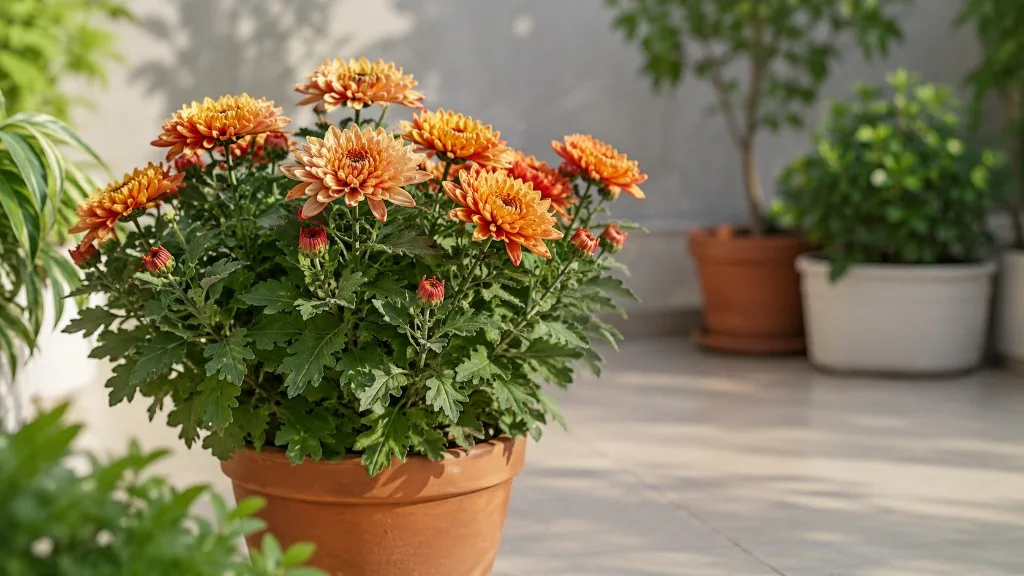
Chrysanthemum Fertilizer: When, How, and Mistakes to Avoid
Chrysanthemum Fertilizer: When, How, and Mistakes to Avoid
Chrysanthemums - often called mums - are built for a late-season flower push, and that growth habit shapes every chrysanthemum fertilizer decision you make. Unlike slow foliage houseplants that tolerate months without feeding, mums accumulate stems and leaves through spring and summer, then redirect energy into buds and blooms as days shorten. Feed them like a low-demand succulent and you get thin stems and fewer flowers. Feed them too aggressively, too late, or on the wrong schedule and you get soft growth, salt-damaged leaves, or a plant that flowers weakly and collapses after one display.
The useful mental model is a two-phase feeding plan: support vegetative growth first, then shift toward bloom-supporting nutrients as buds form. That sounds simple, but mums come in several roles - hardy perennials in garden beds, long-term container specimens, and short-lived fall porch pots already loaded with buds at purchase. Each role needs a slightly different schedule even though the species is the same. Fertilizer supports growth that light, water, pinching, and day length already make possible. It does not replace those fundamentals.
What Chrysanthemums Need From Fertilizer
Chrysanthemums pull nitrogen, phosphorus, potassium, and smaller amounts of micronutrients from soil or potting mix as they produce leaves, stems, roots, and eventually flower tissue. Every flush of new growth consumes stored nutrients. Every heavy watering session in a container washes soluble fertilizer salts out of the root zone. In garden beds, organic matter breaks down and releases nutrients unevenly across the season. Over months of active growth, that combination creates a real need for deliberate feeding - especially for mums you expect to bloom heavily in autumn.
The Old Farmer’s Almanac chrysanthemum guide describes mums as heavy feeders, which is accurate for plants you are pushing toward a dense fall display. That label does not mean “more fertilizer always equals more flowers.” It means the plant builds a lot of biomass before blooming and will show deficiency faster than a woody shrub if nutrients run low during the growing season. The goal is steady, controlled nutrition matched to visible growth - not a constant drip of full-strength product.
Soil chemistry matters too. Commercial chrysanthemum production targets a substrate pH of 5.8 to 6.2 in soilless media and roughly 6.0 to 7.0 in mineral garden soil. When pH drifts too high, iron becomes less available and newer leaves can show interveinal yellowing even when fertilizer is present. When soluble salts accumulate, mums are among the species most likely to show marginal leaf burn before many other garden plants do. Feeding without considering pH, drainage, and salt load is a common reason home growers blame the wrong product for a problem the soil environment caused.
How NPK Supports Leaves, Buds, and Roots
Fertilizer labels display three numbers - N-P-K - representing the percentage of nitrogen, available phosphate, and soluble potash. Nitrogen drives chlorophyll production, leaf expansion, and stem elongation. During the vegetative phase, when you are pinching mums to build a bushy frame, nitrogen is the nutrient doing the heaviest lifting. Phosphorus supports root development, energy transfer, and reproductive tissue formation. As buds initiate, phosphorus becomes more central to flower development. Potassium regulates water movement, enzyme activity, and general stress tolerance - valuable when autumn weather swings between warm days and cold nights.
For most home growers, the sequence looks like this: a balanced or slightly nitrogen-leaning formula such as 10-10-10 or 20-10-20 while the plant is building structure through late spring and early summer, then a bloom-oriented formula with higher phosphorus and potassium - such as 10-20-20, a labeled bloom booster, or diluted tomato feed - once flower buds are visible. Avoid extremely high phosphorus products early in the season; excess phosphorus before the plant is ready to bloom can encourage premature bud formation on some varieties and waste nutrients the plant needed for stems and roots first.
Micronutrients including iron, manganese, magnesium, and zinc rarely require separate bottles when you use a complete fertilizer and maintain suitable pH. If newer leaves yellow between veins while older leaves stay green, investigate pH and root health before assuming the plant simply needs more nitrogen. Iron deficiency and nitrogen deficiency look similar from across the room but need different fixes.
Why Mums Are Heavier Feeders Than Many Houseplants
Greenhouse chrysanthemum production illustrates how hungry these plants can be under strong light and controlled irrigation. UMass Amherst’s garden mum production guide recommends fertilizing rooted cuttings from planting onward, using complete formulas at roughly 250–300 ppm nitrogen during vegetative growth with products such as 20-10-20, and adjusting rates during cool or rainy periods when nutrient uptake slows. That is a professional schedule scaled to crop turnover, not a literal home-garden prescription - but it confirms mums are not passive feeders.
Home conditions differ. Light is lower, pots are smaller, and you are not irrigating on a greenhouse bench schedule. Still, the underlying biology remains: mums that will produce hundreds of flowers on a single plant must first manufacture a large leaf and stem surface area to feed those blooms. A 6-inch porch mum forced into color at the nursery received intensive feeding before you bought it. A hardy garden mum you overwinter and grow for next fall needs you to supply that nutrition across an entire growing season. Treating both as identical is one of the most common feeding errors.
Best Fertilizer Types for Chrysanthemums
The best fertilizer for chrysanthemums is one you can measure accurately, dilute safely, and align with the plant’s current growth stage. Brand matters less than nutrient profile, application control, and whether the product is complete. A water-soluble houseplant or garden fertilizer with micronutrients listed on the label is a sensible default for containers. Garden-bed growers can use the same liquids or incorporate compost and a modest granular supplement.
Avoid two extremes: lawn-grade high-nitrogen products applied at full label strength to a small pot, and slow-release pellets stacked on top of an already enriched commercial potting mix without reading the bag. Mums respond to measured, stage-appropriate doses better than to a single heavy application that releases unpredictably in a confined root zone.
Balanced Formulas for Vegetative Growth
From spring emergence until buds begin forming - typically through mid-July in many Northern Hemisphere gardens, with regional variation - use a balanced or slightly nitrogen-forward fertilizer. Common choices include 10-10-10, 20-20-20, and 20-10-20. These support the repeated pinching cycle that produces a bushy plant: when new shoots reach 3 to 4 inches, you remove the tip, the plant branches, and those new branches need nitrogen and potassium to expand.
The Old Farmer’s Almanac recommends a monthly application of balanced 10-10-10 as a baseline for garden mums, which translates well to home use when combined with half-strength dilution for containers. Clemson HGIC recommends weekly soluble fertilizer for garden mums in active production and warns against overly high phosphorus early because it can push premature flowering before the plant has adequate frame size.
Liquid and water-soluble products give the most control because you can reduce concentration during cool spells, skip a cycle after heavy rain leaches nutrients in garden beds, and stop immediately if you see salt injury. Granular balanced fertilizers work in in-ground plantings when scratched into moist soil around the drip line and watered in thoroughly. Never apply granular fertilizer to dry soil on a hot afternoon and assume rain will wash it in safely.
Bloom Boosters and High-Potassium Feeds
Once flower buds are visible - often in late July or August depending on variety and latitude - shift toward formulas with higher phosphorus and potassium. Products labeled as bloom boosters, formulas near 10-20-20, or diluted tomato feed are widely used because potassium supports flower development, stem strength, and disease resistance during the demanding bloom period. Some growers continue a balanced feed through bud swell and only switch to high-potassium formulas for the final weeks before color shows; others switch as soon as buds are detectable.
There is legitimate disagreement in published guidance about how long to continue feeding. Some sources recommend stopping all fertilizer when buds first form so the plant channels energy into flowers rather than leaves. Others, including experienced chrysanthemum growers and specialty nursery schedules, continue moderate potassium-forward feeding every two to three weeks until buds show color, then stop to prevent soft, short-lived blooms. The reconciliation is context: display-only fall mums purchased in bud need no further feeding, while hardy mums you are growing out for maximum bloom size often benefit from controlled bloom-stage nutrition until color breaks.
If you choose to feed through bud development, keep concentrations conservative. Bloom boosters are not an excuse for full-strength weekly doses. A half-strength liquid application every two to three weeks on an actively growing garden mum is a reasonable upper bound for most home situations. Stop entirely when individual florets show color or roughly four weeks before your expected first frost for container plants you intend to overwinter.
Organic vs Synthetic Options
Both organic and synthetic fertilizers can grow excellent mums when used thoughtfully. Compost, well-rotted manure, and worm castings release nutrients gradually and improve soil structure in garden beds. They fit long-term hardy mums planted in amended soil where microbial activity breaks down organic matter across the season. Side-dressing established in-ground plants with a thin band of compost in late spring and again in early summer can reduce dependence on liquid feeds.
Fish emulsion, seaweed extract, and compost tea provide faster-available nutrients with gentler salt profiles than some synthetic concentrates, though odor and variable analysis make them less convenient on a front porch. Synthetic water-soluble complete fertilizers offer precise NPK ratios and predictable dilution - valuable when you are trying to execute a deliberate vegetative-to-bloom transition on a container specimen.
Slow-release granular fertilizers are popular in commercial mum production as a top-dress at planting, sometimes combined with liquid feed. At home, use them cautiously in small pots: a 3–4 month prill release continues during heat waves and dormancy transitions when you might prefer to stop feeding. If your potting mix already contains slow-release fertilizer - common in nursery mum liners - do not add another layer without checking the label.
| Fertilizer type | Best stage | Typical home use | Main risk |
|---|---|---|---|
| Balanced liquid (10-10-10, 20-10-20) | Vegetative growth | Half strength every 3–4 weeks | Salt buildup if too strong |
| Bloom booster / tomato feed | Visible bud stage onward | Half strength every 2–3 weeks until color | Soft blooms if fed too late |
| Compost side-dress | In-ground hardy mums | 1–2 applications per season | Uneven release; watch nitrogen excess |
| Slow-release granular | Large outdoor containers | Once at spring potting | Double-feeding with enriched mix |
| Fish emulsion / seaweed | Vegetative or light bloom support | Half strength every 3–4 weeks | Odor; variable analysis indoors |
When to Fertilize Chrysanthemums
Timing matters more than brand loyalty. Mums should be fed when they are actively growing and able to transpire normally - not when wilted from drought, freshly repotted into unfamiliar mix, recovering from root rot on Chrysanthemum, or entering dormancy. The calendar provides a framework; the plant provides the final confirmation through new shoots, leaf color, and bud status.
For hardy garden mums and long-term container specimens, begin feeding in early spring once new growth emerges and frost danger has passed. Wait until stems are several inches tall and roots have reactivated after winter dormancy. For nursery-potted mums purchased in full bud in September, skip feeding entirely unless you are transplanting into the garden and the plant will remain for multiple seasons.
Spring and Early Summer: Building the Plant
Spring feeding rebuilds the plant after winter storage or division. Apply your first balanced fertilizer when new shoots are 4 to 6 inches tall and the soil is evenly moist. In garden beds, a side-dress of compost or a diluted liquid feed sets the tone for the pinching season. In containers, half-strength liquid every three to four weeks through June supports the branching structure pinching creates.
Pinching and fertilizing work together. The Old Farmer’s Almanac instructs growers to pinch when shoots are 3 to 4 inches tall, leaving 2 to 3 leaves on each stem, and to repeat every two to three weeks until mid-July when buds develop - earlier on the West Coast, slightly later in the South. Each pinch redirects growth to lateral buds, multiplying the number of stems that can eventually carry flowers. That repeated regrowth consumes nitrogen and potassium. Skipping fertilizer while pinching aggressively can produce a bushy but pale plant with weak stems.
If prolonged cool rain slows growth, hold off rather than forcing feed on saturated soil. UMass production guidance notes that cool temperatures and low light reduce uptake and can increase ammonium toxicity risk when high-ammonium formulas like 20-20-20 are used heavily on soilless media. Home growers using standard balanced liquids at half strength face less risk, but the principle holds: feed active growth, not a plant sitting cold and wet.
Bud Formation Through Flowering
When buds become visible at stem tips - the transition point that ends routine pinching in most schedules - nutrition shifts from frame-building to bloom support. Switch to a phosphorus- and potassium-forward formula as described above. Continue on a two-to-three-week interval if the plant is still actively filling out buds and you are growing for maximum display quality on a perennial mum.
Some chrysanthemum specialists stop pinching and adjust feeding based on variety: early-blooming cultivars set buds sooner than late-season exhibition types. Know your cultivar if possible. If you do not know the name - common with mass-market garden mums - watch the plant: when terminal buds appear and lateral buds up the stem begin swelling, you are in bloom phase regardless of the calendar date.
During flowering, deadheading spent blooms extends the display but does not require continued heavy feeding. Remove faded flowers to redirect energy within the existing nutrient budget. Additional fertilizer during peak bloom rarely helps a plant already in color and can shorten flower longevity by promoting tender new tissue at the wrong moment.
When to Stop Feeding Entirely
Stop fertilizing when buds show color, when flowering finishes and you prepare the plant for dormancy, or when growth visibly stalls in shortening days. For container mums you will discard after frost, there is no reason to feed once the display peaks. For overwintering hardy mums, cease feeding six to eight weeks before your average first hard frost so new soft growth is not killed by early cold.
Winter dormancy means no fertilizer. Mums stored in cold frames, mulched garden beds, or cool garages are not metabolizing nutrients at a rate that justifies feeding. Resume in spring when new basal shoots appear. The only exception some growers mention is a single very light root-zone application in late fall for in-ground plants being prepared for winter in mild climates - this is optional, cultivar-dependent, and unnecessary for most home gardeners mulching adequately.
Never feed a stressed plant: drought-wilted, root-rot-affected, heavily pest-damaged, or recently transplanted without established roots. Fertilizer on damaged roots accelerates salt injury and can collapse an already weakened mum.
How to Apply Chrysanthemum Fertilizer Safely
Application method determines whether the same product helps or harms. Mums prefer evenly moist root zones, thorough watering after feeding, and enough leaching in containers to prevent salt accumulation at the rim where evaporation concentrates minerals.
Always read your product label for the intended concentration. General garden fertilizers assume large soil volumes. A dose calculated for a garden bed poured into a 10-inch pot is effectively an overdose even if the math on the label was followed perfectly.
Dilution, Watering, and Leaching
The safest home default is half the label strength for liquid feeds unless the product specifically lists a rate for container ornamentals or flowering garden plants at a lower concentration. Mix fertilizer in a measured volume of water - a gallon jug with marked lines beats guessing in a partially filled watering can. Apply to already-moist soil, not dust-dry roots, because dry roots take up concentrated salts abruptly and burn.
After feeding, water until excess drains freely from container holes. In garden beds, water deeply across the root zone so nutrients move into the soil profile rather than sitting on the surface. UMass Amherst’s soluble salts injury page notes that chrysanthemums are especially susceptible to soluble salts injury, which appears first as mild chlorosis progressing to necrosis of leaf tips and margins. Prevention requires avoiding excessive fertilization and irrigating with enough water to allow at least 20 percent leaching through the container when salts are suspected.
Once a month during active feeding season, consider a plain-water irrigation cycle for container mums - no fertilizer, just thorough watering to flush accumulated salts. If you use hard tap water with high dissolved solids, leaching matters even more because fertilizer adds to minerals already present.
Keep fertilizer off foliage when possible. Mums have hairy leaves that hold droplets; foliar burns and cosmetic spotting are unnecessary when root feeding works well. If granular fertilizer contacts leaves, rinse immediately.
Container Mums vs In-Ground Garden Mums
In-ground hardy mums benefit from compost-amended soil, occasional balanced granular or liquid feed, and the natural buffering of a large soil volume. Nutrients move slowly, leaching is less extreme than in pots, and earthworms and microbes redistribute organic inputs. A monthly balanced feed or two compost side-dresses per season often suffices when soil was prepared well at planting.
Container mums have the opposite profile: limited soil volume, faster drying, faster leaching, and faster salt concentration. They need more frequent but weaker feeding during growth - often every two to three weeks at half strength while actively growing - plus regular leaching. A mum in a 12-inch pot on a sunny patio can use water daily in August; each watering carries fertilizer away and concentrates salts when evaporation exceeds drainage.
Store-bought fall display mums - the tight mounds covered in buds at garden centers in September - are a special case. They were fed intensively in production greenhouses to force bloom on schedule. Clemson HGIC and multiple nursery guides agree: if you do not plan to keep the plant beyond the season, skip fertilizer entirely. Extra nutrients will not improve a plant already at peak bloom and may shorten flower life. If you transplant that mum into a garden bed for long-term growth next year, a single mild compost incorporation at planting is enough until the following spring.
Seasonal Fertilizer Schedule by Plant Type
Use the plant’s role - not just the calendar - to pick a schedule:
Hardy garden mum (perennial, in ground):
- March–April: Resume feeding when new shoots emerge; balanced liquid or compost side-dress.
- May–mid-July: Balanced feed every 3–4 weeks; pinch on schedule.
- Late July–August: Switch to bloom-support formula every 2–3 weeks if buds are developing and plant is vigorous.
- September: Stop when florets show color; deadhead only.
- October–February: No fertilizer; mulch for winter.
Long-term container mum (overwintered):
- Spring: Begin half-strength balanced liquid when active growth resumes.
- Summer: Every 2–3 weeks balanced feed while pinching; leach monthly.
- Bud stage: Bloom formula every 2–3 weeks until color shows.
- Fall/winter: Stop 4 weeks before frost; store dormant without feed.
Seasonal porch mum (purchased in bud):
- At purchase: No fertilizer needed.
- If keeping for next year: Transplant, water, mulch; wait until next spring to feed.
These schedules assume adequate sun - mums want Chrysanthemum light guide, at least six hours daily - and consistent moisture. A plant in deep shade uses fewer nutrients and may never justify aggressive feeding regardless of what the calendar says.
Signs of Under- and Over-Fertilization
Nutrient problems on mums overlap with drought, root rot, and pest damage, so read the whole plant before changing your feeding program.
Under-fertilization often shows as overall pale green or yellowish leaves, thin stems, slow pinching response, and reduced bud count despite good sun and water. Lower leaves may yellow and drop naturally with age, but uniform paleness on new growth suggests the plant is running low on nitrogen or general nutrition. Confirm by reviewing how long since the last feed, whether heavy rain leached a container, and whether the potting mix was fresh at planting.
Over-fertilization and salt injury appear as brown, crisp leaf tips and margins, sometimes with a yellow band between dead tissue and green leaf, white or pale crust on the soil surface, wilting despite moist soil when roots are damaged, and stunted new growth after a recent feed. UMass Amherst emphasizes that salts accumulate at leaf tips and margins as transpiration concentrates them, producing the characteristic burn pattern mums are known for.
High substrate pH above 6.5 can cause interveinal chlorosis on upper leaves that mimics fertilizer deficiency but reflects poor iron uptake. Adding more nitrogen worsens the situation. Test pH if new leaves yellow between veins while veins stay green.
If symptoms appeared within days of feeding, suspect burn or overdose. If they developed gradually across weeks during rapid growth, suspect deficiency or leaching. If only bottom leaves yellow while new growth stays deep green, consider natural senescence or uneven watering before reaching for fertilizer.
Recovering From Over-Fertilization
If you suspect fertilizer burn, act quickly but calmly. Stop all feeding immediately. Scrape away visible white crust from the soil surface without damaging shallow roots. Flush the container with plain room-temperature water until excess runs freely from drainage holes; repeat two to three times over 48 hours for severe cases. For in-ground plants, deep slow watering across the root zone helps dilute salts, though recovery takes longer in heavy clay.
Move the plant to bright indirect light temporarily if it was in harsh afternoon sun - burned roots deliver less water, and combined stress worsens wilting. Do not repot immediately unless soil is genuinely waterlogged; Chrysanthemum repotting guide fresh after flush can wait until new growth resumes.
Pause fertilizer for four to six weeks minimum, longer if burn was severe. Recovery shows up as new leaves without tip necrosis and stable hydration. Old burned margins never green up; judge success by fresh growth. If the plant continues declining with mushy roots or sour-smelling soil, root rot - not fertilizer alone - may be involved. Trim affected roots, repot into fresh well-draining mix, and withhold feed until reestablishment.
Common Chrysanthemum Fertilizer Mistakes
Feeding display mums that are already blooming. The plant is at the end of its forced production cycle. Extra fertilizer does not create new buds and may stress roots in a crowded pot.
Using full label strength in small containers. Mums are salt-sensitive. Half strength exists for a reason in home horticulture, especially in pots under 12 inches.
Applying fertilizer to dry soil. Always water first, then feed, then water through. Dry-root burn is preventable.
Continuing vegetative nitrogen into late bud swell. Late heavy nitrogen can produce soft stems and delay uniform flowering. Shift formulas with the plant’s stage.
Ignoring slow-release fertilizer already in the mix. Double-feeding from bagged potting soil plus liquid feed plus granular top-dress is a common burn pathway.
Feeding during dormancy or immediately after division. Transplanted divisions need roots, not salts. Wait until new white root tips and shoot growth confirm establishment.
Treating fertilizer as a cure for lack of sun. Mums are short-day plants that initiate buds in response to day length. Fertilizer cannot override photoperiod or fix a mum kept under a porch light that prevents proper bud set.
Forgetting pet safety. The ASPCA lists chrysanthemums as toxic to cats, dogs, and horses. Ingestion can cause vomiting, diarrhea, hypersalivation, incoordination, and dermatitis. Store fertilizer products and plant debris away from pets even when the nutritional chemistry is safe - the plant itself is not.
Conclusion
Chrysanthemum fertilizer works best as a two-phase plan: balanced nutrition while stems and leaves build through spring and early summer, then a cautious shift toward phosphorus- and potassium-forward feeding as buds form on mums you are growing for serious bloom. Match intensity to the plant’s job - hardy garden specimens and long-term containers need steady, diluted feeding with regular leaching; seasonal porch mums already in flower need none. Apply to moist soil at half label strength, water through after every feed, and stop when color shows or growth dormancy begins.
Fertilizer is one lever in a system that includes light, pinching, watering, and day length. Full-sun plants consume feed faster than shaded ones. Pinching multiplies stems that compete for nutrients. Deep watering moves minerals into roots and leaches excess from pots. Mums initiate buds in response to shortening days - fertilizer supports each phase but does not trigger the change. Artificial light at night can disrupt bud set more surely than any product switch.
Mums forgive a missed feeding more readily than an overdose. They are salt-sensitive, heavy feeders only during active growth, and dependent on sun and photoperiod for their signature autumn display. Watch new leaves, bud stages, and soil crust more than the calendar alone. When tips brown and crust appears, flush and pause rather than doubling down. Get the fundamentals right - sun, pinching until mid-July, even moisture - and a restrained fertilizer routine will reward you with the dense, late-season flowers mums are grown to deliver.
When to use this page vs other Chrysanthemum guides
- Chrysanthemum overview - Start here for whole-plant context before deep-diving this topic.
- Chrysanthemum problems hub - Jump to symptom-specific fix guides when this care topic does not resolve the issue.
Related Chrysanthemum guides
- Chrysanthemum overview
- Chrysanthemum watering
- Chrysanthemum light
- Chrysanthemum soil
- Chrysanthemum propagation
- Chrysanthemum repotting
- Chrysanthemum problems
Related tool
Try the Fertilizer Dilution Calculator with chrysanthemum pre-selected to estimate needs for your setup.