Not Enough Light on Chrysanthemum: Causes, Checks & Fixes
Quick answer
Chrysanthemums need at least five to six hours of direct sun outdoors and a bright south- or east-facing window indoors. First step: move the pot to the brightest spot you have and watch whether new stems stay compact within two weeks.
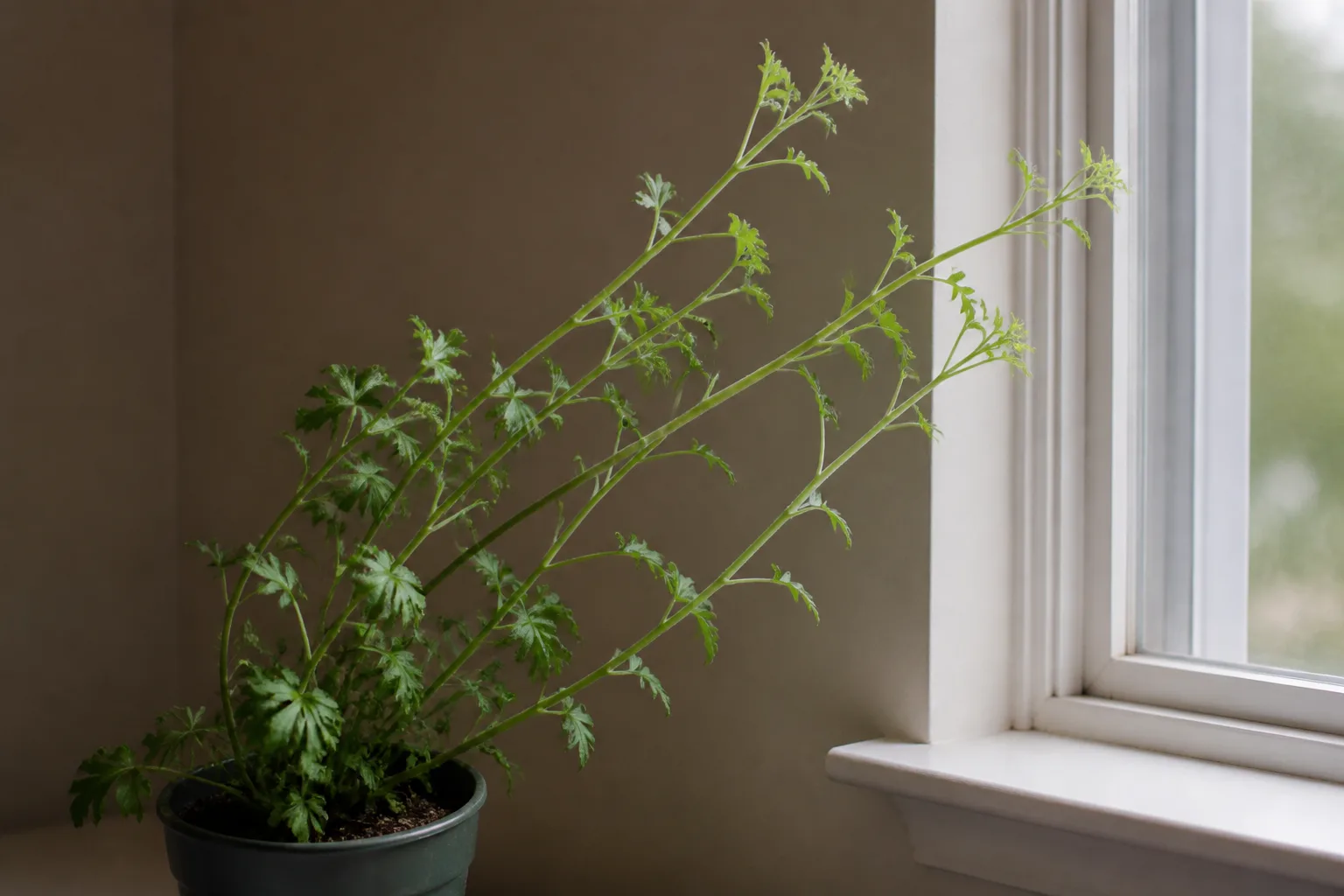
Not Enough Light on Chrysanthemum: Causes, Checks & Fixes
This guide covers not enough light on Chrysanthemum. See also the general Not Enough Light guide, watering, and light pages for this plant.
Not Enough Light on Chrysanthemum: Causes, Checks & Fixes
Quick answer
Chrysanthemums are sun-loving cool-season bloomers. When light is too weak, they survive longer than they thrive-stems stretch, leaves shrink, and autumn flowers shrink or never arrive. A mum parked in a dim living room after the gift-wrap comes off is the classic case.
First step: move the pot to the brightest location available-a south- or east-facing window indoors, or a spot outdoors with at least five to six hours of direct sun. Do not repot, fertilize, or prune heavily until you have corrected light and watched new growth for about two weeks.
Why Chrysanthemum runs out of light
Most chrysanthemums sold as potted colour are short-day plants bred to flower when nights lengthen in autumn. They still need strong daylight to build the stems and buds that respond to shorter nights. Without enough photosynthesis during the day, the plant cannot produce the energy reserves flowering demands.
Outdoors, garden mums want Chrysanthemum light guide. Nebraska Extension notes that plants in shade or semi-shade grow taller, produce weaker and fewer stems, and bear smaller flowers than sun-grown stock. North Carolina Extension lists full sun-six or more hours of direct light daily-as the cultural baseline for Chrysanthemum × morifolium.
Indoors, the mismatch is sharper. Store-bought florist mums often move from a bright greenhouse to a kitchen counter or hallway where light drops sharply with every foot from the window. Iowa State Extension recommends a brightly lit, cool indoor site for potted florist mums-near a window with bright light and temperatures around 60–70°F-not a distant shelf.
Distance matters more than people expect. Light intensity falls quickly as you move away from glass. A corner that looks fine to human eyes may deliver too little usable light for a mum that evolved for open sunny beds.
Night lighting adds a chrysanthemum-specific twist. Mums are short-day plants that bloom in response to long nights; outdoor lights, streetlamps, or lamps left on near the plant can interrupt the dark period that triggers bud formation. Iowa Extension specifically warns against planting near outdoor lights for this reason. Indoor mums near all-night LED strips may stay vegetative even when daytime light seems adequate.
Season shortens the window further. Winter days reduce total light even at the same window. A mum that looked acceptable in October may stretch by January unless you supplement.
What not enough light looks like on Chrysanthemum
Low light usually shows in structure before colour:
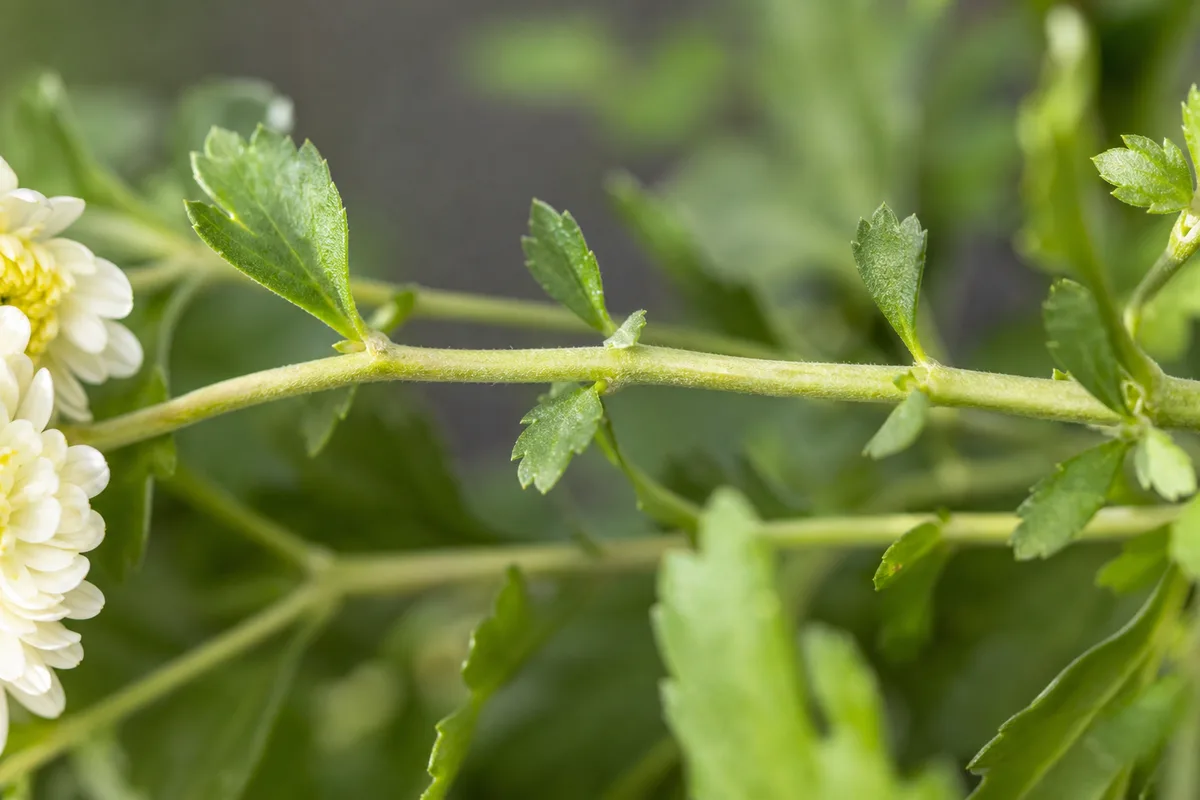
Long gaps between small pale leaves on a leggy chrysanthemum stem - compare with compact internodes on a sun-grown mum.
- Leggy stems with long internodes-the gaps between leaf pairs stretch on new growth while older lower leaves may look normal
- Leaning or one-sided growth toward the brightest window or door
- Smaller, paler new leaves compared with older foliage at the base
- Weak, floppy stems that cannot support bud clusters without staking
- Delayed, sparse, or absent autumn bloom on plants that should flower in cool weather
- Small flowers when buds do open in partial shade
- Slow or stalled spring/summer growth on overwintered plants
University of Maryland Extension lists spindly shoots, fading leaf colour, diminished flowering, and poor branching as typical insufficient-light symptoms on indoor plants. Those patterns map cleanly onto mums, which show poor flowering first because bloom is their main reason for growing.
Mums in weak light also dry slowly. The plant uses less water when photosynthesis is limited, so soil stays wet longer. That combination-dim placement plus soggy cool mix-sets up root rot on Chrysanthemum, which wilts stems in a way that mimics drought. Always check soil moisture and root smell when a mum wilts in a dark room.
How to confirm the cause
Work through these checks before changing anything else:
- Window audit - Identify direction and distance. South, east, or west windows within two feet of glass are strongest indoors. North windows rarely support compact mum growth without grow lights.
- Shadow test at midday - Hold your hand between the plant and the window. A sharp, dark shadow suggests usable direct or bright light. A faint or absent shadow means the spot is too dim for a sun-loving mum.
- Night-light check - Note streetlights, porch sensors, or indoor lamps that stay on near the plant after sunset. Short-day mums need uninterrupted dark periods to set buds reliably.
- New growth comparison - Mark where the newest stem tip is today. After two weeks in a brighter spot, new internodes should shorten. If stems keep stretching, light is still the limiter-or the brightening was too gradual to matter.
- Watering cross-check - Stick a finger into the top 2 cm of mix. If soil stays wet for many days in a dim room, reduce watering frequency and improve light together. Chronic wet soil with yellowing leaves is often rot, not light alone.
- Bloom timing - For autumn-flowering mums, lack of buds by mid-autumn in a dim indoor site strongly supports insufficient light or disrupted night length rather than random “bad luck.”
If the plant sits in five or more hours of direct outdoor sun and still looks weak, look elsewhere-root rot, aphids on soft spring growth, or excess nitrogen pushing leaves at the expense of buds.
First fix for Chrysanthemum
Move the pot to the brightest appropriate location and leave it there for two weeks before any other intervention.
For outdoor garden mums, shift the container or transplant to a bed with at least six hours of direct sun and good drainage. For indoor florist mums, place the pot directly in a south- or east-facing window where leaves receive bright light most of the day. Iowa Extension suggests bright indoor light without harsh direct sun for potted florist types-if afternoon rays scorch petals, use sheer curtain diffusion rather than moving the plant back into dim shade.
Increase light gradually if moving from a very dark interior to intense outdoor sun. Add thirty to sixty minutes of stronger exposure per day over one to two weeks so leaves do not bleach or crisp.
Do not repot on day one. Do not feed a stretched, stressed mum hoping to force buds-fertilizer cannot replace photons. Do not cut the plant back hard before light improves; pruning without brighter exposure produces another round of weak, elongated shoots.
Step-by-step recovery
After the initial move:
- Rotate the pot a quarter turn every few days so all sides receive light and the plant stops leaning permanently one direction.
- Add supplemental lighting if windows are weak - Full-spectrum LED or fluorescent fixtures twelve to eighteen inches above the canopy for twelve to fourteen hours daily can support mums through winter. Maryland Extension notes that artificial light can improve growth quality when natural light is insufficient; avoid running lights more than about sixteen hours total unless you deliberately manage photoperiod for flowering experiments.
- Adjust watering downward in the brighter-but-still-dim transition only if soil was staying wet; in stronger light near a sunny window, check more often because evaporation increases.
- Pinch or shear after new growth compacts - Once internodes shorten on fresh shoots, trim back the leggy framework to encourage branching. Pinching in deep shade only creates more weak stems.
- Manage night darkness for bud set - If you want autumn bloom indoors, give fourteen hours of uninterrupted dark nightly for several weeks, or move the plant outdoors where natural night length does the work. Avoid breaking dark periods with room lights.
- Stake only as a temporary bridge - Weak stems may need support until new growth firms up; remove stakes once the plant stands on its own in adequate light.
If the mum is a disposable gift plant past its display season and remains leggy after four weeks in corrected light, treating it as a seasonal annual is reasonable. Perennial garden mums with good cultivar hardiness are worth the effort to relocate permanently into full sun.
Recovery timeline
Expect structural improvement on new growth within two to three weeks of genuinely brighter placement. Bud development follows once day length and light intensity align with the cultivar’s needs-often weeks later in autumn for outdoor mums.
Old stretched stems never revert to short internodes. Success means compact new shoots, greener normal-sized leaves, and firmer stems. Flowers on the current leggy framework may be smaller than sun-grown neighbours; next season’s display improves once the plant lives in full sun through the growing season.
Lookalike symptoms to rule out
overwatering on Chrysanthemum and root rot yellow lower leaves, smell sour soil, and wilt stems even when mix feels wet. Common on pot mums in cool dim corners where water use is slow. Fix drainage and watering before assuming light alone.
underwatering on Chrysanthemum wilts plants quickly with dry, light pot weight. Stretching is not the primary sign.
Excess nitrogen produces lush dark green foliage with few buds. Leaves may look healthy while flowering stalls-not the pale, spaced pattern of true low light.
Spider mites cause stippling and fine webbing, often in warm dry air. Mites can worsen on stressed mums but do not cause classic internode stretching.
Heat stress in blazing afternoon sun browns petals and scorches leaf edges. That is too much light intensity, not too little-diffuse or shift exposure rather than moving back into deep shade.
Mistakes to avoid
Do not keep a mum as permanent interior décor in a north room or hallway without grow lights. It may stay green briefly, then stretch and quit blooming.
Do not blast a plant from a dark corner into all-day midsummer sun in one move. Sunburn looks like scorched patches, not legginess.
Do not increase watering because the plant looks weak-check light and soil moisture first.
Do not leave porch or security lights shining on garden mums at night if you depend on natural short-day flowering.
Do not assume pinching alone fixes legginess. Pinching in low light creates more elongated shoots.
Chrysanthemum care cross-check
Light ties directly to Chrysanthemum overview’s Chrysanthemum watering guide. Mums in full sun dry faster; those in dim corners stay wet longer and invite root rot in cool weather-the pattern your plant detail flags as common on autumn pot mums.
Temperature matters alongside light. Mums prefer cool growing conditions roughly 10–22°C during active growth. A bright but overheated windowsill can stress buds even when light quantity is adequate.
If you overwinter mums indoors, expect lower water needs than outdoor summer culture because evaporation is slower- but light must still be strong enough to prevent stretch through short winter days.
How to prevent low-light stress next time
Site garden mums in full sun from planting day. Space them away from tree canopies and walls that steal afternoon light.
For gift mums, treat the brightest cool window as the default home, not the dining table centerpiece. Rotate weekly and clean windows before autumn bloom season.
Install grow lights before winter stretch begins if you keep mums as houseplants. Twelve to fourteen hours of supplemental full-spectrum light preserves compact growth when natural days shorten.
Research cultivar type. Florist mums are often grown as seasonal colour; hardy garden mums reward permanent sunny beds. Match expectations to placement.
When to worry
Treat as urgent when stems collapse in a dark room with wet, sour-smelling soil-inspect roots for rot immediately and improve light plus drainage together.
Also act if autumn passes with zero bud set on a mum that received only room-level brightness and constant night lighting. The season may be lost for that cycle, but correcting light and dark periods saves next year’s display on perennial stock.
A slightly stretched but otherwise healthy mum in spring is not an emergency. Move it to sun, watch new growth, then prune. Replace only when roots fail or the plant never compacts after a month in corrected conditions.
Conclusion
Chrysanthemums tell you quickly when light is wrong: they stretch, lean, and withhold the autumn show they were bred for. Move to the brightest suitable spot first, confirm with compact new growth, then prune and adjust water. Old leggy stems will not shrink, but proper sun-or honest grow-light supplementation-restores the bushy, flower-ready habit mums are meant to have.
When to use this page vs other Chrysanthemum guides
- Chrysanthemum watering guide - Use for routine moisture checks before assuming not enough light is the main issue.
- Chrysanthemum problems hub - Browse all 16 common issues on this species.
- Leggy Growth on Chrysanthemum - Different entry point when symptoms overlap with not enough light.
- Slow Growth on Chrysanthemum - Different entry point when symptoms overlap with not enough light.
- Yellow Leaves on Chrysanthemum - Different entry point when symptoms overlap with not enough light.