Yellow Leaves on Chrysanthemum: Causes, Checks & Fixes
Quick answer
Yellow leaves on Chrysanthemum are a symptom, not one diagnosis. First step: push your finger into the top 1–2 cm of mix and note whether soil is wet or dry, which leaves are yellowing, and whether blooms just finished-overwatering, hot-bloom drought, nitrogen shortage, and normal post-bloom aging all look similar from a distance.
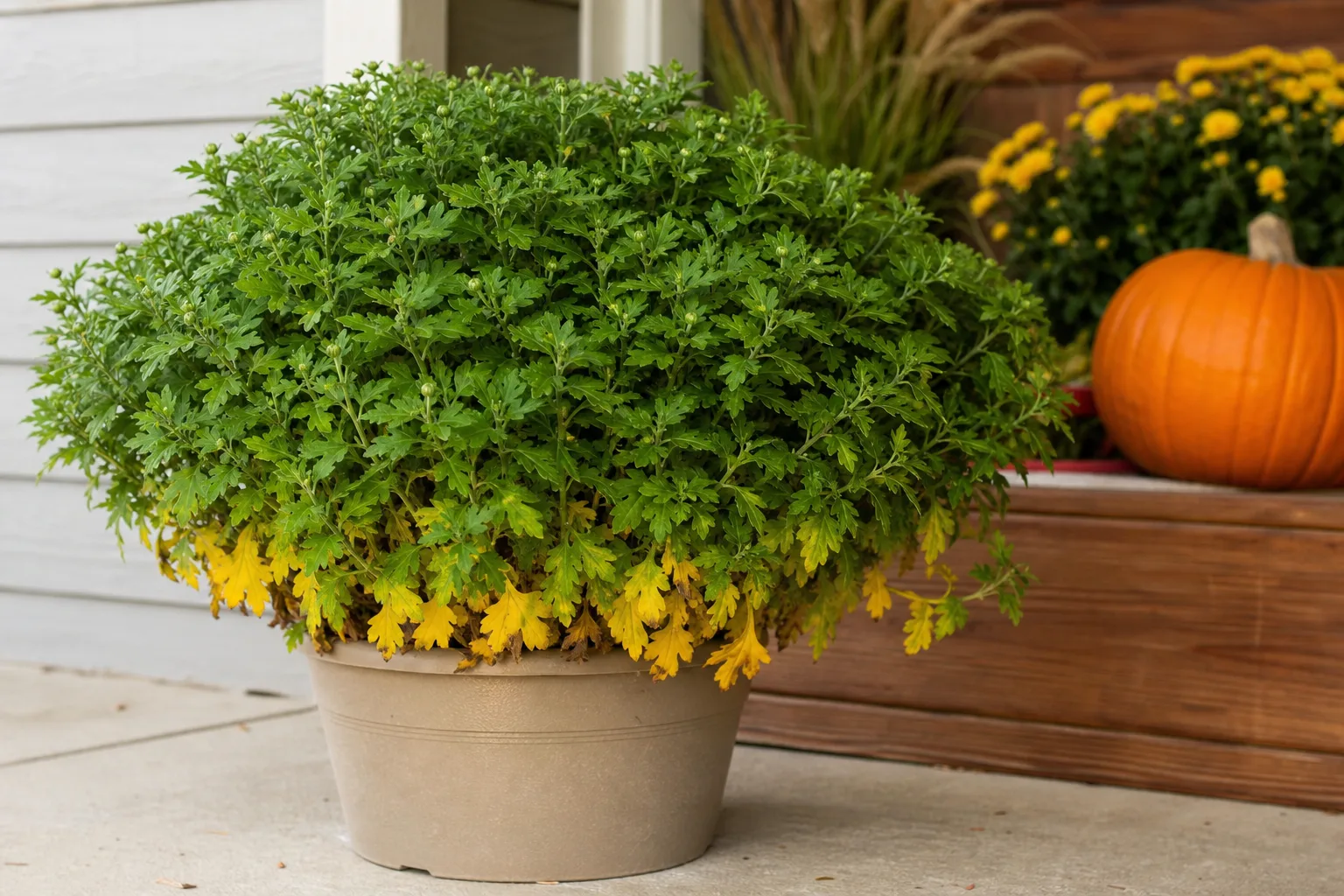
Yellow Leaves on Chrysanthemum: Causes, Checks & Fixes
This guide covers yellow leaves on Chrysanthemum. See also the general Yellow Leaves guide, watering, and light pages for this plant.
Yellow Leaves on Chrysanthemum: Causes, Checks & Fixes
Quick answer
Yellow leaves on Chrysanthemum (Chrysanthemum × morifolium) are a symptom, not a single diagnosis. On autumn porch mums and garden perennials alike, yellowing most often traces to wet crowns in slow-evaporating pots, dry shallow roots during full-sun bloom, nitrogen shortage during spring growth, fungal leaf spot from wet foliage, or normal post-bloom aging of older lower leaves.
First step: push your finger into the top 1–2 cm of mix and note which leaves are affected. Wet, heavy soil with yellow lower leaves and limp texture points to overwatering or early crown stress-see overwatering before you add fertilizer. Dry, light soil with yellowing from the bottom up during hot bloom points to drought on shallow roots. Uniform yellowing on older leaves in spring with firm crown and even moisture may signal nitrogen deficiency-see the fertilizer guide. Yellow-brown spots with halos suggest fungal disease, not a watering calendar fix alone.
Do not fertilize, repot, or move the plant into harsh new sun on day one. Match one correction to what soil, light, and leaf pattern tell you. Full species context: Chrysanthemum overview.
What yellow leaves look like on Chrysanthemum
Mums grow as dense mounding perennials with branching stems and shallow fibrous roots-not a tight central rosette like a succulent. Yellowing follows patterns tied to that architecture.
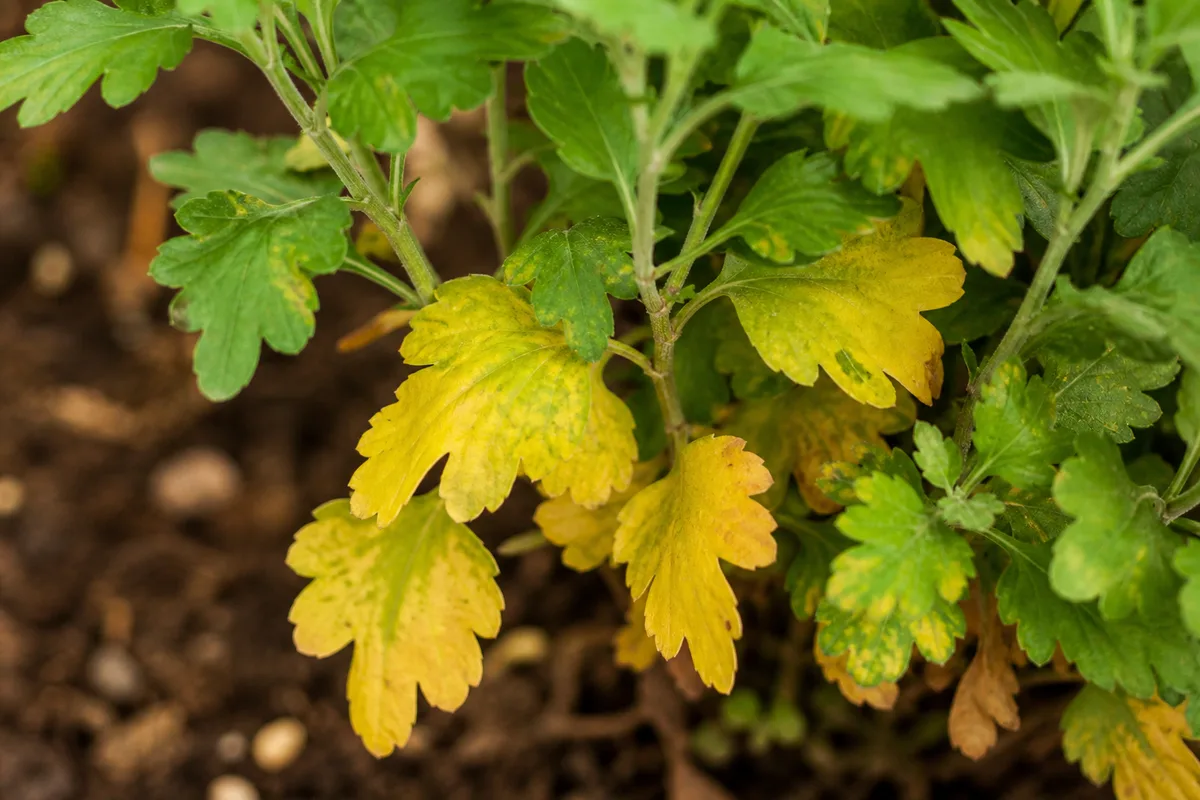
Yellow lower leaves on outer branches with firm green crown growth - post-bloom senescence and stress patterns both start from the bottom up on garden mums.
Post-bloom lower-leaf senescence (often normal):
- Oldest bottom leaves on outer branches fade yellow over weeks after peak flowering
- Crown and upper stems stay green and firm; new shoots may still appear at the base
- Soil moisture is even, not swinging between bone dry and soggy
- Common on florist display mums and garden mums winding down an autumn flush
Overwatering and crown stress:
- Yellowing starts on lower leaves and may climb stems while mix stays dark, cool, and wet
- Leaves feel limp even though you watered recently-damaged roots cannot move water efficiently
- Overwatering causes yellowing leaves that blacken and drop on chrysanthemums
- Sour smell at drain holes, fungus gnats, or soft tissue at the crown signal escalation-see root rot
Underwatering during full-sun bloom:
- Lower and outer leaves yellow with crisp or curled edges on dry, lightweight pots
- Blooming mums in direct sun transpire heavily; shallow roots dry within hours on sunny porches
- Mums especially need ample water when they bloom-missed checks during peak display yellow foliage quickly
Nitrogen deficiency during active growth:
- Uniform yellowing on older lower leaves while newer stem tips stay relatively greener
- Appears in spring and early summer on hungry plants in leached or unfed soil
- Mums are heavy feeders building branching framework before autumn bloom
- Not the same as wet-soil yellowing-soil should be evenly moist, not chronically soggy
Fungal leaf spot and foliar disease:
- Yellow-brown spots with dark margins, often starting on lower leaves in dense mounds
- Leaf spot pathogens on chrysanthemum begin as yellowish areas that enlarge to brown or black
- Overhead watering, crowded pots, and wet foliage overnight worsen spotting
- Yellow halos around spots differ from uniform nitrogen wash across whole leaves
Low light and leggy chlorosis:
- Pale yellow-green new growth with long gaps between leaves and stems leaning toward the window
- Soil stays damp too long in dim rooms because the plant uses water slowly
- Chrysanthemums prefer full sun-shade-heavy sites weaken growth the following season
- See not enough light when stretch precedes yellowing
Pest stippling lookalike:
- Fine speckles or bronzing on leaf undersides from aphids or spider mites
- Yellowing may be patchy, not a clean bottom-up fade
- Inspect before assuming water or fertilizer will fix the color-see aphids
Why Chrysanthemum gets yellow leaves
Shallow roots and fast moisture swings
Chrysanthemums carry very shallow roots that dry quickly in full sun but suffocate when the crown stays wet in cool indoor air. That biology explains why the same mum can yellow from drought on a sunny porch Monday and from overwatering on a dim shelf Tuesday.
The light–watering trap on display mums
Mums bought in peak bloom often move from a bright retail bench to a dimmer indoor table. Lower light slows transpiration, so the same watering rhythm keeps soil wet longer. Lower leaves yellow while owners assume they are underwatering. Fix requires full sun placement and a moisture check-not more arbitrary splashes. NC State lists full sun (six or more hours of direct sunlight daily) as the preferred condition for garden mums.
Overwatering and poor drainage
Retail pots in non-draining foil wrappers, oversized cachepots, and calendar watering in cool rooms keep crowns saturated. Drought causes woody stunted growth; overwatering causes yellowing leaves that blacken and drop-Clemson HGIC draws that contrast directly for chrysanthemums.
Hot-bloom drought
During autumn flowering in direct sun, a root-bound nursery pot can go dry overnight. Lower leaves yellow first because they are farthest from the active root zone and lose water fastest. This is common and fixable if caught before buds abort.
Nitrogen demand in spring growth
Garden mums rebuilding after winter or spring-planted stock need regular nutrition while producing branching stems. Without replenishment in fast-draining soil, the plant moves nitrogen to new tips and strips older lower leaves, producing progressive yellowing from the bottom up-distinct from wet-root failure if soil moisture is stable.
Post-bloom and florist-mum decline
Garden mums may yellow and drop lower leaves naturally after flowering while the crown stays alive for next season. Florist display mums forced for one spectacular flush often decline across much of the plant after bloom even with good care-they are bred for show, not long-term pot culture. Lower yellowing after October bloom on a grocery-store mum may be both normal senescence and a signal the display cycle is ending.
Fungal spotting from wet foliage
Dense mum mounds trap moisture on lower leaves. Overhead watering and poor airflow invite leaf spot fungi that yellow tissue around expanding lesions. This needs sanitation and airflow, not just a watering tweak.
Lookalike symptoms to rule out
| What you see | More likely cause | Quick check |
|---|---|---|
| Yellow-brown spots with dark margins | Fungal leaf spot | Inspect for discrete lesions, not whole-leaf fade |
| Uniform old-leaf yellow, wet soil, limp | Overwatering / root rot | Pot weight; crown firmness |
| Crisp yellow edges, dry light pot | Underwatering | Top inch dry; daily sun exposure |
| Pale stretchy growth, damp soil indoors | Not enough light | Hours of direct sun on foliage |
| Old-leaf yellow only after bloom, firm crown | Post-bloom senescence | Bloom stage; even moisture |
| Stippling, sticky residue, webbing | Aphids / spider mites | Underside inspection |
| Spring bottom-up yellow, fed soil stable | Nitrogen deficiency | Growth stage; fertilizer history |
How to confirm the cause
Work through these six checks in order before you change fertilizer, repot, or prune heavily.
- Top-inch moisture - Insert a finger or skewer into the top 1–2 cm. Wet with limp yellow lower leaves suggests crown stress; dry with light pot suggests drought. Match to the watering guide dry rule.
- Pot weight and drainage - Lift the pot. Heavy, cool soil after days without watering confirms oversaturation. Remove foil wrappers and confirm drain holes are open.
- Leaf pattern and position - Bottom-up uniform fade on dry soil differs from spotted lesions. Whole-plant pale wash with long stems points to light stress.
- Crown firmness - Press stem bases at soil line. Firm crown with yellow outer leaves is a better sign than soft, dark, collapsing tissue.
- Bloom and season timing - Lower yellowing weeks after peak bloom may be senescence. Spring yellow on actively growing garden mums raises nitrogen deficiency on the list.
- Light exposure - Count direct sun hours on the foliage. Blooming mums on dim shelves often yellow from slow metabolism and wet soil together-see light guide.
Quick pattern guide
| Soil at top 1–2 cm | Leaf pattern | Season / context | Likely cause | First action |
|---|---|---|---|---|
| Wet / cool | Lower yellow, limp | Any | Overwatering | Stop watering; check crown |
| Dry | Lower yellow, crisp | Full-sun bloom | Drought | Soak once; daily checks |
| Even moist | Spots with halos | Dense mound | Leaf spot fungus | Remove affected leaves; improve airflow |
| Even moist | Old leaves only | Post-bloom | Senescence | Trim spent foliage |
| Damp too long | Pale whole plant | Indoor dim shelf | Low light trap | Move to full sun; dry before next drink |
| Even moist | Bottom-up uniform | Spring growth | Nitrogen lack | Feed after confirming roots healthy |
First fix for Chrysanthemum
One clear first action: read soil moisture at the top 1–2 cm and match a single correction-do not stack repotting, fertilizer, and a window move the same day.
- Wet soil, heavy pot, yellow limp lower leaves: Stop watering until the top inch dries. Empty saucers, open drain holes, inspect crown firmness. If tissue is soft, follow root rot steps-do not fertilize.
- Dry soil, light pot, yellow crisp lower leaves during bloom: Water thoroughly at the soil surface until excess drains, then empty the saucer within 30 minutes. Recheck daily on sunny porches during peak bloom.
- Yellow-brown spots on lower leaves in a dense mound: Remove affected leaves, stop overhead watering, improve spacing and airflow. Do not soak the crown repeatedly hoping color returns.
- Post-bloom lower-leaf yellow only, firm crown: Peel off spent yellow lower leaves and deadhead finished blooms. Maintain even moisture without soaking the crown.
- Spring bottom-up yellow on actively growing garden mum with stable moisture: Apply balanced nutrition per the fertilizer guide after confirming roots are not waterlogged.
Step-by-step recovery by confirmed cause
Overwatering / early crown stress
Pause watering until the top inch dries. Confirm drainage. If yellowing continues after appropriately dry soil for two weeks, inspect roots-trim only mushy tissue, repot into well-drained mix if needed, and withhold fertilizer until new shoots appear. Full protocol: overwatering guide.
Hot-bloom drought
Soak once until water runs from drainage holes; discard saucer water. Resume checking the top inch daily during full-sun bloom. Lower yellow leaves may not re-green; watch for firm new growth from the crown within one to two weeks.
Nitrogen deficiency
Feed with a balanced soluble fertilizer during active vegetative growth if soil moisture has been stable and roots are healthy-not on a waterlogged plant. Avoid overfeeding; salt buildup can also yellow margins. Expect greener new leaves within two to three weeks; old yellow tissue usually drops rather than re-greening.
Fungal leaf spot
Remove spotted leaves promptly. Water at the soil surface, not over dense foliage. Increase spacing between pots. Severe recurring spot on weakened display mums may not be worth aggressive rescue late in the season.
Low-light chlorosis
Move the pot to full sun-at least 5 to 6 hours of direct light daily-acclimating over 7 to 14 days if coming from deep shade. Stretch the watering interval until the top layer genuinely dries; brighter light increases water use. See not enough light.
Post-bloom senescence
Remove yellow lower leaves and spent flowers. For hardy garden mums you plan to keep, transition outdoors with good drainage per the overview. Florist display mums may continue declining regardless-lower yellowing after bloom is often expected, not a failed rescue.
Recovery timeline
Recovery is judged by new crown growth, not old leaf color.
| Cause | What to expect |
|---|---|
| Mild drought yellow | New green shoots within 1–2 weeks after proper soak and daily checks |
| Overwatering (early) | 2–4 weeks if crown stayed firm; old yellow leaves drop |
| Nitrogen correction | Greener new foliage within 2–3 weeks during active growth |
| Leaf spot (mild) | Spread stops when foliage stays dry; old spots do not vanish |
| Low-light correction | Sturdier new growth within 3–6 weeks; not instant re-greening |
| Post-bloom senescence | Lower leaf drop over weeks; not an emergency if crown is firm |
| Advanced crown rot | Partial save or discard-honest stop when base is extensively mushy |
Fully yellow leaf blades do not re-green. Remove them to reduce pest habitat and improve airflow.
What not to do
- Do not fertilize a mum with wet soil and limp yellow leaves-roots need oxygen first
- Do not increase watering because leaves look pale on already wet mix-limp yellow on wet soil often means damaged roots, not thirst
- Do not treat “bright indirect light” as sufficient-mums need meaningful direct sun for healthy growth and bloom
- Do not repot on day one unless roots are mushy or the nursery ball never dries-repotting stresses an already declining plant
- Do not confuse post-bloom lower-leaf yellow with crown rot-firm crown and even moisture vs soft dark base on wet soil
- Do not overhead soak dense blooms late in the day when fungal spotting is present
When removing yellow leaves, remember that chrysanthemum is toxic to cats and dogs. Bag and discard fallen foliage if pets might chew it; wash hands after handling.
How to prevent yellow leaves on Chrysanthemum
- Check moisture daily during autumn bloom in full sun-water when the top 1–2 cm dries, then soak and empty saucers
- Place blooming mums where they receive at least 5 to 6 hours of direct sunlight daily per Clemson HGIC and NC State
- Remove decorative pot wrappers without drain holes immediately after purchase
- Water at the soil surface, not over dense foliage, to reduce leaf spot
- Feed heavy-feeding garden mums during spring and summer growth per the fertilizer guide
- Deadhead spent blooms and peel off yellow lower leaves before they rest on wet soil
- Avoid night lighting on porches during bud initiation-it delays recovery growth after stress (see light guide)
When to worry
Treat yellowing as urgent if:
- Multiple leaves yellow within days while soil stays wet and the crown turns soft or dark
- Yellowing climbs rapidly toward new shoots during active bloom on a dry or wet pot
- Grey mold or sour smell spreads at the base-escalate to root rot immediately
- Spotted leaves cover most of the mound and stems collapse despite dry foliage practices
Lower urgency: older bottom leaves only yellowing slowly after bloom with a firm crown and stable moisture-that is routine senescence on a branching mum, not an emergency.
Chrysanthemum care cross-check
| Variable | Target for healthy mums | Yellow-leaf link |
|---|---|---|
| Light | Full sun, 5–6+ hours direct | Pale stretch + wet soil indoors |
| Water | Top 1–2 cm dry before soak | Both drought and crown rot |
| Soil | Fertile, well-drained, organic | Wet crown in heavy mix |
| Feed | Regular during vegetative growth | Spring bottom-up yellow |
| Airflow | Space between pots | Fungal spotting in dense mounds |
| Bloom stage | Post-flush lower-leaf drop normal | Do not panic after October bloom |
Related Chrysanthemum guides
- Chrysanthemum care overview - garden vs florist mums, yellow-leaves FAQ, extension sources
- Watering Chrysanthemum - top-inch dry rule and bloom-season rhythm
- Light for Chrysanthemum - full sun and night-darkness rules
- Fertilizer for Chrysanthemum - nitrogen and heavy-feeder timing
- Overwatering on Chrysanthemum - wet soil with limp yellow leaves
- Root rot on Chrysanthemum - soft crown on wet mix
- Not enough light on Chrysanthemum - leggy pale growth
- Aphids on Chrysanthemum - stippling lookalike