Aphids on Chrysanthemum: Causes, Checks & Fixes
Quick answer
Aphids on Chrysanthemum cluster on tender shoots and flower buds-especially in spring. First step: isolate the plant and blast new growth with a strong water rinse before applying insecticidal soap.
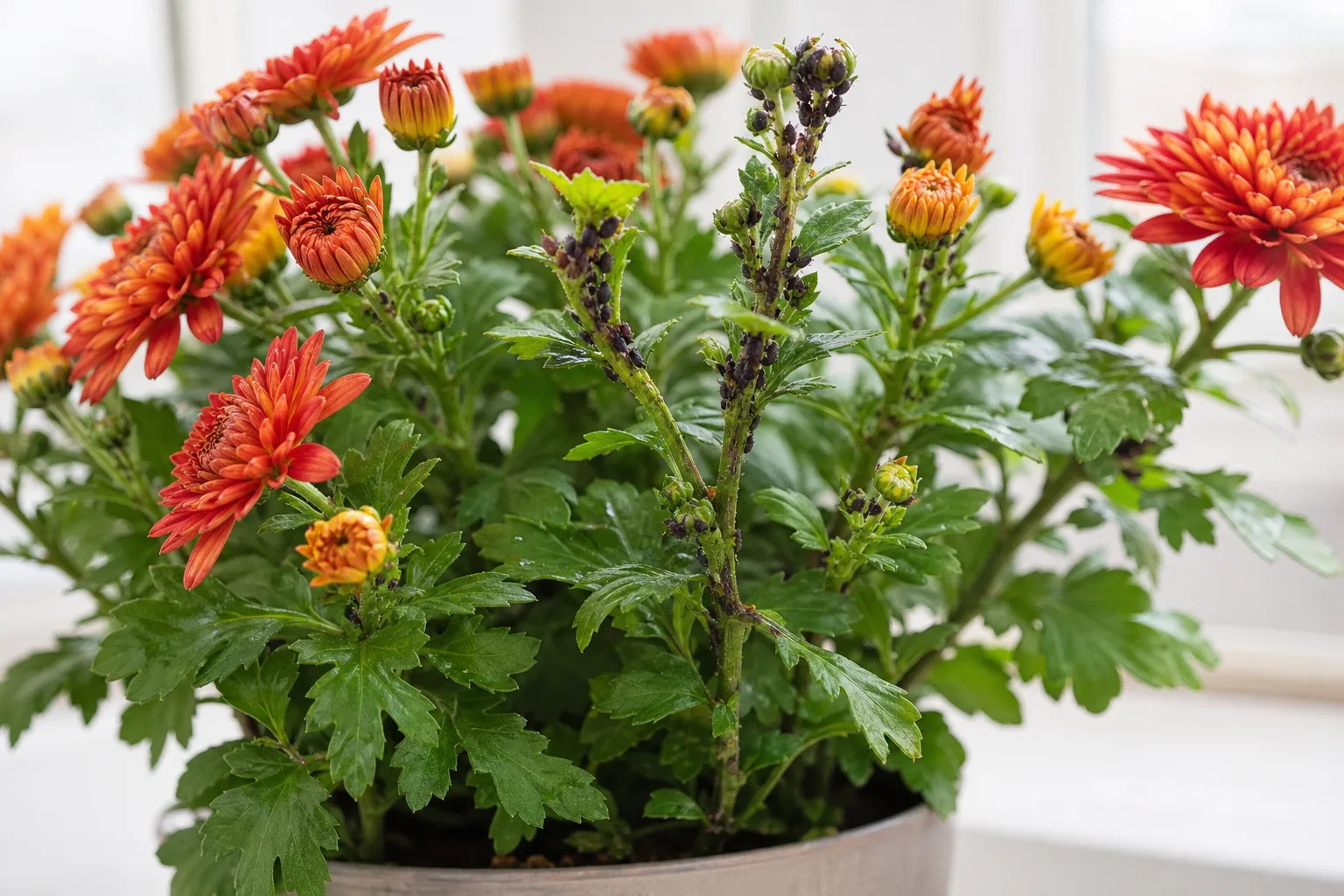
Aphids on Chrysanthemum: Causes, Checks & Fixes
This guide covers aphids on Chrysanthemum. See also the general Aphids guide, watering, and light pages for this plant.
Aphids on Chrysanthemum: Causes, Checks & Fixes
Quick answer
Aphids on Chrysanthemum (Chrysanthemum morifolium, garden mum) are sap-sucking insects that pile onto soft new growth, pinched tips, and flower buds. The specialist chrysanthemum aphid (Macrosiphoniella sanborni) feeds almost exclusively on mums and related composites; green peach and melon aphids can also show up on the same plant.
First step: isolate the mum and rinse terminal shoots thoroughly with a strong stream of water. Hold the pot at an angle, target leaf undersides and bud clusters, and knock live aphids off before reaching for sprays. One rinse rarely finishes the job-confirm survivors with a hand lens, then treat only if insects remain.
What aphids look like on Chrysanthemum
On mums, aphids rarely hide on old, tough foliage. They concentrate where the plant is actively growing:
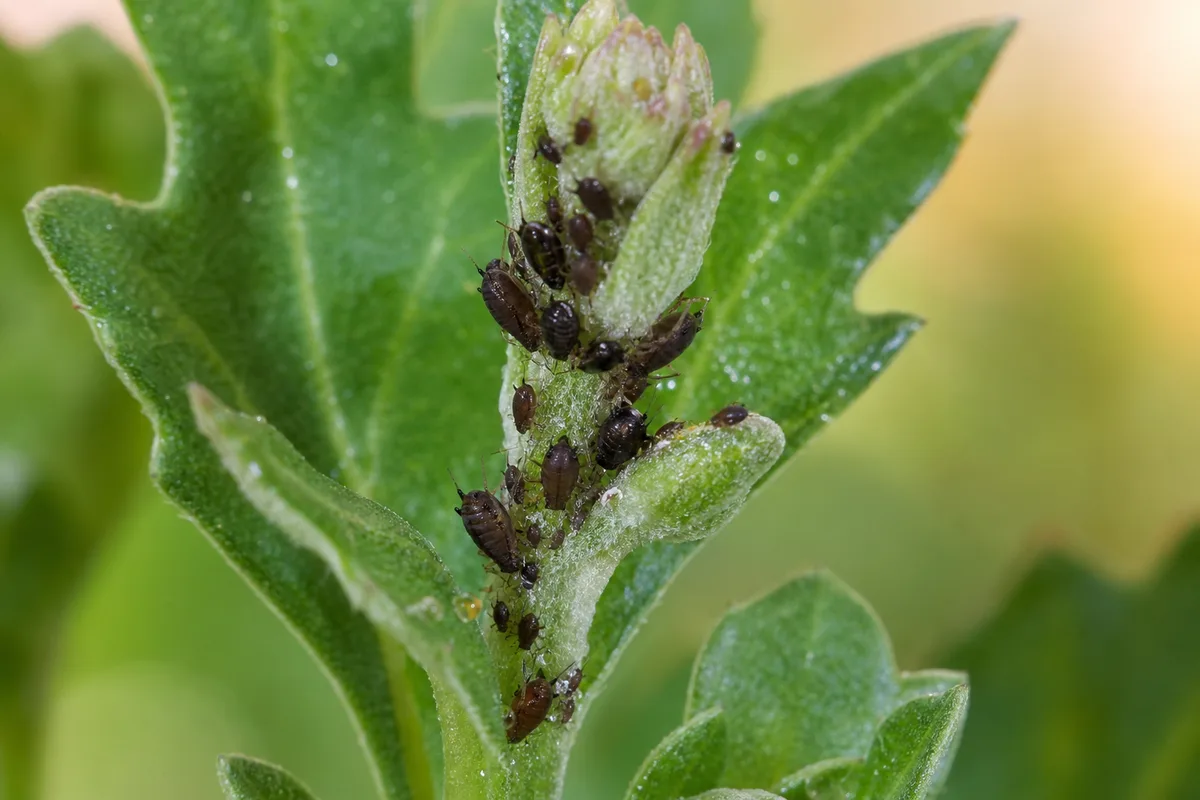
Dark aphid colonies on a chrysanthemum shoot tip with shiny honeydew on the stem - compare with clean new growth on an uninfested mum.
- Terminal buds and fresh side shoots after spring pinching
- Flower stalks and unopened buds in late summer and autumn
- Undersides of young leaves near the growing tip
Chrysanthemum aphids are typically dark mahogany to black, about 1.5 mm long, with short cornicles (tail pipes) at the rear. Clemson HGIC notes that other aphid species on mums may look green or pink-do not rely on color alone if you need a precise ID.
Heavy colonies look like matte clusters stacked along stems. You may also see:
- Shiny, sticky honeydew on leaves and petals
- Whitish cast skins shed as nymphs molt
- Black sooty mold growing on dried honeydew
- Ants traveling up stems to harvest honeydew
- Curled, twisted, or stunted young leaves and buds
A single aphid is easy to miss. By the time leaves distort, the population has usually been building for days-mums can go from a few insects to hundreds on one terminal shoot within a week because females reproduce without mating.
Why Chrysanthemum gets aphids
Mums invite aphids for reasons tied to how the plant is grown, not bad luck alone.
Soft, nitrogen-rich new growth. Garden mums are pinched repeatedly in spring and early summer to build a bushy frame and delay flowering. Each pinch forces tender shoots that aphids prefer for feeding. Heavy nitrogen feeding before bud set produces the same soft tissue-convenient for you, ideal for aphids.
Bud-heavy architecture. As autumn approaches, energy shifts to flower buds. Chrysanthemum aphids gather at terminal buds and feed on new growth, exactly where you least want damage. Dense mum habit also makes it hard for sprays and predators to reach every crevice.
Host specificity and rapid reproduction. Macrosiphoniella sanborni is the primary chrysanthemum pest in many regions and uses chrysanthemum as its only known host in North America. Females give birth to live nymphs-often four to eight per day-with no mating required. One wingless female on a shipped pot mum can seed a greenhouse bench in weeks; winged forms appear when colonies crowd and move to neighboring plants.
Introduction routes. Aphids hitchhike on new nursery mums, shared cuttings, open windows near outdoor infested plants, and tools moved between pots. Skipping quarantine is the fastest way they enter a collection.
Stress and shelter. Mums want Chrysanthemum light guide, but crowded balcony groupings, sheltered porch corners, and stagnant air let aphids reproduce with fewer predators. Dusty leaves and under-watered plants under stress can also be easier targets, though the main driver on mums is tender growth timing-not generic “weak houseplant” culture.
How to confirm the cause
Work through these checks before treating:
- Location on the plant - Aphids sit on soft tips and buds. Scale hides as immobile bumps; spider mites leave fine webbing and stippled older leaves, not glossy honeydew piles on buds.
- Movement - Brush the cluster with a finger or toothpick. Aphids crawl slowly; mealybugs feel waxy and cling; thrips jump or vanish quickly.
- Honeydew test - Sticky shine on stems with insects present confirms active sap feeding. Sticky leaves with no insects may mean aphids already rinsed off or ants farming a colony higher on the stem.
- Color and shape - Dark, pear-shaped bodies with visible cornicles fit aphids. Cottony white masses suggest mealybugs; hard brown shells suggest scale.
- Ant trails - Ants on mum stems often mark an aphid colony above them; follow the line upward.
- Nearby plants - Check all mums and aster-family pots in the same area. Winged aphids disperse when a shoot becomes crowded.
- Virus suspicion - Persistent mottling or vein banding on leaves after aphids are gone may indicate chrysanthemum vein mottle virus or chrysanthemum virus B, which aphids can transmit. There is no cure; remove affected stock and focus on prevention.
If you find firm buds, clean older leaves, and no honeydew, you may be past the active infestation or misreading old curl from mechanical damage during pinching.
First fix for Chrysanthemum
Isolate the plant and rinse new growth hard with water.
Move the mum away from others on a patio, sink, or shower. Use a hose nozzle or sprayer on firm pressure, angling from above so water runs across leaf undersides and bud clusters. Support the plant so stems do not snap-mum tips are brittle when packed with buds.
Repeat the rinse every two days for at least three sessions if weather allows; Clemson HGIC recommends this interval for water dislodging on chrysanthemums. Morning rinses let foliage dry in sun, which suits mums better than soaking buds overnight in cool, humid shade.
After each rinse, inspect with a hand lens. Do not apply soap or oil the same day as the first heavy rinse unless rain or your climate will leave buds wet for hours-saturated tissue plus soap burns more easily. Wait until leaves are dry and aphids still visible.
Step-by-step recovery
Once isolation and rinsing are underway, continue in this order based on severity:
- Manual removal - Wipe heavily infested bud tips with a damp cloth or prune out stems that are more insect than flower. Bag and discard prunings; do not compost active colonies.
- Insecticidal soap or horticultural oil - If live aphids remain after rinsing, spray leaf undersides, stems, and bud clusters until runoff. These are contact killers; UC IPM notes they only affect aphids hit directly. Repeat every five to seven days for two to three cycles to catch nymphs hatching from survivors.
- Timing and sun - Apply in early morning or evening so residues dry before strong midday sun hits mum flowers. Water the pot lightly beforehand if the plant is drought-stressed-soap and oil stress dry roots combined with hot sun.
- Protect predators - Lady beetles, lacewing larvae, and parasitic wasps may already be working if ants are absent. Avoid broad-spectrum pyrethroids indoors unless buds are already lost; they knock out beneficial insects and rarely solve crowded mum architecture in one pass.
- Ant control if needed - Sticky bands or ant barriers on stakes stop ants from protecting aphids. Fixing ants alone does not remove aphids, but it lets predators access colonies.
- Hold fertilizer - Skip nitrogen boosts until new growth looks clean for two weeks. Feeding during an active infestation produces more soft shoots for the next generation.
- Collection-wide check - Inspect every mum and nearby aster-family plant weekly until two weeks pass with zero live aphids on the isolated plant.
Chrysanthemum repotting guide is rarely necessary for foliage aphids. Root aphids (Pemphigus species) are a separate problem on mums; if insects cluster only at the soil line with no terminal colonies, suspect root aphids and inspect roots instead of only spraying tops.
Recovery timeline
First rinse: many aphids drop immediately; honeydew stops accumulating within days if colonies are gone.
One to two weeks: with rinsing alone or soap cycles, nymph counts should crash. Look for clean new tips and buds swelling normally.
Two to four weeks: curled leaves present before treatment stay curled-trim them for appearance once the plant is stable. Flowering on damaged buds may be delayed or uneven; secondary buds often compensate on well-pinched mums.
Ongoing: a single missed winged female can restart a colony. Weekly terminal checks through spring pinching and pre-bloom weeks matter more than a one-time rescue.
Worsening signs: sooty mold spreading despite rinsing, buds browning and aborting en masse, or winged aphids on multiple plants mean escalation-consider removing the worst stem entirely and treating the whole group, not just one pot.
Lookalike symptoms
- Chrysanthemum leafminer - Pale winding trails inside leaves, not external clusters; honeydew absent.
- Two-spotted spider mites on Chrysanthemum - Fine webbing, stippled older foliage in dry heat; mites are tiny dots, not stacked pear-shaped bodies on buds.
- Thrips - Silvery scarring and distorted petals; insects are slender and fast, not clustered blobs.
- Mealybugs on Chrysanthemum - White cottony masses in leaf axils; slower than aphids, no cornicles.
- Scale - Hard or waxy bumps that do not move when scraped; honeydew possible but insects are fixed.
- Powdery mildew - White fungal dust on leaves; not sticky and wipes off differently from honeydew.
- Botrytis on buds - Brown fuzzy mold in cool wet weather; no live sap-sucking insects at the center.
What not to do
Do not spray oil or soap on wilted, sun-stressed, or bud-heavy mums in midday heat-mums in full flower transpire fast and burn easily. Do not use harsh dish soap; plant-labeled insecticidal soap is formulated for foliage contact.
Avoid one treatment and done-aphid nymphs hatch continuously on mums. A single pass misses eggs and hidden corners inside dense habit.
Do not return an isolated mum to the display until you have seen no live aphids for at least two weeks after the last treatment cycle.
Skip high-nitrogen fertilizer while colonies are active; soft regrowth feeds the next wave.
Do not ignore ants-they defend aphids from lady beetles and lacewings.
When handling heavily infested mums, wear gloves and wash hands afterward. Chrysanthemum is toxic to cats, dogs, and horses; keep treated plants away from pets until sprays have dried, and store products out of reach.
How to prevent aphids next time
Quarantine new mums for two weeks before placing them beside existing pots. Inspect terminal growth at purchase-retail autumn mums often arrive with early colonies hidden in buds.
Scout weekly from spring pinching through bud formation. A ten-second check of the topmost shoot catches most mum infestations before honeydew spreads.
Balance nitrogen - mums need feed during active growth, but excess before bud set produces soft shoots. Shift toward phosphorus and potassium as buds form, matching normal chrysanthemum flowering rhythm.
Space plants for airflow in full sun. Crowded porch rows trap heat and reduce predator access.
Rinse dust off foliage during dry spells; clean leaves support photosynthesis and make pest clusters easier to spot.
Encourage predators outdoors-lady beetles, syrphid fly larvae, and lacewings consume large aphid numbers when ants are not farming colonies. Avoid unnecessary broad-spectrum sprays on garden mums that share space with beneficial insects.
When to worry
Escalate quickly if flower buds are coated in aphids within two weeks of expected bloom, sooty mold covers petals, or multiple mums in one area show winged adults. Those situations threaten the display, not just a few leaves.
Suspect virus if mottling persists after aphids are eliminated-remove that plant from the collection rather than propagating from it.
A small cluster on one spring pinch after a thorough rinse is manageable with patience; hundreds on terminal growth with ants and mold is not a wait-and-see case.
Conclusion
Aphids on Chrysanthemum follow the plant’s growth calendar-soft pinched tips in spring, then bud clusters in autumn. Confirm them by finding live insects on terminal tissue and sticky honeydew, not by yellow leaves alone. Isolate, rinse new growth repeatedly, then use contact sprays only where aphids survive. Prevention is weekly inspection during the weeks mums produce the tender shoots aphids want most.
When to use this page vs other Chrysanthemum guides
- Chrysanthemum watering guide - Use for routine moisture checks before assuming aphids is the main issue.
- Chrysanthemum problems hub - Browse all 16 common issues on this species.
- Mealybugs on Chrysanthemum - Different entry point when symptoms overlap with aphids.
- Spider Mites on Chrysanthemum - Different entry point when symptoms overlap with aphids.
- Yellow Leaves on Chrysanthemum - Different entry point when symptoms overlap with aphids.