Mealybugs on Chrysanthemum: Causes, Checks & Fixes
Quick answer
Mealybugs on Chrysanthemum hide in leaf axils, the crown, and near buds. Isolate the plant and dab visible insects with 70% alcohol on a cotton swab, then repeat weekly for at least three weeks.
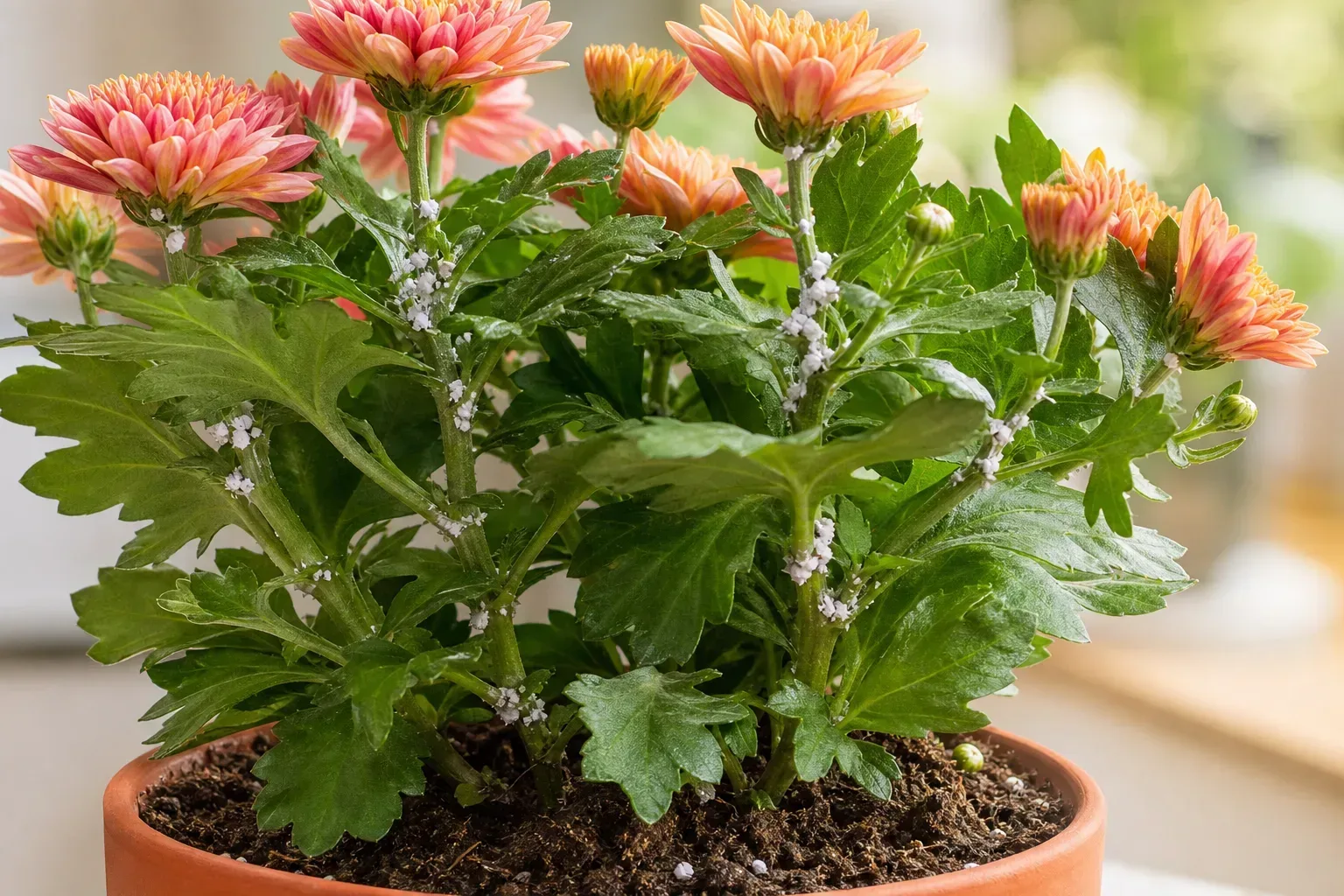
Mealybugs on Chrysanthemum: Causes, Checks & Fixes
This guide covers mealybugs on Chrysanthemum. See also the general Mealybugs guide, watering, and light pages for this plant.
Mealybugs on Chrysanthemum: Causes, Checks & Fixes
Quick answer
Mealybugs on Chrysanthemum are sap-sucking insects that look like tiny white cotton balls tucked into leaf axils, along stems, and in the crown of the plant. First move: isolate the mum away from other pots, then dab every visible cluster with 70% isopropyl alcohol on a cotton swab. Do not start with a whole-plant spray until you have confirmed live insects and checked how dense the infestation is. Mealybugs spread slowly by crawling, but a grocery-store mum in full bloom can already harbor hidden colonies when you bring it home.
What mealybugs look like on Chrysanthemum
On a chrysanthemum, mealybugs most often show up as white, waxy, cottony masses where leaves meet stems-the same tight junctions that make mums look full and bushy. You may also find them under leaves, along flower stalks near buds, at the soil line, and around drainage holes if root-feeding species are present.
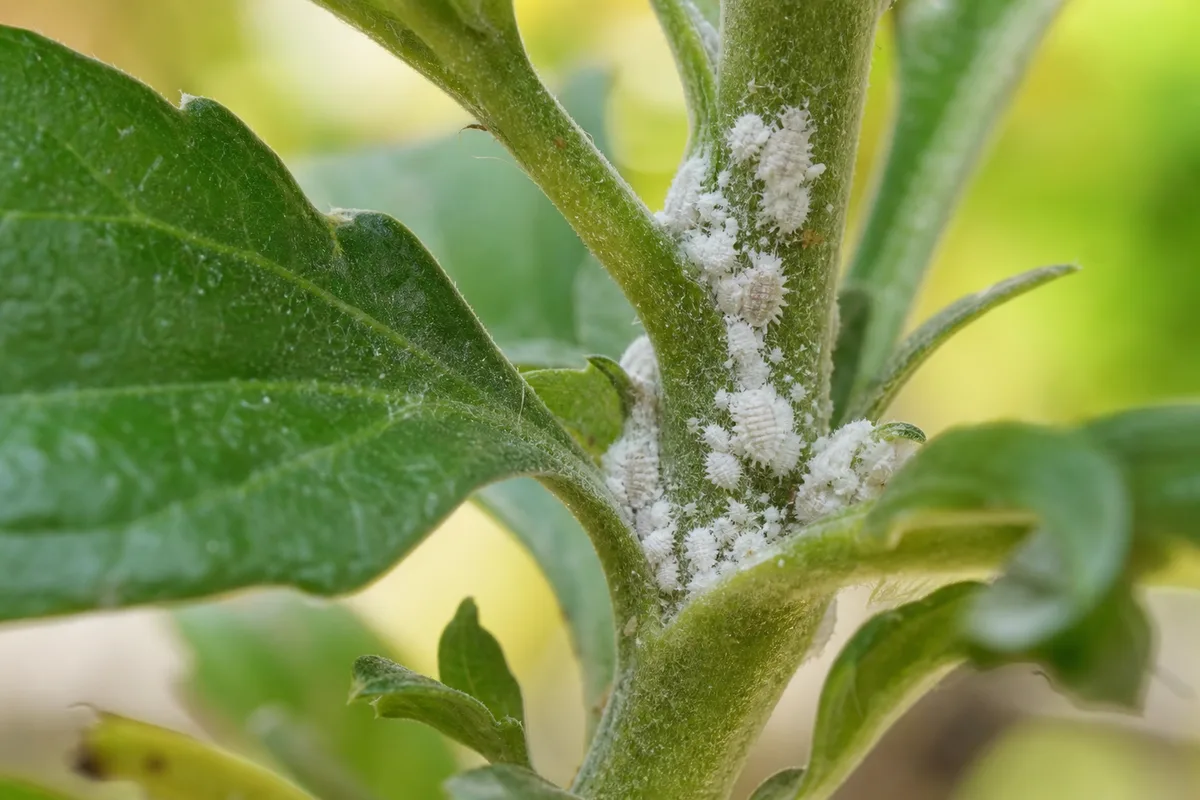
White mealybug masses tucked where a chrysanthemum leaf meets the stem - compare with clean leaf-stem junctions on a pest-free mum.
Individual insects are small, oval, and covered in wax. Females are wingless and typically 2 to 5 mm long when mature. Newly hatched crawlers are tiny, lack wax at first, and can walk short distances before settling to feed. On a mum in active growth, look especially at tender new shoots and recently pinched tips-mealybugs prefer soft tissue.
Damage builds gradually. Mealybugs suck plant sap and excrete sticky honeydew, which can coat leaves and petals. That honeydew often leads to black sooty mold and may attract ants. Leaves may yellow, curl, or drop when populations are heavy. Flower quality suffers if insects cluster on buds during the autumn bloom flush.
Why Chrysanthemum gets mealybugs
Chrysanthemum is a known mealybug host in greenhouse and indoor settings. Kansas State Extension lists chrysanthemum among specific plants attacked in production environments, and the Mexican mealybug has been recorded feeding on chrysanthemums among other floriculture crops. The most common indoor species are usually citrus mealybug (Planococcus citri) and longtailed mealybug (Pseudococcus longispinus).
Several chrysanthemum habits make infestation easier to miss and harder to clear:
Dense, layered foliage. A well-pinched mum has dozens of leaf-stem junctions at different heights. Mealybugs hide in those crevices where sprays and casual inspection do not reach.
Seasonal display mums. Plants bought in full bloom from florists, grocery stores, or garden centers often arrive with pests already present. Skipping quarantine is the fastest way to spread mealybugs through a collection.
Warm, stable indoor conditions. When mums are kept indoors through winter or on a heated porch, all life stages can persist year-round without cold breaks. Populations overlap, so one treatment rarely clears every generation.
Soft, nitrogen-rich new growth. Mums pushed with heavy fertilizer or fast spring growth produce tender shoots that mealybugs prefer for feeding and egg laying. Overfeeding during recovery makes the problem worse, not better.
How to confirm the cause
Work through these checks in order before committing to a full spray regimen:
- Inspect with magnification. Use a hand lens on leaf axils, the crown center, undersides of lower leaves, and any sticky spots on stems or petals.
- Crush-test a sample. Wipe a cottony mass onto white paper and crush it. Mealybugs smear pink or red; mineral dust, perlite, or pollen will not.
- Look for movement. Crawlers are pale and slow. Adult clusters stay put but may have visible legs at the edges if wax is thin.
- Check for honeydew and ants. Shiny sticky residue on leaves or the pot rim supports a sap-feeding pest. Ants on the pot or saucer often indicate mealybugs or aphids nearby.
- Examine the root zone. If stems look clean but the plant keeps declining, peel back slightly at the soil line and inspect drainage holes for white waxy patches-root mealybugs are harder to detect but occur on potted ornamentals.
Confirmed mealybugs means isolation and direct treatment. If you find no insects but do see sticky residue, recheck in three to five days; crawlers are easy to overlook on the first pass.
Lookalike symptoms
Several problems mimic mealybug damage on mums. Ruling them out prevents wasted treatment:
Powdery mildew forms flat white fungal patches on leaf surfaces, not discrete cottony insects in axils. Mildew wipes off differently and does not smear pink when crushed.
Mineral or hard-water deposits leave chalky white crust on leaf edges, usually uniform and not clustered in stem joints.
Aphids are soft-bodied but not wax-covered; they cluster on new growth and move more visibly when disturbed. Chrysanthemum aphids often target tender shoots and flower stems rather than deep crown crevices.
Scale insects form hard brown or tan shells stuck flush to stems. Mealybugs look fluffy and can be lifted with a swab more easily than armored scale.
Botrytis or other fungal spots on spent petals during damp bloom weather cause brown fuzzy decay, not waxy white clusters on living tissue.
The first fix to try
Isolate the plant, then dab visible mealybugs with 70% isopropyl alcohol on a cotton swab or small brush.
Move the chrysanthemum away from other pots-mealybugs crawl between touching leaves and can hitchhike on hands and tools. Work in good light and touch every cottony cluster you can reach in leaf axils, along stems, and under leaves. UC IPM recommends testing alcohol on a small leaf area one to two days before broad use to check for phytotoxicity, especially on mums in hot direct sun.
This single step is the right first response because it kills adults on contact, removes wax-covered clusters you can see, and confirms how widespread the infestation is before you add sprays. Do not repot, prune heavily, or fertilize on day one unless root mealybugs are confirmed in the soil.
Step-by-step recovery
After the initial alcohol dab, follow this sequence based on severity:
Light infestation (few visible clusters)
- Dab alcohol on every cluster you find.
- Repeat weekly for at least three weeks to catch newly hatched crawlers.
- Wipe honeydew off leaves with a damp cloth so sooty mold does not spread.
- Recheck the crown and lower stems each time-mums grow new axils quickly during active seasons.
Moderate infestation (multiple stems affected, no root signs)
- Complete the alcohol dab pass first.
- Two days after a spot test, spray insecticidal soap or horticultural oil directly onto colonies and crawlers, covering leaf axils and stem joints thoroughly.
- Repeat every seven to ten days for two to three cycles. Overlapping mealybug generations often require multiple applications.
- Optionally rinse sturdy foliage with a gentle stream of water between treatments to dislodge wax and honeydew-avoid soaking the crown overnight on a mum kept indoors.
Heavy infestation or root mealybugs suspected
- If more than roughly one-third of stems show colonies, or treatment fails after three weekly rounds, weigh the cost of the plant against continued effort. Heavily infested greenhouse plants are often discarded to protect the rest of the collection.
- For root mealybugs, consider Chrysanthemum repotting guide into fresh mix after rinsing roots, discarding old soil, and scrubbing the pot. This is a secondary step-not a day-one fix-and only when aboveground treatment is not stopping decline.
Throughout recovery, keep watering on the mum’s normal schedule (top 2 cm dry) and hold fertilizer until new growth looks clean for two weeks. Stressed, overfed plants produce the soft tissue mealybugs prefer.
Recovery timeline
Expect visible clusters to shrink within one to two weekly alcohol passes if you reached most colonies. Full clearance usually takes three to four weeks of repeated treatment because eggs and wax-protected adults survive single sprays.
Signs the plan is working:
- No new white clusters in previously clean axils
- Honeydew and ant activity stop increasing
- New leaves and shoots emerge without waxy patches
- Sooty mold stops spreading onto fresh tissue
Signs the infestation is winning:
- Colonies reappear faster each week despite treatment
- Buds abort or fail to open with white wax at their bases
- The plant wilts despite appropriate watering-possible root mealybug damage
- Mealybugs show up on neighboring pots you did not treat
Old leaves with yellowing or heavy sooty coating may not fully recover cosmetically. Judge success by clean new growth and stable flowering, not by restoring every damaged lower leaf.
Mistakes to avoid
Spraying before isolating. One shower or oil application does not stop crawlers from walking to the plant beside it overnight.
Treating once and stopping. A single pass kills visible adults but misses eggs and crawlers under wax. Weekly repetition until no new activity for two weeks is standard for houseplant mealybugs.
Using the wrong product for the pest. Broad pyrethroid sprays often miss hidden mealybugs and can harm beneficial insects outdoors without solving indoor infestations.
Applying alcohol or oil to wilted, sun-stressed mums. Test first, treat in morning or evening, and avoid open flowers if you want bloom to last.
Over-fertilizing during recovery. High nitrogen produces lush new shoots that attract mealybugs to tender growth.
Returning the plant to the group too soon. Keep the mum isolated until you have seen no new clusters for at least two weeks after the last treatment.
Ignoring ants. Ants protect mealybugs from predators. If ants are present, treat the mealybugs and block ant access to the pot.
Chrysanthemum care cross-check
Mealybugs exploit stressed mums, but fixing care alone will not eliminate an active infestation. Still, these chrysanthemum-specific checks reduce reinfestation risk:
- Light: Mums need bright light for strong growth. Weak, stretched stems have fewer leaves but more hidden axils where pests persist unnoticed in dim corners.
- Watering: Overwatered crowns in cool soil stress roots; underwatering on Chrysanthemum mums during hot bloom wilt and attract secondary problems. Stick to watering when the top 2 cm is dry.
- Airflow: Dense mum mounds against a wall trap humidity and honeydew. Slight spacing between pots helps you spot pests earlier.
- Post-bloom handling: After the main flush, lower leaves naturally senesce. Remove spent flowers and yellowing foliage so mealybugs have fewer hiding places through dormancy.
- Pet safety: Chrysanthemum is toxic to cats and dogs. Keep treated plants out of reach until sprays and alcohol have dried, and wash hands after handling sap or heavily infested tissue.
How to prevent mealybugs
Prevention on chrysanthemum is mostly about inspection and quarantine, not routine spraying:
- Quarantine every new mum for two weeks before placing it near other plants. Check leaf axils and the crown on day one, day seven, and day fourteen.
- Inspect weekly during watering, especially in spring when new shoots emerge and during autumn bloom when buds are forming.
- Avoid excess nitrogen fertilizer. Use balanced feeding during active growth; flush salts if the plant has been heavily fed and growth looks unnaturally soft.
- Clean tools and stakes if you trim or divide mums. Mealybugs spread on hands, shears, and reused pots.
- Monitor plants you bring indoors for winter. Stable indoor temperatures allow year-round reproduction-winter is not a pest-free season for potted mums.
- Inspect store-bought bloom mums realistically. A perfect display pot is still a common introduction route; treat quarantine as mandatory, not optional.
Outdoors, natural predators such as lady beetles and lacewings help suppress mealybugs. Indoors, those predators are usually absent, so early manual removal matters more.
When to worry
Act the same day if mealybugs have spread to multiple plants, ants are farming honeydew across several pots, or white clusters sit directly on flower buds you want to keep. Those situations escalate quickly in a warm room full of blooming mums.
Consider discarding the plant if:
- More than one-third of stems carry colonies after two full treatment cycles
- Root mealybugs are confirmed and the mum is a low-value seasonal display plant
- The plant was already declining from crown rot, root rot on Chrysanthemum, or severe wilt before pests appeared
A single grocery-store mum in peak bloom is often cheaper to replace than to rescue from a heavy infestation-protect the rest of your collection first.
When to use this page vs other Chrysanthemum guides
- Chrysanthemum watering guide - Use for routine moisture checks before assuming mealybugs is the main issue.
- Chrysanthemum problems hub - Browse all 16 common issues on this species.
- Yellow Leaves on Chrysanthemum - Different entry point when symptoms overlap with mealybugs.
- Slow Growth on Chrysanthemum - Different entry point when symptoms overlap with mealybugs.
- Spider Mites on Chrysanthemum - Different entry point when symptoms overlap with mealybugs.