Underwatering on Chrysanthemum: Causes, Checks & Fixes
Quick answer
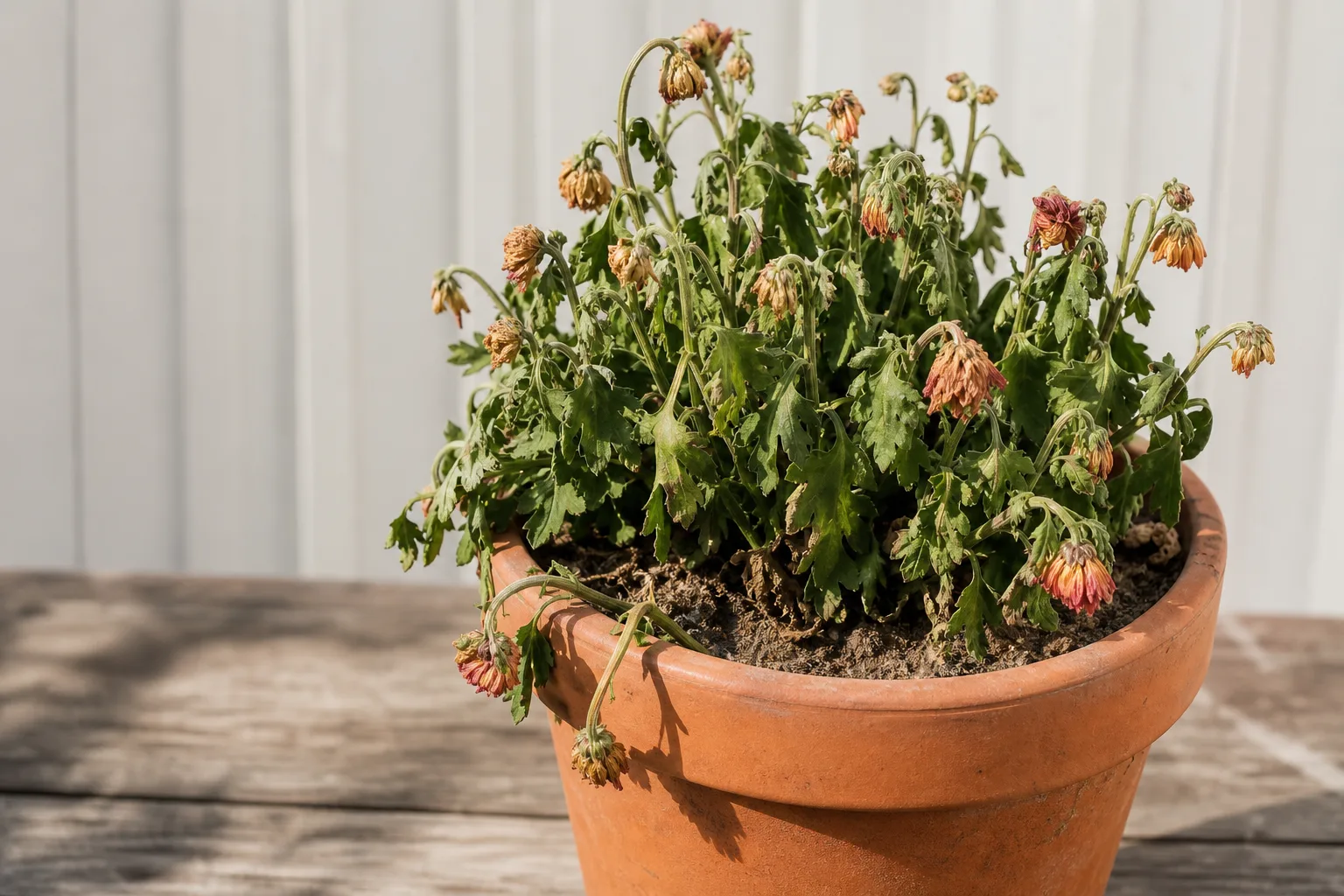
Underwatering on Chrysanthemum shows up as a very light pot, drooping stems, and wilted flowers on dry soil. First step: bottom-water or soak the root ball until the mix is evenly moist, then drain completely.
Underwatering on Chrysanthemum: Causes, Checks & Fixes
This guide covers underwatering on Chrysanthemum. See also the general Underwatering guide, watering, and light pages for this plant.
Underwatering on Chrysanthemum: Causes, Checks & Fixes
Quick answer
Underwatering on Chrysanthemum (Chrysanthemum morifolium, garden mum) means the root zone has stayed dry too long for a plant that blooms best with steady moisture. On a pot mum, the first clues are usually a very light container, drooping stems, and wilted flowers or buds sitting above soil that feels dry 2 cm down-not damp and heavy.
First step: rehydrate the entire root ball once, then drain. Set the pot in a tray of water until the surface darkens and feels moist, or submerge the pot briefly if water has been running straight through dry mix. When drainage stops, lift the pot out, let excess water run off, and empty the saucer. Do not start fertilizing, Chrysanthemum repotting guide, or pruning until you see how the plant responds over the next day.
What underwatering looks like on Chrysanthemum
Above soil, drought stress on mums shows up fast because they carry a heavy load of open flowers on relatively shallow roots.
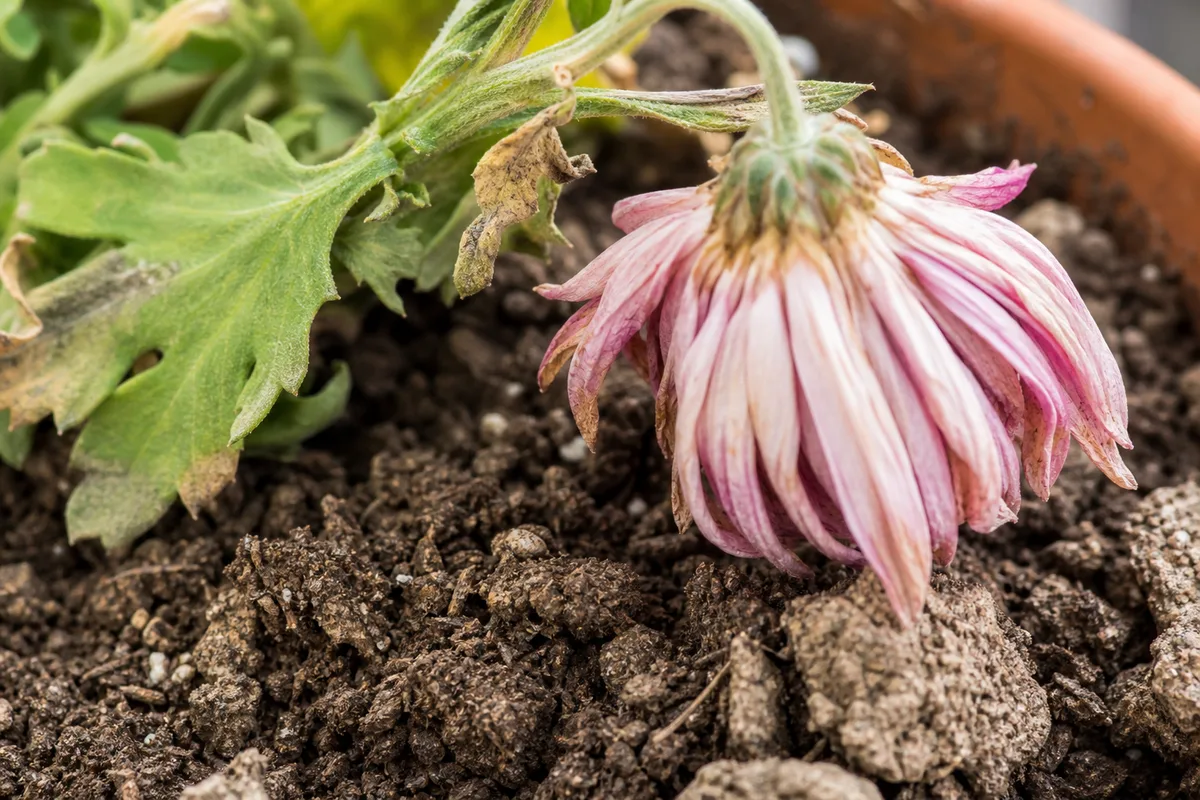
Drooping wilted chrysanthemum bloom with dry soil pulling from the pot edge - compare with firm upright flowers on evenly moist mix.
Typical signs include:
- Drooping stems and leaves that lose their upright posture when moisture runs low
- Wilting flowers and buds on Chrysanthemum-open blooms may look limp or papery before edges turn brown
- Dry, crumbly soil that may pull away from the pot wall, leaving a gap between mix and container
- A lightweight pot when lifted
- Brown, crispy margins on lower leaves or spent petals after repeated dry cycles
The pattern matters. On Chrysanthemum, underwatering usually comes with dry soil throughout the root zone and firm, pale roots if you slide the plant out to look. overwatering on Chrysanthemum and root rot on Chrysanthemum can also cause wilt, but the pot stays heavy, soil smells sour or stays wet for days, and lower leaves may yellow while the mix is still damp.
Store-bought pot mums are especially vocal about drought. They are often rootbound in a small nursery container, placed in Chrysanthemum light guide for autumn colour, and watered on a calendar instead of by soil feel-exactly the setup where a single missed afternoon can wilt an entire bloom flush.
Why Chrysanthemum gets underwatered
Chrysanthemum is a cool-season flowering plant that still drinks aggressively when it is in bud and bloom. Your plant detail rhythm-water when the top 2 cm is dry, often every 1–2 days during flowering and less in cooler rest-exists because container mums dry faster than in-ground plants.
Several Chrysanthemum-specific factors push pots toward drought:
Shallow, container-bound roots. Garden mums have a relatively shallow root system. In pots, less soil mass means less water reserve, so a mum in full sun can need water twice on hot early-fall days if the mix goes dry.
High light and airflow. Chrysanthemum wants 5–6 hours of direct sun for strong flowering. That same exposure speeds evaporation, especially on porches, balconies, and windowsills with wind or heating vents nearby.
Tight nursery pots. Fall mums often arrive rootbound. A dense root ball holds less moisture between waterings and can become hydrophobic when peat-based mix dries completely-water then runs down the sides while the centre stays dry.
Fear of overwatering. Chrysanthemum is prone to root rot in cool, wet soil, so many growers underwater after one soggy episode. Rot and drought both wilt leaves; checking only the leaves without lifting the pot is a common mistake on Chrysanthemum overview.
Hydrophobic potting mix. When dry peat repels water, the surface may look briefly damp after a quick pour while the root ball inside remains dusty. The plant wilts even though you “watered” recently.
Seasonal rhythm changes. Water generously during the autumn–winter flowering flush, then reduce after the main bloom. Underwatering problems peak when the plant is still in full flower but watering has already been cut back for cool weather.
How to confirm the cause
Work through these checks before you soak, repot, or trim:
- Pot weight - Lift the container. A drought-stressed mum feels very light. A waterlogged or rotting plant feels heavy even when leaves droop.
- Soil at 2 cm depth - Stick your finger in or slide the root ball partly out. Dry, dusty mix confirms underwatering. Wet, cool mix points away from drought.
- Gap at the pot edge - Soil shrunk away from the sides means the mix has been dry long enough to pull inward-common on neglected pot mums.
- Water behaviour - If the last watering ran straight out the bottom in seconds, suspect hydrophobic mix, not adequate soaking.
- Recovery test - Chrysanthemum is forgiving: leaves often perk back up after a thorough drink if roots are still healthy. If wilt persists with wet soil, stop treating this as underwatering.
- Stem and root feel - Firm green stems and pale, firm roots support drought diagnosis. Mushy brown roots with sour smell mean rot.
If the pot is light, the mix is dry 2 cm down, and flowers are wilting together, you have enough evidence to proceed with rehydration as the first fix.
First fix for Chrysanthemum
Bottom-water or soak the root ball until the mix is evenly moist, then drain completely.
Choose the method based on how dry the pot is:
Standard bottom-watering (mild to moderate dryness): Place the pot in a shallow tray of water and let the mix draw moisture up through the drainage holes until the surface darkens and feels moist-often 20–60 minutes for a typical mum pot. Remove the pot, let it drain until water stops running from the holes, and empty the saucer.
Full soak (hydrophobic or severely dry mix): If water has been channeling around the root ball, submerge the entire pot in a bucket of water just long enough for air bubbles to slow-the mix is absorbing instead of repelling. Lift the pot out, drain fully, and do not leave it sitting in standing water overnight.
After either method: Water at the base of the plant, not over flowers and foliage, preferably in the morning so leaves dry before evening. That reduces fungal spotting on bloom-heavy mums.
Do not fertilize a drought-stressed Chrysanthemum on the same day. Rehydration comes first.
Step-by-step recovery
Once the first soak is done, support recovery over the next week with one change at a time:
- Move to stable light - Keep the mum in its sunny spot, but avoid shifting it daily while it recovers. Relocation plus drought doubles stress during bloom.
- Establish a check routine - During flowering, check soil moisture daily on container mums. Water when the top 2 cm is dry, not on a fixed weekly calendar.
- Water thoroughly at each session - Each drink should moisten the full root zone until a little water exits the drainage holes, then discard saucer water within 30 minutes.
- Deadhead spent blooms - Remove wilted flowers that will not recover cosmetically. This redirects energy to buds that can still open after the soil stabilizes.
- Repot only if dryness is daily - If a rootbound nursery pot goes dry every single day despite careful watering, upgrade to a slightly larger container with well-drained mix after the plant perks up-not on the same day as emergency soaking.
- Ease off as weather cools - When days shorten and temperatures drop, gradually reduce frequency. Cool, wet soil is where Chrysanthemum root problems start.
Recovery timeline
Mild dehydration on Chrysanthemum often shows improvement within hours to one day after a proper soak-stems stiffen and soft wilted leaves regain turgor. Flower petals that have already crisped will not return to their original colour; look instead for new buds holding form and firm upper leaves after the next watering cycle.
If the plant was wilted repeatedly during peak bloom, expect a shorter remaining display even after correction. Chronic drought stresses a mum that is already spending energy on flowers.
Give the plant 7–10 days of stable moisture before deciding it will not recover. If it stays limp with evenly moist soil, switch diagnosis to root rot or heat damage rather than adding more water.
Lookalike symptoms
Overwatering and root rot - Leaves wilt while soil stays wet and heavy; lower leaves yellow; roots may be brown and mushy. Chrysanthemum root rot is especially common in cool, waterlogged autumn soil.
Heat wilt in afternoon sun - Mums in intense midday heat may droop temporarily, then recover by evening without a soak. If the pot is still heavy and soil is moist, wait until evening before watering again.
Normal spent blooms - Individual flowers browning at the end of their cycle is not underwatering. Drought wilt affects many blooms at once with dry soil and a light pot.
Low humidity alone - Chrysanthemum tolerates moderate humidity well; crispy tips with otherwise moist soil and firm stems more often trace to salt buildup, pest stress, or uneven watering than to dry air alone.
Mistakes to avoid
- Misting flowers instead of soaking roots - Surface moisture does not rehydrate a dry root ball.
- Assuming all wilting means overwatering - On sun-grown pot mums, drought is at least as common as rot.
- Light daily sips on hydrophobic mix - Small top pours never reach the centre; the plant stays thirsty.
- Leaving the pot in a full water tray for days - After recovery soaking, standing water invites the root rot you were trying to avoid.
- Fertilizing before rehydration - Dry roots take up concentrated fertilizer poorly and can burn.
- Repotting and soaking the same day - Stack changes only after you know the plant responded to water.
How to prevent underwatering on Chrysanthemum
Match watering to how fast your pot dries in your light:
- Check daily during the flowering flush on container plants.
- Water when the top 2 cm is dry-roughly every 1–2 days in active bloom and warm weather, less as days cool.
- Water at the base in the morning so foliage dries before night.
- Drain saucers within 30 minutes of each watering.
- Upgrade rootbound nursery pots into well-drained mix with perlite or compost if the plant goes dry every day.
- Reduce frequency gradually after the main autumn flush, but do not let the mix go bone dry for weeks while leaves are still active.
A mum that stays evenly moist through bloom without staying soggy is far less likely to drop its flowers early.
When to worry
Treat the situation as serious if:
- The plant does not perk within 24–48 hours after a confirmed full rehydration
- Stems collapse completely in hot sun with dust-dry soil and flowers shatter rather than simply wilt
- Lower stems turn brown and brittle at the base despite moist soil-possible rot, not drought
- The same pot goes hydrophobic and wilted repeatedly within a week, suggesting the mix has broken down and needs replacement
Chrysanthemum is forgiving of a single dry spell, but repeated drought during bloom often ends the show early. If correction fails after two thorough soaks and a week of stable care, inspect roots for rot before keeping the plant for another season.
Conclusion
Underwatering on Chrysanthemum is a moisture-timing problem on a bloom-heavy, sun-loving pot plant-not a mystery disease. A light pot, dry soil 2 cm down, and wilting flowers point to drought; a heavy wet pot points elsewhere.
Rehydrate the whole root ball once, drain well, then shift to a daily soil check through the flowering season. Crispy petals may not recover, but firm new growth and upright buds mean your mum still has time to put on a proper autumn display.
When to use this page vs other Chrysanthemum guides
- Chrysanthemum watering guide - Use for routine moisture checks before assuming underwatering is the main issue.
- Chrysanthemum problems hub - Browse all 16 common issues on this species.
- Wilting on Chrysanthemum - Different entry point when symptoms overlap with underwatering.
- Brown Tips on Chrysanthemum - Different entry point when symptoms overlap with underwatering.
- Yellow Leaves on Chrysanthemum - Different entry point when symptoms overlap with underwatering.