Brown Tips on Chrysanthemum: Causes, Checks & Fixes
Quick answer
Brown tips on Chrysanthemum usually trace to dry soil during full-sun bloom, fertilizer salt buildup, sun scorch after an unacclimated move, or root stress from chronic wetness-not low humidity. First step: check the top 1–2 cm of mix and lift the pot before you water, feed, or move the plant.
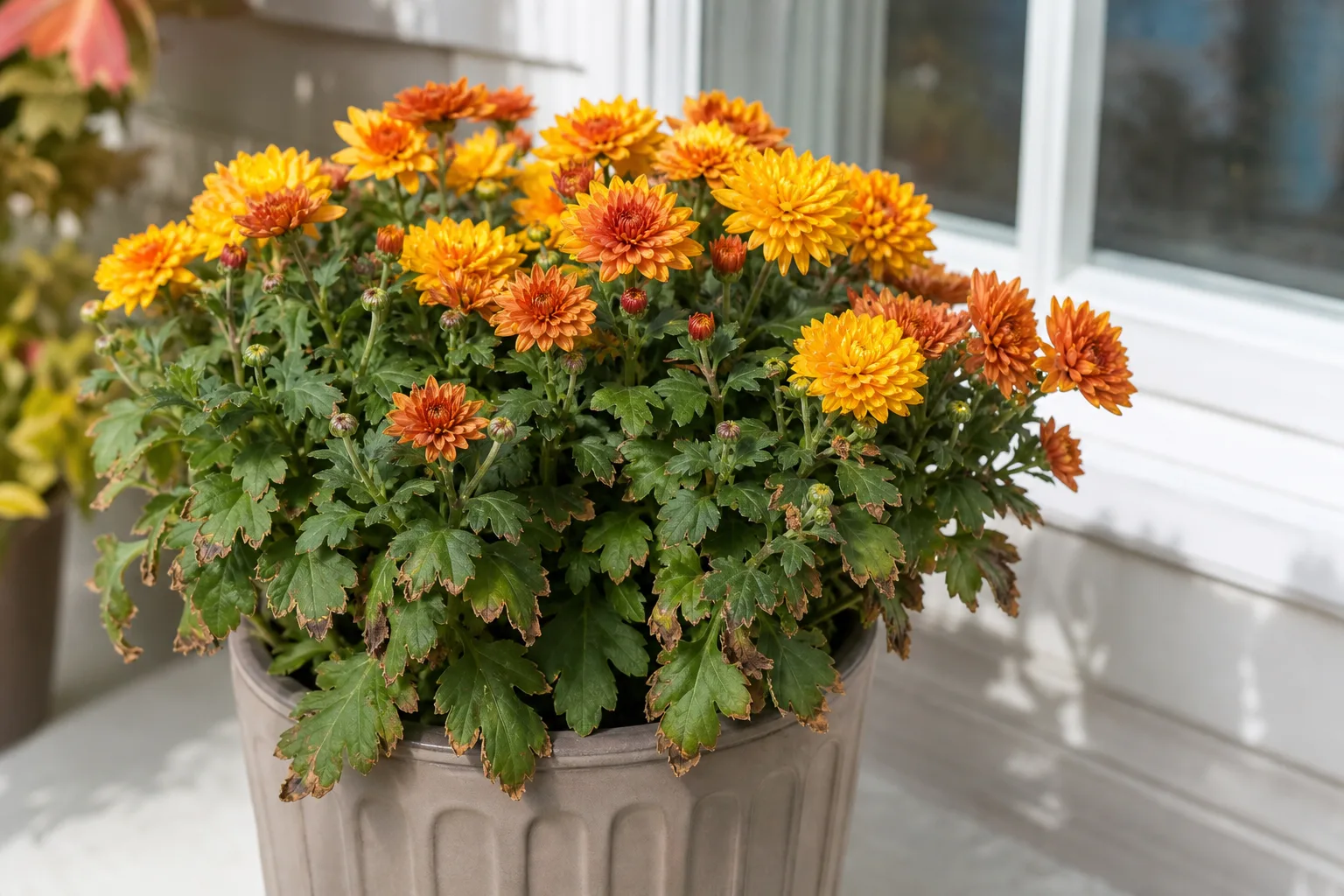
Brown Tips on Chrysanthemum: Causes, Checks & Fixes
This guide covers brown tips on Chrysanthemum. See also the general Brown Tips guide, watering, and light pages for this plant.
Brown Tips on Chrysanthemum: Causes, Checks & Fixes
Quick answer
Brown tips on Chrysanthemum (Chrysanthemum × morifolium)-the garden mum or florist’s mum most people buy in autumn-usually mean leaf margins died from uneven moisture, salt stress, intense sun, or failing roots-not from the low-humidity problems that crisp tropical houseplant tips. Mums carry shallow, fibrous roots and bloom heavily in full sun with moist, well-drained soil, so small care swings show up fast at the leaf edges farthest from the vascular system.
First step: push your finger into the top 1–2 cm of mix and lift the pot. Dry, light soil with crispy tips during peak bloom points to underwatering on Chrysanthemum-see the watering guide. White crust on the rim with brown margins on moist soil suggests salt burn. Bleached or papery tips only on sun-facing leaves after a recent move points to scorch-see the light guide. Cool, heavy, damp soil with spreading margin necrosis means stop watering and check roots-see overwatering.
What brown tips look like on Chrysanthemum
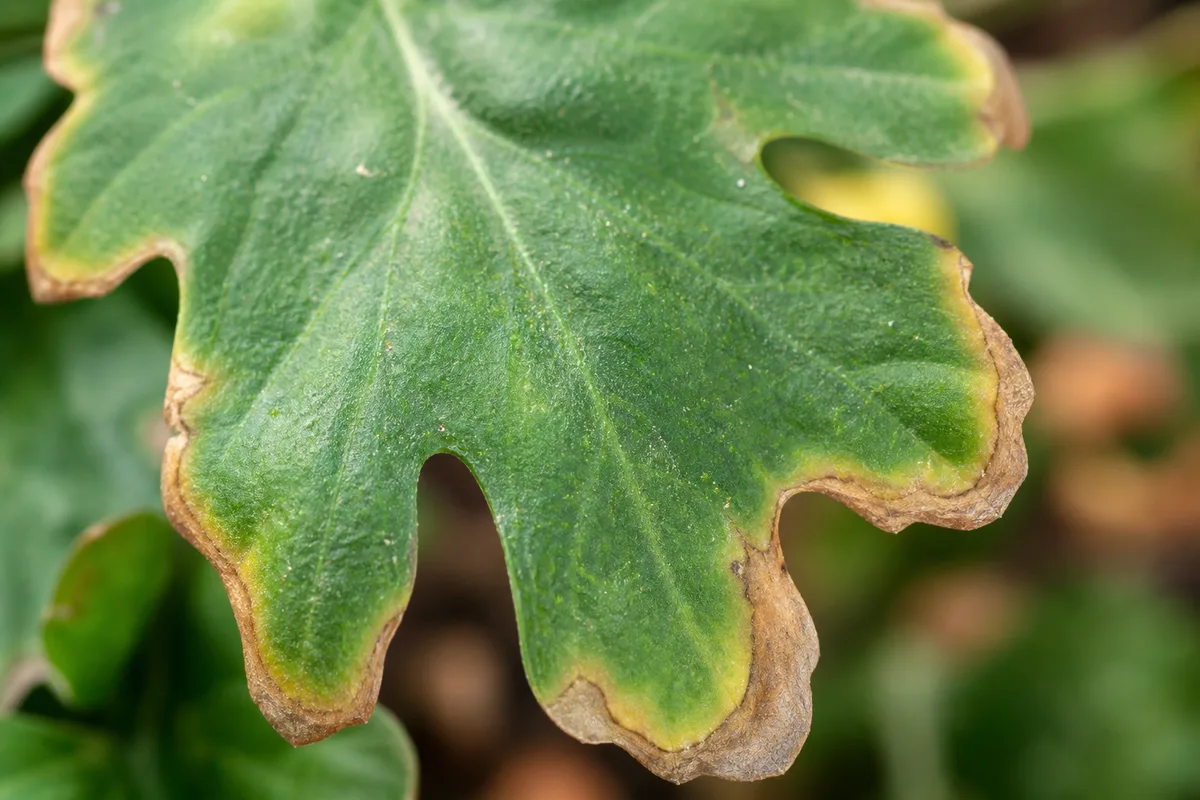
Narrow tan-to-brown necrotic band at the leaf tip and margin - papery dry texture on otherwise green chrysanthemum foliage.
Healthy mum leaves are lobed, medium green, and firm with entire margins. Tip browning changes that edge in patterns that map to cause.
Underwatering during bloom
- Narrow tan-to-brown band at the leaf tip, sometimes creeping slightly along the margin
- Dry, papery texture; leaf may feel thin but stem stays firm
- Often appears on outer leaves and open blooms first while the crown still looks upright
- Soil surface pale and crumbly; pot feels noticeably light when lifted
- Common on sunny porch pots checked only every few days during peak flowering
Fertilizer or salt burn
- Brown or necrotic leaf tips and margins, sometimes with mild yellowing before necrosis
- White or tan crust on pot rim, soil surface, or drain holes
- Soil may still feel moist; stems firm-roots are stressed chemically, not from drought
- Follows heavy feeding, repeated soluble fertilizer without leaching, or dry fertilizer applied to dry mix
- Chrysanthemums are susceptible to soluble salts injury that accumulates at leaf tips and margins
Sun or heat scorch
- Bleached, tan, or crispy patches on leaves facing the brightest afternoon sun
- Tips and margins on one side of the plant or the outer canopy only
- Often follows moving a mum from shade, indoors, or a dim store shelf into full sun without acclimation
- Dark nursery pots in direct sun can overheat roots while soil below the surface still holds moisture
- Wilting blooms in midday heat may pair with scorch but the crown stays firm
Root stress from overwatering
- Brown margins spreading from older lower leaves upward, often with yellowing first
- Soil stays cool, dark, and heavy; sour smell possible at drain holes
- Tips brown while whole lower leaves yellow and hang-different from isolated dry tips on an otherwise green plant
- See yellow leaves when bottom foliage yellows with wet mix
What low humidity usually is not
Mums are cool-season outdoor bloomers, not rainforest foliage plants. Dry indoor air alone rarely causes the isolated crispy tips you see on ferns or calatheas. If tips brown while soil moisture and light history are normal in a humid porch setting, look to water rhythm, salts, or sun before buying a humidifier.
Why Chrysanthemum gets brown tips
Tip tissue dies first because it sits farthest from the water-conducting veins and has the least reserve moisture. On mums, four care failures reach that tissue faster than on many deeper-rooted houseplants.
Shallow roots and bloom-stage water demand
Chrysanthemum roots are shallow and fibrous, concentrated in the upper soil layer. During autumn bloom in sun, flowers and foliage transpire heavily while the small root zone dries from the top down. Miss a dry-down cycle and margins desiccate before the whole leaf wilts. That is why a mum can show tip burn even when you “watered this week.”
Salt accumulation from feeding
Mums are moderate feeders, but over-fertilization raises soluble salts in the medium. Salts move through the plant and concentrate at tips and margins until tissue necroses. Practices that trigger injury include repeated soluble feeds with little leaching, heavy controlled-release fertilizer in a small pot, and applying fertilizer to bone-dry mix. Root injury from high salts can also reduce water uptake and mimic drought.
Full sun without acclimation or heat management
Garden mums grow best in full sun with well-drained, moist soil. They need that light for sturdy stems and bloom-but a plant suddenly exposed to intense afternoon sun can scorch exposed tissue before roots catch up. In warm regions, afternoon protection helps even though deep shade weakens growth.
Impaired roots from chronic wetness
When roots suffocate in soggy mix, they cannot supply leaf margins even if you keep watering. Overwatering on chrysanthemums causes yellowing leaves that blacken and drop. Margin browning on yellow lower leaves with wet soil is a root-stress branch, not a humidity problem.
How to confirm the cause
Work through these checks in order. One honest soil-and-weight reading beats guessing from photos.
- Top-inch moisture and pot weight - Press into the top 1–2 cm. Dry and light: underwatering branch. Cool, heavy, and damp: root-stress branch-do not add water yet.
- Feeding and crust history - Note recent fertilizer, bloom booster, or hard tap water. White rim crust with moist soil strongly supports salt burn.
- Light and move history - Did the plant move to full sun, a south-facing step, or a dark pot in the last week? One-sided tip damage on sun-facing leaves supports scorch.
- Which leaves failed - Tips only on outer sun leaves: sun or drought. Margins on yellow lower leaves with wet soil: overwatering. Even canopy tip browning after feeding: salts.
- Crown and new growth - Firm crown with green center shoots means the plant can recover once care stabilizes. Soft crown on wet soil needs urgent root inspection-see root rot.
| If you see… | Soil / pot | Likely cause | First branch |
|---|---|---|---|
| Crispy tips, firm stems, light pot | Dry top 1–2 cm | Underwatering in bloom | Thorough soak, empty saucer |
| Brown tips + white rim crust | Moist, heavy | Salt injury | Flush, pause feed |
| Bleached tips, sun side only | Moist below surface | Sun / heat scorch | Shade acclimate |
| Brown margins on yellow lower leaves | Wet, cool, heavy | Root stress | Stop watering, inspect |
First fix for Chrysanthemum
Match one action to the branch you confirmed. Do not water, fertilize, and repot the same day.
Dry soil + light pot (underwatering): Water thoroughly at the base until excess drains, then empty the saucer or cachepot. Resume checking daily during bloom-often every one to two days in full sun per the watering guide. That single corrected drink is the first fix; do not feed until new growth looks stable.
Salt crust + moist soil (fertilizer injury): Irrigate with clear water until at least 20% runs from drain holes-leaching clears excess soluble salts. Pause all fertilizer for two to three weeks. Resume at half strength only after new leaves emerge clean.
Sun-side scorch after a move: Move the pot to bright morning sun with afternoon shade for five to seven days, then shift toward full sun gradually. Do not increase watering if soil is already moist-scorch is not fixed by drowning the roots.
Wet soil + yellow lower leaves (root stress): Stop watering. Empty standing runoff. Let the top 2–3 cm dry before the next drink. If smell, gnats, or crown softness appear, inspect roots per overwatering guidance.
Recovery timeline
Brown tip tissue does not re-green. Recovery means new leaves and blooms without fresh necrosis on firm stems.
Mild drought tip burn: Often stabilizes within three to seven days after one or two correct watering cycles during bloom. Old tips stay tan; watch the center shoots.
Salt injury after leaching: New growth should look clean within two to three weeks if feeding stops. Severe salt burn with root damage may take longer and need Chrysanthemum repotting guide into fresh mix.
Sun scorch: Existing bleached tissue remains; healthy new foliage over one to two weeks confirms acclimation worked. Buds may abort on heavily scorched plants-focus on crown health.
Root-stress margins: Lower damaged leaves may yellow and drop. Expect two to four weeks before you can judge whether the crown will push clean new growth. Soft crown on wet soil is not a wait-and-see case.
Lookalike symptoms to rule out
Brown tips vs. yellow leaves: Yellowing often involves whole leaves or lower-canopy fade; tip burn is margin-focused on still-green tissue. Both can trace to water stress-use soil moisture to split drought from rot. See yellow leaves.
Brown tips vs. wilting: Wilting is whole-leaf or whole-plant turgor loss. Tips can brown while most leaves still feel firm. If the entire plant flops, use the wilting guide.
Brown tips vs. fungal leaf spots: Salt and drought produce fairly uniform margin necrosis without round brown spots surrounded by yellow halos inside the leaf blade. Chrysanthemum disease guides describe spot diseases separately-suspect fungus when lesions are scattered in the interior, not just at edges.
Brown tips vs. low humidity: Relevant mainly for mums overwintered in very dry forced-air heat. Even then, underwatering in a small dry pot is more common. Fix water checks before humidifiers.
What not to do
Do not increase watering when soil is already wet and lower leaves are yellow- that deepens root stress and crown rot risk.
Do not feed a stressed mum to “green up” tips. Fertilizer on drought-stressed or salt-burned plants worsens margin necrosis.
Do not move a scorched plant deeper into shade as a permanent fix if you want future bloom-mums need six or more hours of direct sun for sturdy growth. Acclimate instead of abandoning sun.
Do not trim every browned leaf the same day you repot, flush, and spray-stacking shocks hides which fix worked. Change one variable, then watch new growth for seven to ten days.
Do not expect old tips to recover color. Trim dead margins only after care is stable, for appearance.
How to prevent brown tips next time
Check moisture daily during autumn bloom in sun. Water when the top 1–2 cm dries-the rhythm from the watering guide beats any fixed calendar.
Feed modestly and leach occasionally. Use balanced soluble feed at label rates during active growth; avoid excessive fertilizer without drainage. Flush with clear water monthly if you feed weekly through bloom.
Acclimate before full-sun moves. Shift porch mums into direct sun over a week, especially when leaving a dim store or indoor shelf.
Use pots that drain and cool roots. Remove foil wrappers, empty saucers after watering, and avoid dark containers baking in afternoon sun on pavement.
Match light to mum biology, not houseplant rules-see the light guide for full sun and night-darkness needs during bud set.
When to worry
Treat as urgent if the crown feels soft, soil smells sour, roots are mushy on inspection, or margin necrosis spreads to new center growth within days while soil stays wet-those patterns suggest advancing rot, not cosmetic tip burn.
Act within a week if every new leaf emerges with brown tips after you leached salts-substrate or water chemistry may still be too high.
Lower urgency: a few tan tips on outer leaves after a hot weekend when the pot was dry and the crown is firm. Correct watering and monitor.
For species context and seasonal care, see the Chrysanthemum overview.
When to use this page vs other Chrysanthemum guides
- Chrysanthemum watering guide - Use for routine moisture checks before assuming brown tips is the main issue.
- Chrysanthemum problems hub - Browse all 16 common issues on this species.
- Low Humidity on Chrysanthemum - Different entry point when symptoms overlap with brown tips.
- Underwatering on Chrysanthemum - Different entry point when symptoms overlap with brown tips.
- Overwatering on Chrysanthemum - Different entry point when symptoms overlap with brown tips.