Low Humidity on Chrysanthemum: Causes, Checks & Fixes
Quick answer
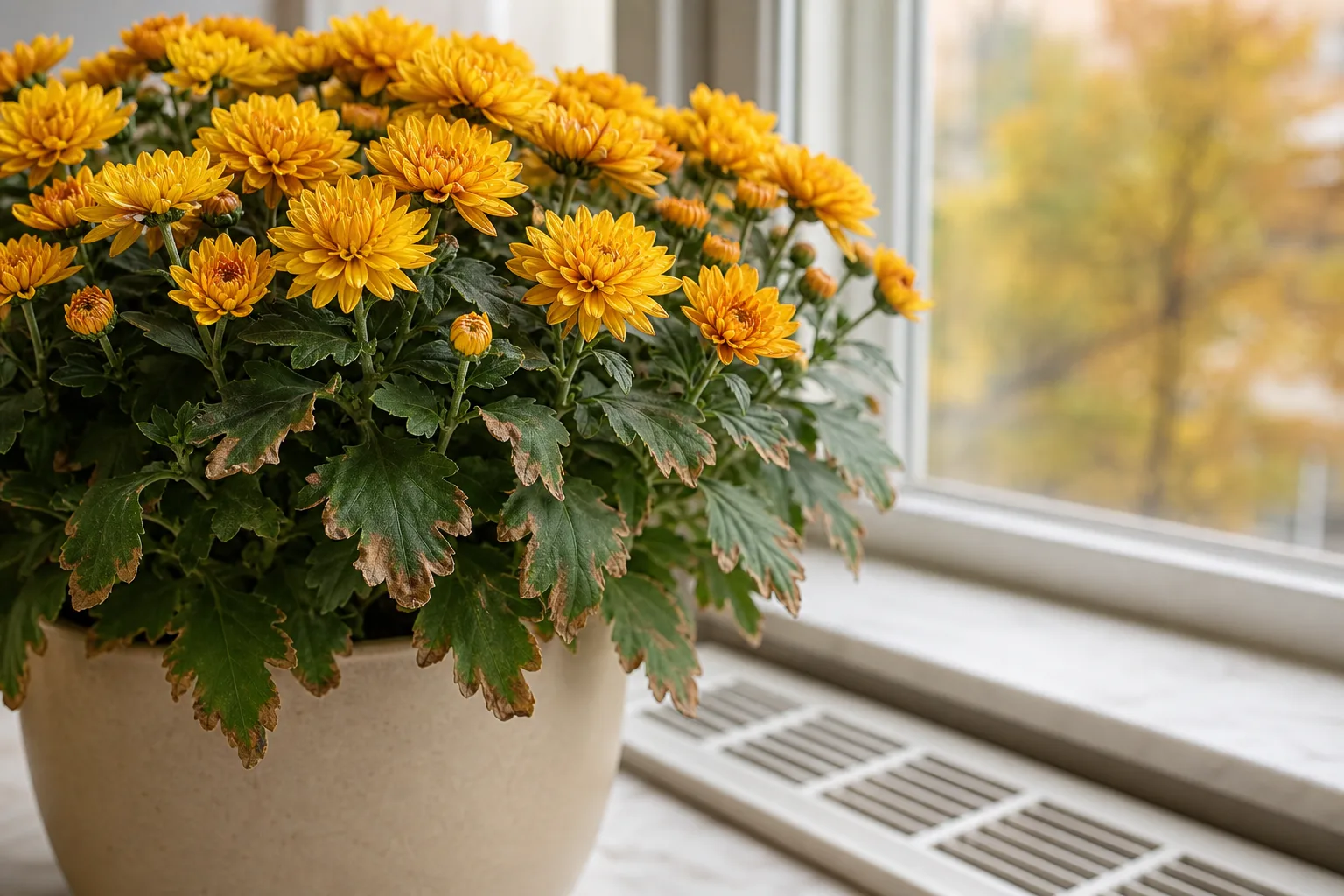
Low humidity on Chrysanthemum shows as crisp outer leaf edges, tight buds that shrivel, and faster pot dry-down-often after heating season starts. Mums tolerate average household air better than tropicals, but forced-air vents and local readings below about 40% still stress blooms. First step: place a hygrometer near the pot, move the plant away from heating vents, then raise ambient humidity with a pebble tray or room humidifier. Do not mist open flowers.
Low Humidity on Chrysanthemum: Causes, Checks & Fixes
This guide covers low humidity on Chrysanthemum. See also the general Low Humidity guide, watering, and light pages for this plant.
Low Humidity on Chrysanthemum: Causes, Checks & Fixes
Quick answer
Your autumn pot mum looked fine on the porch until you brought it indoors-or until the furnace started. Now outer leaf edges are brown and papery, buds that should open are drying in place, and the same pot needs water sooner than last week. On Chrysanthemum (Chrysanthemum × morifolium)-the garden mum and florist mum most people buy in fall-that pattern usually means dry air is pulling moisture from leaf margins and blooms faster than roots replace it, often with a heating vent or sun-heated window accelerating the loss.
Mums tolerate average household humidity better than ferns or African violets, but forced-air heat, radiators, and sunny glass can drop local air beside the pot well below the comfortable moderate band many houseplants prefer (roughly 40–60% at foliage height per general indoor-plant environmental guidance-not a chrysanthemum-specific extension target). Crisp outer leaf edges, buds that shrivel, and faster dry-down from the shallow root zone are the usual signs.
First step: move the pot out of direct heater, radiator, or AC airflow before changing anything else.
| What you notice first | Likely branch | First move |
|---|---|---|
| Crisp margins worst on leaves nearest a vent or radiator | Low humidity / draft stress | Relocate pot; log RH at foliage height |
| Light pot, limp soft leaves, dusty dry top 2 cm | Underwatering | See underwatering on Chrysanthemum |
| Brown edges, heavy wet pot, yellow lower leaves | Root stress / overwatering | See overwatering · root rot |
| Fine stippling + webbing on undersides | Spider mites | See spider mites on Chrysanthemum |
| Even margin burn after heavy feeding, salt crust on rim | Salt buildup | See brown tips |
Do not stack a humidifier, heavier watering, and fertilizer on day one-one airflow correction makes the next week of diagnosis readable.
Scope note: This page covers environmental dry air and draft stress on container mums and indoor displays. If the whole plant wilts on wet soil, see wilting and drooping leaves. If lower leaves yellow while margins crisp, check yellow leaves before assuming humidity alone.
Reviewed by LeafyPixels Review Board · Author: sai-ananth · Methodology: Recommendations checked against Clemson HGIC, NC State Extension, University of Minnesota Extension, Iowa State University Extension, and LeafyPixels chrysanthemum cluster guides.
Low humidity vs. underwatering vs. spider mites on Chrysanthemum
These three problems overlap on blooming pot mums because dry air, skipped watering, and mites all show at the leaf edge-but the first fix differs.
| Pattern | Leaf texture | Pot / soil | Webbing or stippling | Start here |
|---|---|---|---|---|
| Low humidity | Firm leaves; crisp dry margins; buds papery | Moderately heavy; top 2 cm moist | None, or mild stippling only after weeks of dry heat | This page - move off vents, raise ambient RH |
| Underwatering | Limp, soft leaves; wilt through the blade | Light; dry throughout | No | Underwatering |
| Spider mites | Stippled yellow patches; fine webbing on undersides | Variable; often dry in hot rooms | Yes - tap test on white paper | Spider mites |
Dry air and mites often arrive together in warm indoor air. Correct placement and ambient moisture first, then inspect undersides weekly-humidity alone will not clear an active mite colony.
What low humidity looks like on Chrysanthemum
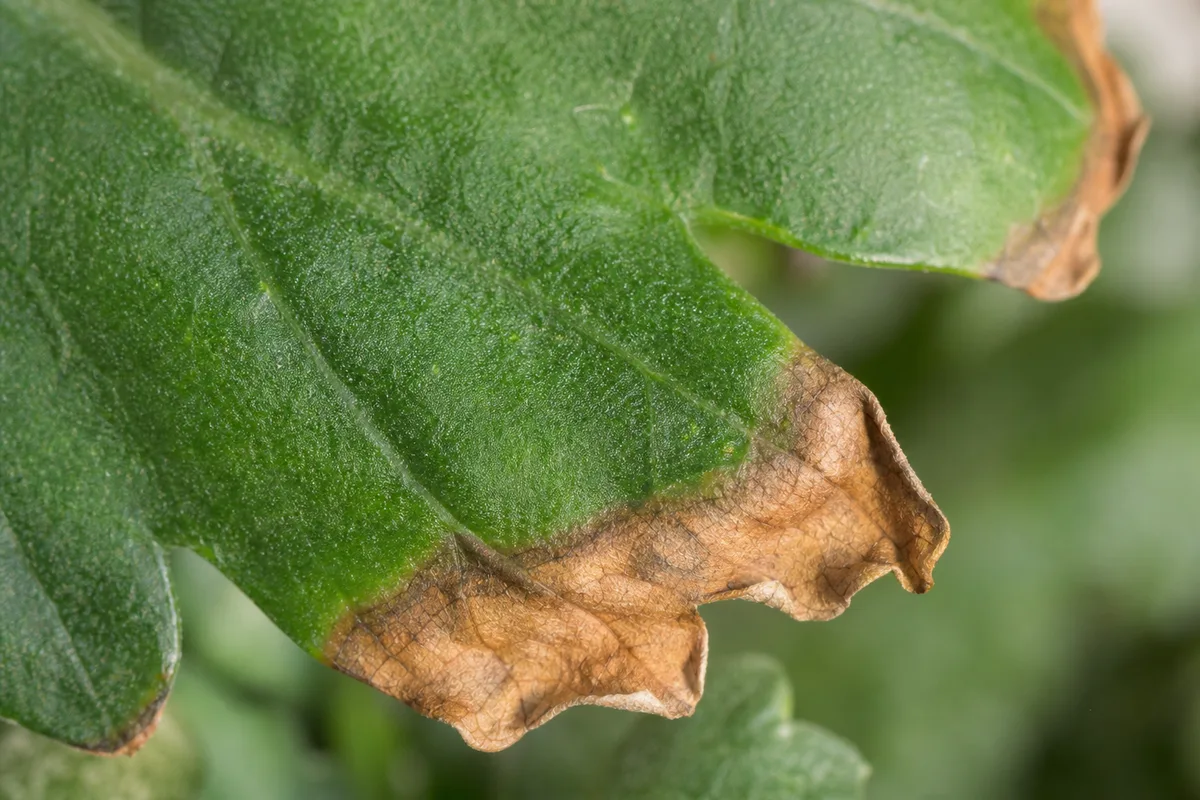
Brown, crisp margins on outer leaves - dryness starts at the oldest leaf tips and edges while newer growth still looks green.
Dry-air damage on a pot mum rarely shows up as sudden whole-plant collapse. You see gradual edge stress on a plant carrying a heavy autumn bloom load:
- Brown, crisp margins on outer leaves - dryness often starts at the oldest leaf tips and edges while newer growth still looks green.
- Buds that form but shrivel or stall - tight buds turn papery and brown when the air around the plant stays too dry during peak bloom.
- Faster pot dry-down - the same mum that needed water every two days now goes light in one afternoon because dry air pulls moisture from leaves and soil surface together.
- Fine stippling on leaf undersides - in warm, dry conditions, spider mites commonly infest chrysanthemum foliage; stippling plus webbing means dry air and pests are overlapping, not humidity alone.
- Petal edge burn on open flowers - blooms near a heating register or sun-heated glass can crisp at the margins even when soil moisture is adequate.
During comfortable ambient moisture with steady watering, Chrysanthemum should show firm stems, open blooms that hold their shape, and leaves without spreading edge crisping. Worry when outer margins brown and buds fail together after heating season starts or the pot moves beside a register.
Garden mums vs. florist pot mums
Garden mums labeled hardy and planted outdoors tolerate wider humidity swings when roots are in ground soil. Florist or gift pot mums forced for a single autumn display sit in small containers with shallow roots-dry indoor drafts hit them harder during the few weeks you keep them on a windowsill. Without a cultivar tag, treat a grocery-store mum in full October bloom as a display plant first: prioritize vent placement and ambient moisture through the show, not long-term humidifier investment unless you are actively overwintering roots.
Porch display vs. indoor overwinter
A mum on an open porch breathes freely; moving it beside a heating register or above a radiator creates a microclimate drier than the room center. Overwintering stock indoors in a cool basement often needs less supplemental humidity than a blooming pot mum on a sunny winter windowsill-the bloom load and heated glass combo dry foliage fastest.
Why Chrysanthemum struggles in dry indoor air
Mums are cool-season bloomers bred for outdoor autumn displays. Indoors, they still want moderate moisture in the air around the foliage-not just in the pot.
Low humidity becomes a problem in three linked ways:
- Winter and forced-air heat - Furnaces and heat pumps strip moisture from room air. Humidity levels are low indoors during winter months while blooming pot mums sit in the warmest, draftiest spots in the house.
- Dry drafts across the mound - A register, radiator, or frequently opened door can drop local humidity faster than the rest of the room. Symptoms on the side facing the draft point to localized dryness even when a hygrometer elsewhere reads acceptable.
- Pest pressure in warm dry air - Spider mites thrive in dry, warm conditions and populations increase rapidly during hot, dry weather on chrysanthemum. See spider mites on Chrysanthemum if stippling and webbing appear.
Humidity is secondary to light and even watering for mums, but very dry air still matters-especially for blooming pot mums overwintering on a windowsill. Soil can be adequately moist while leaf edges crisp; do not assume more water fixes dry air. The underwatering guide covers the opposite pattern: a light, dry pot with limp stems.
How to confirm the cause
Work through these checks before repotting, fertilizing, or spraying:
- Hygrometer reading - Place a meter at foliage height for three to five days. Consistent readings below about 40% with edge crisping confirm dry air as a major factor-humidity levels in homes are often low, especially during winter.
- Draft scan - Feel for air movement from vents, radiators, fans, or doors. Symptoms on the side facing the draft point to localized dryness.
- Pot weight and soil moisture - Lift the pot and press your finger 2 cm into the mix. A light pot with limp, soft leaves suggests underwatering. A moderately heavy pot with crisp but firm leaves points to air humidity, not root dryness.
- Timing - Did crisping or bud loss start when heat or AC began running heavily? Seasonal timing strongly supports low humidity.
- Rule out lookalikes - White crust on the pot rim suggests salt burn. Fine webbing with yellow stipples suggests mites. Uniform edge crisping on multiple outer leaves during dry heating season, with moist soil, fits low humidity better than fertilizer burn or drought.
If humidity at the plant reads in a comfortable moderate band (roughly 40–60%) and edges still brown, check brown tips, underwatering, or pests-correct those before adding more humidity.
Crisp margins vs. underwatering wilt vs. mite stippling
| Signal | Low humidity | Underwatering | Spider mites |
|---|---|---|---|
| Leaf feel | Firm; dry crisp margins | Limp, soft throughout | Stippled patches; may feel gritty on underside |
| Pot weight | Moderate to heavy | Very light | Variable |
| Soil top 2 cm | Moist or evenly drying | Dusty dry | Often dry in hot rooms |
| Webbing | Absent | Absent | Present on undersides |
| Urgency | Low–medium | Medium | Medium–high if webbing spreads |
| First fix | Move off vent; pebble tray or humidifier | One thorough soak | Rinse + treat per mite guide |
The first fix to try
Move the mum out of dry air streams, then raise ambient humidity with a pebble tray or room humidifier-without wetting open blooms.
That single placement plus humidity step addresses the most common cause without inviting crown rot from overwatering. Set the pot on a saucer filled with pebbles and water so the pot bottom sits above the water line. Evaporation from the tray adds moisture to the air around the plant without submerging the shallow root zone. If the tray is not enough in a very dry room, run a small cool-mist humidifier nearby-not aimed directly at the flowers.
Wait one to two weeks and watch new leaf margins and the next bud set. Do not mist blooms, shower the plant, or top-water foliage during this period. Clemson HGIC notes that overhead irrigation that wets flowers invites disease problems on chrysanthemums-avoid wetting petals, especially on crowded container displays.
Step-by-step recovery
After the first fix, add these steps in order-not all on the same day:
- Group with other plants - Group houseplants together to share transpired moisture around the mum. Leave space for air to move; do not pack plants into a stagnant humid corner.
- Adjust window placement - Move the pot off cold glass or add a thin spacer so the bottom does not chill. Keep bright sun for blooming mums per our light guide; do not sacrifice light for humidity.
- Maintain watering rhythm - Water when the top 2 cm of mix dries per your watering guide. Dry air increases evaporation from soil, but soggy mix still causes crown rot-do not compensate for humidity with extra water.
- Inspect leaf undersides weekly - Catching spider mites early prevents dry-air stress from becoming a full infestation.
- Add humidifier output gradually - Aim for a comfortable moderate band at plant level. Jumping far above about 60% with poor airflow on dense mum mounds can invite fungal problems when foliage stays wet.
Pause fertilizer until new leaves look normal and the next buds hold for two weeks.
Recovery timeline and what to expect
Crisp brown edges on existing leaves will not turn green again. Judge success by new tissue:
| Week | What to watch | Good sign | Bad sign → branch |
|---|---|---|---|
| 1–2 | Newest outer leaves | No fresh edge browning | Stippling spreads → mites |
| 3–6 | Bud set and new leaves | Buds swell; soft margins on new growth | Buds abort on wet soil → root rot |
| One bloom cycle | Display hold | Steady flowering in stable air | Whole-plant wilt on wet mix → wilting |
If buds keep aborting despite corrected ambient moisture and stable care, check for mites, thrips, or root stress before assuming humidity is still the issue.
Lookalike symptoms
| What you see | Often confused with | How to tell apart | Guide |
|---|---|---|---|
| Crisp leaf edges | Underwatering | Light pot, limp soft leaves, dry mix throughout vs. firm leaves with dry margins on moist soil | Underwatering |
| Brown tips | Salt or drought burn | Salt crust on pot rim; tips brown after heavy feeding | Brown tips |
| Bud drop | Temperature stress | Cold night wilt after draft below comfort zone vs. buds drying in place during dry heating season | Wilting |
| Stippled leaves | Low humidity alone | Mites: webbing, moving specks on white paper tap test | Spider mites |
| Wilting blooms | Overwatering | Wet heavy soil with yellow lower leaves vs. wilted petal edges on moist soil near dry air stream | Overwatering |
| Yellow lower leaves + crisp tips | Humidity | Often root stress from wet soil; humidity rarely yellows lowers alone | Yellow leaves · Root rot |
Mistakes to avoid
- Misting blooms to raise humidity - Wet petals and dense foliage invite fungal disease when flowers stay wet; misting does not reliably raise room humidity anyway.
- Overwatering to fix dry air - Soggy soil causes crown and root rot while edges still crisp. Crispy tips with moist soil are a humidity signal, not a call for more water.
- Leaving the pot on a heating register - Warm dry air accelerates edge loss and shortens bloom display.
- Ignoring stippling - Dry air and spider mites often arrive together; humidity correction alone will not clear an active mite colony.
- Stacking fixes - Repotting, heavy pruning, and fertilizing the same week adds stress when the plant needs stable air and moisture.
How to prevent low humidity next time
Match prevention to how Chrysanthemum actually grows indoors and on a porch:
- Monitor humidity at foliage height when heating or AC runs-not just room-center readings.
- Use pebble trays or a room humidifier in dry seasons; keep the pot base above standing water.
- Group pots on a bright shelf away from vents and sun-heated south glass in peak summer.
- Water at the soil line when the top 2 cm dries-never overhead on blooms.
- Inspect leaf undersides weekly through winter heating season.
- For overwintered garden stock in a cool room, prioritize draft-free placement over aggressive humidification unless edges crisp on firm, correctly watered plants.
When to worry - and where to go next
Low humidity alone rarely kills a mum with a firm crown and healthy roots. Escalate past this page when:
| Situation | Why it is urgent | Next step |
|---|---|---|
| Fine webbing spreads across multiple stems despite humidity correction | Active mite infestation, not dry air alone | Spider mites - rinse and treat |
| Buds abort every flush for two+ cycles with stable moisture and moderate RH | Root stress, pests, or light failure | Root rot · yellow leaves |
| Crispy tips with soggy soil and sour smell | Overwatering mistaken for humidity fix | Overwatering · root rot |
| Whole plant wilts on wet soil | Root failure, not transpiration | Wilting |
| Cosmetic edge crisping on a few lowers with firm new growth | Manageable | Stay consistent; no emergency repot |
Cosmetic edge crisping on a few lower leaves with firm new growth and stable soil moisture is manageable-stay consistent with placement and ambient moisture rather than repotting immediately.
Persistent decline after two full weeks of corrected airflow and even moisture may involve combined stressors-contact your local cooperative extension office with photos of leaves, pot setup, and your hygrometer log.
Related chrysanthemum care and problem guides
- Chrysanthemum overview - species context, hardy vs florist goals, bloom timing
- Watering - top 2 cm dry-down rhythm; do not overwater for humidity
- Light - bright bloom placement without sacrificing humidity fixes
- Repotting - when shallow roots need more room after the display
- Underwatering - light pot and limp leaves
- Overwatering · Root rot - wet-soil decline from humidity confusion
- Wilting · Drooping leaves - whole-plant wilt patterns
- Yellow leaves - lower-leaf yellowing with multiple causes
- Brown tips - salt, sun, and drought margin burn
- Spider mites - stippling and webbing in dry heat
This URL is the low-humidity and dry-draft hub for the chrysanthemum cluster. Sibling pages go deeper on one cause; start here when margins crisp in heated or air-conditioned rooms.
FAQs
How can I confirm low humidity on Chrysanthemum?
Place a hygrometer at foliage height for several days. Readings consistently below about 40% with crisp outer leaf margins, buds that stall, or new stippling on leaf undersides point to dry air-especially if symptoms worsened when the furnace started. Moist soil with firm stems but dry leaf edges strengthens the humidity diagnosis over underwatering.
Is chrysanthemum crispiness the same as underwatering?
Not always. Underwatering gives a light pot, limp soft leaves, and dry mix throughout. Low humidity gives firm leaves with crisp margins while soil stays moderately moist-common on pot mums beside heating vents. Lift the pot and check the top 2 cm of mix before adding water.
Can I mist my chrysanthemum to raise humidity?
Do not mist open flowers or wet dense foliage late in the day. Wet petals invite fungal spotting on crowded mum mounds, and misting does not reliably raise room humidity. Use a pebble tray or small room humidifier instead, and water at the soil line per your watering rhythm.
Will damaged Chrysanthemum leaves recover from low humidity?
Brown, crisp edges on existing leaves will not re-green. Recovery shows in new leaves staying soft at the margins, buds swelling instead of drying in place, and no fresh stippling on undersides once ambient moisture stays in a comfortable moderate band for several weeks.
When is low humidity urgent on Chrysanthemum?
Act soon when fine webbing appears with stippled leaves in hot dry air-that pattern often means spider mites exploiting dry conditions. Repeated bud loss on a blooming pot mum beside a heating vent also needs correction before the display finishes. Low humidity alone rarely kills a firm-crowned mum, but dry drafts accelerate pest outbreaks.