Chrysanthemum Pruning: When, How, and Mistakes to Avoid
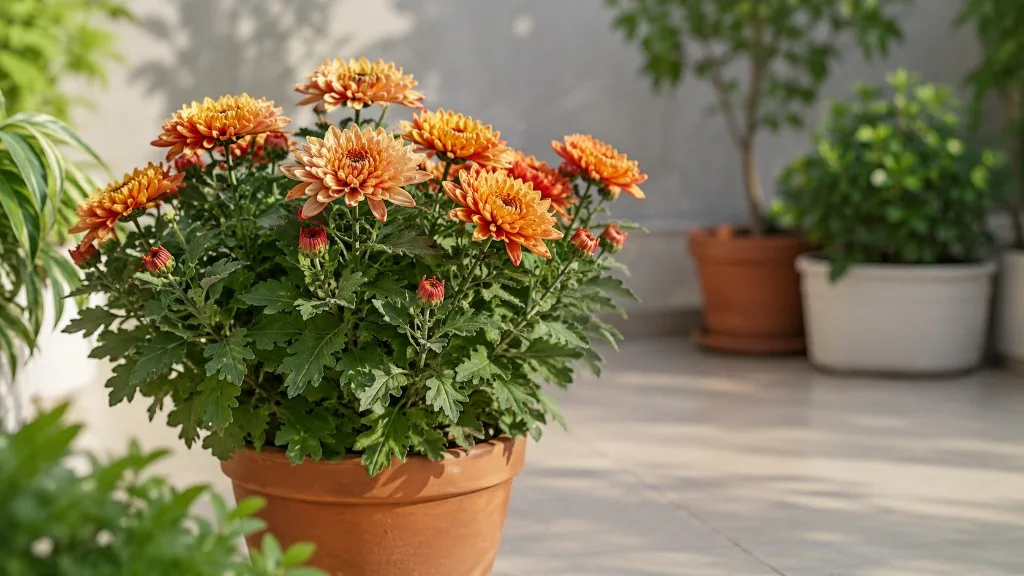
Chrysanthemum Pruning: When, How, and Mistakes to Avoid
Chrysanthemum Pruning: When, How, and Mistakes to Avoid
Most online pruning advice treats chrysanthemums like a woody shrub: wait until spring, shear everything back, and move on. That misses the technique that actually drives fall performance. Your first move on a healthy chrysanthemum in active spring growth is to pinch the soft terminal tip on each stem once shoots reach about 6 inches (15 cm) - removing roughly ½ to 1 inch just above a leaf node. That single tip removal breaks apical dominance and starts the branching that keeps garden mums compact and loaded with autumn flowers.
If you bought a pot of mums in fall and never pinched them, you already know what skipping that step looks like: tall stems that open a tight crown of blooms and then lodge under their own weight. Chrysanthemums respond fast to well-timed pinching. The catch is that timing is physiological, not cosmetic - these plants measure night length and initiate flower buds from mid-summer onward.
Why Chrysanthemum Pruning Is Not Shrub Pruning
Shrub pruning reshapes permanent woody structure. Chrysanthemums are herbaceous perennials - often grown as seasonal bedding - that rebuild their useful architecture every season from soft green stems. Cut the wrong tips at the wrong week and you delete flower buds, not just change shape.
Four tasks get lumped under “pruning,” but each has its own season:
- Pinching removes soft terminal growing points in spring and early summer to force branching.
- Disbudding removes competing flower buds in late summer for larger singles or uniform sprays.
- Deadheading removes faded flowers during bloom to keep the display clean.
- Spring cutback trims last year’s dead stems once new basal growth appears.
Pinching is the core skill for garden mums. Disbudding is optional unless you grow exhibition or cut-flower types. Treating all four as one generic job is the first mistake.
Chrysanthemums are short-day plants - they initiate flower buds when nights lengthen past roughly 10 to 12 hours of uninterrupted darkness. Missouri Botanical Garden notes that response time after induction ranges from about six weeks for early cultivars to eight or ten weeks for late types. Pinching after bud initiation has started removes those developing buds. That constraint - not aesthetics - is why experienced growers mark a hard last-pinch date.
Garden Mums vs Exhibition Types
Garden mums (Chrysanthemum × morifolium hybrids sold as fall bedding or hardy perennials) are bred for sprays of smaller flowers on bushy plants. Pinching is essential if you want compact plants and abundant color. Iowa State Extension recommends pinching until early July so plants have time to form buds before frost.
Exhibition chrysanthemums - incurve, reflex, spider, and other show types - rely on pinching, stem limiting, and disbudding for a few outsized blooms per plant. Genetics sets the ceiling; you cannot turn a standard cushion mum into a show flower through disbudding alone. For curb appeal, focus on pinching. For competition stems, start with an exhibition cultivar and follow the specialist routine from mid-summer onward.
What to Check Before You Cut
Before any pinch or cut, read the plant’s current state:
- Stem height - Are new shoots roughly 6 inches, or still tiny sprouts after spring emergence?
- Bud stage - Do you see pea-sized bud clusters forming low on stems? If yes, you may be past the safe pinching window.
- Plant stress - Heat-scorched, drought-shocked, or root-bound mums need recovery, not another round of tip removal.
- Cultivar and source - Greenhouse-grown pot mums may already be on a production pinch schedule. Confirm whether additional pinching is still safe.
- Night lighting - Street lamps and porch lights interrupt the dark period mums need for bud initiation. Pruning perfectly but lighting the plant at night can still cost you blooms.
If stems are under 6 inches, wait. If buds are already forming and nights are lengthening, stop pinching. If the plant is stressed, fix water and root conditions first, then resume only while still inside the safe calendar window.
The First Cut: Pinch Terminal Tips at 6 Inches
Whether plants emerged from winter dormancy or you set out spring transplants, begin pinching when new shoots reach about 6 inches (15 cm). Iowa State Extension uses this height because it confirms the root system is active and the plant can spare the tip without stalling.
Remove the top ½ to 1 inch of each stem, or snap out the terminal bud with your fingers. The cut lands just above a healthy leaf node - the joint where a leaf meets the stem. You are not shortening the entire stem by half. You are nibbling the soft tip before it hardens into stiff, flower-bound tissue.
On soft spring growth, finger pinching is fast and adequate. The stem should break cleanly above the node, not tear into older tissue. Switch to bypass pruning shears when stems toughen in late spring, when working near brittle wood, or when disease has been an issue. Wipe blades with 70% isopropyl alcohol when moving between plants, especially if any mum shows gray mold, rust, or stem discoloration.
Repeat Pinches Through Early Summer
After the first pinch, lateral shoots grow from nodes below the cut. When those branches reach roughly 6 inches again - or the plant starts stretching beyond a compact dome - pinch the tips a second time. Repeat on a three-to-four-week rhythm through late spring and early summer.
Each removed tip redirects growth hormones so dormant buds in leaf axils wake up and become new branches. Three or four well-timed pinches can transform one lanky shoot into a dome of stems, each capable of carrying a flower spray. The plant also blooms later relative to the date of the last pinch - a scheduling tool, not a side effect. Stop earlier for earlier fall color; push the last pinch to the edge of your safe window for later bloom, but only if frost allows.
Last-Pinch Cutoff by Climate Zone
After your last allowable pinch, leave all branch tips alone until the blooming cycle finishes. Use these extension benchmarks as starting points, then adjust for cultivar bloom time and your frost date:
| USDA zone range | Stop pinching by | Rationale |
|---|---|---|
| 4–5 | June 15–20 | Short season; buds need maximum development time |
| 6–7 | Around July 4 | Classic midpoint for mid-October bloom on many cultivars |
| 8–9 | Mid-July (July 10–15) | Longer frost-free window allows a later last pinch |
| Warm coastal / subtropical | Early August at latest | Heat shifts timing; follow cultivar-specific guidance |
Missouri Botanical Garden suggests mid-June for early September bloomers, July 1 for early-October types, and no later than July 15 for late cultivars - roughly three months between last pinch and bloom. Iowa State Extension advises not pinching after Independence Day to avoid delayed or missed flowering.
In India and other subtropical climates where chrysanthemums flower on a different rhythm, growers often pinch twice - commonly in June and August for winter-bloom varieties. Translate the principle, not just the calendar date: last pinch must fall before flower bud initiation for your cultivar in your climate.
Disbudding for Larger Blooms (Optional)
Disbudding controls how many flowers each branch opens at once. Where pinching builds the branch framework, disbudding shapes individual flower size. The Royal Horticultural Society describes two distinct approaches depending on flower form.
On single-flowered exhibition types, keep the large central terminal bud on each selected stem and remove all side buds. Limit the plant to three to five main stems earlier in the season for show-size blooms.
On spray chrysanthemums - the domed cushion mums sold by the millions each autumn - remove the oversized central bud in each cluster and leave surrounding side buds for an even spray. Many bedding growers skip this step; cutting-flower gardeners use it for balanced vase stems.
Begin disbudding when buds are pea-sized - large enough to identify the dominant bud but small enough to remove without damaging the keeper. Work in cool morning hours with clean fingers or fine-point snips. Stake selected stems as they lengthen so heavy autumn blooms do not snap them.
Watch for crown buds - premature terminal flowers that form low in the canopy during cool nights in late summer. UMass Greenhouse & Floriculture notes that cool nights below about 60°F during early short-day weeks can trigger these early buds. Remove crown buds promptly if they threaten to steal energy from the main autumn display.
Spring Cutback for Perennial Clumps
Hard cutback belongs in early spring, not autumn. After mums finish blooming, aboveground stems die back partially or fully in cold climates. Leave dead foliage through winter where freeze-thaw cycles occur - spent stems insulate the shallow crown from frost heaving.
Once you see new green shoots emerging from the crown, shear last year’s dead stems to a uniform 3 to 4 inches (7–10 cm) above the base. Missouri Botanical Garden recommends this spring trim before restarting the pinching calendar. You are clearing last season’s skeleton so light and air reach fresh growth, not sculpting final shape.
Let new shoots reach 6 inches before the first pinch of the season. Jumping in too early on tiny sprouts removes leaf area the plant still needs to rebuild reserves after winter.
Skip aggressive spring cutback on fall-planted pot mums treated as annuals and on plants that did not survive winter in your zone. Many purchased autumn mums are root-bound and bloom-forced, not selected for hardiness. For container mums overwintered indoors, trim lightly to remove dead flowers and leggy growth, then resume pinching on the 6-inch schedule once active growth returns.
Deadheading and Late-Season Cleanup
Once blooming begins, shift to deadheading - snipping or pinching below spent flower heads to the first healthy leaf or side bud. Deadheading keeps the display tidy, reduces fungal spore load on wet petals, and on some cultivars encourages additional buds while weather remains favorable. It is not pinching; you are not shortening the branch framework.
Do not shear the plant for size in September. By then you are removing open and developing flowers alike. If stems lodge because you skipped spring pinching, use stakes or discreet supports rather than a corrective haircut.
After hard frost kills the tops, trim dead stems for tidiness only if your zone does not need winter protection from standing foliage. Dispose of diseased trimmings in the trash, not the compost pile, if you saw rust, powdery mildew, or stem rot during the season.
Aftercare and Recovery Signs
During the pinching phase, consistent moisture and a balanced soluble fertilizer every two to four weeks support the branching you are forcing. Hold back on heavy nitrogen late in the pinching window - you want structured branching, not another surge of soft growth that needs yet another pinch after the safe cutoff.
Signs pinching worked: lateral shoots multiply after each pinch, the plant forms a compact dome instead of a single upright spike, and flower sprays develop evenly across the canopy in autumn.
Signs pinching was too late or too aggressive: the plant stays bushy and green through fall with few or no flowers, crown buds appear buried inside foliage while stem tips stay green, or stressed plants stall branching after repeated tip removal during heat or drought.
If you pinched too late in a short-season zone, stop cutting, maintain even moisture, and mark an earlier cutoff next year. Shape can wait until spring cutback; buds will not wait for aesthetic preferences.
Tools, Sanitation, and Pet Safety
You need little equipment: bypass pruning shears or sharp scissors for tougher stems, your fingers for soft tips, rubbing alcohol for sterilization, optional stakes and soft ties for exhibition stems, and a bag for diseased debris. Bypass blades crush less tissue than anvil pruners on soft herbaceous stems.
Wear gloves if you have sensitive skin. The ASPCA lists chrysanthemums as toxic to cats, dogs, and horses, causing vomiting, diarrhea, hypersalivation, and incoordination if ingested. Keep trimmings and cut flowers away from pets during routine pinching.
Never remove more than about one-third of healthy leafy growth in a single session on a stressed plant. Chrysanthemums in active growth tolerate frequent light tip pinches well, but wholesale foliage stripping during heat or drought shocks the plant and slows branching heading into bud formation.
Mistakes to Avoid
Treating pinching as optional. Unpinched mums bloom, but often on floppy stems with a narrow display window.
Using one national pinch date without adjusting for zone or cultivar. July 4 is a useful mnemonic in zones 6–7, not a universal law.
Confusing deadheading with pinching in late summer. Removing faded flowers in October is fine. Removing inch-long tip growth in August is bud removal.
Disbudding the wrong way for the flower type. Removing all side buds on a spray cultivar - or keeping the giant central bud on a spray you wanted uniform - disappoints no matter how much you fertilize.
Hard cutting in autumn instead of spring. Shearing after bloom can expose crowns to winter damage and removes foliage that still photosynthesizes on mild days.
Ignoring artificial light at night. A perfectly pinched plant under a security flood may bloom late, unevenly, or not at all.
Pruning stressed plants aggressively. Restore even moisture and root health first; resume pinching only inside the safe calendar window.
Conclusion
Chrysanthemum pruning is three timed skills wearing one name: pinch early and often to build a branched frame, stop pinching before your zone’s bud-initiation window so autumn flowers can form, and disbud selectively only when growing types meant for large singles or uniform sprays. Spring cutback refreshes perennial clumps; deadheading keeps the autumn show presentable.
Mark your last-pinch date before spring ends, keep blades clean, match disbudding strategy to flower form, and leave branch tips alone once short days arrive. Do that and garden mums reward you with the dense fall color they were bred for - not a leggy afterthought that flopped the moment September cooled.
When to use this page vs other Chrysanthemum guides
- Chrysanthemum overview - Start here for whole-plant context before deep-diving this topic.
- Chrysanthemum problems hub - Jump to symptom-specific fix guides when this care topic does not resolve the issue.
- Leggy Growth on Chrysanthemum - Escalate here when pruning adjustments are not enough.
- Slow Growth on Chrysanthemum - Escalate here when pruning adjustments are not enough.
- Brown Tips on Chrysanthemum - Escalate here when pruning adjustments are not enough.