Begonia Rex Care Guide: Complete Indoor Overview
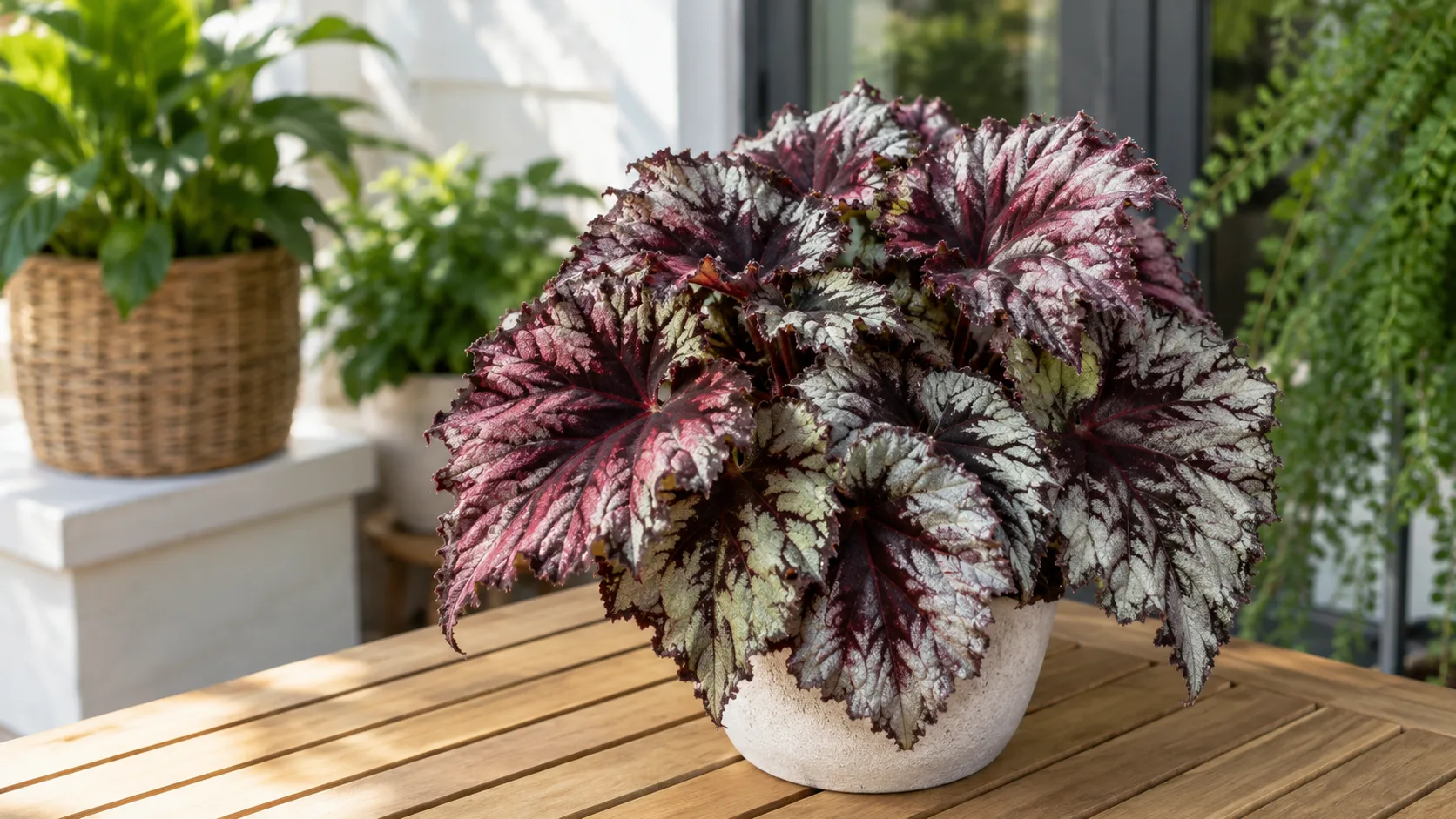
Begonia rex-cultorum
Rex begonia needs 50–70% humidity (humidifier essential), bright to medium indirect light, bottom watering every 7–10 days when top 3 cm is dry, and temperatures consistently above 15°C.
Begonia Rex Care Guide: Complete Indoor Overview
Start with wateringThe most common care mistake for Begonia RexWatering guide → →Begonia Rex care essentials
Light
bright indirect light
Water
Bottom-water every 7–10 days when top 3 cm is dry. Avoid wetting leaves or rhizome. Room-temperature water.
Soil
Light, well-draining potting mix with 20% perlite. pH 5.7–6.2. Avoid compacted mixes.
Humidity
50–60%
Temperature
18–24°C (65–75°F)
Fertilizer
Use balanced liquid fertilizer at half strength and stop if the plant is stressed, newly repotted, or not actively growing. Fertilizing in winter.
About Begonia Rex
Begonia Rex is native to Northeast India, China, typically reaches 30–45 cm tall and wide indoors, with moderate growth. Begonia Rex has a bushy growth habit and part of the Begoniaceae family. It is also known as Rex Begonia, Painted Leaf Begonia, and King Begonia.
| Detail | Information |
|---|---|
| Also known as | Rex Begonia, Painted Leaf Begonia, King Begonia |
| Native region | Northeast India, China |
| Mature size | 30–45 cm tall and wide |
| Growth rate | Moderate |
| Growth habit | Bushy |
| Scientific name | Begonia rex-cultorum |
| Family | Begoniaceae |
Begonia Rex Care Guide: Complete Indoor Overview
What Rex Begonias Are and Why They Are Different From Other Begonias
Begonia Rex, also called rex begonia, painted-leaf begonia, or fancy-leaf begonia, is a houseplant grown almost entirely for foliage. The leaves can look brushed with silver, stained with burgundy, edged in pink, or patterned like stained glass. The flowers, when they appear, are small and easy to ignore. That is not a flaw. It is the point. Rex begonias are living art objects that happen to be plants, and they reward growers who understand one basic fact: they are not generic leafy houseplants with pretty leaves pasted on. They are rhizomatous begonias with a shallow crown, humidity preferences, and a low tolerance for wet foliage and soggy rhizomes.
Most losses trace back to crown rot from overwatering on Begonia Rex, crisped leaves from dry winter air, or faded color from too little light. Once you understand the rhizome and crown, those problems become predictable and fixable.
Botanical identity, rhizomes, and the rex cultorum group
The botanical name most references use is Begonia rex-cultorum, referring to the rex cultorum group of hybrid and selected begonias bred from rhizomatous species. Missouri Botanical Garden describes rex begonias as rhizomatous plants that grow from a shallow, knobby rhizome and do best in large, relatively shallow pots where the rhizome has room to spread. (Missouri Botanical Garden) North Carolina Extension lists rex types as rhizomatous, herbaceous perennials with dense, colorful, variegated foliage typically reaching 12 to 18 inches tall. (NC State Extension)
That rhizome is the care hinge. Rex begonias spread horizontally at or just above the soil surface, so water on the crown is far more dangerous than for many upright houseplants. The workable middle is moist roots, a dry crown, Begonia Rex light guide, and humidity above roughly 50 percent.
Cultivar names, leaf types, and why labels matter indoors
Walk into any plant shop and you will see rex begonias sold under names like Escargot, Fireworks, Jurassic Silver Swirl, Red Tango, and dozens more. Many are cultivars or hybrids within the rex group, not a single uniform species in the wild sense. That matters because cultivars can differ in humidity tolerance, light intensity preference, and winter behavior. One rex may sulk below 45 percent relative humidity while another looks acceptable at 40 percent for weeks. One may tolerate a bit of morning sun when acclimated; another bleaches immediately.
If your plant came with a cultivar tag, keep it. Compact new leaves with strong pattern contrast mean the setup is working. Pale, small, or widely spaced new leaves mean light or humidity is limiting growth. Crisp brown edges with otherwise firm leaves usually mean dry air or inconsistent watering.
Native Range and What It Means for Indoor Care
Rex begonias trace back to rocky, forested slopes in northeastern India, China, Bhutan, and northern Myanmar. North Carolina Extension notes native distribution from Bhutan to northern Myanmar, with the group widely cultivated beyond that range. (NC State Extension) Missouri Botanical Garden describes the broader rex lineage as native to rocky, forested slopes in northeastern Asia. (Missouri Botanical Garden)
That origin explains nearly every indoor preference: filtered light, steady root moisture without a wet crown, airy soil, and warm stable air. The practical translation is simple. Give rex begonias bright indirect light rather than direct sun. Keep relative humidity at or above 50 percent when possible. Use a light, porous potting mix and a pot with drainage. Water when the upper mix approaches dry, but never leave the plant sitting in runoff. Avoid cold drafts below about 60°F (15°C) for long periods. When your home is heated and dry in winter, expect more edge crisping and slower growth unless you add humidity. When a rex begonia drops leaves in low winter light, that can be a normal slowdown rather than immediate death, especially if the rhizome remains firm.
Size, Growth Rate, and What Healthy Foliage Looks Like
Indoors, rex begonias usually reach about 12 to 18 inches (30 to 45 centimeters) tall and wide, with a dense, bushy habit when light and humidity are good. Missouri Botanical Garden and North Carolina Extension both describe mature size in roughly that range. (Missouri Botanical Garden, NC State Extension) Growth rate is moderate in typical indoor conditions. A well-grown plant can produce a steady flush of new leaves through the warm months and slow noticeably in late fall and winter.
Healthy rex begonia foliage is firm, fully expanded, and color-saturated for the cultivar. Silver and metallic patterns should look bright, not chalky. Red and purple tones should look rich, not muddy. The leaf surface should be flat or slightly cupped, not permanently wilted. Petioles should be stiff enough to hold leaves above the rhizome. The rhizome itself should feel firm at the soil surface, not mushy or collapsing. Small pinkish-white flowers may appear in spring or summer, but indoor plants are grown for leaves, and weak flowering is not a care failure.
They are intermediate-care houseplants, not set-and-forget beginners’ plants. Missouri Botanical Garden notes that rex begonias are not easy-care plants and are mainly grown indoors in many climates. (Missouri Botanical Garden) They punish neglect of humidity and crown moisture faster than a pothos will, but the foliage reward is worth learning the rhythm.
Light: Bright Indirect Without Scorching the Leaves
Rex begonias need bright, indirect light to keep vivid leaf color and compact growth. North Carolina Extension recommends bright but indirect sunlight. Direct sun is the fastest way to bleach metallic patterns, scorch leaf edges, and stress a plant that evolved under forest canopy.
A practical placement is near an east-facing window, where gentle morning light is usually safe, or several feet back from a south- or west-facing window so the plant receives strong ambient light without sitting in the beam. A north-facing window can work if the room is bright, but in dim apartments the plant may lose color and stretch. If leaves look pale, smaller than earlier growth, or spaced farther apart on the stem, the plant wants more light. If upper leaves show bleached patches, brown scorched zones, or curling during the brightest hours, it wants softer light or slower acclimation.
Grow lights help in fall and winter. A full-spectrum LED panel 12 to 18 inches above the canopy for 12 to 14 hours daily preserves color when natural light fades. Rotate the pot weekly if growth leans, and acclimate any move over one to two weeks.
Watering: Moist Roots, Dry Crown, No Calendar Guessing
Watering is where rex begonia care is won or lost. The plant wants consistent moisture at the roots but cannot tolerate a wet crown or waterlogged rhizome. Missouri Botanical Garden recommends letting the soil surface become almost dry between waterings and checking with a finger before adding more water. University of Connecticut likewise advises waiting until the top inch of mix feels dry while keeping roots evenly moist - not soggy and not bone dry.
The workable rule is to water when the top 1 to 2 centimeters (roughly half an inch to an inch) of mix feels dry, then water thoroughly until a small amount drains from the holes. Empty the saucer afterward. Aim water at the soil surface or use bottom watering with the pot lifted out of standing water once the mix has absorbed moisture. Avoid splashing the leaves and rhizome, because wet foliage invites fungal spotting and crown rot. Room-temperature water is the safest default. In homes with hard tap water, occasional use of filtered, distilled, or rainwater can reduce brown edge buildup linked to salts and fluoride, though humidity and Begonia Rex watering guide matter more.
Seasonal watering rhythm and winter slowdown
During active growth in spring and summer, many rex begonias need watering about every 5 to 10 days, depending on pot size, light, and humidity. Smaller pots dry faster. Bright windows and grow lights increase water use. High humidity slows surface drying slightly but does not eliminate the need to check the root zone. In late fall and winter, the same plant may need watering only every 10 to 14 days, or even less if it enters a visible slowdown.
Rex begonias can enter a winter dormancy in dim, cool conditions. Missouri Botanical Garden notes that many cultivars stop growing in fall or winter unless grown under lights, and some may drop part or all of their leaves. (Missouri Botanical Garden) If the rhizome remains firm and you see no mushy decay, reduce watering to just enough to prevent the mix from going bone dry for weeks on end. Resume normal watering when new spring growth appears. Do not fertilize a leafless dormant plant. Do not panic-repot a leafless dormant plant unless the rhizome is rotting.
The watering mistakes that rot rex begonias fastest
The most common mistake is watering on a calendar instead of checking the pot. The second is misting leaves or the crown as a substitute for proper soil watering, which briefly wets vulnerable tissue without solving root moisture needs. The third is leaving the pot in a decorative cachepot full of runoff, which keeps the bottom of the mix saturated even when the surface looks acceptable. The fourth is upgrading to an oversized pot, which holds too much wet mix around a small rhizome and causes slow root rot on Begonia Rex that shows up first as wilting, yellowing, or sudden leaf collapse.
If you are unsure whether to water, err slightly toward waiting one more day, then check again. Rex begonias recover from brief dryness more gracefully than from a chronically wet crown, though repeated drought will crisp edges and weaken the plant over time. When in doubt, lift the pot. A light pot with dry top mix needs water. A heavy pot with damp deeper mix can wait.
Humidity and Temperature: The Variables That Decide Leaf Quality
Rex begonias are humidity-sensitive foliage plants. Most references place the useful indoor range at 50 to 70 percent relative humidity, with many cultivars struggling long term below about 50 percent. North Carolina Extension recommends high humidity and suggests bathrooms, kitchens, pebble trays, or humidifiers. Missouri Botanical Garden notes rex begonias require more than 50 percent humidity, with dry winter air commonly producing brown, crispy leaf edges.
A pebble tray, plant grouping, or small humidifier are the most reliable fixes in heated homes. Terrariums stabilize humidity but need airflow. Misting is a weak long-term strategy and can encourage mildew. Temperature is easier than humidity in many homes. Rex begonias generally prefer 60 to 75°F (15 to 24°C), with Missouri Botanical Garden suggesting roughly 70°F days and 60°F nights as an ideal rhythm. (Missouri Botanical Garden) They tolerate brief warmth near 80°F (27°C) less gracefully than sustained cool drafts below 60°F. Keep plants away from winter window panes, air-conditioning vents, and heat blasts from radiators. Sudden temperature swings can trigger leaf drop even when watering is correct.
If your rex begonia looks perfect in summer and miserable in January, assume humidity and light dropped together. Fixing only watering rarely solves winter decline. Add humidity first, supplement light second, and adjust watering third once you know how slowly the pot dries in the darker season.
Soil, Pot Depth, and Drainage for Rhizomatous Roots
Rex begonias want a light, well-draining, slightly acidic mix that still holds some moisture without compacting. Missouri Botanical Garden recommends a porous planting mix in a relatively shallow pot. Target pH around 5.5 to 6.5. Heavy garden soil, dense peat blocks, and straight succulent mix are all poor fits for different reasons: the first two stay too wet, while the last dries too unevenly for fine rex roots.
A practical homemade blend is two parts quality houseplant potting mix, one part perlite, and one part orchid bark or coarse coco chips. That combination drains quickly, holds air, and resists compaction longer than peat-heavy mixes alone. Some growers add a small portion of worm castings or fine bark for organic structure. The exact recipe matters less than the behavior: when you water, moisture should distribute through the pot, drain freely, and leave the upper mix approaching dry within a few days under normal indoor light.
Use a container with drainage holes and favor shallower pots because the rhizome spreads horizontally. Refresh mix every year or two, because old peat collapses and suffocates roots even when foliage still looks fine.
Fertilizer During Active Growth
Rex begonias are moderate feeders during active growth, not hungry monsters. Missouri Botanical Garden recommends a balanced complete fertilizer at quarter strength every two weeks in spring when new growth starts, or a controlled-release fertilizer every three months, then tapering off in fall and stopping in winter. (Missouri Botanical Garden) A practical home routine is a balanced water-soluble houseplant fertilizer diluted to one-quarter to one-half label strength, applied every two to four weeks from spring through early fall.
Always apply fertilizer to already-moist soil. Pouring fertilizer into dry mix is an easy way to burn fine roots and produce brown leaf margins that look like humidity stress. If the plant is leafless, stressed, recently repotted, or sitting in wet soil, skip feeding until growth normalizes. Unused fertilizer in a dormant pot simply becomes salt. Flush the pot with plain water every few months if you see white crust on the soil surface or pot rim.
Heavy feeding does not replace good light and humidity. If foliage is pale and small, check light first. If edges are crisp, check humidity and watering rhythm. Fertilizer helps a plant that is already in the right environment grow slightly faster and maintain color more steadily. It does not rescue a rex begonia rotting in a dark, soggy pot.
Begonia Rex repotting guide Rex Begonias Without Disturbing the Rhizome
Repot rex begonias when roots circle the drainage holes, water runs straight through without soaking in, the plant becomes top-heavy, or the mix has clearly broken down and smells sour. The best timing is early spring, as new growth begins, because the plant has a full warm season to recover. Missouri Botanical Garden notes that rex begonias can be propagated easily by rhizome division during repotting. (Missouri Botanical Garden)
Choose a pot one size larger in width, not a huge jump. A too-large pot is one of the most common post-repot failures because the excess mix stays wet around a small rhizome. Water the day before repotting so the root ball stays intact. Tip the plant out gently, brush away old mix without tearing healthy roots, and trim only mushy or clearly dead tissue. Set the rhizome at roughly the same depth it grew before, with the top of the rhizome visible or just below the surface depending on the cultivar’s habit. Fill around it with fresh mix, water lightly to settle, and keep the plant in bright indirect light with stable humidity while it adjusts.
Hold fertilizer for about a month after repotting. If several leaves collapse but the rhizome is firm, reduce watering and wait. Soft, sour-smelling rhizomes need trimming to healthy tissue and a fresh repot.
Pruning, Grooming, and Airflow
Rex begonias do not need heavy pruning, but they benefit from regular grooming. Remove yellow, brown, or damaged leaves at the base of the petiole with clean snips. Pick up fallen leaves from the soil surface, because decaying foliage on damp mix invites botrytis and fungus gnats. North Carolina Extension and Missouri Botanical Garden both emphasize removing dead leaves promptly and providing good air circulation to reduce mildew and fungal issues. (NC State Extension, Missouri Botanical Garden)
If the plant becomes leggy or lopsided, you can remove the worst stems at the rhizome level to encourage fresh growth. Unlike cane begonias, rex begonias are not usually shaped by repeated tip pinching alone; the rhizome drives the architecture. After major leaf loss from stress, patience matters more than aggressive cutting. Keep conditions stable, avoid overwatering a reduced leaf mass, and let the rhizome push new foliage.
Sanitize tools between plants, especially if you grow multiple begonias. Rex begonias are susceptible to bacterial leaf spot and powdery mildew, and sloppy grooming spreads problems across a collection faster than most beginners expect.
Propagation: Leaf Cuttings, Rhizome Division, and Stem Tips
Rex begonias are rewarding to propagate once the parent plant is healthy. The three main home methods are leaf cuttings, rhizome division, and stem or tip cuttings, depending on the plant’s shape. Missouri Botanical Garden notes that rex begonias can be propagated easily by rhizome division during repotting, and you can root rhizome cuttings or use leaf cuttings to grow additional plants.
Leaf cuttings are the classic rex method. Take a healthy mature leaf and either insert the petiole into moist, well-draining mix or cut the leaf into wedges, each with a major vein, and press the vein side into moist medium. Keep humidity high with a loose clear cover, provide bright indirect light, and keep the mix evenly moist but not soggy. Small plantlets can form at the veins over several weeks. Rhizome division is simplest during repotting: cut the rhizome into sections with at least one growth point and roots, then pot each section separately. Stem or tip cuttings work when the plant has obvious upright stems with nodes; root them in moist perlite-heavy mix under humidity.
Start propagation in spring or early summer when the parent is actively growing. Weak, pest-infested, or rotting parents produce weak cuttings. Label cultivars if you know them, because rex seedlings and divisions can look different from the parent until mature leaves develop. The first sign of success is new tiny leaves or firm white roots, not merely the cutting staying green.
Common Problems: Yellow Leaves, Brown Edges, and Leaf Drop
Most rex begonia problems are environmental, and the leaves tell the story early if you know how to read them. The hardest part is resisting the urge to change everything at once. Adjust one major variable, then watch new growth for two to three weeks.
Yellow leaves often mean overwatering, especially if the soil stays wet and lower leaves yellow first. They can also mean underwatering on Begonia Rex if the mix is dry and leaves are crisp. Low light produces pale, weak yellowing across the plant. Natural aging causes occasional lower leaf yellowing that is harmless if new growth continues. Check moisture at depth, then light, then pests on leaf undersides.
Brown, crispy edges usually point to low humidity, inconsistent watering, salt buildup, or harsh tap water. Raise humidity, water thoroughly when the top of the mix is dry, and flush the pot with plain water periodically. If only the leaf margins are affected while the center remains firm, humidity is the prime suspect in winter.
Sudden leaf drop can follow cold drafts, heat stress, root rot, or a major light change. Missouri Botanical Garden notes that sudden temperature swings can cause leaf drop as a stress response. (Missouri Botanical Garden) If many leaves fall during winter in a dim room, dormancy may be involved. If leaves fall while the soil is wet and the rhizome is soft, rot is involved.
A quick reference:
| Symptom | Most likely cause | Practical fix |
|---|---|---|
| Lower leaves yellow, wet soil | Overwatering, poor drainage | Let mix dry appropriately, check roots, repot if needed |
| Crispy brown leaf edges | Low humidity, dry soil, salts | Add humidifier, water deeply when due, flush pot |
| Bleached or scorched patches | Too much direct sun | Move to bright indirect light, acclimate slowly |
| Small pale new leaves, long gaps | Too little light | Increase light or add grow lamp |
| Wilting with wet soil | Root or crown rot | Trim rot, repot into fresh airy mix, reduce watering |
| Leaf drop in winter, firm rhizome | Dormancy, low light | Reduce watering slightly, add light and humidity in spring |
| Dull faded patterns | Low light or low humidity | Improve both; color returns on new growth first |
Pests, Mildew, and Disease Prevention
Rex begonias are not pest magnets, but they are not immune. North Carolina Extension flags mealybugs and notes that overwatering causes root rot, while fungal diseases such as botrytis and powdery mildew can occur. (NC State Extension) Missouri Botanical Garden likewise cites mealybugs, mildew, and botrytis as concerns and recommends grooming and airflow as prevention. (Missouri Botanical Garden)
Mealybugs look like white cottony tufts in leaf axils and along stems. Treat with alcohol swabs on visible insects, then insecticidal soap or neem oil on a weekly schedule until clear. Spider mites thrive in dry winter air and cause stippling plus fine webbing. Increase humidity, rinse leaf undersides, and use soap or neem consistently. Fungus gnats indicate overly wet surface mix; let the top dry more between waterings and use sticky traps for adults. Powdery mildew shows as white powdery patches and worsens where airflow is poor and leaves stay wet. Remove affected leaves, improve circulation, and avoid misting.
Prevention is simpler than cure: check plants weekly, keep dead leaves off the soil, do not crowd rex begonias into stagnant corners, and water the base rather than the foliage. Quarantine new plants for a week or two before placing them beside a prized rex cultivar.
Pet Safety and Where to Place Rex Begonias at Home
Rex begonias are toxic to pets if ingested. The ASPCA lists Begonia rex as toxic to dogs, cats, and horses, with soluble calcium oxalates as the toxic principle and the underground parts generally the most toxic portion. (ASPCA) North Carolina Extension also notes calcium oxalate toxicity with vomiting and salivation in dogs and cats, plus possible skin irritation from sap. (NC State Extension)
That does not mean you cannot keep a rex begonia in a pet household, but it does mean placement matters. Keep plants on stable shelves, in hanging baskets, or in rooms pets do not access. Watch for chewed leaves or dug-up rhizomes, which are especially risky because underground tissue carries higher toxicity. If you suspect ingestion, contact your veterinarian or the ASPCA Animal Poison Control Center promptly.
Sap may irritate sensitive skin, so wash hands after pruning. The best location combines bright indirect light, stable warmth, and elevated humidity - kitchens, bathrooms, plant stands, or ventilated terrariums when light is adequate.
Conclusion
Begonia Rex is worth the effort because few houseplants offer this level of foliage drama in a compact footprint. The care model is coherent once you accept the plant on its own terms: it is a rhizomatous tropical foliage plant from humid, filtered-light forests in Asia, not a forgiving desert succulent or a low-light afterthought. Give it bright indirect light, 50 percent or higher humidity, a light well-draining mix in a shallow pot, and water applied when the upper mix dries while the crown stays relatively dry. Feed lightly during active growth, groom consistently, and expect a winter slowdown that may include leaf drop without killing a firm rhizome.
Most failures are environmental and reversible if caught early. When light, humidity, watering, and grooming line up, rex begonias produce leaves that look almost unreal, month after month, in an ordinary room.
When to use this page vs other Begonia Rex guides
- Begonia Rex overview - Canonical hub for this species - care topics and problems branch from here.
- Begonia Rex problems - Symptom-first path when you already know something is wrong.
Related Begonia Rex guides
How to care for Begonia Rex?
How much light does Begonia Rex need?
bright indirect light
- bright indirect light - bright indirect light.
When should you water Begonia Rex?
Bottom-water every 7–10 days when top 3 cm is dry. Avoid wetting leaves or rhizome. Room-temperature water.
- Check top 2 cm of soil; apply water at the base only - Bottom-water every 7–10 days when top 3 cm is dry.
- Drain excess water - Bottom-water every 7–10 days when top 3 cm is dry.
What soil works best for Begonia Rex?
Light, well-draining potting mix with 20% perlite. pH 5.7–6.2. Avoid compacted mixes.
- peat-free potting mix - Light, well-draining potting mix with 20% perlite.
- perlite - Light, well-draining potting mix with 20% perlite.
- orchid bark - Chunky bark pieces that create air pockets and mimic epiphytic growing conditions.
Grower notes for Begonia Rex
What matters most with Begonia Rex
Begonia Rex is easiest to grow when you judge the whole plant: new growth, root-zone moisture, light exposure, and how quickly the pot dries after watering. In practice, the care checkpoint is simple: bright indirect light. Pair that with light, well-draining potting mix with 20% perlite; pH 5.7–6.2. Avoid compacted mixes, and avoid changing water, pot size, and placement all at once.
Best placement in a real home
Begonia Rex belongs where bright indirect light is realistic for most of the day, not only where the pot looks good. Bottom-water every 7–10 days when top 3 cm is dry. Avoid wetting leaves or rhizome. Room-temperature water. If the pot stays wet longer than expected, move the plant into better light or reassess the mix before watering again. Humidity target: 50–60%. Temperature comfort zone: 18–24°C (65–75°F).
Before you buy this plant
Choose Begonia Rex with firm new growth, clean leaf undersides, and soil that does not smell sour or feel compacted. Be cautious if you see brown-tips, sticky residue, collapsed crowns, or a pot that is wet in poor light. Cosmetic old-leaf damage is less worrying than weak roots or active pests.
First month after bringing it home
Do not repot Begonia Rex on day one unless the mix is failing or pests are obvious. Quarantine it, learn how fast the pot dries, and keep care boring while it adjusts. Watch especially for brown-tips and root-rot. If problems appear, correct the condition first rather than stacking fertilizer, repotting, and pruning together.
Safety note for Begonia Rex
Begonia Rex is not a plant to keep within reach of pets or children. The database flags it for cats and dogs. Use gloves if sap or plant tissue is irritating, and pick a pet-safe alternative for floor pots or low shelves.
How to tell Begonia Rex is settling in
Also sold as Rex Begonia, Painted Leaf Begonia, and King Begonia, this plant should be judged by stable new growth rather than label names alone. If you plan to multiply it later, common methods include Leaf cuttings and Rhizome division. Repot only when you see roots at drainage holes and very fast drying. If root-rot shows up early, inspect light, watering, and roots before assuming the plant is permanently weak.
Toxic to cats and dogs
ASPCA lists begonias as toxic to cats and dogs. Keep away from pets.
ASPCA classifies all begonia species as toxic. Underground parts carry highest toxicity.
Watering Begonia Rex
For Begonia Rex, check top 2 cm of soil; apply water at the base only and water every 7–10 days in growing season; reduce in winter. Reduce watering in autumn and winter when growth slows.
| Detail | Information |
|---|---|
| How often | Every 7–10 days in growing season; reduce in winter |
| How to check | Check top 2 cm of soil; apply water at the base only |
| Seasonal changes | Reduce watering in autumn and winter when growth slows |
Signs of overwatering
- mushy crown or petioles
- grey mould on leaves
- wilting despite wet soil
Signs of underwatering
- leaf curl
- wilting
- dry soil
Soil & potting for Begonia Rex
Use a mix of peat-free potting mix, perlite, orchid bark for Begonia Rex. Good; shallow pots work well. Target soil pH around 5.5–6.5. Repot every 1–2 years, ideally in spring.
| Detail | Information |
|---|---|
| Recommended mix | peat-free potting mix, perlite, orchid bark |
| Drainage | Good; shallow pots work well |
| Soil pH | 5.5–6.5 |
| Repotting frequency | Every 1–2 years |
| Best season to repot | Spring |
Signs it needs repotting
- roots at drainage holes
- very fast drying
Humidity & temperature for Begonia Rex
Begonia Rex prefers 50–60%, though normal home humidity is usually fine. Keep temperatures around 18–24°C (65–75°F).
| Detail | Information |
|---|---|
| Humidity | 50–60% - normal home humidity is fine. |
| Ideal temperature | 18–24°C (65–75°F) |
Fertilizer & pruning for Begonia Rex
Use use balanced liquid fertilizer at half strength and stop if the plant is stressed, newly repotted, or not actively growing. Fertilizing in winter. for Begonia Rex.
| Detail | Information |
|---|---|
| Fertilizer type | Use balanced liquid fertilizer at half strength and stop if the plant is stressed, newly repotted, or not actively growing. Fertilizing in winter. |
Common problems on Begonia Rex
Brown Tips
MediumLikely cause: Low humidity below 40–50% - the primary chronic problem for rex begonias in typical homes.
Quick fix: Humidifier targeting 50–70% RH. Never mist leaves. Switch to filtered water.
Full fix guide →Root Rot
MediumLikely cause: Overwatering - the shallow rhizome rots quickly in persistently wet conditions.
Quick fix: Bottom water only when top 3 cm is dry. Repot in fresh draining mix if rhizome shows rot.
Full fix guide →Yellow Leaves
MediumLikely cause: Common on this plant type; confirm with recent watering, light, and root checks.
Quick fix: Inspect the plant and correct the most likely care stressor before stacking treatments.
Full fix guide →Overwatering
MediumLikely cause: Common on this plant type; confirm with recent watering, light, and root checks.
Quick fix: Inspect the plant and correct the most likely care stressor before stacking treatments.
Full fix guide →Underwatering
MediumLikely cause: Common on this plant type; confirm with recent watering, light, and root checks.
Quick fix: Inspect the plant and correct the most likely care stressor before stacking treatments.
Full fix guide →Spider Mites
MediumLikely cause: Common on this plant type; confirm with recent watering, light, and root checks.
Quick fix: Inspect the plant and correct the most likely care stressor before stacking treatments.
Full fix guide →Mealybugs
MediumLikely cause: Common on this plant type; confirm with recent watering, light, and root checks.
Quick fix: Inspect the plant and correct the most likely care stressor before stacking treatments.
Full fix guide →Aphids
MediumLikely cause: Common on this plant type; confirm with recent watering, light, and root checks.
Quick fix: Inspect the plant and correct the most likely care stressor before stacking treatments.
Full fix guide →Leggy Growth
MediumLikely cause: Common on this plant type; confirm with recent watering, light, and root checks.
Quick fix: Inspect the plant and correct the most likely care stressor before stacking treatments.
Full fix guide →Slow Growth
MediumLikely cause: Common on this plant type; confirm with recent watering, light, and root checks.
Quick fix: Inspect the plant and correct the most likely care stressor before stacking treatments.
Full fix guide →Wilting
MediumLikely cause: Common on this plant type; confirm with recent watering, light, and root checks.
Quick fix: Inspect the plant and correct the most likely care stressor before stacking treatments.
Full fix guide →Drooping Leaves
MediumLikely cause: Common on this plant type; confirm with recent watering, light, and root checks.
Quick fix: Inspect the plant and correct the most likely care stressor before stacking treatments.
Full fix guide →Low Humidity
MediumLikely cause: Common on this plant type; confirm with recent watering, light, and root checks.
Quick fix: Inspect the plant and correct the most likely care stressor before stacking treatments.
Full fix guide →Not Enough Light
MediumLikely cause: Common on this plant type; confirm with recent watering, light, and root checks.
Quick fix: Inspect the plant and correct the most likely care stressor before stacking treatments.
Full fix guide →Fungus Gnats
MediumLikely cause: Common on this plant type; confirm with recent watering, light, and root checks.
Quick fix: Inspect the plant and correct the most likely care stressor before stacking treatments.
Full fix guide →Mold on Soil
MediumLikely cause: Common on this plant type; confirm with recent watering, light, and root checks.
Quick fix: Inspect the plant and correct the most likely care stressor before stacking treatments.
Full fix guide →Curling Leaves
MediumLikely cause: Common curling leaves pattern on Begonia Rex under indoor care stress.
Quick fix: Inspect roots, watering, light, and pests; adjust one variable and monitor new growth.
Full fix guide →Brown Leaves
MediumLikely cause: Common brown leaves pattern on Begonia Rex under indoor care stress.
Quick fix: Inspect roots, watering, light, and pests; adjust one variable and monitor new growth.
Full fix guide →Black Spots
MediumLikely cause: Common black spots pattern on Begonia Rex under indoor care stress.
Quick fix: Inspect roots, watering, light, and pests; adjust one variable and monitor new growth.
Full fix guide →Holes in Leaves
MediumLikely cause: Common holes in leaves pattern on Begonia Rex under indoor care stress.
Quick fix: Inspect roots, watering, light, and pests; adjust one variable and monitor new growth.
Full fix guide →Pale Leaves
MediumLikely cause: Common pale leaves pattern on Begonia Rex under indoor care stress.
Quick fix: Inspect roots, watering, light, and pests; adjust one variable and monitor new growth.
Full fix guide →Distorted Leaves
MediumLikely cause: Common distorted leaves pattern on Begonia Rex under indoor care stress.
Quick fix: Inspect roots, watering, light, and pests; adjust one variable and monitor new growth.
Full fix guide →Scale Insects
MediumLikely cause: Common scale insects pattern on Begonia Rex under indoor care stress.
Quick fix: Inspect roots, watering, light, and pests; adjust one variable and monitor new growth.
Full fix guide →Thrips
MediumLikely cause: Common thrips pattern on Begonia Rex under indoor care stress.
Quick fix: Inspect roots, watering, light, and pests; adjust one variable and monitor new growth.
Full fix guide →Whiteflies
MediumLikely cause: Common whiteflies pattern on Begonia Rex under indoor care stress.
Quick fix: Inspect roots, watering, light, and pests; adjust one variable and monitor new growth.
Full fix guide →Leaf Miners
MediumLikely cause: Common leaf miners pattern on Begonia Rex under indoor care stress.
Quick fix: Inspect roots, watering, light, and pests; adjust one variable and monitor new growth.
Full fix guide →Caterpillars
MediumLikely cause: Common caterpillars pattern on Begonia Rex under indoor care stress.
Quick fix: Inspect roots, watering, light, and pests; adjust one variable and monitor new growth.
Full fix guide →Nitrogen Deficiency
MediumLikely cause: Common nitrogen deficiency pattern on Begonia Rex under indoor care stress.
Quick fix: Inspect roots, watering, light, and pests; adjust one variable and monitor new growth.
Full fix guide →Iron Deficiency
MediumLikely cause: Common iron deficiency pattern on Begonia Rex under indoor care stress.
Quick fix: Inspect roots, watering, light, and pests; adjust one variable and monitor new growth.
Full fix guide →Magnesium Deficiency
MediumLikely cause: Common magnesium deficiency pattern on Begonia Rex under indoor care stress.
Quick fix: Inspect roots, watering, light, and pests; adjust one variable and monitor new growth.
Full fix guide →Potassium Deficiency
MediumLikely cause: Common potassium deficiency pattern on Begonia Rex under indoor care stress.
Quick fix: Inspect roots, watering, light, and pests; adjust one variable and monitor new growth.
Full fix guide →Calcium Deficiency
MediumLikely cause: Common calcium deficiency pattern on Begonia Rex under indoor care stress.
Quick fix: Inspect roots, watering, light, and pests; adjust one variable and monitor new growth.
Full fix guide →