Begonia Rex Repotting: When, How & Mistakes
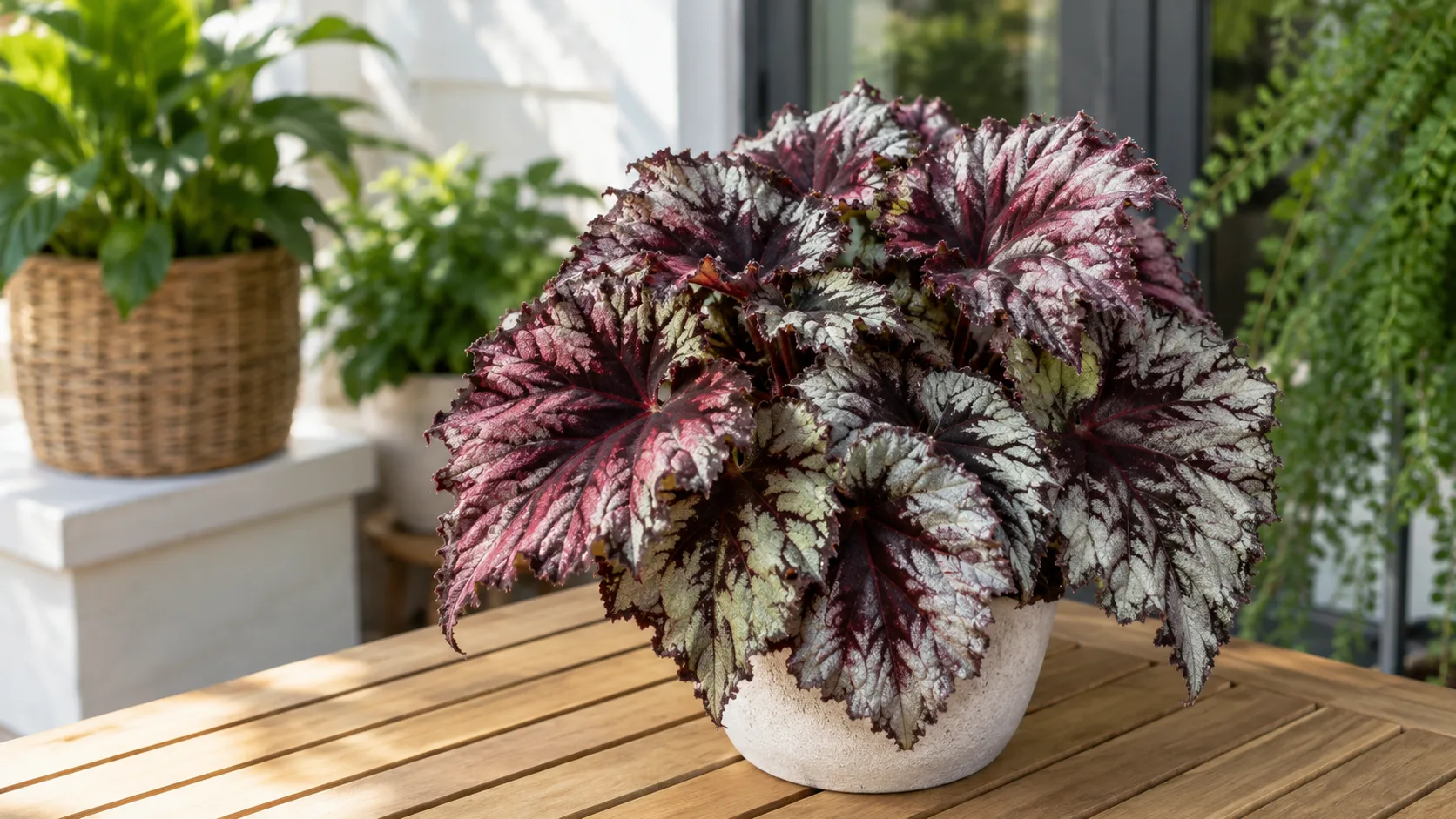
Begonia Rex Repotting: When, How & Mistakes
Begonia Rex Repotting: When, How & Mistakes
A Begonia Rex that suddenly wilts, drops colorful leaves, or stops pushing new growth is not always suffering from bad light or inconsistent watering. Often the real problem sits below the soil line: a creeping rhizome pressed against a pot wall, a substrate that no longer drains, or a container so deep that the lower half stays wet long after the top feels dry. Repotting is the reset that fixes those root-zone problems - but only if you treat rex begonias as the shallow, rhizomatous plants they are, not as generic foliage houseplants that simply need “a bigger pot.”
Begonia Rex belongs to the rex cultorum group, a collection of rhizomatous begonias bred for painted, metallic, or textured foliage rather than flowers. Missouri Botanical Garden describes these plants as growing from thick, fleshy stems that crawl horizontally along or just above the soil surface. That growth habit changes every repotting decision: pot depth, rhizome placement, soil texture, and how aggressively you disturb the root ball. The New York Botanical Garden Plant Information Service notes that rex begonias are shallow-rooted, prefer to be somewhat root-bound in shallow containers, and recover fastest when repotted in spring with a mix that balances moisture retention, drainage, and stability.
Why Begonia Rex Repotting Works Differently Than Most Houseplants
Most popular houseplants - pothos, monstera, peace lilies - grow vertically from a central root mass that pushes downward and outward. You can often upsize them into a deeper pot, bury the stem a little, and the plant adapts. Begonia Rex does not work that way. Its active roots and the storage rhizome stay near the soil surface, spreading horizontally rather than diving deep. NC State Extension describes rex types as rhizomatous plants with dense, colorful foliage typically reaching 12 to 18 inches tall.
That single biological fact drives four practical rules that separate successful rex repotting from the generic advice you will find on all-purpose houseplant pages. First, choose a shallow, wide container rather than a deep one. Second, move up only one pot size at a time because excess unused soil holds moisture the small root system cannot use. Third, keep the rhizome on or just above the soil surface rather than burying it like a tuber. Fourth, use a light, porous mix and do not pack it firmly around the roots - the American Begonia Society and NYBG both emphasize loose placement over compaction.
Repotting also refreshes soil that has broken down. Even when the plant is not dramatically root-bound, peat and bark decompose over 12 to 24 months, fine particles migrate downward, and drainage slows. A fresh pot and fresh substrate restore the air pockets the shallow roots depend on, and give you a chance to inspect the rhizome for hidden rot before it spreads.
How Often to Repot Begonia Rex
The practical answer: every 1 to 2 years, with annual refreshes for fast-growing specimens. The New York Botanical Garden advises repotting when the plant is too crowded, as often as every year, with spring as the best timing. The American Begonia Society notes that even plants kept in the same-sized pot should have their planting medium changed annually to keep them growing vigorously.
Begonia Rex actually prefers to be slightly root-bound, so wait for clear signals rather than repotting every spring by default. The goal is to refresh degraded soil, correct a failing root zone, or provide modest new room when the rhizome reaches the pot walls - not to give unlimited space. A plant you bought last week does not need repotting yet; NYBG warns against repotting a newly purchased rex begonia for its first few weeks at home.
If the mix is two seasons old but the plant looks healthy, a same-size refresh - same shallow pot, fresh substrate, light root trim - is often more useful than upsizing.
Seven Signs Your Rex Begonia Needs a New Pot
Roots, soil, and the rhizome itself will tell you when the calendar is wrong. Watch for these seven signals.
- Rhizome pressing against the pot wall or spilling over the rim. Missouri Botanical Garden notes that repotting is warranted when the rhizome has grown too long for its container. Surface-level growth is normal; cramped, circling rhizome with stalled new leaves is not.
- Roots visible at drainage holes or circling the root ball. A few roots peeking out are fine. A dense white mat wrapping the entire root ball means the plant has run out of usable soil volume.
- Water running straight through without wetting the root zone. This usually means the mix has broken down or pulled away from the pot walls, so water channels down the sides while the center stays dry.
- Soil drying out unusually fast. A pot that needed water every 7 to 10 days now demands it every 2 to 3 days. That often indicates more root and rhizome than soil.
- Stalled growth despite good light, humidity, and feeding. When a healthy-looking rex begonia refuses to push a new leaf for an entire growing season, exhausted or compacted soil and restricted roots are prime suspects.
- Sour, musty, or swampy-smelling substrate. Anaerobic breakdown in the pot means the root zone is losing oxygen even if the leaves still look acceptable.
- Chronic wilting with wet soil. If leaves collapse while the mix feels soggy, inspect the roots during repotting. Crown or rhizome rot often starts below the foliage line.
Any one of these signs justifies a repot. Two or more, and the plant is overdue. Do not wait for every leaf to yellow before you act - rex begonias drop foliage quickly once the rhizome is compromised.
Best Time of Year to Repot Begonia Rex
Timing matters because rhizomatous begonias root most actively when warmth and daylight are rising, not when the plant is coasting through short winter days. Repot when the plant can grow new roots into fresh mix, and recovery takes weeks. Repot when it cannot, and the same disturbance can cost you a season of foliage.
Why spring and early summer are safest
Spring and early summer are the active growing window for Begonia Rex indoors. The New York Botanical Garden and the American Begonia Society both recommend spring as the best repotting period because the plant is already pushing new leaves, rhizome tips are active, and the root system has energy reserves to recover from transplant shock. The practical sweet spot is when nighttime temperatures in your home stay consistently above 60°F (about 16°C) and you see fresh growth at the rhizome tips.
When to repot outside the calendar
Two situations override the calendar. The first is active root or rhizome rot - soft, mushy, foul-smelling tissue, wilting leaves, and saturated soil that will not dry. Waiting for spring will cost the plant. Repot immediately into fresh, lightly moist mix, trim all compromised tissue, and accept slower recovery. The second is a catastrophically failing root zone - a pot that will not drain, soil that has turned to mud, or a container that cracked and exposed roots to drying air. In both cases, repot now, keep the rhizome at the correct depth, and give the plant extra humidity and stable warmth afterward.
If you must repot in fall or winter, minimize disturbance: same-size refresh rather than a larger pot, no division unless necessary, no fertilizer for at least a month, and stricter attention to humidity. Do not repot a brand-new store-bought plant in its first two to three weeks at home regardless of season - let it acclimate first.
Choosing the Right Pot - Size, Shape, and Material
The new pot does not need to be decorative. It needs to be one size larger in diameter, shallower than you think, equipped with a drainage hole, and made of a material that matches your watering habits.
The one-size-up rule for shallow rhizomes
The American Begonia Society advises moving up one pot size at a time and warns against repotting into a much larger container. For small rex begonias, that means a 1-inch jump - from a 3-inch to a 4-inch pot, for example. For established plants, a 2-inch jump is usually the maximum safe increase, such as from a 4-inch to a 6-inch shallow bowl. NYBG likewise recommends repotting into a container only slightly larger than the current one.
Oversized pots are the single most common reason rex begonias rot after repotting. A large volume of fresh, moist soil surrounds a small rhizome and limited root system. The mix stays wet in the center and lower zones while the surface dries, creating exactly the anaerobic conditions rhizomes cannot tolerate. One size up keeps the soil volume proportional to the roots.
Wide and shallow beats deep and tall
Rex begonias are wide-and-shallow plants. NYBG recommends a shallow terracotta pot with a drain hole and notes that rex begonias are shallow-rooted and prefer shallow containers so rhizomes can spread without a deep column of unused wet soil below the roots.
Azalea pots, bulb pans, and low bowls work well; standard tall nursery pots do not. Terracotta dries evenly and suits overwaterers; plastic holds moisture longer and suits dry homes. Whatever material you choose, a drainage hole is non-negotiable.
Best Soil Mix for Begonia Rex Repotting
The best repotting mix for Begonia Rex is light, porous, moisture-retentive, and fast-draining - a balance that sounds contradictory until you remember that shallow roots need both water and oxygen at the same time. Heavy garden soil, dense peat-only blends, and standard indoor potting mix used straight from the bag are usually too compacted for rex culture.
American Begonia Society blend that works indoors
The New York Botanical Garden cites a classic mix recommended by the American Begonia Society: 1 part coco coir-based potting mix, 1 part small orchid bark (1/8 to 1/4 inch), and 1 part #2 or larger perlite. (NYBG, American Begonia Society) This blend gives moisture retention from the coir base, air channels from the bark, and drainage from the perlite. NYBG also instructs growers to leave soil lightly spread around the roots and not pack it in firmly, because compaction collapses the air pockets rex roots need.
A workable substitute is 2 parts indoor potting mix, 1 part coarse perlite, and 1 part fine orchid bark. The mix should feel springy, not muddy, and drain within a minute or two of watering. Begonia Rex prefers slightly acidic soil (pH 5.5 to 6.5). Do not reuse old soil or add gravel to the pot bottom - both create drainage problems rather than solving them.
Preparing Your Rex Begonia 48 Hours Before the Move
A smooth repot starts before the plant leaves its pot. Water lightly the day before if the mix is bone dry, because dry rhizomes and roots snap more easily than slightly moist ones. Do not soak the plant immediately before repotting unless you are rescuing hydrophobic, salt-crusted soil - soggy root balls fall apart and make rhizome handling harder.
Choose a clean, stable workspace with good light. Rex begonia leaves are brittle and stain easily; work over newspaper, a tray, or a shallow bin so you can see fallen leaves, root pieces, and old mix clearly. Wear gloves if you have sensitive skin - NC State Extension notes that begonia sap can cause skin irritation for some people.
Gather tools first: shallow pot, pre-moistened mix, clean scissors, chopstick, and room-temperature water. Have the new pot partially filled before you unpot - rex rhizomes dry quickly when left bare-root.
Step-by-Step: How to Repot Begonia Rex
Follow these steps in order. The goal is minimal rhizome disturbance, correct depth, and a stable plant that does not wobble in its new home.
Step 1: Slip the plant out of its current pot. Tip the container on its side and gently coax the root ball free. If it resists, squeeze a flexible plastic pot or run a chopstick around the inside edge. Never yank the plant by its leaves or stems - rex foliage tears easily and the rhizome can separate from the root mass.
Step 2: Inspect the rhizome and roots. Healthy roots are white to tan and firm. The rhizome should feel solid, not squishy. Trim any black, mushy, or foul-smelling roots and soft rhizome sections with clean scissors. If you find extensive rot, treat this as a rescue repot: cut back to healthy tissue even if that means a smaller plant.
Step 3: Loosen old soil gently. Shake or brush away spent mix from the sides and bottom of the root ball. Do not bare-root the plant completely unless rot forces you to. Keep some original soil around the fine roots to reduce shock. Tease out only circling roots at the bottom and edges.
Step 4: Position the rhizome at the correct depth. Place the plant in the new pot so the rhizome sits on the soil surface or just slightly tucked into the top layer, with most of the knobby stem visible above the mix. NYBG warns that burying the rhizome causes rot. The root side of the rhizome contacts moist mix below; the upper surface stays exposed to air.
Step 5: Add fresh mix loosely around the roots. Spoon mix around the sides and beneath the root ball. Use a chopstick to settle soil into gaps without compacting. The plant should sit at the same depth it occupied before - do not bury stems or leaf bases deeper than they were.
Step 6: Leave the rhizome partially exposed. After settling, you should still see rhizome tissue above the soil line. A thin layer of mix over the downward-facing roots is correct; a mound covering the entire rhizome is not.
Step 7: Water lightly. Give a small amount of room-temperature water around the root zone, not a heavy soak. The goal is to moisten new mix around the roots without saturating the entire pot. Let excess water drain fully and empty the saucer.
Step 8: Place in bright, indirect light. Keep the repotted plant out of direct sun for at least one to two weeks. Sun plus transplant stress scorches rex leaves quickly. Maintain 50 to 60 percent humidity if possible - a pebble tray, grouped plants, or a humidifier helps reduce water loss while roots re-establish.
Step 9: Hold off on fertilizer. Do not feed for at least four weeks, and preferably six. Fresh mix contains starter nutrients, and the root system needs time to heal. Fertilizing too early burns tender new root tips and stresses an already disturbed rhizome.
Dividing Rex Begonias During Repotting
A crowded rex begonia is often a propagation opportunity, not just a repotting job. When the rhizome has formed multiple sections with their own roots and leaves, you can divide it during the same spring repot and pot each section separately. Missouri Botanical Garden describes dividing the rhizome during repotting and rooting the cut sections to grow additional plants.
Each division needs at least one growing point and rooted rhizome. Plant at the same surface-level depth as the parent. Divisions need higher humidity and lighter watering until new growth appears. Skip division on stressed, rotting, or newly purchased plants, and do not force apart an immature rhizome.
Aftercare for the First Four to Six Weeks
The repot is not finished when the plant is in its new pot. Aftercare determines whether your Begonia Rex pushes new leaves within two weeks or sulks until the next growing season. Treat the first month as a recovery period, not a return to normal care on day three.
Keep the plant in bright, indirect light at 65 to 75°F (18 to 24°C) with 50 to 60 percent humidity. Expect mild transplant shock - slight wilting or one or two yellowing leaves - for one to two weeks. New leaves at rhizome tips are the clearest recovery signal. Do not fertilize for four weeks, and do not repot again if the plant looks sad.
Begonia Rex watering guide after the transplant
Watering after repotting is a light-touch rhythm, not your normal schedule applied blindly. Check the top inch of mix with your finger. Water when that layer feels dry, using room-temperature water applied gently around the root zone without soaking the exposed rhizome. The first few waterings should be moderate - enough to moisten new mix around the roots, not enough to leave the pot heavy and sodden.
Fresh mix may dry at a different rate than the old soil, so let the top inch of mix and pot weight guide you rather than habit. After four to six weeks of active new growth, return to your normal watering and resume fertilizer at half strength.
Common Repotting Mistakes to Avoid
Most rex begonia repotting failures trace back to a short list of repeatable errors. Avoid these and your odds of a smooth recovery rise sharply.
- Burying the rhizome. This is the number-one rex-specific mistake. A buried rhizome rots. Keep it on or above the soil surface.
- Choosing a pot that is too large or too deep. Excess soil stays wet. Use one size up and a shallow, wide shape.
- Using dense, unamended potting soil or garden soil. Heavy mix suffocates shallow roots. Use the ABS blend or an equivalent airy mix.
- Packing the soil firmly. Compaction removes air pockets. Settle mix with tapping and a chopstick, not thumb pressure.
- Repotting a brand-new plant immediately. Let store-bought rex begonias settle in for two to three weeks before repotting.
- Repotting in winter without cause. Off-season transplants stall unless rot or pot failure forces your hand.
- Fertilizing too soon. Wait at least four weeks. Fresh mix plus fertilizer on disturbed roots causes burn.
- Waterlogging the fresh pot. A heavy first soak in a full pot of new mix invites rot. Water lightly.
- Placing the plant in direct sun after repotting. Begonia Rex light guide only until new growth appears.
- Bare-rooting a healthy plant. Stripping all soil damages fine root hairs and extends shock. Keep some original mix around the roots.
- Ignoring drainage holes. A decorative pot without drainage is a standing-water container. Use a functional inner pot or drill a hole.
Also remember pet safety: the ASPCA lists begonias as toxic to cats and dogs, with the highest concentration of soluble calcium oxalates in the underground portions - exactly the rhizome and roots you handle during repotting. Keep cuttings, soil, and trimmed tissue away from pets, and wash hands after working with the plant.
Troubleshooting Slow Recovery After Repotting
If your Begonia Rex still looks unhappy three weeks after repotting, work through this diagnostic list before you change anything else.
Wilting with wet soil points to rot, overwatering on Begonia Rex, or an oversized pot - inspect the rhizome and trim soft tissue. Wilting with dry soil may mean underwatering on Begonia Rex or hydrophobic mix that channels water down the sides. Yellowing without new growth often signals a buried rhizome, low humidity, or cold drafts - check depth first. No new growth after six weeks in spring usually means insufficient light, a pot that is too large, or a division still establishing. Treat any pests without repotting again.
If you followed shallow-pot and rhizome-surface rules, slow recovery is often just patience. Rex begonias rebound more slowly than pothos - give stable conditions another two to three weeks before changing anything else.
Conclusion
Begonia Rex repotting is not a generic “bigger pot, fresh soil” job. It is a rhizome-aware transplant: repot every 1 to 2 years when the plant is crowded or the mix has failed, in spring or early summer, into a shallow, wide pot only one size larger with a drainage hole, using a porous mix of coco coir potting soil, orchid bark, and perlite. Keep the rhizome on or above the soil surface, do not pack the mix, water lightly, hold off on fertilizer for four to six weeks, and maintain bright indirect light with steady humidity while roots re-establish.
Done right, a rex repot is a quiet annual or biennial refresh that keeps painted foliage vivid and the rhizome healthy for years. Done wrong - too deep, too wet, too big a pot - it is the moment a beautiful Begonia Rex first meets the rot conditions that cost leaves you cannot replace until new ones emerge. The plant will tell you when it needs the move. Your job is to answer with a shallow pot, a light hand, and the patience to let it recover on rhizomatous time, not pothos time.
When to use this page vs other Begonia Rex guides
- Begonia Rex overview - Start here for whole-plant context before deep-diving this topic.
- Begonia Rex problems hub - Jump to symptom-specific fix guides when this care topic does not resolve the issue.
- Root Rot on Begonia Rex - Escalate here when repotting adjustments are not enough.
Related Begonia Rex guides
- Begonia Rex overview
- Begonia Rex watering
- Begonia Rex light
- Begonia Rex soil
- Begonia Rex propagation
- Begonia Rex fertilizer
- Root Rot on Begonia Rex
- Begonia Rex problems
Related tool
Try the Pot Size Calculator with begonia-rex pre-selected to estimate needs for your setup.