Overwatering on Begonia Rex: Causes, Checks & Fixes
Quick answer
Overwatering on Begonia Rex means the rhizome and root zone stay wet too long-limp painted leaves on heavy damp soil are the classic trap. First step: stop watering, empty the saucer, and press the top 2–3 cm of mix. If the pot is still heavy and the rhizome feels soft at the soil line, treat as crown-rot urgency.
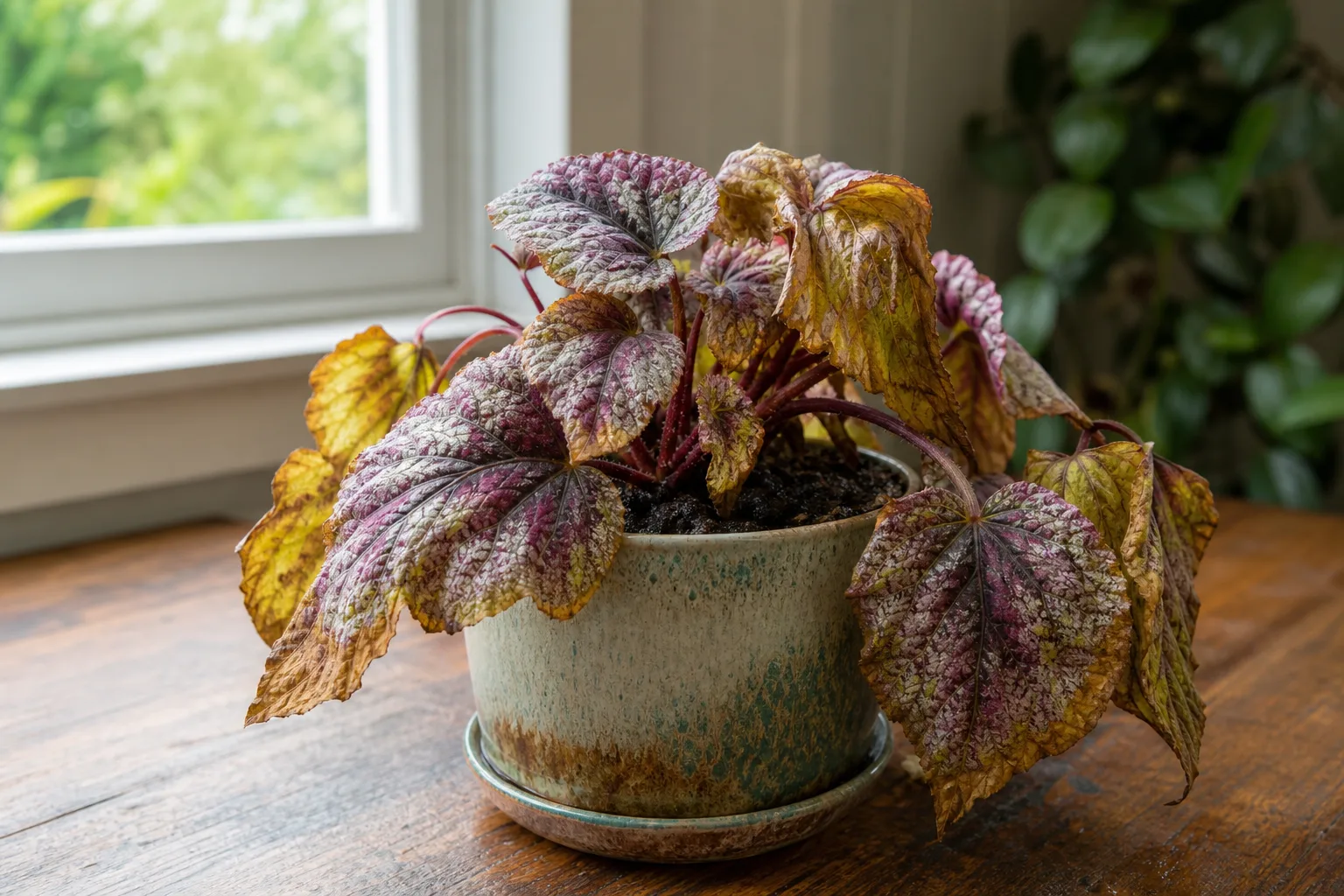
Overwatering on Begonia Rex: Causes, Checks & Fixes
This guide covers overwatering on Begonia Rex. See also the general Overwatering guide, watering, and light pages for this plant.
Overwatering on Begonia Rex: Causes, Checks & Fixes
Quick answer
Overwatering on Begonia Rex (Begonia rex-cultorum) is not a single bad watering-it is chronic saturation of a shallow rhizomatous stem and fine roots that need oxygen between drinks. Rex begonias spread from a thickened horizontal rhizome at or just above the soil line, and the crown where new leaves emerge is exposed to whatever pools at the surface. When mix stays wet for days, roots stop functioning and the plant can show limp painted leaves on heavy damp soil-the wet-soil paradox that tricks growers into watering again.
First step: stop watering immediately. Lift the pot, empty any saucer or cachepot, and press your finger into the top 2–3 cm of mix. If soil clings wet and the pot feels heavy while leaves hang limp, you are in overwatering territory-not drought. For the full watering rhythm that prevents this pattern, see the Begonia Rex watering guide. This page is the focused wet-soil diagnostic deep-dive.
What overwatering looks like on Begonia Rex
Overwatering on rex types follows a recognizable progression from subtle root stress to crown collapse. Learn these patterns together.
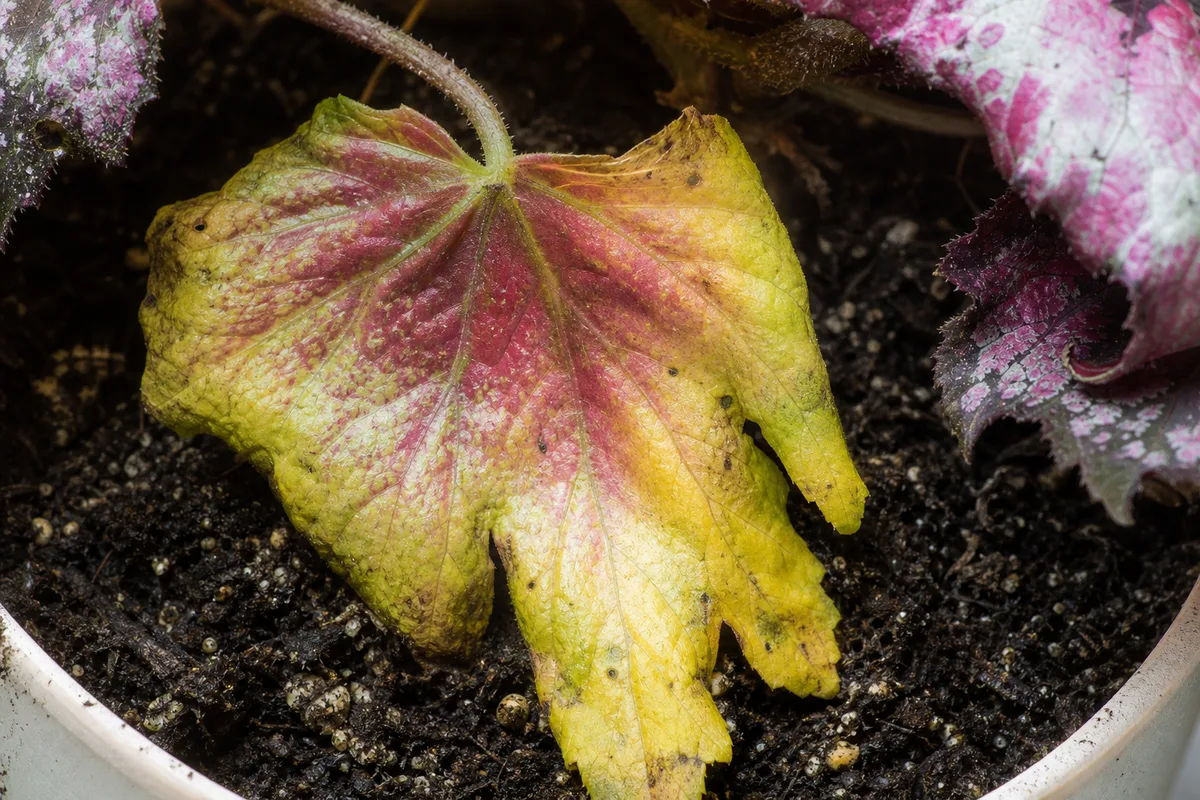
Overwatering symptoms on Begonia Rex - compare with healthy tissue on the same plant.
Early above-soil signs
- Limp leaves and soft petioles while the mix is clearly damp-not the crisp curl of drought
- Yellow lower leaves dropping while soil stays wet, especially on the oldest foliage at the rhizome base
- Slowed or stalled new growth even in spring, with smaller or pale emerging leaves
- Edema or water-soaked patches on textured rex foliage when transpiration lags behind root uptake
- Fungus gnats hovering at the soil surface in a pot that never dries down
Below-soil and crown signals
- Sour or musty smell when you lift the pot or brush soil from the rhizome
- Soft, mushy petioles where they meet the rhizome at the soil line
- Blackened or hollow rhizome tissue when you expose the crown-advanced crown rot
- Fine roots that slip off when touched instead of staying firm and pale
Rex begonias fail faster than forgiving vines like pothos because the rhizome stores water but also rots quickly when oxygen is gone. A single week of saturated mix in a cool dim room can move a healthy plant to crown stress while upper leaves still look acceptable.
Why Begonia Rex gets overwatered
The same watering habits that work on pothos or peace lilies often destroy rex begonias. The biology explains why.
Rhizome and crown vulnerability
Rex begonias spread from a rhizomatous stem that stores water and energy near the soil surface. NC State Extension notes that overwatering can cause root rot on rex types and that fungal problems increase when air circulation is poor. The rhizome is not buried deep like a bulb-the crown is exposed to splash, standing water, and chronically damp peat at the surface. When water pools on the crown or the mix stays saturated, tissue breaks down. Crown rot collapses the plant from the center outward, often before you notice much yellowing.
Fine roots need oxygen as much as moisture. Saturated mix collapses air spaces; roots stop absorbing even though water is present-hence wilt on wet soil. University of Minnesota Extension warns not to overwater begonias since they are highly susceptible to root rot.
Calendar watering and winter mismatch
Many growers water every seven days because that worked in summer. In fall and winter, rex cultivars often enter semi-dormant slowdown-growth pauses, older leaves drop, and the same volume of mix holds moisture far longer because the plant is not pulling it. Keeping the summer schedule in February is one of the most common overwatering paths. During slowdown, the target shifts from evenly moist to barely moist until spring leaf buds return.
Oversized pots, heavy mix, and cachepot traps
An oversized glazed pot with dense peat mix dries slowly at the center while the surface looks pale. Bottom watering without emptying the saucer leaves the pot sitting in runoff-the mix wicks up and never gets a real dry-down. Anoka County Master Gardeners caution that rex begonias should never sit in standing water. Decorative cachepots hide standing water until the rhizome has been anaerobic for days. Shallow rex pots exaggerate the surface dry, core wet mismatch: the top inch looks ready while the rhizome zone stays saturated.
Low light and cool rooms
A rex on a dim shelf or cold windowsill transpires slowly. Water applied on a bright-room schedule leaves mix wet for weeks. Low light plus wet soil is a common path to rot without any single dramatic overwatering event.
Lookalike symptoms to rule out
| Pattern | Pot weight | Top 2–3 cm soil | Rhizome at crown | What it usually means |
|---|---|---|---|---|
| Overwatering | Heavy | Wet, cool, clings | Soft or blackening | Saturated roots/rhizome |
| Underwatering | Light | Dry, crumbly | Firm tan or green | Drought-see underwatering |
| Low humidity wilt | Normal | On schedule | Firm | Midday collapse, crispy margins-low humidity |
| Wet-soil wilt (advanced) | Heavy | Saturated | Mushy | Crown/root rot-root rot |
| Natural senescence | Normal | Dry on schedule | Firm | One or two old lower leaves yellow |
Misting does not fix waterlogged rhizomes. NC State Extension recommends avoiding misting rex begonias; wet foliage raises mildew risk without solving root-zone oxygen loss. Use a humidifier or pebble tray for ambient humidity while you correct soil moisture.
For the acute collapse version of wet-soil failure, see wilting on Begonia Rex.
How to confirm overwatering (6-step checklist)
Work through these checks in order before you repot or trim. Each step narrows the diagnosis.
-
Finger test at 2–3 cm depth - Press near the pot edge, not against the rhizome. Cool, clinging soil means hold off on water. Dry crumbly surface combined with light pot weight points away from overwatering.
-
Pot weight comparison - Lift the pot now and recall how heavy it felt right after the last thorough watering. Heavy plus limp leaves on a plant you have not watered recently strongly suggests chronic saturation.
-
Skewer or chopstick probe - Slide a dry wooden skewer down the inside edge, wait thirty seconds, pull out. Damp streaks mid-pot mean moisture remains below a dry-looking surface.
-
Drainage and standing water - Confirm holes are open. Check whether the inner pot sits in water inside a cachepot or saucer. Pour a small amount of water and watch it exit within seconds.
-
Rhizome firmness at the crown - Gently brush soil from where petioles meet the rhizome. Firm tan or green tissue supports a dry-down pause. Soft, black, or hollow tissue means escalate to inspection and possible repot per the root rot guide.
-
Smell and pest clues - Sour or rotten odor from the pot, plus fungus gnats on constantly damp surface, reinforce overwatering even before you unpot.
Confirmed overwatering with firm rhizome and mostly intact roots often resolves with dry-down alone. Confirmed mushy rhizome or sour smell returning needs the recovery branch below.
The first fix to try
Make one clear first move: stop watering and empty all standing water. Move the plant to bright indirect light with good airflow-not a dark corner where evaporation stalls. Do not fertilize. Do not mist leaves.
If the rhizome feels firm and smell is neutral: Let the top 2–3 cm of mix dry fully before the next drink. Empty saucers after every future watering. Judge improvement by whether new leaves emerge firm over the next two to four weeks-not by old yellow blades re-greening.
If the rhizome feels soft, smells sour, or leaves keep collapsing on wet soil: Unpot the same day. Inspect roots and rhizome, trim mushy tissue with clean scissors, air-dry cut surfaces for several hours, and repot only firm sections into fresh airy mix in a clean pot with drainage. Follow the numbered rescue workflow in the root rot guide.
Do not repot into a larger pot hoping it will dry faster-that adds wet soil volume around a stressed rhizome.
Step-by-step recovery when the rhizome may be damaged
When inspection shows rot beyond a simple dry-down:
- Unpot and rinse roots and rhizome under lukewarm water so color and texture are visible.
- Trim all mushy, black, or hollow tissue until only firm rhizome and roots remain. Sterilize blades between cuts if rot was advanced.
- Air-dry cut surfaces for two to four hours on paper towel in shade-not direct sun on rex leaves.
- Repot into fresh airy mix with perlite or bark in a shallow pot sized to the remaining rhizome-not the former foliage spread.
- Wait about one week before the first light watering so cut surfaces callus.
- If only small firm rhizome sections remain, consider leaf cuttings from healthy blades as salvage-the mother plant may not recover if the crown is lost.
Keep recovery plants in bright indirect light with humidity above 50% but dry crown. Water sparingly until new growth confirms roots are working again.
Recovery timeline and what to watch
Recovery is judged by firm new leaves from the rhizome, not by instant recovery of collapsed old foliage.
- Mild overwatering, firm rhizome - Stabilization within one to two weeks after dry-down; first new painted leaves in two to four weeks
- Moderate rot with rhizome trim - Four to six weeks before consistent new growth; expect some leaf loss
- Salvage via leaf cuttings - New plantlets in four to eight weeks when conditions are stable
- Advanced crown mush - Often fatal on the mother plant; prioritize propagation from firm tissue
Signs of improvement: pot dries down between waterings, rhizome stays firm when you check monthly, new leaves unfurl with rich color, no sour smell returning.
Signs of worsening: spreading black tissue at the crown, wilt on wet soil after repot, fungus gnats increasing, or no new growth after six weeks in good light.
Mistakes to avoid
- Do not water because leaves look limp when soil is already wet-that deepens root and rhizome failure.
- Do not fertilize a waterlogged plant; stressed roots cannot use nutrients safely.
- Do not repot into garden soil, a larger pot, or a container without drainage hoping faster drying.
- Do not leave the plant in the same sour mix without trimming damaged rhizome tissue when mush is present.
- Do not mist as a recovery step-wet rex foliage invites powdery mildew on stressed plants.
- Do not keep the winter watering schedule when growth has slowed-reduce to barely moist.
How to prevent overwatering next time
Prevention on Begonia Rex is rhythm and anatomy, not luck:
- Water when the top 2–3 cm of mix feels dry, then water thoroughly and drain completely-not on a fixed calendar. See the watering guide for finger, skewer, and pot-weight checks.
- Empty saucers within 30 minutes of every watering-discard excess runoff so the plant does not sit in a wet dish. Lift cachepots to verify no standing water.
- Use airy, well-drained mix in a shallow pot matched to rhizome spread-not an oversized deep container.
- Match watering to light and season-dim winter corners need longer dry-down; resume active-season rhythm only when spring growth returns.
- Keep water off leaves and crown-bottom water or top water at the soil perimeter only.
- Watch for fungus gnats as an early wet-soil clue-see fungus gnats on Begonia Rex if adults appear.
When to worry
Treat as urgent when:
- The rhizome turns black or hollow at the soil line
- Petioles go mushy at the base while soil stays wet
- Sour smell returns within days after repot
- Multiple lower leaves yellow and drop in one week on saturated mix
- Grey mold or water-soaked patches spread on leaves in stagnant humid air plus wet soil
Mild yellowing on one old leaf with firm rhizome and soil drying normally is not an emergency-adjust schedule and monitor. When in doubt, firmness at the crown beats leaf appearance.
Related Begonia Rex guides
- Watering - full rhythm, seasonal shifts, and moisture checks
- Root rot - trim, repot, and salvage when rot is confirmed
- Wilting - acute wet-soil vs dry-pot first fork
- Yellow leaves - lower-leaf yellowing patterns
- Underwatering - light pot and firm rhizome recovery
- Fungus gnats - wet-soil co-symptom
- Low humidity - firm-rhizome wilt lookalike