Watering Begonia Rex: Schedule, Soil Checks, and Mistakes
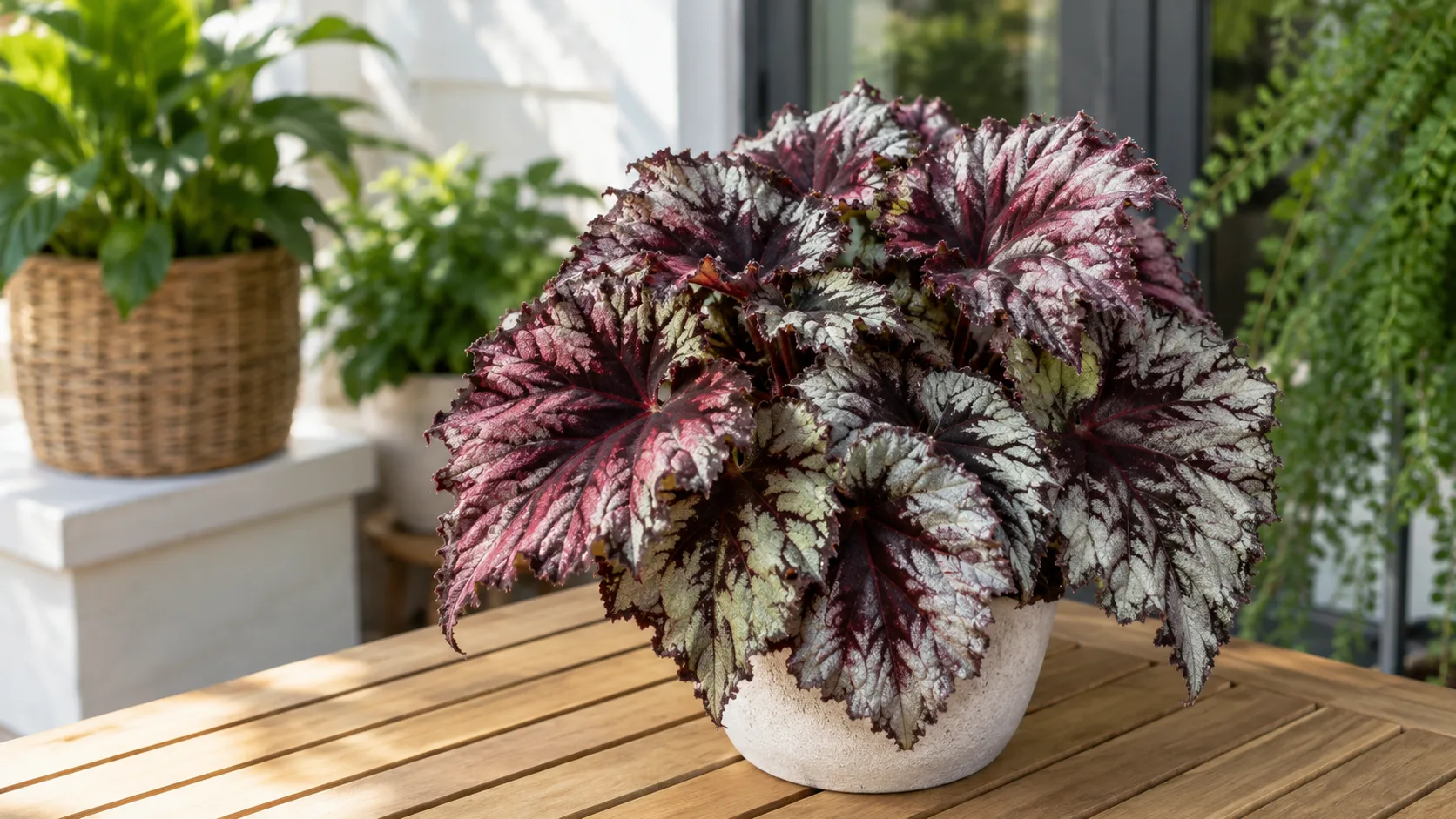
Watering Begonia Rex: Schedule, Soil Checks, and Mistakes
Watering Begonia Rex: Schedule, Soil Checks, and Mistakes
Why Begonia Rex Watering Is Not a Calendar Problem
Begonia Rex looks like it should be straightforward: add water on a schedule, keep the leaves glossy, move on. In practice, rex begonias punish that approach faster than almost any other common foliage plant. The issue is not that the plant is mysteriously difficult. The issue is that most people water it like a pothos or a peace lily - a splash every few days, water on the leaves, a decorative pot with no drainage, and a calendar reminder that fires whether the soil is dry or not. Rex begonias need a different logic because they grow from a rhizome sitting at or just above the soil line, with a fragile crown where new leaves emerge and fine roots that rot quickly in stale, airless mix.
The useful mental model is evenly moist root zone, brief dry-down, never soggy crown. That is not the same as “keep it wet” and it is not the same as “let it dry like a succulent.” University of Connecticut’s rex begonia factsheet puts it plainly: rex begonias like evenly moist conditions, but it is better to underwater slightly than to overwater, and you should wait until the top inch of potting mix feels dry before watering again. Anoka County Master Gardeners add the same caution - rex begonias have fragile root systems that succumb quickly to rot if left soggy, and they should never sit in standing water. Those two sentences contain the whole philosophy. Your job is not to memorize “every seven days.” Your job is to learn how fast your specific pot dries in your specific room, then water only when the checks say the plant is ready.
That learning curve is shorter than it sounds. After two or three weeks of checking the same plant on the same days - lifting the pot, touching the soil, watching how new leaves behave - most growers internalize the rhythm. A plant in Begonia Rex light guide, in a well-draining mix with perlite, in a pot with drainage holes, may need water every five to eight days during active growth. The same cultivar in a dim corner, in a heavy peat mix, inside a cachepot that traps runoff, may go two weeks between drinks in winter and still be too wet at the center. The calendar is a reminder to check, not a command to pour.
The Rhizome and Crown Change Everything
Understanding Begonia rex-cultorum anatomy saves you from the most expensive watering mistake. Rex begonias are rhizomatous - they spread from a thickened horizontal stem, the rhizome, that stores water and energy and sends up leaves along its length. The rhizome is not buried deep like a bulb. In most pots, part of it sits near the surface, and the crown - where petioles meet the rhizome - is exposed to whatever happens at the soil line. When water pools on the crown, splashes sit in the leaf axils, or the mix stays saturated for days, the rhizome tissue breaks down. Crown rot is the phrase you will see in every serious rex begonia guide, and for good reason: once the rhizome turns mushy and black at the center, the plant often collapses before you have time to propagate a salvage piece.
Fine roots on rex begonias are equally unforgiving. They need oxygen as much as moisture. A mix that holds water without draining - or a pot sitting in a full saucer - collapses air spaces, roots stop functioning, and the plant can wilt even though the soil is wet. That paradox - limp leaves plus wet mix - is one of the most confusing signals in houseplant care, and rex begonias display it early. The watering goal is therefore a full drink followed by a real dry-down, not permanently damp soil. You are managing a shallow, rhizome-heavy root system in a pot that should dry noticeably between waterings, while never letting the entire root ball turn into a hard, water-repellent brick.
How Often to Water Begonia Rex Indoors
There is no honest universal answer to “how often” that does not start with “it depends.” What you can use is a starting range, then adjust with checks. During active growth - typically spring and summer when light is stronger and new leaves are unfolding - many indoor rex begonias need water roughly every seven to ten days. In cooler, dimmer months, that often stretches to ten to fourteen days or longer, and some plants in partial dormancy need even less. Those numbers are guides for how often to look, not how often to water.
The real frequency is set by four variables working together: light, temperature, pot and mix, and humidity. A rex begonia under bright indirect light transpires faster and pulls water from the mix more aggressively than the same plant three meters from a window. Warm rooms above 24°C (75°F) accelerate drying; a plant on a cold windowsill in January may use almost no water for weeks. A shallow terra cotta pot dries faster than a deep glazed ceramic one. A mix with twenty percent perlite and some bark dries faster and safer than straight peat. Humidity above fifty percent slows leaf water loss but does not remove the need to check the soil - high humidity is not a substitute for root-zone moisture.
University of Minnesota Extension notes that begonias should be watered regularly at the base when possible to avoid fungal leaf diseases, and warns against overwatering on Begonia Rex because begonias are highly susceptible to root rot. That “regularly” does not mean “constantly.” It means consistently checking and watering when the plant is ready, with good drainage every time. If you are new to rex begonias, check twice a week and water only when the top layer is dry and the pot feels lighter. Within a month you will know whether your plant behaves like a five-day plant or a twelve-day plant.
Growing Season vs Winter Slowdown
Seasonal change is where calendar watering fails most visibly. In growing season, rex begonias push new leaves, extend rhizomes, and use water predictably. The top two to three centimeters of mix dry in a steady rhythm. You water thoroughly, the plant drinks, the pot drains, and new growth looks firm and richly colored. When days shorten and indoor light drops, growth slows or stops. The same volume of mix holds moisture longer because the plant is not pulling it. Many rex cultivars enter a semi-dormant phase in fall and winter - older leaves yellow and drop, new leaves pause, and the rhizome rests.
During slowdown, the worst thing you can do is keep the summer schedule. Watering every week because “that is what I did in July” is how healthy rhizomes rot in February. Reduce frequency and shift your target from “evenly moist” to barely moist if the plant is not producing new growth. The surface can stay dry longer. The pot should still not become a dust bowl, but the center should not feel wet when you probe with a skewer. Resume your active-season rhythm only when you see fresh leaf buds and the plant is clearly waking up - usually as light improves in late winter or early spring. Fertilizer and watering should rise together; do not feed a plant you are keeping on winter-dry soil.
The Best Soil Moisture Checks Before You Water
The most reliable watering check for Begonia Rex is soil moisture at the right depth, not leaf appearance alone. Leaves lie. They wilt when overwatered and when underwatering on Begonia Rex. They curl in low humidity and in drought. Soil at the root zone tells a clearer story. The standard trigger used by extension sources and experienced growers is: water when the top 2–3 cm (about one inch) of potting mix feels dry to the touch. Not powder-dry throughout the entire pot - just the upper layer. Below that, the mix should still hold some moisture, approaching dry but not desiccated.
If the top inch is dry and the pot feels noticeably lighter than it did right after the last watering, you are usually in the green zone. If the top looks dry but the pot still feels heavy and a skewer inserted near the edge comes out dark and cool, wait. Surface peat can look pale while the center stays wet. That mismatch is common in plastic pots with dense mix, and it is one reason rex begonias rot in the hands of careful owners who “only water when the top looks dry” without checking weight or depth.
Finger Test, Skewer Test, and Pot Weight
The finger test is the fastest daily tool. Press gently into the top 2–3 cm. If it feels cool and clings to your skin, hold off. If it feels dry and crumbly, combine that reading with pot weight before you water. Avoid jamming your finger against the rhizome; a shallow check is enough for routine decisions.
The skewer or chopstick test helps when you are unsure about the center of the pot. Slide a dry wooden skewer down the inside edge of the container, wait thirty seconds, and pull it out. Damp streaks or dark color mean moisture remains. A clean, dry skewer supports watering. This is especially useful after Begonia Rex repotting guide into a larger container, when the outer mix can dry while the core stays wet.
The pot weight test is the skill that separates good rex growers from anxious ones. Lift the pot right after a thorough watering and notice the heft. Lift it every two or three days as it dries. A begonia ready for water feels distinctly lighter - not empty, but clearly less saturated. Weight catches overwatering early: if the surface looks dry but the pot still feels heavy, the plant is not ready no matter what the calendar says. After a few cycles with the same plant, you may barely need the finger test; your hands will know.
Bottom Watering vs Top Watering for Begonia Rex
Both methods work for Begonia Rex if you control where the water goes and how completely the pot drains afterward. Bottom watering means setting the nursery pot in a basin of room-temperature water and letting the mix wick moisture upward until the surface glistens. Top watering means applying water slowly at the soil line with a narrow spout. The method matters less than keeping the crown and leaves dry and never leaving the plant in standing water once it has had enough.
Bottom watering is popular for rex begonias because it reduces splash on textured leaves, keeps the rhizome from being hit by a stream of water, and encourages even uptake through the root zone. It is a strong default if you tend to pour too quickly or if your plant sits where top watering would wet the foliage every time. The procedure is simple: place the pot in shallow water for ten to twenty minutes, remove it when the surface feels moist, let it drain freely for fifteen to thirty minutes, then empty any saucer or cachepot. Do not leave the pot soaking overnight.
Top watering is equally valid when done with intention. Use a watering can with a long, narrow spout, divide the soil into sections, and water until excess runs from the drainage holes. Top watering is useful when you need to flush accumulated salts from fertilizer or hard tap water, because bottom watering alone can leave minerals concentrated at the surface over time. The New York Botanical Garden recommends watering thoroughly until water runs from drainage holes, which helps flush salts and ensures the full root zone receives moisture. Whichever method you choose, the non-negotiable finish is the same: drain completely, dry crown, empty the saucer.
When Bottom Watering Is the Safer Default
Choose bottom watering as your default if your rex begonia has highly textured leaves that trap droplets, if you use a cachepot and cannot see drainage easily, or if you have already seen powdery mildew or leaf spotting after wet foliage. University of Connecticut specifically warns that wet leaves increase susceptibility to powdery mildew on rex begonias. Bottom watering does not fix low airflow or chronic overwatering, but it removes one variable. If you bottom water every cycle, still top water occasionally - perhaps once every four to six weeks - to flush the mix, then return to bottom watering for routine care.
How to Water Without Wetting Leaves or the Crown
The practical technique is boring on purpose, and boring is good. Move leaves aside gently with one hand or tilt the pot slightly. Apply water only to the soil surface around the rhizome, not onto the rhizome itself. Continue until water exits the drainage holes, then stop. If a drop lands on a leaf, blot it with a soft cloth and keep the plant out of harsh light until the leaf is dry. Rex begonia leaves are not delicate glass, but repeated wetting plus stagnant air is how leaf spot and botrytis get a foothold.
Avoid misting as a watering substitute. Misting wets foliage briefly, raises humidity for minutes at best, and encourages the exact surface moisture rex begonias dislike. If your home is dry, use a humidifier, a pebble tray with the pot elevated above the water line, or group plants together. Anoka County Master Gardeners recommend humidifiers or pebble trays for rex begonias indoors while keeping roots from sitting in water - humidity and watering are related but not interchangeable.
Use room-temperature water. Cold water shock can stress roots and, on some begonias, mark leaves. Let tap water sit until it matches room temperature, or use filtered water if your tap is extremely hard or heavily treated. Begonia Rex tolerates typical municipal water in most homes; perfection is less important than consistency and temperature.
Signs You Are Overwatering Begonia Rex
Overwatering is the leading cause of rex begonia loss indoors, and it often looks like thirst at first glance. Learn these patterns together, not one at a time. Yellowing leaves that drop without crisping, especially lower leaves while the soil stays damp, point to root stress. Wilting while the mix is wet - not slightly cool, but clearly saturated - means roots are failing to move water even though it is present. A sour or musty smell from the pot, mushy petioles at the base, or a soft, blackened rhizome when you brush soil away are advanced signals that require immediate action.
Leaves may also show grey mold or water-soaked patches when air is stagnant and the mix stays wet. Powdery mildew can appear on surfaces that stay humid without drying. If several signs stack - wet soil, limp leaves, soft crown, smell - treat it as a rot emergency, not a scheduling tweak.
Crown Rot, Root Rot, and Soggy Rhizomes
Crown rot starts where water sits on the rhizome. The tissue turns mushy, blackens, and the plant collapses from the center outward. Root rot starts below, when fine roots die in oxygen-starved mix and pathogens move in. Both often coexist. University of Minnesota Extension notes that root rot is difficult to treat because by the time symptoms appear, damage is already advanced - which is why prevention through drainage and dry-down matters more than rescue.
If you suspect rot, stop watering immediately. Remove the plant from the pot, inspect the rhizome and roots, and trim any soft, black, or hollow tissue with clean scissors. Let cut surfaces air-dry for several hours. Repot into fresh, airy mix in a clean pot with drainage, burying only healthy rhizome sections. Keep the plant in bright indirect light with good airflow and water sparingly until new growth confirms recovery. Severely affected plants may only be salvageable by leaf cuttings or rhizome divisions from firm tissue. Not every plant survives; honest assessment early saves healthy sections.
Signs You Are Underwatering Begonia Rex
Underwatering is less common than overwatering but still damaging, especially when drought repeats in a bright, dry room. Crispy brown leaf edges, leaf curl, and drooping petioles on a light, dry pot are classic drought signals. The top mix may pull away from the pot edge. A single dry episode usually recoveres with a thorough soak and proper drainage. Repeated drought stresses fine roots, and when water finally returns to a damaged root system, the plant may still wilt - another reason to check before reacting.
Do not fix underwatering with daily sips. Small amounts of water every day keep the surface damp while leaving the center dry, or they create alternating wet-dry stress that rex begonias handle poorly. One full watering that reaches the root zone, followed by a normal dry-down, is always better than seven partial ones. If the mix has become hydrophobic - water runs down the sides and out the bottom without soaking in - bottom water for a longer soak or repot into fresh mix may be necessary.
Seasonal Watering Adjustments Through the Year
Think of the year as two watering personalities, not twelve identical months. Active growth means faster dry-down, fuller drinks, and closer checks. Slowdown or dormancy means longer intervals, lighter moisture targets, and zero guilt about a dry surface. Transition between them gradually as light changes, rather than flipping a switch on a calendar date.
In spring, as new leaves appear, increase checks to twice a week and resume thorough watering when the top layer dries. Summer may be your shortest interval if the plant sits in warm, bright conditions - but still check, because air conditioning can cool a room and slow drying unexpectedly. Autumn is the trap season: heat may still be on, light is already falling, and the mix stays wet longer than summer habits expect. Start stretching intervals in September or October if you are in the northern hemisphere, even if the plant still looks full.
What to Do When Growth Slows in Fall and Winter
When rex begonias drop leaves and pause new growth, reduce watering to match rest, not decay. The rhizome is alive beneath the soil even when the pot looks sparse. Keep the mix barely moist - a skewer should not come out soggy, and the pot should not feel heavy for weeks on end. Some growers water lightly every two to three weeks in deep winter; others go longer. The correct interval is whatever keeps the rhizome from shriveling without staying wet.
Do not fertilize on winter-dry soil. Do not repot into a much larger pot during slowdown unless rot forces your hand. Do not move the plant repeatedly between hot and cold zones, which confuses both growth and moisture use. When daylight lengthens and new buds swell, increase water slightly before you increase fertilizer - roots need moisture to take up nutrients safely.
How Pot Size, Mix, and Drainage Change the Schedule
The pot is part of the watering system. Rex begonias do best in shallow, wide containers with drainage holes, sized for the rhizome rather than an oversized decorative pot. A pot too large holds excess wet mix around a small rhizome; the center stays saturated while the surface dries, and rot follows. After repotting, expect slower dry-down until roots and rhizome explore the new space - sometimes several weeks of conservative watering.
Mix texture matters as much as pot shape. LeafyPixels and Missouri Botanical Garden-style guidance for rex begonias emphasizes light, well-draining potting mix with perlite, avoiding compaction, with pH roughly 5.5–6.5. Perlite, orchid bark, or coarse components increase air space and shorten the dangerous wet phase after each watering. Heavy peat alone holds moisture long enough to punish rex roots in low light.
Cachepots and saucers cause silent overwatering. Water drains from the nursery pot, fills the decorative outer pot, and the roots sit in a reservoir. Empty saucers within fifteen to thirty minutes of every watering. If you must use a cachepot, lift the inner pot to water and drain, then return it only when dripping has stopped. Terra cotta dries faster than glazed ceramic; adjust checks accordingly rather than copying a schedule from a friend whose plant lives in a different container.
Water Quality and Temperature for Begonia Rex
Rex begonias are moderately sensitive compared with tough foliage plants, but they are not orchids. Most growers succeed with room-temperature tap water if it is not extremely soft or salty. If leaf edges brown despite good watering and light, accumulated minerals or chlorine may be contributing; occasional top watering to flush the mix, or using filtered water, can help. Let cold tap water stand until it warms - sudden cold at the roots slows uptake and stresses a plant already adjusting to indoor conditions.
Avoid watering with softened water high in sodium if you can. Avoid ice cubes on the soil, a social-media shortcut that delivers cold shock and uneven moisture. Consistency beats perfection: the same source, the same temperature, the same thorough-then-drain rhythm teaches you how the plant responds over time.
Recovering From a Watering Mistake
Recovery starts with one change at a time. If you overwatered, stop watering, improve airflow, empty standing water, and inspect the rhizome. If the plant is salvageable, repot into fresh mix and wait for firm new growth before returning to a normal schedule. If you underwatered, soak thoroughly once, drain fully, and resume checks - do not flood daily. If you wet the crown repeatedly, tilt the plant to shed water, keep leaves dry for a week, and switch to base watering.
Do not stack fixes. Repotting, fertilizing, moving to a new window, and changing watering frequency in the same week makes it impossible to know what helped or hurt. Rex begonias respond slowly; give each adjustment ten to fourteen days in stable conditions before the next one. Propagation from healthy leaf cuttings or rhizome sections is the backup plan when the main crown is lost - a normal part of rex culture, not a personal failure.
Common Begonia Rex Watering Mistakes to Avoid
The mistakes repeat across homes because they feel sensible in the moment. Watering on a fixed weekly schedule without checking soil or pot weight is the most common. Leaving the pot in a full saucer or cachepot is the most destructive. Misting instead of watering creates wet leaves without hydrating roots. Daily small sips keep soil unevenly moist and starve the center or rot the base. Using an oversized pot after repotting “to give it room” extends wet time dangerously. Pouring water over the rhizome and leaves invites crown rot and mildew. Ignoring seasonal slowdown and watering summer frequency in winter rotting dormant rhizomes. Reacting to wilt by adding water without checking whether the soil is wet or dry turns overwatering crises into repeat events.
Each mistake has the same fix: check the root zone, water at the base, drain completely, adjust for season and light, and read symptoms in context rather than reflex.
Conclusion
Watering Begonia Rex well is less about memorizing a number of days and more about reading a shallow rhizome in a pot that breathes. Check the top 2–3 cm of mix, lift the pot, and water thoroughly at the soil line only when the plant is genuinely ready. Let excess drain, keep the crown dry, and shorten or lengthen the interval as light and season change. Slight underwatering is safer than slight overwatering for Begonia Rex overview; crown rot is harder to reverse than a day of wilt on dry soil.
If you build the habit of checking twice a week and watering only when finger, skewer, and weight agree, rex begonias stop feeling unpredictable. The schedule becomes yours - tied to your window, your mix, and your room - and the plant keeps the painted leaves that made you buy it in the first place.
When to use this page vs other Begonia Rex guides
- Begonia Rex overview - Start here for whole-plant context before deep-diving this topic.
- Begonia Rex problems hub - Jump to symptom-specific fix guides when this care topic does not resolve the issue.
- Overwatering on Begonia Rex - Escalate here when watering adjustments are not enough.
- Underwatering on Begonia Rex - Escalate here when watering adjustments are not enough.
- Root Rot on Begonia Rex - Escalate here when watering adjustments are not enough.
Related Begonia Rex guides
- Begonia Rex overview
- Begonia Rex light
- Begonia Rex soil
- Begonia Rex propagation
- Begonia Rex fertilizer
- Begonia Rex repotting
- Overwatering on Begonia Rex
- Underwatering on Begonia Rex
- Root Rot on Begonia Rex
- Wilting on Begonia Rex
- Drooping Leaves on Begonia Rex
- Mold on Soil on Begonia Rex
Related tool
Try the Plant Watering Calculator with begonia-rex pre-selected to estimate needs for your setup.