Mold on Soil on Begonia Rex: Causes, Checks & Fixes
Quick answer
White or gray fuzz on Begonia Rex soil is usually harmless surface fungus feeding on wet organic mix. Scrape the top layer, let the surface dry, and improve airflow before watering again.
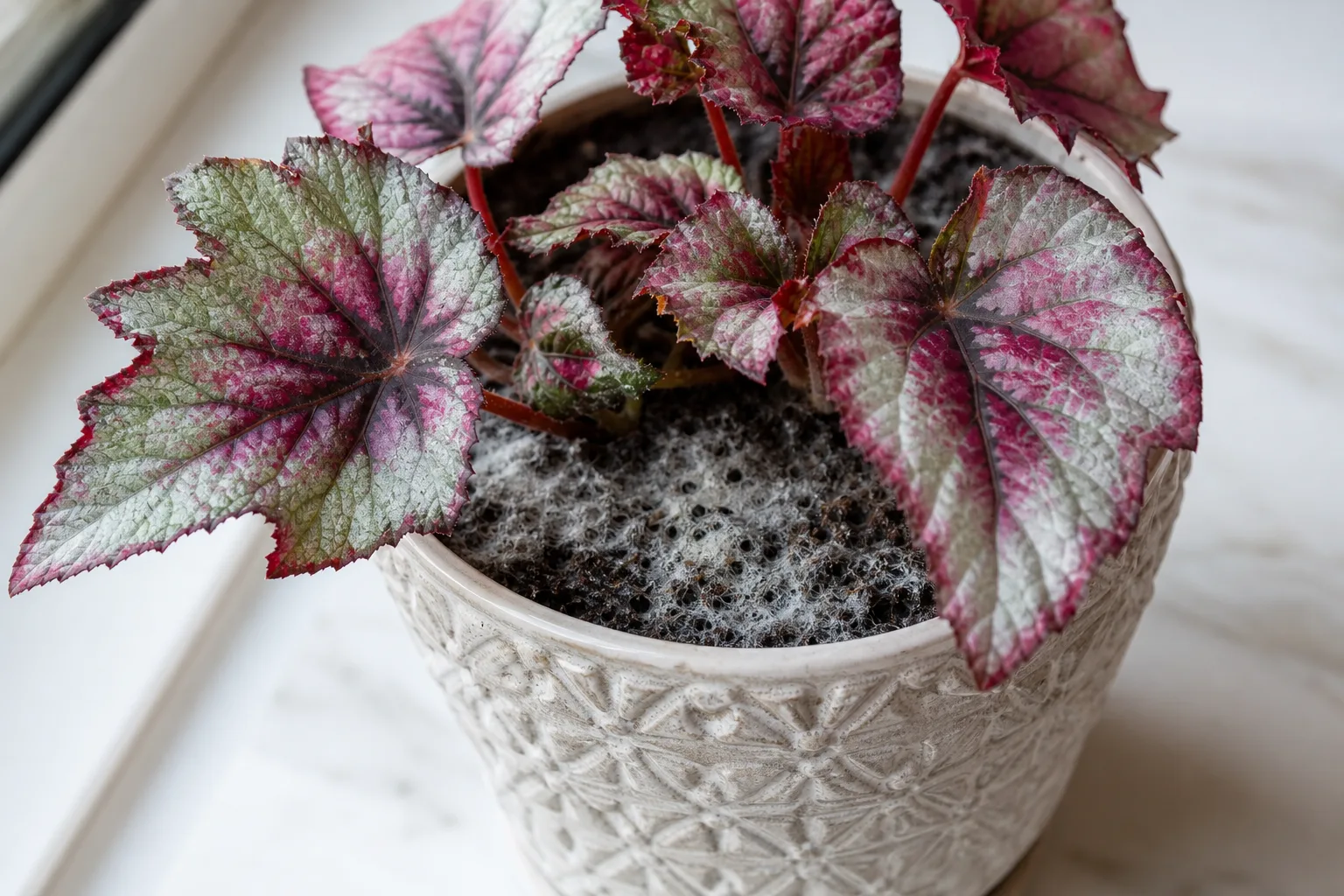
Mold on Soil on Begonia Rex: Causes, Checks & Fixes
This guide covers mold on soil on Begonia Rex. See also the general Mold on Soil guide, watering, and light pages for this plant.
Mold on Soil on Begonia Rex: Causes, Checks & Fixes
Quick answer
White or gray fuzz on the soil of Begonia Rex is almost always saprophytic fungus-a decomposer feeding on organic matter in damp potting mix, not a leaf disease attacking your painted foliage. The mold itself rarely harms living plants, but it is a reliable warning that the surface stays wet too long.
That matters on rex begonias because the rhizome sits near the soil line and rots quickly when [the root zone loses oxygen](https://www.missouribotanicalgarden.org/gardens-gardening/your-garden/help-for-the-home-gardener/advice-tips-resources/insects-pests-and-problems/environmental/[overwatering on Begonia Rex](/plants/begonia-rex/overwatering/)). First step: scrape off the top 1–2 cm of moldy mix and stop watering until the top 2–3 cm feels dry. Do not reach for fungicide or repot on day one unless the rhizome is already mushy.
What mold on soil looks like on Begonia Rex
Most owners notice a white, gray, or occasionally yellow fuzzy film on the soil surface, sometimes spreading from fallen leaf bits around the crown. It often appears a few days after a heavy drink, in a humid corner, or when old rex leaves have dropped and been left to decay on the mix.
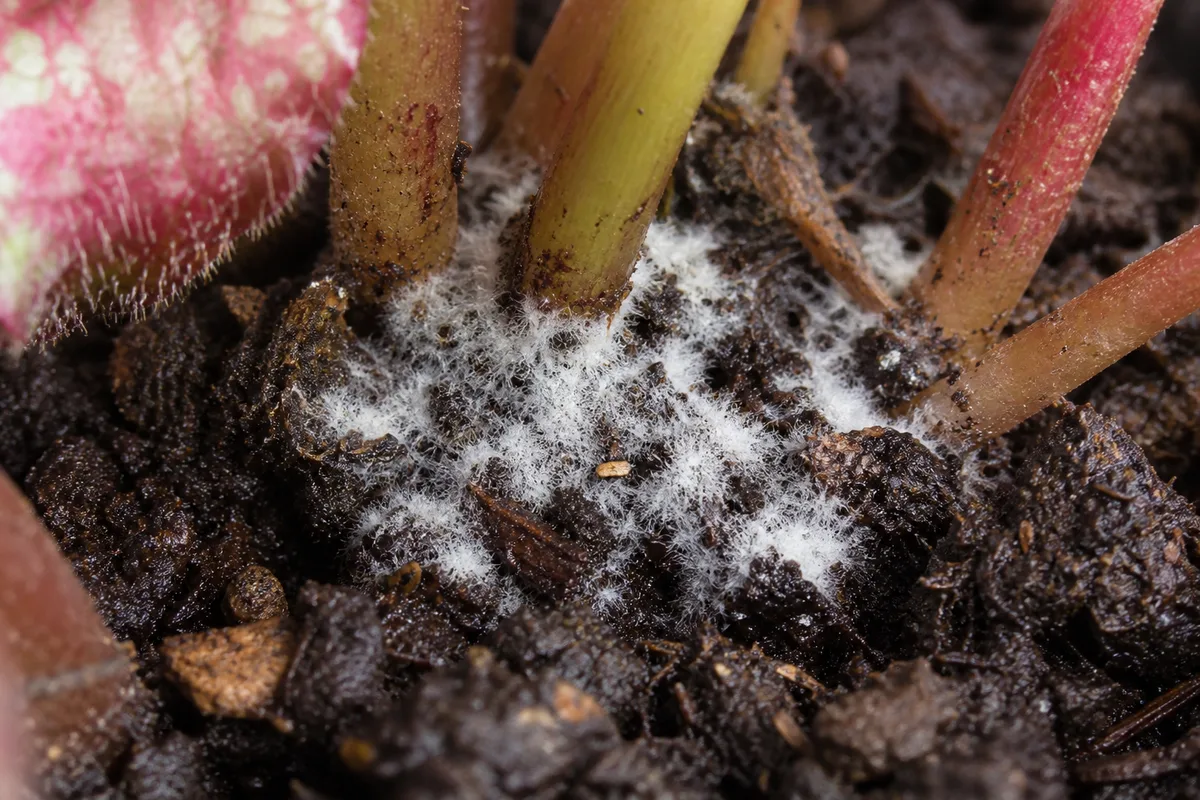
Mold on Soil symptoms on Begonia Rex - compare with healthy tissue on the same plant.
The foliage may still look spectacular while only the soil looks wrong. That is normal for surface mold. What should raise a different alarm is mushy petioles at the base, wilting with wet soil, or gray mold patches on leaves themselves-those point toward crown rot, root decline, or wet-foliage disease rather than harmless soil fungus.
Other surface clues that often travel with mold on rex pots:
- Soil that stays dark and cool at the surface for many days after watering
- A faint musty smell when you lift the pot
- Small black fungus gnats hovering when you tap the rim
- Green algae on the pot edge in dim, constantly damp setups
Salt crust is an easy mix-up: hard white deposits from tap water or fertilizer feel gritty and do not look cottony. Mold is soft and usually returns if you only brush it aside without fixing moisture.
Why Begonia Rex gets mold on soil
Rex begonias need steady humidity and evenly moist roots, but they punish soggy, stagnant mix around the shallow rhizome. Mold appears when those two truths collide at the soil surface.
Surface moisture that never dries is the main driver. Calendar watering, bottom-watering before the top inch has dried, or keeping the pot in a cachepot that holds runoff all leave the upper layer damp. Saprophytic fungi thrive on that wet organic surface while the plant below may still be absorbing water.
High humidity without airflow makes the problem worse. Begonia Rex performs best around 50–70% relative humidity, yet humid air alone does not replace the need for the top layer to dry briefly between drinks. A plant grouped tightly with neighbors, sitting on a pebble tray, or placed in a closed cabinet can hold surface moisture even when you are trying to bottom-water carefully.
Organic, peat-heavy mix feeds the fungus. Rex begonias want light, well-draining potting soil with perlite and bark-not straight water-retentive peat. The same organic particles that hold moisture for roots also give saprophytes food when they stay wet.
Fallen rex leaves accelerate mold. Painted begonia foliage drops easily when stressed; leaves left on the soil surface decompose and create a perfect fungal buffet right against the crown.
Low light and oversized pots slow drying. A rex in a dim corner uses less water, so the same weekly schedule keeps the surface wet. A deep pot with a small rhizome holds a large wet zone that evaporates slowly from the top.
How to confirm the cause
Work through these checks before changing everything at once:
- Scope of the fuzz - Confined to soil surface only? Likely saprophytic mold. On leaf blades or petioles? Investigate foliar disease or rot instead.
- Rhizome firmness - Gently brush soil away from the crown. Firm rhizome tissue supports a surface-mold diagnosis. Soft, dented, or blackened base means escalate to rot care.
- Moisture at depth - Dry top 2–3 cm with a firm plant usually means you can scrape and wait. Wet surface and wet center with limp leaves suggests overwatering stress beyond cosmetic mold.
- Pot weight and drainage - Heavy pot many days after watering, blocked holes, or standing water in the saucer confirm chronic wetness.
- Gnats and smell - Flies within a day of watering plus musty odor mean the whole root zone ecosystem is too damp, even if leaves still look fine.
- Recent care changes - New humidifier, colder room, heavier mix, or repot into a much larger container often explain sudden mold without any new pathogen.
If the rhizome is hard, leaves are firm, and only the top layer is fuzzy, treat as confirmed surface mold tied to moisture management. If the crown is soft, call it possible rot and inspect roots before scraping alone.
First fix for Begonia Rex
Scrape off the top 1–2 cm of moldy soil and pause watering until the top 2–3 cm of mix feels dry.
Use a spoon or small tool, discard the removed material in the trash-not the compost pile indoors-and leave the crown exposed but undisturbed. This single step lowers spore load and forces you to break the wet-surface cycle without shocking the rhizome through immediate Begonia Rex repotting guide.
Do not water again just because rex begonias “like humidity.” They need moist roots with a brief dry-down at the surface, not a permanently damp top layer.
Step-by-step recovery
After scraping, work in this order based on severity:
- Remove debris - Pick off fallen leaves, old petiole stubs, and any mulch sitting on the soil. Mold often starts on that litter, not living rhizome tissue.
- Improve airflow - Space the pot away from crowded shelves, open a vent slightly, or run a small fan on low nearby. Rex begonias still need humidity, but stagnant damp air at the soil line prolongs mold.
- Adjust watering - Resume bottom-watering only when the top few inches of soil feel dry and the pot feels noticeably lighter. Empty the saucer within 30 minutes so the base never sits in runoff.
- Top-dress if needed - Replace scraped soil with a thin layer of fresh, dry, perlite-rich mix-not wet garden soil. This refreshes the surface without a full repot.
- Address fungus gnats if present - Yellow sticky traps catch adults; let the soil dry appropriately between waterings to break the larval cycle. Persistent gnats with declining growth mean inspect roots for rot.
- Repot only when mold keeps returning - If fuzz reappears within a week despite a dry surface and clean debris, the mix may be too dense or the pot too deep. Repot in spring into a shallow, well-drained blend with drainage holes, trimming only mushy roots.
Skip fungicide drenches for typical white surface mold. They stress rex roots without fixing the wet conditions that caused the problem.
Recovery timeline
Cosmetic improvement should appear within days once the scraped surface stays dry. You are looking for no new fuzzy growth for one to two weeks after the Begonia Rex watering guide changes.
If mold returns within three to five days while the surface never truly dries, the underlying issue-pot size, mix, light, or watering frequency-is still unresolved. Full correction, including habit changes and optional top-dressing, often takes two to four weeks.
Judge plant health by new leaves from the rhizome, not by old foliage. Existing yellow or limp leaves from earlier overwatering may drop; that is not mold damage-it is prior root stress showing late.
Worsening signs during recovery: softening crown, petioles collapsing at the soil line, sour smell intensifying, or wilting while mix stays wet. Those mean stop scraping and inspect for rot.
Lookalike symptoms
- Mineral salt crust - Hard white rim deposits from hard water or fertilizer; scrape feels gritty, not cottony, and often returns after watering regardless of dry-down habits.
- Green algae on soil - Flat green film in low light with constant surface moisture; fix light and drying, similar to mold but smoother in texture.
- Gray mold on leaves - Botrytis or similar foliar issues from wet foliage; appears on blades and petioles, not just soil. Rex begonias should never be misted or top-watered onto leaves.
- Yellow houseplant mushrooms - Larger fruiting bodies from the same saprophytic group; harmless to the plant but remove if pets or children can reach the pot.
- Root or crown rot - Wilting, mushy base, sour smell, and brown roots below; much more serious than surface fuzz alone.
What not to do
Do not drench fungicide on harmless surface mold-it adds stress without fixing wet culture. Do not keep watering on schedule while the top stays damp “because rex begonias need moisture.” Do not mist leaves to compensate for dry air; that invites foliar disease and adds water to the crown zone.
Avoid repotting immediately into a bigger pot; extra wet soil volume often makes mold and rot more likely on shallow-rooted rex plants. Do not ignore returning mold when gnats and limp leaves appear together-that is a root-zone problem, not a cosmetic one.
Do not assume the plant is doomed if only the soil surface is fuzzy and the rhizome is firm. This is one of the most fixable warnings rex begonias give.
How to prevent mold on soil next time
Build prevention around dry surface, moist root zone, steady airflow:
- Bottom-water when the top 3 cm is dry, not on a fixed calendar
- Remove fallen leaves the same week they drop
- Use light mix with perlite and bark in a shallow pot with open drainage
- Pair humidifier use with gentle air movement so foliage gets humidity without a permanently wet soil cap
- Empty saucers after every watering and skip decorative pot covers that trap moisture
- Place the plant where Begonia Rex light guide helps the pot dry predictably-weak light slows evaporation and encourages recurring mold
When mold is gone and new growth stays firm, your rex is telling you the surface is finally drying the way this rhizomatous plant requires.
When to use this page vs other Begonia Rex guides
- Begonia Rex watering guide - Use for routine moisture checks before assuming mold on soil is the main issue.
- Begonia Rex problems hub - Browse all 16 common issues on this species.
- Fungus Gnats on Begonia Rex - Different entry point when symptoms overlap with mold on soil.
- Overwatering on Begonia Rex - Different entry point when symptoms overlap with mold on soil.
- Root Rot on Begonia Rex - Different entry point when symptoms overlap with mold on soil.