Root Rot on Begonia Rex: Causes, Checks & Fixes
Quick answer
Root rot on Begonia Rex means the rhizome or fine roots have decayed from staying wet too long-not a mystery fungus on the leaves. Stop watering, expose the rhizome at the soil line, and trim mushy tissue before shallow-repotting into fresh draining mix.
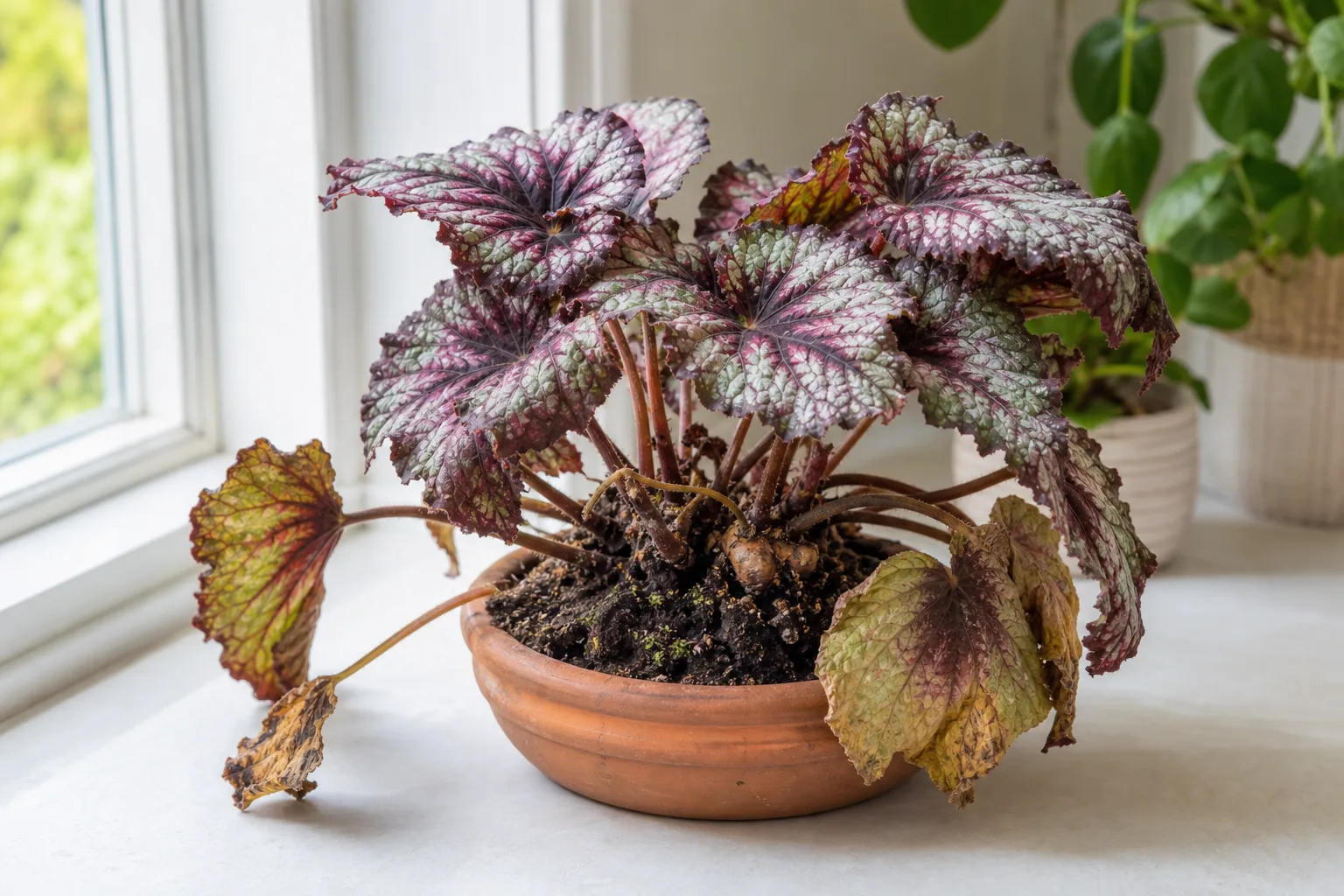
Root Rot on Begonia Rex: Causes, Checks & Fixes
This guide covers root rot on Begonia Rex. See also the general Root Rot guide, watering, and light pages for this plant.
Root Rot on Begonia Rex: Causes, Checks & Fixes
Quick answer
Root rot on Begonia Rex (Begonia rex-cultorum) is decay of the rhizome and fine roots from chronic wet soil-not a leaf disease you can spray away. Rex begonias grow from a thickened horizontal stem at or just above the soil line, and that shallow anatomy rots faster than deep-rooted houseplants when oxygen is gone from saturated mix.
First step: stop watering immediately. Empty any saucer or cachepot, then inspect the rhizome before you repot or fertilize. Limp painted leaves on heavy damp soil mean damaged roots may be unable to absorb water even though the pot holds moisture-the wet-soil paradox that sends many growers back to the watering can too soon.
This page covers confirmed decay: rhizome trim, shallow repot, and salvage options. If soil is wet but the rhizome still feels firm, start with the overwatering guide for dry-down and prevention before roots fail.
What root rot looks like on Begonia Rex
Root rot on rex types follows a progression from hidden root stress to crown collapse. Learn these patterns together so you do not confuse rot with dormancy or drought.
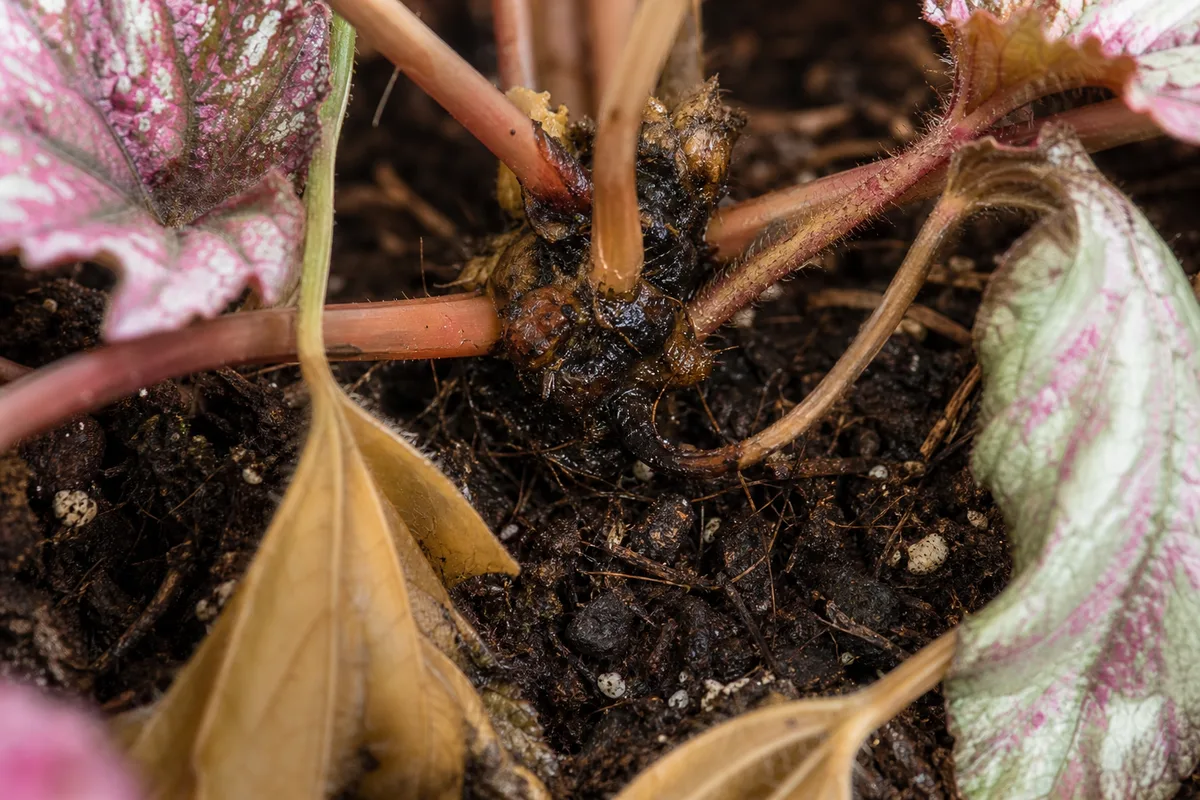
Root Rot symptoms on Begonia Rex - compare with healthy tissue on the same plant.
Early above-soil signs
- Yellow lower leaves dropping while mix stays damp-not the crisp edge curl of underwatering
- Limp leaves and soft petioles despite wet soil; the plant looks thirsty but does not perk after watering
- Stalled or pale new growth even in spring, with smaller emerging leaves
- Fungus gnats hovering over soil that rarely dries-the wet mix that precedes rot
- Sour or musty smell when you lift the pot or brush soil from the rhizome
Rhizome and root signals on inspection
- Soft, mushy, or black tissue at the rhizome where petioles meet soil-the crown rot zone
- Fine roots that slip off when touched instead of staying firm and pale
- Hollow or translucent rhizome sections when you expose tissue below the surface
- Advanced collapse: painted leaves brown and fall in clusters, stem bases turn water-soaked, center growth stops
Rex begonias fail faster than forgiving vines because the rhizome stores water but also breaks down quickly when mix stays saturated. A single week of waterlogged soil in a cool dim room can damage the crown while upper leaves still look acceptable.
Why Begonia Rex gets root rot
The same watering habits that work on pothos often destroy rex begonias. The biology explains why.
Rhizome anatomy and shallow pots
Rex begonias are rhizomatous-a thickened horizontal stem spreads at or just above the mix, sending up leaves along its length. Missouri Botanical Garden notes that rex begonias need porous mix and a shallow pot, with watering that lets the soil surface become almost dry between drinks. A deep oversized pot holds a wet lower zone the rhizome never reaches, and burying the rhizome when repotting invites decay at the crown.
Overwatering and poor drainage
Begonias are highly susceptible to root rot when overwatered. NC State Extension lists overwatering as a direct cause of root rot on rex types. Heavy peat mix without perlite or bark, blocked drainage holes, and pots sitting in saucer water keep fine roots oxygen-starved until they decay.
Winter dormancy on a summer schedule
Many rex cultivars enter semi-dormancy in fall and winter-older leaves yellow and drop, new growth pauses. Watering every week because “that is what I did in July” keeps mix saturated while the rhizome barely draws moisture. NYBG recommends allowing soil to remain drier in winter without letting the entire pot go bone dry. Rot in February often starts with a summer watering calendar in a dim room.
High humidity without dry-down
Rex begonias need humidity above 50%-some cultivars want more-but humidity slows leaf water loss without fixing a soggy root zone. A bathroom rex in heavy mix can stay wet at the center while leaves look fine. Humidity trays and pebble dishes help leaves; they do not replace drainage and a real surface dry-down.
Wet leaves and crown splash
NYBG warns to keep leaves dry when watering and to discard saucer runoff within 15 minutes. Water pooling on the textured rex crown or sitting in a wet dish accelerates tissue breakdown at the soil line-the same zone where rhizome rot begins.
Lookalike symptoms to rule out
Not every yellow or limp leaf means rot. Sort these patterns before you trim a healthy rhizome.
| Pattern | Pot / soil | Rhizome | Leaves | Likely cause |
|---|---|---|---|---|
| Root rot | Heavy, wet days after watering; sour smell | Soft, mushy, or black at soil line | Limp on damp soil; lower yellow first | Confirmed decay - this page |
| Overwatering (early) | Wet but rhizome still firm | Firm tan or green when pressed | Limp or yellow lower leaves | Overwatering - fix before rot |
| Underwatering | Light, dry throughout | Firm; may shrivel slightly when very dry | Crispy edges; perks after one soak | Underwatering |
| Winter dormancy | Dries slowly; not permanently swampy | Firm; no odor | Gradual old-leaf drop; no mushy crown | Reduce water per watering guide |
| Low humidity | Normal dry-down rhythm | Firm | Crisp margins; slight cupping | Low humidity |
| Acute wilt | Either wet or dry | Firm unless rot advanced | Sudden droop | Wilting - check soil first |
If the pot stays heavy for a week after watering, lower leaves keep yellowing, and the rhizome feels soft when you brush soil away, treat as rot regardless of how green the top leaves still look.
How to confirm the cause
Work through this inspection in order:
- Lift the pot. A heavy, waterlogged feel days after the last drink suggests saturation, not drought.
- Empty the saucer and cachepot. Standing water at the bottom keeps the rhizome zone wet even when the surface looks dry.
- Smell the drainage hole. A sour or rotten odor means anaerobic conditions in the root zone.
- Check the top 2–3 cm. Rex begonias should be watered when this zone feels dry-see the watering guide. Constant surface dampness confirms overwatering heading toward rot.
- Gently slide the plant out. Squeeze a flexible nursery pot or tap the rim-never yank painted leaves.
- Brush soil from the rhizome. Expose the crown where petioles meet the horizontal stem. Keep the creeping rhizome above the mix-buried rhizome tissue rots faster.
- Press rhizome and roots gently. Healthy tissue is firm, tan to green on the rhizome, pale on fine roots. Rotten tissue is brown, translucent, slimy, or hollow and may fall apart between your fingers.
Confirmed rot means mushy rhizome or roots, sour-smelling mix, or soft tissue at the soil line-not one yellow leaf on an otherwise stable plant with firm crown tissue.
First fix for Begonia Rex
Stop all watering immediately. This single action prevents further oxygen loss while you prepare for rhizome surgery. Move the plant to bright indirect light-not harsh sun, but enough brightness that mix will dry predictably once you repot.
Do not fertilize, mist heavily, or repot into a deeper container. Do not water because leaves look wilted when soil is already wet-that deepens decline. Your next step after the pause is unpotting and trimming decay; a 24-hour dry-down on a chronically wet root ball often makes mushy tissue easier to see before you cut.
Step-by-step recovery
Once you confirm rot, work through these steps in order:
Trim decayed rhizome and roots
Use clean, sharp scissors or pruners sterilized with rubbing alcohol. Cut away every brown, soft, or hollow rhizome section and every slimy root back to firm tissue. It is normal to remove a significant portion on a badly overwatered plant. The American Begonia Society notes you can cut the rhizome back-it will develop new leaves and may branch from healthy tissue below the trim.
Dispose of trimmed material in the trash, not the compost bin. Wear gloves if sap irritates your skin.
Air-dry cut surfaces
After trimming, let the rhizome and root stubs air on a paper towel for two to four hours. Rex tissue is thin; a brief dry period reduces reinfection risk when you repot into fresh mix.
Repot into fresh shallow mix
Choose a clean pot with drainage holes shallower and only slightly wider than the trimmed rhizome-not a deep standard houseplant pot. NYBG recommends shallow terracotta with the rhizome above the medium. Use airy mix with perlite and orchid bark per the soil guide. Set the rhizome at the same depth it grew before; do not bury it deeper to stabilize a wobbly plant-that invites crown rot.
See the repotting guide for timing and pot sizing after root trim.
Water once, then wait
Water lightly to settle fresh mix, then do not water again until the top 2–3 cm feel dry-often seven to ten days on a freshly trimmed rex. Hold all fertilizer for at least three to four weeks until firm new growth resumes.
Rhizome cutting backup if the base fails
If the main rhizome collapses but a lateral section remains firm, root that section in moist perlite or repot it alone. Missouri Botanical Garden lists rhizome division during repotting as the easy propagation route for rex begonias. If no firm rhizome remains, salvage a healthy leaf petiole cutting per the propagation guide-that is a backup path, not a substitute for fixing drainage on the parent.
Recovery timeline
Mild cases with mostly firm rhizome tissue may stabilize within one to two weeks after you stop the wet cycle and improve drainage. Moderate cases needing rhizome trim typically show the first firm new leaf from a growth point in four to six weeks during spring or summer active growth.
Judge success by new painted leaves and rhizome firmness, not by old yellow foliage re-greening-it will drop or stay discolored. Severe crown rot where the entire rhizome turns black and hollow is often fatal; rhizome section or leaf propagation may be the only save.
Signs the plant is improving: the pot lightens between waterings on a normal schedule, new leaves emerge firm and richly colored, and exposed rhizome tissue feels solid when pressed.
Signs it is worsening: mushy tissue spreads along the rhizome, leaves collapse in waves despite dry surface soil, or the mix smells sour again within days of repotting.
What not to do
Do not keep watering because leaves look wilted when soil is already wet-damaged roots cannot take up water even when the mix holds moisture.
Do not apply fungicide to sour mix without removing mushy rhizome tissue and fixing drainage. Chemicals cannot restore oxygen to waterlogged soil.
Do not repot into garden soil, a pot without holes, or a much deeper container that traps unused wet mix below the rhizome.
Do not fertilize a root-damaged rex hoping to “boost” recovery-salts stress weakened fine roots hardest.
Do not mist recovering foliage heavily-wet rex leaves invite spotting and disease on stressed plants.
Do not assume every winter leaf drop requires emergency surgery-confirm rhizome firmness and soil smell first.
How to prevent root rot on Begonia Rex
Prevention is shallow-pot anatomy plus dry-down rhythm:
- Water when the soil surface is almost dry-stick a finger into the top 2–3 cm per MOBOT rex guidance and the watering guide, not on a fixed calendar.
- Use a shallow pot matched to rhizome spread with open drainage; empty saucers within 15 minutes of every drink.
- Keep the rhizome above the mix line when repotting-never bury it to fix a wobbly plant.
- Use airy, well-drained mix with perlite and bark; refresh when compacted per the soil guide.
- Reduce watering in winter when growth slows-barely moist, not evenly wet, until spring buds return.
- Water at the soil perimeter and keep leaves dry during recovery and routine care.
- Watch fungus gnats as an early wet-soil clue before rhizome tissue fails.
Treat chronic overwatering as the precursor problem; this page is the emergency deep-dive when decay is confirmed.
When to worry
Treat as urgent when:
- The rhizome turns black or hollow at the soil line while mix stays wet
- More than half the rhizome is mushy on inspection
- Petioles go water-soaked at the base and collapse within days
- Sour smell returns within a week after trim-and-repot
- Center growth stops entirely on saturated mix in cool dim conditions
- Grey mold or greasy leaf spots spread on wet foliage in stagnant air
Mild yellowing on one old leaf with firm rhizome and soil drying normally between waterings is not an emergency-adjust schedule and monitor. When in doubt, rhizome firmness at the crown beats leaf appearance.
Related Begonia Rex guides
- Overwatering - wet-soil precursor before roots fail
- Watering - rhythm, seasonal shifts, and moisture checks
- Wilting - acute wet-soil vs dry-pot first fork
- Yellow leaves - lower-leaf progression on wet mix
- Underwatering - light pot and firm rhizome recovery
- Fungus gnats - wet-soil early warning
- Soil - mix ratios for recovery repot
- Repotting - shallow pot sizing after root trim
- Propagation - rhizome division and leaf salvage
- Low humidity - crisp edges vs rot wilt
- Begonia Rex overview - species care hub