Best Soil for Begonia Rex: Mix, Drainage & Repotting
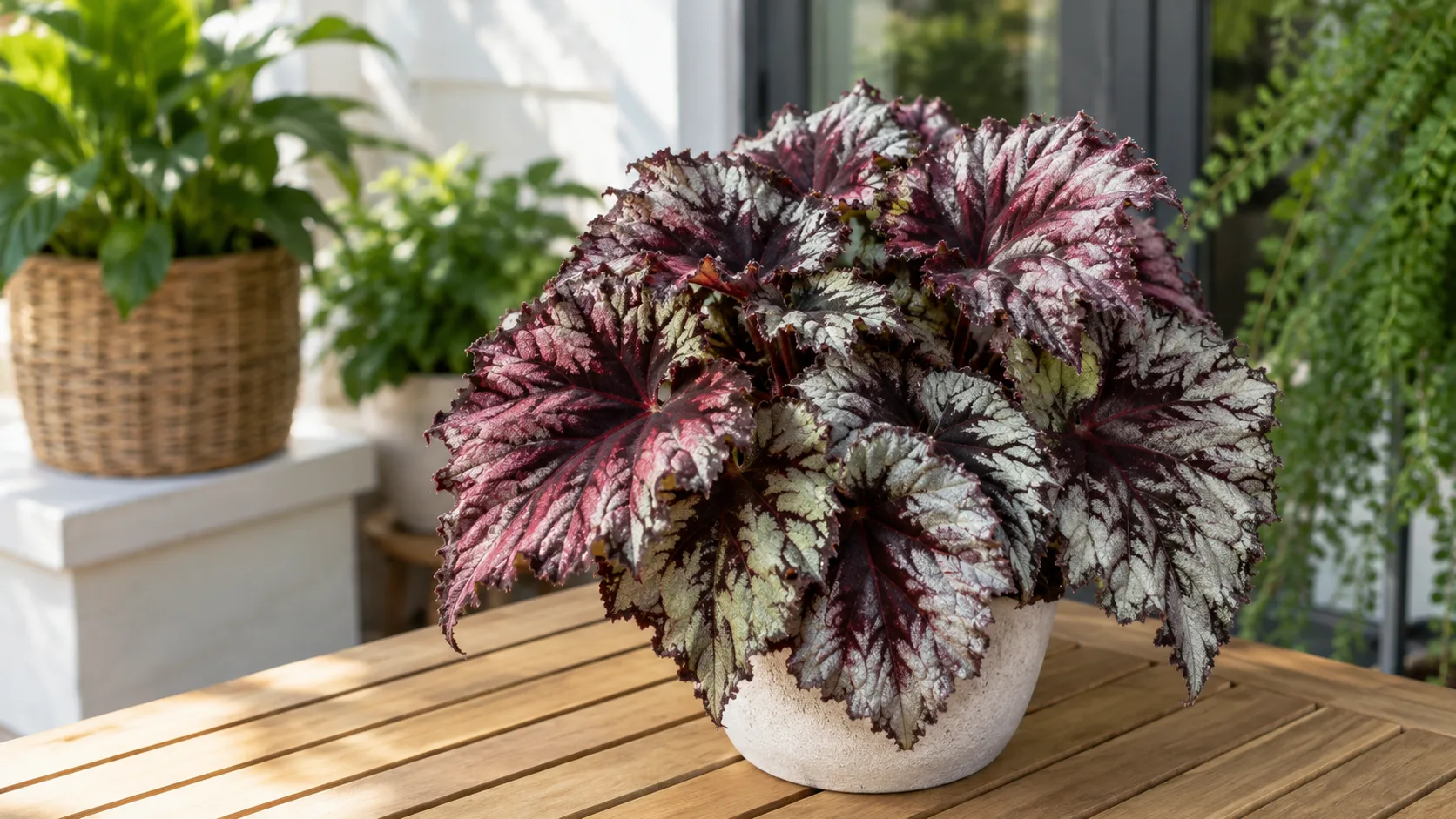
Best Soil for Begonia Rex: Mix, Drainage & Repotting
Best Soil for Begonia Rex: Mix, Drainage & Repotting
Begonia Rex is not picky about brand names on a bag of potting mix. It is picky about what that mix does at the root zone. Rex begonias grow from a shallow rhizome - a thickened horizontal stem that sits at or just above the soil surface - with fine roots that need oxygen as much as they need moisture. The best soil for Begonia Rex is light, porous, slightly acidic, and fast enough to drain that the upper mix can dry slightly between waterings without the lower root zone turning into a swamp. Missouri Botanical Garden describes rex begonias as requiring porous planting mix and a shallow pot, with the soil surface allowed to become almost dry between waterings. (Missouri Botanical Garden) Get that balance right and the painted leaves stay vivid. Get it wrong and you will chase leaf drop, crown rot, and mushy rhizomes while blaming light or humidity for a soil problem.
What Rex Begonia Soil Needs to Do
A good rex begonia potting mix has four jobs at once. It must hold the plant upright, retain enough moisture that fine roots do not dry out sharply between waterings, drain excess water quickly, and keep air pockets open so roots can breathe. That is a narrower window than many common houseplants tolerate. Pothos can survive in dense all-purpose soil for a while. Rex begonias usually cannot, especially in plastic pots, cool rooms, or low-light corners where evaporation slows down.
The useful mental model is not “dry soil” or “wet soil.” It is moist roots with a dry crown. The rhizome and the point where petioles emerge should not sit in saturated mix. The roots below should never go bone-dry for long stretches either. When a mix is too heavy, water lingers around the rhizome and crown rot follows. When a mix is too coarse and fast-draining, the plant wilts between waterings and new leaves stay small. The goal is a springy, open texture that re-wets evenly, drains freely after a full watering, and stays lightly moist for several days without feeling soggy for a week.
Rhizomes, shallow roots, and why the root zone behaves differently
Rex begonias are rhizomatous begonias. They spread horizontally at or just above the soil line rather than sending a deep taproot straight down. Missouri Botanical Garden describes rex begonias as growing from a thickened rhizome and doing best in large, relatively shallow pots where the rhizome has room to spread. North Carolina Extension likewise describes rex types as rhizomatous plants with dense, colorful foliage. (NC State Extension)
That anatomy changes every soil decision. A tall standard pot filled with mix the roots never colonize holds a deep column of wet soil beneath a shallow rhizome. New York Botanical Garden notes that rex begonias are shallow-rooted and prefer shallow containers - azalea pots or bulb pans give the rhizome surface area without a deep reservoir of soggy soil at the bottom.
Planting depth matters just as much as ingredients. The rhizome should sit at or slightly above the soil surface, not buried like a bulb. Deep planting is one of the fastest ways to rot an otherwise healthy plant. If you take one rule from this page, make it this: build a mix that drains well, choose a shallow pot, and never bury the crown.
Core Ingredients in a Good Begonia Rex Mix
Stop thinking in product labels and start thinking in functions. Every ingredient in a Begonia Rex soil mix should earn its place. One component holds moisture. Another creates air space. Another adds structure so the mix does not collapse into mud after a few months. The exact ratio depends on your home, but the jobs stay the same.
Peat moss or coconut coir as the moisture base
Sphagnum peat moss is the traditional base in rex begonia mixes because it is lightweight, holds moisture without feeling muddy when blended correctly, and naturally trends slightly acidic. Missouri Botanical Garden recommends a porous planting mix for rex begonias. The American Begonia Society recommends a blend of coco coir-based potting mix, orchid bark, and perlite as a balanced starting point.
Coconut coir is the most common peat alternative. It rewets more easily than dry peat, holds moisture well, and appeals to growers who want a peat-free mix. Coir is not automatically better in every pot. Some products hold more water than expected when packed tightly, and poorly processed coir can carry salts. If you use coir, pair it generously with perlite or bark so the mix stays open.
Choose peat when you are following a proven peat-based recipe or using a commercial African violet blend as a base. Choose coir when you want peat-free culture or when dry peat has been hard to rehydrate in your environment. Either works if aeration materials are present in meaningful amounts.
Perlite, pumice, and other aeration materials
Perlite is expanded volcanic glass - those white granules in most potting mixes. In rex begonia soil, its job is to create air space and improve drainage. Without enough perlite, pumice, or a similar material, even a “light” peat mix can compact and suffocate fine roots. The American Begonia Society recommends perlite as a key component for aeration and drainage in rex begonia mixes.
Do not treat perlite as decoration. If your mix looks nearly solid dark peat with only a few white flecks, it probably needs more aeration. For most indoor rex begonias in top-watered plastic or glazed pots, perlite should make up roughly 25 to 35 percent of the finished blend. In cool, low-light, or high-humidity rooms where pots dry slowly, push perlite toward the higher end.
Pumice works similarly to perlite but is heavier and does not float to the surface as easily during watering. Some growers prefer it in mixes for plants that get watered heavily from the top. Either perlite or pumice is fine; what matters is that the finished mix feels springy, not dense.
Vermiculite holds moisture and can soften the mix around fine roots, but too much vermiculite keeps rex begonia soil wet longer than the rhizome tolerates. Use it sparingly - usually no more than one part in a four-part mix - unless your home is very dry and the plant wilts between waterings.
Orchid bark, charcoal, and structure additives
Fine orchid bark or pine bark fines add structure and create air pockets that persist longer than perlite alone. The American Begonia Society includes orchid bark in standard rex begonia recipes because it keeps the mix from collapsing while still draining well. Bark pieces should be small enough that the rhizome can sit comfortably against the mix without large voids that stay dry while the rest of the pot wets unevenly.
Horticultural charcoal is optional but useful in mixes for plants prone to root-zone stagnation. A small handful per quart of mix can help buffer against souring in closed indoor conditions. It is not a substitute for drainage holes or perlite. Think of charcoal as insurance, not the main ingredient.
Worm castings can add gentle nutrition and microbial life, but keep the amount modest - roughly five to ten percent of the mix at most. Too much rich organic matter holds water and breaks down into denser material faster than rex begonia roots prefer.
Best DIY Soil Mix Recipes for Begonia Rex
No single rex begonia soil recipe is perfect for every home. The best recipe is the one that stays lightly moist without going soggy under your actual light, humidity, pot material, and watering habits. Use the formulas below as starting points, then adjust based on how the mix behaves after two or three watering cycles.
Before mixing, moisten dry peat or coir slightly so ingredients blend evenly. Dry peat can repel water at first, creating a false sense of drainage: water runs down the pot sides while the root ball stays dry. Use a clean tub or bucket, measure by volume not weight, and mix until the texture looks uniform.
Simple beginner mix most growers should start with
The most dependable DIY Begonia Rex soil mix for most indoor growers is:
- 2 parts peat moss or coconut coir
- 1 part perlite
- 1 part fine orchid bark
This 2:1:1 ratio matches what Missouri Botanical Garden and the American Begonia Society recommend: enough organic material to hold moisture, enough perlite and bark to keep the mix open. (Missouri Botanical Garden, American Begonia Society) For a single 6-inch pot refresh, that might mean 2 cups coir, 1 cup perlite, and 1 cup bark.
A slightly faster-draining variant that works well in plastic pots or humid rooms is:
- 2 parts peat or coir
- 2 parts perlite
- 1 part orchid bark
If the plant still stays wet too long after two weeks of normal care, increase perlite again rather than Begonia Rex repotting guide into a deeper pot. The fix is almost always more air in the mix, not a bigger container.
Adjustments for dry homes, wet homes, and rescue repots
Dry homes - heated winter air, strong grow lights, terracotta pots, or frequent air movement - pull moisture out of small pots quickly. If your rex begonia wilts between waterings even when you are careful, reduce perlite slightly or add a small amount of vermiculite. A workable dry-home blend is 2 parts peat or coir, 1 part perlite, 1 part bark, and ½ part vermiculite. Watch the crown: more moisture retention only helps if you are not overwatering on Begonia Rex to compensate for dry leaves.
Wet homes - cool north windows, plastic pots, cachepots without drainage, low light, or humidity above 60 percent - need more air. Push toward 2 parts peat or coir, 2 parts perlite, 1 part bark, and skip vermiculite entirely. Consider a terracotta azalea pot, which breathes and dries the mix marginally faster than glazed ceramic.
Rescue repots after crown stress, sour soil, or early root rot on Begonia Rex should prioritize oxygen over moisture retention. A rescue blend of 2 parts perlite, 1 part peat or coir, and 1 part fresh bark gives damaged roots breathing room while still holding some water. Trim mushy roots and rhizome tissue with clean scissors, let cuts air-dry for an hour if the rot was advanced, then repot into a pot only slightly wider than the remaining root mass. Do not jump to a large pot “to help it recover.” Recovery needs air, not excess wet soil.
Commercial Mixes That Work Without Starting From Scratch
You do not have to blend from raw ingredients to grow a healthy rex begonia. Many growers use a high-quality bagged mix and amend it. The question is not whether commercial soil can work. It is whether your commercial soil drains fast enough for a rhizomatous plant in your pot and room.
African violet potting mixes are often the best off-the-shelf shortcut. NYBG notes that many high-quality African violet mixes work well for rex begonias because they are designed to hold some moisture while still providing excellent aeration. If the bag looks dark, fine, and dense, blend in extra perlite at roughly one part perlite to two parts bagged mix before potting.
Regular all-purpose potting soil can work only if amended heavily. Straight multipurpose compost is usually too dense for rex begonias in indoor pots. Mix two parts all-purpose soil with one part perlite and one part orchid bark, then test drainage before trusting it with a prized cultivar. If water pools on the surface or the pot still feels heavy four days after watering in moderate light, the blend needs more perlite.
Cactus or succulent mix is generally too fast-draining on its own for rex begonias, which prefer consistent root moisture with brief dry-downs, not desert-style drought cycles. If cactus mix is all you have, blend it with peat or coir until the texture feels halfway between succulent mix and African violet mix. The squeeze test below is the final judge.
Orchid bark mixes alone are usually too coarse and dry for rex begonias unless heavily supplemented with peat or coir. Orchid bark belongs in the recipe as a structural ingredient, not as the entire medium.
pH, Minerals, and Fertilizer Salts in the Root Zone
Rex begonias prefer slightly acidic soil, typically in the pH 5.5 to 6.5 range. Missouri Botanical Garden and multiple grower references place rex begonias in that acidic-to-neutral band. (Missouri Botanical Garden) Peat-based mixes naturally trend acidic. Coir is closer to neutral, which is one reason coir-based blends often behave a bit differently from peat-based ones even at the same ratio.
Most home growers do not need to obsess over pH testing if the plant is growing well. If you are mixing from raw peat and the plant repeatedly shows pale new growth, fertilizer sensitivity, or unexplained decline despite good light and watering, pH becomes worth checking. Many commercial African violet and begonia-friendly mixes already include limestone or other buffers.
Fertilizer salts are a more common indoor problem than raw pH. When water evaporates from the soil surface, dissolved minerals from tap water and fertilizer can accumulate as a white crust. Leaf edge burn and stalled growth sometimes trace back to salt stress rather than humidity. If crust appears, flush the pot with plain water until runoff flows freely from the drainage holes, then let the plant drain fully before returning it to a cachepot. At repotting time, replace old compacted mix instead of endlessly flushing a broken-down substrate.
If your tap water is very hard, using filtered or rainwater for rex begonias can reduce long-term salt buildup, especially in small pots where the root zone is sensitive.
Drainage Speed: How to Test Whether Your Mix Is Working
Ingredients on paper mean little if the mix behaves badly in your pot. Run three quick checks after you blend or buy soil and again two weeks into normal care.
The finger test is the everyday tool. Stick your finger into the top 2 to 3 centimeters (about the top inch) of mix. Missouri Botanical Garden advises letting the soil surface become almost dry between waterings and checking by touch. (Missouri Botanical Garden) For rex begonias, water when that upper layer feels dry or nearly dry, while the mix slightly below still has a trace of moisture. If the surface stays damp for many days in a moderate-light room, the mix or pot is too wet for Begonia Rex overview.
The squeeze test tells you whether a new blend is structurally sound before you pot. Dampen the mix slightly, squeeze a handful, and open your hand. It should hold together loosely and crumble when you poke it. If it forms a tight muddy ball, add perlite or bark. If it will not hold together at all and feels like dry gravel, add more peat or coir.
The post-watering runoff check happens right after a full watering. Water until excess drains from the bottom, then watch the surface. Water should not sit in a pool for long periods. The pot should feel lighter after a day or two than it did immediately after watering. If the pot still feels heavy and the surface looks dark and saturated four to five days later in normal indoor conditions, you have a drainage problem - usually dense mix, an oversized pot, blocked drainage holes, or a plant sitting in a saucer of stale water.
Healthy rex begonia roots need a rhythm: moist, briefly drier at the surface, never waterlogged at the rhizome. Your mix passes when that rhythm matches your watering and the plant produces firm new leaves.
Pot Choice and Why Depth Matters as Much as Soil
The right soil for Begonia Rex can still fail in the wrong pot. Container shape and material change how fast mix dries, how air reaches roots, and how much wet soil sits around a shallow rhizome.
Shallow, wide pots outperform deep narrow ones for rex begonias. Azalea pots and bulb pans are ideal formats because they match horizontal rhizome growth without stacking unused wet mix below the roots. Missouri Botanical Garden and NYBG both emphasize relatively shallow pots with room for the rhizome to spread.
Drainage holes are non-negotiable for long-term indoor culture. A beautiful cachepot without holes is fine only if the grow pot inside can drain freely and you empty the outer saucer after watering. Rex begonias should not sit in standing water.
Pot size should track root mass, not leaf spread. Rex begonias often perform well slightly root-bound. NYBG recommends repotting into a container only slightly larger than the current one when the rhizome touches the pot sides. Oversized pots are one of the most common reasons soil stays wet too long. When in doubt, choose the smaller appropriate pot with a more open mix.
Terracotta breathes and dries faster, which helps heavy-handed waterers but may demand more frequent checks in dry air. Glazed ceramic and plastic retain moisture longer, which is fine if the mix is airy and light is adequate. Match pot material to your watering tendency: chronic overwaterers often do better in terracotta with a chunky mix; underwaterers in dry homes may prefer plastic or glazed pots with slightly more moisture retention in the blend.
When and How to Repot Begonia Rex
Repotting is not an annual ritual you perform because the calendar says so. It is a tool for refreshing broken-down mix, correcting drainage failure, or giving a rhizome modestly more horizontal room. Missouri Botanical Garden suggests repotting when the rhizome begins to press against the pot sides or roots emerge from drainage holes - not on a fixed schedule for a healthy, stable plant.
Spring, as new growth starts, is the best repotting window. Active roots establish faster in warm, bright conditions. Avoid repotting a stressed plant in deep winter unless the soil is clearly sour or rotting. If the rhizome is firm, leaf loss in low winter light may be seasonal slowdown rather than a repot emergency.
Repot every 12 to 24 months if the mix has compacted, drainage has slowed, or fertilizer salts have built up - even when the plant has not outgrown the pot. Refreshing soil in the same size pot is often smarter than upsizing.
Step-by-step repotting without burying the rhizome
Water the plant lightly a day before repotting if the mix is bone dry, but avoid repotting from a saturated wet root ball unless you are rescuing rot. Gather fresh mix, a clean pot one size larger at most (often the same size is enough), and sharp scissors for dead roots.
Gently slide the plant out and brush away old mix from the rhizome and roots. Remove mushy, black, or hollow roots. Healthy rex begonia roots are fine and white or tan, not slimy. Trim any bare, woody rhizome sections if you want a cleaner look; the rhizome can branch and regrow leaves from cut surfaces.
Place a shallow layer of fresh mix in the new pot. Set the rhizome on the mix so the top of the rhizome sits at or just above the final soil line. Spread roots outward, not downward into a deep hole. Fill around the sides with fresh mix, tapping the pot lightly to settle without compressing. Do not pile mix on top of the rhizome. The crown where leaves emerge must stay exposed to air.
Water lightly to settle the mix, then drain fully. Keep the plant in Begonia Rex light guide and maintain humidity while it adjusts. Hold off on fertilizer for three to four weeks unless the plant was actively growing and only received a soil refresh. Expect some older leaves to droop after repotting; watch the rhizome, not just the foliage. A firm rhizome and new pinholes of growth mean the repot worked.
Soil Problems: Symptoms, Causes, and Fixes
When a rex begonia struggles, soil is not always the culprit - but it is involved often enough that you should read the root zone before changing light, fertilizer, and humidity all at once.
Surface stays wet for days usually means dense mix, an oversized pot, low light, blocked drainage, or a cachepot trapping water. Fix the mix first: repot into a 2:1:1 or airier blend, confirm holes are open, and stop letting the pot sit in runoff.
Water runs straight through channels while the root ball stays dry often means hydrophobic, broken-down peat or uneven repotting with air pockets. Soak the pot bottom-up for twenty minutes once, then repot into fresh, evenly moistened mix if the problem returns.
Sour or swampy smell from the pot means anaerobic soil and possible root decline. Unpot immediately, trim rotted tissue, and repot into a rescue blend with more perlite. Reduce watering until new growth appears.
Wilting with wet soil can mean root rot has already damaged the uptake system even though the mix is moist. Inspect roots rather than watering again. Rotten roots feel mushy and smell bad; healthy roots feel firm.
Crispy leaf edges with fast-drying soil may mean the mix is too coarse, the pot is too small, or humidity is too low for the cultivar. If the mix dries in a day or two under moderate light, add a bit more coir or vermiculite, move out of terracotta, or increase humidity before chasing fertilizer.
White crust on the soil surface signals salt buildup. Flush or refresh the mix at repotting and review fertilizer strength. Rex begonias are sensitive to heavy feeding in stagnant soil.
Common Soil Mistakes With Rex Begonias
Some failures repeat so often they deserve direct naming.
Using unamended all-purpose potting soil in a deep plastic pot is the most common beginner mistake. It looks fine for a month, then the rhizome sits in wet mix through winter.
Overpotting after buying a beautiful cultivar is the second. Bigger pot plus fresh wet soil does not equal faster growth. It equals longer dry-down times and more rot risk.
Burying the rhizome because it looked “untidy” above the soil line causes crown rot even in a perfect mix. Rex begonias are not meant to be planted deep.
Adding gravel at the bottom of the pot does not improve drainage in the way most people imagine. It reduces usable root space and can create a perched water table. Use the right mix and holes instead.
Repotting into dry peat without pre-moistening leads to uneven wetting and false watering confidence. Always blend and pre-moisten ingredients.
Refreshing only the top inch while leaving compacted, sour soil around the roots solves nothing. Either fully refresh or repot.
Copying a recipe without watching the plant ignores that your home is not a greenhouse blog’s home. Recipes are starting points; the plant’s drying speed is the feedback loop.
Seasonal Soil Care Through Winter Dormancy
Rex begonia soil care is not identical year-round. In fall and winter, many cultivars slow growth or drop leaves in lower light. Missouri Botanical Garden notes that rex begonias may enter dormancy unless grown under lights, sometimes losing leaves, and that watering should taper accordingly. (Missouri Botanical Garden)
When growth slows, the same mix dries more slowly because the plant pulls less water. That is when dense soil becomes dangerous. If your rex begonia is semi-dormant, water less often but do not switch to a heavy moisture-retentive blend to “help” it. Keep the rhizome firm and the crown dry. A plant with no leaves but a healthy rhizome can resume in spring.
Winter is usually the wrong time for elective repotting unless the soil is failing. If you must repot a winter-stressed plant, use a slightly airier mix than in summer and keep humidity moderate without misting the crown. Resume normal repotting and feeding rhythms when new growth is obvious in spring.
Terracotta pots and dry heated air can desiccate small root balls in winter even when the mix was appropriate in summer. If the pot goes too light too fast, group plants to raise humidity or shift slightly toward moisture retention in the blend next spring - not by overwatering a dormant rhizome now.
Conclusion
The best soil for Begonia Rex is not a mystery formula locked inside an expensive bag. It is a light, porous, slightly acidic mix that keeps fine roots moist, the rhizome airy, and excess water moving out of the pot after every watering. A dependable starting recipe is two parts peat moss or coconut coir, one part perlite, and one part fine orchid bark, adjusted with more perlite if your home runs cool and humid or more coir if the mix dries too fast in heated air. Pair that mix with a shallow pot, drainage holes, and a rhizome planted at or just above the soil surface, and you have solved the soil problems that kill more rex begonias than pests ever do.
Watch how the pot dries, not the calendar. Refresh compacted mix every one to two years. Repot in spring when the rhizome needs room or the soil has stopped draining well. If something looks wrong, check the root zone before you rewrite the entire care routine. Rex begonias ask for attention to detail, not constant intervention - and soil is where that detail matters most.
When to use this page vs other Begonia Rex guides
- Begonia Rex overview - Start here for whole-plant context before deep-diving this topic.
- Begonia Rex problems hub - Jump to symptom-specific fix guides when this care topic does not resolve the issue.
- Root Rot on Begonia Rex - Escalate here when soil adjustments are not enough.
- Mold on Soil on Begonia Rex - Escalate here when soil adjustments are not enough.
Related Begonia Rex guides
- Begonia Rex overview
- Begonia Rex watering
- Begonia Rex light
- Begonia Rex propagation
- Begonia Rex fertilizer
- Begonia Rex repotting
- Root Rot on Begonia Rex
- Mold on Soil on Begonia Rex
- Begonia Rex problems
Related tool
Try the Soil Mix Calculator with begonia-rex pre-selected to estimate needs for your setup.