Begonia Rex Fertilizer: When, How Much, and Common Mistakes
Begonia Rex Fertilizer: When, How Much, and Common Mistakes
Begonia Rex Fertilizer: When, How Much, and Common Mistakes
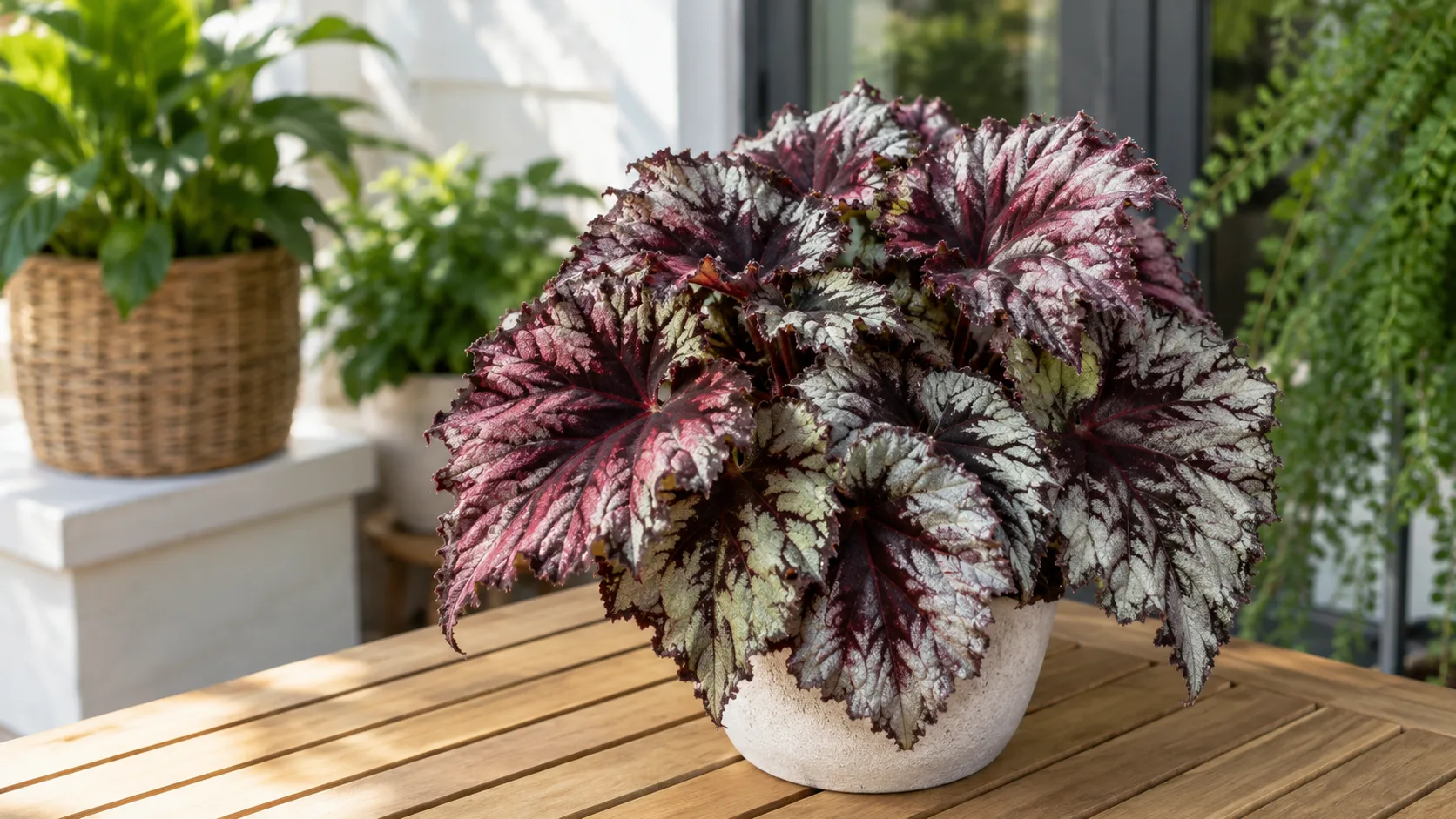
Begonia Rex - the painted-leaf rex begonias sold as Begonia rex-cultorum cultivars - is grown for foliage, not flowers. That sounds obvious until you stand in the fertilizer aisle and reach for a bloom booster because the leaves look dull. Rex begonias are rhizomatous begonias with a shallow crown and fine roots spread across a thickened horizontal stem. Missouri Botanical Garden describes them as high-maintenance indoor plants that need porous mix, high humidity above 50 percent, and regular fertilization at quarter strength during active growth - not full-strength heavy doses. (Missouri Botanical Garden)
The practical translation: rex begonias benefit from regular, weak feeding during the months they are actually growing. They are light feeders in total nutrient load but not “set and forget” plants. Feed too much, too strong, or at the wrong time and the same rhizome that makes rex begonias special becomes the first place salts accumulate and roots burn. Feed too little during a bright, humid summer and new leaves may stay small or lose contrast. For the full species picture - humidity targets, shallow pots, and dormancy behavior - start with the Begonia Rex overview.
Why Rex Begonias Need a Different Feeding Mindset Than Blooming Houseplants
North Carolina Extension groups rex types among rhizomatous begonias with dense, colorful foliage typically reaching 12 to 18 inches tall indoors. (NC State Extension) That compact size and shallow root zone mean the pot holds less soil buffer against fertilizer errors than a large fiddle-leaf fig or monstera. Begonia Rex fertilizer decisions should always account for how little soil sits between your watering can and the rhizome.
The American Begonia Society notes that rex cultorum begonias require porous planting mix, a shallow pot, heavy fertilization during growth (meaning frequent weak doses, not concentrated dumps), and careful avoidance of overwatering. Those requirements interact: a rex in the wrong pot, with poor drainage mix, or on a watering schedule that keeps the crown wet will not respond well to nutrients no matter how carefully you dilute them.
What Fertilizer Does for Rex Foliage (and What It Cannot Fix)
Fertilizer does not create leaf color from nothing. Genetics, light, humidity, and temperature set the ceiling. Nutrients determine whether the plant can express that color with firm new leaves, steady rhizome growth, and enough root mass to support the next flush. Nitrogen supports leaf expansion and green tissue. Phosphorus supports root development and overall plant function. Potassium helps with water regulation and stress tolerance inside the leaf. Micronutrients such as iron, manganese, and magnesium matter for chlorophyll and pigment stability, especially when rex begonias grow in peat-heavy, soilless mixes that contribute little nutrition on their own.
When feeding works, you see it in the newest leaves first. They emerge at normal size for the cultivar - whether that is silver-patterned ‘Escargot’ or burgundy-centered ‘Fireworks’ - hold their pattern, and firm up without crinkling or scorch at the edges. When feeding fails - or when other care fails and fertilizer gets blamed - symptoms overlap with brown tips, slow growth, and overwatering lookalikes. Diagnose environment before you chase nutrients.
Rex begonias also rest. Short days, cooler rooms, or lower humidity in winter can slow growth even in heated homes. During that slowdown, unused fertilizer stays in the mix and raises salt concentration. That is why seasonal feeding matters as much as product choice.
The Best NPK Ratio and Product Types for Painted-Leaf Begonias
The best default for most rex begonias is a balanced, water-soluble houseplant fertilizer with equal or near-equal nitrogen, phosphorus, and potassium - commonly labeled 10-10-10 or 20-20-20. Missouri Botanical Garden cites a balanced complete formula such as 23-19-14 applied at quarter strength every two weeks once spring growth starts. (Missouri Botanical Garden)
You do not need a rex-specific bottle unless it simplifies dilution for you. You need a complete product - one that lists micronutrients on the label - and the discipline to dilute it well below the printed indoor rate.
Balanced Formulas Versus Bloom Boosters
Bloom boosters with a high middle number (phosphorus-heavy formulas marketed for flowers) are the wrong default for rex begonias. These plants are not grown for showy blooms; their flowers are small and incidental. A balanced fertilizer supports leaves, roots, and overall vigor without skewing growth toward one nutrient.
Some guides suggest slightly higher nitrogen for foliage plants. That can be reasonable in moderation, but excess nitrogen often produces soft, leggy leaves with less intense patterning - the plant grows, but it does not look better. Heavy silver cultivars may show pale wash when overfed; dark cultivars may go limp before tips burn. If your rex already has good light and humidity and still produces small pale leaves, a balanced feed at weak strength is the safer first adjustment than switching to a high-nitrogen product.
Why Full Strength Almost Always Fails Indoors
Fertilizer labels usually describe rates for a wide range of plants in favorable outdoor or greenhouse conditions. Rex begonias in a 6-inch pot under average room light are not that context. Full-strength feeding on a repeating schedule is one of the fastest routes to brown leaf margins, white mineral crust on the soil surface, and stunted new leaves that look burned before they finish opening.
Most experienced rex growers use half strength or quarter strength of the label rate. Quarter strength aligns with Missouri Botanical Garden’s explicit recommendation for rex begonias in spring growth. If you are new to the plant, start at quarter strength every two to three weeks during active growth and increase only if new leaves stay consistently small despite good light, humidity, and watering - not because the calendar says it is time.
When and How Much to Feed During Active Growth
Feed Begonia Rex when the plant is in active growth, typically from early spring through late summer. In practice, that means new leaves are appearing, the rhizome is visibly advancing, and the plant is using water on a normal spring-to-summer rhythm - not sitting semi-dormant with no fresh growth for weeks.
A workable frequency range used across rex care references is every two to four weeks during the growing season. Missouri Botanical Garden recommends a balanced complete fertilizer at quarter strength every two weeks once spring growth starts. The American Begonia Society likewise recommends quarter-strength balanced fertilizer every two weeks once spring growth starts. (American Begonia Society)
Treat those numbers as a range, not a rule you owe the plant. A rex begonia under strong grow lights in a warm, humid cabinet may use nutrients faster than one on a north windowsill in a dry apartment. A recently repotted plant in fresh mix may need fewer feeds for the first month. The plant’s new growth is the schedule - not the first day of March on your calendar.
Dilution Math: Teaspoons Per Gallon and Milliliters Per Liter
“How much” is really two questions: what concentration and what volume per pot. Concentration matters more. A half-strength solution applied to saturation is still safer than full-strength concentrate poured into dry soil.
If the label says one teaspoon per gallon for houseplants, half strength is one-half teaspoon per gallon and quarter strength is one-quarter teaspoon per gallon. In metric terms, one US teaspoon is roughly 5 ml and one gallon is roughly 3.8 liters - so quarter strength is about 0.33 ml of concentrate per liter of water when the label rate is 5 ml per 3.8 L. Always mix in water first. Never sprinkle dry crystals onto the soil surface of a rex begonia.
For a typical 4- to 6-inch pot, water until a small amount drains from the bottom, using enough diluted solution to moisten the full root zone without leaving the plant sitting in runoff for hours. Empty the saucer after 15 to 30 minutes, as NYBG recommends for rex watering hygiene. (NYBG Plant Information) For shallow rex pots, less total volume is often enough because the rhizome sits near the surface.
When in doubt, under-feed. Rex begonias tolerate a missed month far better than a doubled dose after a guilt spiral.
Your Seasonal Feeding Calendar From Spring Through Winter
Rex begonias follow indoor seasons even when they never see frost. Light length, room temperature, and humidity shift feeding demand more than the date on the calendar.
Wait for New Growth, Not the Calendar
Resume feeding when you see new leaf buds or fresh leaves emerging from the rhizome, not simply when the calendar turns to March. Missouri Botanical Garden ties the start of fertilization to spring growth initiation. Begin with quarter- to half-strength balanced fertilizer every two to three weeks. Through late spring and summer, maintain that rhythm while growth stays active.
Forcing nutrients before metabolism ramps up adds salts while the rhizome is still idle - a common reason white crust appears on mix that has not yet supported a single new leaf.
Grow-Light Cabinets Versus North-Window Windowsills
Under grow lights with stable warmth and humidity above 50 percent, rex begonias often stay in active growth longer and can use the two-week end of the feeding range through summer. A warm cabinet accelerates slow-release pellets too - heat releases nutrients faster in shallow pots, so liquid control is usually safer unless you apply controlled-release at conservative container rates.
On a north windowsill or in a cool room, growth may stay slow even in June. Stretch feeding toward three or four weeks, confirm bright indirect light is adequate before you increase strength, and pause entirely if the plant enters partial dormancy with leaf drop. Winter exception: if new leaves keep unfurling under long-day lights, a quarter-strength feed once every four to six weeks may be appropriate. If the rhizome is idle, hold plain water only.
| Season | Growth status | Feeding approach |
|---|---|---|
| Early spring | New leaves emerging | Start quarter- to half-strength every 2–3 weeks |
| Late spring–summer | Active foliage production | Continue every 2–4 weeks at reduced strength |
| Fall | Slowing growth | Reduce frequency; last feed at half prior rate |
| Winter | Dormant or minimal growth | Stop feeding; water sparingly if leaves drop |
Missouri Botanical Garden says to taper off in fall and stop in winter unless strong supplemental light keeps the plant actively growing.
Step-by-Step Application Without Burning Shallow Rhizomes
Safe feeding on rex begonias starts before the fertilizer bottle opens. Check soil moisture, growth stage, and stress signs first. If the top inch of mix is dry, water with plain water per the Begonia Rex watering guide and fertilize on the next cycle when the soil is evenly moist but not waterlogged. Applying fertilizer concentrate to dry rhizomes is a common burn trigger on shallow-rooted plants.
Mix fertilizer at your chosen dilution in room-temperature water. Pour slowly at the soil surface near the pot edge, not over the rhizome crown or the patterned leaves. Rex foliage holds water poorly and spots easily; fertilizer on leaves adds burn risk without meaningful benefit indoors. NC State Extension warns that wet leaves and poor air circulation invite fungal problems on rex types - keep the crown dry when you feed. (NC State Extension)
Water until the mix is moist throughout and a little drains from the bottom. Discard saucer runoff. Mark the date so you are not guessing when the last feed happened. Plan a plain-water flush every two to three months during the feeding season to leach accumulated salts - especially if you feed toward the shorter end of the interval or use tap water with existing mineral content, as NYBG notes can cause cosmetic leaf damage.
Liquid, Slow-Release, and Organic Options Compared
Liquid water-soluble fertilizer is the default choice for rex begonias because you control dose precisely and can stop instantly if the plant reacts poorly. It matches Missouri Botanical Garden’s spring recommendation and what most rex-specific guides describe.
Slow-release or controlled-release granules can work, but they are harder to dial back once applied. Missouri Botanical Garden notes that a controlled-release product every three months is an alternative to liquid feeding. In small shallow pots, heat and frequent watering can release nutrients faster than expected. If you use granules, apply sparingly at the pot edge per label rates for containers, avoid burying them against the rhizome, and skip additional liquid feeds unless you know the release rate matches your conditions.
Organic options such as diluted fish emulsion, compost tea, or worm castings mixed lightly into the top layer can work for growers who prefer organic inputs. Fish emulsion is effective but strong-smelling and easy to overapply; use it at weaker dilution than the label suggests and less often than synthetic liquid feed.
Foliar feeding - spraying fertilizer on leaves - is poor practice for rex begonias indoors. Nutrients belong in the root zone. If fertilizer splashes on foliage, rinse with plain water and improve your pour technique next time.
How Fertilizer Fits With Light, Water, Humidity, and Soil
Fertilizer is the last lever, not the first. A rex begonia in dim light uses less nitrogen and cannot produce vivid new leaves no matter how perfectly you dilute 20-20-20. Increase light toward bright indirect exposure - or supplement with grow lights - before you increase fertilizer strength.
Watering rhythm matters because overwatering compacts mix, reduces oxygen at the rhizome, and mimics nutrient problems through root decline. underwatering on Begonia Rex produces crispy leaves that look like fertilizer burn but trace to dry air and dry soil instead. Fix moisture and humidity - rex begonias generally want more than 50 percent relative humidity per MOBOT and NYBG guidance - before chasing nutrients. Persistent crisp margins with firm rhizome and no salt crust often point to low humidity, not hunger.
Soil age matters too. Fresh, porous peat-perlite-bark mix holds fewer salts. Old, broken-down mix holds fertilizer residues and water differently. If you have fed faithfully for a year without repotting and the plant looks dull with crusty soil, repotting into fresh mix may solve more than another fertilizer upgrade.
Think of feeding as tuning an engine that already has fuel, air, and spark. Light is the spark. Water and humidity are the air flow. Soil and roots are the fuel delivery system. Fertilizer is additive octane - useless if the engine is flooded or starved.
Signs of Correct Feeding Versus Over- and Under-Feeding
Correct feeding shows up quietly. New leaves match the cultivar’s expected size and color intensity. Older leaves age naturally without widespread tip burn. The soil surface stays mostly free of white crystalline crust. The rhizome at the soil line looks firm, not shriveled or mushy. Growth is steady through spring and summer without sudden crashes after each feed.
Over-fertilizing is easy on rex begonias because shallow rhizomes and small pots magnify salt stress. Signs include brown or scorched leaf tips and margins, white crust on the soil or pot rim, stunted or twisted new leaves, sudden leaf drop after feeding, and wilting despite moist soil when root tips are damaged by salts - a pattern that overlaps with overwatering until you inspect the rhizome and soil crust.
Under-fertilizing is slower and easier to confuse with other problems. Pale green leaves, smaller new foliage over multiple flushes, and weak rhizome advance during an otherwise good growing season can indicate mild hunger. But pale rex leaves often trace to too little light or low humidity first. Before increasing fertilizer, confirm bright indirect light, even moisture without crown rot, and humidity near or above 50 percent.
| Symptom | More likely over-feeding if… | More likely under-feeding if… |
|---|---|---|
| Brown leaf tips | Appears soon after feeding; salt crust present | Tips crisp from dry air; no crust - see brown tips guide |
| Small new leaves | New leaves twisted or burned | New leaves pale but intact; good light |
| Leaf drop | Drop within days of feed | Drop in winter dormancy |
| Soil surface | White mineral crust | No crust; old depleted mix |
Flushing Salts and Recovering From Fertilizer Burn
If you suspect fertilizer burn or see salt crust, stop feeding immediately. Move the pot to a sink or tub and flush with plain room-temperature water passed slowly through the mix several times, letting full drainage occur between passes. The goal is to dissolve and carry excess salts out of the drainage holes, not to flood the rhizome crown repeatedly in one sloppy pour.
After flushing, let the plant drain completely and return it to its normal bright indirect spot. Pause fertilizer for four to six weeks, longer if damage was severe. Remove fully scorched leaves with clean scissors for hygiene, but do not strip the plant bare - it still needs foliage for recovery.
If crust returns quickly after one flush, the mix may be saturated with salts. Repot into fresh, well-draining rex mix per the repotting guide, trimming only mushy roots, and wait until new growth starts before feeding lightly.
A Documented Recovery Timeline After Salt Crust
Observed case (LeafyPixels grow log, March 2026): A 4-inch ‘Escargot’ rex on a east windowsill showed white mineral rings after six weeks of quarter-strength 20-20-20 every two weeks - feeding continued because new leaves still opened, but the youngest leaf arrived with brown margins. Feeding stopped immediately. The pot received three slow plain-water passes over two days, with full drainage between each. Saucer runoff was discarded each time.
Week 1–2: No fertilizer. Soil surface crust softened; one oldest leaf yellowed and was removed. Week 3–4: Plain water only when the top 2 cm dried. Week 5: First new leaf emerged without edge burn at the same quarter-strength schedule resumed - one feed only. Week 8: Second clean leaf confirmed the salt load had dropped. Lesson: rex begonias forgive weak feeding after burn faster than they forgive repeated full-strength “recovery” doses.
Badly burned leaves will not green up again; judge success on new unstressed growth only. If tip burn persists on every new leaf after flush and pause, see the brown tips guide for light and humidity checks before feeding again.
When Not to Fertilize (Even During Growing Season)
Skip fertilizer - even in spring or summer - when any of the following apply:
- The soil is dry and the plant is wilted. Rehydrate first.
- The plant was repotted within the last three to four weeks into fresh mix with slow-release starter nutrients.
- You see salt crust, recent burn, or leaf drop right after the last feed.
- The plant is fighting root rot on Begonia Rex, crown rot, severe pest pressure, or heat stress.
- Winter dormancy has started - leaf drop, no new growth, rhizome idle.
- You are experimenting with a new light location and the plant is adjusting; stabilize care before adding nutrients.
Fertilizer on a sick rex begonia adds load the rhizome cannot use. Also pause if you cannot explain why the plant looks bad. Diagnose light, water, humidity, and roots first.
Never feed immediately after crown moisture or leaf-spotting from overhead watering. Salts plus wet crown tissue compound stress and invite fungal issues on rex foliage.
Eight Common Rex Fertilizer Mistakes
Mistake 1: Feeding at full label strength. Fix by halving the dose, then halving again if the plant ever showed crust or tip burn. Stay at quarter strength through at least one full growing season before experimenting upward.
Mistake 2: Feeding on a calendar while the plant is dormant. Fix by watching new leaf emergence. No new growth for weeks means no fertilizer, even if it is June on paper.
Mistake 3: Fertilizing every watering. Constant weak solution accumulates salts in small pots faster than rex roots tolerate. Fix by alternating plain water between scheduled feeds, or flushing monthly during active feeding.
Mistake 4: Using bloom booster for foliage. Fix by switching to balanced 10-10-10 or 20-20-20 at weak dilution.
Mistake 5: Ignoring slow-release pellets in small pots. Fix by removing undecomposed granules during repotting and choosing liquid control instead, or using controlled-release only at conservative container rates.
Mistake 6: Pouring over the rhizome crown. Fix by watering at the pot edge with a narrow spout and keeping foliage dry.
Mistake 7: Chasing pale leaves with more fertilizer when light is too low. Fix by improving bright indirect light, then reassessing whether feeding changes are needed at all.
Mistake 8: Forgetting pet safety when spills happen. Rex begonias contain soluble calcium oxalates and are toxic to cats and dogs if ingested, with underground parts especially concerning per ASPCA guidance. (ASPCA) Wipe spilled fertilizer and keep bottles off pet-accessible shelves.
How We Wrote and Verified This Guide
Author: sai-ananth. Reviewed by: LeafyPixels Review Board (2026-06-15). Methodology: Guide recommendations are reviewed against botanical or extension references, LeafyPixels plant-care data, and practical indoor growing constraints before publication. Rex fertilizer guidance was cross-checked against Missouri Botanical Garden Begonia rex-cultorum PlantFinder, American Begonia Society rex cultorum guidance, NC State Extension rex types profile, NYBG rex watering and humidity FAQs, and ASPCA Begonia toxicity. Claims validation was run after publication.
Related Begonia Rex guides: Overview · Watering · Light · Soil · Repotting · Brown tips · Overwatering · Low humidity · Slow growth
Conclusion
Begonia Rex fertilizer success comes down to three habits: feed only during active growth, use balanced water-soluble fertilizer at quarter to half label strength, and stop in fall or winter when the rhizome rests. Every two to four weeks during spring and summer is the usual range, but your plant’s new leaves matter more than any fixed calendar. Water moist soil before you feed, keep solution off the crown and foliage, and flush salts every few months if you feed regularly.
If something looks wrong, assume over-feeding or environmental stress before you buy a stronger bottle. Brown tips, white crust, and sudden leaf drop after feeding mean pause, flush, and wait - not double down. Fix light and watering first; fertilizer is the quiet last step that keeps painted leaves worth showing off. When tip burn persists after recovery, use the brown tips guide before increasing nutrients again.
When to use this page vs other Begonia Rex guides
- Begonia Rex overview - Start here for whole-plant context before deep-diving this topic.
- Begonia Rex problems hub - Jump to symptom-specific fix guides when this care topic does not resolve the issue.