Brown Tips on Begonia Rex: Causes, Checks & Fixes
Quick answer
Brown tips on Begonia Rex usually mean the leaf margins lost moisture faster than the plant could replace it-most often from dry indoor air below 50% RH, hard tap water, or direct sun on patterned foliage. First step: check a hygrometer beside the canopy and probe the top 2–3 cm of mix before you water more.
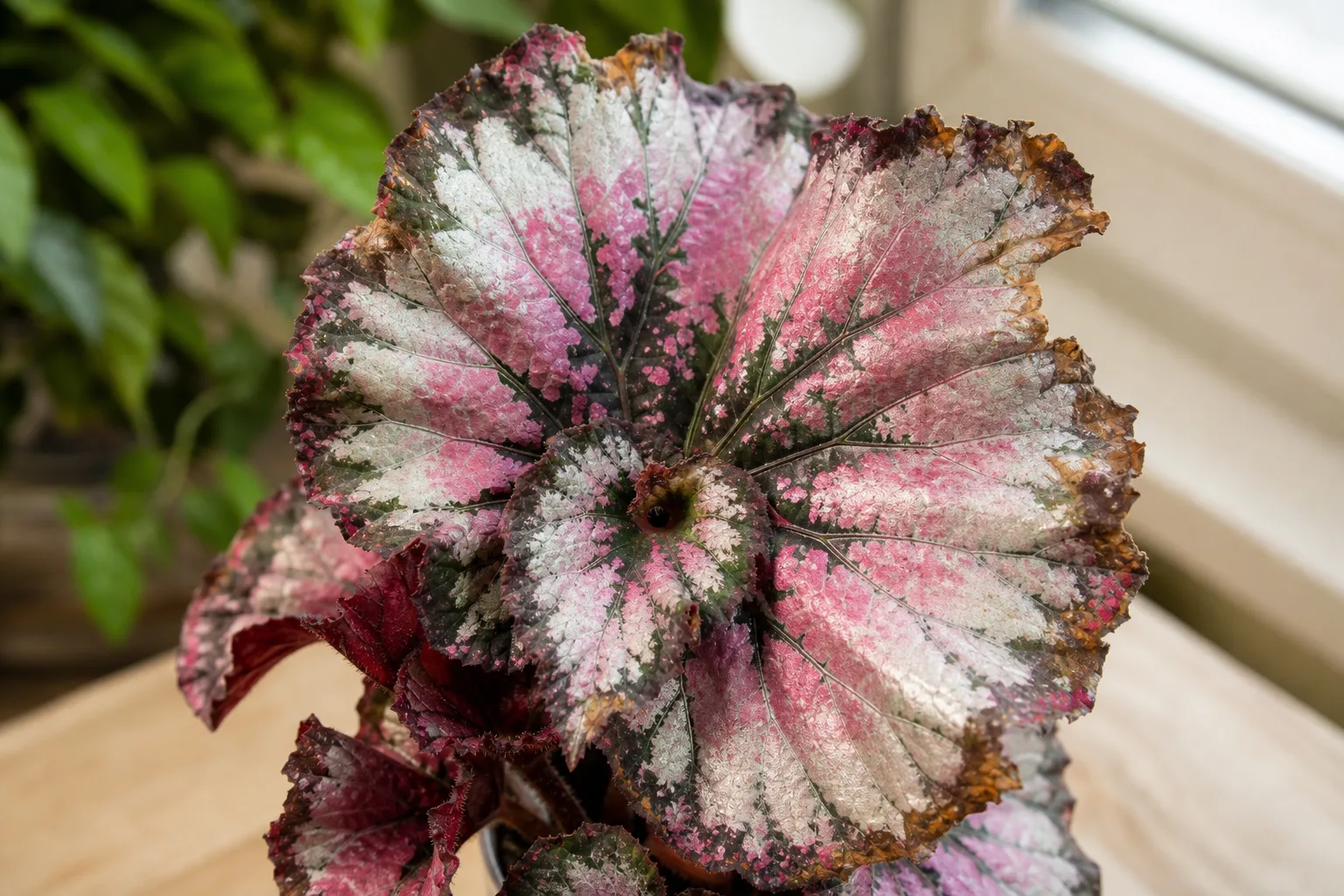
Brown Tips on Begonia Rex: Causes, Checks & Fixes
This guide covers brown tips on Begonia Rex. See also the general Brown Tips guide, watering, and light pages for this plant.
Brown Tips on Begonia Rex: Causes, Checks & Fixes
Quick answer
Brown tips on Begonia Rex (Begonia rex-cultorum) are edge desiccation on thin, patterned foliage-not one diagnosis. Rex begonias grow from a shallow rhizome with leaves on short petioles; margins lose water first when air is dry, water carries minerals, or sun hits one side of each leaf. That anatomy means brown tips often trace to low humidity below about 50% RH, hard tap water or salt buildup, inconsistent watering, heater or AC drafts, or direct sun scorch-sometimes two causes at once in a dry winter window.
First step: read a hygrometer beside the canopy and probe the top 2–3 cm of potting mix. If RH reads below 50% and oldest outer leaf edges are papery while the rhizome is firm, start with a humidifier targeting 50–70% and filtered water-not crown misting and not extra watering on already-damp mix. For full baseline care rhythm, see the Begonia Rex overview. This page is the multi-cause brown-edge hub; RH deep-dives live on low humidity.
What brown tips look like on Begonia Rex
Rex begonias are grown for bold metallic and burgundy leaf patterns on relatively thin blades. Brown tips and margins show up in distinct patterns:
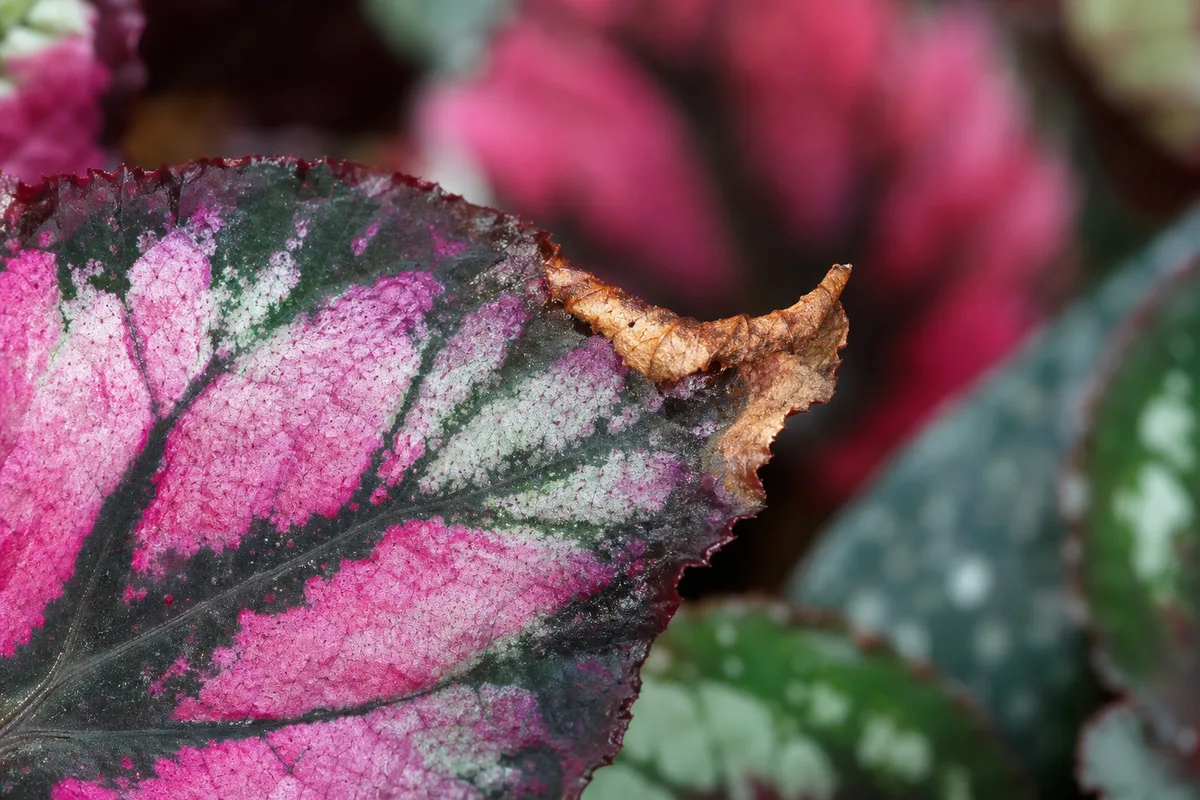
Brown Tips symptoms on Begonia Rex - compare with healthy tissue on the same plant.
- Low-humidity edge crisping - Oldest outer leaves develop dry, papery brown margins that start at tips and creep inward while the leaf center still holds color. New center growth may look fine at first. Heated winter rooms, AC airflow, and spots near radiators are common triggers. Often overlaps with a dull yellow-green wash before full crisping-see low humidity.
- Tap-water and salt-burn edges - Brown tips with a crisp, sometimes whitish crust along margins; you may see white crystals on the soil surface after regular feeding. Damage can appear on multiple leaves even when humidity seems adequate. NYBG warns that high mineral content in water can cause cosmetic leaf damage on rex cultivars.
- Underwatering dry-down - Lower leaves first; edges turn brown and brittle while the pot feels lightweight and mix pulls away from pot sides. Less common than humidity stress on rex begonias but real after repeated long dry cycles. See underwatering.
- Overwatering with edge symptoms - Wet mix for days plus limp leaves and sometimes brown margins when roots fail to move water-edges dry even though soil is damp. Check rhizome firmness; this pattern can escalate to root rot or overwatering.
- Direct sun scorch - Patchy brown or bleached zones on the sun-facing side of each leaf; shaded portions keep stronger patterning. Rex begonias need bright indirect light, not harsh rays through south or west glass.
- Draft and vent desiccation - One-sided browning on leaves nearest a heater, AC vent, or cold window glass while the rest of the rosette looks normal.
Worry when browning reaches new crown leaves, pairs with wet soil and a soft rhizome, or hits many blades within a week-not when one oldest outer leaf shows dry margins in a 32% RH winter room.
Why Begonia Rex gets brown tips
Low humidity and winter heating
This is the leading cause of brown tips on rex begonias indoors. Rex Cultorum Group plants need relative humidity above 50%, and thin- or silky-leaf cultivars may need 60–80%. NYBG notes that crispy leaf margins signal the plant needs greater humidity. Typical heated homes drop to 25–40% RH in winter; rex leaf edges desiccate before the center because margins transpire fastest.
Rex begonias are rhizomatous foliage plants with shallow roots in often-small pots-soil can stay appropriately moist while air still strips moisture from leaf edges. That split is why brown tips persist even when you water on schedule.
Hard tap water and fertilizer salt buildup
Minerals in tap water and repeated fertilizer applications leave salts in the mix. As moisture moves through leaves and evaporates, salts concentrate at margins and burn tissue brown. NYBG specifically links high mineral content in water to cosmetic rex leaf damage. Colorado State Extension notes that brown leaf tips and white crust on soil are classic salt-buildup signs on houseplants.
Inconsistent watering and shallow rhizome pots
Rex begonias prefer evenly moist but never soggy mix. UConn advises watering when the top inch of mix feels dry and notes it is better to underwater slightly than overwater. Repeated wet-dry swings stress margins: a long dry spell crisp edges; compensating with heavy watering on an already-wet rhizome invites crown problems without fixing the desiccation pattern.
Shallow pots dry unevenly-surface may look dry while the rhizome zone stays damp, or the reverse after a deep soak.
Direct sun and heat stress
Rex leaves evolved under forest canopy. Direct sunlight bleaches and scorches patterned foliage within days. Scorched tissue turns brown and papery on exposed surfaces while the shaded side of each leaf retains color-a different pattern from uniform humidity crisping on all outer leaves.
Drafts, vents, and microclimate extremes
Forced-air heating, AC outlets, and cold window panes create localized dry zones. One side of the rosette browns while humidity a few feet away reads acceptable on a wall-mounted hygrometer-always measure at plant height.
Lookalike symptoms to rule out
Before repotting, feeding, or misting, rule out these common misreads:
| Pattern | Likely cause | Key differentiator |
|---|---|---|
| Papery brown margins on oldest outer leaves; firm rhizome; RH below 50% | Low humidity | Uniform edge crisping; new growth may be clean initially |
| Brown edges + white soil crust; regular feeding | Salt / fertilizer burn | Crust on mix surface; multiple leaves despite adequate RH |
| Crispy edges + lightweight pot; dry deep mix | Underwatering | Pot light; mix pulls from sides-not wet heavy pot |
| Brown edges + wet soil + limp leaves | Overwatering / root stress | Rhizome may soften; sour smell possible |
| Patchy brown on sun-facing leaf side only | Sun scorch | Shaded side keeps pattern; placement in direct rays |
| One-sided edge burn | Draft or vent | Damage localized to leaves nearest the airflow source |
| Brown tips climbing to new growth + soft crown | Root rot escalation | Urgent-see root rot |
If wet soil, limp foliage, and spreading brown margins appear together, fix drainage and rhizome moisture before raising humidity.
How to confirm the cause
Work through this rex-specific inspection in order:
- Hygrometer at canopy height - Below 50% RH strongly supports humidity correction. Thin-leaf cultivars may need 60% or higher per NYBG rex guidance. Note if the plant sits near a heater, vent, or cold glass.
- Moisture at 2–3 cm depth - Press into the top layer. Cool clinging mix means do not add water for edge crisping. Lightweight pot and crumbly mix suggest underwatering. Surface dry with heavy pot means probe deeper-the center may still be wet.
- Which leaves are affected - Oldest outer margins only, slowly = humidity or salts likely. Sun-facing patches = light scorch. One side of rosette = draft. Many leaves quickly + wet soil = overwatering likely.
- Water source and soil surface - White crust, hard tap water, or humidifier filled with tap water points to mineral burn. Filtered water with low RH points to humidity first.
- Light at plant height - Direct sun on patterned leaves, or deep interior shade more than six feet from glass, both produce distinct browning with different fixes. See light and not enough light.
- Rhizome firmness - Gently press where petioles meet soil. Firm tissue supports humidity, water-quality, or light fixes. Soft tissue with wet mix means escalate to root rot the same week-do not only humidify.
Confirmed low-humidity crisping shows at least two signs: RH below 50% at the plant, papery margins on outer leaves, and firm rhizome without sour soil smell.
First fix for Begonia Rex
Run a humidifier beside the canopy to hold 50–70% RH-and use filtered or distilled water for both the humidifier and the next watering.
That single environmental correction addresses the most common rex brown-tip cause without wetting leaves or drowning an already-moist rhizome. Do not mist foliage-NYBG does not recommend misting because water settling on rex leaves causes spots; NC State Extension advises avoiding misting to prevent disease.
Make this one change first. Wait two weeks and watch the next unfurling leaf before stacking repotting, heavy feeding, or pest treatments.
If you confirmed a different cause
Salt or mineral burn (white crust, hard tap water, brown edges despite good RH): Leach the mix by running room-temperature filtered water through the pot until it drains freely, discard runoff, and switch to low-mineral water going forward. Hold fertilizer until new growth looks stable. See Colorado State guidance on leaching salts from potting mix.
Underwatering (lightweight pot, dry deep mix, papery lower edges): Water thoroughly until a little drains, empty the saucer within 30 minutes, then resume checking the top 2–3 cm on a regular rhythm-see watering.
Overwatering (wet mix, limp leaves, heavy pot): Pause watering until the top 2–3 cm dries; keep the crown dry when you eventually water. See overwatering.
Sun scorch (patchy browning on exposed leaf sides): Move out of direct rays to bright indirect light; trim fully scorched leaves if mostly dead.
Draft damage (one-sided crisping): Relocate away from vents, radiators, and cold glass; add humidity if the new spot is still dry.
Recovery timeline
Brown rex leaf margins do not turn green again. Recovery is measured by new growth unfurling without fresh edge burn-not old blade color:
- Mild humidity crisping - Spread often stops within one to two weeks once RH stabilizes at 50% or higher. The next new leaf may emerge clean within two to three weeks.
- Salt flush and water-quality switch - Existing damage stays brown; new leaves show improvement within two to four weeks if salts were the driver.
- Sun scorch - New leaves after relocation should hold patterning within two to three weeks; scorched tissue remains on old blades.
- Overwatering-related edge symptoms - Depends on rhizome health. Firm rhizome plus dry-down may take two to four weeks; soft crown tissue may not fully recover.
Signs of improvement: hygrometer holds target RH, new leaves unfurl without crisp edges, outer damage does not climb toward the crown. Signs of worsening: browning on new growth, soft rhizome, sour soil, or edges spreading while soil stays wet.
What not to do
Do not mist leaves or the crown to fix brown tips-rex begonias are prone to powdery mildew and leaf spots when foliage stays wet.
Do not water more because edges look dry when the top 2–3 cm of mix is already damp-overwatering worsens rhizome stress and will not rehydrate crisp margins in dry air.
Do not fertilize a stressed plant with brown edges. Salt buildup from overfeeding causes the same symptom you are trying to fix.
Do not place the pot in a pebble tray so the base touches standing water-roots need drainage; trays work only when the pot sits above the water line.
Do not trim every leaf on day one unless tissue is fully dead. Partially green leaves still support recovery.
Do not ignore soft rhizome tissue while treating humidity. Crown collapse with wet soil is urgent-see root rot.
How to prevent brown tips next time
Prevention matches how rex rhizomes and thin foliage actually behave indoors:
- Hold 50–70% RH year-round - Humidifier beside the canopy beats misting; thin-leaf cultivars may need the upper end per NYBG. Monitor with a hygrometer at plant height, not across the room.
- Use low-mineral water - Filtered, distilled, or rainwater for watering and humidifier fill reduces edge burn on rex foliage.
- Water when the top inch dries - UConn rex guidance: top inch dry before watering; keep the crown dry when you pour.
- Bright indirect light only - No direct sun on patterned leaves; rotate a quarter turn weekly for even growth.
- Keep away from vents and cold glass - Drafts desiccate margins faster than center tissue.
- Flush salts occasionally - If you feed through spring and summer, a thorough filtered-water flush reduces fertilizer-related tip burn.
- Remove spent outer leaves promptly - Makes new edge stress easier to spot early.
- Plan for winter dryness - Heating season drops RH; start the humidifier before edges crisp, not after half the rosette is damaged.
When to worry
Treat brown tips as urgent when:
- Browning reaches new crown leaves within days, not slowly on oldest outer foliage.
- Rhizome feels soft at the soil line or soil smells sour-pair with root rot guidance.
- Many leaves brown within a week while soil stays wet-root failure may masquerade as dry edges.
- Wilting pairs with wet soil and spreading margin damage.
Treat as normal watchful waiting when:
- Only oldest outer margins crisp slowly in a dry heated room with a firm rhizome.
- You raised RH and switched water and need two to three weeks to read the next unfurling leaf.
Begonia Rex care cross-check
If brown tips return after humidity correction, compare your routine to rex needs:
| Checkpoint | Healthy target | Brown-tip risk when wrong |
|---|---|---|
| Relative humidity | 50–70% at canopy; higher for thin-leaf cultivars | Heated winter air below 50% RH |
| Water quality | Filtered or low-mineral water | Hard tap water; salty humidifier fill |
| Soil moisture | Top inch dry before watering; crown stays dry | Wet-dry swings; watering wet mix for “dry edges” |
| Light | Bright indirect; no direct scorch | Sun-facing patchy burn on patterned leaves |
| Placement | Away from vents, radiators, cold glass | One-sided draft desiccation |
| Fertilizer | Dilute, active season only; occasional flush | Salt crust on soil; tip burn despite good RH |
Fix the failing checkpoint before upsizing the pot, feeding heavily, or treating for pests you have not confirmed.
Related Begonia Rex guides
- Begonia Rex overview - rhizome biology, humidity, and baseline care rhythm
- Low humidity - RH targets, humidifier setup, and pebble trays
- Watering - top-inch dry-down and crown-dry technique
- Underwatering - dry rhizome and crispy lower edges
- Overwatering - wet rhizome when edges brown on damp mix
- Root rot - soft crown escalation
- Yellow leaves - full-blade yellowing and rhizome stress patterns
- Light - bright indirect placement and sun scorch avoidance
- Not enough light - pale growth that overlaps with humidity stress