Underwatering on Begonia Rex: Causes, Checks & Fixes
Quick answer
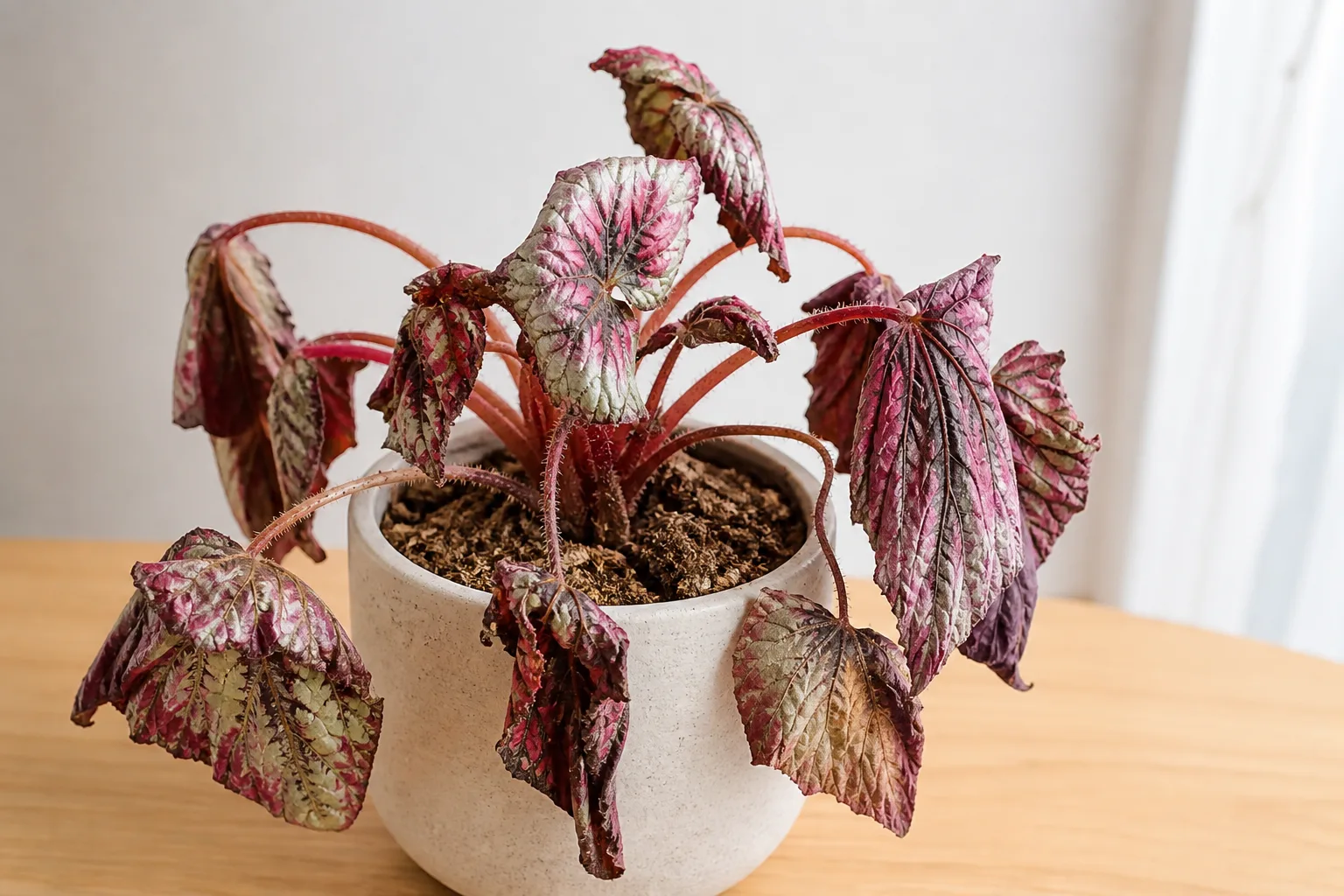
Underwatering on Begonia Rex shows as a very light pot, limp or curling leaves, and dry mix several centimeters down. First step: bottom-water in a tray until the surface moistens, drain fully, then resume checking the top 2–3 cm before the next drink.
Underwatering on Begonia Rex: Causes, Checks & Fixes
This guide covers underwatering on Begonia Rex. See also the general Underwatering guide, watering, and light pages for this plant.
Underwatering on Begonia Rex: Causes, Checks & Fixes
Quick answer
Underwatering on Begonia Rex (Begonia rex-cultorum) means the rhizome and shallow roots have gone too long without usable moisture. The painted leaves wilt first because their large surface area loses water quickly, while the creeping rhizome sits near the soil surface where mix dries out fast in bright light or warm, dry air.
First step: bottom-water today. Set the pot in a tray of room-temperature water for 15–30 minutes until the top of the mix darkens and feels moist, then lift it out and let it drain completely. Do not splash water on the velvety leaves or crown-that invites mildew on a plant already under stress. One thorough soak beats repeated small sips that never reach the dry core of the root ball.
What underwatering looks like on Begonia Rex
Rex begonias telegraph thirst through their foliage before the rhizome fails. Common above-soil signs include:
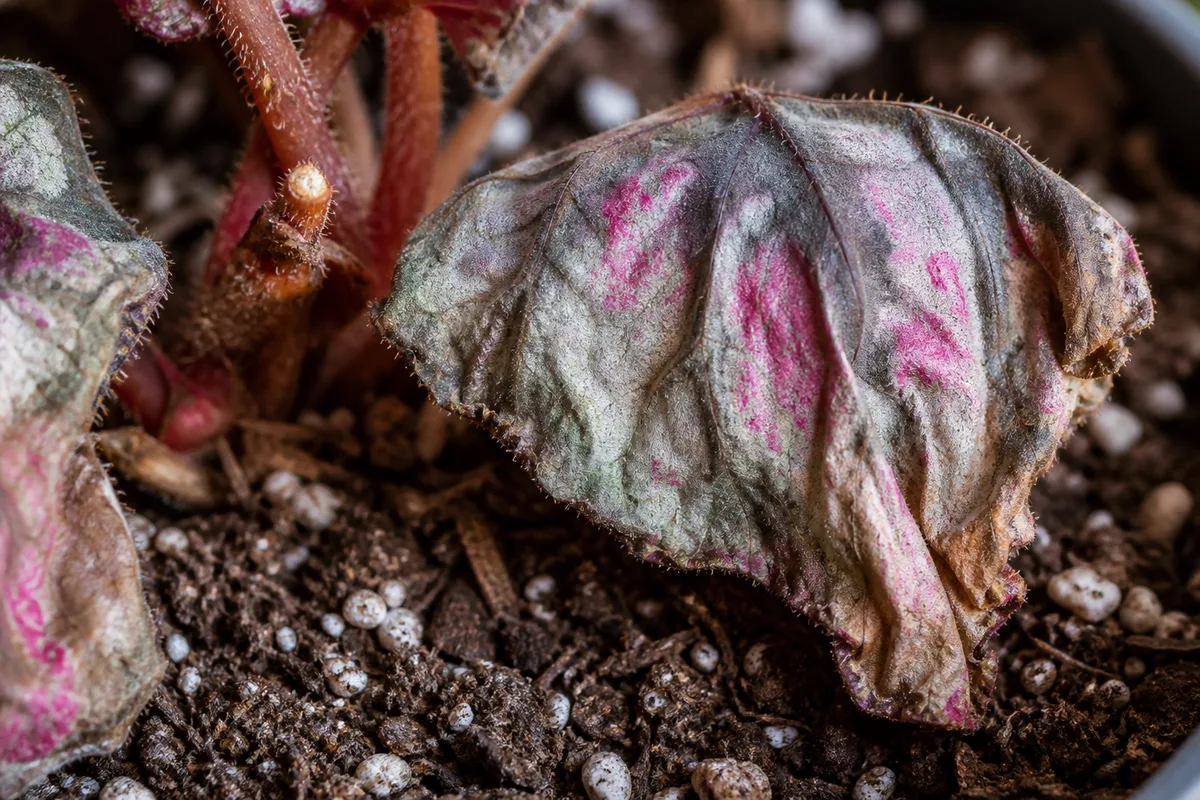
Underwatering symptoms on Begonia Rex - compare with healthy tissue on the same plant.
- Limp, drooping leaves on Begonia Rex that feel thin rather than plump-the whole rosette may look collapsed by afternoon; wilting leaves signal a plant getting too dry
- Leaf curl or cupping as cells lose turgor pressure
- Dry, lightweight pot when lifted; a very light pot often indicates dry soil
- Mix pulled away from the pot wall, leaving a gap between soil and plastic or ceramic; shrinking soil away from the pot indicates very dry conditions
- Crispy brown margins on older leaves-often worsened by low humidity but triggered or amplified by dry roots
- Slowed or stalled new growth from the rhizome while existing leaves decline
Below soil, underwatered rex roots stay firm and pale, not brown or mushy. The rhizome should feel solid, not soft. There is no sour smell from the pot. That dry-firm profile separates drought from the overwatering on Begonia Rex pattern where soil stays wet, lower leaves yellow, and stems soften at the soil line.
Do not confuse underwatering with winter rest. Many rex cultivars slow or stop growth in fall and may drop leaves when light and temperatures drop. During that rest you water less-but the potting medium should not dry completely in winter. A dormant plant with firm rhizome and barely moist soil is normal; a actively growing plant with dust-dry mix and limp leaves is underwatering.
Why Begonia Rex gets underwatered
Rex begonias evolved on humid forest floors in northeastern India and southern China. Indoors they need steady root-zone moisture without constant sogginess-a balance that is easy to miss. Missouri Botanical Garden describes rex care as demanding: high humidity above 50%, porous mix, shallow pots, and letting the surface become almost dry between waterings while still avoiding chronic drought.
Shallow roots and a surface rhizome dry faster than deep-rooted houseplants. A small pot in Begonia Rex light guide may need water every few days in summer, not the 7–10 day calendar you use in winter. Root-bound plants with little mix left to hold water can go from fine to wilted in 48 hours.
Fear of overwatering pushes many owners to wait too long. Rex begonias are notorious for rot when soil stays wet, so underwatering feels safer-but repeated dry cycles stress the rhizome, kill fine root hairs, and make the plant harder to re-wet later.
Other rex-specific triggers:
- Heat and dry air near radiators, AC vents, or sunny windows accelerate transpiration from large, thin leaves
- Light soilless mix in plastic pots dries quickly and can become hydrophobic when allowed to go bone dry-water then runs down the sides without soaking the center
- Bottom-watering skipped or cut short so only the saucer base gets moist while the top stays dry
- Winter watering cut too aggressively while the plant still has leaves and active growth under lights
- Travel or neglect during peak growing season when evaporation is highest
Low humidity alone can crisp leaf edges on rex begonias, but if the pot is light and mix is dry at depth, underwatering is at least part of the problem-fix moisture at the roots first, then address humidity for long-term leaf quality.
How to confirm the cause
Work through these checks before you soak or repot:
- Pot weight - Lift the pot. Very light means dry; heavy and cool at the surface suggests wet soil and a different diagnosis.
- Soil moisture at depth - Stick a finger 2–3 cm into the mix, or use a moisture meter partway down. Dusty dry throughout confirms drought. Damp deep mix with wilted leaves suggests root damage from overwatering, not thirst-wilted leaves with wet soil often mean rotting roots cannot take up water.
- Stem and rhizome firmness - Gently press the base. Firm tissue supports underwatering; soft, mushy crowns point to rot-do not soak heavily without inspecting roots.
- Soil gap test - If mix has shrunk from the pot sides and water runs straight through to the saucer, the root ball is extremely dry or hydrophobic.
- Recent care history - Has the plant gone more than 10–14 days without a thorough drink during active growth? Was it moved to a brighter or hotter spot without increasing water checks?
- Smell and roots (if unsure) - Tip the plant out. Healthy roots are white or tan and firm. Sour odor or brown slime means rot-treat that, not drought.
If the pot is light, mix is dry several centimeters down, and stems are firm, treat as underwatering. If soil is wet and roots are mushy, read the overwatering or root rot on Begonia Rex guides instead-adding water will make rot worse.
First fix for Begonia Rex
Bottom-water until the full root zone rewets, then drain.
Rex begonias are sensitive to wet foliage, so base watering is the safest rehydration method:
- Fill a basin or tray with room-temperature water (tepid, not cold from the tap).
- Set the pot in the water so the mix can draw moisture up through the drainage holes. Wait 15–30 minutes until the top 1–2 cm of soil darkens and feels moist to the touch.
- Remove the pot and let it drain freely for at least 15 minutes. Discard excess water from the saucer after 15 minutes-rex roots deteriorate rapidly if left sitting in a wet dish.
- Do not mist leaves as a substitute; roots need soil moisture, not a surface spritz.
If water ran through instantly on a previous attempt because the mix was shrunken and hydrophobic, repeat the bottom soak once or poke a few shallow holes in the dry surface to help water penetrate. For severely dry plants, a second 20-minute soak after the first drain is acceptable.
Do not follow the soak with daily top watering “to be safe”-that swings toward the rot rex begonias tolerate poorly. Wait until the top 2–3 cm feels dry again before the next thorough bottom-water.
Step-by-step recovery
After the first soak:
- Move out of stress zones - Shift the plant away from direct hot sun, heating vents, and cold AC blasts while it recovers. Bright indirect light is ideal.
- Boost humidity - Target 50% relative humidity or higher with a humidifier or pebble tray. Crispy edges from dry air will not heal on old leaves, but stable humidity reduces further margin damage while new growth emerges.
- Resume the check-don’t-calendar rhythm - Water when the top 2–3 cm of mix is dry during active growth; reduce frequency in fall and winter but do not let the medium go completely dust-dry for weeks.
- Trim only after stabilization - Remove fully crisp or collapsed leaves once turgor returns to the rest of the plant. Leave partially damaged leaves if they still photosynthesize.
- Repot only if needed - If the mix has collapsed, smells stale, or stays hydrophobic after two soaks, repot into fresh light, well-draining mix in a shallow pot sized to the rhizome. Do not upsize dramatically.
- Hold fertilizer - Skip feed until new leaves look healthy for two weeks. Salt on drought-stressed roots adds stress.
Recovery timeline
Mild dehydration - Leaves often regain turgor within 24–48 hours after a proper bottom soak; many plants perk up within hours once thoroughly rewetted. You should see stems stiffen and the rosette lift before new growth appears.
Moderate stress - Plants that were dry for one to two weeks may take three to seven days to look normal again. Judge success by firm new leaves emerging from the rhizome, not by old crispy edges greening up-they will not.
Severe or repeated drought - Fine roots may have died back. The plant might perk briefly after watering then decline again as rot sets into dead root tissue. Recovery can take several weeks or fail entirely if most of the rhizome has desiccated. Escalate to root inspection if wilt returns within days of a good soak.
Worsening signs after watering: softening rhizome, sour smell, yellow lower leaves on moist soil, or continued collapse without new buds within two weeks.
Lookalike symptoms
- Overwatering / root rot - Wilt with wet soil, mushy stems, sour odor, yellow lower leaves. Do not soak again; let mix dry and inspect roots.
- Low humidity - Crispy margins with adequately moist soil and otherwise turgid leaves. Add a humidifier; adjust watering separately.
- Heat or light stress - Edge burn or wilt in direct sun despite moist soil. Move to bright indirect light.
- Normal winter slowdown - Leaf drop with firm rhizome and slightly dry but not desiccated mix. Water sparingly, not on a summer schedule.
- Hydrophobic mix - Surface looks briefly damp after a quick pour but center stays dry; pot light, plant still wilted. Bottom-soak or repot.
What not to do
Do not drench from above daily after one dry spell-rex leaves stay wet, and soggy rhizomes rot quickly. Avoid cold tap water on stressed plants; room-temperature water reduces shock.
Do not mist instead of watering the soil-brief humidity on leaves does not rehydrate roots. Do not fertilize a drought-stressed rex to “wake it up.”
Do not assume every wilt means underwatering without checking soil moisture at depth. Watering a wilted plant whose roots are rotting in wet mix accelerates decline.
Do not leave the pot in the soak tray overnight-rex begonias need drainage after rewetting, not permanent saturation.
How to prevent underwatering next time
Build a routine around soil feel and pot weight, not the calendar. Missouri Botanical Garden recommends letting the soil surface become almost dry between waterings while still meeting the plant’s moisture needs-on rex begonias that usually means checking the top 2–3 cm every few days in active growth.
- Bottom-water thoroughly when dry, then drain saucers within 15 minutes
- Keep humidity at 50% or above so leaves lose water less aggressively between drinks
- Match pot size to rhizome-oversized pots stay wet too long, but undersized root-bound pots dry in days
- Refresh old peat-heavy mix that has gone hydrophobic before chronic dry-wet cycles damage roots
- Adjust for season-more frequent checks in bright warm months, less in winter, but never let mix go completely dry for extended periods while leaves are still attached
- Lift the pot weekly during learning phase; lifting the pot is one of the best ways to gauge soil moisture
When to worry
Treat as urgent when the entire plant is collapsed, soil is dust-dry well below the surface, and the rex sits in hot sun or dry furnace air-rehydrate today with a bottom soak and move to stable conditions.
Inspect roots if the plant wilts again within 48 hours of a good soak, the rhizome feels soft, or leaves yellow while soil is moist. Those patterns suggest root death from prior drought or hidden rot, not simple thirst.
If the rhizome is shriveled, brown, and brittle with no firm tissue left, recovery is unlikely-salvage healthy rhizome sections for propagation if any firm growth points remain.
Conclusion
Underwatering on Begonia Rex is a moisture-timing problem tied to shallow roots, thirsty foliage, and a species that rots if overcorrected. Confirm it with a light pot and dry mix at depth, rehydrate with one thorough bottom-water, and prevent repeat episodes by checking the top 2–3 cm instead of watering on autopilot. Crisp old leaves may stay crisp, but firm new growth from the rhizome means you solved the real issue.
When to use this page vs other Begonia Rex guides
- Begonia Rex watering guide - Use for routine moisture checks before assuming underwatering is the main issue.
- Begonia Rex problems hub - Browse all 16 common issues on this species.
- Wilting on Begonia Rex - Different entry point when symptoms overlap with underwatering.
- Brown Tips on Begonia Rex - Different entry point when symptoms overlap with underwatering.
- Yellow Leaves on Begonia Rex - Different entry point when symptoms overlap with underwatering.