Drooping Leaves on Begonia Rex: Causes, Checks & Fixes
Quick answer
Begonia Rex leaves droop when petioles lose turgor-most often from overwatered rhizomes (limp leaves on wet soil), underwatering (light dry pot), low humidity, or cold drafts. First step: press the top 2–3 cm of mix and lift the pot-wet and heavy means stop watering and probe the rhizome; dry and light means one thorough soak with full drainage.
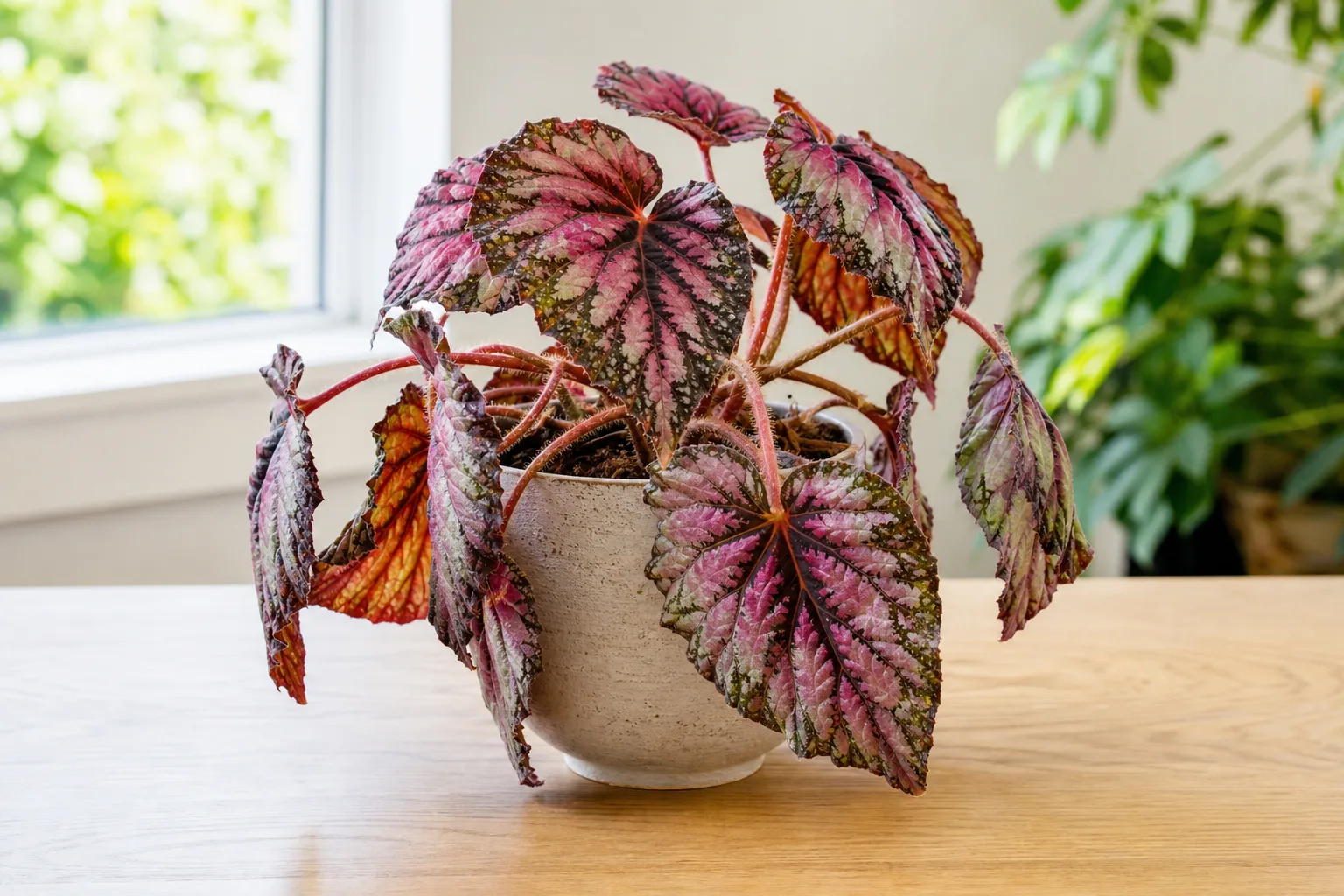
Drooping Leaves on Begonia Rex: Causes, Checks & Fixes
This guide covers drooping leaves on Begonia Rex. See also the general Drooping Leaves guide, watering, and light pages for this plant.
Drooping Leaves on Begonia Rex: Causes, Checks & Fixes
Quick answer
When Begonia Rex (Begonia rex-cultorum) leaves hang lower than usual, the painted foliage is losing turgor-internal water pressure in the petioles and blades. On this rhizomatous species, droop rarely means one generic “stress.” It almost always traces to soil moisture at the rhizome, ambient humidity, or temperature shock-and the wrong first fix (especially watering wet soil) makes recovery harder.
First step: press your finger into the top 2–3 cm of mix and lift the pot. UConn’s rex begonia factsheet recommends watering when the top inch feels dry-not on reflex when leaves look tired. A heavy, wet pot with limp leaves means stop watering and inspect the rhizome crown. A light, dry pot with soft petioles means one thorough soak with full drainage-see the Begonia Rex watering guide.
This page covers gradual drooping over days. For acute same-day collapse, see wilting on Begonia Rex.
Drooping vs wilting on Begonia Rex
Both symptoms look like “sad rex,” but timing and urgency differ:
| Symptom page | What it usually means on rex begonias | Typical speed | Soil clue |
|---|---|---|---|
| Drooping leaves (this page) | Gradual petiole sag-leaves hang at a lower angle | Days to 1–2 weeks | Wet vs dry fork still applies |
| Wilting | Acute turgor collapse-limp stems, fast spread | Hours to 1–2 days | Wet soil + sudden collapse = urgent |
| Overwatering | Chronic damp mix, yellow lower leaves, gnats | Builds over weeks | Stays wet many days |
| Underwatering | Crisp edges, light pot, mix pulls from sides | After missed checks | Bone dry throughout |
| Low humidity | Margin crisping with normal soil moisture | Winter heating weeks | Rhizome firm; RH below ~50% |
Rex begonias store water in a shallow rhizome near the soil surface. Textured leaves hide early wilt cues-petiole angle change is often the first signal you notice. That is why droop on rex types deserves a soil-and-rhizome check before any treatment.
What drooping leaves look like on Begonia Rex
Gradual petiole sag (most common pattern)
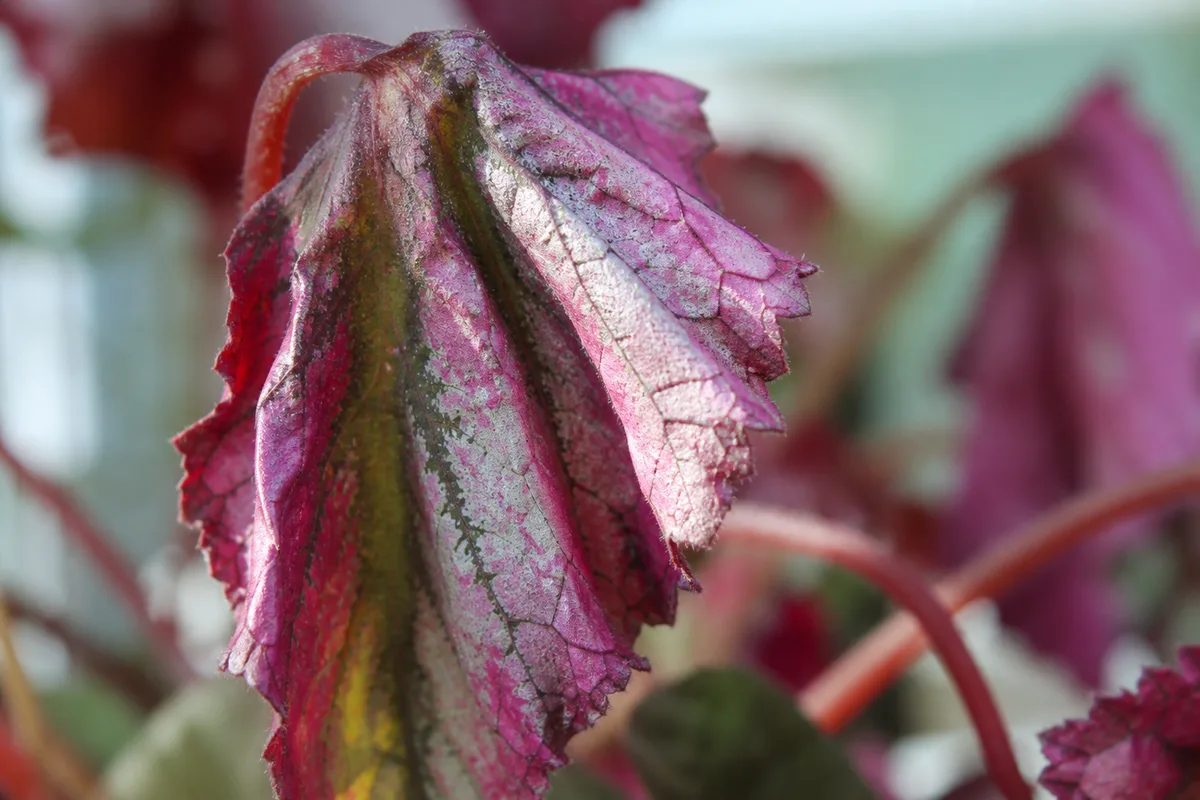
Drooping Leaves symptoms on Begonia Rex - compare with healthy tissue on the same plant.
- Leaf blades still show rich pattern and color but petioles angle downward
- Change develops over several days, not overnight
- Whole plant may sag evenly, or one side near a draft or dry air source droops first
- Touch test: blades feel soft but not papery; stems may still be green and somewhat firm
Wet-soil droop (overwatering / rhizome stress)
- Limp leaves while mix stays damp for many days
- Pot feels heavy; skewer near the edge comes out dark and cool
- Lower leaves may yellow before edges crisp; sour smell or fungus gnats suggest chronic saturation
- Gently brushing soil from the crown may reveal soft, dark rhizome tissue-rot often shows as droop before obvious yellowing
- Adding water does not firm foliage-the wet-soil paradox described in the watering guide
Dry-soil droop (underwatering)
- Light pot; top 2–3 cm and often deeper mix feel dry
- Petioles droop; leaf edges may start crisp or curl inward
- Mix may pull away from pot sides
- Recovers within hours of one thorough bottom or top watering if the rhizome is still firm
- Repeated drought weakens fine roots-recovery slows after multiple dry cycles
Low-humidity droop (soil moisture normal)
- Petioles sag while soil moisture reads normal and rhizome stays firm
- Often in heated winter rooms with RH below 40–50%
- Brown crispy margins may appear alongside droop on multiple leaves
- Perks after sustained humidity (humidifier or pebble tray)-not after extra watering
- See the low-humidity guide for RH targets
Cold draft or AC stress
- Droop appears after nights near a cold window, AC vent, or heater blast
- Soil moisture may be appropriate; tissue looks suddenly limp but not mushy at crown
- Anoka County Master Gardeners note rex begonias dislike drafts and prefer stable 60–80°F
- Recovery after moving to stable warmth often takes 2–5 days without other treatment
Why Begonia Rex leaves droop
Rhizome sensitivity and crown rot
Rex begonias are rhizomatous perennials-a thickened horizontal stem sits at or just above the soil line, sending up leaves and fine roots. NC State Extension lists overwatering as a primary disease trigger because saturated mix collapses air spaces around shallow roots. When the rhizome or crown stays wet, tissue breaks down. Leaves droop because uptake fails, not because the plant lacks water in the pot.
Crown rot often appears as droop before yellow leaves. The painted surface hides stress; petiole sag is the early alarm.
The wet-soil paradox
The most common rex begonia watering mistake is adding water to already wet soil because leaves look limp. University of Minnesota Extension warns begonias are highly susceptible to root rot and that symptoms appear only after damage is advanced. Limp foliage plus damp mix almost always means root or rhizome dysfunction-the opposite of thirst.
Underwatering and uneven moisture
UConn notes rex begonias prefer evenly moist conditions but tolerate slight underwatering better than overwatering. When the mix dries too far-especially in bright, warm rooms-petioles lose turgor. Daily small sips that wet only the surface while the center stays dry create alternating stress rex types handle poorly.
Low humidity and transpiration
Rex cultivars evolved under forest canopy humidity. NC State recommends high humidity and pebble trays while avoiding misting. Dry indoor air increases transpiration from large, thin leaves. The root zone may hold adequate moisture, but leaves still droop when air pulls water faster than roots replace it-especially in winter.
Cold, heat, and seasonal slowdown
Temperature swings slow root function abruptly. Winter semi-dormancy also reduces water use; continuing a summer watering rhythm on a resting rhizome keeps mix wet too long and produces slow chronic droop with yellowing lower leaves.
Lookalike symptoms to rule out
Before treating, separate drooping from overlapping rex problems:
- Root rot - Soft crown, sour soil, mushy rhizome on inspection; droop is a symptom, not the whole diagnosis
- Yellow leaves - Often follows chronic overwatering; may coexist with droop but needs rot pathway first
- Spider mites - Fine webbing, stippled leaves, dust-like specks on undersides; droop is secondary to feeding damage
- Begonia Rex repotting guide stress - Temporary sag 3–7 days after disturbance with otherwise firm rhizome and appropriate moisture
- Normal evening posture - Some cultivars hold leaves slightly lower at night; daytime firmness returns without care changes
How to confirm the cause
Work through these checks in order:
- Soil moisture at 2–3 cm depth - Dry and crumbly vs cool and clinging. Surface peat can look pale while the center stays wet.
- Pot weight - Heavy after days without watering suggests saturation; very light suggests drought.
- Rhizome firmness - Gently brush soil from the crown. Firm tan or green rhizome fits moisture or humidity stress. Soft, black, or hollow tissue confirms rot urgency.
- Humidity reading - Hygrometer beside the canopy. Below ~50% RH with firm rhizome and normal soil points to low humidity.
- Draft and temperature - Note proximity to AC vents, radiators, and cold glass. Below ~13°C (55°F) risks cold stress on rex types per RHS rhizomatous begonia guidance.
- Timeline - Gradual sag over a week fits drooping (this page). Same-day collapse after a watering event fits wilting.
- New growth condition - Firm emerging leaves with droopy old ones often means environmental stress, not total rhizome failure.
Wet vs dry vs humidity quick reference
| Pattern | Soil / pot | Rhizome | First action |
|---|---|---|---|
| Overwatering droop | Wet, heavy | Firm or softening | Stop watering; inspect crown |
| Crown / root rot | Wet, sour smell | Soft, dark | Stop water; trim rot; repot if needed |
| Underwatering droop | Dry, light | Firm | One thorough soak; drain fully |
| Low-humidity droop | Normal moisture | Firm | Humidifier or pebble tray; do not mist |
| Cold draft droop | Normal moisture | Firm | Move off cold glass / vent |
First fix for Begonia Rex
Match your first action to soil moisture-not to leaf appearance alone.
- If the top 2–3 cm is dry and the pot feels light: Give one thorough watering at the soil line (bottom or top), until excess drains, then empty the saucer. Do not water again until the top layer dries. NYBG recommends watering thoroughly until water runs from drainage holes so the full root zone receives moisture.
- If the mix is wet and the pot feels heavy: Stop watering immediately. Improve airflow, empty standing water, and inspect the rhizome at the crown. Do not fertilize, repot, and prune on the same day.
This single fork prevents the most damaging mistake on rex begonias: sympathy watering into saturated soil.
Step-by-step recovery
After the first fix, proceed by confirmed cause:
Overwatering or rhizome rot pathway
- Stop all watering until the top 2–3 cm dries-often 7–14 days in winter.
- Unpot only if the crown feels soft or smell is sour; otherwise wait for dry-down first.
- Trim mushy rhizome or root tissue with clean scissors; let cuts air-dry several hours.
- Repot into fresh, airy mix in a shallow pot with drainage-see root rot for salvage limits.
- Water sparingly at the next cycle; judge by new firm leaves, not old petioles re-stiffening.
Underwatering pathway
- Bottom-water 15–20 minutes or top-water slowly at the soil perimeter until runoff.
- Drain 15–30 minutes; never leave the pot in standing water.
- Resume normal checks-water when top 2–3 cm dries, not on a fixed calendar.
- If water runs down pot sides without soaking in, the mix may be hydrophobic; longer bottom soak or repot.
Low-humidity pathway
- Place a humidifier beside the plant targeting 50–70% RH-Anoka County Master Gardeners recommend humidifiers or pebble trays while keeping roots dry.
- Group plants or use a pebble tray with the pot above the water line.
- Do not mist leaves-UConn links wet foliage to powdery mildew on rex begonias.
- Keep watering rhythm unchanged until RH stabilizes; do not compensate with extra soil water.
Cold draft pathway
- Move the pot 30 cm or more from cold glass, AC vents, and heater blasts.
- Maintain stable room temperatures in the rex comfort zone.
- Wait 3–5 days before stacking other fixes.
Make one care correction at a time so you can read the plant’s response over the next 7–10 days.
Recovery timeline
| Cause | First sign of improvement | Full stabilization |
|---|---|---|
| Mild underwatering | Firmer petioles within 6–24 hours | 1–2 watering cycles |
| Low humidity | New leaves with cleaner edges | 2–3 weeks above 50% RH |
| Overwatering (early) | No further yellowing; mix dries normally | 2–4 weeks |
| Rhizome rot (partial) | Firm new growth from healthy sections | Weeks to months; some tissue lost |
| Cold draft | Reduced sag after stable placement | 3–7 days |
Old drooped leaves may not fully re-stiffen even after the cause is fixed. Rex begonias renew from the rhizome-firm new leaves are the success signal, not perfect older foliage.
What not to do
Do not water because leaves look limp when soil is already wet-University of Minnesota Extension notes root rot is difficult to treat once symptoms show; prevention through dry-down matters more than rescue.
Do not mist drooping leaves as a first fix. Wet foliage on rex types invites mildew and does not correct root-zone or humidity problems.
Do not fertilize a stressed rex before confirming moisture, rhizome health, and light. Do not stack repotting, heavy pruning, and pesticide on the same day.
Do not assume drooping equals underwatering. Check weight and depth first.
How to prevent drooping leaves next time
Align daily care with rex biology:
- Water when the top 2–3 cm dries-not on a calendar-using finger, skewer, and pot-weight checks from the watering guide.
- Drain completely after every watering; empty saucers within 15–30 minutes.
- Keep water off the crown and leaves; bottom watering is a safer default for textured foliage.
- Maintain 50–70% RH in heated rooms without misting leaves.
- Use shallow pots with drainage and airy mix-oversized heavy pots extend dangerous wet phases.
- Reduce watering frequency in fall and winter when growth slows; semi-dormant rhizomes use less water.
- Rotate away from cold glass in winter and keep stable temperatures.
Weekly inspection while problems are still small catches petiole sag before crown rot advances.
When to worry
Treat as urgent if:
- The crown or rhizome feels soft while soil stays wet
- Droop spreads to new growth within 48 hours despite dry soil correction
- Sour smell, grey mold on wet leaves, or black mush at the soil line appears
- The whole plant collapses acutely after a recent heavy watering-escalate to wilting and root rot pathways
Lower urgency fits gradual sag on firm rhizome with a clear wet-or-dry diagnosis and a single matched fix underway.
Related Begonia Rex problems
- Watering Begonia Rex - wet-soil paradox, moisture checks, seasonal rhythm
- Overwatering - chronic damp mix and yellow lower leaves
- Underwatering - dry pot and crisp edges
- Root rot - crown softness and rhizome salvage
- Low humidity - winter margin crisping with normal soil
- Wilting - acute collapse vs gradual droop
- Begonia Rex overview
Conclusion
Drooping leaves on Begonia Rex are a diagnostic message, not a single disease. Wet soil plus heavy pot calls for stopping water and checking the rhizome-not another drink. Dry soil plus light pot calls for one thorough soak with full drainage. Normal soil plus dry winter air calls for humidity at the canopy, not misting. Learn that fork-aligned with shallow rhizome biology and extension-backed watering checks-and droop becomes a useful early signal instead of a rot emergency. When collapse is sudden or the crown softens, escalate to the wilting and root-rot guides before stacking more treatments.
When to use this page vs other Begonia Rex guides
- Begonia Rex watering guide - Use for routine moisture checks before assuming drooping leaves is the main issue.
- Begonia Rex problems hub - Browse all 16 common issues on this species.
- Underwatering on Begonia Rex - Different entry point when symptoms overlap with drooping leaves.
- Overwatering on Begonia Rex - Different entry point when symptoms overlap with drooping leaves.
- Root Rot on Begonia Rex - Different entry point when symptoms overlap with drooping leaves.