Not Enough Light on Begonia Rex: Causes, Checks & Fixes
Quick answer
Begonia Rex needs bright indirect light to hold its leaf color and compact shape. First step: move the pot to the brightest safe spot within a few feet of an east- or filtered west-facing window, or add a full-spectrum grow light 12 inches above the foliage.
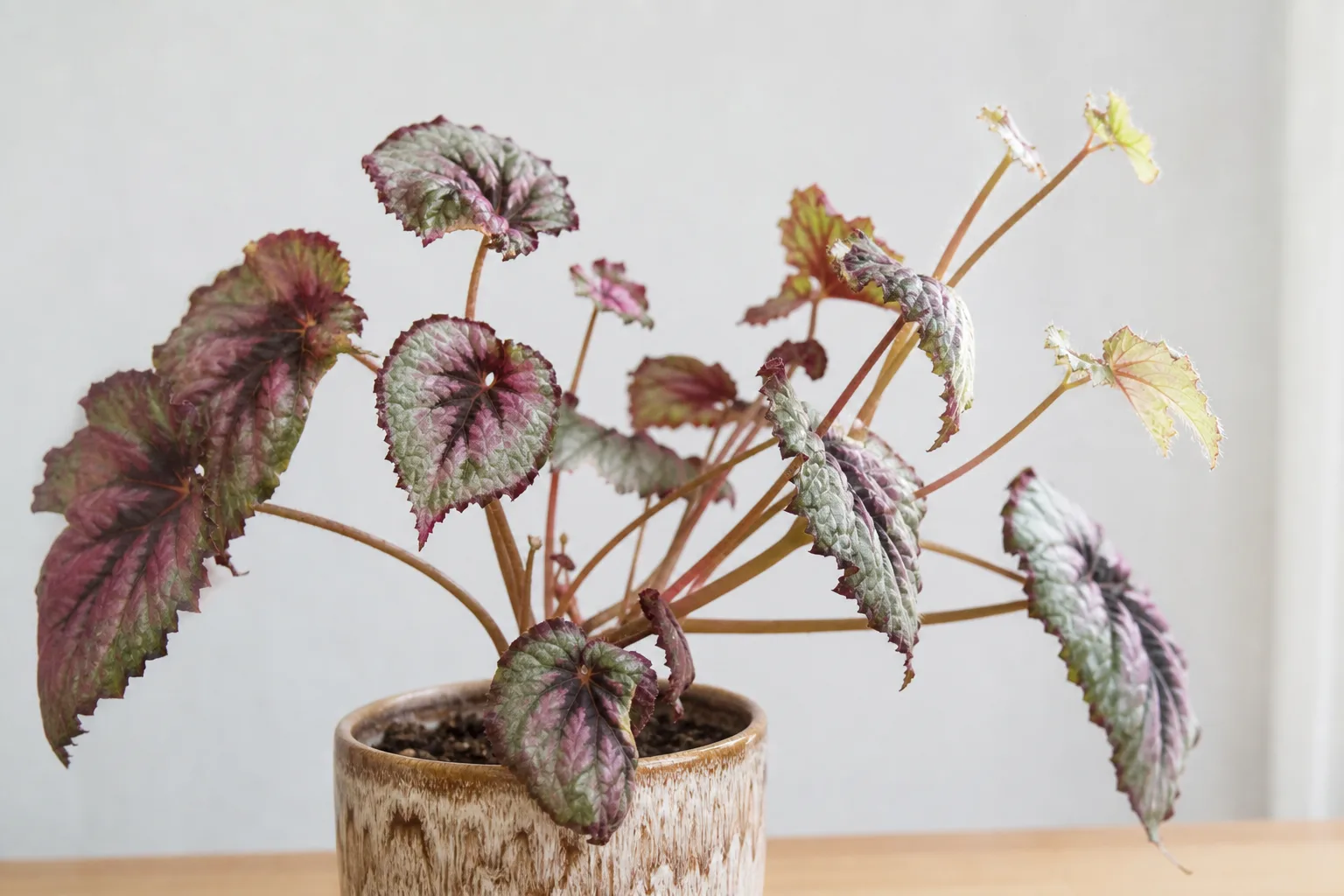
Not Enough Light on Begonia Rex: Causes, Checks & Fixes
This guide covers not enough light on Begonia Rex. See also the general Not Enough Light guide, watering, and light pages for this plant.
Not Enough Light on Begonia Rex: Causes, Checks & Fixes
Quick answer
Begonia Rex (Begonia rex-cultorum) is grown for painted foliage, not flowers-and that color costs energy. In dim rooms the plant stretches toward windows, shrinks new leaves, and fades the silver, pink, and burgundy patterns that make cultivars worth keeping. Growth slows, and the shallow rhizome may sit in wet mix longer because the plant is not using water.
First step: move the pot today to the brightest safe indirect spot in your home-typically within two to three feet of an east-facing window, or several feet back from a south- or west-facing window with sheer curtains. If no window gives enough brightness, add a full-spectrum LED grow light about 12 inches above the leaves for 12–14 hours daily. Do not reach for fertilizer, Begonia Rex repotting guide, or pruning until you have corrected light and watched new growth for two weeks.
What not enough light looks like on Begonia Rex
Low light on rex begonias shows up in the leaves and stems before the rhizome fails. Common signs include:
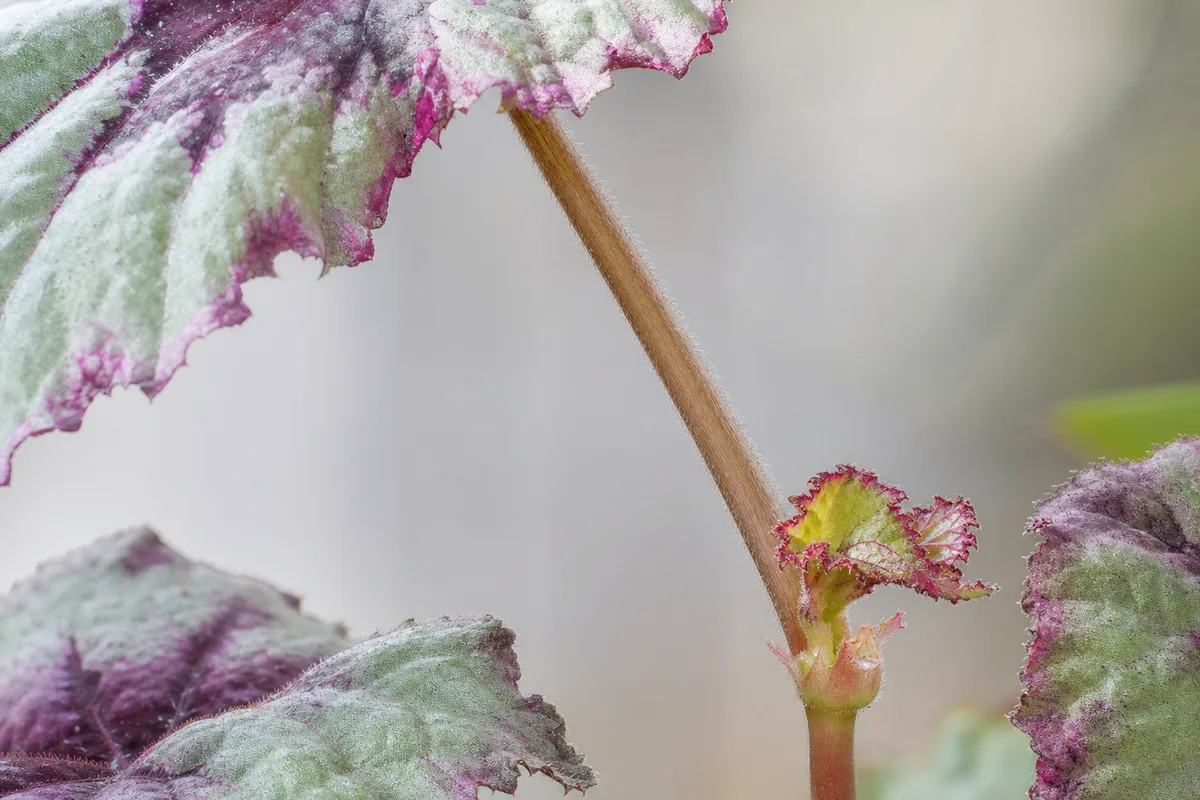
Not Enough Light symptoms on Begonia Rex - compare with healthy tissue on the same plant.
- Long, thin petioles holding leaves farther from the rhizome than usual
- Smaller new leaves compared with older ones from when the plant had better light
- Lean or one-sided growth as stems reach toward the brightest direction
- Dull or washed-out leaf color-metallic silver, deep burgundy, and pink zones lose contrast first
- Slow or stalled growth even when watering and humidity seem unchanged
- Wide spacing between leaves along the rhizome, giving an open, sparse look
Because rex begonias have thin, often hairy leaves with bold patterning, the color fade is one of the earliest clues. A healthy plant under proper light holds crisp pattern edges; in shade the same cultivar can look muddy green within a few weeks.
Normal winter behavior: Many rex cultivars slow or drop leaves in fall and winter when daylight shortens. That rest is different from year-round legginess in a permanently dark shelf. Dormant plants still need a firm rhizome and mostly dry mix-not continuous stretch toward a distant window while soil stays damp.
Why Begonia Rex gets not enough light
Rex begonias evolved on shaded forest floors in northeastern India and southern China, but “shade” in nature still means bright filtered daylight-not the back of a dim hallway. Indoors, the usable light at a plant’s location drops sharply with distance from glass, dirty panes, tinted windows, and short winter days.
Begonias are generally grouped with medium-light houseplants-bright enough to support steady foliage but not harsh direct sun. Rex types are more exacting than wax begonias: they need plenty of light without hot direct sun on their delicate leaves. A spot that feels “fine” to you may be low light for a plant whose whole value is leaf pigment.
Common triggers in real homes:
- Decor placement - Bookshelves, bathroom corners, and interior rooms more than six feet from windows
- North-only exposure in winter, when daylight hours are shortest
- Obstructed glass - Sheers, frosted film, overhangs, or neighboring buildings
- Seasonal fade - Same summer placement becomes too dark after clocks change
- Competition - Larger plants shading a rex on a shared plant stand
There is a compounding risk specific to Begonia Rex overview: rex begonias are rhizomatous and sensitive to overwatering in slow-growing conditions. When light is too low, photosynthesis and transpiration drop, so the pot stays wet longer. Weak light plus wet rhizome tissue invites rot-so “not enough light” and “too much water” often overlap on the same plant.
How to confirm the cause
Work through these checks before changing fertilizer or repotting:
- Window distance and direction - Stand where the pot sits. Can you see sky from plant height? East and west windows usually give the best indirect brightness; deep north corners often need supplemental light in winter.
- Lean test - If the plant consistently faces one direction and new leaves emerge toward the glass, it is searching for photons.
- New vs. old leaf size - Compare the smallest emerging leaf to one from six months ago (if you have a photo). Shrinking new foliage strongly suggests light limitation.
- Pattern intensity - Fading variegation on fresh leaves, not just older lower leaves, points to current light stress.
- Soil dry-down speed - Stick a finger into the top 2–3 cm. If mix stays wet for a week or more while growth is weak, low light may be slowing water use-do not solve that by watering less alone without adding brightness.
- Rhizome firmness - Gently press the rhizome at the soil surface. Firm tissue with stretchy stems fits light stress; soft, mushy rhizome with sour smell is rot-stop watering and inspect roots.
- Two-week trial move - Shift the pot to a brighter indirect location (or add a grow light) without changing anything else. Compact new petioles confirm the diagnosis.
Lookalikes to rule out
| What you see | More likely cause if… |
|---|---|
| Brown crispy leaf edges | Low humidity or fluoride/salt in water-not primary low light |
| Yellow lower leaves with wet soil | Overwatering or root rot on Begonia Rex-check rhizome firmness |
| Pale leaves in direct afternoon sun | Too much light / sunburn-move back from glass |
| Sticky residue or webbing | Pests-inspect leaf undersides with a magnifier |
| Sudden wilt after a cold draft | Temperature stress-rex begonias dislike cold air below about 13°C |
If stretch, fade, and lean appear without pests, scorch, or mushy rhizome, insufficient light is the leading explanation.
First fix for Begonia Rex
Move the plant to bright, indirect light-or add a grow light if windows are inadequate.
Practical placement:
- East window: Often ideal; morning sun is gentle, afternoon is indirect.
- West or south window: Set the pot three to five feet back from the glass, or use a sheer curtain so hot midday rays do not hit velvety leaves.
- North window: May work in summer; plan on supplemental lighting from autumn through spring.
If natural light cannot reach roughly medium brightness at the leaf surface, use a full-spectrum LED positioned 12–18 inches above the foliage for 12–14 hours per day. Keep total daily light (sun plus lamp) at or below about 16 hours so the plant still gets a dark period.
After moving, rotate the pot a quarter turn weekly so both sides receive light and the rhizome does not grow lopsided.
Do not jump straight to direct sun to “fix” legginess-rex leaves scorch quickly, showing bleached or brittle patches that will not heal. Increase brightness gradually over one to two weeks if the plant has been in deep shade for months.
Step-by-step recovery
Once light improves:
- Hold watering steady until you learn the new dry-down rhythm. Brighter spots use water faster; dim spots that were kept too wet need fewer drinks, not more.
- Wait for two new leaves before judging success. Look for shorter petioles and stronger color.
- Trim only after stabilization. If the rhizome has long bare sections, cut back to healthy tissue once new leaves emerge normally. Rooted rhizome pieces can propagate new plants.
- Resume diluted feeding only when active growth returns in spring-never feed a stressed rex in a dark corner hoping to “green it up.”
- Maintain humidity in the 50–60% range rex begonias prefer; better light does not replace air moisture for leaf edge health.
Recovery timeline
Expect visible improvement in two to three weeks once light is adequate-faster in warm growing months, slower in winter dormancy. The first sign is more compact new growth, not reversal of old stretch.
Old elongated petioles and faded leaves do not revert-plants grown in brighter light would be more compact, but existing stretch remains. They can remain until you prune them or they age off naturally. A plant that keeps producing small pale leaves after four weeks in a brighter spot may still be too far from the light source or need a stronger lamp.
Signs the problem is worsening: rhizome softening at the soil line, grey mold on leaves, or leaf drop combined with constantly wet mix. Those patterns mean rot or disease may be taking over-inspect the rhizome, reduce watering, and improve airflow and light together.
Mistakes to avoid
- Placing in direct hot sun to compensate for months of shade-scorch is permanent on rex foliage.
- Over-fertilizing a pale, stretched plant-nutrients cannot replace photons.
- Repotting on day one-root disturbance adds stress when the real issue is placement.
- Cutting back hard before light improves-you remove photosynthetic tissue the plant needs to recover.
- Ignoring watering after a move-soil that dried in five days in shade may dry in three near a window.
- Assuming a north window is enough year-round without watching winter stretch.
How to prevent not enough light next time
Choose placement by light first, décor second. Rex begonias reward the brightest indirect spot you can offer without sunburn. Before buying, identify where medium light actually exists in your home-often an east windowsill or a desk with a clip-on grow lamp.
Seasonal habits that help:
- Clean windows in fall so winter rays are not filtered by grime.
- Add or extend grow lights when daylight drops below roughly ten hours.
- Rotate pots weekly for even growth.
- Track pot weight or top-soil dryness after any move-light and watering move together.
If a room cannot supply enough brightness for painted foliage, rex begonias are the wrong plant for that spot. Low-light tolerant species will look better with less effort.
When to worry
Low light alone rarely kills a rex begonia quickly, but weak light plus wet soil can. Treat as urgent if the rhizome feels soft, stems collapse at the base, or leaves develop grey fuzzy mold-unpot, trim rot, and repot into fresh airy mix only after removing decay.
Also escalate if, after four to six weeks of corrected Begonia Rex light guide or supplemental lamps, new leaves are still tiny and colorless. The plant may need a stronger light source, or another stressor (pests, chronic overwatering, cold drafts) is still limiting growth.
When to use this page vs other Begonia Rex guides
- Begonia Rex watering guide - Use for routine moisture checks before assuming not enough light is the main issue.
- Begonia Rex problems hub - Browse all 16 common issues on this species.
- Leggy Growth on Begonia Rex - Different entry point when symptoms overlap with not enough light.
- Slow Growth on Begonia Rex - Different entry point when symptoms overlap with not enough light.
- Yellow Leaves on Begonia Rex - Different entry point when symptoms overlap with not enough light.