Leggy Growth on Begonia Rex: Causes, Checks & Fixes
Quick answer
Leggy growth on Begonia Rex is etiolation-long thin petioles and wide spacing along the rhizome as the plant reaches for light. First step: move the pot to bright indirect light within two to three feet of an east window, or add a full-spectrum grow light 12 inches above the foliage, before pinching tips or cutting back bare rhizome sections.
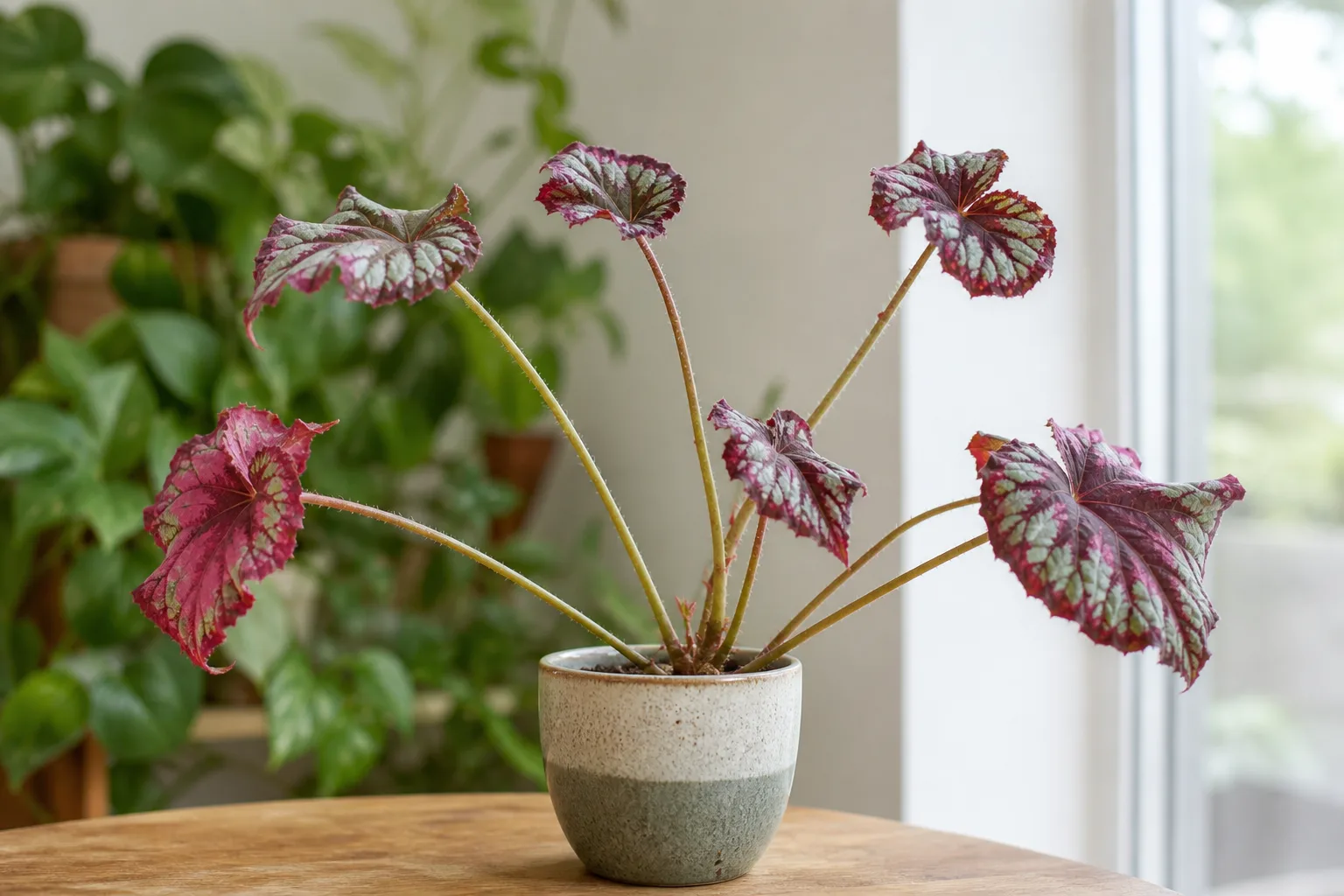
Leggy Growth on Begonia Rex: Causes, Checks & Fixes
This guide covers leggy growth on Begonia Rex. See also the general Leggy Growth guide, watering, and light pages for this plant.
Leggy Growth on Begonia Rex: Causes, Checks & Fixes
Quick answer
Leggy growth on Begonia Rex (Begonia rex-cultorum) is etiolation: the rhizomatous plant stretches toward available light, producing long thin petioles, wide gaps between leaves along the rhizome, and smaller, paler new foliage while painted patterns lose contrast. It is not healthy vigor-rex begonias are grown for compact, metallic leaf displays, and stretch destroys the silhouette that makes cultivars worth keeping.
First step: move the pot today to bright indirect light-typically within two to three feet of an east-facing window, or several feet back from a filtered south- or west-facing window. If no window passes a simple brightness check at plant height, add a full-spectrum LED grow light about 12 inches above the leaves for 12–14 hours daily. Correct light before pinching tips or cutting back bare rhizome sections; pruning without improving light causes repeat legginess.
For broader insufficient-light symptoms-overall fade, stalled growth, and wet mix in dim corners-see the not enough light on Begonia Rex guide. This page focuses on recognizing stretch on a rhizomatous rex, correcting etiolation, and rebuilding compact growth through pinching and rhizome cutback after light improves.
What leggy growth looks like on Begonia Rex
Read new growth along the rhizome first. Rex begonias do not build a tall woody trunk; legginess shows as open spacing on a horizontal rhizome and elongated petioles, not classic tree-like internode stretch.
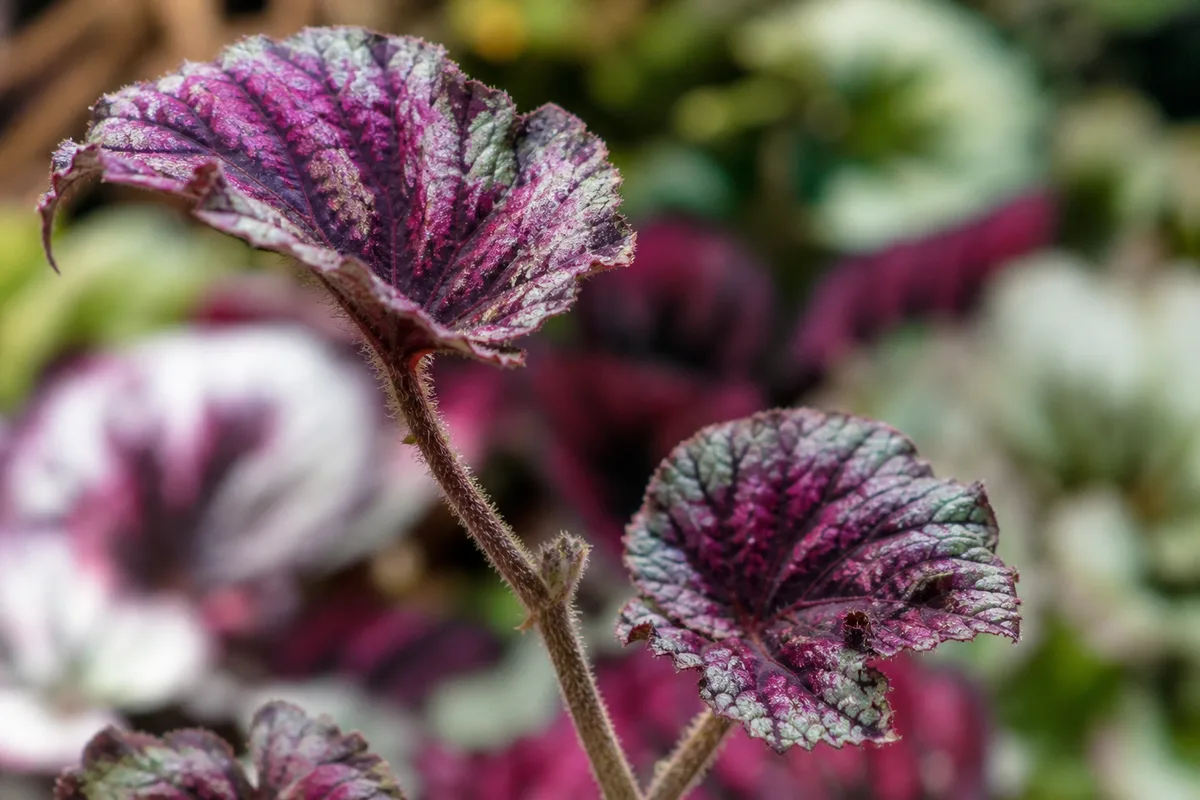
Leggy Growth symptoms on Begonia Rex - compare with healthy tissue on the same plant.
Long, thin petioles hold leaves farther from the rhizome than compact plants of the same cultivar. Compare the newest leaf stem to one from six months ago if you have a photo-or to a healthy rex at a nursery under proper light.
Wide leaf spacing along the rhizome gives an open, sparse mound. Healthy rex types form a dense habit roughly 12 to 18 inches tall when light is adequate; etiolated plants look hollow in the center with leaves clustered at the stretched ends.
Smaller new leaves emerge while older foliage from brighter days may still look full-sized. Pattern intensity drops on fresh growth-metallic silver, burgundy, and pink zones turn muddy before lower leaves fade.
Lean toward the brightest direction is common. Rex begonias reach toward brighter light when exposure is uneven, and pots that never rotate grow lopsided rhizomes.
Bare rhizome sections develop when stretch outpaces leaf production. Missouri Botanical Garden notes that rex rhizomes can grow too long for their container and develop unsightly bare sections-a hallmark of chronic legginess, not a single bad week.
Leggy growth develops gradually over weeks to months. Sudden mass leaf drop in fall often fits normal winter slowdown on rex cultivars rather than etiolation-though a plant that keeps stretching toward a distant window through winter while soil stays damp is still light-starved.
Why Begonia Rex gets leggy
Rex begonias are rhizomatous foliage plants bred for painted leaves, not height. They spread from a shallow thickened stem at the soil surface and send up leaves on petioles. When daily light is too low, the plant cannot afford the metabolic cost of a full, colorful canopy. It enters a survival strategy: extend petioles and rhizome toward photons and produce smaller leaves with more chlorophyll and less showy pigment.
NC State Extension classifies rex types as needing bright but indirect sunlight-not the back of a dim hallway. University of Connecticut warns that too little light produces weak, elongated growth, while direct sun scorches delicate leaves. The usable indoor target is filtered brightness strong enough to hold cultivar color without hot sunbeams on velvety tissue.
Distance from glass matters sharply. A rex on a bookshelf six feet from a north window may survive but etiolate continuously. Decorative placement-bathrooms with frosted glass, interior rooms, plant stands shaded by larger neighbors-triggers stretch even when watering and humidity seem fine.
Short winter photoperiods accelerate the problem. Even moderate reflected light may be inadequate if exposure hours drop below what the rhizome needs to keep compact spacing.
Over-fertilizing in shade can drive weak elongated tissue when light cannot support dense growth-nitrogen pushes soft stretch without improving pattern color. That is secondary to low light on most leggy rex specimens but worth ruling out if you have been feeding heavily in a dim spot.
There is a compounding rex-specific risk: low light slows photosynthesis and transpiration, so mix stays wet longer on a shallow rhizome. Weak light plus wet rhizome tissue invites rot-stretch and overwatering often overlap on the same plant.
Lookalike symptoms to rule out
| Pattern | Likely cause | What differs from leggy etiolation |
|---|---|---|
| Long petioles + rhizome gaps + lean toward window | Insufficient light (etiolation) | Primary match for this page |
| Dull patterns + slow growth without obvious petiole stretch | Not enough light broadly | Fade and stall may precede obvious stretch |
| Yellow lower leaves + wet soil + soft rhizome | Overwatering in low light | Mushy crown; fix light and dry-down together |
| Brown crispy edges on otherwise compact plant | Low humidity or salts | Spacing normal; margins dry |
| Bleached patches on sun-facing leaves | Too much direct sun | Move back from hot glass |
| Sticky residue or webbing on undersides | Spider mites or mealybugs | Pests present; stretch may be secondary |
| Leaf drop in fall with firm rhizome, dry mix | Normal winter rest | Stretch pauses; plant not reaching for window |
Soft rhizome at the soil line with sour smell points to rot, not etiolation alone. Firm rhizome, directional stretch, and moderate soil moisture keep leggy growth at the top of the list.
How to confirm the cause
Work through this checklist before cutting rhizome or Begonia Rex repotting guide:
- Rhizome spacing comparison - Eyeball gaps between the last three leaves along the rhizome versus older compact sections. Widening spacing confirms etiolation.
- Petiole length - Newest petioles noticeably longer and thinner than mature ones from brighter days.
- Lean test - Consistent growth toward one window supports light deficiency. Random collapse at the base suggests rot or mechanical damage.
- Pattern on fresh leaves - Fading variegation on emerging foliage, not just aging lower leaves, points to current light stress.
- Window distance and direction - Stand at plant height. Deep interior placement or north-only winter exposure without supplemental light strongly suggests stretch will continue.
- Soil dry-down speed - Mix wet for a week or more while growth is weak fits low light slowing water use-do not solve stretch by watering less alone without adding brightness.
- Rhizome firmness - Gently press the rhizome at the soil surface. Firm tissue with elongated petioles fits light stress; soft, mushy rhizome is rot-stop watering and inspect roots.
- Two-week light trial - Move to brighter indirect light or add a grow light without changing anything else. Shorter new petioles confirm the diagnosis.
If five or more checks point to insufficient light at the pot, proceed with the light-first fix below-not fertilizer, repotting, or heavy rhizome cuts on day one.
First fix for Begonia Rex
Increase usable light at the leaf surface in one deliberate placement change-then hold steady.
Move the rex to the brightest safe indirect location:
- East window: Often ideal; morning sun is gentle, afternoon is indirect.
- West or south window: Set the pot three to five feet back from glass, or use a sheer curtain so hot midday rays do not scorch velvety leaves.
- North window: May work in summer; plan supplemental lighting from autumn through spring.
If natural light cannot reach roughly medium brightness at the leaf surface, use a full-spectrum LED positioned 12–18 inches above the foliage for 12–14 hours per day. Keep total daily light (sun plus lamp) at or below about 16 hours so the plant still gets a dark period.
After moving, rotate the pot a quarter turn weekly so both sides receive light and the rhizome does not grow lopsided.
Do not jump to direct sun to fix months of shade-rex leaves scorch quickly. Increase brightness gradually over one to two weeks if the plant has been in deep shade.
Adjust watering to the new dry-down rate. Brighter spots use water faster; dim spots that were kept too wet need fewer drinks once light improves-not more stretch treatment.
Full window placement and grow-light specs are on the Begonia Rex light guide.
Step-by-step recovery: light, then pinching and rhizome cutback
Once light is corrected, rebuild compact form in this order:
Phase 1 - Stabilize (days 1–14)
- Hold placement stable. No repotting, no fertilizer, no heavy cuts the same week as the move.
- Check top-soil dryness twice weekly until you learn the new rhythm in the brighter spot.
- Rotate weekly for even exposure.
Phase 2 - Confirm compact new growth (weeks 2–4)
- Judge recovery by new leaves, not old stretched petioles. Shorter stems and stronger pattern color confirm the light fix worked.
- Wait for two healthy new leaves before reshaping.
- Skip fertilizer until active growth resumes in spring-never feed a stressed rex in a dark corner hoping to green it up.
Phase 3 - Pinch and prune after new buds appear
Only reshape after compact new growth proves light is adequate.
Tip pinching - Nip soft growing tips just above a leaf node when a stem looks elongated. Missouri Botanical Garden notes that tip pinching earlier will result in beneficial branching on rex types. This redirects energy to lateral shoots without large wounds.
Rhizome cutback - For long bare rhizome sections, cut the rhizome back once new leaves emerge normally. MOBOT describes pruning as simple: cut the rhizome back; it will develop new leaves and may branch. Rooted rhizome pieces can propagate new plants. Limit live foliage removal to no more than one-third per session on a stressed plant. Full technique-node placement, sanitization, and timing-is on the Begonia Rex pruning guide.
What old tissue cannot do - Elongated petioles never shorten. Plants grown in brighter light would be more compact, but existing stretch remains until you prune it or leaves age off naturally.
Recovery timeline
Expect visible improvement in two to three weeks once light is adequate-faster in warm growing months, slower in winter dormancy. The first sign is more compact new growth, not reversal of old stretch.
Old elongated petioles and faded leaves do not revert. A severely etiolated rex may take six to eight weeks of correct light plus selective pinching before the mound looks full again-even when care is right.
Worsening signs: rhizome softening at the soil line, grey mold on leaves, or leaf drop combined with constantly wet mix. Those patterns mean rot or disease may be taking over-inspect the rhizome, reduce watering, and improve airflow and light together.
What not to do
Do not prune or cut back rhizome before light improves-you remove photosynthetic tissue while the plant still cannot produce compact leaves. Do not fertilize heavily to compensate for dim placement; nutrients cannot replace photons.
Avoid unfiltered afternoon sun as a panic fix; rex foliage scorches permanently. Do not repot on day one unless roots are clearly failing-root disturbance stacks stress when placement is the real issue.
Do not water less as the only response when soil stays wet in a dark room; fix light so the plant uses moisture again. Do not assume rapid petiole extension equals healthy vigor-etiolated rex tissue is structurally weak.
Resist moving the pot weekly hunting for a perfect spot. Make one deliberate upgrade, then wait fourteen days before judging new growth.
How to prevent leggy growth next time
Choose placement by light first, décor second. Rex begonias reward the brightest indirect spot you can offer without sunburn. Before buying, identify where medium light actually exists-often an east windowsill or a desk with a clip-on grow lamp.
Seasonal habits that help:
- Clean windows in fall so winter rays are not filtered by grime.
- Add or extend grow lights when daylight drops below roughly ten hours.
- Rotate pots weekly for even rhizome growth.
- Pinch soft tips during summer active growth so stretch does not rebuild open spacing.
- Track pot weight or top-soil dryness after any move-light and watering move together.
If a room cannot supply enough brightness for painted foliage, rex begonias are the wrong plant for that spot.
When to worry
Escalate beyond routine light correction when:
- The rhizome feels soft or mushy at the soil line with sour-smelling wet mix
- Grey fuzzy mold develops on leaves in a damp dim corner
- New leaves stay tiny and colorless for four to six weeks after corrected bright indirect light or supplemental lamps
- Pests coat weakened stretch growth despite improved light-treat spider mites or mealybugs actively
Slow directional lean with a firm rhizome and moderately dry soil is standard etiolation-correct light once, then pinch or cut back bare sections.
Begonia Rex care cross-check
After light improves, align related care so stretch does not return:
- Light - Window placement, grow-light hours, and reading bleaching versus stretch
- Not enough light - Pattern fade, wet-soil compounding, and full low-light recovery when stretch is part of broader dim-room decline
- Pruning - Rhizome cutback, tip pinching, one-third rule, and sanitization
- Watering - Dry-down rate increases in brighter spots; soggy dim-corner schedules cause compound stress
- Overwatering - Wet rhizome risk when low light slows transpiration
- Overview - Hub for rex begonia care rhythm and stability after any change
Conclusion
Leggy Begonia Rex is etiolation-a light-seeking stretch that produces long petioles, open rhizome spacing, and weak patterned foliage, not healthy vigor. The fix hierarchy is deliberate: upgrade light as one stable change, wait for compact new leaves, then pinch tips or cut back bare rhizome to rebuild density. Old petioles never shrink; recovery shows on the next leaf set. Get photons right first, reshape second, and the rex can regain the painted, compact mound that made you choose it-without repeating the same stretch next season.
When to use this page vs other Begonia Rex guides
- Begonia Rex watering guide - Use for routine moisture checks before assuming leggy growth is the main issue.
- Begonia Rex problems hub - Browse all 16 common issues on this species.
- Not Enough Light on Begonia Rex - Different entry point when symptoms overlap with leggy growth.
- Slow Growth on Begonia Rex - Different entry point when symptoms overlap with leggy growth.
- Yellow Leaves on Begonia Rex - Different entry point when symptoms overlap with leggy growth.