Begonia Rex Pruning: When, How, and Mistakes to Avoid
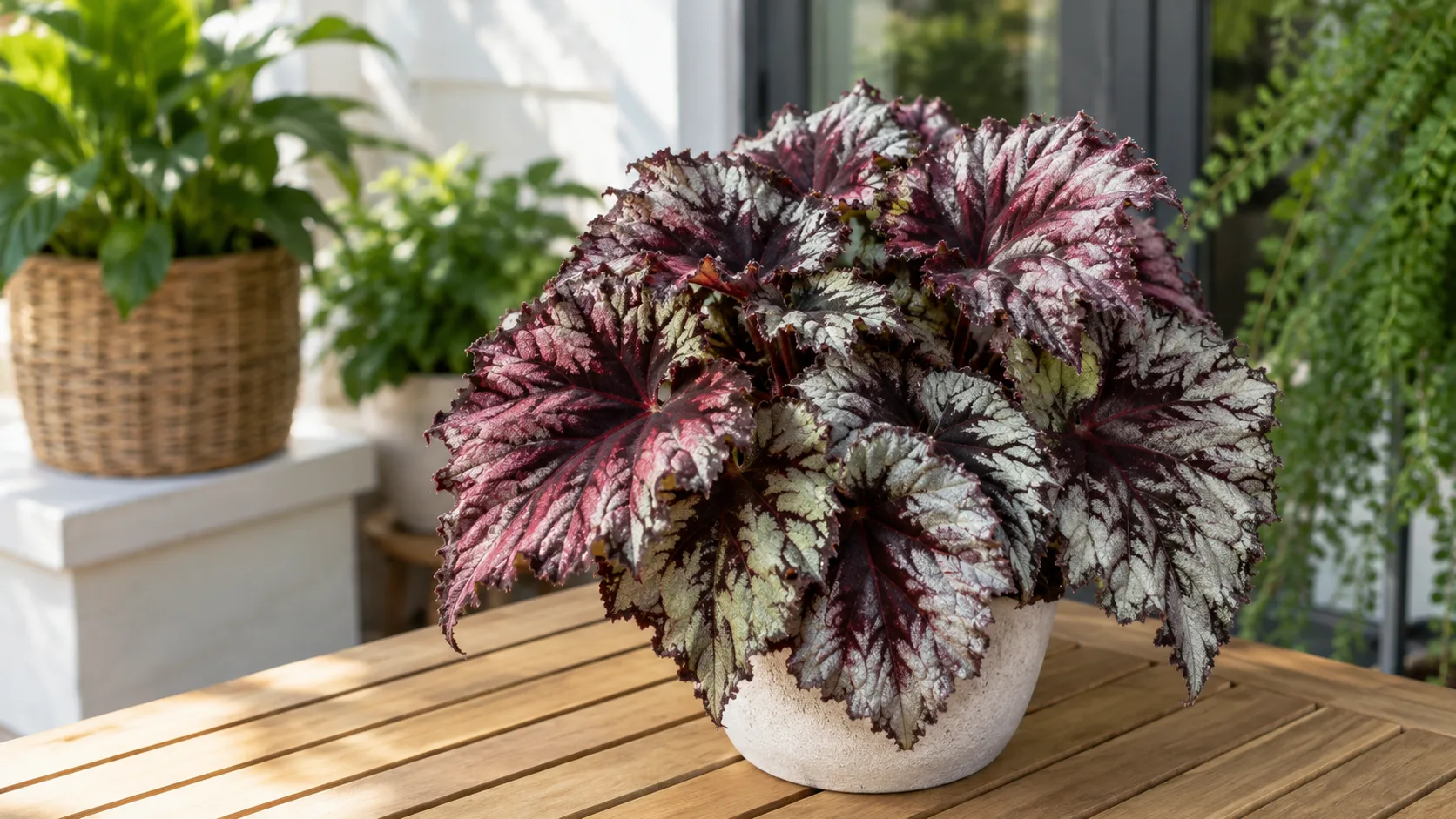
Begonia Rex Pruning: When, How, and Mistakes to Avoid
Begonia Rex Pruning: When, How, and Mistakes to Avoid
Quick Answer - What to Cut First on a Rex Begonia
First, remove only dead, damaged, or clearly diseased leaves. Trace each yellow or brown petiole to its base and snip at the soil line without nicking the rhizome. That single sanitation step clears declining tissue, improves airflow around the crown, and lets you see whether any shaping cuts are actually needed. Rex begonias are rhizomatous foliage plants - you groom them more often than you reshape them.
After cleanup, decide whether the plant has leggy stems or an overlong rhizome with bare sections. If yes, shorten those sections during active growth by cutting just above a healthy node or trimming the rhizome back as Missouri Botanical Garden recommends for bare rhizomes. If the mound looks balanced and only outer leaves were yellow, stop there. Pruning cannot fix low light or soggy soil; it only redirects energy once those basics are reasonable.
How Rex Begonias Grow and Where New Leaves Emerge
Begonia Rex belongs to the rex-cultorum group - rhizomatous hybrids grown almost entirely for painted foliage rather than height or showy flowers. Missouri Botanical Garden describes these plants as spreading from a shallow rhizome at or just above the soil surface, with leaves rising on short petioles. New growth pushes from the center outward while older outer leaves naturally decline. That renewal pattern tells you what pruning is for: clearing finished leaves and redirecting a stretched stem or rhizome, not building a tall specimen.
Most rex begonias reach roughly 12 to 18 inches tall and wide indoors. You are working on compact, delicate tissue - not a woody shrub that tolerates hard cutback. After a correct cut, new shoots usually emerge from the node just below your snip or from dormant buds on the rhizome near the crown. A cut mid-internode leaves a stub that browns and cannot branch.
Rhizomes, Petioles, and the Crown You Must Protect
The crown is the active center where the rhizome produces new leaves. It is the most vulnerable part of the plant. Never cut into, bury, or waterlog the crown during grooming.
For outer leaf removal, follow the declining petiole to its base and cut at the soil line or as close to the rhizome as possible without slicing healthy tissue. That is the correct approach for yellow lower leaves, which are normal as rex begonias age from the outside in.
For leggy stems or bare rhizome sections, find a healthy leaf node - the slight swelling where a leaf attaches or a side shoot could emerge - and cut 5 to 10 millimeters above it at a slight angle. NYBG’s rex begonia care guide advises pinching or cutting above a leaf node to promote bushier growth. Cuts made far from any node leave a bare stub that often turns black. Cuts made into the node itself can damage the bud you wanted to activate.
If you are unsure whether you are looking at a standalone petiole or a true stem, move foliage aside and watch where the structure originates. Petioles on rhizomatous rex leaves usually emerge individually from the base. Stems appear when the plant stretches in low light, producing longer sections between leaves - those stretched sections are your primary shaping targets.
When to Prune Begonia Rex
Rex begonias can be groomed lightly year-round when there is something specific to remove. Dead, mushy, pest-infested, or clearly yellow leaves should come off whenever you see them. Missouri Botanical Garden notes that removing dead leaves promptly helps prevent mildew and botrytis on rex types. Waiting for spring does not help a rotting leaf, and leaving diseased tissue in place invites problems across tight foliage.
Cosmetic shaping and rhizome reduction belong in the active growing season, when the plant has light, warmth, and root activity to push new buds quickly. NYBG recommends pruning rex begonias as the plant begins to exhibit growth in early spring. For most indoor growers, that window runs from late spring through early summer, roughly when new leaves appear faster and the pot dries out more quickly than in winter. Missouri Botanical Garden notes that rex begonias slow in fall and winter, with some cultivars dropping part or all of their leaves in dim, cool conditions - that slowdown is your signal to reduce shaping cuts, not increase them.
Shaping Cuts vs Cleanup Cuts
Think of the year in three modes. Active growth mode (spring through early fall in a typical heated home with decent light) is for leggy stem reduction, light thinning of crowded inner leaves, rhizome cutback on bare sections, and corrective shaping. Maintenance mode (any season) is for removing damaged leaves, clearing debris from the soil surface, and snipping spent flower stalks if you choose. Rest mode (late fall through winter, especially if the plant is leaf-dropping or sitting in lower light) is for cleanup only - no major reshaping and no panic pruning when leaves fall as part of dormancy.
If your rex begonia loses many leaves in December but the rhizome still feels firm and you see no mushy decay, the plant may be entering a winter rest, not dying. Pruning heavily in that state removes the remaining photosynthetic surface the rhizome needs until spring. Wait until new growth resumes, then assess shape.
Signs Your Rex Begonia Needs a Trim
Not every rex begonia needs pruning on a schedule. A plant in Begonia Rex light guide with steady humidity often keeps a balanced mound on its own for months. Prune when you see a specific problem, not because the calendar says so.
Outer leaf decline is the most common trigger: lower or older leaves turning yellow, brown at the edges, or hanging limp while the center still looks healthy. Those leaves are finished contributing and can go.
Leggy growth or bare rhizome sections are the second major trigger. If petioles elongate, leaves become smaller or farther apart, or the rhizome creeps past the pot edge with naked tissue between leaves, the plant is reaching for light or outgrowing its container. Pruning alone will not fix insufficient light, but shortening stretched sections after you improve placement prevents the plant from wasting energy on weak tissue. Missouri Botanical Garden specifically recommends rhizome cutback when bare sections develop.
Crowding in the center can justify selective thinning if inner leaves stay damp and powdery mildew keeps returning. Remove a few of the oldest blocking leaves at the base to improve airflow, but do not strip the plant bare.
Pest and disease signals also justify immediate cuts. Mealybug clusters at petiole bases, soft rotted stems, or leaves with spreading bacterial spots should be removed with clean tools and disposed of in the trash. Good circulation and prompt dead-leaf removal are standard prevention for fungal issues on rex types.
Hold off on shaping if the plant is recently repotted, clearly underwatering on Begonia Rex or overwatered, or dropping leaves rapidly for unknown reasons. Fix the underlying stress first. A wilted rex begonia in soggy soil does not need cosmetic trimming; it needs root-zone correction.
Tools and Safety Before You Cut
Rex begonia stems and petioles are fleshy and thin. Micro-tip pruning snips, small precision scissors, or sharp household scissors dedicated to plants work best. The goal is a single clean slice without tearing. Dull blades crush tissue, slow healing, and invite rot at the cut face.
Sterilize blades before you start and between plants if you are grooming more than one begonia. Wipe with rubbing alcohol (isopropyl alcohol) or a commercial tool wipe, then let the blades dry briefly. If you are removing diseased tissue, sterilize again before moving to healthy stems on the same plant.
Wear gloves if your skin is sensitive. Begonias contain calcium oxalate crystals that can irritate skin and mucous membranes. The ASPCA lists begonias as toxic to dogs and cats, with clinical signs including vomiting and salivation; underground parts carry the highest toxicity, but all parts contain oxalates. Pruning creates fresh tissue and scatters leaves on the floor - exactly what curious pets investigate. Dispose of trimmings in a closed bin out of reach.
Work in good light and turn the pot as you go. Most accidental crown damage happens when someone reaches into dense foliage without seeing where the rhizome begins.
How to Prune Begonia Rex Step by Step
Start every session with inspection, not cutting. Look at the plant from above and from the side. Note yellow leaves, stretched stems, bare rhizome sections, damaged tips, spent flowers, and any pest hiding at petiole bases. Plan the minimum cuts that solve the problem. Gather sterilized tools and a disposal bag.
Work in this order: sanitation first, structure second, cosmetic shaping last. Remove dead and diseased material before you shorten healthy stems or rhizomes. That sequence keeps you from spreading pathogens and gives you a clearer view of the living shape underneath.
Removing Dead and Yellow Leaves at the Soil Line
Hold the petiole of a yellow or brown leaf and trace it to the base. Snip the petiole as close to the rhizome or soil line as possible without cutting into the rhizome itself. If neighboring foliage blocks access, gently move leaves aside or cut from the underside where you have a clear line. Do not yank leaves off by hand unless they detach with almost no force; tearing can pull rhizome tissue or damage adjacent buds.
Partially damaged leaves can stay if more than half the blade is still green and firm. A small brown tip on an otherwise healthy rex leaf is often a humidity or watering signal, not a reason to remove the whole leaf. If damage is spreading, the leaf is more than half gone, or you see soft rot at the petiole base, remove it entirely. After dead leaf removal, brush fallen debris off the soil so it does not hold moisture against the crown.
Shortening Leggy Stems and Rhizomes
Identify the stem section that looks stretched - longer internodes, smaller leaves, or a lean toward the window. Follow it down until you find a healthy node with a visible bud or leaf attachment. Cut 5 to 10 millimeters above that node. If the stem is very long, you can shorten it by one-third to one-half in a single session as long as total foliage removal from the whole plant stays within the one-third limit discussed below.
For bare rhizome sections that have outgrown the pot, Missouri Botanical Garden advises simply cutting the rhizome back - it will develop new leaves and may branch. Use a sharp sterile blade and remove only the naked trailing portion, keeping the crown and active growth points intact. The trimmed rhizome section can be rooted for propagation.
After the cut, the node below your snip usually pushes one or two new shoots within a few weeks in warm, bright conditions. Pinch those shoots lightly once they have two or three leaves if you want extra branching. Avoid cutting the central crown or the youngest inner leaves unless you are removing clear damage.
How Much Foliage You Can Safely Remove
The one-third rule is the safest volume guide for rex begonia shaping: do not remove more than one-third of the total foliage in a single session. Rex begonias store energy in their rhizome, but they still depend on leaves for day-to-day photosynthesis. Strip the plant heavily and you force the rhizome to draw down reserves, often triggering additional leaf drop, stalled regrowth, or susceptibility to rot if the root zone is even slightly too wet.
If your plant needs major renovation - for example, a long-neglected specimen with almost all stems leggy or a rhizome trailing far beyond the pot - plan two or three lighter sessions spaced across the active season rather than one dramatic cutback. Each session removes up to one-third of what remains, followed by recovery time with stable light, appropriate humidity, and no fertilizer push for two to three weeks.
Cleanup of fully dead leaves does not count toward the one-third limit the same way live green tissue does, because that material is no longer functional. Still, if you find yourself removing dead leaves by the dozen, investigate why so many leaves failed before treating aggressive grooming as the solution.
Pinching Soft Tips vs Cutting Back Stems
Pinching removes the soft growing tip of a stem with fingers or snips before it hardens. Cutting removes a longer section back to a lower node or trims a rhizome section. Both can increase branching, but they serve different moments.
Missouri Botanical Garden notes that tip pinching earlier in the plant’s life results in beneficial branching. NYBG recommends pinching above a leaf node on smaller plants, particularly if practiced regularly from youth. Pinching works best during active growth when new stems are soft and pale green. Use sterilized snips or a fingernail on the smallest tips only. Cutting works best on established leggy sections or bare rhizomes where you need to reset length.
Do not pinch or cut dormant winter growth that is not expanding; there is no active meristem to respond.
Some growers pinch monthly through summer to keep rex begonias dense. That rhythm is optional. If your plant already holds a tight mound and vivid color, excessive pinching can reduce the large showy leaves rex begonias are grown for. Let cultivar character guide you: a variety that naturally stays compact needs less intervention than one that stretches quickly in average home humidity.
Aftercare and Recovery Timeline
Pruning redirects energy, but aftercare determines whether that energy becomes new leaves or further stress. Keep light steady and bright indirect after grooming. Do not move the plant immediately into harsh direct sun - fresh cuts and reduced leaf area make scorch more likely.
Water carefully for the first two weeks. The plant transpires less with fewer leaves, so the pot may stay wet longer. Check the soil before watering; do not autopilot the old schedule. Avoid splashing the crown or wetting cut surfaces during watering. Bottom watering or careful surface watering at the pot rim reduces crown rot risk while the plant adjusts. Maintain humidity at or above 50 percent if possible; Missouri Botanical Garden states rex begonias require more than 50% humidity for healthy growth.
Hold fertilizer for two to three weeks after anything beyond minor dead leaf removal. Feeding a recently cut rex begonia pushes soft, weak growth when the root system and remaining leaves have not yet rebalanced. Resume diluted balanced fertilizer every two to four weeks once you see new leaves expanding normally. Missouri Botanical Garden recommends tapering fertilizer in fall and stopping in winter during dormancy.
Watch for powdery mildew after thinning dense plants. Improved airflow helps, but an open wound plus high humidity without air movement can still invite fungal issues. If you see white powder on leaves, isolate the plant, improve circulation, and avoid overhead misting until new growth hardens off.
Healthy regrowth shows as small leaves with strong cultivar color emerging from nodes or the crown center. Those leaves should expand over two to three weeks. Full bushier shape often takes six to eight weeks from the first prune in a good environment - faster under grow lights, slower in a dry winter room. If new growth has not appeared within two to four weeks during active spring or summer growth, review light, temperature, and root moisture before cutting again.
Saving Healthy Trimmed Material for Propagation
Healthy material from pruning does not have to go in the trash. Rex begonias propagate readily from leaf cuttings and, during Begonia Rex repotting guide, rhizome division. Missouri Botanical Garden notes that pruned rhizome sections can be rooted to grow another plant. NYBG describes leaf petiole cuttings and rhizome segment propagation in spring using a sterile cutting tool and a humid propagation setup. Choose leaves that are fully mature, unblemished, and not the oldest declining tissue you removed for sanitation reasons.
For leaf petiole cuttings, trim the petiole to about 2 to 3 centimeters, insert it into a light moist mix, cover with a humidity dome or bag vented daily, and keep in bright indirect light. Rhizome segments shortened during pruning can also root if they include a growth point. Propagation trimmings still contain oxalates - keep projects away from pets and children.
Common Pruning Mistakes on Rex Begonias
The fastest way to stress a rex begonia is to treat it like a hedge. Over-pruning - removing half the plant because it looked uneven - causes shock, especially outside active growth. Wrong-season heavy cuts in late fall or winter, when the plant is dormant or leaf-dropping, extend recovery from weeks to months. Dirty tools spread bacterial and fungal pathogens across fleshy tissue that has no bark to wall off infection.
Watering on autopilot after pruning keeps the mix too wet for the reduced leaf area and invites crown rot. Fertilizing immediately forces pale, stretched regrowth. Leaving stubs above nodes creates dieback that looks like disease. Tearing leaves instead of cutting petioles damages the rhizome. Ignoring light while only pruning leggy stems guarantees the plant will stretch again.
Placement errors show up within days. A stub more than a centimeter above a node turns brown and dry; cut lower next time. Slicing the rhizome or crown while removing a lower leaf is a serious error - stop, let the plant dry slightly, and avoid watering the crown until the wound calluses. Wound sealants and pruning paste are unnecessary on rex begonias and can trap moisture against cuts; clean open air healing is standard for herbaceous houseplants.
Conclusion
Begonia Rex pruning works best as targeted grooming for a rhizomatous foliage plant, not a hard reset. Remove dead and declining leaves at the soil line whenever they appear. Shorten leggy stems and bare rhizome sections in late spring through early summer, cutting just above healthy nodes and staying within the one-third volume limit. Use sharp sterilized snips, protect the crown, and coordinate aftercare by holding fertilizer briefly and adjusting water to match reduced leaf area. Most rex begonias respond with new shoots within a few weeks in active growth. If recovery stalls, fix light and root moisture before cutting again - staged light trims beat one desperate chop every time.
When to use this page vs other Begonia Rex guides
- Begonia Rex overview - Start here for whole-plant context before deep-diving this topic.
- Begonia Rex problems hub - Jump to symptom-specific fix guides when this care topic does not resolve the issue.
- Leggy Growth on Begonia Rex - Escalate here when pruning adjustments are not enough.
- Slow Growth on Begonia Rex - Escalate here when pruning adjustments are not enough.
- Brown Tips on Begonia Rex - Escalate here when pruning adjustments are not enough.