Slow Growth on Begonia Rex: Causes, Checks & Fixes
Quick answer
Rex begonias grow at a moderate indoor pace and often slow or drop leaves in fall and winter when the rhizome stays firm-that is normal rest, not failure. First step: check the calendar and press the rhizome at the soil line; if it is firm and the season is cool or dim, reduce watering and wait for spring instead of repotting or fertilizing.
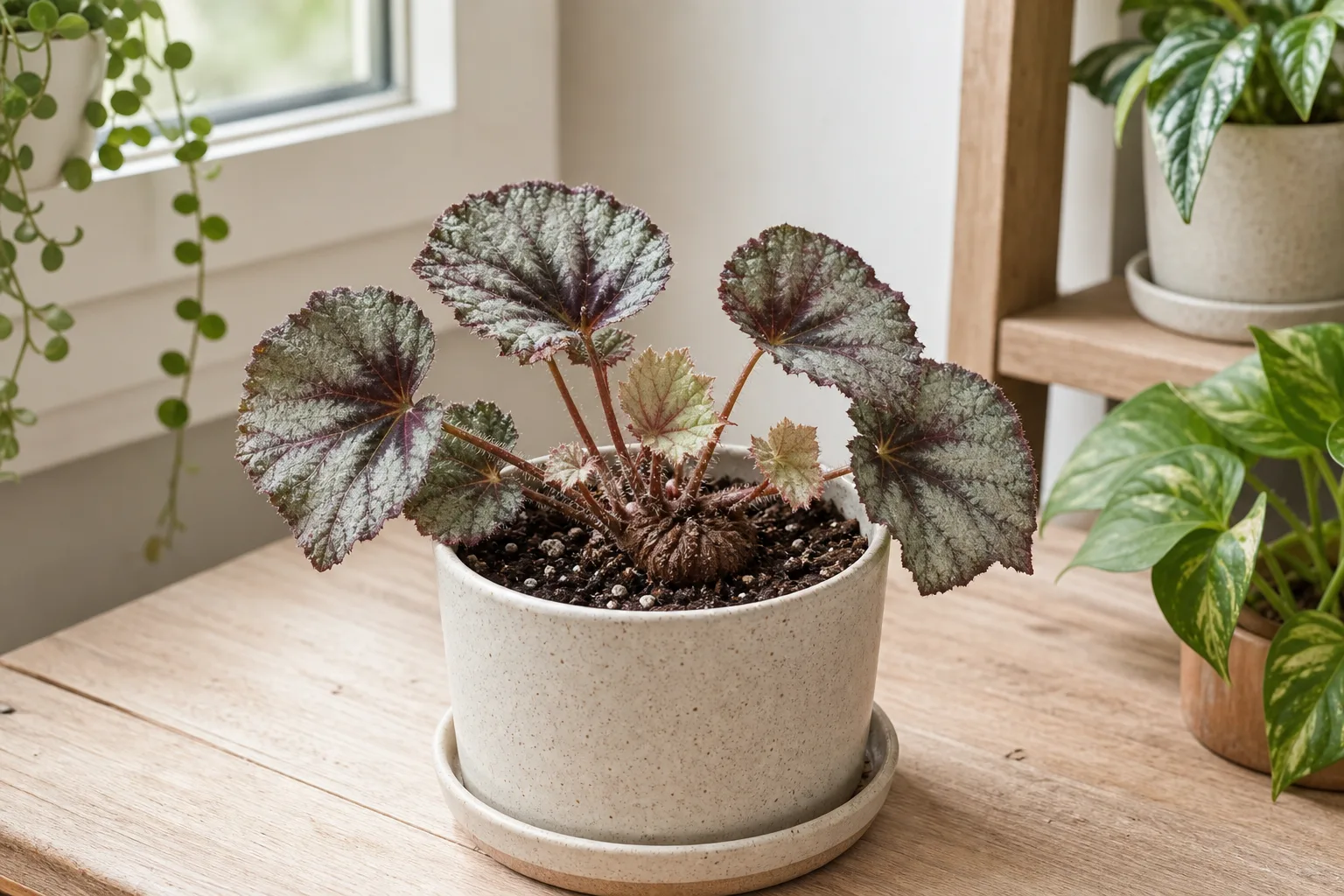
Slow Growth on Begonia Rex: Causes, Checks & Fixes
This guide covers slow growth on Begonia Rex. See also the general Slow Growth guide, watering, and light pages for this plant.
Slow Growth on Begonia Rex: Causes, Checks & Fixes
Quick answer
Slow growth on Begonia Rex (Begonia rex-cultorum) is often normal seasonal rest, not a care crisis. Rex begonias are rhizomatous foliage plants with a moderate indoor growth rate-they produce a steady flush of colorful new leaves through warm months and slow noticeably or enter dormancy in late fall and winter, sometimes dropping part or all of their leaves while the rhizome stays firm.
First step: check the season and rhizome before changing care. Gently press the rhizome at the soil surface. Firm tissue + cool dim months + no mushy soil usually means wait-reduce watering to sparingly, skip fertilizer, and hold repotting until spring growth returns. Firm rhizome + warm bright season + weeks without any new leaf points to correctable stress-most often low humidity, insufficient light, wet rhizome in shade, or root-bound shallow pot.
For full baseline care rhythm, see the Begonia Rex overview. This page focuses on telling normal slowdown from a true stall, confirming the cause, and choosing the right first fix.
Is slow growth normal on Begonia Rex?
Yes-often. Rex begonias are not fast vining houseplants. NC State Extension describes a dense habit reaching roughly 12 to 18 inches tall when conditions are good, and Missouri Botanical Garden classifies them as moderate growers indoors that need the right combination of humidity, light, and watering before they look spectacular.
Healthy moderate growth looks like:
- One to several new leaves per month during spring and summer in typical home conditions-not daily visible change.
- Compact, color-saturated new foliage with stiff petioles holding leaves above the rhizome.
- Steady but not explosive rhizome spread in a shallow pot-the plant fills width before it races upward.
Normal seasonal slowdown looks like:
- Fewer or no new leaves from late fall through winter, especially away from grow lights.
- Older leaf yellowing and drop while the rhizome remains firm and plump at the soil line.
- Slower soil dry-down as transpiration drops-pots that needed water every five to seven days in July may need only every ten to fourteen days in January.
Missouri Botanical Garden notes that many cultivars stop growing in fall or winter unless grown under lights and that if leaves drop during dormancy, you should water only sparingly until spring when new leaves emerge. That pattern is rest, not death-provided the rhizome is healthy.
Abnormal slow growth-the kind that needs intervention-shows during active growing season (roughly spring through early fall) or when care stress blocks even winter maintenance leaves:
- No new leaves for four to six weeks while room temperatures stay above about 60°F (15°C) and the plant sits in reasonable indirect light.
- Pale, small, widely spaced new leaves that lack cultivar pattern intensity-often low light or low humidity limiting expansion.
- Shrinking or softening rhizome with wet soil-crown stress masquerading as patience.
- Whole-plant fade and stall in a dim, soggy corner-light and watering problems compound.
The counterintuitive truth rex owners miss: a leafless rex with a firm rhizome in January may be fine, while a rex that keeps one or two tiny pale leaves all summer in a dry, dim room is stalled and needs correction.
What slow growth looks like on Begonia Rex
Read new growth at the rhizome tip first, not only overall plant size.
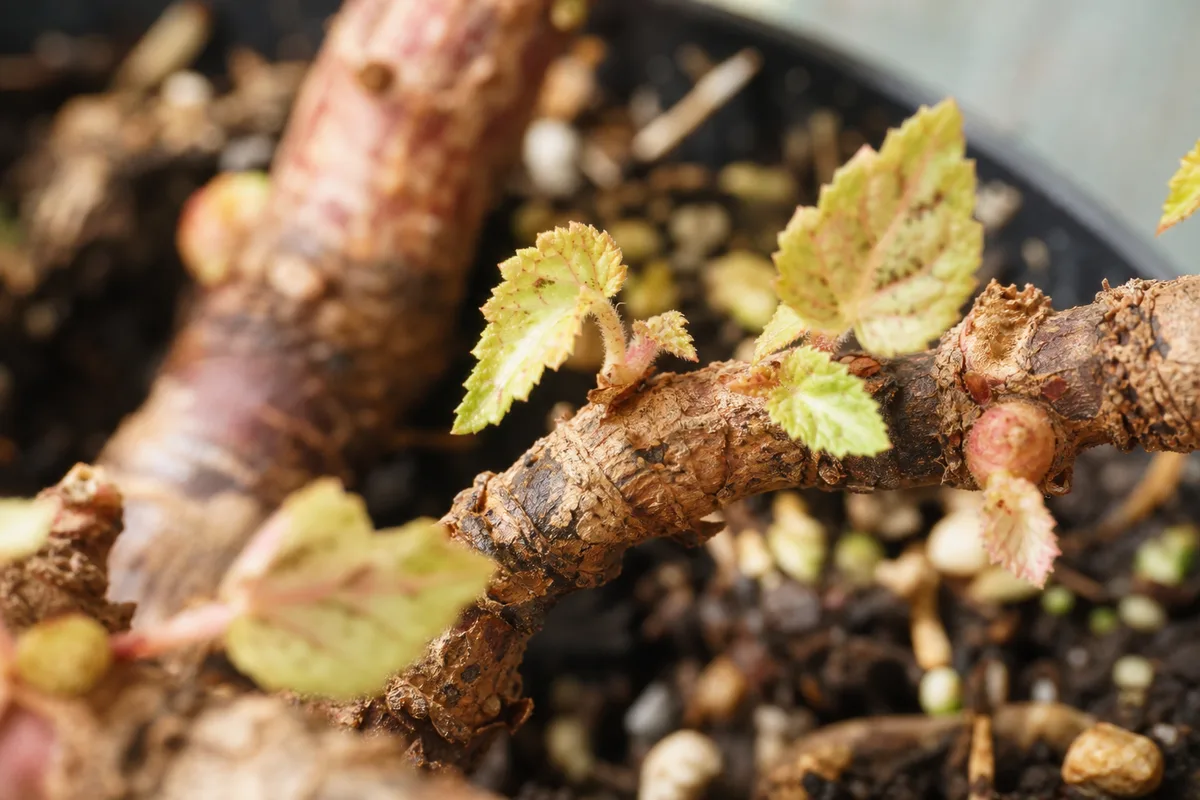
Slow Growth symptoms on Begonia Rex - compare with healthy tissue on the same plant.
Stalled warm-season flush - During spring and summer, healthy rex begonias push new leaves regularly. A stall shows as no emerging leaf buds for weeks, existing leaves aging without replacement, or the same small leaf count since repotting months ago.
Small, pale new leaves - When new foliage does appear but stays undersized, washed out, or widely spaced along the rhizome, light or humidity is usually limiting-not a mysterious “slow gene.” Compare newest leaves to older ones from when you bought the plant or to the not enough light patterns.
Winter leaf drop with bare rhizome - Some cultivars drop most or all leaves in low winter light. The pot looks empty except for a visible firm rhizome at the soil surface. Soil dries slowly. This fits dormancy if the rhizome is solid-not mushy.
Compact stall vs. leggy stretch - True slow growth means few leaves total. Leggy growth means the plant still produces leaves but with long thin petioles and open rhizome spacing as it reaches for photons. A rex doing neither-no new leaves and no obvious stretch-has stalled.
Wet-soil stall in shade - Mix that stays damp for a week or more while growth stops often pairs low light with overwatering relative to reduced transpiration. The rhizome may still feel firm early; left uncorrected, softness follows. See overwatering if soil smells sour or the crown yields to pressure.
Why Begonia Rex gets slow growth
Rex begonias grow from a shallow horizontal rhizome, not a deep taproot. New leaves cost energy the rhizome stores. When any key input drops, the plant pauses leaf production rather than pushing weak tissue-especially in cultivars bred for bold pattern display, not speed.
Seasonal dormancy and photoperiod
Short days and cooler rooms trigger dormancy in many rex cultivars. Missouri Botanical Garden describes fall and winter slowdown unless plants are grown under lights, with some cultivars dropping leaves entirely. Growth resumes when day length and warmth return-often March through April in temperate homes.
This is biology, not neglect-if the rhizome is firm, the fix is patience and reduced water, not fertilizer.
Low humidity limiting leaf expansion
Rex begonias require more than 50% humidity. NC State Extension recommends high humidity for rex types. When winter heating pulls rooms to 25–35% RH, new leaves may emerge small, stall mid-expansion, or abort even when light and watering look acceptable. Dry air damage and growth stall overlap-see low humidity on Begonia Rex if margins crisp too.
Insufficient light during active season
Rex begonias need bright indirect light for compact, colorful growth. University of Connecticut notes that too little light produces weak growth on rex begonias. In dim placement, the plant may stop producing full-sized leaves entirely or enter a prolonged semi-dormant state even in summer. Low light also slows transpiration, so soil stays wet longer-a compounding stall risk.
Temperature below the growth comfort zone
Missouri Botanical Garden suggests rex begonias do best with day temperatures around 70°F and nights around 60°F. If it is cooler, they usually survive but growth will be slow. Drafty winter window sills, unheated rooms, or air-conditioning blasts below about 60°F (15°C) extend stalls beyond normal dormancy.
Wet rhizome and crown stress
Overwatering in dim conditions is a classic rex stall pathway. The rhizome needs moist roots and a dry crown. Chronically wet mix around a shallow rhizome suppresses new leaves and invites rot. A plant that has not grown in months while soil stays soggy needs dry-down and light correction, not more water or feed.
Root-bound shallow pot
Rex begonias prefer relatively shallow pots where the rhizome can spread. When roots circle densely and water runs straight through, new leaf production can stall even when foliage looks okay. This is more common after two to three years in the same container-confirm by gently sliding the root ball out in spring.
Salt buildup and mistimed fertilizer
Heavy feeding during low-growth months leaves salts in the mix that stress fine roots. Missouri Botanical Garden recommends tapering fertilizer in fall and stopping in winter. Fertilizing a dormant or stressed rex rarely speeds growth-it often burns margins and deepens the stall.
Recent move or environmental shock
Rex begonias are environmentally sensitive. A move from greenhouse to dry home, a repot, or a shift to a much darker shelf can trigger two to four weeks of paused growth even when long-term conditions are fixable. Hold steady after one correction before stacking more changes.
Normal winter slowdown vs. problem slowdown
| Signal | Normal winter rest | Problem stall (needs action) |
|---|---|---|
| Season | Late fall through winter | Spring–summer, or any season with grow lights and warmth |
| Rhizome feel | Firm, plump at soil surface | Soft, mushy, or shrinking |
| Leaf status | May drop most leaves; few or no new ones | No new leaves for 4+ weeks while older leaves age without replacement |
| New leaf quality | N/A or occasional small maintenance leaf | Pale, tiny, widely spaced, or pattern washed out |
| Soil moisture | Dries slowly; sparing water is correct | Stays wet 7+ days; sour smell |
| Humidity | Low RH may add edge crisping but firm rhizome still rests | Below ~50% RH with stalled flush during active months |
| Light | Short photoperiod; dim window acceptable if resting | Dim placement during warm months with no supplemental light |
| First response | Wait, water sparingly, no feed/repot | Diagnose light, humidity, water, or rot per tables below |
If five or more rows in the problem stall column match your plant during growing season, proceed with confirmation checks-not patience alone.
How to confirm the cause
Work through this checklist in order:
- Calendar and room temperature - Is it November through February in a temperate climate, or is the room consistently above 65°F with days lengthening? Cool short-day rest fits dormancy; warm-season silence needs a stress diagnosis.
- Rhizome firmness test - Gently press the rhizome where it meets the soil. Firm tissue supports wait-or-correct-light/humidity paths. Soft or collapsing tissue with wet mix points to root rot-stop watering and inspect.
- Newest leaf size and color - Compare the last two leaves to older growth. Full size and strong pattern mean conditions recently worked; a sudden stall may be seasonal. Small, pale, widely spaced leaves mean light or humidity is limiting now.
- Humidity at canopy height - A hygrometer beside the pot reading below 45% during active growth strongly supports humidity as a stall factor on rex cultivars.
- Light at plant height - Stand where the pot sits. Deep interior placement, north-only winter exposure without a grow light, or a shelf more than six feet from glass often cannot sustain active rex growth. See the Begonia Rex light guide.
- Soil dry-down speed - Water when the top mix approaches dry per the watering guide. If the pot stays heavy and wet for a week while leaves are sparse, overwatering relative to light is likely-do not add more water to “wake” the plant.
- Root-bound check - In spring, tip the plant out gently. Dense root circling, little visible mix, and water channeling suggest repotting after conditions stabilize-not during mid-winter dormancy unless rot is present.
- Pest scan - Mealybugs and spider mites weaken growth on stressed rex plants. Inspect leaf undersides and rhizome crevices before assuming pure cultural stall.
If the rhizome is firm, the season is cool or dim, and soil is not soggy, default to dormancy management-not repot, prune, or fertilize.
First fix for Begonia Rex
Match the first action to what you confirmed-not every slow rex needs more light.
If firm rhizome + fall/winter dormancy
Reduce watering to sparingly and wait for spring. Keep the mix from going bone dry for weeks, but do not soak a leafless pot. Skip fertilizer. Do not repot unless the rhizome is rotting. Resume normal watering when the first spring leaf bud appears-often March or April.
Optional: add a full-spectrum grow light 12–14 hours daily if you want to minimize winter dormancy and keep some growth through short days.
If firm rhizome + warm season + pale small new leaves
Raise usable humidity to at least 50% RH at the canopy with a small humidifier-rex begonias stall leaf expansion in dry heated air. In the same week, move to brighter indirect light within two to three feet of an east window or add supplemental LED 12–18 inches above leaves for 12–14 hours. Correct light and humidity together before fertilizing.
If firm rhizome + warm season + dim room but no new leaves at all
Increase bright indirect light first-one deliberate placement change, then hold two weeks. University of Connecticut links insufficient light to weak or stalled growth on rex begonias. Adjust watering to match faster dry-down in brighter spots.
If wet soil + dim corner + weeks without growth
Stop watering until the top 2–3 cm of mix dries, then move to brighter indirect light. Let the rhizome dry down before the next drink. This pairs light correction with dry-down-see overwatering if softness develops.
If soft rhizome or sour soil
Do not wait out dormancy. Stop watering, inspect roots, trim mushy tissue, and repot into fresh airy mix only if rot is confirmed-follow the root rot guide.
Make one primary correction at a time so you can read the plant’s response over the next two to three weeks.
Recovery timeline
Dormancy wait (firm rhizome, winter rest) - Expect little visible change for one to three months. Success is no further rhizome softening and the first new leaf in late winter or spring, often within days to two weeks after light and warmth increase. Old dropped leaves do not return; the rhizome pushes fresh foliage.
Humidity or light correction during active growth - Many rex cultivars produce the next leaf within two to four weeks once humidity stays above 50% and light is adequate. Judge by leaf size and pattern saturation on new growth, not recovery of old small leaves.
Overwatering recovery in shade - Dry-down plus brighter placement may take three to six weeks before a confident new leaf appears. If the rhizome was soft, recovery is slower and may require trimming-weeks to months.
Post-repot stall - Rex begonias often pause two to four weeks after repotting even when healthy. Hold fertilizer for about a month; keep humidity and light stable.
When to escalate - No new growth after six to eight weeks of corrected warm-season conditions with firm rhizome, or spreading softness, means re-check roots, pests, and whether the pot is root-bound.
What not to do
Do not fertilize a leafless dormant rex or a stressed plant in wet soil-Missouri Botanical Garden recommends stopping fertilizer in winter, and salts on fine roots deepen stalls.
Do not repot during firm-rhizome winter rest unless rot is confirmed-disturbing a resting rhizome in cold dim conditions adds shock without benefit.
Do not water on a summer calendar when the plant is dormant and transpiring little-wet mix around a leafless rhizome invites rot.
Do not mist leaves to fix slow growth-NC State Extension recommends avoiding misting rex begonias; raise ambient humidity instead without wetting the crown.
Do not stack repotting, heavy pruning, and pesticide on the same day-one change at a time.
Do not panic-buy a larger pot to force growth-oversized containers stay wet around shallow rhizomes and worsen stalls.
How to prevent slow growth next time
Plan for seasonal rhythm. Expect slower or leafless months in late fall and winter; taper watering as transpiration drops and resume normal rhythm when spring flush starts.
Hold humidity at 50% or higher through heating season-a humidifier beside the canopy prevents the small-leaf stalls that dry January air causes. See low humidity for setup.
Keep bright indirect light year-round. East windows, filtered south or west placement, or a grow light 12–14 hours daily in winter preserves moderate growth and color. Rotate the pot a quarter turn weekly for even compact development.
Match fertilizer to active growth only. Quarter-strength balanced feed every two weeks in spring and summer per Missouri Botanical Garden, then taper in fall-never feed a dormant leafless plant.
Repot in early spring when roots circle a shallow pot, not mid-winter. Choose one size wider, not a deep oversized container.
Avoid frequent moves once you find a bright, humid station-rex begonias stall briefly after environmental shifts.
When to worry
Treat slow growth as urgent when:
- The rhizome feels soft or mushy at the soil line, especially with wet soil or sour smell.
- No new leaves for more than a month during warm bright weather with humidity above 50% and appropriate watering.
- Crown tissue collapses while lower leaves yellow-escalate to root rot inspection immediately.
- Pests coat new growth or stippling spreads on undersides while the plant weakens-address spider mites or mealybugs before expecting a growth flush.
Treat as normal watchful waiting when:
- The rhizome is firm, leaves dropped in late fall or winter, and soil dries slowly in a cool room.
- You recently corrected light or humidity and need two to three weeks to read the next leaf.
Related Begonia Rex guides
- Begonia Rex overview - growth rate, rhizome biology, and baseline care rhythm
- Watering - seasonal dry-down and dormancy watering
- Light - compact growth and color requirements
- Low humidity - RH targets and humidifier setup
- Not enough light - pale small leaves and fade
- Leggy growth - etiolation vs. true stall
- Overwatering - wet rhizome in dim corners
- Root rot - soft crown escalation