Mealybugs on Begonia Rex: Causes, Checks & Fixes
Quick answer
Mealybugs on Begonia Rex hide in tight crown axils, petiole bases, and at the shallow rhizome line where painted leaves meet soil. First step: isolate the plant and dab every visible cottony cluster with 70% isopropyl alcohol on a cotton swab-spot-test one lower leaf first because Rex foliage can burn.
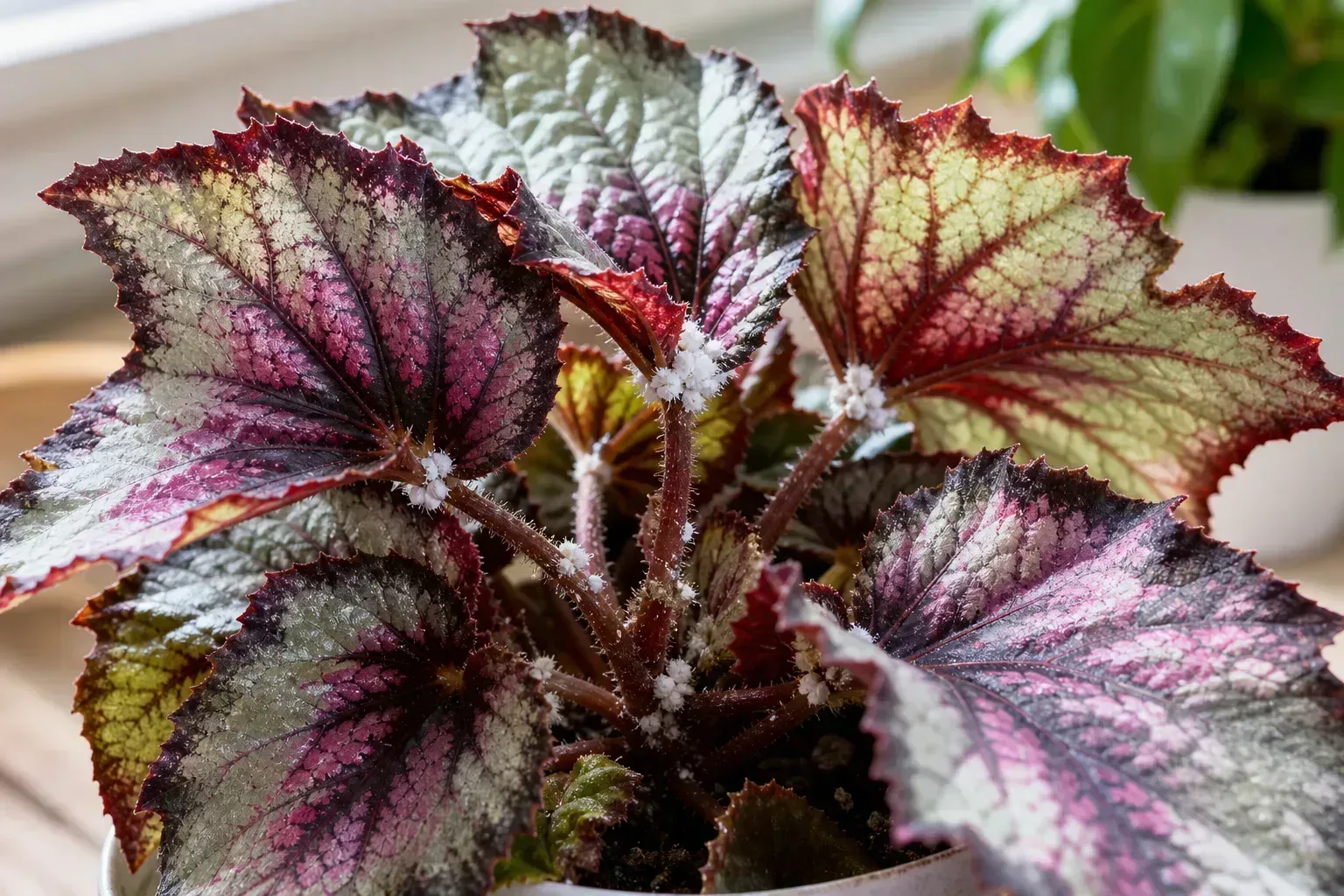
Mealybugs on Begonia Rex: Causes, Checks & Fixes
This guide covers mealybugs on Begonia Rex. See also the general Mealybugs guide, watering, and light pages for this plant.
Mealybugs on Begonia Rex: Causes, Checks & Fixes
Quick answer
Mealybugs on Begonia Rex (Begonia rex-cultorum) are soft-bodied sap feeders that hide where painted leaves overlap at the shallow rhizome crown-exactly the spots you skip when a quick top-water wets only the soil surface. Cottony white wax in petiole axils, sticky honeydew on metallic leaf patterns, and yellowing lower blades are the usual first clues on rhizomatous rex begonias.
First step: isolate the plant and dab every visible cottony cluster with 70% isopropyl alcohol on a cotton swab. NC State lists mealybugs among the pests to monitor on rex types, and the dense rosette architecture keeps colonies small and hidden until honeydew or sooty mold announces them. Do not spray alcohol over whole painted leaves until you spot-test one lower blade-Rex foliage can scorch when solvent pools on hairy or patterned surfaces.
For rhizome anatomy and humidity context, see the Begonia Rex overview. Shared pest mechanics: mealybugs on Aglaonema follow the same weekly alcohol-and-monitor cycle with different crown sensitivity.
What mealybugs look like on Begonia Rex
Early infestations are easy to miss on painted, metallic rex leaves because natural leaf hairs and silver patterning camouflage white wax until clusters grow in sheltered crevices.
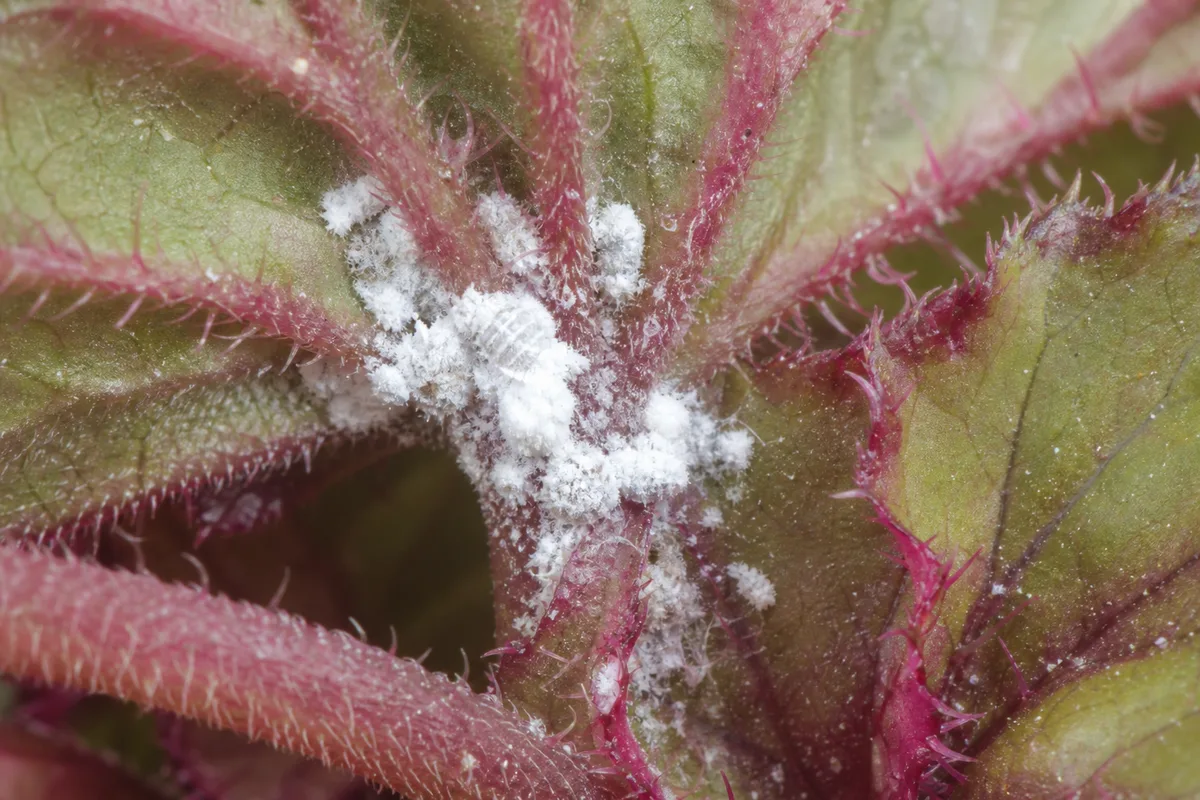
Mealybugs symptoms on Begonia Rex - compare with healthy tissue on the same plant.
Typical signs on rex begonias include:
- White cottony masses tucked where petioles meet the rhizome, in overlapping crown axils, or along the stem above the soil line-mealybugs secrete powdery wax that looks like tiny tufts of cotton.
- Slow-moving oval bodies beneath the wax when you part the rosette with a magnifier; adults are roughly 3/16 inch long and crawl sluggishly when disturbed.
- Sticky honeydew on painted leaf surfaces, pot rims, or nearby shelves; heavy feeding supports black sooty mold that dulls metallic patterns.
- Yellowing, curling, or dropping leaves on heavily fed blades-sap loss shows first on outer lower leaves that stay in the rosette longest.
- White wax at the rhizome line or drainage holes when root or crown mealybugs feed below the visible foliage-common on rhizomatous pots where the shallow rhizome sits partly exposed.
Rex begonias carry leaves on stiff petioles above a shallow rhizome at the soil line. Mealybugs concentrate in tight axils where new painted leaves emerge and at the pot rim where humidity trays keep the crown zone moist-exactly the microclimate rex growers maintain per the low-humidity guide without inspecting crevices.
Unlike the even fine dusting of natural trichomes on fuzzy cultivars, mealybugs form discrete clumps that grow over days and smear pink when crushed-not a uniform surface texture.
Why Begonia Rex gets mealybugs
Mealybugs are introduced pests, not a watering mistake. They arrive on new plants, shared propagation cuttings, contaminated potting tools, or neighboring infested pots-then exploit rex architecture that hides them from casual inspection.
Dense rosettes and rhizome crowns create blind spots. Multiple overlapping painted leaves give mealybugs sheltered feeding sites at petiole bases that top-down watering never disturbs. UConn notes rex begonias should not stay wet at the crown-growers often avoid foliar moisture, which means axil colonies can grow undetected while the rhizome stays correctly dry per the watering guide.
High-humidity culture helps pests persist. Rex begonias prefer bright indirect light and elevated humidity-bathroom and kitchen placements, pebble trays, and grouped plant shelves keep wax-coated mealybugs from desiccating while painted foliage stays lush. Shared humidity trays and touching leaves between pots give crawlers a bridge overnight.
Tender new growth after feeding attracts reinfestation. Soft leaves pushed after heavy fertilizer application offer easy sap access-hold feeding until the pest cycle clears, as outlined in the fertilizer guide.
Spread from neighbors. Mealybugs crawl to adjacent pots and hitch on hands, pruners, or fallen leaf debris. When you find cottony axil clusters, check the same shelf for aphids and spider mites-stressed rex collections often carry multiple pests.
Lookalike symptoms to rule out
Not every white patch on Rex foliage is a mealybug. Check these before treating:
| What you see | Likely cause | Key difference from mealybugs |
|---|---|---|
| Even fine hairs across leaf face | Natural Rex trichomes | Fixed to surface; no cottony balls; no pink smear |
| Flat white powder spreading on blade | Powdery mildew | Film on leaf surface; not waxy tufts in axils |
| White crust after hard-water mist | Mineral deposits | Wipes off dry; no movement; no honeydew |
| Fine stippling + webbing | Spider mites | Paper tap test; no cottony clusters |
| Sticky new shoots, no wax tufts | Aphids | Soft-bodied green or black insects on tender growth |
| White specks in soil only | Perlite or fungus-gnats residue | Not attached to petiole bases; see fungus gnats |
Confirmed mealybugs show cottony axil clusters plus either pink smear on crush or sticky honeydew-one sign alone is not enough if you cannot find live insects or wax masses.
How to confirm the cause
Work through this inspection in order:
- Isolate the plant on a tray away from other houseplants before handling foliage.
- Part the crown rosette gently-support petioles from below so brittle Rex stems do not snap while you look into axils.
- Run the cotton swab test: dab a visible white cluster and crush it-mealybugs smear pink or reddish when crushed; minerals and leaf fuzz do not.
- Inspect the rhizome line: pull soil back slightly from the shallow rhizome and check the pot rim, drainage holes, and where painted leaves meet mix-mealybugs may feed below the soil surface on rhizomatous plants.
- Check undersides and outer lower leaves where honeydew and sooty mold appear first on metallic patterns.
- Inspect neighbors on the same humidity tray or shelf even if they look clean-crawlers walk across contact points within days.
If you find wax masses but no live insects after one alcohol pass, keep treating weekly-newly hatched crawlers reinfest from eggs protected under cottony wax.
First fix for Begonia Rex
Isolate the plant and dab every visible cottony cluster with 70% isopropyl alcohol on a cotton swab.
Move the pot away from neighbors. Dip a cotton swab in 70% isopropyl alcohol (rubbing alcohol) and touch each mealybug directly-treated insects turn light brown as the wax dissolves. Work systematically through crown axils, petiole bases, stem joints, and any wax at the rhizome line. Wipe honeydew from painted leaves with a damp cloth so sooty mold does not spread.
This single targeted step kills adults and many exposed crawlers without soaking the rex crown in foliar sprays-critical on a species that rots when the rhizome sits wet.
Do not pour alcohol into the center of the rosette or spray full-strength solvent across painted foliage until you have spot-tested.
Alcohol spot-test on Rex foliage
Rex begonias carry hairy, patterned leaves that can burn when alcohol contacts leaf tissue-not just the insects:
- Spot-test one lower leaf: dab a tiny alcohol amount on an inconspicuous area, wait 24 hours, and check for bronzing or water-soaked spots before wider use.
- Touch insects only: apply alcohol directly to cottony masses with a swab or fine brush; avoid wiping solvent across metallic painted surfaces.
- Keep treated rex out of direct window sun until dry-alcohol plus hot light marks fuzzy cultivars within hours.
- Repeat weekly for at least three weeks-Colorado State advises weekly repeats until bugs are gone because crawlers hatch on staggered cycles.
If alcohol dabs are not enough
When cottony clusters return after two weekly swab passes, add a labeled insecticidal soap for houseplants, coating axils and undersides until runoff. Maryland Extension recommends soap for heavy infestations with multiple applications. Repeat every five to seven days for at least three cycles.
Spot-test one lower leaf before full spray, wait 24 hours, then treat. Move sprayed rex begonias out of direct window sun until foliage dries. Avoid homemade soap mixes; commercial formulations reduce burn risk on sensitive painted foliage.
For crown-heavy infestations with wax at the rhizome line, a systemic houseplant insecticide watered into the root zone may reach pests below the soil surface-use only on labeled ornamental houseplants, never on herbs or edibles grown indoors, and follow label intervals exactly.
Editorial note: A rex Escargot in a grouped bathroom tray cleared after targeted alcohol dabs every seven days for four weeks plus one insecticidal-soap pass on outer axils; the first clean painted leaf unfurled at day 18 once honeydew was wiped weekly and the pot was spaced away from a neighboring pothos that had hidden stem mealybugs.
When to escalate
Treat as urgent when cottony wax appears on multiple plants from the same shelf, new center growth stays sticky and stunted, or sooty mold covers most painted foliage. Isolate the whole group and run the same weekly alcohol schedule on every pot.
Consider discarding a severely infested, low-value rex in a shared collection-Maryland Extension notes heavily infested plants should be discarded when control fails. Bag the pot before moving so crawlers do not drop onto clean floors.
Most healthy rex begonias recover with consistent alcohol dabs and repeated soap cycles if the rhizome stays firm. If wax persists after three weekly treatments with confirmed technique, inspect again for root mealybugs at the drainage holes or reassess whether powdery mildew-not insects-is the white film on leaf faces.
Recovery timeline
Week 1: Visible cottony masses should shrink after the first alcohol pass plus one follow-up swab session. Fresh wax in crown axils means the cycle is not broken-keep treating.
Weeks 2–3: With weekly dabs or soap sprays, live mealybug counts drop. Leaves with heavy feeding damage may yellow permanently; painted pattern does not repair on tissue that already collapsed.
Weeks 4–6: Clean new leaves emerging from the center without sticky residue mean the plant is winning. Rex begonias grow moderately indoors, so a rosette thinned by drop may need a full warm-season flush before it looks showy again.
Judge success by new growth and absent wax clusters, not by old leaf color. Remove only leaves that are mostly yellow and limp-keep partially marked foliage if the plant is sparse, because rex begonias recover faster with some photosynthetic surface intact.
Worsening signs: Spreading wax after treatment, fresh honeydew each week, or soft rhizome tissue mean escalate-verify rhizome-line inspection, inspect neighbors, and reassess watering per the watering guide.
What not to do
Do not pour alcohol into the crown cup or flood the rhizome center-solvent and moisture pooling at the shallow rhizome invites rot on rex begonias.
Do not spray full-strength alcohol across entire painted leaves without a spot-test; leaf tissue can be damaged even when insects die.
Do not stop after one clean-looking week. A single missed egg batch restarts the outbreak from one hidden axil.
Do not compost infested prunings or propagation leaves indoors-crawlers survive in debris and reinfest clean pots.
Do not return the plant to the collection after one treatment. Wait until you see no live wax masses and no fresh honeydew for two weeks of monitoring.
Skip horticultural oil on hairy Rex cultivars without a 24-hour spot-test; oils can mark patterned foliage in hot window light near the light guide placement.
When handling prunings or treated plants, remember begonias are toxic to cats and dogs-keep cuttings and swabs out of reach.
How to prevent mealybugs on Begonia Rex
Prevention targets introduction vectors while respecting rex crown inspection habits:
- Quarantine new plants and leaf cuttings for two weeks; inspect crown axils and rhizome lines before placing them near rex begonias.
- Check axils every time you bottom-water-the natural moment your hands are already at pot level on rhizomatous plants.
- Space pots on humidity trays so painted leaves do not touch; mealybugs crawl across contact points overnight.
- Wipe honeydew promptly with a damp cloth so sooty mold does not mask new colonies on metallic patterns.
- Hold fertilizer until pests clear-tender flushed growth is easier for mealybugs to pierce.
Avoid clustering rex pots tight against soft-leaved neighbors without monthly axil checks-shared bathroom humidity helps both plants and pests persist.
Begonia Rex care cross-check
Mealybugs and environmental problems can both mark rex leaves, but the patterns differ:
| Symptom pattern | Likely issue | First check |
|---|---|---|
| Cottony axil clusters + pink smear | Mealybugs | Isolate; alcohol dab on wax masses |
| Fine upper-surface stippling | Spider mites | Paper tap test; rinse undersides |
| Even crisp margins, no wax | Low humidity | Hygrometer at canopy |
| Sticky new shoots, no cotton | Aphids | Hand lens on tender growth |
| Yellow lower leaves, wet mix | Overwatering | Rhizome firmness |
A firm rhizome with waxy axil clusters means pests, not root rot on Begonia Rex. Fix the mealybug cycle first; only reassess watering if soil stays soggy after treatment stops.
Stable baseline care from the overview and light guide helps new painted leaves emerge faster once insects are gone.
Related Begonia Rex problems
- Spider mites - stippling and webbing, not cottony wax
- Aphids - sticky new-growth pest with rhizome-safe rinse protocol
- Low humidity - crisp edges without axil clusters
- Fungus gnats - soil-surface insects, not foliar wax
- Begonia Rex overview - rhizome anatomy, humidity, and baseline care
Conclusion
Mealybugs on Begonia Rex are introduced sap feeders that hide in crown axils and at the rhizome line on painted foliage. Confirm live pests with the cotton swab pink-smear test and rhizome-line inspection, isolate and alcohol-dab first while spot-testing sensitive cultivar leaves, then use labeled insecticidal soap only where weekly dabs fail on a five- to seven-day repeat schedule. Recovery is measured by clean new painted leaves without sticky residue-and prevention comes from quarantine, axil checks at every watering, and spacing pots on shared humidity trays.
When to use this page vs other Begonia Rex guides
- Begonia Rex watering guide - Use for routine moisture checks before assuming mealybugs is the main issue.
- Begonia Rex problems hub - Browse all 16 common issues on this species.
- Yellow Leaves on Begonia Rex - Different entry point when symptoms overlap with mealybugs.
- Slow Growth on Begonia Rex - Different entry point when symptoms overlap with mealybugs.
- Spider Mites on Begonia Rex - Different entry point when symptoms overlap with mealybugs.