Problems

Venus Flytrap Problems: Causes & Quick Fixes

Quick answer

Venus Flytrap is prone to 18 common issues - each link below is a plant-specific fix guide.
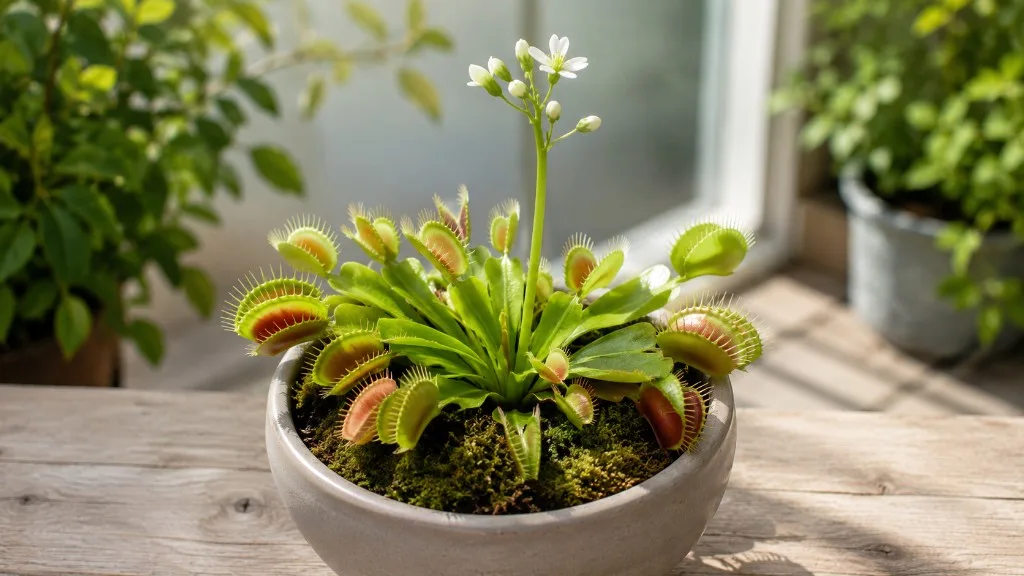
Venus Flytrap houseplant

Venus Flytrap problems

Use the guides below to diagnose and fix common issues on Venus Flytrap. Each problem page explains why it happens on this species and what to do first.

Or use our problem diagnosis tool to narrow down symptoms.

Common problems on Venus Flytrap

Likely cause: Tap water minerals or fluoride kill the sensitive roots; also low humidity or insufficient light

Quick fix: Switch immediately to distilled water or rainwater only; never use tap water

Full fix guide →

Likely cause: Mould on the sphagnum moss surface is common and usually not harmful; can indicate stagnant air

Quick fix: Improve air circulation; remove mouldy moss surface; ensure direct sunlight

Full fix guide →

Likely cause: Venus Flytraps are inherently slow-growing; insufficient sun is the most common cause

Quick fix: Ensure minimum 4 hours direct sun daily; outdoor placement in summer dramatically accelerates growth

Full fix guide →

Likely cause: Inadequate moisture, tap water damage, or insufficient humidity

Quick fix: Check tray has distilled water; trim dead traps; ensure at least 50% humidity

Full fix guide →

Likely cause: Plants under 2–3 years old rarely flower; many growers remove flower spikes to preserve plant energy

Quick fix: If your plant flowers, consider removing the spike-blooming exhausts a small plant; let mature plants flower if healthy

Full fix guide →

Likely cause: Common on this plant type; confirm with recent watering, light, and root checks.

Quick fix: Inspect the plant and correct the most likely care stressor before stacking treatments.

Full fix guide →

Root Rot

Medium

Likely cause: Common on this plant type; confirm with recent watering, light, and root checks.

Quick fix: Inspect the plant and correct the most likely care stressor before stacking treatments.

Full fix guide →

Likely cause: Common on this plant type; confirm with recent watering, light, and root checks.

Quick fix: Inspect the plant and correct the most likely care stressor before stacking treatments.

Full fix guide →

Likely cause: Common on this plant type; confirm with recent watering, light, and root checks.

Quick fix: Inspect the plant and correct the most likely care stressor before stacking treatments.

Full fix guide →

Likely cause: Common on this plant type; confirm with recent watering, light, and root checks.

Quick fix: Inspect the plant and correct the most likely care stressor before stacking treatments.

Full fix guide →

Mealybugs

Medium

Likely cause: Common on this plant type; confirm with recent watering, light, and root checks.

Quick fix: Inspect the plant and correct the most likely care stressor before stacking treatments.

Full fix guide →

Aphids

Medium

Likely cause: Common on this plant type; confirm with recent watering, light, and root checks.

Quick fix: Inspect the plant and correct the most likely care stressor before stacking treatments.

Full fix guide →

Likely cause: Common on this plant type; confirm with recent watering, light, and root checks.

Quick fix: Inspect the plant and correct the most likely care stressor before stacking treatments.

Full fix guide →

Wilting

Medium

Likely cause: Common on this plant type; confirm with recent watering, light, and root checks.

Quick fix: Inspect the plant and correct the most likely care stressor before stacking treatments.

Full fix guide →

Likely cause: Common on this plant type; confirm with recent watering, light, and root checks.

Quick fix: Inspect the plant and correct the most likely care stressor before stacking treatments.

Full fix guide →

Likely cause: Common on this plant type; confirm with recent watering, light, and root checks.

Quick fix: Inspect the plant and correct the most likely care stressor before stacking treatments.

Full fix guide →

Likely cause: Common on this plant type; confirm with recent watering, light, and root checks.

Quick fix: Inspect the plant and correct the most likely care stressor before stacking treatments.

Full fix guide →

Likely cause: Common on this plant type; confirm with recent watering, light, and root checks.

Quick fix: Inspect the plant and correct the most likely care stressor before stacking treatments.

Full fix guide →

Frequently asked questions

How often should I water Venus Flytrap?

Use only distilled water or rainwater-never tap water. Keep the growing medium consistently moist by standing the pot in 1–2 cm of distilled water (tray method). In practice, water keep tray topped with 1–2 cm distilled water at all times during growing season. Tray should never run completely dry during the growing season; reduce to just barely moist in winter dormancy. During winter dormancy (November–February), keep medium just barely moist-do not use the tray method; allow some drying between waterings.

What light does Venus Flytrap need?

Venus Flytrap grows best in full sun-minimum 4 hours of direct sun per day.

Is Venus Flytrap safe for cats and dogs?

Venus Flytrap is generally considered non-toxic to cats and dogs. Always monitor pets around new plants and contact your vet if unusual symptoms appear.

How do I propagate Venus Flytrap?

Propagate Venus Flytrap from healthy stem or root divisions during active growth.

What soil is best for Venus Flytrap?

Use pure nutrient-free medium-standard potting soil kills this plant. Use pure sphagnum moss or a 1:1 mix of peat moss and perlite (no fertiliser-amended products). A good mix includes pure long-fibre sphagnum moss, or peat moss (unfertilised) with perlite (50%). Retains moisture while staying oxygenated; must be nutrient-free. Target soil pH around 4.5–5.5 (highly acidic).

When should I repot Venus Flytrap?

Repot Venus Flytrap every 2 years in early spring before dormancy ends, ideally in early spring (February–March, before new growth). Signs it needs a bigger pot: sphagnum moss decomposing, multiple rhizomes crowding the pot.

Why does my Venus Flytrap have brown tips?

Tap water minerals or fluoride kill the sensitive roots; also low humidity or insufficient light Quick fix: Switch immediately to distilled water or rainwater only; never use tap water

How this Venus Flytrap problems guide is reviewed?

Editorial policyReview board

Written by · Reviewed by LeafyPixels Review Board · Updated June 17, 2026

This Venus Flytrap problems problem guide was researched and written by . Problems symptoms on Venus Flytrap, lookalike causes, and step-by-step fixes are cross-checked against extension pest, disease, and care references before publication.

We prioritize sources that hold up under scrutiny:

  • University cooperative extension bulletins and fact sheets (Penn State, Clemson, UMD, NC State, and similar programs)
  • Botanical garden and horticultural society publications
  • Peer-reviewed plant science and veterinary toxicology references where pet safety matters (including ASPCA Animal Poison Control)
  • Established reference works on indoor plant culture

The LeafyPixels editorial team then reviews the draft for clarity, step-by-step usefulness, and fit with real apartment and home conditions-not ideal greenhouse setups. When guidance changes materially, we update the page and note the revision date.


Sources used

  1. **Black sooty mold** (n.d.) Mealybugs Indoor Plants. [Online]. Available at: https://extension.umd.edu/resource/mealybugs-indoor-plants (Accessed: 17 June 2026).
  2. **three to five closures** (n.d.) Full. [Online]. Available at: https://www.frontiersin.org/journals/plant-science/articles/10.3389/fpls.2022.970320/full (Accessed: 17 June 2026).
  3. adult females lay eggs in moist peat-rich media (n.d.) Fungus Gnats As Houseplant And Indoor Pests. [Online]. Available at: https://extension.colostate.edu/resource/fungus-gnats-as-houseplant-and-indoor-pests/ (Accessed: 17 June 2026).
  4. Barry Rice advises cutting young flower stalks at the base (n.d.) Faq2620. [Online]. Available at: https://sarracenia.com/faq/faq2620.html (Accessed: 17 June 2026).
  5. Carnivorous Plant FAQ (n.d.) Faq2640. [Online]. Available at: https://sarracenia.com/faq/faq2640.html (Accessed: 17 June 2026).
  6. carnivorous plant FAQ (n.d.) Faq2200. [Online]. Available at: https://sarracenia.com/faq/faq2200.html (Accessed: 17 June 2026).
  7. Carnivorous plants are very sensitive to chemicals (n.d.) Faq3660. [Online]. Available at: https://sarracenia.com/faq/faq3660.html (Accessed: 17 June 2026).
  8. carnivorous plants must not be fertilized (n.d.) PlantFinderDetails. [Online]. Available at: https://www.missouribotanicalgarden.org/PlantFinder/PlantFinderDetails.aspx?kempercode=d707 (Accessed: 17 June 2026).
  9. Clemson Extension distinguishes salt crust from saprophytic soil fungi (n.d.) Houseplant Diseases Disorders. [Online]. Available at: https://hgic.clemson.edu/factsheet/houseplant-diseases-disorders/ (Accessed: 17 June 2026).
  10. damage fine roots and tunnel into stems (n.d.) FungusGnatLarvae. [Online]. Available at: https://www.carnivorousplants.org/grow/pests/FungusGnatLarvae (Accessed: 17 June 2026).