Crispy Leaves on Venus Flytrap: Causes, Checks & Fixes
Quick answer
Crispy traps and petioles on Venus flytrap mean dry, dead tissue-most often from an empty tray, tap-water mineral damage, or humidity below 40% indoors. First step: refill the tray with distilled, rain, or reverse-osmosis water under 50 ppm TDS and never let the rhizome dry out during the growing season.
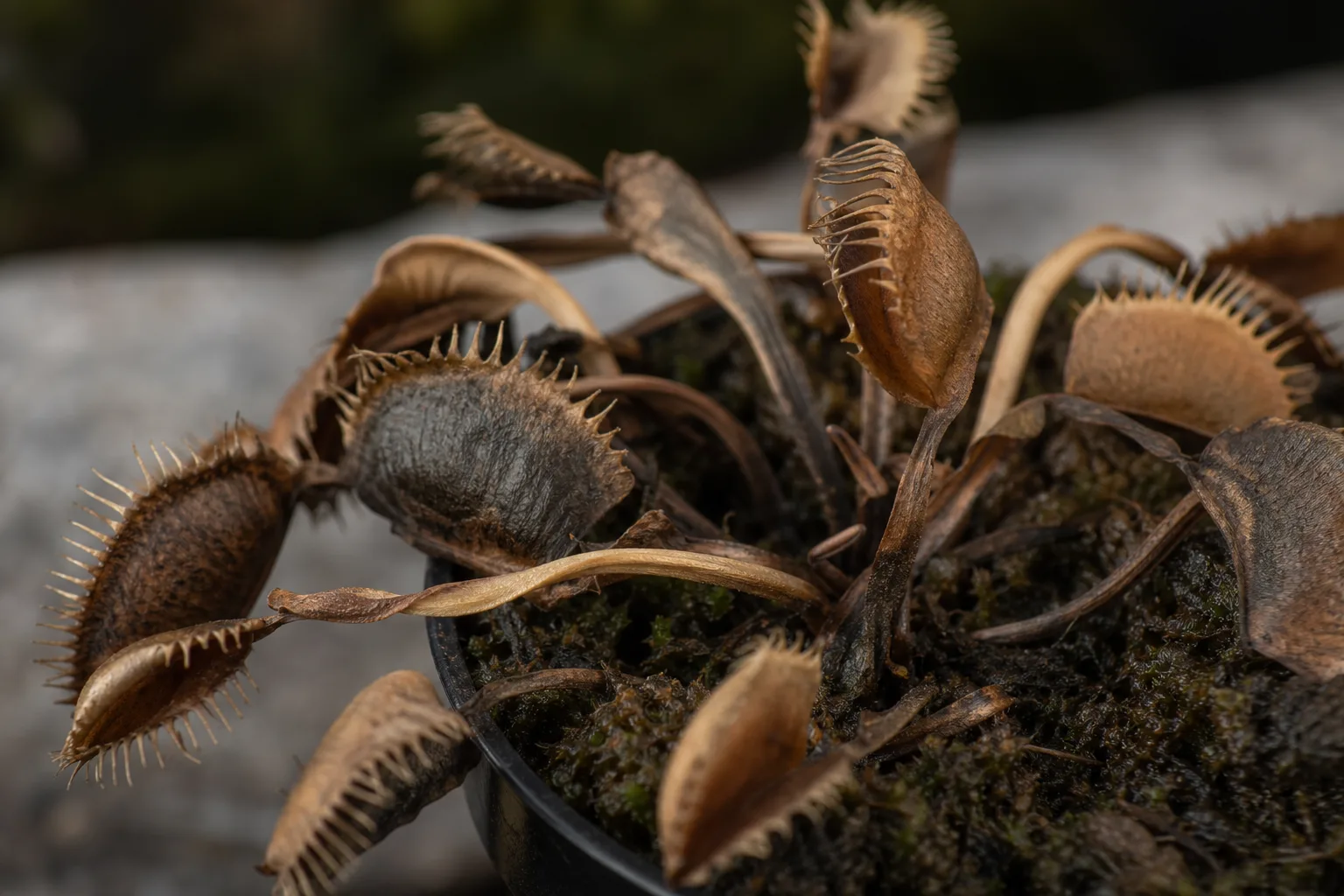
Crispy Leaves on Venus Flytrap: Causes, Checks & Fixes
This guide covers crispy leaves on Venus Flytrap. See also the general Crispy Leaves guide, watering, and light pages for this plant.
Crispy Leaves on Venus Flytrap: Causes, Checks & Fixes
Quick answer
Crispy traps and petioles on a Venus flytrap (Dionaea muscipula) mean dry, dead tissue-not rot. On this bog carnivore, damage shows up as papery trap lobes that fail to reopen, stiff brown petiole bases, and tan mineral-stiffened trap margins when roots cannot deliver moisture or when dissolved salts pull water out of fine roots even in wet peat.
The three most common triggers are drought from an empty tray or dry root zone, tap-water mineral dehydration, and low indoor humidity below 40% at trap level during heating season. Normal trap senescence after feeding can look similar but hits one trap at a time while the rest of the rosette stays firm and green.
First step: refill the tray with distilled, rainwater, or reverse-osmosis water under 50 ppm TDS and verify the peat is damp at 2–3 cm depth-never let the rhizome dry out during active growth. Do not fertilize, repot, and flood the crown on the same day; restore pure moisture first, then judge new trap growth over the next two weeks.
This page covers crispy trap and petiole diagnosis. For tan margin burn without full desiccation, see brown tips. For tray setup, the 50 ppm rule, and crown-above-water depth, start with Venus flytrap watering. For pale weak traps and grow-light placement, see light. For limp traps on soggy mix, see overwatering and root rot.
What crispy leaves look like on Venus Flytrap
Venus flytraps do not have conventional foliage leaves-they have traps on petioles emerging from a horizontal rhizome. Crispy damage breaks healthy tissue in predictable ways:
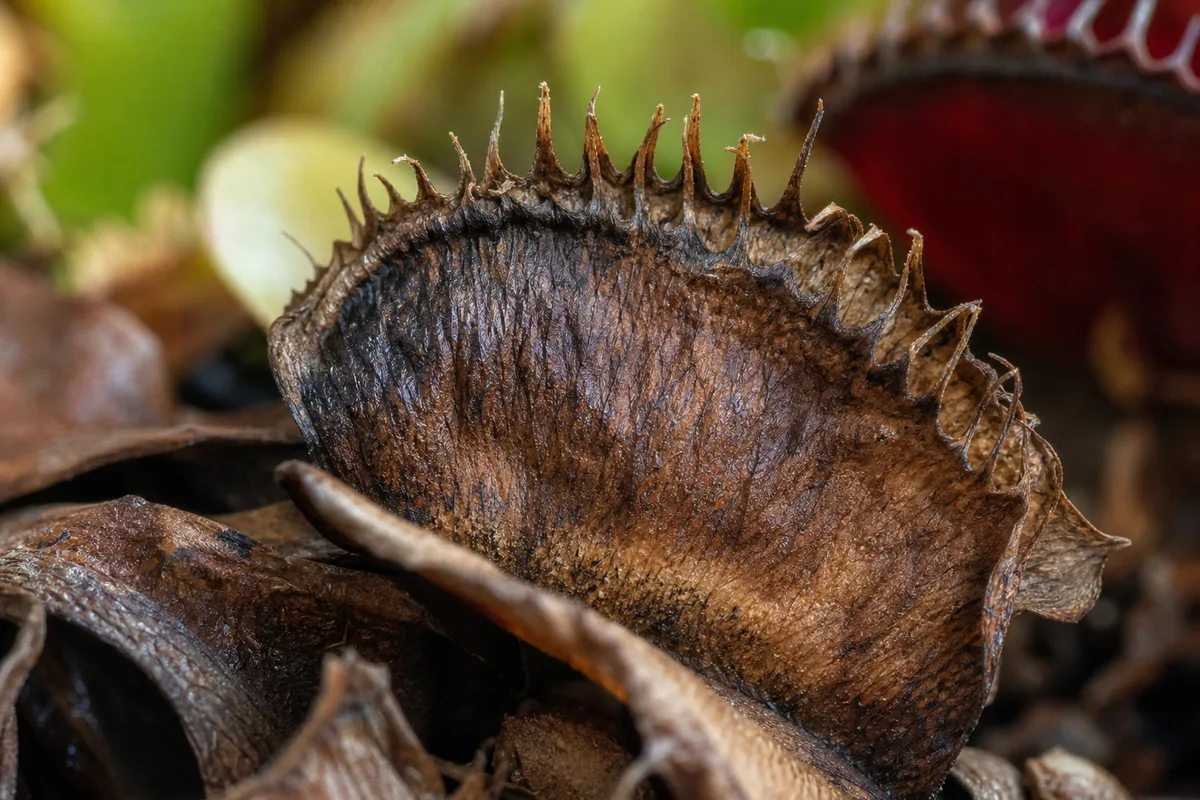
Crispy Leaves symptoms on Venus Flytrap - compare with healthy tissue on the same plant.
- Dry, papery trap lobes that stay open or reopen slowly and feel brittle when pinched-not soft, wet, or black from the base up
- Stiff brown crispy petiole bases with limp traps above-classic drought when the tray has been empty during active growth
- Tan stiff trap margins on multiple traps at once while tap or spring water has been in use-mineral burn dehydrating roots from below
- Uniform blackening of one trap after three to five closures or after digesting prey-often normal senescence; neighboring traps stay green and firm
- Bleached or scorched trap faces on the sun-exposed side after a sudden outdoor move-unacclimated full sun, not drought alone
- Crisp edges on otherwise well-watered plants in heated winter rooms-low humidity layered on another stressor
Healthy traps are firm, close with visible speed when trigger hairs are touched, and show red interior pigment on many cultivars when light is adequate. Widespread papery tissue on multiple traps while the tray is dry points to moisture failure-not pests.
What crispy traps do not look like: mushy rhizome with sour-smelling peat, traps collapsing on soggy mix, or fine webbing under traps. Those patterns point to overwatering or root rot-not simple dry tissue stress.
Why Venus Flytrap gets crispy leaves
Drought and empty tray during active growth
Venus flytraps evolved in nutrient-poor acidic bogs where the soil stays damp year-round. During active growth-roughly March through October in the Northern Hemisphere-the root zone should never go bone dry. When the tray empties and peat dries at depth, fine root hairs die first. Traps lose turgor, petiole bases brown and crisp, and lobes feel papery. A single dry spell during a heat wave can crisp several traps in days even if the rhizome remains firm when caught early.
Tap-water mineral dehydration
Municipal tap water, spring water, and most bottled waters carry dissolved minerals that accumulate in peat moss because carnivorous roots cannot excrete excess salts the way conventional houseplant roots might. The ICPS growing guide recommends distilled, reverse-osmosis, or clean rainwater when tap water exceeds 90 ppm TDS; most growers target 50 ppm or less for routine care.
Mineral buildup creates a cruel paradox: peat may feel damp while roots effectively dehydrate as conductivity rises. Trap margins turn tan and stiff, petioles crisp, and new growth stalls-sometimes weeks after the last tap refill. NC State Extension notes that treated or hard tap water can kill the plant; widespread crispy tissue with a tap-water history is an early visible warning before rhizome collapse.
Low indoor humidity
Venus flytraps prefer high humidity and consistently moist soil. Heated apartments in winter often drop below 40% relative humidity at trap level. When roots deliver adequate moisture but air pulls water from trap surfaces faster than the plant replaces it, margins crisp on outer traps while the tray still holds water. This pattern overlaps with low humidity stress and is common on desks far from moisture sources.
Sun scorch on unacclimated plants
A flytrap moved from a dim windowsill to all-day outdoor sun without a seven-to-fourteen-day acclimation period can show bleached or brown crispy patches on trap surfaces facing the brightest exposure. Scorch differs from drought by timing-it follows a sudden light increase while peat moisture is normal, not an empty tray.
Normal trap senescence after feeding
Each trap is a modified leaf with a limited lifespan. After three to five closures-whether from prey or curious poking-the trap blackens and dies while the plant replaces it from the rhizome. One trap at a time turning black and crisp after feeding is normal. Widespread papery traps on multiple petioles while the tray is dry is not.
How to confirm the cause
Work through these checks in order. Each step narrows the diagnosis without stacking unnecessary treatments.
- Tray level and peat moisture at depth - Is the saucer empty? Insert a finger or skewer to 2–3 cm depth. Dusty dry peat with a light pot supports drought (underwatering). Damp peat with widespread stiff tan margins points to minerals or humidity instead.
- Water source and TDS history - Have you used tap, spring, or unknown bottled water in the past month? Test with a TDS meter: above 50 ppm strongly supports mineral dehydration. Below 50 ppm with an empty tray points to drought alone.
- Tissue texture pinch test - Papery and brittle equals environmental dryness, mineral stiffening, or senescence. Soft, mushy, or foul-smelling equals rot-see root rot.
- Pattern across the rosette - One black crisp trap after feeding = likely senescence. Multiple papery traps with dry petiole bases = drought or minerals.
- Rhizome firmness - Gently brush peat from the crown. Firm white or pale green rhizome with crisp traps fits drought or mineral stress caught early. Soft mushy crown on wet peat = overwatering, not this guide.
- Light and humidity context - Heating season crisp on well-watered plants suggests low humidity. Sudden outdoor placement after indoor culture supports scorch.
- Trap size - Small pale traps on long thin petioles signal insufficient light even when water is pure; they may crisp before reaching full size.
Confirmed drought crisp: empty tray, dry peat at 2–3 cm, limp papery traps, brown petiole bases, firm rhizome, pure or unknown water.
Confirmed tap-water mineral crisp: tan stiff margins on multiple traps, tap or spring water history, TDS above 50 ppm or hard-water region, peat may still feel damp.
Confirmed normal senescence: one trap blackening after closures or feeding, rest of rosette green and firm, tray and water otherwise sound.
First fix for Venus Flytrap
Refill the tray with distilled, rainwater, or reverse-osmosis water only-1–2 cm depth during active growth-and verify peat is damp at 2–3 cm depth within the hour.
Pour out any stale tray water, rinse the saucer, and use pure water under 50 ppm TDS. If the mix has gone bone dry, set the pot in a shallow basin of pure water halfway up the container for 30–60 minutes so peat can reabsorb moisture, then return to the standard tray method. Move the plant to at least six hours of direct sun daily or supplemental white LED grow light 12 to 16 hours daily.
Make this moisture-and-water correction before Venus Flytrap repotting guide, fertilizing, or trimming every trap. One clear intervention lets you judge whether new firm traps emerge within two weeks. If you have used tap water for more than a few weeks, plan a repot into fresh peat-perlite mix within seven days-but still switch water and refill the tray immediately even if repotting waits.
Step-by-step recovery
Day 1 - pure water and tray refill
Empty the tray and saucer. Refill with distilled or rainwater only to 1–2 cm. If peat is bone dry, bottom-soak as described above. Position for full direct sun outdoors if climate allows, or 6–12 inches below a white full-spectrum LED. Trim only traps that are fully black and collapsed-leave partially crisp traps if green tissue remains.
Days 2–7 - monitor rhizome and moisture rhythm
Check the rhizome crown: it should feel firm and white or pale green, not soft or foul-smelling. Refill the tray when the mix approaches dry at 2–3 cm depth during the growing season-never let the entire pot desiccate again. The New York Botanical Garden carnivorous guide recommends keeping the crown above the saturated zone so standing water does not rot tissue while you correct drought or mineral damage.
Days 7–14 - repot if minerals accumulated
If tap water ran for weeks, minerals bind to peat and switching water alone may not be enough. Unpot, discard old mix, rinse roots gently with pure water, and repot into fresh carnivorous peat and perlite with no fertilizer. Missouri Botanical Garden notes Venus flytraps must never receive conventional fertilizer-fresh low-mineral mix is the recovery medium, not enriched potting soil.
Resume shallow tray watering after repot. Expect two to four weeks before the first firm new trap with clean margins appears on moderate mineral damage.
Humidity correction if winter crisp persists
When the tray is full, peat is damp, water is pure, and margins still crisp on outer traps in heated rooms, raise humidity above 40% at trap level with a pebble tray, grouping plants, or a small humidifier-see low humidity for placement specifics.
Ongoing - judge only new growth
Old crispy trap tissue does not re-green. Success means new traps are firm, adequately sized for your light level, and free of fresh papery margins. If new growth stays pale and small after pure water and six hours of sun, escalate the light upgrade before assuming moisture failed.
Recovery timeline
| Severity | What you see | Realistic recovery |
|---|---|---|
| Mild - one dry spell, firm rhizome | Papery traps on two to three petioles, empty tray | Firm new traps in 7–14 days after tray refill and pure water |
| Moderate - weeks of tap water | Widespread stiff tan margins, slowed new growth | 3–5 weeks after repot into fresh peat and pure water |
| Drought with hydrophobic peat | Water runs through, mix shrunk from pot walls | 24–48 hours after bottom-soak; new traps in 2–3 weeks |
| Severe - soft rhizome, sour smell | Crown mush with black traps on wet peat | May need root-rot salvage; crisp guide alone is not enough |
Recovery markers: firm new traps that close with speed, stable white rhizome, stopped spread of papery tissue to untouched traps. Cosmetic damage on old traps may persist until those traps senesce naturally.
Lookalike symptoms to rule out
| Pattern | Key difference from crispy traps |
|---|---|
| Brown tips | Tan margin burn on trap lobes without full petiole desiccation; often mineral or light stress with tray still holding water |
| Underwatering | Overlaps heavily with drought crisp-empty tray and dry peat are the shared signature; this page adds mineral and humidity forks |
| Low humidity | Crisp edges on well-watered plants in heated dry air; tray full, peat damp at depth |
| Not enough light | Small pale traps on long stems crisp before full size; pure water does not fix trap quality |
| Normal post-feeding senescence | One trap blackens and crisps after closures; rosette otherwise healthy |
| Overwatering / root rot | Mushy rhizome, sour peat, wilt on wet soil-not dry papery traps from drought |
| Sun scorch | Follows sudden outdoor move; bleached patches on sun-facing trap faces with normal tray moisture |
What not to do
Do not fertilize a crispy flytrap to “help it recover.” Carnivorous plants capture insects for nitrogen-conventional fertilizer burns roots already stressed by drought or minerals.
Do not keep using tap water while waiting to repot. Every refill deposits more salts even if you plan a mix change next weekend.
Do not deep-flood the tray to compensate for crispy traps in cool dim corners. Mineral-stressed or drought-recovering rhizomes rot faster in deep standing water-keep 1–2 cm and increase light.
Do not interpret one black crisp trap after feeding as crisis. Confirm whether multiple traps show papery drought or mineral tissue before escalating.
Do not mist traps as a substitute for tray moisture when peat is bone dry. Misting raises humidity briefly but does not rehydrate a desiccated root zone.
Mistakes to avoid
- Assuming bottled “spring water” is safe-it often exceeds carnivorous plant TDS limits
- Blaming pests first when an empty tray and tap-water history explain the pattern
- Repotting into regular potting mix with fertilizer or lime-use carnivorous peat and perlite only
- Measuring success by old trap texture instead of new trap firmness
- Letting the tray stay empty through a heat wave because “carnivorous plants hate wet feet”-they hate dry roots during growing season more
How to prevent crispy traps next time
Use distilled, rainwater, or RO water under 50 ppm TDS exclusively. Test tap once with a meter if you wonder whether your region is an exception-most apartment growers are not. Maintain the tray method at 1–2 cm during active growth and reduce standing water during cool dormancy.
Provide six or more hours of direct sun daily outdoors or supplemental LED per the light guide. Keep indoor humidity above 40% near the plant when possible during heating season.
Check tray level and peat at 2–3 cm depth every day or two in summer heat-evaporation can empty a shallow saucer in 48 hours on a sunny windowsill. One black crisp trap after feeding is fine; new papery margins on multiple traps mean moisture or water purity needs correction before damage spreads to the rhizome.
When to worry
Escalate same-day if the rhizome softens, peat smells sour or rotten, or traps collapse on soggy mix-that is root failure, not drought crisp alone.
Act within days if most traps are papery, the tray has been empty for a week during active growth, or widespread stiff tan margins continue after a pure-water switch with no new growth for three weeks.
Monitor calmly if one old trap crisps and blackens after feeding, the rhizome is firm, and newest traps emerge firm after you corrected tray moisture and water purity.
Conclusion
Crispy traps and petioles on Venus flytrap are a carnivore-specific desiccation signal-usually empty tray drought, tap-water mineral dehydration, or dry indoor air-not generic houseplant leaf crisp. Refill the tray with pure water under 50 ppm TDS, keep peat damp at depth during the growing season, and judge recovery by firm new traps, not repaired old tissue. When minerals have accumulated for weeks, repot into fresh carnivorous mix after the water switch. One black crisp trap after feeding is normal; widespread papery traps on multiple petioles with a dry tray is not.
Related Venus flytrap guides: overview · watering · light · brown tips · underwatering · not enough light · low humidity · overwatering · root rot
When to use this page vs other Venus Flytrap guides
- Venus Flytrap watering guide - Use for routine moisture checks before assuming crispy leaves is the main issue.
- Venus Flytrap problems hub - Browse all 18 common issues on this species.
- Brown Tips on Venus Flytrap - Different entry point when symptoms overlap with crispy leaves.