Venus Flytrap Propagation: Division & Cuttings
Venus Flytrap Propagation: Division & Cuttings
Venus Flytrap Propagation: Division & Cuttings
Venus flytrap propagation is less about exotic technique and more about reading the plant’s calendar. Dionaea muscipula multiplies in the wild through seed and through the slow spread of its underground rhizome, which sends up new rosettes when conditions in the Carolina coastal plain bogs favor growth. At home, you can work with that same biology four ways: division of offshoots at the end of dormancy, leaf pullings that include a sliver of white rhizome, seed (rewarding but genuinely slow), and flower stalk cuts that both redirect energy back to trap production and sometimes produce bonus clones. None of these methods uses regular potting soil or tap water. Every path starts with nutrient-poor acidic media, clean water, and enough light that the parent - and every baby - can photosynthesize without burning.
The mistake most beginners make is not choosing the wrong method. It is choosing the right method at the wrong moment. Mid-winter dormancy is for resting, not for yanking leaves. Spring awakening, when you lift the plant for its annual repot, is when divisions happen cleanly. Active summer growth is when leaf pullings and flower stalk strikes have the warmth and day length to push new plantlets. Seed sits in its own lane: sow fresh, accept a multi-year wait, and treat seedlings like fragile bog plants rather than fast houseplant projects. This guide walks through each method with the timing, tools, and aftercare that separate a reliable clone from a blackened rhizome in wet moss.
How Venus Flytraps Reproduce in Nature and in Your Pot
In native North and South Carolina wet savannahs, Venus flytraps face two reproductive pressures: spread locally through rhizome growth and offsets, and spread widely through sexual reproduction when flowers are pollinated and seed ripens. The bog environment is brutally poor in nitrogen and phosphorus, which is why the plant evolved traps in the first place. Propagation at home mirrors those two lanes. Vegetative methods - division, leaf pullings, flower stalk cuttings - produce genetic copies of the parent cultivar. Seed shuffles genetics and is how breeders create new varieties, but it is not how you preserve a named clone like ‘B52’ or ‘Akai Ryu’.
Vegetative propagation is what most collectors use day to day because it is faster than seed and true to the parent. Division gives you a plant with roots already attached. Leaf pullings and flower stalk cuttings give you small plantlets that need weeks to months of humid stability before they behave like independent rosettes. Seed gives you the highest volume potential - one flower can yield dozens of seedlings - but the Missouri Botanical Garden notes seedlings require years of careful culture before reaching mature display size.
Rosette Division vs. Leaf Pullings vs. Seed
Division is the fastest route to a new plant you can pot and display. When a single rhizome has produced a second or third rosette - each with its own crown of leaves emerging from a distinct center - you can separate them into individual pots during the spring repot that marks the end of dormancy. Each piece keeps its existing root system, so the shock is manageable if you work gently and return the divisions to bright light and consistent moisture.
Leaf pullings are the classic clone method when you do not yet have a multi-crown plant. You detach an outer leaf with a small piece of the white rhizome still attached at the base, lay it on damp sphagnum or peat mix, and wait. The leaf itself will eventually blacken and die; that is normal. Success is a tiny green nub at the rhizome junction that becomes a new rosette. Without that white rhizome tissue, the leaf may sit unchanged for months and never produce a plant.
Seed is the slow path with the widest genetic outcome. Fresh seed germinates without cold stratification under warm, bright conditions. You get many plants, but each is a unique seedling, not a clone. Flower stalk cuttings occupy a middle ground: you remove the stalk early to stop the plant from pouring energy into flowers, then root the cut stalk in moist media. Strike rates vary by grower, but upright or horizontal placement in dedicated humid pots can yield plantlets in roughly two to five months when timing and moisture are right.
When to Propagate Venus Flytrap
Timing for Venus flytrap propagation is not a single calendar date. It is a read on whether the plant is exiting rest, actively photosynthesizing, or sliding back toward dormancy. A healthy flytrap in a typical temperate indoor or outdoor setup follows a rhythm: winter dormancy with fewer, smaller leaves; spring awakening with new trap growth and often a flower stalk; summer vegetative push; and autumn slowdown. Your propagation window should ride that rhythm instead of fighting it.
Attempting leaf pullings or flower stalk strikes while the plant is fully dormant is a low-probability experiment. The rhizome is not pushing active meristem tissue, humidity domes invite fungal problems in cool air, and you stress an already-minimal plant at the point in the year when it has the least reserves. Division sits in a special category because the conventional best practice - echoed by the ICPS growing guide and Missouri Botanical Garden - is to divide at the end of dormancy during the spring repot, not in the dead of winter and not randomly in autumn when the plant is trying to harden off.
End of Dormancy Is Division Season
End-of-dormancy division means lifting the plant once you see clear spring growth: new traps unfolding, greener center leaves, and a rhizome that feels firm rather than mushy. This is usually late winter to early spring in mild climates, or when your plant exits its indoor dormancy fridge protocol if you use one. The repot gives you bare-root access to the rhizome so you can see whether offsets have their own roots.
Dividing at this moment has two advantages. First, the plant is about to enter its strongest growth phase, so separated offsets heal and root into fresh media quickly. Second, you combine two chores - annual repot and multiplication - which reduces total disturbance compared with dividing mid-summer and then Venus Flytrap repotting guide again weeks later. If an offset is still tiny and rootless, leave it attached one more year. The ICPS leaf-pullings guide warns that separating a new rosette before it has its own root system often kills the offset. Patience here is propagation skill.
Active Growth Windows for Leaf and Stalk Cuttings
Leaf pullings and flower stalk cuttings belong in active growth, typically spring through mid-summer. Warm temperatures (roughly 21–35°C / 70–95°F), long photoperiods, and bright light give the rhizome tissue enough energy to initiate plantlets. Early spring pullings can work as the plant wakes, but many growers get higher strike rates once stable summer conditions arrive.
For flower stalks, the clock is tighter. Stalks emerge in spring and elongate fast. The cutting window is when the stalk is about 1–3 inches tall and before buds open - not after the plant has committed weeks of resources to blooming. Late-summer pullings can still succeed in warm climates, but allow at least six to eight weeks before your expected dormancy onset so plantlets are not trying to establish as the plant slows down. If your flytrap is recovering from shipping, root rot on Venus Flytrap, or pest treatment, postpone all propagation until new healthy leaves confirm the parent is stable.
Division at Dormancy: Separating Offshoots and Clones
Division at dormancy exit is the most reliable Venus flytrap propagation method for anyone who already has a clumping plant. Mature specimens frequently produce a second growth point on the same rhizome - two or more crowns whose leaves interfere with each other and make the pot look crowded from multiple centers. That is not one plant having a bad hair day. It is the rhizome doing what it does in the wild: branching. Your job is to separate the branches when each can survive alone.
Unlike leaf pullings, division delivers instant plants with recognizable traps and, if you timed it right, functional roots. Unlike seed, divisions are clones. Unlike flower stalk propagation, you are not gambling on a two-month wait for the first visible nub. The trade-off is that you need a plant mature enough to have produced offsets in the first place, which can take a year or more from a typical nursery purchase.
Reading a Multi-Crown Rosette
Before you cut anything, confirm you actually have multiple growth points rather than a single rosette with leaves emerging in a tight spiral. A multi-crown plant shows two or more distinct centers, each producing its own trap-bearing leaves. Offsets may be smaller than the main rosette but should look structurally complete - not just a single stray leaf.
Check roots once the plant is unpotted and rinsed. An offset ready for separation often has its own white root strands branching from the rhizome segment beneath its crown. If the offset is visible above soil but still shares a thin rhizome bridge with no independent roots, mark it mentally for next year’s division. Forcing separation early is one of the most common ways collectors lose otherwise healthy clones.
Step-by-Step Division at Spring Repot
Start with hydrated plants. Water the pot with distilled water or rainwater a day before so the rhizome is pliable. Gather a sterile razor blade or sharp knife, fresh peat moss and perlite mix (1:1, no fertilizer) or live sphagnum, and small pots for each division. Unpot gently and rinse away old media to expose the white rhizome.
Identify natural fault lines between crowns. Each division needs at least one healthy growth point and a few roots. Cut through the rhizome cleanly rather than tearing. Tears invite rot at the wound. Trim only black, fully dead leaves - do not strip the plant bare. Pot each division so the white rhizome sits horizontally just below the surface, with the crown above media level. Never bury traps.
Water from below with a shallow tray of distilled water and place the pots in Venus Flytrap light guide - minimum four hours of direct sun daily, more if acclimated. Expect older leaves to blacken over the following weeks as the plant reallocates energy; new center growth is the signal that the division took. Hold off on feeding traps with insects until new growth is obvious and the plant has been stable for several weeks.
Leaf Pullings: Cloning From Rhizome Tissue
Leaf pullings are the standard way to clone a single-crown Venus flytrap without waiting for natural offset formation. The method is simple to describe and slow to reward. You are not rooting the leaf like a pothos stem. You are harvesting a fragment of rhizome meristem attached to a leaf and keeping that fragment alive in humid conditions until it initiates a new rosette. The leaf is expendable cargo. The white base is everything.
The ICPS leaf-pullings guide emphasizes that pullings potted in the same dry-ish tray as the parent often fail because the cutting needs consistently moist surface media for months - a moisture level that would stress an established plant. Plan a separate small pot or propagation tray with its own humidity cover.
The White Rhizome Base That Makes Pullings Work
Select an outer, healthy leaf with a green trap that has not fully hardened into winter color. Clear media from the rhizome junction. Grip the leaf near the base and pull downward and outward with a quick, firm motion. A successful pulling retains a thin crescent of white rhizome at the leaf base - not green leaf tissue alone, not a naked leaf ripped free.
If you see only green, try an adjacent leaf. If the rhizome is exposed and brittle from dormancy, wait until spring awakening. Sterile tools are less critical for the pull itself than for any follow-up trimming, but clean hands and clean media reduce mold pressure. Take only a few pullings per parent per season. Removing a dozen leaves from a small rosette can weaken a plant that needed those traps for photosynthesis.
Planting and Humidity for Leaf Pullings
Lay the pulling trap-side up on damp long-fiber sphagnum or peat mix. Cover the white rhizome base with a thin layer of media; leave the trap exposed to light. Enclose the pot in a clear bag or humidity dome with small ventilation holes. Bright light - 13+ hours daily, including direct sun if temperatures stay moderate - speeds strike. Heat in the 78–90°F range improves outcomes for seed and pullings alike, though pullings still take patience.
Keep the surface consistently moist with distilled water, never soggy enough to smell sour. In four to twelve weeks, you may see a small green bump at the rhizome base. That nub becomes the new plant. The original leaf will blacken; do not remove it until it is fully dry, because premature disturbance can dislodge the infant rosette. Once the new plant has two or three small traps and obvious roots, acclimate it to open air over a week and pot it normally.
Growing Venus Flytrap From Seed (The Slow Path)
Venus flytrap seed propagation is the method for volume, experimentation, and genetics - not for quickly copying your favorite clone. Seedlings are genetically unique individuals. One flowering season can produce dozens of seeds if you hand-pollinate flowers from two unrelated plants (or self-pollinate, with inbreeding trade-offs). The process from sowing to a plant that looks like what you see in photos online is measured in years, not weeks.
According to the ICPS growing guide and Missouri Botanical Garden, germination itself is relatively quick under warm conditions - often within two to five weeks - but maturation toward adult trap size takes several years of seasonal care including dormancy.
Sowing Fresh Seed Without Stratification
Venus flytrap seed does not require cold stratification when sown fresh. Research in the Carnivorous Plant Newsletter notes that wild seed can enter secondary dormancy after smoke exposure from summer fires - fascinating ecology, but not something home growers need to simulate for purchased or hand-collected seed. Sow as soon as seed is available, or refrigerate dry seed for up to a year if you must delay.
Surface-sow on damp peat, sphagnum, or a sand-peat blend without fertilizer. Mist with distilled water and cover for humidity until sprouts appear. Provide bright light - 13 hours daily, supplementing with grow lights if needed - and temperatures around 78–90°F for best germination. When seedlings show their first tiny traps, transplant gently into individual pots or spaced plugs. Never use nutrient-enriched media; even mild fertilizer burn kills seedlings faster than adult plants.
Treat the first year as a nursery phase. Some growers skip dormancy the first year to push size; most plants still need a proper dormancy by year two for long-term health. Label trays obsessively - cultivar names do not apply to seedlings, and six-month-old flytraps look identical until traits emerge. If your goal is a display plant next season, seed is the wrong tool. If your goal is twenty pots of genetic lottery on a windowsill, seed is perfect.
Flower Stalk Cuts: Save Energy and Make Plantlets
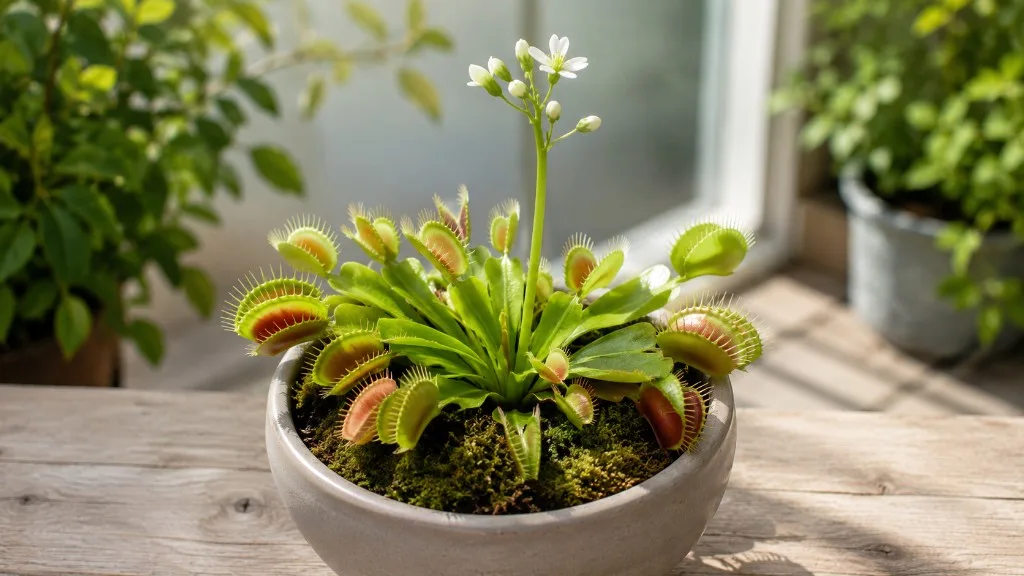
A Venus flytrap flower is tall, white, and genuinely beautiful - and genuinely expensive for a small plant. Blooming diverts a large share of the rhizome’s stored energy into vertical stalk growth and seed production. Traps often shrink, new growth slows, and a marginal plant can take months to recover. That is why most experienced growers cut the flower stalk early, redirecting energy back to vegetative growth. The second benefit, less obvious to beginners, is that the removed stalk can itself be propagated.
Flower stalk propagation reuses tissue that would otherwise go in the compost. The stalk is not a leaf and not a root, but it carries enough living cells to generate adventitious plantlets where it contacts moist media. Success is less consistent than division and slower than many houseplant cuttings, but the material is free and the energy savings on the parent are immediate.
When and How to Cut the Flower Stalk
Watch the center of the rosette in spring. The flower stalk emerges as a rounded bud on a vertical stem, distinct from the flat trap-bearing leaves. Cut when the stalk is roughly 1–3 inches tall and before flowers open. Use clean scissors and snip as close to the base as possible without damaging surrounding leaves. Cut cleanly - do not twist or rip, which tears rhizome tissue and invites rot.
If you want seed from a healthy, well-established plant, let one stalk bloom and hand-pollinate. For a recently purchased flytrap, a stressed plant, or anything under about three inches across, cutting early is the better care decision. You can still attempt propagation with the removed piece. Think of it as splitting the difference: the parent keeps its trap size, and you get a low-stakes cloning experiment on the side.
Setting Stalk Cuttings for Strike Success
Two approaches dominate grower practice. Upright method: stick the base of the stalk one-quarter to one-half inch into moist peat or sphagnum, like a flag, with most of the stalk above the surface. Horizontal method: cut the stalk into 1–2 inch segments, lay them on the surface half-buried so cut ends sit in moist media and the upper surface still receives light. Some outdoor growers report excellent horizontal strikes in live sphagnum with entire stalks buried lightly along their length.
Use a dedicated propagation pot with higher surface moisture than your main collection prefers. A humidity dome or bag helps. Bright light, warm temperatures, and distilled water only. Plantlets may appear in two to five months - sometimes faster in summer heat, sometimes slower indoors. Do not tug or repot at the first green bump. Let the stalk segment die back naturally as the plantlet feeds off it, the same way a leaf pulling blackens while the baby rosette forms.
Not every stalk strikes. Height at cutting, moisture consistency, and parent vigor all influence outcomes. A failed stalk cutting still benefited the parent by preventing bloom. That alone makes the snip worthwhile.
Choosing the Best Propagation Method for Your Situation
Method selection is a decision tree, not a popularity contest. If your plant already shows multiple crowns and spring repot is due, division at dormancy exit is the clear winner - fastest mature plants, highest success rate, true clones. If you have one beautiful cultivar and no offsets yet, leaf pullings during active growth are the standard clone path. Accept a two-to-three-month minimum before you judge failure.
If a flower stalk appears on a plant you do not want to bloom, cut early and try stalk cuttings in a side pot. The parent wins either way. If you want many plants cheaply and enjoy long projects, sow fresh seed and commit to the three-to-five-year maturation arc. If you need a guaranteed result for a gift next month, buy a second plant instead of betting on pullings.
Preserve cultivar identity only through vegetative methods. Seed from ‘Red Dragon’ does not reliably produce all-red offspring. Division, pullings, and stalk clones keep the parent’s traits. Label every pot the day you propagate. Venus flytrap rosettes look alike when small, and six unmarked pots in sphagnum become a guessing game by autumn.
Aftercare, Troubleshooting, and Common Mistakes
Every propagation method converges on the same aftercare principles once new growth is visible. Use nutrient-free acidic media - pure long-fiber sphagnum or 1:1 peat and perlite with no added fertilizer. Water only with distilled water or rainwater. Provide strong light, including direct sun once plants are acclimated. Feed insects sparingly and only to plants with open traps handling them well; new divisions and tiny seedlings do not need hand-feeding to survive.
Tray watering - standing pots in 1–2 cm of distilled water - keeps moisture steady without drowning crowns. Avoid sealed humidity domes indefinitely; ventilate after strikes appear to harden tissue. Do not apply commercial fertilizer or carnivorous “boosters.” Mineral burn shows up as browned trap edges and stalled growth long before you connect cause and effect.
Common failures map cleanly to causes. Black, mushy rhizome on a division or pulling: too wet, too cold, or wounded tissue infected. Start with cleaner cuts and drier surface conditions while maintaining humidity only around the strike zone. Offset died after division: separated too early without roots, or buried too deep. Leaf pulling never sprouted: no white rhizome tissue, taken during dormancy, or dried out in low humidity. Stalk cutting shriveled: media too dry for the enclosed setup you used. Seedlings damping off: poor airflow under a sealed cover, or contaminated media.
The parent plant deserves aftercare too. After division or heavy pulling sessions, give it excellent light and stable water for the rest of the growing season. Skip triggering a second flower stalk if possible - some plants try again the same spring. Watch for pest transfer; isolate propagation pots from your main collection until you confirm no mold or aphids are hitchhiking.
Conclusion
Venus flytrap propagation rewards patience and calendar literacy more than gadgetry. Divide offshoots at the end of dormancy during your spring repot when each crown has roots worth keeping. Use leaf pullings with a visible white rhizome fragment during active growth when you need clones from a single rosette. Treat seed as a slow, genetic wildcard project measured in years, not weeks. Cut flower stalks early to protect trap size, then root the pieces in a humid side pot for a bonus shot at plantlets. Every method shares the same foundation: acidic mineral-free media, distilled water, strong light, and respect for the plant’s seasonal rhythm.
Pick one method that matches what your plant is offering you this season - offsets, spare leaves, a spring stalk, or a seed pod - and execute it cleanly before you stack experiments. A single well-timed division beats three half-finished pulling trays every time. Once your first clone traps shut on its own, the calendar starts making sense, and multiplying flytraps stops feeling like folklore and starts feeling like routine bog-plant care.
When to use this page vs other Venus Flytrap guides
- Venus Flytrap overview - Start here for whole-plant context before deep-diving this topic.
- Venus Flytrap problems hub - Jump to symptom-specific fix guides when this care topic does not resolve the issue.
Related Venus Flytrap guides
- Venus Flytrap overview
- Venus Flytrap watering
- Venus Flytrap light
- Venus Flytrap soil
- Venus Flytrap fertilizer
- Venus Flytrap repotting
- Venus Flytrap problems
Related tool
Try the Propagation Success Calculator with venus-flytrap pre-selected to estimate needs for your setup.