Venus Flytrap Watering: Distilled & Tray Method
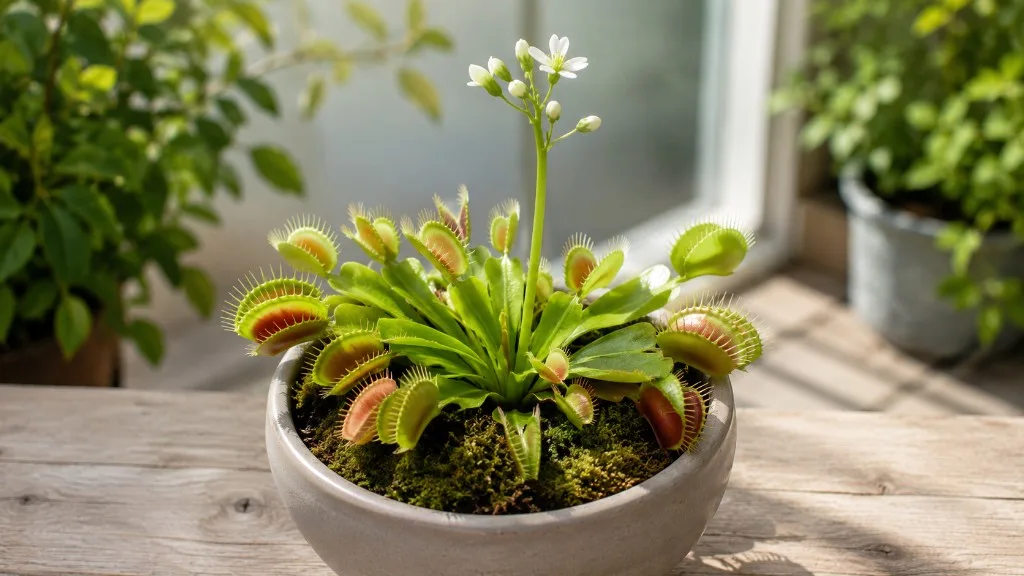
Venus Flytrap Watering: Distilled & Tray Method
Venus Flytrap Watering: Distilled & Tray Method
Venus flytrap watering is less about memorizing a calendar and more about obeying two hard rules that most houseplant advice gets wrong: use only distilled, rainwater, or reverse-osmosis water, and keep the growing medium consistently moist without drowning the rhizome crown. Dionaea muscipula evolved in nutrient-poor bogs around Wilmington, North Carolina, where the soil stays damp and the water carries almost no dissolved minerals. Your tap water does the opposite - it delivers calcium, magnesium, sodium, chlorine, and other ions that accumulate in peat moss and burn fine roots over weeks or months. The tray method solves the moisture half of the equation by letting the pot wick water up from below; your job is to refill that tray with pure water before the root zone dries out, while backing off during winter dormancy so cold, wet soil does not rot the crown.
If you take nothing else from this guide, remember this: never use unverified tap water on a Venus flytrap. Minerals do not wash away the way excess fertilizer might on a pothos. They bind to the peat, raise conductivity in the root zone, and progressively damage tissue adapted to near-zero nutrition. Pair pure water with a shallow tray, check moisture at root depth rather than on the surface, and adjust intensity by season. Get those three decisions right and watering becomes the easy part of carnivorous plant care.
Why Water Quality Matters More Than Water Frequency
Most Venus flytraps die from water mistakes long before anyone debates whether Tuesday or Thursday is watering day. The plant’s native habitat is a wet savannah bog - permanently damp, acidic, and mineral-poor. Evolution stripped away the root system’s tolerance for dissolved solids because nutrients arrive from captured insects, not from groundwater. When you pour typical municipal tap water onto sphagnum peat, those minerals have nowhere to go. They stay in the pot, layer after layer, until conductivity in the rhizome zone exceeds what the plant can handle.
Frequency still matters, but it sits second in the priority stack. A perfectly timed watering schedule using hard tap water will still kill the plant. Conversely, a slightly imperfect moisture rhythm with distilled or rainwater gives you room to learn. That is why experienced growers test water before they debate trays, and why carnivorous plant societies treat water quality as the first troubleshooting question when a flytrap declines without obvious pests.
How Tap Water Minerals Damage Venus Flytrap Roots
Tap water minerals kill Venus flytrap roots through gradual accumulation, not always through an immediate visible burn. Calcium and magnesium - the ions that make water “hard” - deposit in peat moss and raise the total dissolved solids (TDS) in the root zone. Sodium and chlorine, common in treated municipal supplies, stress tissue that never evolved detox pathways for them. Kevin Zhang of the Mid-Atlantic Carnivorous Plant Society describes the effect as similar to fertilizer burn in garden plants: the mineral load overwhelms roots adapted to near-zero nutrition, and function collapses before you see obvious wilting.
The damage sequence is often quiet. Traps may close more slowly, new leaves emerge smaller, and the rhizome - the horizontal stem at soil level where traps attach - softens or turns brown at the center. By the time several traps blacken at once, mineral injury and crown rot may overlap, but the original trigger was frequently months of tap water. Nigel Hewitt-Cooper, a multiple RHS gold medal-winning carnivorous plant grower, puts the rule plainly for UK growers: unless your tap water measures under 50 ppm, rainwater must be used. The same threshold applies worldwide even though local tap chemistry varies.
Boiling tap water does not fix this. Neither does a standard pour-through fridge filter or most pitcher filters. Those remove some chlorine and improve taste but leave dissolved minerals largely intact. “Spring water” and “mineral water” sold in bottles are worse - they are intentionally enriched with ions and will harm carnivorous plants over time, as noted in the Midtown Carnivores Dionaea care sheet. The only safe shortcuts are water types engineered to be low-TDS, or tap water verified with a meter.
The 50 ppm TDS Rule and What It Means
The 50 ppm TDS limit is the benchmark carnivorous plant growers use because it approximates the mineral load of natural bog water. TDS - total dissolved solids - measures combined ions in parts per million. The ICPS growing guide recommends using distilled, reverse-osmosis, or clean rainwater when tap water exceeds 90 ppm TDS; most growers target 50 ppm or less for routine care. A handheld TDS meter costs roughly $10–20 and removes guesswork if you wonder whether your tap is an exception.
Some experienced growers tolerate 50–100 ppm temporarily, but only with a disciplined flush-and-repot schedule to prevent buildup. That is an advanced compromise, not a beginner recommendation. If your tap reads 150 ppm - common in hard-water regions - the answer is not “water less often.” The answer is distilled, RO, or rain. For most readers in apartments and suburbs, buying gallon jugs of distilled water from a grocery store is the simplest reliable path.
Approved Water Sources for Venus Flytraps
You have three primary options, and they all serve the same purpose: deliver hydration without nutrition the plant did not ask for. Switching between them is fine as long as each source meets the TDS threshold. What you should not do is alternate pure water with tap “to save money” on weekends - that still loads minerals into the peat.
Distilled Water
Distilled water is steam-condensed water stripped of dissolved solids during the distillation process. Pharmacies, grocery stores, and big-box retailers sell it by the gallon in most of North America and Europe. It typically reads 0–5 ppm on a TDS meter, well within safe range for carnivorous plants. For a single potted Venus flytrap in a 3–4 inch pot, a gallon often lasts two to four weeks depending on heat, light, and tray evaporation - making the cost modest compared with replacing a dead plant and contaminated peat.
Store jugs sealed, label them if you also keep household supplies, and pour from a clean watering can rather than dunking tools into the jug. Distilled water picks up nothing from the air, but a dirty dipper introduces algae and bacteria you do not want in a tray. If you grow several carnivorous plants, consider a home RO system under the sink; upfront cost is higher, but per-gallon expense drops over time.
Rainwater and Reverse Osmosis Water
Rainwater is the closest match to what Dionaea muscipula drinks in the wild, provided collection is clean. Use a food-safe barrel or container fed from a roof without toxic treatments; avoid runoff from copper gutters or freshly tarred surfaces. First-flush diverters improve quality by discarding the initial dirty wash. In urban areas with heavy air pollution, test rain before committing - occasional readings can exceed 50 ppm near industrial zones.
Reverse osmosis (RO) water from an under-sink unit or dedicated aquarium filter typically reads 0–20 ppm and scales well for collections. Aquarium shops sometimes sell RO water by the gallon if you lack home filtration. RO and distilled are interchangeable for Venus flytraps; choose based on convenience and cost in your household. Neither requires acidification for normal care despite occasional forum debates - neutral pH low-mineral water is the goal.
The Tray Method Explained
The tray method - also called bottom watering - places the pot in a shallow dish of pure water so the peat wicks moisture upward through the drainage holes. Sphagnum peat and perlite mixes act like a sponge: capillary action pulls water to the roots while the surface stays slightly less saturated than the bottom. This mimics bog hydrology more closely than a quick pour from above, and it reduces the chance you splash water repeatedly onto the rhizome crown where rot starts.
The tray method is not “set and forget forever.” It is a moisture delivery system you still manage by refilling before the tray dries and by lifting the pot out during cool dormancy. The ICPS growing guide notes the pot must always sit in pure water, with the crown kept above the saturated zone - a detail that matters most in warm, bright weather when evaporation pulls water through the mix actively. In cold, low-light months, the same standing water can linger too long - which is why seasonal adjustment matters as much as setup.
Setting Up a Bottom-Watering Tray
Choose a plastic saucer, cafeteria tray, or shallow food container wider than the pot base. Plastic is ideal because unglazed terracotta and some ceramic glazes can leach minerals into water over time - a secondary risk after tap water itself. The pot must have multiple drainage holes; single-hole novelty pots trap stale water in pockets. If your flytrap arrived in a sealed plastic cup from a hardware store, repot into a proper carnivorous mix and drilled container before committing to long-term tray watering.
Place the filled pot into an empty tray first, then add pure water to the tray - not over the traps. This keeps the rhizome dry while the mix begins wicking. Position the entire setup where it receives at least six hours of direct sun daily during the growing season; strong light increases transpiration and prevents the tray from leaving the upper mix waterlogged in cool corners. The New York Botanical Garden carnivorous plant guide recommends maintaining a margin between the tray water level and the soil surface so the crown sits above the saturated zone - a detail beginners skip and regret.
How Deep the Water Should Be
Keep 1–2 cm (roughly ½ to 1 inch) of pure water in the tray during active growth in warm conditions. That depth is enough for the peat to stay moist throughout the pot without creating a permanent pond around the rhizome. When temperatures exceed 27°C (80°F) and the plant sits in Venus Flytrap light guide, evaporation may pull the tray dry in a day or two - refill promptly. In cooler weather below that threshold, let the tray go dry for a day or two before refilling while checking that the root zone an inch below the surface has not gone crisp.
Never interpret tray method as “flood indefinitely.” The goal is moist, not submerged. If algae coats the soil surface, traps blacken at the base, or the rhizome feels soft when you gently brush away peat, you are holding too much standing water for the current temperature and light. Empty the tray, let the mix approach barely damp at depth, then resume shallow refills.
Keeping Soil Moist Without Flooding the Rhizome
The phrase experienced growers repeat is “moist, not wet, not dry.” Venus flytraps want their roots in damp peat continuously during the growing season, but the rhizome crown - where new traps emerge - needs air exchange. Permanently waterlogged crowns in cool, low-light conditions invite fungal rot that spreads faster than mineral damage. Think of the pot as three zones: the bottom third should stay damp most days, the middle third cyclically moist, and the top few millimeters at the rhizome allowed to breathe between tray refills.
Checking only surface color misleads you because peat can look dry on top while staying wet below. Insert a finger, bamboo skewer, or moisture probe to about 2–3 cm depth. If it feels cool and clearly damp, do not add tray water yet even if the tray is empty. If it feels barely damp and the pot weighs light, refill the tray. Weight learning takes a few weeks: lift the pot after a fresh refill and again when you know the mix has dried down - your hands become a scale.
Pure water makes this balance easier because you are not adding salts that osmotically pull moisture away from roots. Mineral-laden water creates a double stress: physical oversaturation plus rising conductivity. That is why the moist-not-flooded rule and the distilled-water rule work as a pair rather than independent tips.
How Often to Water During the Growing Season
There is no fixed weekly schedule that works for every Venus flytrap. A 3-inch pot in a sunny south window in July may drink through a tray in two days. The same plant in a cloudy east window in April may need tray refills only twice a week. Pot depth matters too - taller pots retain moisture longer than shallow ones. Your decision should come from root-zone moisture, tray level, pot weight, temperature, and light, not from a phone reminder that fires every Sunday regardless of conditions.
During active growth - roughly March through October in the Northern Hemisphere for plants receiving natural photoperiod - err slightly on the side of consistent moisture. Letting the mix go bone dry even once can kill fine root hairs that took weeks to extend into fresh peat after Venus Flytrap repotting guide. If you travel, the tray method shines: a deeper saucer with 1–2 cm of distilled water buys a few extra days compared with top watering alone, though no tray replaces a check after a heat wave.
Reading Pot Weight and Root-Zone Moisture
Build a simple two-point check before every refill. First, lift the pot: heavy and cool usually means damp throughout; light and warm signals dry-down. Second, probe depth: damp at 2 cm means wait even if the tray is dry; dry at 2 cm means refill even if the surface looks slightly dark. Write down what you observe for the first month in a new location - humidity, air conditioning, and pot material all change the rhythm faster than generic advice captures.
When in doubt during growing season, refill a shallow tray rather than pouring a heavy top drench that soaks the crown. You can always add a little water tomorrow; reversing crown rot is harder. If traps are actively opening and closing and new leaves emerge from the center, your moisture is probably in range even if the calendar says you “already watered recently.”
Seasonal Watering Changes and Winter Dormancy
Venus flytraps require a winter dormancy period of roughly three to four months with shorter photoperiod and cooler temperatures - typically 2–10°C (35–50°F) for many growers, though brief dips vary by clone and acclimation. During dormancy, metabolic activity drops and water consumption falls sharply. Keeping the summer tray routine through November in a cold windowsill is one of the fastest routes to rhizome rot.
Transition by reducing tray depth and frequency as growth slows and old traps brown. NC State Extension advises keeping dormancy soil barely damp - sometimes only two or three waterings per month - while still never letting the entire pot desiccate into dust. Remove standing water from trays in cool weather; water from above sparingly or use a shallow brief tray soak, then let drain. Blackened outer traps during dormancy are normal; a firm white rhizome beneath them is what you protect.
When days lengthen in March or April, gradually restore the growing-season tray rhythm as new green growth appears from the center. Jumping from dormancy dryness to a permanently full tray in one day shocks roots. Increase moisture in step with rising light and temperature, the same way you would harden off any perennial leaving winter storage.
Signs You Are overwatering on Venus Flytrap or underwatering on Venus Flytrap
Overwatering in Venus flytraps usually means the wrong kind of wet - cold, stagnant, and crown-saturated - rather than simply “too much distilled water in summer sun.” Watch for blackening traps starting at the base, a mushy rhizome when you inspect gently, mold or algae spreading across the soil surface, and a sour smell from the peat. These signs intensify when low light, oversized pots, and continuous deep trays overlap. If several appear together, empty any standing water, improve airflow and light if possible, and let the mix dry toward barely damp before resuming shallow tray refills.
Underwatering shows as limp traps that fail to reopen, crispy edges on existing traps, and a rhizome that shrinks or pulls down into the pot. A single dry spell often recoverable if you rehydrate evenly with pure water and avoid flooding the crown as compensation. Repeated drought cycles damage root tips and make the plant trap less efficiently even after moisture returns - it spends energy rebuilding infrastructure instead of growing.
Mineral damage from tap water can mimic both patterns: traps blacken like overwatering rot, yet the mix may feel oddly crusty or stained white on the pot interior. If you suspect past tap use, plan a full repot into fresh peat-perlite mix after flushing is no longer practical - covered in the next section.
Top Watering vs Bottom Watering
Bottom watering via the tray method should be your default during warm, bright growing months. It delivers even moisture, reduces crown splashing, and matches how many growers maintain collections on outdoor bog trays. Top watering - pouring pure water gently over the soil surface until it runs from drainage holes - has legitimate uses too. An occasional top drench flushes stale air through the mix, carries a small amount of atmospheric nitrogen into the peat, and helps reset a pot that has dried unevenly.
A practical hybrid used by advanced growers alternates: top water for a week or two, then tray method for a week or two, mimicking natural rainfall plus rising groundwater. For beginners, keep it simpler: tray method daily management with a monthly top flush using distilled or rain at room temperature poured slowly around the perimeter, never directly into the crown. Use a watering can fitted with a fine rose to disperse flow.
Neither method fixes bad water. Top watering with tap accelerates mineral deposition throughout the column; bottom watering with tap wicks ions steadily from below. Choose pure water first, then choose delivery mechanics.
Flushing Mineral Buildup From the Growing Medium
If you used tap water before reading this guide - or if your TDS reads between 50 and 100 ppm - flushing can buy time before repotting. Pass pure distilled or RO water through the pot several times over several hours, letting each pour drain fully. FlytrapCare recommends this when water TDS exceeds 50 ppm but remains below tolerable upper bounds. Flushing leaches some accumulated salts downward, though it cannot fully restore old peat that has bound minerals chemically.
White crust on the pot interior, slowed trap response despite good light, and TDS runoff above input water signal that repotting into fresh mix is the real fix. Cut away any soft, brown rhizome tissue with sterile scissors, dust nothing (no cinnamon myths required), and replant firm white rhizome sections level with the soil surface. Resume tray method only with verified pure water. Prevention remains easier: a $15 TDS meter and gallon jugs of distilled cost less than repeated emergency repots.
Common Venus Flytrap Watering Mistakes
The most common failure is using tap water because the plant “looked fine” for a month. Mineral injury is cumulative. The second is running a deep tray year-round without seasonal reduction, especially indoors where winter light is weak. Third is letting the pot dry completely while waiting for a strict schedule. Fourth is substituting filtered fridge water, boiled water, or bottled spring water without testing - all frequently exceed 50 ppm. Fifth is watering the traps themselves or misting for humidity; Venus flytraps do not absorb water through traps, and wet crowns rot.
Smaller but costly errors include growing in unglazed clay pots that wick minerals, using closed containers without drainage because carnivorous plants “like wet,” and repotting into fertilized potting soil while trying to tray-water - standard mix kills roots through nutrition toxicity even with perfect water. Each mistake overlaps with soil and light topics, but water is the variable you control every few days. Fix water first when decline has no insect culprit.
Your First-Month Watering Checklist
When a new Venus flytrap arrives home, do not repot on day one unless the soil is clearly wrong or pests are visible. Quarantine it, buy distilled or RO water, and set a plastic tray under the existing pot if drainage exists. For the first four weeks, log tray refills and pot weight to learn how your room dries the mix. Keep the plant in direct sun - at least six hours daily - because light and watering interact; dim corners stay wet dangerously long.
Verify water once with a TDS meter even if you trust the label on jugs. Test any tap you are tempted to use; if it reads above 50 ppm, stop. During this month, resist triggering traps for entertainment; each closure spends energy better directed toward root establishment. If old traps blacken individually while new green growth emerges from the center, moisture is likely acceptable. If everything collapses at once, inspect the rhizome, review water source, and compare your routine with the moist-not-flooded standard before changing light, soil, and water simultaneously.
Conclusion
Venus flytrap watering succeeds when pure water and consistent moisture work together: distilled, rainwater, or reverse-osmosis water under 50 ppm, delivered mainly through a shallow tray that keeps the root zone damp without flooding the rhizome crown. Tap water is not a harmless shortcut - dissolved minerals accumulate in peat and kill roots long before you identify the cause. During the growing season, refill trays based on weight and depth checks, not a rigid calendar; during dormancy, pull back toward barely moist and remove standing water in cold weather. If minerals already entered the pot, flush with pure water or repot into fresh carnivorous mix and restart with the rules above. Master water quality first and the rest of flytrap care - light, dormancy, feeding - becomes far more forgiving.
When to use this page vs other Venus Flytrap guides
- Venus Flytrap overview - Start here for whole-plant context before deep-diving this topic.
- Venus Flytrap problems hub - Jump to symptom-specific fix guides when this care topic does not resolve the issue.
- Overwatering on Venus Flytrap - Escalate here when watering adjustments are not enough.
- Underwatering on Venus Flytrap - Escalate here when watering adjustments are not enough.
- Root Rot on Venus Flytrap - Escalate here when watering adjustments are not enough.
Related Venus Flytrap guides
- Venus Flytrap overview
- Venus Flytrap light
- Venus Flytrap soil
- Venus Flytrap propagation
- Venus Flytrap fertilizer
- Venus Flytrap repotting
- Overwatering on Venus Flytrap
- Underwatering on Venus Flytrap
- Root Rot on Venus Flytrap
- Wilting on Venus Flytrap
- Drooping Leaves on Venus Flytrap
- Mold on Soil on Venus Flytrap
Related tool
Try the Plant Watering Calculator with venus-flytrap pre-selected to estimate needs for your setup.