Underwatering on Venus Flytrap: Causes, Checks & Fixes
Quick answer
Underwatering on Venus flytrap shows as limp traps that fail to reopen, an empty water tray, and dry peat 2–3 cm below the surface while the rhizome stays firm and white. First step: refill the tray with distilled, rain, or reverse-osmosis water to 1–2 cm depth and bottom-soak if peat has gone bone dry.
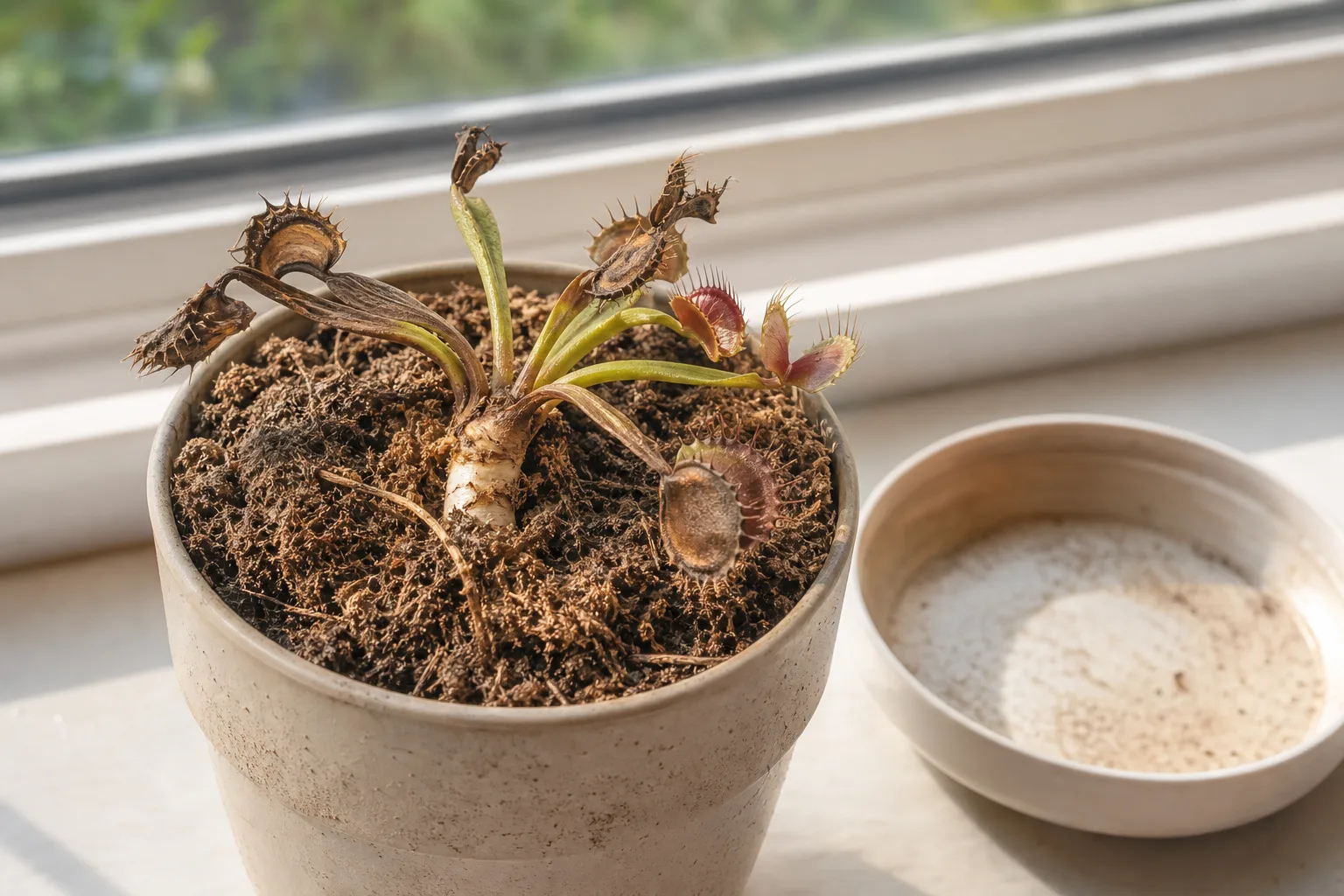
Underwatering on Venus Flytrap: Causes, Checks & Fixes
This guide covers underwatering on Venus Flytrap. See also the general Underwatering guide, watering, and light pages for this plant.
Underwatering on Venus Flytrap: Causes, Checks & Fixes
Quick answer
Underwatering on a Venus flytrap (Dionaea muscipula) is acute moisture failure-an empty tray, dry peat at 2–3 cm depth, and limp traps that fail to reopen while the rhizome crown stays firm and white. This bog carnivore evolved in nutrient-poor wetlands where soil stays damp; letting the root zone go bone dry during active growth kills fine root hairs within hours and collapses traps faster than most houseplants wilt.
The pattern differs from crispy leaves-which describes dead, papery tissue after drought or mineral damage has progressed-and from wilting or drooping leaves, which cover multiple moisture-stress causes including rot. This page is emergency drought triage: confirm the tray is empty, restore pure water, and separate underwatering from tap-water mineral stress, dormancy dieback, and soggy-soil crown failure.
First step: refill the tray with distilled, rainwater, or reverse-osmosis water to 1–2 cm depth and verify peat is damp at 2–3 cm below the surface within the hour. If the mix has gone bone dry and water runs straight through, bottom-soak the pot in pure water for 30–60 minutes before returning to the standard tray rhythm. Do not pour tap water from above onto the crown, fertilize, or repot on day one.
For tray setup, the 50 ppm TDS rule, approved water sources, and seasonal rhythm, start with Venus flytrap watering. For tan stiff trap margins after tap-water use, see brown tips and crispy leaves. For limp traps on soggy peat with a soft crown, see overwatering and root rot.
What underwatering looks like on Venus Flytrap
Venus flytraps do not have conventional leaves-they have traps on flat petioles from a horizontal rhizome at the peat surface. Underwatering shows up as living tissue losing turgor before cells die, not as immediate papery crisp:
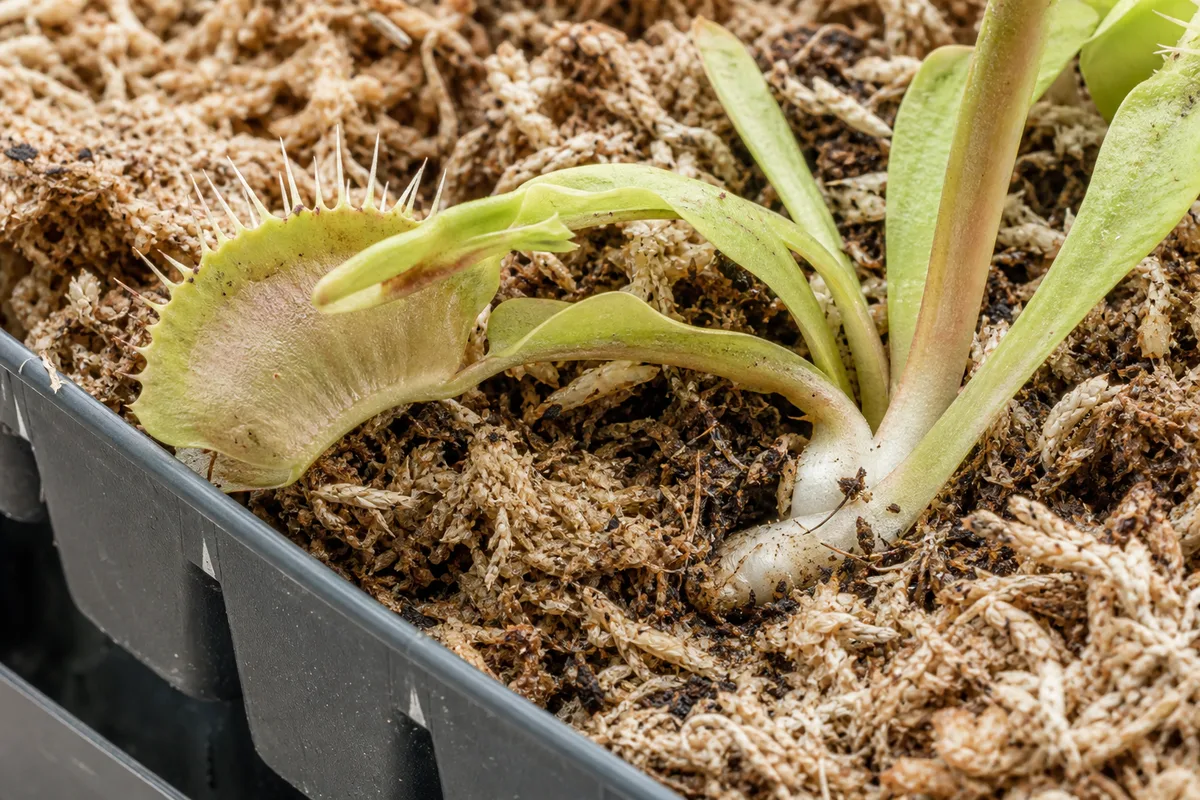
Underwatering symptoms on Venus Flytrap - compare with healthy tissue on the same plant.
- Limp, drooping traps that hang open or reopen slowly when touched-healthy traps are firm and close with visible speed
- Empty water tray or saucer that has been dry for one or more days during active growth
- Dry peat at 2–3 cm depth when probed with a finger or skewer-surface color alone misleads because peat can look slightly dark on top while the root zone desiccates
- Lightweight pot that lifts easily compared with a freshly watered container
- Brown drying at petiole bases on multiple traps-not one black trap after feeding
- Peat pulling away from pot walls or shrinking when bone dry-hydrophobic dry-out after prolonged drought
- Firm white or pale green rhizome when you gently brush peat from the crown-drought caught early usually spares the growing point
What underwatering does not look like: mushy rhizome with sour-smelling peat, traps collapsing on soggy mix, or widespread blackening in late fall with a firm rhizome-that last pattern is often dormancy, not acute drought. Fine webbing under traps points to spider mites, not tray dryness alone.
Why Venus Flytrap gets underwatering
Empty tray and missed refills during active growth
The tray method keeps peat moist by wicking pure water up from a saucer 1–2 cm deep. When the tray empties and no one refills it, capillary flow stops. Fine root hairs die first, then traps lose turgor. During active growth-roughly March through October in the Northern Hemisphere-the root zone should never go bone dry. A single dry spell in full sun can collapse several traps within 24–48 hours even if the rhizome remains salvageable.
Heat, light, and fast evaporation
Venus flytraps need at least six hours of direct sun daily during the growing season. Strong light plus temperatures above 27°C (80°F) can pull a shallow tray dry in one to two days. A sunny south windowsill or outdoor bog tray evaporates faster than a dim desk-check depth and tray level daily in summer heat, not weekly.
Travel, neglect, and “carnivorous plants hate wet feet” myths
Growers sometimes leave trays empty because generic houseplant advice warns against standing water. Dionaea is a bog plant-it tolerates shallow standing water during warm bright weather far better than dry roots during growth. Weekend travel without a filled saucer, a forgotten windowsill during a heat wave, or switching from tray to occasional top-watering without monitoring depth are common triggers.
Hydrophobic peat after bone-dry spells
When peat desiccates completely, it can repel water and shrink from pot walls. Pouring from above runs through without rewetting the root zone-the plant looks “watered” while roots stay dry. This is still underwatering until a bottom soak re-saturates the mix.
Tap-water mineral buildup mimicking drought
Municipal tap water and spring water carry dissolved minerals that accumulate in peat and damage roots even when the tray looks full. Traps may limp and new growth stall while peat feels damp-a mineral dehydration paradox, not simple tray drought. If you have used tap water for weeks, read brown tips and plan a repot after switching to pure water. An empty tray with pure-water history points to drought alone.
Dormancy watering confusion
During winter dormancy, Venus flytraps need less frequent watering and reduced standing water-but the rhizome should not desiccate. Widespread trap blackening on a firm rhizome in late fall is often normal dormancy, not underwatering. Limp green traps on bone-dry peat in spring when new growth should be active is drought-refill promptly.
How to confirm the cause
Work through these checks in order. Each step narrows the diagnosis without stacking unnecessary treatments.
- Tray level - Is the saucer empty or nearly dry? An empty tray during active growth strongly supports drought.
- Peat moisture at 2–3 cm depth - Insert a finger or bamboo skewer. Dusty dry mix with a light pot confirms underwatering. Damp at depth with limp traps suggests minerals, rot, or heat stress instead.
- Pot weight - Lift the container. Sudden lightness after heat or travel supports dry-down; heavy cold pot on soggy mix points to overwatering.
- Rhizome firmness - Gently brush peat from the crown. Firm white or pale green rhizome with limp traps fits drought caught early. Soft, dark, foul-smelling crown on wet peat = root rot-do not deep-flood the tray.
- Trap texture and reopening speed - Limp living traps that reopen slowly differ from papery crisp tissue on crispy leaves. Touch a trigger hair: sluggish response on dry peat supports drought.
- Water source history - Pure water with empty tray = drought. Tap or spring water for weeks with limp traps on damp peat = mineral stress-switch water and consider repot even if you also refill the tray.
- Season and dormancy context - Late fall widespread blackening on firm rhizome may be dormancy. Spring or summer limp traps on dry peat during active growth is underwatering.
- Light check - Small pale traps on long thin petioles signal insufficient light compounding stress; still fix moisture first.
Confirmed underwatering: empty tray, dry peat at 2–3 cm, limp traps, firm rhizome, lightweight pot, pure or unknown water without long tap history.
Confirmed mineral mimic: limp traps, tap-water history, damp peat, TDS above 50 ppm-see brown tips after the water switch.
Confirmed overwatering lookalike: limp traps on heavy soggy pot, soft rhizome, sour smell-see overwatering and root rot.
First fix for Venus Flytrap
Refill the tray with distilled, rainwater, or reverse-osmosis water only-1–2 cm depth-and verify peat is damp at 2–3 cm within the hour.
Pour out any stale tray water, rinse the saucer, and use pure water under 50 ppm TDS. If peat has gone bone dry or pulls from pot walls, set the pot in a shallow basin of pure water halfway up the container for 30–60 minutes so the mix reabsorbs moisture, then return to the standard tray method. Do not pour tap water from above onto the rhizome crown.
Make this one moisture correction before Venus Flytrap repotting guide, fertilizing, or trimming every trap. Position for at least six hours of direct sun daily outdoors if climate allows, or supplemental white LED grow light 12 to 16 hours daily per the light guide. Judge response over 24–48 hours-traps should begin to firm slightly if the rhizome was still healthy.
Step-by-step recovery
Hour 1 - pure water and tray refill
Empty the tray. Refill with distilled or rainwater to 1–2 cm. Bottom-soak if peat is hydrophobic. Move the plant to bright direct light if it was in a dim corner-underwatering plus low light compounds weak trap recovery.
Hours 2–24 - monitor turgor and rhizome
Check the rhizome crown: it should feel firm and white or pale green, not soft. Refill the tray when the mix approaches dry at 2–3 cm depth during active growth-never let the entire pot desiccate again. The New York Botanical Garden carnivorous guide recommends keeping the crown above the saturated zone so shallow standing water rehydrates roots without drowning tissue.
Days 2–7 - establish moisture rhythm
During March through October, check tray level and peat at depth every day or two in heat. Weight learning helps: lift the pot after a fresh refill and again when you know the mix has dried down. Expect slightly firmer traps within 24–48 hours on mild drought; new trap emergence takes longer.
Days 7–14 - repot only if minerals accumulated
If tap water ran for weeks, minerals bind to peat and tray refill alone may not restore root function. Unpot, discard old mix, rinse roots gently with pure water, and repot into fresh carnivorous peat and perlite with no fertilizer. Missouri Botanical Garden notes Venus flytraps must never receive conventional fertilizer-fresh low-mineral mix is the recovery medium.
Resume shallow tray watering after repot. Expect 7–14 days before the first firm new trap on moderate drought; 2–3 weeks if mineral damage overlapped.
Ongoing - judge only new growth
Old limp traps and brown petiole bases do not fully re-turgify. Success means new traps emerge firm, adequately sized for your light level, and close with speed. If new growth stays pale and small after pure water and adequate sun, escalate the light upgrade before assuming moisture failed.
Recovery timeline
| Severity | What you see | Realistic recovery |
|---|---|---|
| Mild - one dry spell, firm rhizome | Limp traps on two to three petioles, empty tray 1–2 days | Traps begin firming in 24–48 hours; new traps in 7–14 days |
| Moderate - tray empty a week in summer | Most traps limp, dry peat throughout, firm rhizome | 2–3 weeks for consistent new trap emergence after bottom-soak and tray rhythm |
| Hydrophobic dry-out | Peat shrunk from walls, water runs through | 24–48 hours after bottom-soak; new traps in 2–3 weeks |
| Drought plus tap-water minerals | Limp traps, tap history, damp or dry peat | 3–5 weeks after pure-water switch and likely repot |
| Severe - soft rhizome, sour smell | Crown mush with black traps on wet or dry peat | May need root-rot salvage; drought refill alone is not enough |
Recovery markers: firm new traps that close with speed, stable white rhizome, stopped spread of limpness to previously healthy traps. Cosmetic limpness on old traps may persist until those traps senesce naturally.
Lookalike symptoms to rule out
| Pattern | Key difference from underwatering |
|---|---|
| Overwatering / root rot | Limp traps on heavy soggy pot, soft dark rhizome, sour peat-not dry peat and empty tray |
| Crispy leaves | Papery, dead tissue after drought progressed; underwatering is earlier limp living stage-often same fix, different symptom focus |
| Wilting / drooping leaves | Broader limp-trap triage including heat collapse and dormancy-this page owns empty tray + dry peat confirmation |
| Brown tips | Tan margin burn with tray often still holding water; tap-water mineral history |
| Tap-water mineral stress | Limp traps on damp peat with tap history-refill with pure water but also repot |
| Dormancy | Widespread blackening late fall on firm rhizome; not acute spring limpness on bone-dry peat |
| Not enough light | Small pale traps on long petioles; pure water does not fix trap quality alone |
| Normal post-feeding senescence | One trap blackens after closures; rosette otherwise firm with sound tray rhythm |
What not to do
Do not fertilize an underwatered flytrap to “help it recover.” Carnivorous plants capture insects for nitrogen-conventional fertilizer burns roots already stressed by drought.
Do not use tap water because the tray is empty and you need water now. Every refill deposits minerals even in an emergency-use distilled, rain, or RO only.
Do not deep-flood the tray for days in a cool dim corner to compensate for limp traps. Drought-recovering rhizomes still rot in deep standing water when light and temperature are low-keep 1–2 cm and increase light.
Do not mist traps instead of rewetting peat when the root zone is bone dry. Misting raises humidity briefly but does not restore root-zone moisture the tray method delivers.
Do not confuse dormancy dieback with drought in late fall-but do not let the rhizome desiccate all winter either. Dormant plants need barely damp mix, not bone dry.
Do not repot on day one unless peat is contaminated with tap minerals for weeks. Restore pure moisture first; repot within a week if mineral history is long.
Mistakes to avoid
- Checking only surface peat color while the tray stays empty for days
- Assuming “carnivorous plants hate wet feet” and skipping the tray during active growth
- Blaming pests before confirming tray level and peat depth
- Measuring success by old trap firmness instead of new trap emergence
- Leaving the plant in dim light while correcting drought-light and moisture work as a pair
- Using bottled “spring water” in an emergency-it often exceeds carnivorous TDS limits
Venus flytrap care cross-check
Underwatering recovery depends on three habits that the watering guide covers in full:
- Pure water under 50 ppm TDS-distilled, rain, or RO only for routine refills
- Tray method at 1–2 cm during active growth with crown above the saturated zone
- Seasonal adjustment-consistent moisture March through October; reduced standing water but no rhizome desiccation during dormancy
Light matters equally: underwatered traps recover slowly in dim rooms. Aim for six or more hours of direct sun or supplemental LED per light. Soil should be carnivorous peat and perlite with no fertilizer or lime-see soil if repotting after mineral damage.
How to prevent underwatering next time
Use the tray method at 1–2 cm with distilled, rainwater, or RO water under 50 ppm TDS during active growth. Check tray level and peat at 2–3 cm depth every day or two in summer heat-a shallow saucer can empty in 48 hours on a sunny windowsill.
Before travel, fill the tray and use a slightly deeper saucer if away for several days-never leave the pot dry on a heat wave windowsill. During dormancy, reduce standing water but keep mix barely damp; a desiccated dormant rhizome is hard to salvage in spring.
One limp trap after a single missed refill is a warning, not a crisis. Most traps limp with an empty tray for a week during active growth needs same-day correction.
When to worry
Escalate same-day if the tray has been empty for several days during active growth, most traps collapse limp on bone-dry peat in summer heat, or peat has pulled away from pot walls and water runs through without soaking.
Escalate to root rot protocols if the rhizome softens, peat smells sour or rotten, or traps collapse on soggy mix-that is wet-soil failure, not drought refill alone.
Monitor calmly if one or two traps limp after a single dry day, the rhizome is firm, and new traps emerge firm within two weeks after tray refill and pure water.
Conclusion
Underwatering on Venus flytrap is an acute tray-and-root-zone drought-empty saucer, dry peat at depth, limp traps, and a firm rhizome-not generic houseplant wilt. Refill the tray with pure water under 50 ppm TDS, bottom-soak hydrophobic peat, and judge recovery by firm new traps within 7–14 days during active growth. Separate drought from soggy-soil rot, tap-water mineral stress, and dormancy dieback before stacking treatments. This page handles emergency triage; long-term tray rhythm and water purity live in the watering guide.
Related Venus flytrap guides: overview · watering · light · crispy leaves · wilting · drooping leaves · brown tips · overwatering · root rot · not enough light
When to use this page vs other Venus Flytrap guides
- Venus Flytrap watering guide - Use for routine moisture checks before assuming underwatering is the main issue.
- Venus Flytrap problems hub - Browse all 18 common issues on this species.
- Wilting on Venus Flytrap - Different entry point when symptoms overlap with underwatering.
- Brown Tips on Venus Flytrap - Different entry point when symptoms overlap with underwatering.
- Yellow Leaves on Venus Flytrap - Different entry point when symptoms overlap with underwatering.