Drooping Leaves on Venus Flytrap: Causes, Checks & Fixes
Quick answer
Drooping traps on Venus flytrap usually mean the rhizome is too dry, too wet and rotting, entering dormancy, or stressed by tap water or weak light-not a fertilizer shortage. First step: gently press the rhizome at soil level (firm and white is healthy), check whether the tray is empty or standing water is too deep, and confirm distilled or rainwater only before repotting or feeding.
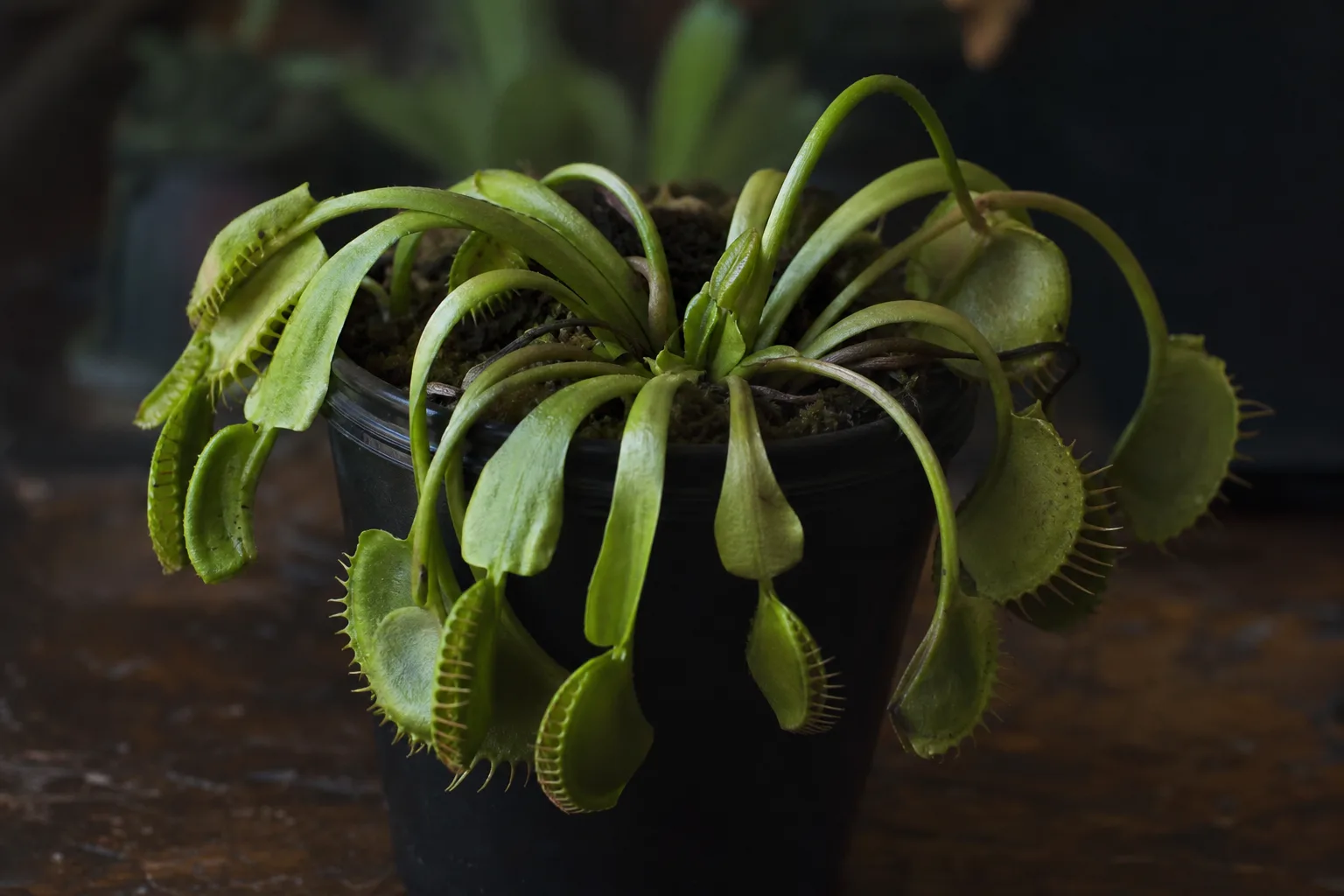
Drooping Leaves on Venus Flytrap: Causes, Checks & Fixes
This guide covers drooping leaves on Venus Flytrap. See also the general Drooping Leaves guide, watering, and light pages for this plant.
Drooping Leaves on Venus Flytrap: Causes, Checks & Fixes
Quick answer
Drooping leaves on Venus flytrap (Dionaea muscipula) mean traps and petioles have lost turgor and hang at a lowered angle-often gradually over days, not in a single afternoon. On this temperate carnivore, limp growth usually traces to dry rhizome and an empty tray, crown rot from too much standing water in cool conditions, entering dormancy, tap-water mineral damage, or insufficient full sun-not a nutrient deficiency.
The pattern matters more than the word “drooping.” Gradual limpness on dry, lightweight peat with a still-firm rhizome points to underwatering. Limp traps on constantly wet cold soil with a soft dark crown is crown rot. Widespread dieback in late fall with a firm white rhizome is dormancy. Slow weakening over weeks on tap water signals mineral burn. Long floppy petioles in a dim room means not enough light.
First step: gently press the rhizome at soil level (firm and white is healthy), check tray depth and whether peat is dry or waterlogged at the crown, and confirm you use only distilled, rain, or reverse-osmosis water. That three-part check separates opposite emergencies before you repot, feed traps, or stack treatments. Full tray-method detail lives in our Venus flytrap watering guide.
What drooping leaves look like on Venus flytrap
Drooping on Dionaea is a posture change, not always a color change. Healthy traps hold petioles upright or slightly outward; drooping traps hang downward, the hinged leaf may fail to close fully, and the whole rosette can look flattened even when tissue is still green.
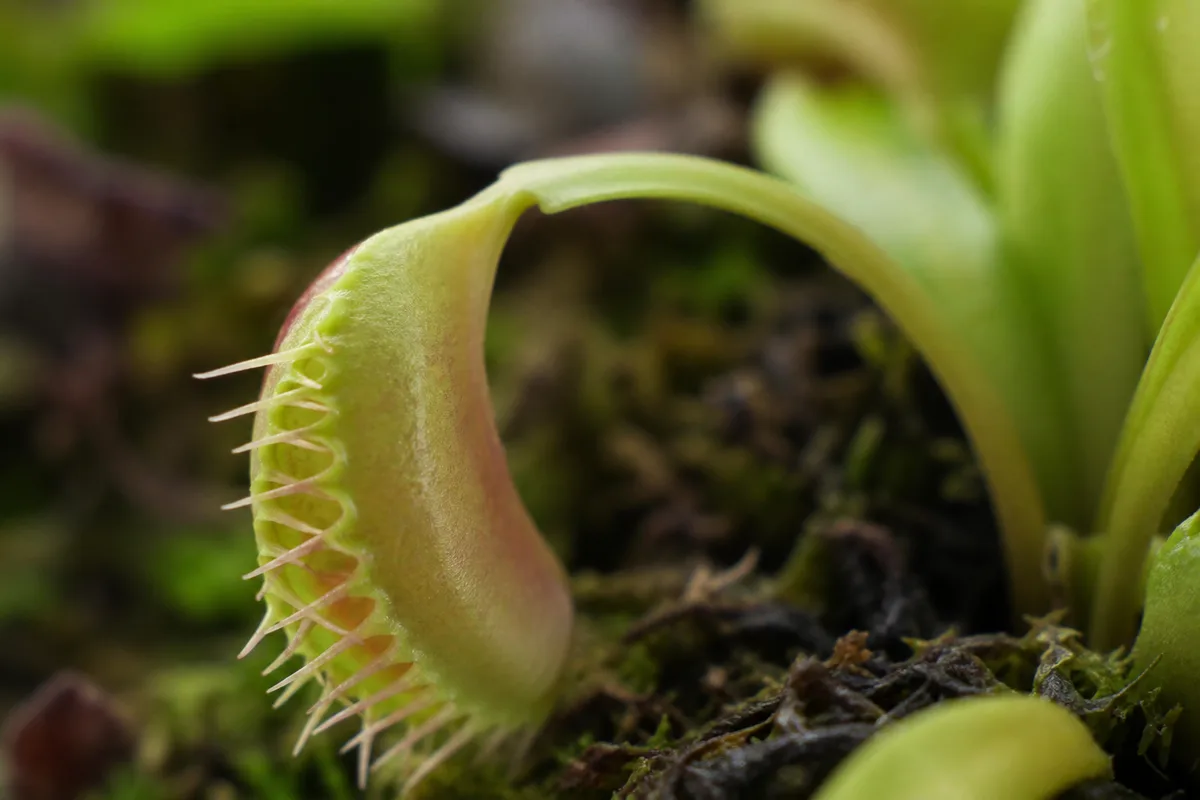
Drooping Leaves symptoms on Venus Flytrap - compare with healthy tissue on the same plant.
Gradual droop (most common pattern)
- Traps and petioles angle toward the soil over several days to two weeks
- Tissue may stay green at first; edges sometimes pale before blackening
- Pot feels light when underwatered, or heavy and cool when crown is rotting
- Newest trap at center may still emerge, but smaller and weaker than earlier growth
- Onset follows a care change: tray left empty, tap water introduced, move to dim shelf, or deep tray in winter
Drought droop versus crown-rot droop
| Signal | Dry rhizome (underwatering) | Wet crown (rot / overwatering) |
|---|---|---|
| Rhizome feel | Firm but plant looks tired; may shrink slightly | Soft, brown, or black at center; may smell sour |
| Peat at 2 cm depth | Dusty dry; pot very light | Soggy; water may sit in tray for days |
| Trap color | Green limp, then crisp edges | Green to black limp; black spreads from base |
| Season / light | Hot sunny window, tray evaporated | Cool dim room, deep standing water |
| First fix | Refill tray 1–2 cm with pure water | Lift from standing water; see root rot |
Dormancy limpness (firm rhizome, seasonal timing)
From October through February in the northern hemisphere, shortening days trigger dormancy. Traps die back and hang limp while the rhizome stores energy underground. The crown should stay firm and white-not mushy. Widespread limpness in peak summer on wet soil is not dormancy.
Single-trap droop (normal senescence)
One older trap at the rosette edge droops, yellows, then blackens over one to two weeks while the rhizome stays firm and a replacement trap emerges from the center. This is turnover, not systemic decline. Worry when most traps droop at once during active growth season.
Why Venus flytrap leaves droop
Dionaea has no woody tissue. Traps and petioles stay rigid only through turgor pressure and healthy roots wicking moisture from mineral-poor peat. Anything that disrupts water uptake, crown air exchange, or photosynthesis produces limp growth. Unlike a succulent, the plant cannot store water long-term in thick leaves-it depends on constant root-zone moisture with a dry crown surface.
Underwatering and empty tray
Venus flytraps evolved in wet savannah bogs where peat stays damp. Fine roots desiccate quickly when the tray dries completely-NC State warns not to allow the soil to dry out-or peat at depth goes dusty. The rhizome may still feel firm, but traps lose rigidity because roots cannot replace transpiration loss-especially in bright sun or warm terrariums. This is the most common fixable cause and the opposite of crown rot.
Crown rot from too much water in cool, dim conditions
The tray method works during warm, bright growth-but permanent deep standing water in cool or low-light conditions suffocates the rhizome crown when peat stays soggy instead of merely moist. Peat stays wet while roots rot; traps droop and blacken from the base upward. A sour smell at soil level is urgent. This overlaps with overwatering and requires different action than refilling a dry tray.
Tap-water mineral damage (delayed droop)
NYBG notes tap water and most bottled water carry too much dissolved salt for carnivorous plants. Minerals bind to peat over weeks; fine roots fail before obvious yellowing. Traps hang limp on thinning petioles while new growth stays small-a slow droop owners often misread as humidity or thirst. The ICPS Dionaea guide recommends distilled, reverse-osmosis, or clean rain water when tap TDS exceeds 90 ppm; most growers target 50 ppm or less.
Insufficient light
Venus flytraps need full sun-at least six hours of direct light daily outdoors or strong supplemental LEDs indoors. Weak light produces elongated floppy petioles and small traps that cannot maintain turgor. The plant leans toward the brightest source and gradually collapses. Gift-shop flytraps on kitchen windowsills often droop within weeks. See light requirements for lux targets.
Entering dormancy
Temperate Dionaea rests in winter. NC Extension explains that shortening photoperiod triggers dormancy, reinforced by cooler temperatures roughly 35–50 °F (2–10 °C). Above-ground growth dies back and traps go limp while the rhizome remains firm. Trying to force growth with warmth, fertilizer, or deep trays in November weakens the plant.
Heat stress and repot shock
Sudden move to a hot closed terrarium, radiator, or sun-scorched windowsill without acclimation can wilt traps within hours-closer to acute wilting than gradual droop. Fresh repotting into dry mix when the rhizome was drought-stressed also causes temporary limpness for one to two weeks while roots re-establish. Do not fertilize or feed during this recovery window.
How to confirm the cause
Work through these checks in order. One rhizome squeeze and tray-depth reading beats guessing from trap posture alone.
- Rhizome firmness - Gently press the horizontal stem at soil level between thumb and finger. Firm and white supports drought, dormancy, light stress, or minerals. Soft, brown, or black with sour odor supports crown rot-act within days.
- Tray depth and pot weight - Lift the pot. Very light plus dry peat at 2 cm depth confirms drought. Heavy pot plus water sitting in tray for days on a cool windowsill confirms overwatering risk.
- Water chemistry - Have you used tap or spring water in the last month? White crust on the pot rim or peat surface strengthens mineral-damage suspicion. Confirm distilled, rain, or RO water only.
- Light hours - Count direct sun or measure grow-light intensity at trap level. Long thin petioles in a dim room confirm weak light before you deepen the tray.
- Season and newest growth - Fall limpness with firm rhizome fits dormancy. Summer limpness with declining new trap size fits culture stress.
- Onset speed - Gradual over days to weeks fits drooping from chronic causes. Overnight collapse fits wilting or acute drought-see wilting guide for that branch.
You have confirmed the primary cause when rhizome feel, tray state, water source, and season align with one row in the decision table below.
Wet tray vs dry pot vs dormancy vs mineral damage
| Pattern | Likely cause | First direction |
|---|---|---|
| Firm rhizome; dry peat; empty tray; active summer growth | Underwatering | Refill tray 1–2 cm pure water |
| Soft dark crown; soggy peat; sour smell; cool dim room | Crown rot | Lift from standing water; root-rot salvage |
| Firm rhizome; widespread limpness Oct–Feb; shorter days | Dormancy | Reduce water; cool rest; do not fertilize |
| Firm rhizome; weeks of tap water; small new traps | Mineral damage | Switch to pure water; repot if no improvement |
| Long floppy petioles; dim exposure; weak trap color | Low light | Move to full sun or add grow lights |
| One old trap limp; new trap emerging; firm rhizome | Normal senescence | Wait; remove only blackened tissue |
First fixes matched to cause
Apply one correction at a time so you know what helped. Do not stack repotting, pruning all traps, fertilizer, and pesticide on the same day.
If the rhizome is firm and peat is dry (underwatering)
Refill the tray with distilled, rain, or reverse-osmosis water to 1–2 cm depth and check again in 24 hours. NYBG recommends a shallow dish under the pot so peat wicks moisture from below-never let the tray stay empty through a sunny growing week. Do not pour water on the crown from above. Expect the next trap to emerge firmer within one to two weeks if drought was the only issue.
If the crown is soft on wet cold soil (crown rot)
Lift the pot from standing water immediately. Let the tray dry completely. If the rhizome center is mushy or smells sour, follow root-rot salvage steps-trim black tissue with sterile scissors and repot into fresh unfertilized peat-perlite mix. Do not refill a deep tray “to help” a rotting plant.
If you have been using tap water (mineral damage)
Switch to pure water today-empty the tray, rinse it, refill with distilled or rain water to 1–2 cm. Do not fertilize. If limpness continues after four weeks of pure water during active growth, repot into fresh mineral-free mix and discard old peat that holds accumulated salts.
If petioles are long and floppy in dim light
Move to at least six hours of direct sun outdoors, or add a full-spectrum LED at roughly 15,000–25,000 lux for 12–14 hours daily per ICPS indoor guidance. Acclimate nursery-shaded plants over 7–14 days. Increasing water without fixing light deepens flop.
If timing and firm rhizome fit dormancy (fall through winter)
Allow natural dieback. Keep peat barely moist-sometimes watering only two to three times per month during dormancy. Reduce or remove standing tray water in cold conditions. Do not warm the plant to “perk it up” or feed traps. Aim for at least 10 weeks of cool rest when possible.
Recovery timeline
Limp trap tissue does not re-stiffen. A drooping trap that has lost turgor will not stand upright again even after you fix the cause. Judge recovery by new traps emerging firm and properly sized and stopped spread to previously healthy growth-not by old traps repairing themselves.
- After tray refill for drought: New upright trap often appears within 7–14 days during active growth if the rhizome stayed firm.
- After pure-water switch for minerals: Improvement on new growth may take two to four weeks; months of tap water may need repotting first.
- After light correction: First compact trap with good color may take three to six weeks as the plant rebuilds photosynthetic capacity.
- After crown-rot salvage: Recovery is uncertain; firm white rhizome tissue after trim is the minimum bar for hope. Severe mushy centers may not recover.
- During dormancy: Little new upright growth until March or April when day length increases-do not declare failure in January.
Documented recovery example
On an indoor specimen that drooped after the tray evaporated during a warm June week, traps hung fully limp while the rhizome stayed firm. Refilling the tray with distilled water to 1 cm produced the first upright trap 11 days later; every pre-drought trap remained limp until it senesced and was replaced. The rhizome never softened-confirming drought droop rather than rot.
Drooping vs wilting vs dormancy on Venus flytrap
These three patterns confuse owners because all involve limp traps. The diagnostic split is speed, rhizome feel, and season.
| Feature | Drooping (this guide) | Wilting | Dormancy |
|---|---|---|---|
| Onset | Gradual over days to weeks | Often overnight or within 48 hours | Weeks in late fall; predictable season |
| Trap color | Often green limp first | May crisp or collapse quickly | Yellows then blackens; widespread |
| Rhizome | Firm unless rot advanced | Firm in drought; soft in sudden rot | Firm and white |
| Tray / soil | Chronic mismatch-dry or too wet | Often acute dry-out or heat shock | Barely moist; less standing water |
| Action | Match chronic cause in table above | See wilting guide | Rest; reduce water; no fertilizer |
What not to do
Do not refill a deep tray because traps look tired in a dim cool room-that accelerates overwatering rot.
Do not water with tap water hoping to perk limp traps-minerals worsen root function.
Do not fertilize a drooping Venus flytrap. Missouri Botanical Garden warns fertilizer burns roots on carnivorous plants.
Do not repot into bone-dry mix when the rhizome is drought-stressed-moisten fresh peat first or use the tray method after repotting.
Do not cut off every green drooping trap at once-the plant needs remaining foliage for recovery.
Do not trigger traps for fun or overfeed while the plant is weak; digestion costs energy it cannot spare.
Do not interrupt dormancy by moving a firm-rhizome plant to a warm dim shelf in November because traps drooped.
Do not assume generic houseplant droop advice (mist more, add balanced fertilizer) applies to Dionaea.
How to prevent drooping leaves next time
Active growth (spring through early fall):
- Distilled, rain, or RO water only; tray 1–2 cm during warm bright conditions
- Six or more hours direct sun outdoors or strong LED indoors
- Mineral-free peat-perlite mix; never standard potting soil
- Check pot weight every two to three days in heat-refill tray before peat desiccates at depth
- Reduce tray depth or pause standing water when weather turns cool and light drops
Dormancy (late fall through winter):
- Allow natural limp dieback; keep peat barely moist
- Cool rest 35–50 °F when possible for at least 10 weeks
- Avoid deep trays in cold low-light months
Year-round:
- Inspect rhizome firmness weekly during routine care
- Refresh mix every one to two years via repotting to prevent mineral buildup
- Judge health by new trap posture and size, not old limp traps
When to worry
Treat as urgent if the rhizome center turns mushy or black, a sour rot smell spreads from soil level, multiple traps blacken within a week on wet cold peat, or limpness worsens after you switched to pure water and corrected light for three weeks during summer growth.
Lower urgency: one drooping trap on a firm plant with a new trap emerging; seasonal limpness in November with firm white rhizome; temporary limpness for 3–5 days after repotting with otherwise correct culture.
Conclusion
Drooping leaves on Venus flytrap usually mean dry rhizome, wet rotting crown, dormancy, tap-water minerals, or weak light-not hunger. Press the rhizome, read the tray, and verify pure water before stacking treatments. Gradual limp on dry peat wants a refill; limp on soggy cold soil wants rescue from standing water; fall limp with firm rhizome wants rest; slow limp on tap water wants a chemistry change; long floppy stems in dim light want sun. Fix the pattern that fits, then judge only the next generation of traps.
Related Venus flytrap care: Overview · Watering · Light · Soil · Repotting · Underwatering · Overwatering · Root rot · Wilting · Not enough light
When to use this page vs other Venus Flytrap guides
- Venus Flytrap watering guide - Use for routine moisture checks before assuming drooping leaves is the main issue.
- Venus Flytrap problems hub - Browse all 18 common issues on this species.
- Underwatering on Venus Flytrap - Different entry point when symptoms overlap with drooping leaves.
- Overwatering on Venus Flytrap - Different entry point when symptoms overlap with drooping leaves.
- Root Rot on Venus Flytrap - Different entry point when symptoms overlap with drooping leaves.