Low Humidity on Venus Flytrap: Causes, Checks & Fixes
Quick answer
Venus flytraps rarely need high room humidity if the tray method keeps peat moist with distilled water and the plant gets full sun. Dry winter air matters mainly when it dries the water dish too fast or the pot sits near a heating vent. First step: refill the tray with distilled water and move the pot away from vents before adding a humidifier or closed dome.
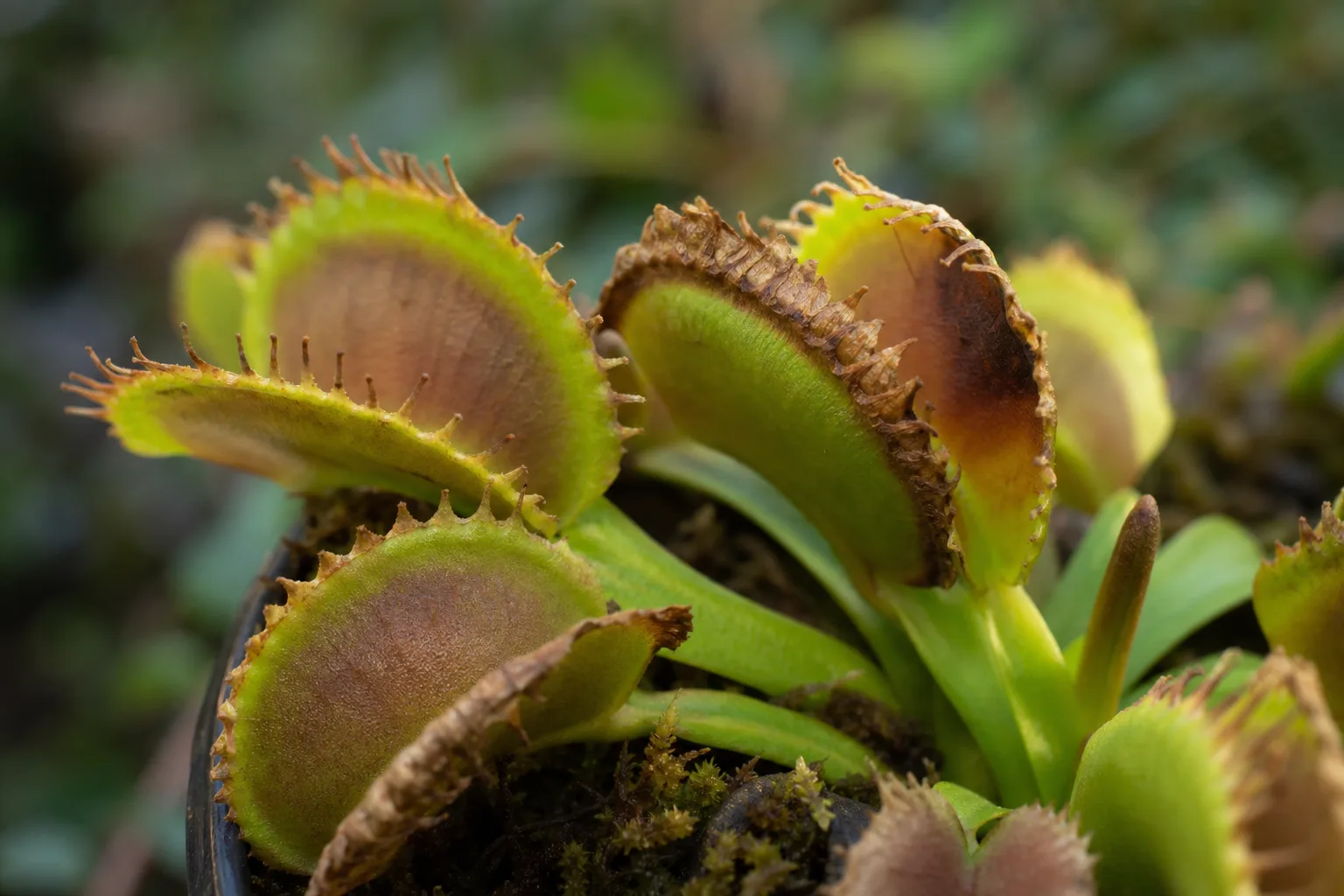
Low Humidity on Venus Flytrap: Causes, Checks & Fixes
This guide covers low humidity on Venus Flytrap. See also the general Low Humidity guide, watering, and light pages for this plant.
Low Humidity on Venus Flytrap: Causes, Checks & Fixes
Quick answer
Venus flytrap (Dionaea muscipula) is a temperate carnivorous bog plant-not a tropical foliage houseplant. Most indoor failures blamed on “low humidity” are actually empty water trays, tap water, or insufficient light. The New York Botanical Garden carnivorous guide states that added humidity is often unnecessary when you maintain the correct moist growing environment with pure water.
Dry winter air becomes a real problem when it dries the water dish too quickly, leaves the peat approaching dry at root depth, or the pot sits in a hot microclimate next to a radiator or forced-air vent. In those cases you see slower new trap production, smaller traps, and sometimes pale, weak growth-but that last pattern often overlaps with insufficient light.
First step: refill the tray with distilled, rain, or reverse-osmosis water and move the pot away from heating vents. Do not reach for a closed terrarium or heavy misting until tray moisture and light are confirmed. Full culture basics live in our Venus flytrap overview.
Do Venus flytraps need high humidity indoors?
Honest answer: usually not, if watering and light are correct.
Dionaea is native to open, sunny Carolina bogs where humidity is moderate-not the steamy 80–90% of a sealed tropical terrarium. NC State Extension lists high humidity among cultural needs, but in practice that humidity comes from wet peat and standing water in the tray, not from misting the room. The moist growing setup creates localized humidity around the rosette without a greenhouse dome.
Most heated homes run 30–45% relative humidity in winter. That is adequate for Venus flytrap when:
- The tray holds 1–2 cm of pure water and is refilled before the dish goes dry
- The plant receives at least six hours of direct sun or strong supplemental grow lights
- The pot is not directly above a radiator or in a hot air vent path
You may need extra humidity buffering when a hygrometer near the plant reads below 35% and the water dish evaporates empty within 24 hours despite daily refills. That pattern means dry air is pulling moisture from the tray faster than you are replacing it-not that the plant needs tropical fog.
What low humidity stress looks like on Venus flytrap
Venus flytrap does not develop classic “crispy brown leaf edges” like a fern or rubber plant. Humidity-related stress on Dionaea shows up through trap quality and soil moisture, not margin burn.
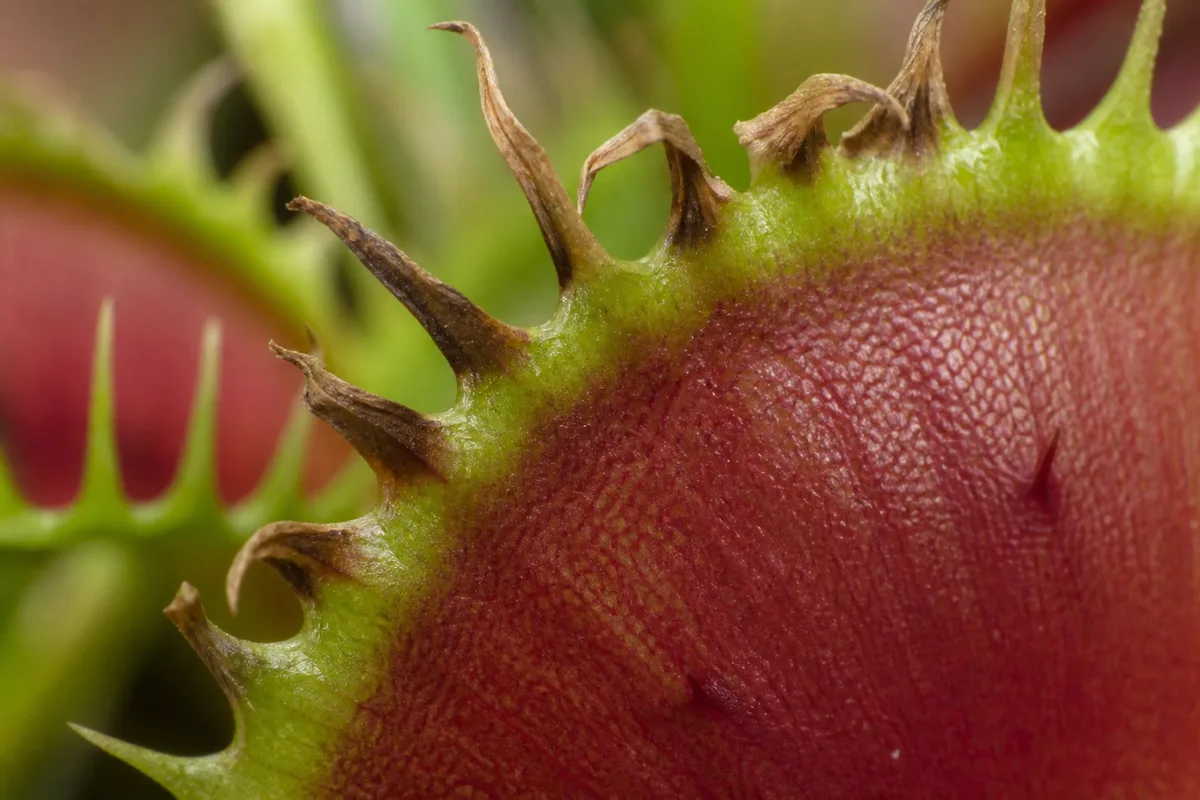
Low Humidity symptoms on Venus Flytrap - compare with healthy tissue on the same plant.
Signs that dry ambient air may be contributing:
- Water tray evaporates empty within a day in a heated room while the plant sits near a vent
- Peat feels approaching dry an inch below the surface even though you watered recently
- New traps stay small or production slows during active growth season (spring through early fall)
- Traps look dull or slightly desiccated at the edges while the rhizome at soil level stays firm
- Plant sits on a windowsill above a radiator or in the direct path of forced-air heat
What low humidity usually does not look like:
- Long, pale petioles with tiny traps reaching toward the window (etiolation from low light-the most common misdiagnosis)
- Gradual decline over months while using tap water (mineral buildup-see watering guide)
- Mushy, foul-smelling rhizome with blackening at the crown (crown rot from overwatering in cool, dim conditions)
- Widespread trap blackening in November with slowing growth (normal dormancy entry, not humidity failure)
- Fine stippling on traps with webbing (spider mites in warm dry corners-see spider mites on Venus flytrap)
Individual traps turn black and die after a few months on healthy plants. That is normal trap senescence, not a humidity crisis.
Why dry air affects Venus flytrap differently than tropical houseplants
Tropical foliage plants like ferns lose water through large thin leaves and need ambient humidity to prevent margin burn. Venus flytrap is different: it is a temperate perennial that pulls most of its moisture from wet peat through fine roots, not from humid air alone.
Three factors make Dionaea humidity logic distinct:
Tray method is primary. The NYBG guide recommends a dish of about ½ to 1 inch of water under the pot, with at least a 2-inch margin between water level and soil surface. That standing water keeps peat damp and creates a humid microclimate at the rosette. Dry room air mainly matters when it accelerates tray evaporation faster than roots can stay hydrated.
Airflow matters as much as moisture. Dionaea grows in open pine savannas with constant air movement. Missouri Botanical Garden notes Venus flytraps need high humidity but also warns against tap water and fertilizer. Closed containers that boost humidity while blocking airflow create the stagnant conditions that kill temperate carnivores.
Light drives trap size. A flytrap in dim light produces elongated, pale growth that owners often blame on humidity. Fixing humidity without fixing full sun or grow lights will not produce firm, colorful traps.
Lookalike symptoms to rule out
| Symptom pattern | More likely cause | First check |
|---|---|---|
| Long thin petioles, small pale traps | Insufficient light | Hours of direct sun or grow-light intensity at trap level |
| Slow decline over months, white crust on peat | Tap-water mineral damage | Water TDS; switch to distilled/rainwater; consider repotting |
| Mushy rhizome, sour smell, wet cold soil | Crown rot / overwatering | Rhizome firmness; reduce tray water in cool dim conditions |
| Mass trap blackening in late fall | Dormancy | Season, day length; rhizome still firm; reduce water |
| Stippling, webbing on traps | Spider mites | Leaf inspection in warm dry corners |
| Tray empty daily, firm rhizome, good light | Dry air accelerating evaporation | Hygrometer; vent placement; open humidity dome |
Work through this table before buying humidity gear. On Venus flytrap, light and water chemistry outrank ambient humidity in most troubleshooting sequences.
How to confirm low ambient humidity is contributing
Run these checks in order:
- Hygrometer reading - Place a small hygrometer beside the pot at trap height. Readings below 35% in a heated room while the tray dries fast support a humidity contribution. Readings of 40–55% with an empty tray point to watering neglect, not dry air.
- Tray dry-down rate - Fill the tray to 1–2 cm with distilled water in the morning. If the dish is bone dry within 24 hours and the plant sits near a heat source, dry air is accelerating evaporation. A healthy setup in moderate humidity typically needs refilling every two to four days, not daily-though hot, dry rooms vary.
- Root-zone moisture - Press a finger into peat an inch below the surface. Approaching dry at depth while the tray was empty confirms the plant lost soil moisture-not just air moisture.
- Vent and radiator placement - Heat blowing across the pot dries the tray and peat faster than the rest of the room. Only the traps on the heat-facing side may look stressed first.
- Light cross-check - Confirm at least six hours of direct sun or 12–16 hours of strong grow light. If petioles are elongated, fix light before humidity.
- Water source - Verify distilled, rain, or RO water only. Mineral damage mimics general decline.
If the tray stays wet for days, the rhizome is firm, light is strong, and water is pure, humidity is probably not your problem.
First fix for Venus flytrap
Refill the tray with distilled, rain, or reverse-osmosis water to 1–2 cm depth and move the pot away from heating vents, radiators, and forced-air drafts.
This single step addresses the most common real-world humidity issue on Dionaea: dry air drying the water dish and root zone, not lack of tropical fog. The tray method keeps peat moist from below; moving off the vent slows evaporation without stacking treatments.
Do not compensate for dry air by flooding the tray deeper or misting with tap water. Standing water too deep in cool, low-light conditions risks crown rot. Tap misting adds minerals that accumulate in peat.
Do not seal the plant in a closed jar as the first fix. Closed containers trap heat and stagnant moisture-see the terrarium section below.
Step-by-step recovery
After the first fix stabilizes tray water and placement:
- Maintain daily tray checks during active growth. Refill before the dish goes completely dry. In very dry rooms this may mean topping up every day-that is normal, not a sign the plant is dying.
- Add open humidity buffering if needed - Place the pot and tray inside an open glass bowl or humidity dome with ventilation holes. NYBG suggests a terrarium-like setting with adjustable ventilation when winter dryness empties the dish too fast. The top stays open or vented; this is not a sealed jar.
- Run a cool-mist humidifier nearby as a secondary step in rooms that stay below 35% RH. Point it into the room, not directly into traps. A humidifier does not replace the tray.
- Hold repotting and feeding for two weeks while conditions stabilize. Do not fertilize-fertilizer kills Venus flytrap roots.
- Remove only fully black traps by snipping at the base. Leave green traps even if edges look worn; they still photosynthesize.
- Treat spider mites if found - NC State lists spider mites among pests to watch for; dry air favors mites, but raising humidity alone will not clear an active infestation.
Terrarium and humidity dome: open vs closed
Do not grow Venus flytrap in a sealed closed terrarium. The ICPS growing guide notes no terrarium is needed-closed glass traps heat, holds excessive moisture, blocks airflow, prevents insect feeding, and makes winter dormancy nearly impossible. Mold and crown rot follow quickly in stagnant warm humidity.
What works instead:
- Open bowl or fish tank with no lid - Walls reduce draft slightly; top is fully open
- Humidity dome with ventilation holes - Partially covers the rosette while allowing air exchange
- Adjustable-vent terrarium - NYBG recommends ventilation to prevent summer heat buildup and wilting
Store-bought flytraps often arrive in small plastic domes. Remove the dome or at least prop it open once the plant is home. Keeping a temperate carnivore sealed in a warm shop dome for weeks is a common cause of decline mislabeled as humidity stress.
A practical winter setup in a dry heated room: pot in tray inside an open glass container, grow light overhead for 12–16 hours, distilled water in the tray, dome vented or removed during the warmest part of the day.
Recovery timeline
Judge recovery by new trap production, not by old traps regaining color.
- Within one to two weeks of stable tray moisture and vent-free placement, existing trap decline should stop spreading
- New traps emerging over the next three to six weeks should be firmer and larger if light and water are correct
- Old blackened or desiccated traps do not green up again-that tissue is spent
- One trap per month dying and being replaced is normal turnover on a healthy plant
If no new traps appear after six weeks with correct tray water, pure water, and strong light, revisit the lookalike table-mineral damage, crown rot, or chronic low light are more likely than humidity alone.
What not to do
Do not mist traps or peat with tap water. Tap water carries dissolved salts that accumulate and burn roots over time.
Do not use a closed terrarium to fix dry winter air. Heat and mold kill faster than low humidity.
Do not deepen the tray beyond 1–2 cm to compensate for dry air in a dim, cool room-that invites overwatering and crown rot.
Do not group Venus flytrap with tropical houseplants on a generic pebble tray without the carnivorous tray method. Tropical grouping advice does not replace mineral-free standing water under the pot.
Do not chase 80%+ humidity. Excessive ambient moisture without airflow promotes fungal problems on a plant that evolved in open bogs.
Do not skip winter dormancy because you are worried about dry heated air. A flytrap that never rests weakens within one to two years regardless of humidity.
Venus flytrap care cross-check
Low-humidity symptoms often appear when other basics are slightly off. Confirm these match your plant’s needs:
- Water - Distilled, rain, or RO water only; tray method 1–2 cm during active growth; barely damp in dormancy
- Light - Minimum six hours direct sun or strong grow lights 12–16 hours daily
- Soil - 1:1 unfertilized peat and perlite; never standard potting mix
- Dormancy - Three to four months cool rest near 32–50 °F (0–10 °C); reduced water
- Feeding - Small insects in traps only; never fertilizer
How to prevent humidity-related stress next winter
Before heating season starts, move the flytrap off windowsills directly above radiators. If that is the only bright spot, add a grow light so the plant can sit farther from the heat source.
Keep a hygrometer near the pot from November through March. When RH drops below 35% and tray refill frequency doubles, add an open dome or room humidifier early-not after traps stop forming.
Match tray refill rhythm to season. Active growth in spring and summer tolerates standing water; dormancy needs barely moist peat with little or no standing water-do not keep a full tray on a cold dormant plant.
Refresh peat-perlite mix every one to two years so the medium wicks water efficiently. Old compacted peat dries faster at the surface while staying wet at the bottom, mimicking confusing moisture patterns.
When to worry
Treat as urgent if the rhizome feels mushy, the crown smells sour, or all traps blacken within days in summer with wet cold soil. Those patterns point to crown rot or mineral poisoning-not fixable with a humidifier.
Act within a week if the tray empties daily, peat is dry at depth, and no new traps have formed for six weeks during active growth season while light is confirmed adequate. Chronic root-zone drying in a hot dry room can weaken the plant before rot sets in.
A few old traps blackening while new firm traps emerge is low urgency-normal turnover or early dormancy. Adjust tray and placement, then watch the next generation of traps.
Conclusion
Low humidity on Venus flytrap is usually a tray-evaporation and placement problem, not a need for tropical greenhouse air. Refill the dish with pure water, move off the vent, and confirm full sun before buying domes or humidifiers. If traps stay small on long pale stems, check light. If decline is slow and steady with tap water, check minerals. When those basics are right, moderate indoor humidity is often enough for a healthy snapping rosette.
Related Venus flytrap care: Overview · Watering · Light · Soil · Repotting · Not enough light · Root rot
When to use this page vs other Venus Flytrap guides
- Venus Flytrap watering guide - Use for routine moisture checks before assuming low humidity is the main issue.
- Venus Flytrap problems hub - Browse all 18 common issues on this species.
- Brown Tips on Venus Flytrap - Different entry point when symptoms overlap with low humidity.