Slow Growth on Venus Flytrap: Causes, Checks & Fixes
Quick answer
Venus flytraps are inherently slow growers-a healthy plant may produce only one to three new traps per month in good light, and none at all during winter dormancy. First step: count new traps over the past four to eight weeks and press the rhizome; if the crown is firm but traps stay tiny on long pale petioles, move to at least six hours of direct sun outdoors or 12–16 hours of supplemental LED indoors while keeping distilled tray water at 1–2 cm.
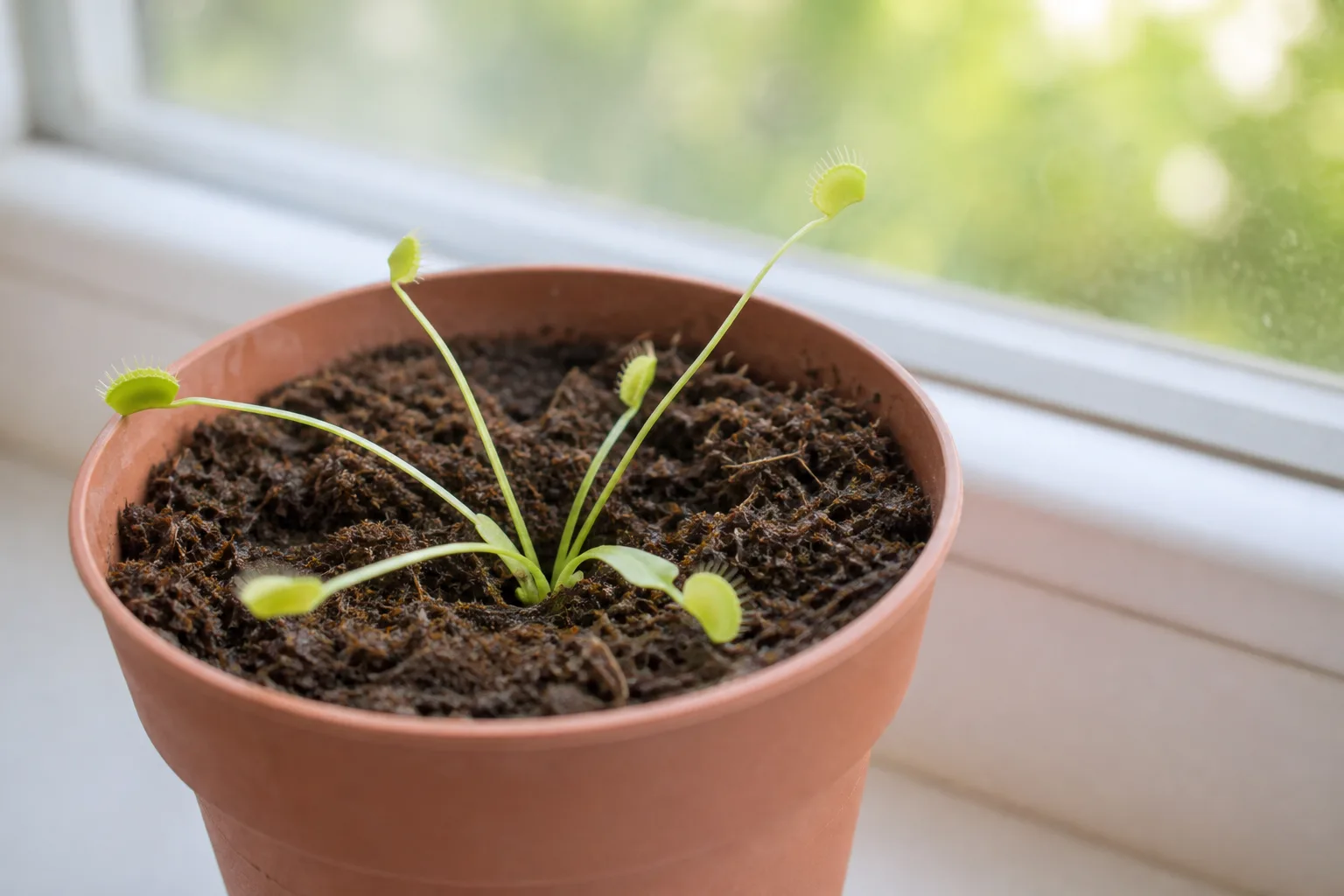
Slow Growth on Venus Flytrap: Causes, Checks & Fixes
This guide covers slow growth on Venus Flytrap. See also the general Slow Growth guide, watering, and light pages for this plant.
Slow Growth on Venus Flytrap: Causes, Checks & Fixes
Quick answer
Venus flytrap (Dionaea muscipula) is a temperate carnivorous perennial with a naturally slow growth rate-not a fast tropical vine. NC State Extension lists its growth rate as slow, and the ICPS Dionaea checklist notes the plant declines immediately without enough light, which is the most common fixable stall indoors.
First step: count how many new traps opened in the last four to eight weeks and press the white rhizome at soil level. A firm rhizome with one small trap every four to six weeks in moderate indoor light may be normal species pace. Zero new traps through an entire warm growing season, or traps that stay tiny on long pale petioles, usually means insufficient photons-not that the plant needs fertilizer or a bigger pot.
Do not stack Venus Flytrap repotting guide, feeding, and light changes on the same day. Fix light and distilled tray water first, then judge only the next generation of traps. Full species context: Venus flytrap overview.
Scope note: This page answers “is my flytrap growing slowly on purpose?” The leggy growth guide covers stretch morphology on long petioles. The not-enough-light guide goes deep on placement trials and lux targets. Start here when trap production has stalled or feels abnormally quiet.
Is slow growth normal on Venus flytrap?
Yes-inherently slow growth is normal for Dionaea. Each snapping trap is a modified leaf that costs energy to build and operate; the plant will never match the leaf output of a pothos or philodendron in the same pot.
Normal slow pace on a healthy flytrap looks like:
- One to three new traps per month during active growth (roughly March through October in the Northern Hemisphere), depending on cultivar, age, and light intensity
- Compact rosettes with firm traps on relatively short petioles when light is adequate
- A firm white rhizome at the soil line with no sour smell
- Seasonal quiet in late autumn when dormancy begins-outer traps blacken and new growth pauses while the rhizome stays solid underground
Abnormal stall-growth so slow it signals a problem-looks like:
- Zero new traps from April through September despite warm temperatures and tray water maintained
- Traps that stay very small with long thin pale petioles reaching toward the window (etiolation without meaningful trap expansion)
- Stalled new growth on wet peat with a softening rhizome or sour smell (rot, not pace)
- Progressive trap failure after months of tap water while new buds stop forming (mineral buildup)
The decision tree is simple: firm rhizome + seasonal timing + modest trap count = often normal; firm rhizome + zero warm-season traps + dim light = fixable stall; soft rhizome or sour peat = urgent, not a pace question.
Why Venus flytrap grows slowly
Several forces limit trap production on Dionaea-some biological, some cultural.
Inherent metabolism. Venus flytraps evolved in nutrient-poor acidic peat bogs of the Carolina coastal plain. They supplement scarce soil nitrogen by capturing insects, but each trap still requires photosynthesis and respiration to build. NC Extension dormancy research notes that snapping shut on prey temporarily shifts energy away from photosynthesis in that leaf-trap production is expensive, so the plant budgets conservatively.
Trap production cost. A mature rosette holds roughly six to eight traps at once. Replacing a trap takes weeks. Over-triggering traps with fingers, large meals, or repeated false closures burns energy without nutrition and can slow the next leaf from emerging.
Winter dormancy. Venus flytraps are temperate perennials that require roughly three to five months of cold rest triggered mainly by shortening photoperiod and reinforced by cool temperatures around 35–50 °F (2–10 °C). During dormancy, above-ground growth stops or nearly stops. Mistaking October quiet for a stall and repotting or feeding a resting plant wastes energy and risks rot.
Insufficient light is the leading fixable cause of abnormally slow growth indoors. NC State specifies full sun-six or more hours of direct sunlight daily. The ICPS checklist is blunt: without adequate light, the plant starts declining immediately. Indoors, most windowsills fail this test without supplemental LEDs at roughly 15,000–25,000 lux for 12–16 hours daily per ICPS indoor guidance.
Tap-water mineral stall. Dissolved calcium, magnesium, and sodium in tap water accumulate in peat over months. Fine roots fail before obvious blackening; traps stay small and new growth stalls. NYBG notes tap water and most bottled water carry too much dissolved salt for carnivorous plants. This mimics slow decline rather than sudden collapse.
Overwatering in low light compounds stall. Dim rooms slow evaporation; deep standing water on a cold rhizome invites crown rot. The ICPS Dionaea guide requires the pot always sit in pure water, but the crown should stay above the saturated zone-typically 1–2 cm tray depth with water more than 5 cm below the soil surface in a tall pot.
Recent repotting or shipping redirects energy to root recovery. Expect a two- to four-week pause after division or nursery shipment before trap count resumes.
What slow growth looks like on Venus flytrap
Slow growth on flytraps is about trap production rate and trap quality, not vine length.
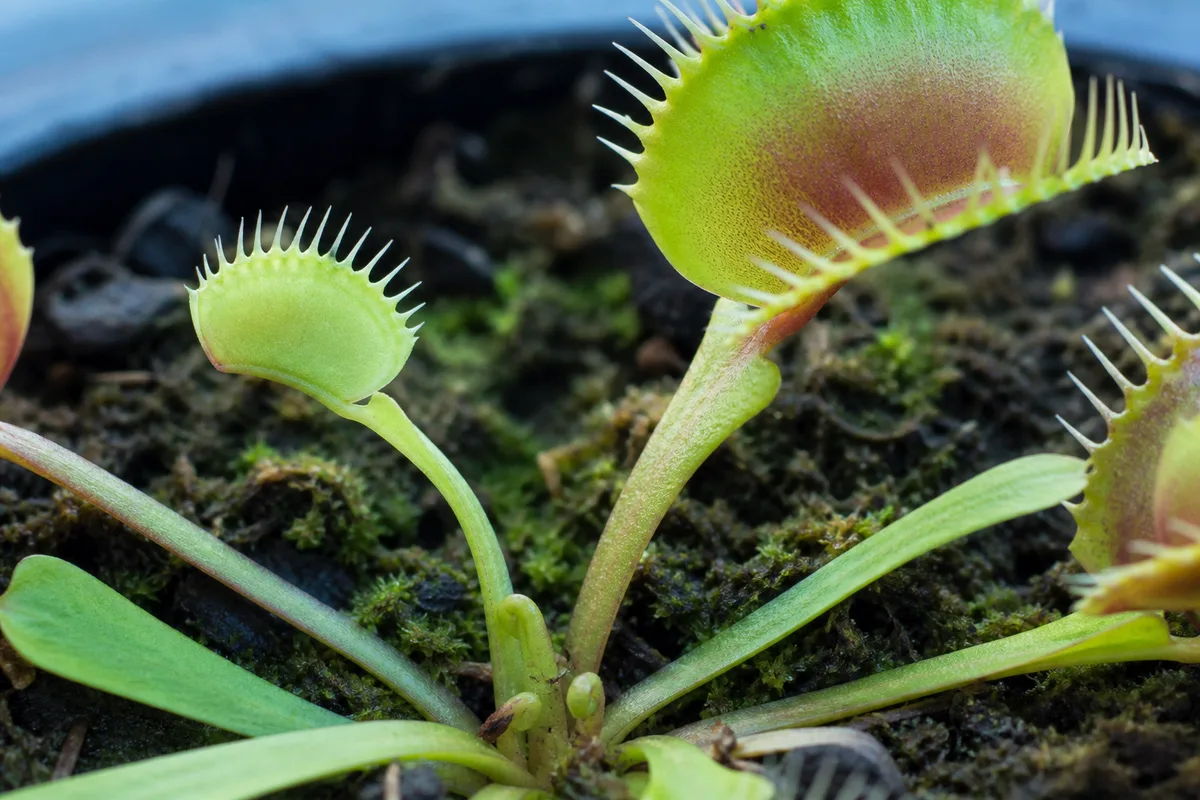
Slow Growth symptoms on Venus Flytrap - compare with healthy tissue on the same plant.
Normal slow growth in adequate light:
- One to three new traps opening per month during active season
- Traps roughly 0.5–1.5 inches with firm hinges; many cultivars show red interior lining in strong sun
- Older traps naturally blacken and die after several closures-replacement, not crisis
- Rhizome firm and white at the soil line
Dim-light stall (most common indoor pattern):
- Very small traps at the ends of long pale petioles
- No new trap for six to eight weeks during warm months
- Rosette looks static while a pothos nearby would still push leaves
- Red trap interior fades or never develops
Tap-water mineral stall:
- Growth was acceptable for months, then new traps stop or stay tiny
- Several mature traps fail within a few weeks without obvious pests
- White crust may appear on peat surface or pot rim over time
- Rhizome may still feel firm early; decline accelerates if water chemistry is not corrected
Dormancy pause (expected, not a stall):
- Triggered by shortening days in late autumn
- Outer traps blacken from edges; rosette shrinks to a small resting bud
- Firm rhizome underground; no sour rot smell
- Zero new traps October–February in temperate climates is normal
Root rot stall:
- Growth stops while peat stays continuously saturated in cool low light
- Rhizome softens; sour smell at soil level
- Traps blacken from the base upward-not one old trap aging out
Slow growth vs. leggy growth vs. not enough light
These pages overlap but serve different search intents.
| Pattern | Main question | Key visual | First fix page |
|---|---|---|---|
| Slow growth (this page) | “Is this pace normal?” | Few or no new traps for weeks; static rosette | Count traps; check dormancy calendar and rhizome |
| Leggy growth | ”Why are petioles so long?” | Long stretched petioles, small pale traps reaching for light | Leggy growth guide |
| Not enough light | ”How much sun does it need?” | Etiolation, faded red lining, placement trial | Not enough light guide |
A single dim windowsill plant can fit all three descriptions. Start here to normalize expectations, then follow the light guide for placement specifics.
How to confirm the cause
Work through this checklist in order during active growth season (skip trap-count urgency during confirmed dormancy).
- Season check - Note the month. October–February firm rhizome with blackening outer leaves in a cool room likely means dormancy, not a stall requiring intervention.
- Trap count - Count traps that fully opened in the last four to eight weeks. Zero through June–August with warm temperatures strongly suggests stall; one to three in moderate light may be normal.
- Rhizome firmness - Gently press the white crown at soil level. Firm and white supports light or water chemistry diagnosis; soft, dark, or sour points to root rot or overwatering-urgent, not pace.
- Petiole length vs. trap size - Short petioles with small traps in dim light suggest normal slow metabolism; long pale petioles with tiny traps confirm photon deficit.
- Water source history - List what you have used for three months. Tap water or “purified” bottled water (not distilled) raises mineral-stall probability. Target TDS below 50 ppm with distilled, RO, or clean rain.
- Tray depth and dry-down - During active growth, is the pot in 1–2 cm standing distilled water? Does peat dry noticeably faster after a recent light increase? Deep constant saturation in a dim cool room worsens rot risk.
- Light hours - Outdoors: confirm six or more hours of unfiltered direct sun. Indoors: note whether a grow light runs 12–16 hours and how close it sits. A north window alone rarely sustains active trap production.
- Two-week photon trial - If light is suspect and the rhizome is firm, increase photons (south window, outdoor tray, or LED) without changing water chemistry, pot, or feeding. Success means the next trap is larger and on a shorter petiole.
Stop when one pattern clearly fits. Do not repot a healthy slow plant hoping to jump-start it.
First fix for Venus flytrap
Match one primary action to the dominant pattern.
If traps are tiny on long pale petioles, or zero warm-season traps in dim light
Move the plant to at least six hours of direct outdoor sun in a tray of distilled water, or add a white LED delivering roughly 15,000–25,000 lux at 12–16 hours daily indoors per ICPS guidance. Acclimate nursery-shaded plants over 7–14 days. Keep 1–2 cm tray water; do not fertilize. Judge the next trap, not old stretched leaves.
If you have used tap water for months and growth stalled
Switch immediately to distilled, RO, or rain water under 50 ppm TDS. If decline is advanced, repot into fresh unfertilized peat-perlite mix following the soil guide and watering guide. Do not feed traps during recovery.
If the rhizome is firm and the calendar says dormancy
Reduce tray water to barely moist peat, provide cool rest near 35–50 °F if possible, and stop trying to force growth. Resume active-season culture when new trap buds unfurl in spring.
If rhizome is soft or peat smells sour on wet cold soil
Rescue from standing water first-shallow dry-down, improved airflow, brighter cool light. See overwatering and root rot before repotting.
If the plant was recently repotted or shipped
Hold steady in consistent light and tray water for two to four weeks before additional changes.
Step-by-step recovery by cause
After low-light correction:
- Increase photons using outdoor full sun or supplemental LED; acclimate gradually.
- Maintain 1–2 cm distilled tray water; peat will dry faster in brighter light-top off more often.
- Wait three to six weeks for the first noticeably larger trap on a shorter petiole.
- Optionally feed one small insect in one trap per week during active growth only-never soil fertilizer.
After tap-water correction:
- Flush culture with pure water; repot if minerals have accumulated for many months.
- Hold light steady; do not feed until new growth looks firm.
- Expect four to eight weeks before trap count recovers on a damaged root system.
After dormancy:
- Keep peat barely moist through cold months.
- As photoperiod lengthens, restore tray watering and full sun.
- First spring traps may be small; size increases through the season if light is strong.
After root rot rescue:
- Trim black mushy rhizome tissue with a sterile blade.
- Repot into fresh mix; shallow tray only when the crown is firm.
- Recovery may take a full growing season; some divisions never regain prior trap count.
Recovery timeline
Light correction: First noticeably larger trap on a shorter petiole often appears within three to six weeks after photons increase during active season. Full rosette fill-out may take the remainder of the growing season.
Tap-water recovery: Root damage from minerals heals slowly-expect four to twelve weeks before trap production normalizes after switching water and repotting if needed.
Dormancy: Zero new traps for three to five months is expected. Spring wake-up brings the first small traps within two to four weeks of lengthening days and warming temperatures.
Post-repot pause: Two to four weeks of little activity is normal after division or repotting.
Signs you are on track:
- New traps opening on a predictable monthly rhythm in summer
- Traps larger than the previous generation
- Firm white rhizome; neutral peat smell
- Faster tray dry-down after light increase (healthy transpiration)
Signs the problem is worsening:
- Rhizome softens despite corrected light
- Multiple traps blacken within a week on wet cold peat
- Zero new growth through an entire warm season after six weeks of confirmed strong light and pure water
- Sour smell spreads from soil level
Lookalike symptoms to rule out
| What you see | Likely cause | Key difference |
|---|---|---|
| Zero traps Oct–Feb; firm rhizome; outer leaves blacken | Dormancy | Seasonal; cool rest; not fixed by fertilizer |
| Long pale petioles; tiny traps | Low light / leggy stretch | Traps still attempt to form; petioles elongated |
| Zero traps Jun–Aug; firm rhizome; dim room | Light stall | No dormancy timing; fix photons |
| Small traps then sudden mass failure; tap water history | Mineral buildup | Water chemistry, not hunger |
| Soft rhizome; sour wet peat | Crown / root rot | Urgent; limp blackening from base up |
| One old trap blackens; new trap emerging | Normal trap senescence | Isolated; wax-free crown |
| Limp traps after dry tray week | Drought droop | Opposite of rot; see wilting |
| White cottony crown clusters | Mealybugs | Wax and honeydew; see mealybugs |
What not to do
- Do not fertilize a stalled Venus flytrap hoping to force growth. Missouri Botanical Garden warns never to use fertilizer-salts damage roots the same way tap-water minerals do.
- Do not repot a healthy slow plant into a larger pot to “jump-start” it. Repot only for mineral rescue, root rot, or when the growth point hits the pot edge per ICPS guidance.
- Do not stack repotting, feeding, and light changes on the same stressed plant.
- Do not trigger traps repeatedly with fingers or oversized meals-each closure spends energy without nutrition.
- Do not deep-tray water a dormant plant or a rhizome showing rot signs.
- Do not assume a blackening trap in November is death-check rhizome firmness before discarding a dormant plant.
How to prevent slow growth next time
Match culture to Dionaea biology year-round:
- Full sun outdoors or 12–16 hours of strong supplemental LED indoors during active growth-see the light guide
- Distilled, RO, or rain water only in a 1–2 cm tray during active season-see the watering guide
- Unfertilized peat-perlite mix refreshed every one to two years-see the soil guide
- Mandatory winter dormancy with barely moist peat and cool temperatures
- Weekly rhizome checks during routine care so stall signs stay small
- Feed sparingly-one small insect in one trap per week at most during active growth, only after light and water are correct
Prevention on Venus flytrap means respecting slow species pace while eliminating fixable photon and water bottlenecks-not copying a weekly watering calendar from a tropical foliage plant.
When to worry
Treat as urgent if the rhizome turns mushy or black, a sour rot smell spreads from soil level, multiple traps blacken within a week on wet cold peat, or zero new traps persist through a full warm season after six weeks of confirmed strong light, pure water, and firm rhizome.
Lower urgency: one old trap blackening while a new trap emerges; October growth pause with firm white rhizome; two to four weeks quiet after repotting with otherwise correct culture.
Conclusion
Slow growth on Venus flytrap is often normal species pace, especially when the rhizome is firm and the calendar points to dormancy. Abnormal stall usually traces to too few photons, tap-water minerals, or wet rotting crown-not hunger. Count traps, press the rhizome, verify pure water, and increase light before fertilizer, repotting, or panic. Judge recovery only by the next generation of traps, not old cosmetic damage.
Related Venus flytrap care: Overview · Light · Watering · Soil · Leggy growth · Not enough light · Overwatering · Root rot · Wilting · Mealybugs
When to use this page vs other Venus Flytrap guides
- Venus Flytrap watering guide - Use for routine moisture checks before assuming slow growth is the main issue.
- Venus Flytrap problems hub - Browse all 18 common issues on this species.
- Not Enough Light on Venus Flytrap - Different entry point when symptoms overlap with slow growth.
- Leggy Growth on Venus Flytrap - Different entry point when symptoms overlap with slow growth.
- Yellow Leaves on Venus Flytrap - Different entry point when symptoms overlap with slow growth.