No Flowers on Venus Flytrap: Causes, Checks & Fixes
Quick answer
A Venus flytrap under two to three years old with only traps and no center stalk is usually normal-not a care failure. If a mature plant sends up a smooth cylindrical stem in early spring, that is a flower stalk, not a leaf. First step: confirm plant age and intent-wait for maturity if you want blooms someday; snip the stalk at the base when it reaches about 1–3 inches if the plant is small, weak, or you prefer trap growth over flowers.
No Flowers on Venus Flytrap: Causes, Checks & Fixes
This guide covers no flowers on Venus Flytrap. See also the general No Flowers guide, watering, and light pages for this plant.
No Flowers on Venus Flytrap: Causes, Checks & Fixes
Quick answer
Venus flytrap (Dionaea muscipula) growers arrive at this page with two different questions-and both are valid.
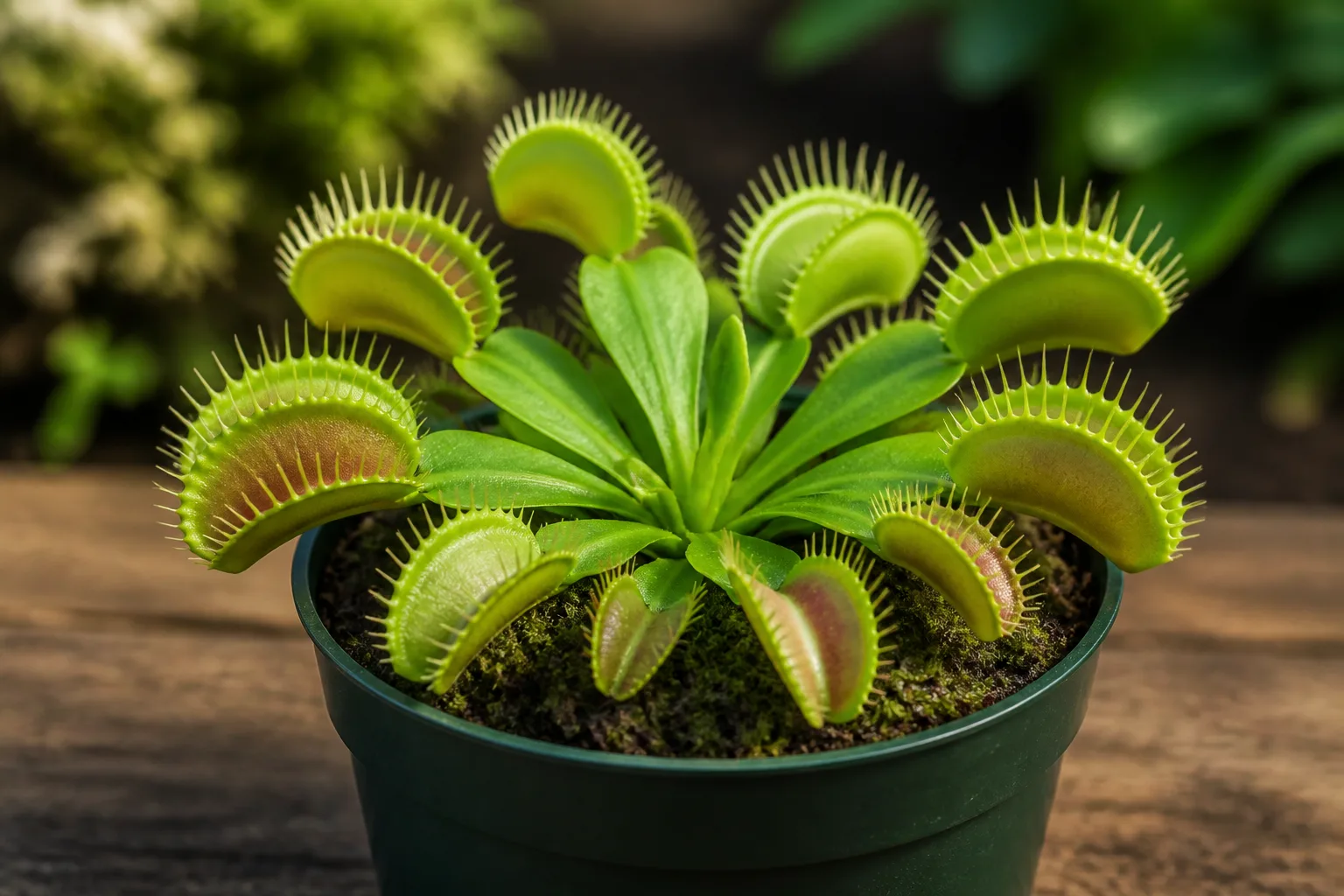
Scenario A - young rosette, no stalk: Your plant is a year or two old, shows a tight crown of traps, and has never produced a tall center stem. That is usually normal. Mature Venus flytraps flower in spring on a leafless scape after building rhizome reserve, but young plants channel energy into traps and rhizome growth first. No action needed beyond solid culture: full sun-at least six hours of direct light daily, distilled or rainwater only, and a proper winter dormancy so the plant can bloom in a future spring.
Scenario B - cylindrical stem in March: A smooth, round, trap-free shoot rises from the crown. That is a flower stalk, not a new leaf. Many experienced growers remove it to preserve trap energy. Barry Rice advises cutting young flower stalks at the base as soon as they appear unless you are a skilled grower with spare plants to risk.
First step: Decide which scenario fits. If the plant is immature, wait and improve culture-do not force blooms. If a stalk is emerging on a small or stressed plant, snip it at 1–3 inches at the crown and follow the flower-stalk removal protocol in our pruning guide. Make one change at a time; do not repot, fertilize, and prune on the same day.
Is no flowering normal on Venus flytrap?
Yes-for most of the plant’s early life, and often by design for container growers.
A healthy young flytrap should look like a basal rosette of flat petioles ending in hinged traps, with no vertical cylindrical stem at the center. That silence is expected for roughly two to three growing seasons under good care before the first reliable spring bloom. Seed-grown plants and small nursery divisions simply have not built enough rhizome reserve yet.
Many growers treat absence of flowers as success, not failure. Flowering consumes a great deal of plant energy, and after blooming a Venus flytrap can remain sluggish for nearly a year in cultivation-longer than wild plants recover because indoor light, humidity, and dormancy are rarely ideal. Cutting stalks early redirects that budget toward traps and division.
If your plant is mature, firm at the rhizome, and still bloomless after several springs, the question shifts from “Is this normal?” to “Is culture strong enough to support flowering?”-covered below.
What a flower stalk looks like (vs a leaf)
Identification matters because searchers often type “long stem in center” when they mean the opposite of no flowers-they have a stalk and need to know what it is.
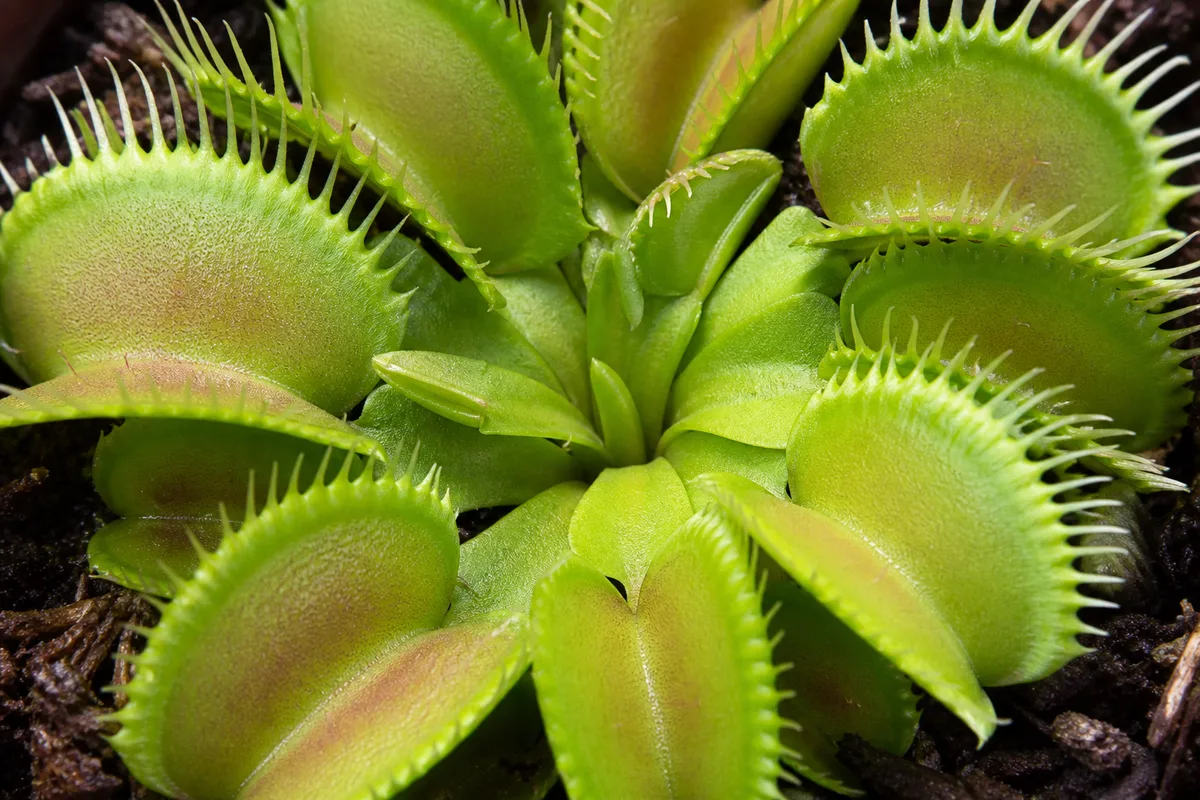
No Flowers symptoms on Venus Flytrap - compare with healthy tissue on the same plant.
Compare the two structures at the crown:
| Feature | Flower stalk (scape) | New leaf |
|---|---|---|
| Shape | Cylindrical, rod-like, round in cross-section | Flat petiole (leaf stem) widening toward a trap |
| Tip | Small bud that will open into white blooms | Hinged trap with trigger hairs |
| Growth speed | Often faster vertical elongation once established | Opens outward; trap forms at the end |
| Season | Early spring, weeks after dormancy ends | Any time during active growth |
| Height potential | 4–12 inches (10–30 cm) leafless scape with clusters of white cup-shaped flowers in May–June | Petioles typically 2–5 inches long with trap at tip |
Rice’s FAQ shows young stalk and leaf side by side: the stalk is on the right, the leaf on the left. Early stalks look like a tiny green bead at the center before they elongate. Once rod-shaped and trap-free, it is a flower stalk-act before buds swell.
Do not confuse a flower stalk with an etiolated leaf on a dim-grown plant. Low-light leaves stretch on long thin petioles but still carry a trap at the tip and remain flat, not cylindrical. Fix light intensity rather than cutting a legitimate photosynthetic leaf.
What no flowers look like on a healthy young plant
“No flowers” on a young Venus flytrap is a rosette-only appearance:
- Compact crown of 4–8 traps with no upright center shoot
- Flat green or red-tinged petioles radiating from the rhizome-each ending in a functional trap
- Firm white rhizome at the soil line when you gently brush peat away
- Steady trap replacement during spring and summer-old outer leaves blacken as new inner ones emerge
- No bud swelling, no white blooms, no tall leafless scape through an entire growing season
That picture is healthy immaturity, not a deficiency. Do not apply bloom fertilizer, repot for “flowering energy,” or panic over a missing stalk on a plant still building size.
When no flowers might signal a problem (on a plant old enough to bloom):
- Mature rosette with strong light and good water that has skipped spring stalks two or more years after previously flowering
- Pale, elongated petioles and tiny traps-often low light, not a flowering block
- Skipped or weak dormancy-indoor warmth all winter prevents the seasonal rhythm that triggers spring blooms
- Recent Venus Flytrap repotting guide or division-the plant may sit out a bloom year while roots re-establish
Why Venus flytrap may not flower
Immaturity (most common)
Young plants prioritize rhizome and trap production over reproduction. Expect the first flower stalk only after two to three years of vigorous culture, sometimes longer from seed.
You-or the previous grower-removed every stalk
Deliberate early removal is standard practice. If stalks are cut each spring, you will see no flowers while the plant stays stronger for trap growth. That is intentional, not a diagnosis.
Insufficient light
Venus flytraps need full direct sun-six or more hours daily, with eight or more ideal during active growth per our light guide. Chronic dim culture produces weak rosettes that may never allocate energy to flowering-or may stress-flower instead (see below).
Skipped or weak dormancy
Dionaea is a temperate perennial. Spring blooms follow winter dormancy when shortening days and cool temperatures reset the plant. A flytrap kept warm under 14-hour grow lights all winter may grow year-round but miss normal spring flowering rhythm or bloom off-season as a stress response.
Recent stress: repotting, shipping, tap water damage
Repotting, mineral burn from tap water, or shipping shock can pause blooming for a season even on mature plants. Fix water purity and light before expecting a stalk.
Stress flowering (paradoxical bloom on a weak plant)
Flowering does not always mean health. NC Extension dormancy guidance notes that repeatedly skipped dormancy can leave plants less vigorous and prone to flowering at the wrong time when culture is marginal. A pale, small rosette with a rapidly elongating stalk in summer-not spring-is a warning, not a trophy. Cut the stalk and correct culture immediately.
How to confirm the cause
Run this maturity-and-culture checklist before changing anything:
- Age estimate - Division from a nursery this year? Likely too young. Same pot for three-plus springs with a fist-sized rosette? Mature enough to bloom if culture allows.
- Stalk present? - Cylindrical center shoot means you have flowers incoming, not “no flowers.” Jump to cut-vs-keep below.
- Season - Bloom time is spring (May–June) in most climates, shortly after dormancy ends. No stalk by late summer on a young plant is normal.
- Light audit - Traps red inside and compact? Good sign. Long thin pale petioles? Increase direct sun or supplemental LED hours before expecting blooms.
- Water - Rainwater or distilled only; tray 1–2 cm during active growth per our watering guide.
- Dormancy last winter - Did the plant experience 6–12 weeks of cool rest (roughly 35–50 °F) with reduced water? Skipping dormancy is a common reason mature plants skip spring stalks.
- Rhizome firmness - Press gently at the crown. Firm and white supports waiting or culture fixes. Soft, blackening tissue is rot-address that before flowering concerns.
If the plant is young, firm, and well-lit with no stalk, no further fix is required for flowering.
First fix: wait for maturity vs cut the stalk early
If the plant is immature and you want blooms someday: Do nothing aggressive. Maintain full sun, pure water, annual dormancy, and patience. The first stalk will appear in a future spring when the rhizome is ready.
If a flower stalk is emerging and the plant is small, weak, recently repotted, or you prefer traps over blooms: Cut now. Rice recommends removing the cylindrical stalk at the base as soon as you identify it-ideally when 1–3 inches (2.5–7.5 cm) tall, before buds enlarge. The NYBG carnivorous plant guide likewise advises removing flower stalks before bloom to preserve vigor in pots.
Use sharp scissors, cut at the crown, and avoid nicking neighboring traps. The plant may produce a second stalk-remove that one too. Detailed step-by-step cuts live in our Venus flytrap pruning guide.
Make one intervention today: either culture patience or stalk removal-not both combined with repotting or feeding.
When to cut vs when to allow flowering
| Situation | Recommendation |
|---|---|
| Plant under ~2–3 years old | Cut if a stalk appears; plant is too small to afford the energy cost |
| Weak, pale, or recently stressed rosette | Cut immediately; fix light and water |
| Off-season summer stalk | Cut; treat as stress flowering, not normal spring bloom |
| Stalk past 4–8 inches with enlarging buds | Late to help much-energy largely spent; cut anyway if you do not want seed, or let finish if skilled |
| Mature, vigorous plant in full outdoor sun; spare specimen | Optional allow for seed or curiosity-accept slower trap production |
| Named cultivar you want to preserve true-to-type | Cut-seed does not come true to cultivar |
| Novice indoor grower | Cut early per Carnivorous Plant FAQ |
Rice warns that after flowering, cultivated plants may stay weakened for up to a year and may die if culture is marginal. Skilled growers with excellent conditions sometimes report no problems-but beginners should default to removal.
Recovery timeline after flower-stalk removal
After early stalk removal on a healthy plant:
- Immediate - Energy redirects toward new trap leaves from the crown
- 2–4 weeks - New traps often visible during active spring growth with full sun and tray water
- Rest of season - Trap size and count typically exceed what a blooming plant would have produced
- If plant bloomed fully - Expect months of sluggish growth; recovery may take most of a growing season or longer indoors
Judge success by new trap emergence and firm rhizome-not by whether old traps enlarge overnight. Individual traps do not heal; only new leaves replace them.
Lookalike symptoms
| What you see | Likely meaning | Action |
|---|---|---|
| No stalk, young rosette, firm rhizome | Normal immaturity | Wait; improve culture |
| No stalk, 4+ years, good light, proper dormancy | Culture gap or prior stalk removal | Audit dormancy and light; be patient one season |
| Cylindrical center shoot in spring | Flower stalk-not “no flowers” | Cut vs keep decision |
| Long thin petiole with small trap, no cylinder | Etiolation from low light | More direct sun; do not cut leaf |
| Tall stalk in summer on weak plant | Stress flowering | Cut stalk; fix culture |
| Black mushy crown, no growth | Crown rot / overwatering on Venus Flytrap | Not a flowering issue-rescue culture |
What not to do
- Do not fertilize to force blooms-Venus flytraps must never be fertilized; minerals burn roots and do not override biology.
- Do not wait until the stalk is 8+ inches if you want to preserve energy-bud enlargement at 10–20 cm means damage is largely done.
- Do not assume flowering proves health-stress blooms on struggling plants need stalk removal, not celebration.
- Do not skip dormancy while expecting reliable spring flowers indoors.
- Do not stack repotting, pruning, and water experiments the same week-you will not know which change helped.
How to encourage blooms on a mature plant (optional goal)
If you genuinely want flowers on a mature, vigorous plant:
- Provide outdoor full sun or equivalent 12–16 hours of strong grow light during active growth
- Deliver mandatory winter dormancy-cool, barely moist, shortened photoperiod
- Use rainwater or distilled water with a steady 1–2 cm tray in spring
- Avoid repotting the season you hope to bloom
- Accept that trap count may drop while the stalk elongates
Even with perfect care, skipping stalk removal is a trade-off. Most container growers prefer traps over the small white cup-shaped blooms on a tall scape.
How to prevent problems next spring
From late winter onward, scout the crown weekly as new growth resumes:
- Brush peat gently from the center and look for a round green bead-early stalk primordium
- Cut stalks at 1–3 inches before buds swell if the plant is not a spare seedling candidate
- Keep dormancy compliant every winter-flowering rhythm depends on it
- Maintain six or more hours of direct sun so the plant has reserves to bloom or recover after you cut
Prevention for most growers means early stalk removal, not chasing flowers.
Practical checks
Urgency when paired with decline
“No flowers” alone is never urgent. Act quickly if a stress stalk appears on a declining rosette and bases soften, rot smell spreads, or traps collapse while soil stays soggy-fix water and light before debating blooms.
Best inspection order
Crown center for cylindrical shoot → plant age estimate → season (spring vs summer) → trap color and petiole length (light) → rhizome firmness → dormancy history → water source purity.
Severity note
A missing flower on a one-year-old plant is zero severity. A summer stalk on a pale indoor plant is high severity-cut and correct culture.
Related guides
Venus flytrap hub: overview · pruning (flower-stalk removal) · light · watering · slow growth · not enough light
Conclusion
No flowers on Venus flytrap usually means one of two things: a young plant behaving normally, or a grower who wisely removed spring stalks to protect trap growth. If a smooth cylindrical stem appears in early spring, you no longer have a “no flowers” problem-you have a flower stalk decision. Cut at 1–3 inches on small or stressed plants; wait for maturity and strong culture if you hope to see blooms on a healthy mature rosette. Either path starts with identifying what is at the center of the crown-not generic houseplant bloom advice.
This guide was written by sai-ananth and reviewed by the LeafyPixels Review Board on 2026-06-16 against the Carnivorous Plant FAQ (Barry Rice), NC State Extension Dionaea profile, NYBG carnivorous plant guide, NC Extension dormancy guidance, and LeafyPixels Venus flytrap care data.
When to use this page vs other Venus Flytrap guides
- Venus Flytrap watering guide - Use for routine moisture checks before assuming no flowers is the main issue.
- Venus Flytrap problems hub - Browse all 18 common issues on this species.