Aphids on Venus Flytrap: Causes, Checks & Fixes
Quick answer
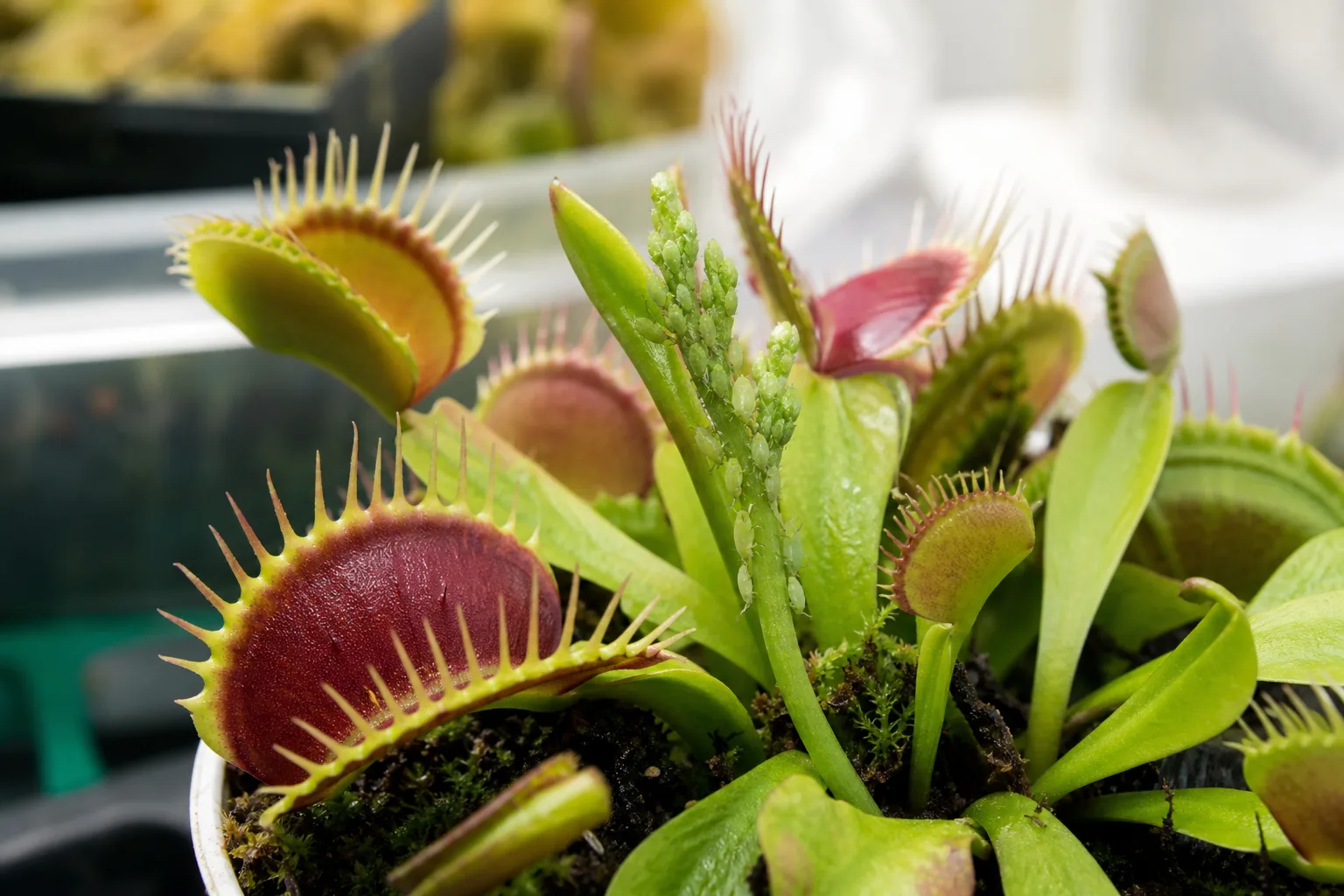
Aphids on Venus flytrap cluster on soft new growth-emerging traps, central growing points, and tender petiole tips-often leaving sticky honeydew on trap margins. First step: isolate the plant and rinse visible aphids off with a gentle jet of distilled water, aiming at new growth without waterlogging the rhizome crown.
Aphids on Venus Flytrap: Causes, Checks & Fixes
This guide covers aphids on Venus Flytrap. See also the general Aphids guide, watering, and light pages for this plant.
Aphids on Venus Flytrap: Causes, Checks & Fixes
Quick answer
Aphids on Venus flytrap (Dionaea muscipula) cluster on soft new growth-the central growing point, emerging traps before they fully open, and tender petiole tips-often leaving sticky honeydew on trap margins and nearby petioles. They suck plant sap and excrete sugary honeydew from tender tissue, which can coat traps, attract ants, and support sooty mold if ignored through a growing season.
First step: isolate the plant the same day you spot insects. Move it away from other carnivorous plants, companion houseplants, and shared humidity trays. Once isolated, rinse visible aphids off with a gentle jet of distilled water, aiming at new growth and trap interiors without flooding the white rhizome crown.
Venus flytraps need full sun-at least six hours of direct light daily and distilled water, rainwater, or reverse-osmosis water only-never tap water in any rinse protocol. Tray depth during active growth is typically 1–2 cm of standing water below the pot. Judge recovery by firm new traps without fresh honeydew, not by expecting old damaged tissue to look perfect again. Full species context: Venus flytrap overview.
What aphids look like on Venus flytrap
Aphids on Venus flytraps are easy to miss until you inspect the youngest tissue-open traps facing the window are not where colonies start. Check the central growing point, traps still opening, and petiole bases where new shoots emerge from the rhizome crown.
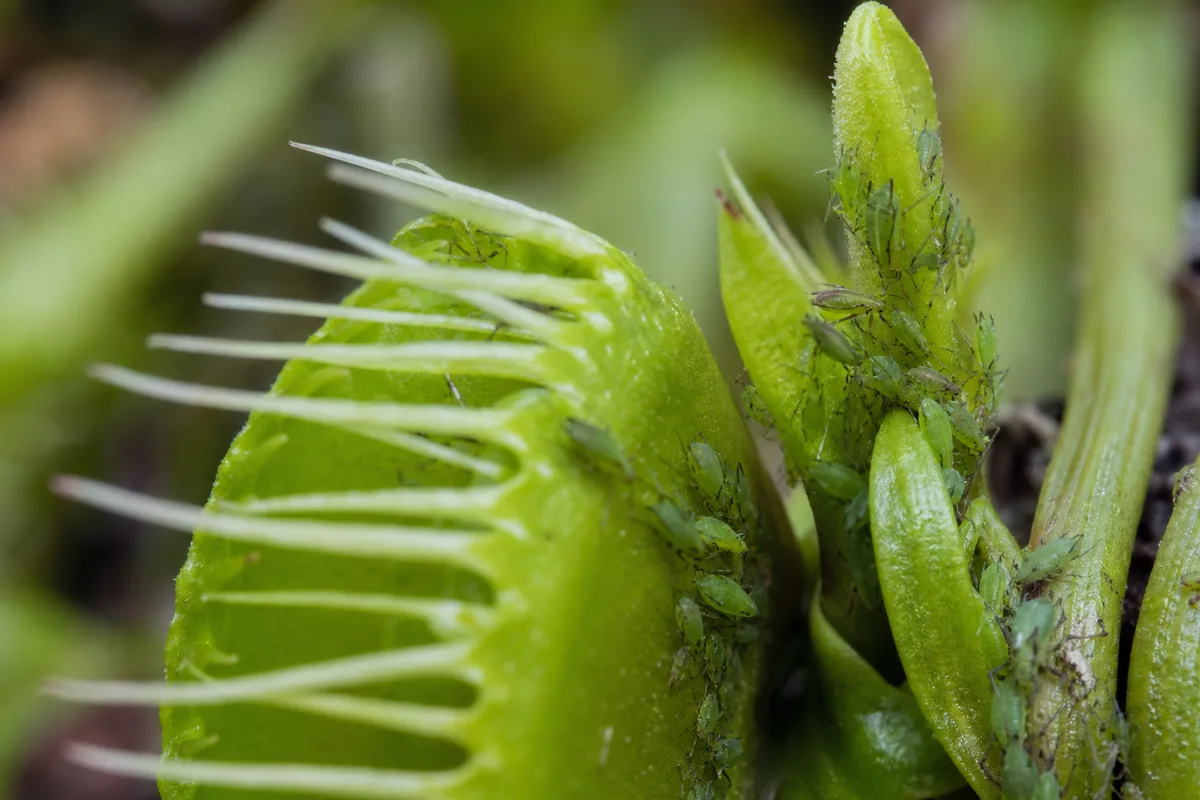
Aphids symptoms on Venus Flytrap - compare with healthy tissue on the same plant.
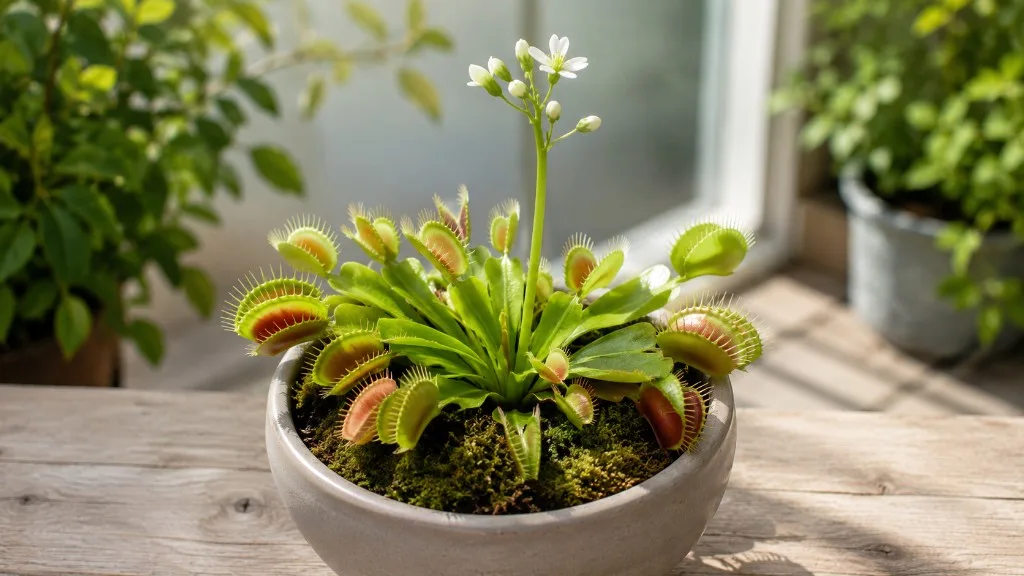
Typical signs include:
- Tiny soft-bodied insects about 1/16 to 1/8 inch long, often green but sometimes black, brown, or pink
- Dense clusters packed on emerging traps and the central growing point-aphids prefer soft, new plant growth
- Glossy, sticky honeydew on trap margins, petioles, or the pot rim below active colonies
- Whitish cast skins shed by growing nymphs on new tissue-often the first sign before you spot live insects
- Stunted or distorted new traps that open unevenly while older traps still look partially normal
- Ants on the pot rim or tray farming honeydew from crown colonies
Do not mistake normal aging for pest damage. Venus flytraps naturally blacken outer traps in late fall as dormancy begins, and individual old traps die after several closures. Aphid stress shows live insects or honeydew on multiple new growth points, stickiness, and stalled clean new traps-not one black trap on an otherwise insect-free rosette.
Pear-shaped bodies with visible legs and antennae confirm aphids under magnification. Fast-running tan specks suggest thrips instead; fine webbing in dry heat points to spider mites; white cottony tufts in crown folds point to mealybugs.
Heavy honeydew on trap margins can interfere with trigger-hair function-the sticky film may prevent traps from sensing prey or closing cleanly until you rinse it off with distilled water. That is another reason to treat early, not because aphids “outsmart” the traps.
Why Venus flytrap gets aphids
Aphids are common sap-sucking pests on houseplants that usually arrive on new nursery stock, companion plants, or open windows-not because Venus flytraps are uniquely prone, but because their spring growth pattern creates reliable feeding sites.
Soft emerging traps. Venus flytraps push new traps from a basal rosette through spring and summer. Aphids colonize tender new growth-exactly the tissue inside partially opened traps and at the central growing point where you may not look during casual watering. Aphids can cause deformed leaves on outdoor Venus flytraps as well.
Protected growth points. Aphids colonize young tender growth on unfurling traps-tight spaces where a quick glance at open traps misses colonies tucked inside hinge lines or between overlapping petioles.
Introduction from outside. New carnivorous-plant nursery purchases, summer patio time with companion plants, or winged aphids through open windows are common entry routes. Skipping quarantine is the most frequent cause in mixed collections.
Stressed but still growing plants. Underlit windowsill specimens with weak new growth can host exploding aphid numbers because populations can increase with great speed when temperatures are warm indoors.
Carnivorous-plant biology raises the stakes. Venus flytraps evolved in nutrient-poor acidic peat and must never be fertilized-any accidental nitrogen from tap minerals or grower feeding pushes soft shoots that aphids colonize quickly, while sap loss on an already stressed rhizome weakens a plant with little reserve. Aphids on a healthy outdoor flytrap in full sun are manageable; the same colony on an underlit specimen with mineral buildup can stall new trap production faster than on a forgiving pothos vine.
How to confirm the cause
Work through these checks before spraying anything beyond distilled water:
- Target newest growth first - Aphids cluster on emerging traps and the central growing point; nutrient stress usually shows on older traps without insect clusters.
- Magnify trap interiors and petiole bases - Use a hand lens or phone macro. Pear-shaped bodies with cornicles (tail pipes) on the hind end confirm aphids.
- Feel for stickiness - Honeydew-coated petioles are tacky. Dry, crispy wilt without stickiness points to drought or heat stress instead.
- Look for shed skins - White cast skins mean active generations; swollen tan or gray aphid mummies mean parasitic wasps are already working-avoid broad sprays that kill helpers.
- Watch ants - Ant trails on pot rims strongly suggest honeydew-producing sap feeders nearby, often aphids.
- Rule out lookalikes - No insects inside new growth? White cottony tufts in crown folds fit mealybugs better. Fine webbing in dry heat fits spider mites.
Confirmed diagnosis requires visible aphids or their honeydew on new Venus flytrap growth, not a single distorted trap alone.
Lookalike symptoms to rule out
| What you see | Likely cause | Key difference |
|---|---|---|
| Soft green/black pear-shaped insects on new growth | Aphids | No fluffy wax coat; clusters on emerging traps |
| White cottony tufts in crown folds | Mealybugs | Waxy filaments; pink smear when crushed |
| Fine webbing and yellow stippling in dry heat | Spider mites | No pear-shaped clusters; webbing on petioles |
| Tiny flies over wet peat surface | Fungus gnats | Adults fly when disturbed; larvae in wet moss |
| One black trap on otherwise clean rosette | Normal trap senescence | No insects or honeydew on new growth |
If the rhizome feels firm and white, peat smells neutral, and the only issue is aphids with honeydew, pest treatment fits. If the crown is soft, dark, and sour-smelling while peat stays saturated, rule out crown rot from overwatering before aggressive rinsing.
First fix for Venus flytrap
Isolate the plant and rinse visible aphids off with distilled water.
Move the flytrap away from other carnivorous plants and houseplants. Use a spray bottle or gentle faucet stream of distilled, rain, or RO water-a forceful spray of water knocks many aphids off plants when aimed directly at colonies. Target emerging traps, the central growing point, and petiole bases where insects hide. Let the plant dry in bright light the same day without leaving the rhizome submerged in a deep tray.
Do not jump to insecticidal soap, alcohol, and pruning all the same afternoon. Water knock-down alone often clears light indoor infestations on Venus flytraps, and it leaves no chemical residue on sensitive trap tissue.
If colonies remain after two or three rinses spaced two to three days apart, proceed to contact treatments-not before.
Step-by-step recovery
Once water alone is insufficient, work in this order:
- Remove heavily infested trap shoots by hand - Pinch or tweeze traps packed with aphids inside curled tissue that rinses cannot reach. Drop removed tissue into soapy water rather than composting indoors.
- Dab persistent clusters with alcohol - Touch visible aphids with a cotton swab lightly moistened with 70% isopropyl alcohol. Carnivorous plants are very sensitive to chemicals-touch only the pest, never pool alcohol on the rhizome crown.
- Apply dilute insecticidal soap - Use a product labeled for houseplants. Soaps work by smothering and have no residual activity; you must wet living insects directly. Test one petiole first; keep the plant out of direct sun for 24 hours. Rinse with distilled water afterward to reduce leaf burn risk on trap tissue.
- Repeat on a schedule - Treat every five to seven days for two to three cycles to catch nymphs hatching from eggs soap missed. One spray rarely ends an aphid outbreak.
- Manage ants if present - Disrupt ant trails so lady beetles and lacewings can reach aphids if the plant spends summer outdoors.
- Hold fertilizer and systemic pesticides - Do not feed stressed Venus flytraps or apply imidacloprid or standard houseplant systemics-imidacloprid can cause mild damage to Dionaea and these products can deform traps or kill the rhizome.
Keep the flytrap isolated until you see no live aphids or fresh honeydew for at least two weeks after the last treatment. See watering protocol for tray refill after any rinse.
After knock-down, wipe remaining honeydew from petioles with a distilled-water-damp cotton swab. Sooty mold that grows on old honeydew usually flakes off once the sugar source is gone-focus on stopping fresh deposits, not scrubbing open traps.
Recovery timeline
Distorted traps do not uncurl. Heavily honeydew-coated or aphid-damaged traps stay misshapen even after insects die. Judge success by new clean traps, not old foliage.
- 48–72 hours - Live aphid count should drop after the first thorough rinse; honeydew may still feel sticky until you wipe petioles with distilled water.
- 7–14 days - With repeated water or soap cycles, new traps should open cleaner and show fewer insects on inspection.
- 2–3 weeks - Active growth resumes if the rhizome and light are sound; judge by firm white crown tissue and traps without fresh stickiness.
Worsening signs: winged aphids on multiple shoots, sooty mold coating most petioles, stalled new traps for more than a week during active growth, or colonies jumping to neighboring carnivorous plants-these need faster escalation and wider inspection across the whole collection.
Flytraps rebound faster in bright direct light than on dim windowsills where new growth stays slow.
Mistakes to avoid
Do not ignore a few green specks on one emerging trap-they multiply into crown-wide colonies within weeks. Do not pour undiluted alcohol or concentrated soap over the whole rosette or rhizome. Do not return an isolated plant to a shared carnivorous collection after one rinse round-aphids hide inside traps you missed.
Do not fertilize a pest-hit Venus flytrap or use tap water in any rinse-both stress an already weakened rhizome. Do not keep a deep water tray while repeatedly drenching the crown for pest control; that invites crown rot. Do not use neem oil or heavy horticultural oils without a spot test-carnivorous leaves burn easily in direct sun after oil application.
Do not trigger traps manually to “catch” aphids-each trap can only snap shut about half a dozen times before it stops functioning, and closing empty traps wastes energy the plant needs for recovery.
Heavy aphid infestations on a declining Venus flytrap may warrant discarding the plant to protect a large collection-nursery-propagated specimens are replaceable once neighbors are safe.
How to prevent aphids on Venus flytrap
Scout emerging traps and the central growing point during weekly care, especially when rotating pots on a tray. Quarantine new carnivorous plants-and any bare-root divisions-for two to three weeks before placing them beside established flytraps.
Keep flytraps in full direct sun during the growing season so rosettes stay vigorous and you notice aphid clusters early. Never fertilize; nutrient stress from minerals matters more than nitrogen feeding on this species. Watch for aphids, spider mites, and black spot when bringing outdoor pots indoors or mixing new nursery stock into a display.
Sterilize tweezers and scissors with rubbing alcohol between plants when trimming multiple carnivorous specimens. Keep peat trays and humidity domes from touching between pots so crawlers cannot bridge gaps.
Summer patio specimens can benefit from outdoor placement where lady beetles, lacewings, and parasitic wasps reach aphids naturally-if you see lacewing eggs on nearby foliage, scout your flytraps closely because that often signals aphids nearby. Bring plants back indoors before winged aphids hitch a ride on other pots.
When to worry
Treat as urgent when aphids cover most emerging traps, winged adults appear, ants swarm the pot rim, new traps stall for more than a week during active growth, or honeydew coats multiple petioles. Aphid feeding can stunt growth and distort new leaves even on otherwise hardy specimens when sap loss continues.
Replace severely declining plants-with a soft dark rhizome and aphids throughout the crown-rather than fighting endless reinfestation on a stressed specimen. A single small cluster on one emerging trap with a firm white rhizome elsewhere is manageable with isolation and rinses; act within days before populations explode.
Rinse vs. soap vs. discard decision table
| Situation | Rhizome | Colony size | Urgency | First action |
|---|---|---|---|---|
| Few aphids on one emerging trap | Firm and white | Small cluster | Routine | Isolate; distilled-water rinse; recheck in 48–72 hours |
| Aphids return after two rinses | Firm and white | Moderate, localized | Moderate | Third rinse, then alcohol dab on visible clusters; soap spot-test one petiole if needed |
| Honeydew on multiple petioles, no winged adults | Firm and white | Spread across new growth | High | Remove infested trap shoots; soap cycle every 5–7 days for 2–3 rounds; inspect entire collection |
| Winged aphids, sooty mold, stalled new traps | Firm or slightly soft | Collection-wide | Escalate same day | Treat all neighboring carnivorous plants; consider discard if reinfestation persists after full soap cycle |
| Soft dark rhizome, aphids throughout crown | Soft, dark, sour smell | Severe | Discard | Isolate and discard plant to protect collection; sterilize pot and tools |
When winged aphids appear, inspect every carnivorous plant on the same shelf or tray-not just the flytrap that showed symptoms first. Winged aphids disperse to other plants when food quality deteriorates in warm indoor collections.
When to escalate-not just rinse again
Use this closing decision path once you have confirmed aphids-not lookalikes:
- Continue distilled-water rinses - One small cluster on firm white rhizome; live count drops after each rinse; no winged adults or sooty mold.
- Escalate to alcohol dab, then soap - Two or three rinses failed; honeydew persists on multiple petioles; rhizome still firm and white. Spot-test soap on one petiole before whole-rosette application.
- Collection-wide inspection - Winged aphids, ants farming honeydew, or colonies on neighboring pots. Treat all affected plants on the same schedule; do not return any to the display until two weeks insect-free.
- Discard and replace - Soft dark rhizome, stalled traps for more than a week during active growth despite full treatment cycle, or reinfestation after three soap rounds. Nursery-propagated flytraps are replaceable; protecting the rest of the collection matters more.
Getting that fork right matters more than treating on a calendar. Venus flytraps recover quickly from light infestations when rinsed early in full sun-they do not recover from repeated crown drenching combined with a rotting rhizome.
Related Venus flytrap guides
- Venus flytrap overview - full care hub for light, water, and dormancy
- Watering - tray depth and distilled-water protocol after pest rinses
- Light - full sun requirements for faster post-treatment recovery
- Mealybugs - when white cottony tufts in crown folds, not pear-shaped clusters
- Spider mites - when fine webbing and stippling appear in dry heat
- Fungus gnats - when tiny flies rise from wet peat, not from trap tissue
- Root rot - when rhizome is soft and sour-smelling, not just sticky from honeydew
- Overwatering - avoid deep trays while repeatedly rinsing the crown
FAQs
How can I confirm aphids on a Venus flytrap?
Confirm when you see soft pear-shaped insects packed on emerging traps or the central growing point, sticky honeydew on petioles or trap margins, or whitish shed skins on new tissue-not yellowing alone without insects. A hand lens helps distinguish green aphids from perlite specks or mineral crust on the pot rim.
How many distilled-water rinses before trying soap on Venus flytrap?
Try two or three thorough rinses spaced two to three days apart before escalating to alcohol dabs or dilute insecticidal soap. If live aphids or fresh honeydew remain after the third rinse, move to contact treatments-not before. One rinse rarely ends an indoor outbreak.
Is insecticidal soap safe on Venus flytrap traps?
Diluted insecticidal soap can work after water rinses fail, but carnivorous plants are more sensitive than typical houseplants. Test one petiole or trap margin first, keep the plant out of direct sun for 24 hours, and rinse with distilled water afterward. Many growers prefer repeated distilled-water jets and careful manual removal before reaching for soap on Dionaea.
How do I tell aphids from mealybugs on the rhizome crown?
Aphids are soft green, black, or pink pear-shaped insects without a fluffy wax coat, usually on newer upright growth and emerging traps. Mealybugs look like white cottony tufts with waxy filaments in crown crevices and along petiole bases. Both leave sticky honeydew, but aphids cluster on tender shoots while mealybugs hide in protected folds at the soil line.
Will aphids kill my Venus flytrap?
A single small cluster on one emerging trap with a firm white rhizome is manageable with isolation and rinses. Severe infestations that coat most new traps, stall growth for more than a week, or coincide with a soft dark rhizome can kill a stressed plant or make replacement safer than endless retreatment. Judge by new clean traps, not old damaged tissue.