Ctenanthe Care: Light, Water, Soil & Tips
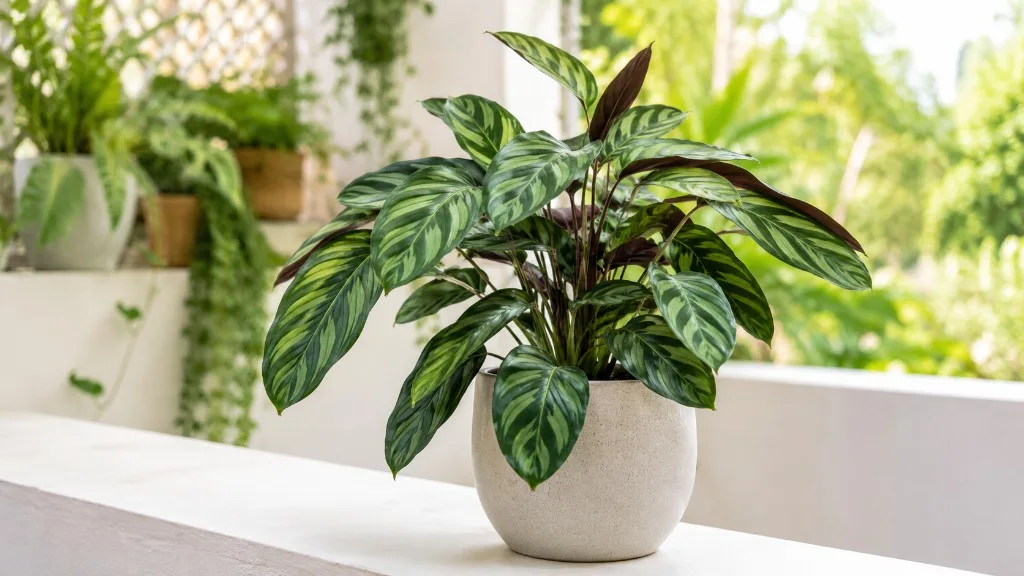
Ctenanthe burle-marxii
Ctenanthe needs consistent moisture, high humidity (60%+), and filtered water to maintain its fishbone leaf pattern. Curling edges indicate low humidity or underwatering.
Ctenanthe Care: Light, Water, Soil & Tips
Start with wateringThe most common care mistake for CtenantheWatering guide →Ctenanthe care essentials
Light
medium to bright indirect light, low indirect light
Water
Keep evenly moist but not waterlogged; water when top inch dries.
Soil
Moisture-retentive but well-draining peat-based or coco coir mix.
Humidity
High humidity (60%+); sensitive to dry air
Temperature
18°C to 27°C (65–80°F)
Fertilizer
Feed lightly during active growth. Balanced liquid fertilizer at half strength.
About Ctenanthe
Ctenanthe has a upright growth habit.
| Detail | Information |
|---|---|
| Growth habit | Upright |
| Scientific name | Ctenanthe burle-marxii |
Ctenanthe Care: Light, Water, Soil & Tips
What Is Ctenanthe?
Ctenanthe (pronounced ten-AN-thee) is a genus of tropical foliage plants in the Marantaceae family - the same family that includes prayer plants (Maranta), Calathea, and Stromanthe. You will see it sold as never never plant, fishbone prayer plant, or bamburanta, depending on the species and retailer. The leaves are the entire reason to grow it: elliptical or oval blades marked with fishbone stripes, silver bands, gold splashes, or bold green-on-gray patterning, often with wine-red or burgundy undersides that show when the foliage lifts at night.
Indoors, size depends heavily on species. The widely sold Ctenanthe burle-marxii - the classic fishbone prayer plant - typically stays 6 to 12 inches (15 to 30 cm) tall, making it a strong desk or shelf plant. Ctenanthe oppenheimiana and Ctenanthe setosa cultivars can reach 1 to 3 feet (30 to 90 cm), while Ctenanthe lubbersiana may grow 2 to 3 feet (60 to 90 cm) tall and 3 to 4 feet wide as a houseplant in a bright room (NC State Extension). Growth is moderate compared with faster tropicals, and the plant forms an upright to slightly spreading clump rather than a trailing vine.
If you are deciding whether Ctenanthe fits your home, the honest summary is this: Ctenanthe rewards steady moisture, filtered light, and real humidity - and it punishes dry air, mineral-heavy tap water, and watering swings. It is generally more forgiving than the fussiest Calatheas but still firmly in the “humidity-aware foliage” category, not the set-and-forget group. The payoff is patterned leaves that move visibly at dusk, a compact footprint for smaller species, and a plant that most sources classify as non-toxic to pets, which matters if you share space with curious cats or dogs.
Botanical Background and the Prayer Plant Family
Ctenanthe evolved in the understory of tropical rainforests in Central and South America, including southeastern Brazil for C. burle-marxii. In that environment the plant receives filtered light through canopy gaps, constant warmth, and humidity that rarely dips below comfortable tropical levels. Roots sit in loose, organic forest soil that stays lightly moist but drains freely after heavy rain. That native context is the reference point for every indoor decision: when your home is too dark, too dry, or too wet for too long, the leaves report the problem before the stems do.
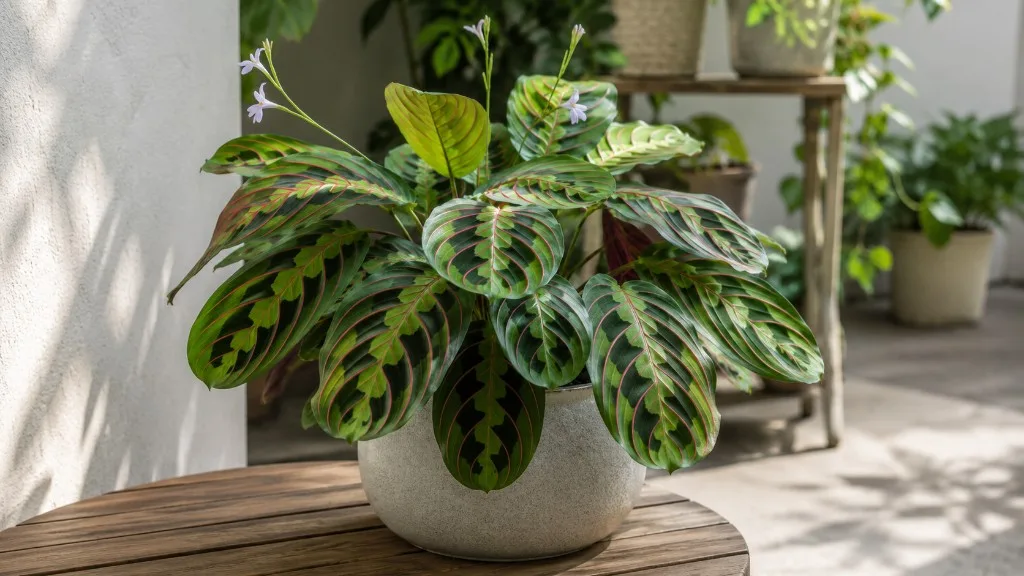
The Marantaceae connection is not just taxonomy - it is a care shortcut. Family members share rhizomatous or clumping root systems, patterned leaves with strong variegation, and the circadian leaf movement called nyctinasty. At night, Ctenanthe folds its leaves upward so they stand more vertically, exposing colorful undersides; by morning they flatten again as light returns. That nightly folding is normal behavior, not a distress signal. If leaves stay rolled or curled during the day, you are usually looking at underwatering on Ctenanthe, low humidity, temperature stress, or direct sun - a different problem entirely.
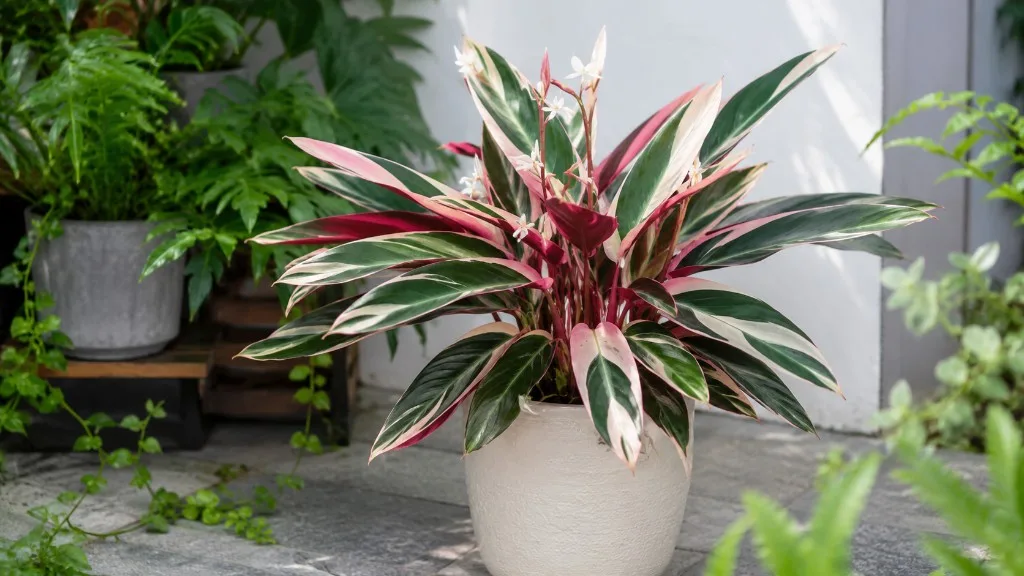
Three species dominate the houseplant trade. C. burle-marxii is the compact fishbone type with pale green leaves and dark green herringbone stripes. C. oppenheimiana - often called the never never plant proper - produces lance-shaped leaves with silver bands and maroon undersides; the Tricolor form adds cream and pink tones. C. lubbersiana carries large green leaves splashed with golden yellow and can become a room-scale focal point. Newer Sweet Dreams® cultivars from Proven Winners expand the palette further with series such as Grey Star, Exotica, and Amagris. Tags matter because a 12-inch desk plant and a 4-foot floor plant have different light appetites and watering speeds even though both say “Ctenanthe” on the bench.
Compared with Calathea, Ctenanthe is often described as slightly easier: it tends to keep a steadier clump, bounce back faster from a missed watering, and show margin damage less dramatically than the most delicate calathea cultivars. Compared with Maranta, Ctenanthe usually grows more upright and less trailing, with narrower, more rhythmic striping. None of that makes it a beginner plant in a dry apartment with hard tap water - it means the care model is prayer-plant family care, not generic foliage care.
Why the Name Never Never Plant Matters
“Never never plant” most commonly refers to Ctenanthe oppenheimiana, but retailers apply the common name loosely to the whole genus. “Fishbone prayer plant” almost always means C. burle-marxii. When you buy without a botanical tag, identify what you have by leaf shape and mature size: small oval fishbone leaves point to burle-marxii; longer lance leaves with silver bands suggest oppenheimiana; large gold-splashed leaves suggest lubbersiana. Care principles overlap, but a tall lubbersiana in a bright corner will drink faster and need more root space than a tabletop burle-marxii.
The common names also hint at expectations. “Prayer plant” signals nyctinasty - if your plant never moves at night, check whether it is getting enough darkness and whether you are observing during evening hours. “Never never” is folklore more than botany, but it stuck because the plant feels unfamiliar next to pothos and snake plants. Treat it as a specialty foliage plant with rainforest habits and you will calibrate water and humidity correctly from the start.
Best Growing Conditions for Ctenanthe
Ctenanthe performs best when your room approximates the warm, humid, filtered-light rhythm of its native forest floor. The four variables that decide almost every outcome are light, water, soil, and temperature with humidity. Align those and feeding, Ctenanthe repotting guide, and propagation become straightforward. Misalign one - especially water or humidity - and the leaf edges will tell you within days.
Light Requirements
Ctenanthe needs medium to Ctenanthe light guide. Think of the bright glow on a wall near a window, not the sunbeam on the floor. NC State Extension recommends bright, indirect light - think placement near north- or east-facing windows, or filtered light at a west or south exposure. Gentle early morning or late afternoon sun can be acceptable on some species if the plant was grown in brighter conditions and you acclimate slowly, but midday direct sun bleaches pale cultivars and scorches fishbone markings within hours.
The fastest diagnostic is new growth. Compact internodes, firm emerging leaves, and crisp pattern contrast mean light is probably right. Longer stems, smaller new leaves, and fading variegation mean the plant wants more brightness. Bleached patches, brown crispy spots on the sun-facing side, or leaves that stay curled open during the day mean too much direct exposure or a move that happened too fast. Acclimate over one to two weeks when shifting from a dim shop shelf to a brighter sill - leaves formed in low light are thin and burn easily.
Ctenanthe tolerates lower light better than many sun-loving tropicals, which is why it appears on pet-safe low-light lists, but dim corners still have costs. Growth slows, the pot dries more slowly, and pattern contrast softens. If you must use a low-light spot, reduce watering frequency to match the slower metabolism and watch for fungus gnats in constantly cool, damp mix. A full-spectrum grow light on a 10–12 hour timer, 12–18 inches above the canopy, can supplement weak winter windows without heat stress if you keep duration moderate at first.
Temperature and Humidity
Ctenanthe prefers stable room temperatures between 60 and 85°F (15 and 29°C), with the most comfortable band around 65 to 80°F (18 to 27°C). Avoid placing pots directly under air-conditioning vents, radiators, or drafty winter window sills where leaf temperature can swing sharply even when the thermostat reads fine. Cold damage shows as dark translucent patches or sudden leaf collapse; heat stress paired with dry air shows as crispy margins and upward curling.
Humidity is not optional for long-term beauty. Aim for 50 to 80% relative humidity, with 60% and above producing the cleanest leaf edges in dry-home winters. NC State Extension places never never plants in the medium to high humidity camp, often requiring a humidifier in dry homes. Below about 40%, expect brown tips, tan leaf margins, and spider mite pressure even when watering is correct. A humidifier near the plant is the most reliable fix. A pebble tray with the pot elevated above the water line helps locally. Grouping plants raises ambient moisture modestly. Misting is a minor, temporary boost - useful for dust removal if you wipe afterward, but not a substitute for structural humidity in heated winter air.
Buy a simple hygrometer if you are unsure. When humidity is low, fix that before increasing fertilizer or repotting - those interventions do not solve desiccation and can compound stress.
Soil and Drainage
Use a moisture-retentive but well-draining peat-based or coco coir mix amended with perlite, orchid bark, or pumice so water moves through the pot in seconds rather than pooling. The principle matters more than a branded bag: roots need even moisture without days of saturation. A workable home blend is roughly two parts quality houseplant mix, one part perlite, and one part orchid bark or coco chips - add extra bark for larger species that stay in the same pot for years.
Always plant in a container with a drainage hole. Decorative cachepots are fine only if you empty runoff after every watering. Oversized pots are a common silent killer: excess mix stays wet around underdeveloped roots, leading to yellowing, sour soil, and root rot on Ctenanthe. Target a slightly acidic to neutral pH typical of tropical mixes; hobbyists rarely need to meter pH for Ctenanthe, but salt crust on the soil surface from hard tap water and overfeeding is a real issue that shows on leaf margins before roots fail.
Refresh compacted mix on a one- to three-year cycle depending on species and growth speed. Old peat breaks down, drainage slows, and the Ctenanthe watering guide that once worked suddenly keeps the root zone soggy.
How to Water Ctenanthe
The general rule for Ctenanthe is keep the soil consistently moist but never waterlogged. Water when the top 1 to 2 inches (2.5 to 5 cm) of mix feels dry and the pot still has moderate weight - NC State Extension recommends watering when the top inch feels dry - the same depth check. In bright, warm, actively growing conditions that often translates to every five to ten days for a medium pot, but your calendar should be a reminder to check, not a rule to follow blindly.
Water thoroughly until a small amount runs from the drainage hole, then empty the saucer. Use room-temperature water. Ctenanthe is sensitive to chlorine, fluoride, and hard-water minerals that accumulate in the mix and burn leaf edges over time. Filtered, distilled, or rainwater is ideal; if you use tap water, let it sit overnight so some minerals settle and the temperature stabilizes. The water-quality issue is easy to underestimate because the plant may look fine for months before margins brown in a uniform pattern that does not match sun scorch.
Watering Rhythm During Active Growth
During spring and summer, when new leaves are unfolding and the plant is visibly growing, the root zone should feel like a wrung-out sponge most of the time - moist through the middle, not wet mud. Daytime wilting or leaves that stay folded open on a light, dry pot point to underwatering. Water deeply once, then wait until the top layer dries again on the same depth schedule. Yellowing lower leaves on a heavy, wet pot point the opposite direction: roots are struggling in saturated mix.
Link every watering decision to light and pot size. A Ctenanthe moved closer to a window drinks faster. A plant freshly repotted into a slightly larger pot dries more slowly until roots explore the new volume. A compact burle-marxii in a 4-inch pot can need checks twice weekly in summer; a large lubbersiana in a floor pot may differ by only a day or two but at a much larger total volume.
Seasonal Adjustments
In cooler, dimmer months, growth slows and the pot retains moisture longer. Stretch the interval between waterings, pause fertilizer, and resist the urge to “help” a plant that looks static - dormancy-like rest is normal when light is weak. The most common winter failure is continuing a summer watering rhythm in October through February low light, which keeps mix waterlogged and invites yellow leaves, gnats, and rot.
Heating systems drop humidity while increasing evaporation from the soil surface, which creates a split problem: the pot may dry faster at the top while the plant still suffers dry air at the leaves. Check depth moisture, not just surface color, and run a humidifier if margins crisp despite what feels like adequate watering.
Common Watering Mistakes
The single most damaging mistake is watering on a fixed weekly schedule without checking the pot. The second is letting the plant sit in a full saucer or cachepot, which suffocates roots within days. The third is alternating drought and flood - letting the plant go bone dry until it wilts, then soaking repeatedly - which destroys fine roots and produces chronic edge burn even after you “correct” the schedule.
People also misread prayer-plant movement. Upright leaves at 9 p.m. are normal. Upright, stiff, gray-green leaves at 2 p.m. on a dry pot are thirst. Pair symptom with depth moisture and pot weight before changing anything. If stems are mushy at the base and the mix smells sour, stop watering, inspect roots, trim brown soft tissue, and repot into fresh, airy mix.
How to Feed Ctenanthe
Ctenanthe is a light to moderate feeder during active growth, not a heavy one. Apply a balanced water-soluble fertilizer - such as 10-10-10 or 20-20-20 - diluted to half the label strength once a month from spring through early fall, as NC State Extension recommends with half-strength fertilizer once per month during active growth. Pour on already-moist soil so nutrients distribute without burning dry roots. If your potting mix includes a slow-release starter charge, hold off supplemental feeding for the first four to six weeks after repotting.
Hold fertilizer entirely during late fall and winter, after a major repot until new growth appears, and while the plant recovers from root damage or pest stripping. Overfeeding produces salt buildup and brown leaf tips that mimic tap-water burn. If margins crisp despite good moisture and humidity, flush the pot with plain water at two to three times the pot volume and pause feeding for six to eight weeks.
Organic options - diluted liquid seaweed or worm-casting tea at weak strength - work if you prefer, but the same rule applies: feed only active plants in stable conditions. A stressed Ctenanthe in dry air does not need more salt; it needs a better environment.
Repotting and Root Health
Repot Ctenanthe roughly every two to three years, or whenever roots circle drainage holes, water runs straight through without soaking in, or the plant dries out within a day of watering despite a previously normal rhythm. NC State Extension notes mature C. oppenheimiana can take 5–10 years to reach ultimate height, reflecting the genus’s fairly slow growth, so aggressive annual repotting is unnecessary unless you are upsizing a young plant that is clearly rootbound.
The best timing is spring or early summer as active growth resumes. Choose a pot only one size larger - about 2 inches (5 cm) wider than the current rootball. Oversized pots hold excess wet mix and are the most common trigger for rot after repotting. Use fresh, well-draining tropical mix, maintain the same planting depth, and water lightly for the first week while cut roots callus. Keep the plant in bright indirect light and skip fertilizer until new leaves open.
Signs It Is Time to Repot
The clearest signs are physical: roots emerging from drainage holes, water racing down the sides of old, shrunken mix, a top-heavy plant that tips easily, or soil that smells sour and compacted even when you water carefully. Slower growth alone is not a repot signal if the plant is winter-dormant or light-limited - pair stalling with root and soil inspection first.
If you repot only because leaves have brown tips, you may miss the actual cause - humidity or water chemistry. Fix environment first unless roots are clearly circling or mix is degraded.
Propagation Methods for Ctenanthe
The most reliable home propagation method for Ctenanthe is division during repotting. The plant grows in clumps with multiple shoots arising from a shared root mass; separating those shoots gives you new plants with roots already attached, which is far easier than rooting lone leaves.
Step-by-step division:
- Water the parent one day before dividing so tissues are hydrated and mix is cooperative.
- Remove the plant from its pot and tease apart natural clumps with your fingers, using a clean knife only where rhizomes resist gentle pulling.
- Ensure each division has at least one healthy shoot, several roots, and a viable growth point - a leaf without roots or a root without a shoot rarely succeeds.
- Pot each division into small, well-draining containers only slightly larger than the root mass.
- Keep divisions in bright indirect light, humidity above 50%, and evenly moist - not soggy - mix for the first four to six weeks.
- Resume normal care when new leaves open without browning at the margins.
Stem cuttings with at least one node can work for some upright species: take a 4 to 6 inch (10 to 15 cm) cutting, remove lower leaves, insert the node into moist perlite-heavy mix or water, and cover loosely with a clear bag to raise humidity if your ambient air is dry. Cuttings are slower and more failure-prone than division; use them when the plant is too small to split or you want to preserve a specific stem’s pattern.
Do not propagate a pest-infested, drought-shocked, or rotting parent. Weak divisions inherit the same problems and fail at high rates. Stabilize the mother plant first, then divide from healthy outer shoots.
Common Ctenanthe Problems
Most Ctenanthe problems are environmental, not mysterious disease. Leaves are sensitive indicators for water, humidity, light, and water chemistry long before stems collapse. Work through causes in that order and you will solve most cases without a spray cabinet full of products.
Yellow Leaves, Brown Tips, and Pests
Yellow leaves often mean overwatering on Ctenanthe, especially in low light or an oversized pot. Check whether the mix stays wet at depth while the surface looks merely damp. Lower yellow leaves with green veins can indicate chlorosis from poor drainage or nutrient lockout in soggy soil. Single older yellow leaves on an otherwise healthy clump may be normal senescence - remove them and move on.
Brown tips and crispy margins usually point to low humidity, underwatering cycles, salt or mineral buildup, or cold drafts. If tips appear on older and new leaves alike in winter, humidity and water quality are prime suspects. If only sun-facing patches brown, light is too strong. Flush the pot periodically with plain water if you fertilize regularly or use hard tap water.
Daytime curling with dry pot weight signals thirst or low humidity. Night folding without daytime curl is nyctinasty - no fix required. Pests to watch for include spider mites in dry air (fine webbing, stippled leaves), mealybugs in leaf axils (white cottony clusters), and aphids on tender new growth. Inspect undersides weekly. Isolate infested plants, rinse foliage, and treat with insecticidal soap or horticultural oil, repeating at label intervals until new growth stays clean.
Fungus gnats indicate surface moisture staying wet too long - often a winter overwatering issue. Let the top layer dry slightly more between drinks, add a thin sand or perlite top dressing, and avoid letting fallen leaf debris decay on wet soil.
Is Ctenanthe Safe for Pets?
Ctenanthe is widely considered non-toxic to cats and dogs, which is one reason it appears on pet-safe plant lists alongside Maranta and Calathea. Related prayer plants in Marantaceae are listed as non-toxic to cats and dogs by the ASPCA, and Ctenanthe is widely grouped with them as low-risk - though it is not always individually listed in the ASPCA database. That said, Ctenanthe is not always individually listed in the ASPCA’s searchable toxic plant database the way some Maranta species are, so cautious pet owners should treat “non-toxic” as low poisoning risk, not a license to let animals treat the plant as salad.
Any plant material can cause mild gastrointestinal upset - vomiting or diarrhea - if a cat or dog eats enough of it, even when the plant is not poisonous. Sensitive individuals may react to sap or leaf hairs on contact. Practical guidance: place pots where chronic nibbling is unlikely, watch for digestive symptoms after any known chewing incident, and call your veterinarian or the ASPCA Animal Poison Control Center if symptoms persist or you are unsure of the plant’s identity.
Do not confuse Ctenanthe with unrelated houseplants that share vague common names. Identity on the tag - Ctenanthe plus a species or cultivar name - is what matters for safety research.
Conclusion
The most useful thing to know about Ctenanthe is that it is a Marantaceae foliage plant from tropical American rainforests that wants filtered bright light, evenly moist well-draining soil, and humidity above roughly 50% - with 60% and up producing the cleanest leaves in typical heated homes. It is more forgiving than many Calatheas but still sensitive to dry air, tap-water minerals, and watering swings. Night leaf folding is normal nyctinasty; daytime curl and crisp margins are calls to adjust water, humidity, or light.
Match care to the species you actually have - a compact C. burle-marxii on a desk dries faster and stays smaller than a floor-sized C. lubbersiana - and check pot moisture at depth before every watering. Divide during spring repotting when you want more plants; feed lightly only in active growth; flush salts if tips brown despite good humidity. Get those basics right and Ctenanthe becomes a long-lived, patterned, pet-friendly accent that earns its place in a serious foliage collection.
When to use this page vs other Ctenanthe guides
- Ctenanthe overview - Canonical hub for this species - care topics and problems branch from here.
- Ctenanthe problems - Symptom-first path when you already know something is wrong.
Related Ctenanthe guides
How to care for Ctenanthe?
How much light does Ctenanthe need?
medium to bright indirect light, low indirect light
- medium to bright indirect light, low indirect light - medium to bright indirect light, low indirect light.
When should you water Ctenanthe?
Keep evenly moist but not waterlogged; water when top inch dries.
- Check top 2 inches - Keep evenly moist but not waterlogged; water when top inch dries.
- Drain excess water - Keep evenly moist but not waterlogged; water when top inch dries.
What soil works best for Ctenanthe?
Moisture-retentive but well-draining peat-based or coco coir mix.
- Well-draining mix - Moisture-retentive but well-draining peat-based or coco coir mix.
Grower notes for Ctenanthe
What makes Ctenanthe different
Ctenanthe is a prayer-plant relative, but many forms are a little more forgiving than the most delicate Calatheas. The leaves still react to dry air, mineral-heavy water, and direct sun, yet the plant often keeps a steadier clump when moisture is consistent. Its patterned foliage is usually narrower and more rhythmic than the broad round Calathea types. Think of it as a humidity-aware foliage plant rather than a drama-free low-light plant.
Ctenanthe water note
Use filtered, rain, or rested water if your tap water leaves mineral crusts on pots. Ctenanthe leaf edges tell the truth about water quality and dry air, so repeated brown tips should change your routine. Keep the mix lightly moist, then let the top layer begin to dry before watering again. Airflow matters because a damp crowded crown invites spotting.
Ctenanthe buying note
Buy for clean new leaves and a firm crown. Older leaves may have minor edge marks, but new growth should not be rolled, torn, or heavily spotted. Check the underside of leaves for mites because patterned foliage can hide early damage. A compact clump with several shoots is better than one tall stretched section.
What matters most with Ctenanthe
Ctenanthe is part of the fussy foliage group where leaf movement, crisping, and humidity stress can look dramatic before the plant is truly lost. Judge the newest rolled leaves and root moisture before reacting to every old edge mark. In practice, the care checkpoint is simple: medium to bright indirect light, low indirect light. Pair that with moisture-retentive but well-draining peat-based or coco coir mix, and avoid changing water, pot size, and placement all at once.
Best placement in a real home
Ctenanthe belongs where medium to bright indirect light, low indirect light is realistic for most of the day, not only where the pot looks good. Keep evenly moist but not waterlogged; water when top inch dries. If the pot stays wet longer than expected, move the plant into better light or reassess the mix before watering again. Humidity target: High humidity (60%+); sensitive to dry air.. Temperature comfort zone: 18°C to 27°C (65–80°F).
Before you buy this plant
Choose Ctenanthe with firm new growth, clean leaf undersides, and soil that does not smell sour or feel compacted. Be cautious if you see brown-tips, sticky residue, collapsed crowns, or a pot that is wet in poor light. Cosmetic old-leaf damage is less worrying than weak roots or active pests.
First month after bringing it home
Do not repot Ctenanthe on day one unless the mix is failing or pests are obvious. Quarantine it, learn how fast the pot dries, and keep care boring while it adjusts. Watch especially for brown-tips and curling-leaves. If problems appear, correct the condition first rather than stacking fertilizer, repotting, and pruning together.
Is it pet safe?
Ctenanthe is generally considered pet safe.
Watering Ctenanthe
Keep evenly moist but not waterlogged; water when top inch dries.
Soil & potting for Ctenanthe
Moisture-retentive but well-draining peat-based or coco coir mix.
Humidity & temperature for Ctenanthe
Ctenanthe prefers high humidity (60%+); sensitive to dry air, though normal home humidity is usually fine. Keep temperatures around 18°C to 27°C (65–80°F).
| Detail | Information |
|---|---|
| Humidity | High humidity (60%+); sensitive to dry air - normal home humidity is fine. |
| Ideal temperature | 18°C to 27°C (65–80°F) |
Fertilizer & pruning for Ctenanthe
Use feed lightly during active growth. Balanced liquid fertilizer at half strength. for Ctenanthe.
| Detail | Information |
|---|---|
| Fertilizer type | Feed lightly during active growth. Balanced liquid fertilizer at half strength. |
Common problems on Ctenanthe
Brown Tips
HighLikely cause: Low humidity or fluoride in tap water accumulating in leaf margins
Quick fix: Increase humidity to 60%+ and switch to filtered or rainwater
Full fix guide →Curling Leaves
MediumLikely cause: Low humidity or underwatering causes the leaf blade to roll inward
Quick fix: Water thoroughly and boost humidity immediately
Full fix guide →Yellow Leaves
MediumLikely cause: Common on this plant type; confirm with recent watering, light, and root checks.
Quick fix: Inspect the plant and correct the most likely care stressor before stacking treatments.
Full fix guide →Root Rot
MediumLikely cause: Common on this plant type; confirm with recent watering, light, and root checks.
Quick fix: Inspect the plant and correct the most likely care stressor before stacking treatments.
Full fix guide →Overwatering
MediumLikely cause: Common on this plant type; confirm with recent watering, light, and root checks.
Quick fix: Inspect the plant and correct the most likely care stressor before stacking treatments.
Full fix guide →Underwatering
MediumLikely cause: Common on this plant type; confirm with recent watering, light, and root checks.
Quick fix: Inspect the plant and correct the most likely care stressor before stacking treatments.
Full fix guide →Spider Mites
MediumLikely cause: Common on this plant type; confirm with recent watering, light, and root checks.
Quick fix: Inspect the plant and correct the most likely care stressor before stacking treatments.
Full fix guide →Mealybugs
MediumLikely cause: Common on this plant type; confirm with recent watering, light, and root checks.
Quick fix: Inspect the plant and correct the most likely care stressor before stacking treatments.
Full fix guide →Aphids
MediumLikely cause: Common on this plant type; confirm with recent watering, light, and root checks.
Quick fix: Inspect the plant and correct the most likely care stressor before stacking treatments.
Full fix guide →Leggy Growth
MediumLikely cause: Common on this plant type; confirm with recent watering, light, and root checks.
Quick fix: Inspect the plant and correct the most likely care stressor before stacking treatments.
Full fix guide →Slow Growth
MediumLikely cause: Common on this plant type; confirm with recent watering, light, and root checks.
Quick fix: Inspect the plant and correct the most likely care stressor before stacking treatments.
Full fix guide →Wilting
MediumLikely cause: Common on this plant type; confirm with recent watering, light, and root checks.
Quick fix: Inspect the plant and correct the most likely care stressor before stacking treatments.
Full fix guide →Drooping Leaves
MediumLikely cause: Common on this plant type; confirm with recent watering, light, and root checks.
Quick fix: Inspect the plant and correct the most likely care stressor before stacking treatments.
Full fix guide →Low Humidity
MediumLikely cause: Common on this plant type; confirm with recent watering, light, and root checks.
Quick fix: Inspect the plant and correct the most likely care stressor before stacking treatments.
Full fix guide →Not Enough Light
MediumLikely cause: Common on this plant type; confirm with recent watering, light, and root checks.
Quick fix: Inspect the plant and correct the most likely care stressor before stacking treatments.
Full fix guide →Fungus Gnats
MediumLikely cause: Common on this plant type; confirm with recent watering, light, and root checks.
Quick fix: Inspect the plant and correct the most likely care stressor before stacking treatments.
Full fix guide →Mold on Soil
MediumLikely cause: Common on this plant type; confirm with recent watering, light, and root checks.
Quick fix: Inspect the plant and correct the most likely care stressor before stacking treatments.
Full fix guide →